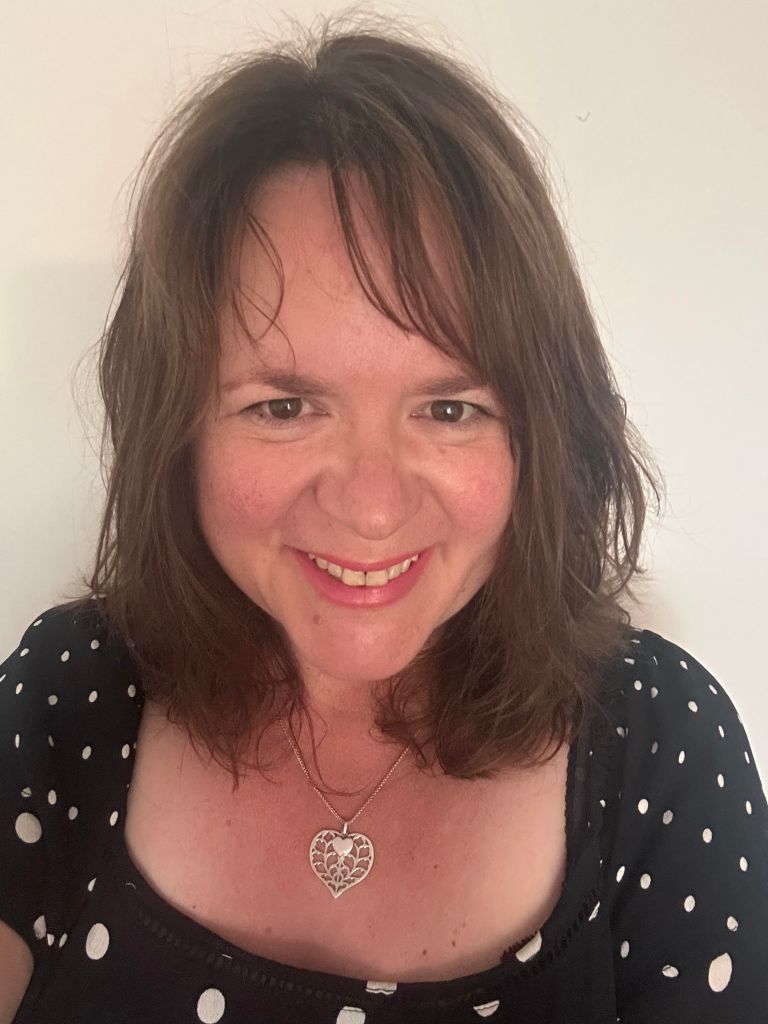
It’s an enormous pleasure introducing this month’s guest poet. We met a while ago when I attended one of Alexandra’s online courses. She’s an inspiring tutor.
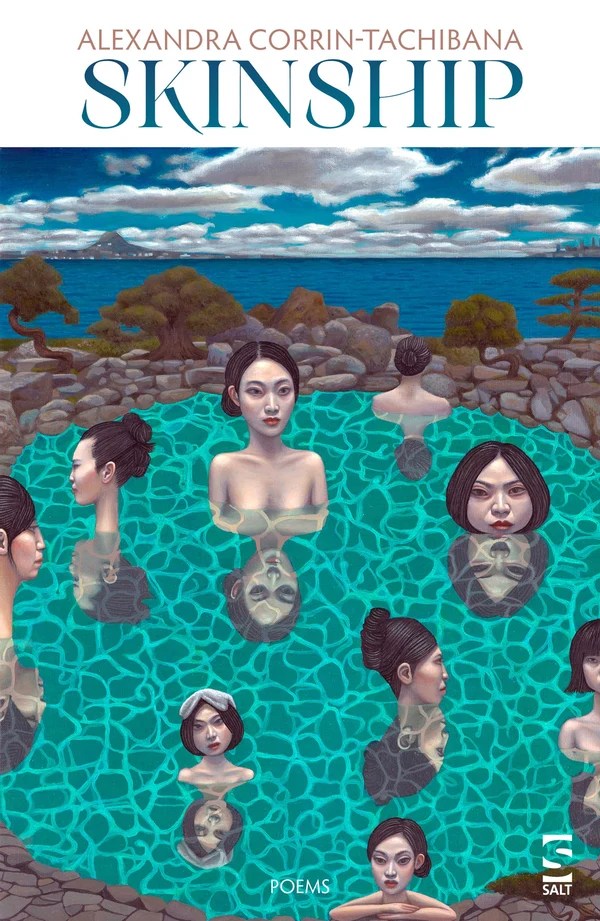
You’ll find her biography at the end of this post, with links to two more poems. This week Alexandra’s second collection with Salt is published. Skinship is a full collection: formally innovative in using and adapting traditional Japanese forms (haiku, tanka, senryu, haibun, and zuihitsu). I was particularly struck by the ‘burning haibun’.
The poems are ‘rooted in Alexandra’s lived experience of Japan’ and rich, poignant and memorable. There is a well-judged balance of humour and sadness. It’s not surprising that many of the poems have already been published and successful in competitions.
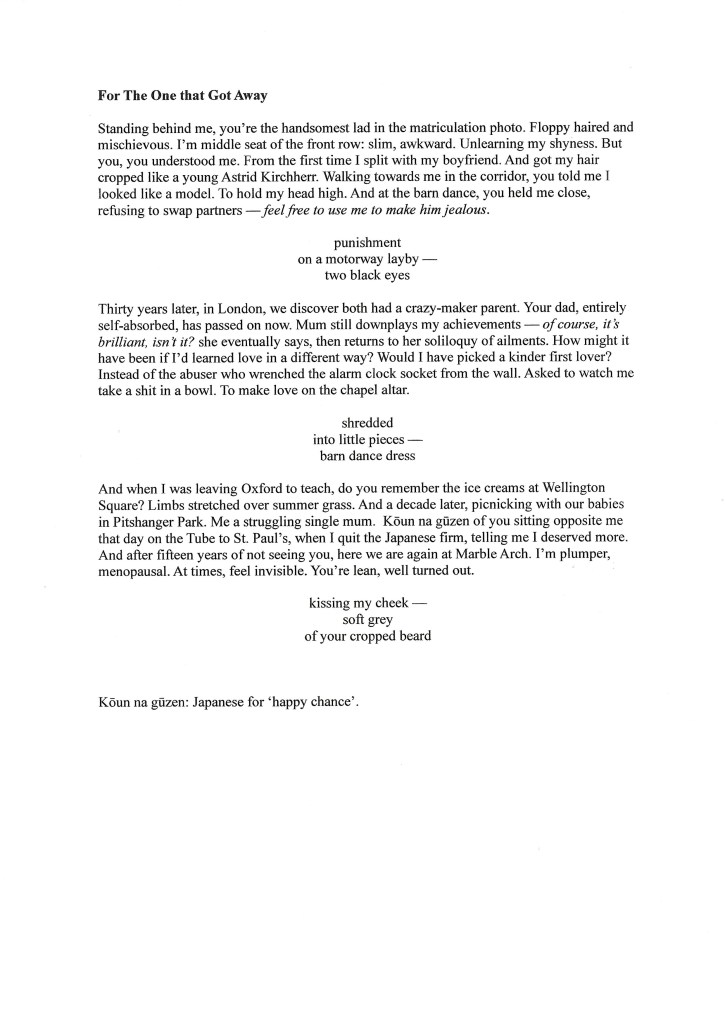
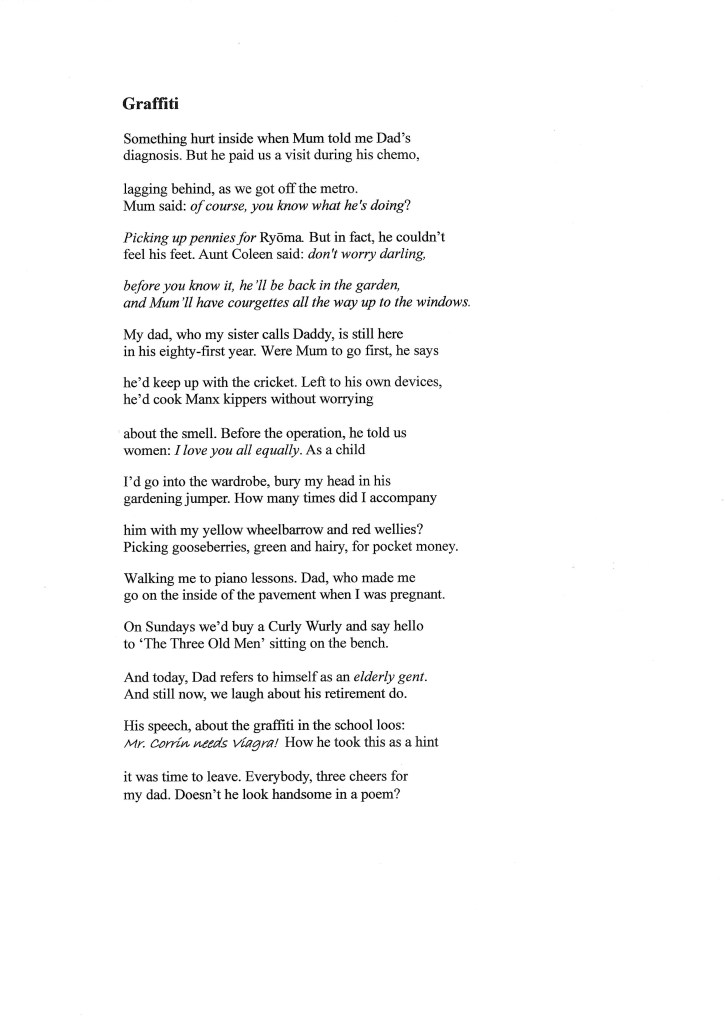
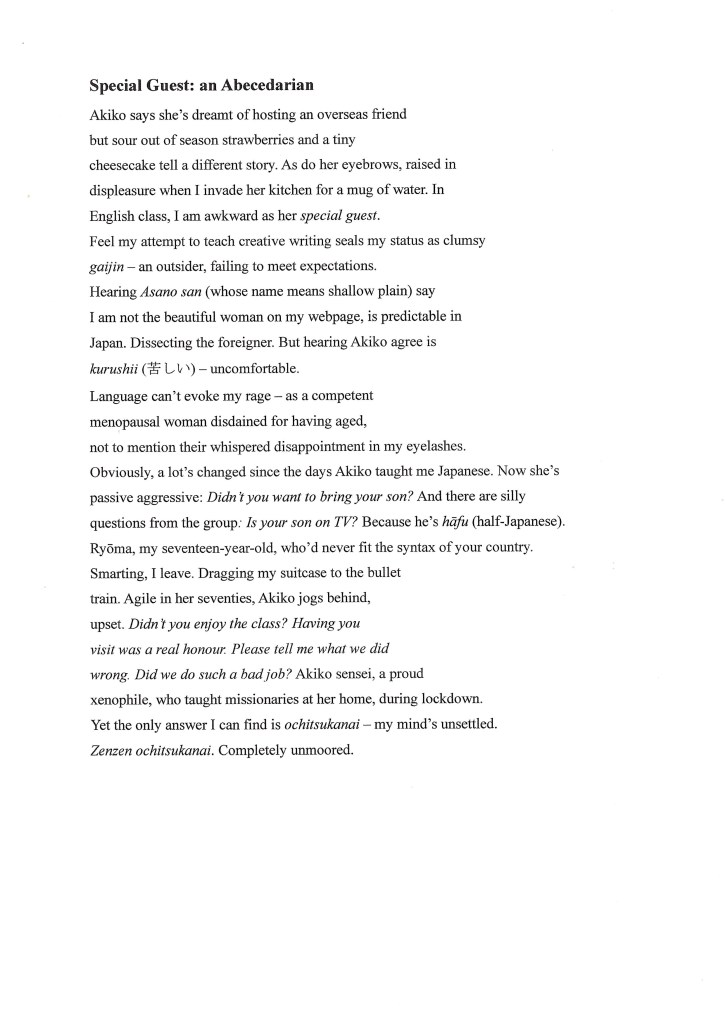
Here are the three poems which I chose from my long shortlist. To preserve the original features, the poems are presented as images.
Biography
Alexandra Corrin-Tachibana is the author of two poetry collections: Sing Me Down from the Dark and Skinship, both published by Salt publishing.
This year, she won the Frome Festival Crysse Morrison Poetry Prize, as well as Verve’s February Poem of the Month competition, was placed third, by Mimi Khalvati, in the Kent and Sussex competition, and shortlisted for the Wolves Lit Festival competition. She is shortlisted for the 2026 Forwards Prize for Best Single Written Poem, for her poem, Madam Gout, originally published by Magma.
Alexandra lived in Japan for 10 years and has Masters’ degrees in Japanese Language and Culture and in Writing Poetry. She is based in Newcastle-upon-Tyne and teaches for The Poetry School and The Poetry Business. Her most recent work is published or forthcoming in Pennine Platform, The North, Vervacious anthology (Verve Poetry Press), The Alchemy Spoon, and online in And Other Poems.
Celebrating a decade of blogging: 4 published poetry books (3 collections, 1 pamphlet), a Northern Writers’ Award; 360 blog posts, 117,508 words, including 89 guest poets; 52,500 views (increasing from 1,314 in 2016 to 9,600 so far in 2026); 33,900 visitors, 4000 likes. All that without AI…
I was delighted when Oversteps Books decided to consider Another life for publication. It was competitive: no guarantee they’d pick my manuscript.
Anxiety took over. ‘I need a website; I need to look like a serious poet’.
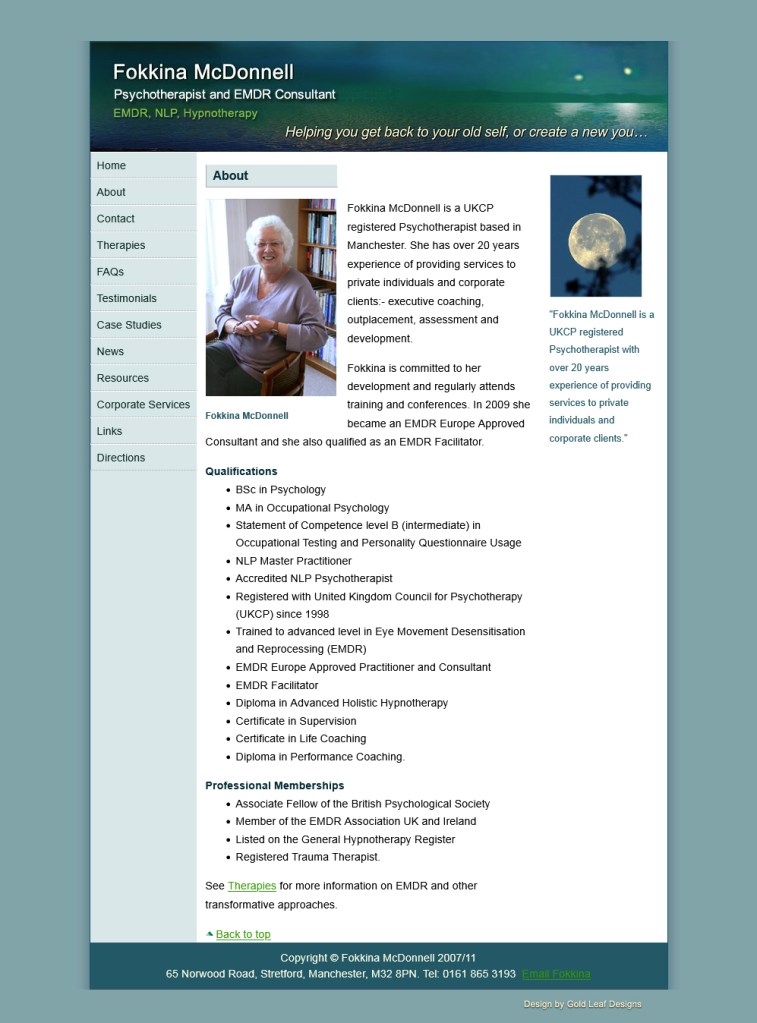
Fortunately, I already had a webmaster. Sophie Brown had designed the website for my consultancy and psychotherapy practice nine years earlier and helped me to keep it going.
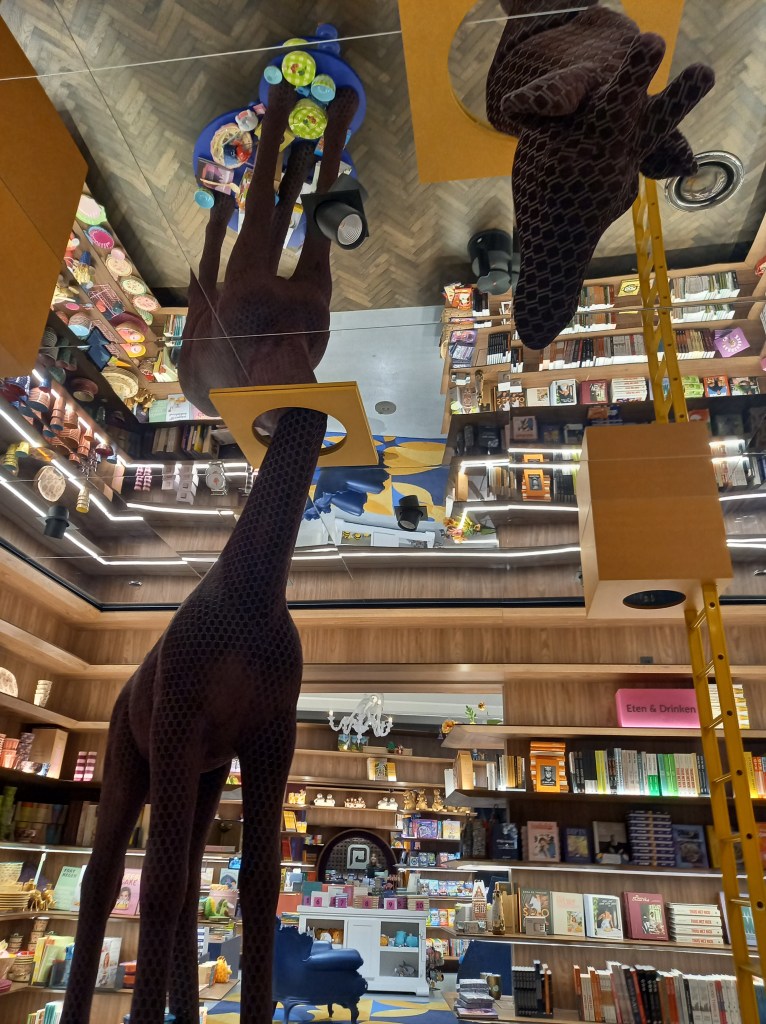
Both of us are creatives with a business/consultancy side – so, we’re often on the same wavelength. Over a busy Easter weekend, Sophie and I finalised the website for acaciapublications.co.uk together in 2016. An obsessive search for just the right picture of a giraffe…
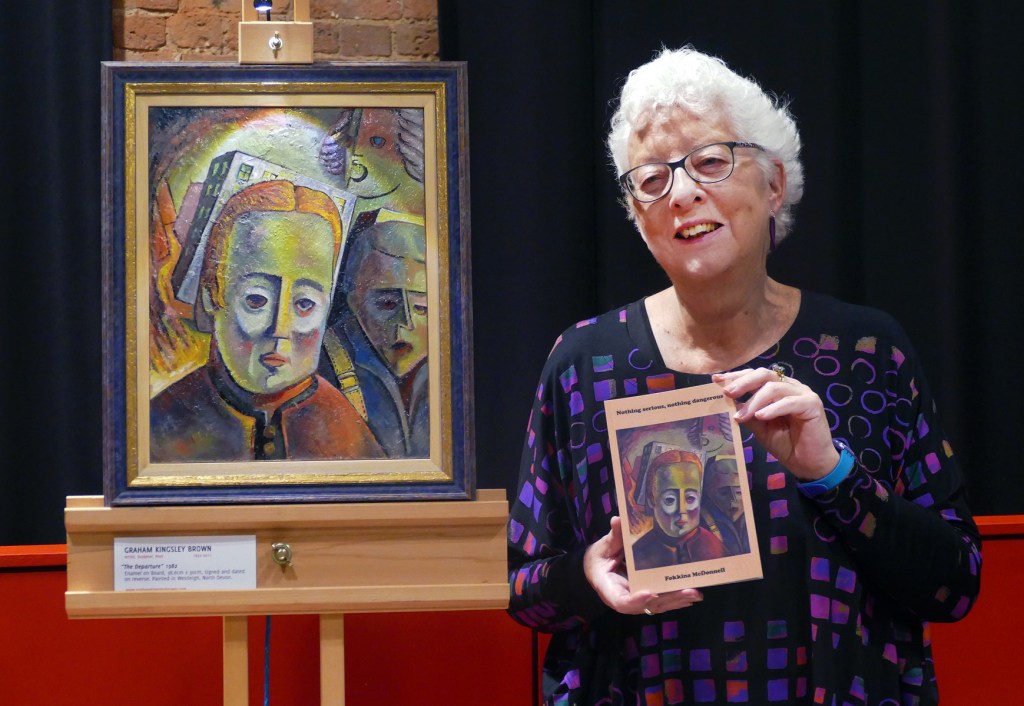
Just before the Covid lockdown, Sophie was at the launch for my second collection Nothing serious, nothing dangerous. The cover is the painting The Departure by Sophie’s late father.
Book Launch of “Nothing serious, nothing dangerous with painting “The Departure” copyright Sophie Brown 2026
I am grateful to our mutual friend H. for making the introduction all those years ago. A couple of times each year I still check in with Sophie: for technical advice and to explore if the website still fits with my current goals.
A huge ‘Thank you’ to Sophie, who deserves the limelight today.
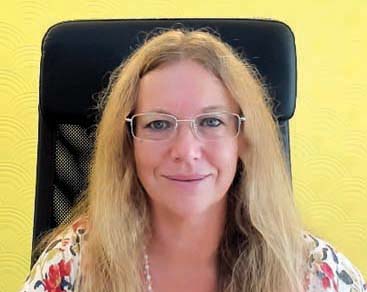
Sophie Brown
I did design the visual style and infrastructure for the acacia publications site, and we’ve had many conversations about its purpose and dealt with technical issues. However, all the hard work – writing content over the decade, persistently creating regular blogs, meeting people, inviting guests, editing the site – is, of course Fokkina’s. Something to celebrate indeed!
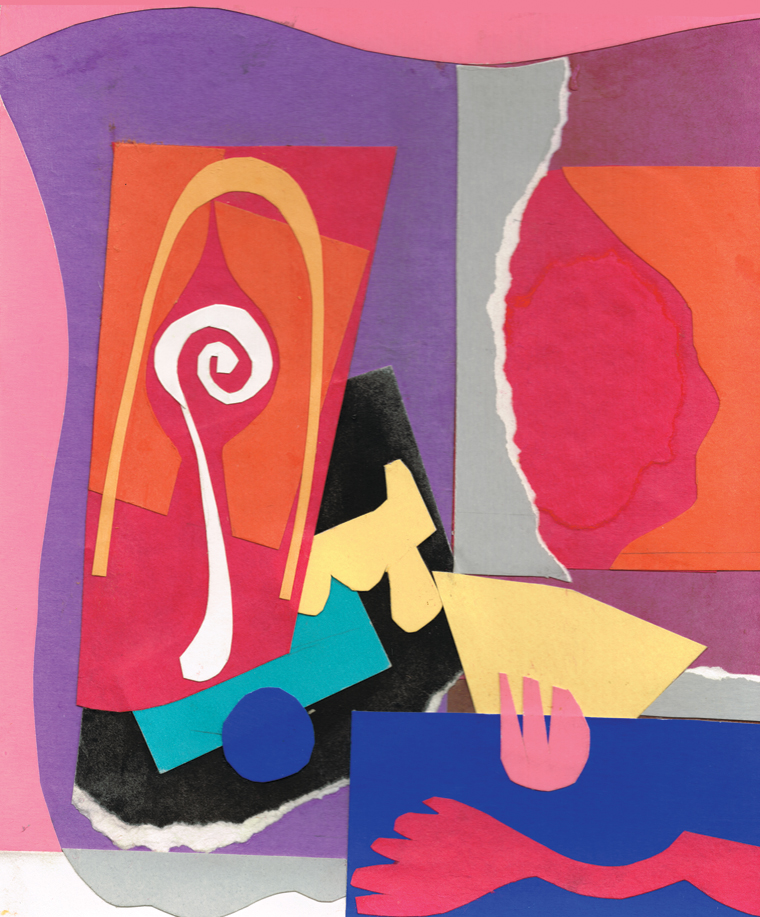
Pygmalion – cutout paper on mountboard by Graham Kingsley Brown, Copyright Sophie Brown 2026
I was fortunate to inherit a proclivity for creative thinking, a good eye for design and practical art skills from my artist father Graham Kingsley Brown, whose varied work in painting, sculpture, design and poetry I have had the pleasure to bring to light in recent years at https://www.grahamkingsleybrown.co.uk.
Professional life This innate impulse took me on an evolving path through art history, painting and design, to becoming a professional Landscape Architect designing landscapes, and from there to developing skills in “thinking”, whilst being Creative Director for The Edward de Bono Foundation UK. That led to co-founding Company of Mind with Adrian West in 2010, where I design thinking programmes, with graphics and techniques for the “canvas of the mind”. We’ve facilitated thousands of people to work together using systematic techniques to shift perception in order to successfully come up with new ideas and strategies.
Moving to the East Yorkshire coast from urban Manchester 5 years ago has brought a new lease of life with different conditions, as moving to the Netherlands has done for Fokkina.
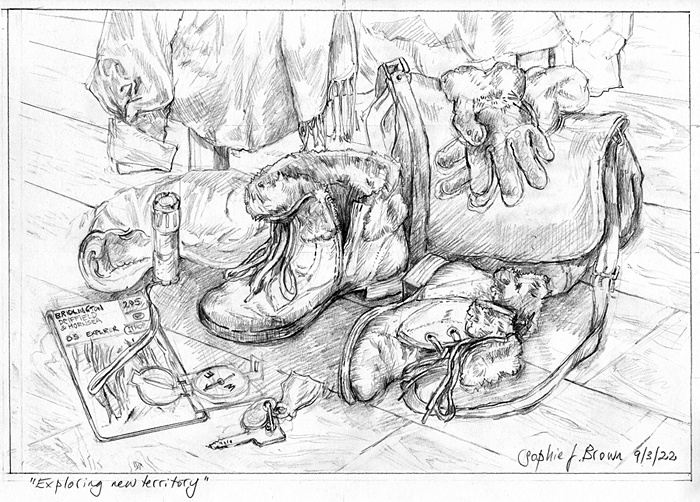
Each day, year, decade brings the opportunity to explore fresh inner and outer territory in our chosen means of expression. What is crucial, as Fokkina has demonstrated, is a consistent practice paired with a responsive approach.
credit: Nathanjhilton via Pexels – The Lowry, Salford, UK
I’ve just booked a workshop that Cath Drake has organised. She gets top-notch poets and authors. Paul Hetherington is a distinguished scholar and poet. He has published 19 full-length collections of poetry and prose poetry. He has won or been nominated for over 50 national and international awards and competitions.
I have done Zoom workshops with Paul before and am excited at the chance to experiment more with what John Holland calls ‘notional ekphrasis’ – poetry describing artwork that ‘doesn’t exist except in poetry’s own fiction’. Some famous writing, of course, describes art that doesn’t exist, as in Keats’ Ode on a Grecian Urn and Homer’s account of Achilles’ shield in the Iliad.
Here is an early example I wrote. It was commended in the 14th Ware Open Poetry Competition, 2012, and published in the anthology.
credit: Couleur, via Pixabay
Still casting a shadow
Two unused scratch cards, with the faintest whiff of orange. Found on the floor of the Lowry, Salford after a performance of The Love for Three Oranges by Opera North. Purchased on eBay and donated by J Smith Esq.
*
Patina and Pathos. Today’s lecture has been cancelled due (rest of notice torn off)
*
Scale drawings and recipe for three-tiered wedding cake: SEX, three wedding cakes in the shape of capital letters S, E and X, with red, white and blue marzipan. Decorated with 24 small edible doves and placed in a French sleigh bed made of walnut.
*
Spot the difference competition. Place your feet on the white X on the gallery floor for the best vantage point. Spot the differences between the wax model of an attendant and the live guard (seated). Put your form in the box.
*
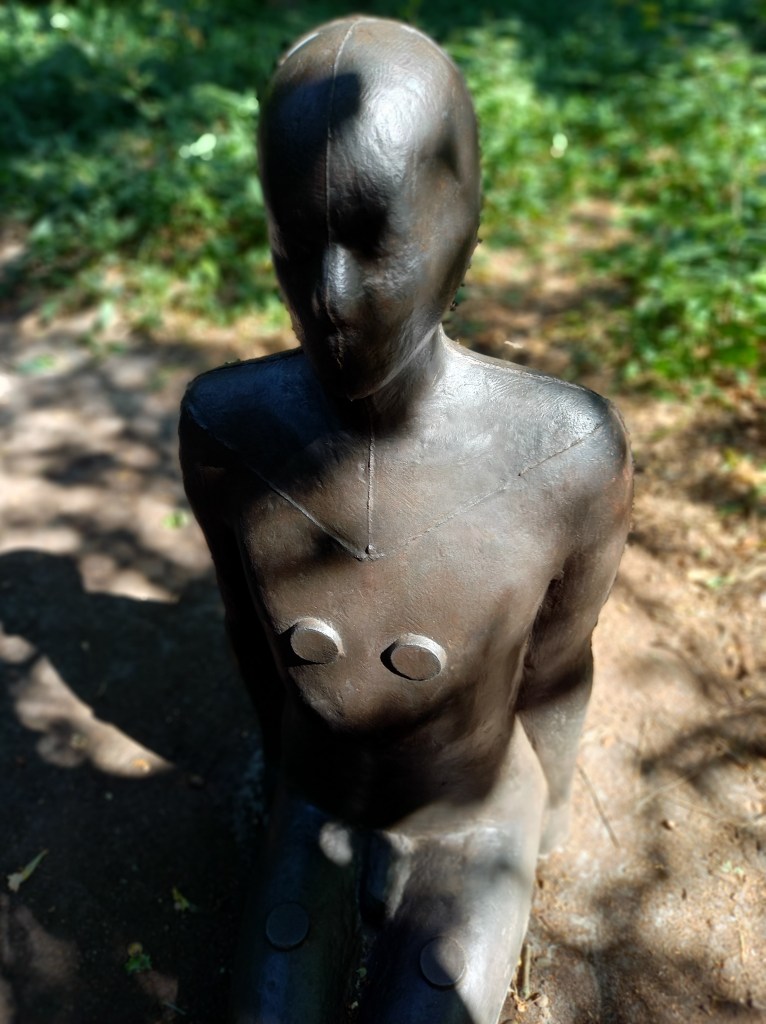
Bronze box, still casting a shadow, with burnished lid, bronze hinges and clasp, key missing. Age of box indeterminate, size varies daily depending on the swelling and shrinking of contents.
own photo: Anthony Gormley, Ground, exhibition Voorlinden Museum, Wassenaar, 2022.
Writing prompt
1)
You may already have an idea, or even an object in mind. Or you may want to start with some notes or a drawing.
If you’re not sure, you could start with a specific museum as I did, or you can create one.
What does your notional gallery, museum look like? Is it a permanent or temporary building? Is there a garden or roof terrace which displays art?
What is the location: a city or town (real or imagined), or out in nature – dunes, a national park?
Will your work be public art – in or by a well-known building?
What is the ‘notional’ work? Is it a painting, sculpture, drawing, photograph, mixed media, collage, video, made of fabric or knitted?
Is it a single piece or is it composed of hundreds or thousands of items?
Are sounds involved, scent, or movement?
Perhaps, the notional work is out in nature, made of objects found, like in Andy Goldsworthy’s work?
Is the work interactive in some way? Perhaps, you’re there (like Marina Abramović) interacting with visitors?
2)
Is there a form that suits your imagined artwork? Fragments, like my prose poem? In stanzas, as a prose poem, or a concrete poem that uses the shape of your object?
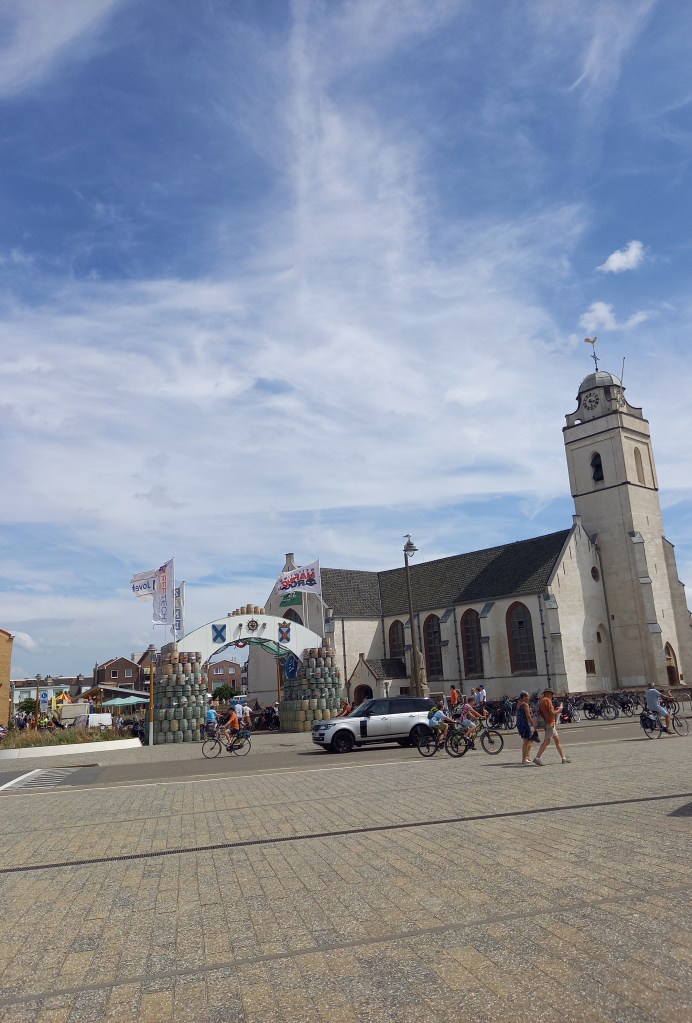
Only half an hour’s drive away is Katwijk aan Zee, a traditional town with a small fishing port. During the summer vacation, the weekly Tuesday market is extended: crafts people showing and selling their goods, music, or a display of vintage cars.
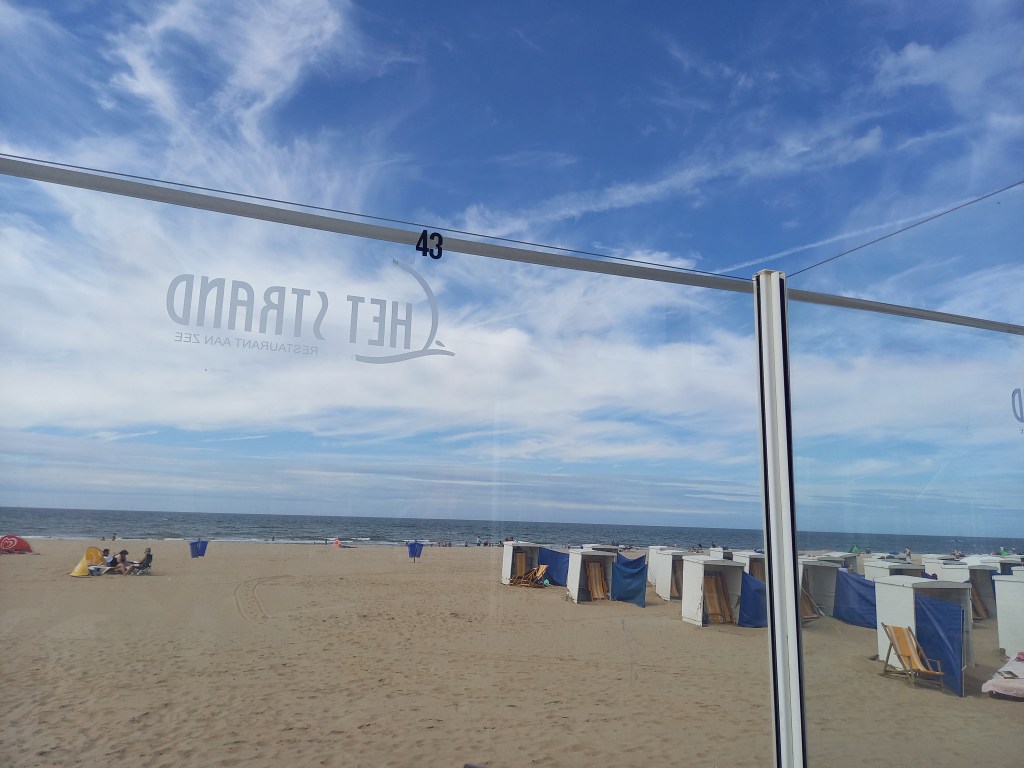
The council spent money on a large car park hidden below the dunes. Coffee, a walk round the market, lunch on the beach. This year my friend and I chose the Trio of the Sea – smoked salmon, Dutch shrimps and a delicious taco with tuna and wasabi. We favour Het Strand, with glass panels between tables for privacy.
Today, the heat is back. So, I’m posting a cooling prompt from earlier this year. Write on from Everything was frozen…
Everything is frozen
The welcomes clatter to the ground. Those sandwiches, salmon and cucumber; the cheese scones; even the tiered metal tray on the once-wooden table. Mary, the absentee landlady, gasps. Two small vowels fall on the carpet. Everything so white, so silvery, so creaking on the change.
Tom strokes his beard, that has been soft as a lamb, cuts his finger and now the miracle of the red blood turning to icy droplets. If there had been a cat, it would have chased them around the room. This is always a sadness – a poem or story without a cat.
Poëzie Week ran last month in The Netherlands and Flanders, the Dutch-speaking part of Belgium. Events were arranged in libraries, bookshops, schools, etc.
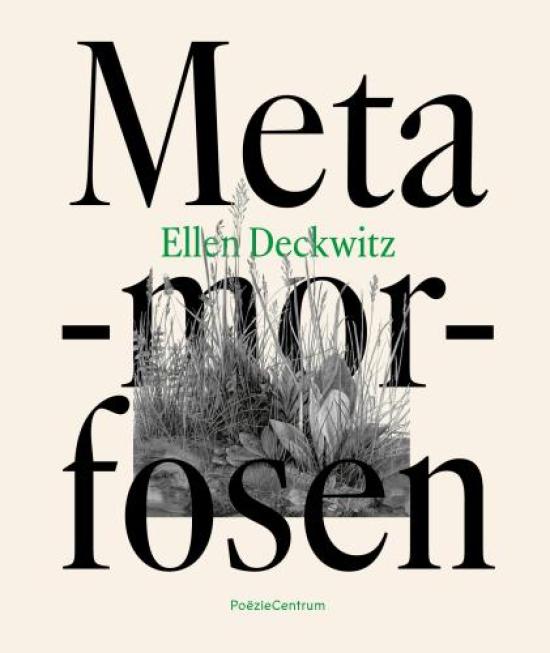
If you spent at least 12,50 Euro on a poetry book, you’d receive a copy of the poetry pamphlet Metamorfosen, written by poet Ellen Deckwitz specially for Poëzieweek and published by het Poëziecentrum, Gent.
Op = Op. So, I dashed to the nearest bookshop and checked at the till copies were still available. You’re not surprised to learn the poetry section was small, but I found the new collection Tussen mij from the poet and artist Maria Barnas, just published .
Ellen Deckwitz is a tireless ambassador for poetry: daily podcast for a radio station, columns, visits to schools and colleges. Her Eerste Hulp bij Poëzie (Poetry First Aid) is an accessible introduction to contemporary poetry. Her poetry has been translated into several languages, and she has received several Dutch awards and in Italy (Premio Campi).
I listened to a short interview she did with Hanna van Binsbergen (monthly podcast of het Poëziecentrum). Some of her poetic influences are Tomas Tranströmer, Sylvia Plath, Ted Hughes, Osip Mandelstam.
She talked about the unrealistic demands placed on romantic love and how friendships have increasingly become important. The ninemetamorphoses in the pamphlet challenge the cliché of romantic love, our need for some significant other:
Ooit droomde je van een mens voor jezelf. Iemand die je geliefde, je ouder, kameraad of leider kon zijn.
Once you dreamt of a human for yourself. / Someone who could be your lover, your parent, comrade / or leader.
Transformation and metamorphosis as often seen as positive events: the pupa turning into a butterfly, catharsis leading to rebirth, renewal. Deckwitz reminds us that in Ovid’s Metamorphoses many of the metamorphoses do not turn out well – Icarus, Narcissus.
Romantic relationships can be violent: the facts are often also just pleasant machetes – en feiten zijn vaak ook gewoon / prettige machetes.
The person ending things with ‘Sorry, maar –’ changes into an earthworm, while the one left behind ‘jumped furiously up and down in his underpants’ – ‘sprong woedend op en neer in zijn onderbroek‘.
Writing Prompt:
How do you view metamorphosis? Have you used any myths to inspire your writing? Or folk tales, fairy tales?
I drafted the poem Snow woman on a workshop. When I read through the notes, I realised it refers to the myth of Sisyphus. The poem first appeared on Atrium.
Snow woman
My father didn’t give up. For many years, he kept going. He carries the white with bare hands, rolling the fresh snow uphill. He shapes and sculpts roundness.
The snow woman stands in the shade, so my mother has a greyish tinge from the outset. Six small coals give her a static smile. She does not want to live in the shadows.
During the night, sometimes, her silk scarf disappears. He buys her new ones. Winter is their season, spring follows. It’s warming up, and a long, long time till summer.
My father never asked for help. Mother starts shedding, and now she is snowing words, words, words. It’s soon a white-out.
It’s a great pleasure to introduce this month’s guest poet Julie Mellor.
Julie holds a PhD in creative writing from Sheffield Hallam University and has published two poetry chapbooks with Smith/Doorstop: Breathing Through Our Bones (2012) and Out of the Weather (2017). In 2019 she became interested in haiku, and since then her haiku and haibun have appeared in Blithe Spirit, Frogpond, Modern Haiku, Presence, The Heron’s Nest and Tinywords, as well as two Red Moon anthologies. She recently retired from a career in education, and enjoys walking her dog, attending art classes and playing the banjo.
Here are recent haiku and a haibun with their publication details. You can find more of Julie’s writing on her site here.
Modern Haiku 54.3 (Autumn 2023)
toe-hold weeds things that were said years ago
Blithe Spirit 35:2 (May 2025)
long night joining the dots between stars
The Heron’s Nest Summer 2025
wetting the ink a ghost orchid blooms from its painted stem
Presence issue 82 (Summer 2025)
morning moon beside the fretless banjo pistachio shells
BHS Hope anthology 2025 (ed Neil Sommerville)
butterfly summer I write a letter to my future self
Presence 73 – Summer 2022 – and included in Contemporary Haibun 18 (Red Moon Press, 2023)
The Coffin Path
Grass, waist high this morning, and wet with last night’s rain. Brushing past it, my jeans wick the droplets from seeding cock’s-foot and brome. No one else walks this way. Behind the hawthorn hedge is the cemetery. People tend to use the other path, the one that the council mows. Or else they drive – ‘to save their legs’ my mother says. Some days she says she wants to be buried. Other days, she thinks she’d prefer to be cremated and have her ashes scattered next to a memorial bench. No rush to decide, I tell her, trying to make light of things.
elderflowers pressed in her prayer book a recipe for wine
Thanks to poet Jonathan Davidson for introducing me (and the other poets on the course) to the Sestude. This form (a poem of 62 words) was invented by John Simmons, co-founder of the ‘26’ writing group in 2003. The English alphabet has 26 letters and 62 is its opposite.
It started with a project ‘26 treasures’ in the Victoria & Albert Museum’s British Galleries. The creative community 26.org.uk is a not-for-profit organisation which still undertakes a range of creative projects.
I enjoyed playing around with the form and, going through my folders, came across a short prose poem that only needed to lose a few words:
If there were no wind, cobwebs would cover the sky.
If there were no wind, cobwebs would cover the sky. Soon enough, the clouds would get angry, address the spiders Have you no manners? Your offspring is just sitting around. The angrier the clouds got, the greyer they looked. It was a battle of grey against grey. Battles and wars always end in tears. The people below were relieved: Rain at last.
Note: Serbian proverb quoted by Vasko Popa, The Golden Apple, 2010.
The Golden Apple collection is a round of stories, songs, spells, proverbs & riddles that Popa himself selected from various anthologies of Serbo-Croatian folk literature.
Writing Prompt
A few more proverbs and riddles. I will share answers next month!
Proverbs
Get your moustaches together, you’re going on a journey.
If you put him on a wound, it would heal.
When did fog ever uproot a tree-trunk?
Riddles
In one room both bone and flesh grow.
I stretched a gold thread through the wide world and wound it up into a walnut shell.
I shake a tree here, but the fruit falls half an hour away.
It is a pleasure to introduce our February guest poet Rob Miles. I do not know Rob personally: we have been Facebook friends for some time. I bought a copy of his recent collection Dimmet which was published by Broken Sleep Books. See below the poems for Rob’s biography.
The glorious cover image of a murmuration was designed by Aaron Kent. Dimmet is a West Country word for dusk, twilight. Katherine Towers notes of the collection: ‘These are poems of great precision and delicacy’. I’ve chosen four poems which demonstrate these qualities.
Dimmet
His hands still bronzed, still baling-raw. His voice no longer snared, whisper-low as decades ago, in this same field, he guided me
to not disturb that horse; circling quietly, its half-scattered straw an ingot melting, and my thin flames no match for such a sunset anyway.
*
On this, another near-to-night, it’s clear that he has no more kept his mind from wayward sparks than I have closed my eyes
before any fading fire, ever since recalled a slow white shadow steady on its dial in the always almost dark.
Café Poem
Just when I think there is nothing so boring
as someone else’s childhood a toddler
in dungarees is guided around our table
by his puppeteer parent, arms up, in a vertical sky-dive, or
like a drunk, when walking is more about not falling
every step forward rewarded with a double high five.
I whispered to the dog
that she’d been a winner a Crufts champion
at least twice. Once she saw off a Dobermann, burglars, a werewolf
even the odd Sasquatch. I reminded her
as her old eyes darkened that she had saved lives.
Making Way
A keeper, you said of the house, but I’d sensed everything trying to make its way: those errant velvet fingers from your orchid pots; the oak putting on its chain mail of ivy and moss and losing; the birds we fed still pinned to their shadows; crisp wasps electrocuted by views through grubby double glazing, and you just weeks before, showing your wrists as if uncuffed, asking for my thoughts on a fragrance.
Biography
Rob Miles is from South Devon, and he lives in Leeds where he is Fellow in Film Studies in the Centre for World Cinemas and Digital Cultures at The University of Leeds. His poetry has appeared widely in magazines and anthologies, recently in Stand, New Welsh Review, The Scores, Spelt, 14 Magazine, Ink Sweat and Tears, One Hand Clapping, Poetry Wales, and four Candlestick Press pamphlets. He has won various awards including the Philip Larkin Prize, judged by Don Paterson, the Resurgence International Ecopoetry Prize, judged by Jo Shapcott and Imtiaz Dharker, and the Poets & Players Prize, judged by Sinéad Morrissey.
Lucy Newlyn describes Dimmet as ‘the best collection of contemporary poetry I have read in a long while’, and John Glenday writes: ‘When it’s done as well as this, there’s nowhere on earth poetry can’t go.’
It is a great pleasure to introduce this month’s guest poet David Bingham. We first met many years ago through the British Haiku Society. David was President of the Society from 2020-2022, and in 2020 he was the winner of the British Haiku Society International Haibun Prize. His poetry appears regularly in a wide variety of magazines. See below for further details.
The haiku have all been previously published: in Presence, Blithe Spirit, or Time Haiku. The tanka first appeared in Blithe Spirit and the BHS Tanka Anthology 2022, while the haibun was the winner of the British Haiku Society International Ken and Noragh Jones Haibun Award, 2017. I hope you enjoy the selection.
Haiku
a lifetime overcoming gravity – still it gets me down
Private Keep Out molehills on both sides of the fence
clear night sky – lights from both the living and the dead
away in the wind … the word-filled air
is there a word for it? the sound swans make when they fly
late spring meadow… within the yellow the blue of summer
storming the old hill fort – bluebells and celandine
inland sea the wash from our boat moves the border
stream through sunlight through stream
closing over trails in algae where the ducks have been
I turn to call the dog … then remember
Euston Station – my skin ripples in the hand drier
an apology… the predictive text writes it for me
Tanka
sun shine and motorway spray – I drive through rainbows to be with you
silently together after all that talk watching swallows hawk for flies over the meadow
on waking I turn my dreams inside out letting the seams show for the rest of the day
doors left wide open revealing an unlit space nothing here to steal but the darkness
Haibun
Sleight of Mind
Some people need to know how he pulls the shining light bulbs from his mouth, levitates above the stage or escapes from a straightjacket.
Me, I like the mystery of it; the explanations are always so mundane. True magic lies in the imagination. Switching off the rational mind. Letting yourself go and trusting the conjuror.
I do it with words. Like how I brought you here. Even if you asked me, I couldn’t tell you how it’s done.
snowdrops … mistaking ‘what is’ for ‘what isn’t’
Biography
David Bingham’s debut poetry collection The Chatter of Crows was published by Offa’s Press in October 2014 and in 2020 he was the winner of the British Haiku Society International Haibun Prize.
His poetry appears regularly in a wide variety of magazines, including Blithe Spirit, TimeHaiku and Presence and in anthologies, including: the Wenlock Poetry Festival anthologies for 2012, 2014, 2015 and 2016; Beyond Words, 2018 and where silence becomes song, 2019, the International Haiku Conference Anthology, published by the British Haiku Society; In the Sticks, 2021 and Away with the Birds, published by Offa’s Press; In Snow and Rain, 2022, an anthology of tanka published by the British Haiku Society; and Festival in a Book, published by the Wenlock Poetry Festival, 2023.
At different times, he was editor of both Borderlines and Blithe Spirit magazines and joint editor of the haiku and related genres anthologies Ripening Cherries, published by Offa’s Press, 2019 and Shining Wind published by the British Haiku Society, 2024.
He has read his work in arts centres, pubs, theatres, on local radio and poetry and literature festivals. He has read at City Voices in Wolverhampton, Country Voices in Shropshire and as a member of Green Wood Haiku at the BHS International Haiku Conference in St Albans in June 2019.
As part of the humorous poetry double act, Bingham and Woodall, he has performed at the Wolverhampton Lit Fest and Comedy Festivals in 2017 and 2018, and at the Ironbridge Festival in 2019.
My friend Kathleen Kummer recently had her 95th birthday. We have had a weekly telephone call since the start of the first lockdown in March 2020. Kathleen’s poems from her collection Living below sea level have featured here before.
Flying a kite refers to the ‘90s, as the grandson is now in his thirties. He lives abroad, but regularly visits. A variation on the villanelle form, the poem successfully blends the personal and the universal.
Flying a kite
My grandson and I are flying his kite. Though we stand on the earth’s green rim in spring, there’ll be talk of wars on the news tonight.
We have climbed the steep meadow, have not taken fright at the notice, Beware of the Bull. Larks sing as my grandson and I are flying his kite.
We have coaxed it upwards, where wind and light give life to what was a limp, gaudy thing. Time enough for reports of the fighting tonight.
Its streamers rippling, the wind just right, it rides the skies, a jocular king. My grandson and I are flying his kite.
These skies are empty, but for the flight of buzzards and invisible larks on the wing. The skies they will show on the news tonight
will be apocalyptic, eerily bright with the clever ways of destroying and killing to which the whole world claims the right. I am watching my grandson wind in his kite.