Category Archives: Writing Prompt

Forgetfulness – guest poet Ian Seed

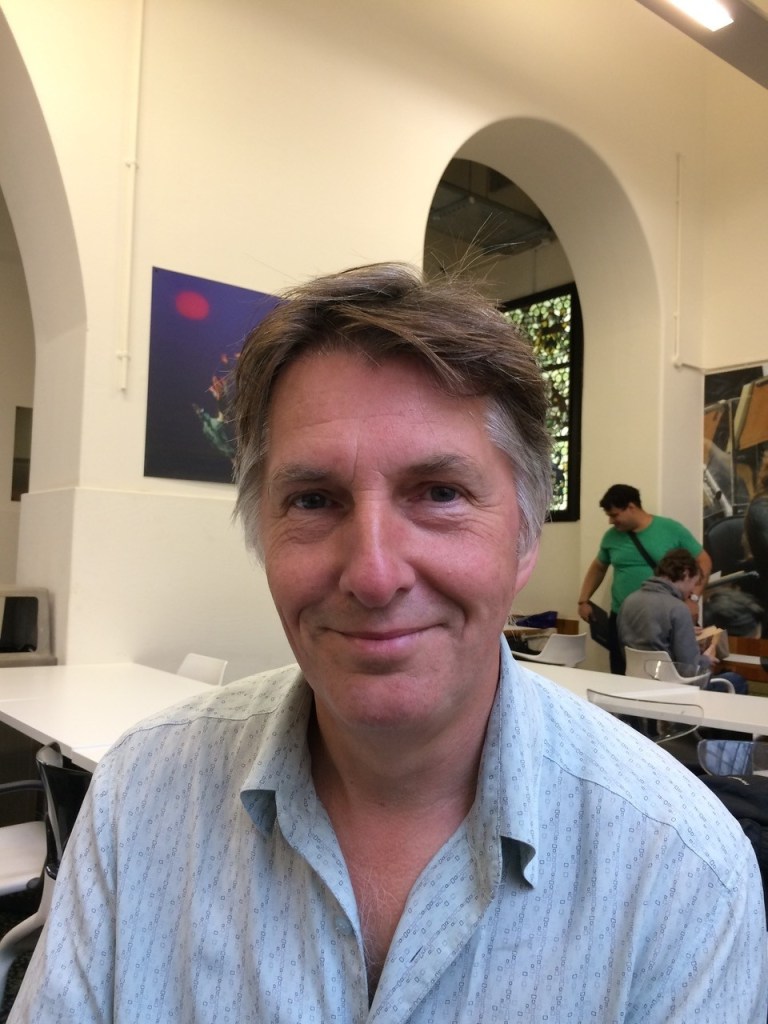
Photo credit: Jonathan Bean, Lancaster Litfest


I am delighted to introduce our June guest poet Ian Seed. We met on a writing course where Ian was the guest reader on the 9th of December 2019. I know the exact date because I bought a copy of his translation of The Thief of Talant by Pierre Reverdy and Ian wrote a dedication for me ‘sometimes it’s nice to be a stranger’.


You’ll find Ian’s biography below the four poems. These are from his recent collection Forgetfulness, ‘tragicomic navigation of different forms of loss’. It is beautifully produced by Shearsman Books. Caroline Bird writes: “Ian Seed allows us to ‘stay inside the asking’’, inside a dream half-dreamt, a loss mid-grieved. His elegies expand like half-lit corridors, leading to new selves – or old selves we have forgotten, their ‘cigarettes glowing in the oncoming evening’.”


The collection is in four sections. Section 1 opens with Scattering my Mother’s Ashes – a sequence of nine prose poems. This is followed by the title poem Forgetfulness. Section 2 includes the numbered sequence Jugglers and poems laid out in stanzas, like Unscripted. Section 3 has 20 prose poems of varying length. I found it very hard to choose, but here are Pastoral and Relations.

Forgetfulness

Walking up the mountain, I see my mother sitting on the café terrace of her new care home. She’s looking remarkably young – her hair’s been dyed its old dark colour and someone must have applied a lotion to make her skin all smooth again. Yet she still has that look in her eyes of not knowing where she is anymore. I doubt she will recognise me, but she greets me by name. I tell her I’m on my way to meet a friend at the top of the mountain – I can’t stop for long. She nods, though I’m not sure she’s understood. Deep down we both know she’s no longer alive, but neither of us can bring ourselves to say so.

Unscripted

A heavy snow. The film eyes
of a stranger. This street is absent
from the story of the city

which I cannot recognise, though
my body’s memory can read
its twists and turns, its lines

broken through movement. The shape
of this snowflake resists
the tyranny of completion. I

is the space of the abandoned
intersection, the recorder motionless
for the first time.

Pastoral
after Max Jacob

The three soldiers in their red uniforms were sitting on the river bank, their long rifles laid to rest on the grass. ‘Soldiers are not handsome in themselves, except they can make themselves look as if they are,’ I declared from my perch on a fallen tree trunk nearby. ‘People may say that beard is ugly, but that’s only because it happens not to be in fashion at a particular time.’ I looked at one of the young soldiers – slim, dark hair, blue eyes, whose name I gathered from their conversation I’d listened to earlier was Tom – and went on: ‘But there are some soldiers who are extraordinarily handsome whatever they wear, whatever the fashion.’ I looked at the other two soldiers. ‘And you too can make yourselves handsome with just a few changes. As for me, I’m out of the game now.’

Relations

My grandfather, who had committed suicide, was in an old-fashioned train compartment with me, lying in my arms. I remembered the softness of his woollen suit from my teenage years. He was just as lost as he had been back then after my grandmother died. He was comforted by my holding him, but not sure who either of us was.

Biography

Ian Seed’s recent publications include Forgetfulness (Shearsman, 2026), My Outsize Hank Williams Cowboy Hat, with artwork by Lupo Sol (Sacred Parasite, 2025), The Dice Cup, from the French of Max Jacob (Wakefield, 2023), The River Which Sleep Has Told Me, from the Italian of Ivano Fermini (Fortnightly Review Odd Volumes, 2022), and New York Hotel (Shearsman, 2018), a TLS Book of the Year. To find out more, go to www.ianseed.co.uk

Birthday Party – poem

Today is the birthday of my friend Kathleen Kummer. After several falls, she is now very frail and housebound.

Kathleen and I met on a writing week with the poet Lawrence Sail at the beginning of the century. She had lived and worked in the Netherlands. We became friends. I visited her in Dorchester and in Devon where she moved, aged 79, to be nearer her two daughters.

Kathleen had a body of work when she moved to Devon, and sent a manuscript to Alwyn Marriage at Oversteps Books. They published her debut collection Living below sea level (2012).

I am deeply grateful to Kathleen for our friendship and our poetry connection. Today I’m posting her poem Birthday Party, showing her empathy and eye for telling detail.

Birthday Party

It’s his fortieth birthday. He’s sitting alone. He seems
neither man, not child, nor anything in between.
When he opens his presents, he’s all of these at once,
and happy. (‘What shall I give him?’ ‘Anything’, they’d said.)

Somehow, he’d made it plain he wanted a fish
on his cake. So on top, a flatfish. It looks like a fossil,
all its bones impressed on the green marzipan. A frieze
of stiff, blue icing ripples round the base.

A family group over there on the leather settee
talks about children at college and moving house.
He gazes through and beyond them, remote as those heads
on Easter Island, but jumps up to blow out his candles.

He’s given a card which reads Happy 30th! (‘He won’t know,
don’t worry.’) His hair is receding – he’s beginning to look like
his father, who tomorrow will take him back to the Home
where he has his bedroom and bathroom en suite. (‘Very smart!’).

Life expectancy begins to fall – guest poet


I’m very pleased to introduce this month’s guest poet Tom Sastry. His collection was published to its usual high standards by Nine Arches Press in 2025. The striking cover ‘Half Full’ is by Tom Denbigh, 2025. It’s a contemporary woodcut of the 1607 Bristol Channel Flood image.


Tom Sastry has published one pamphlet and three collections. Carol Ann Duffy said he “makes friendships and love affairs new and strange” and Hera Lindsay Bird call him “a magician of deadpan”. His poems have appeared in The Guardian and Poetry Review. His latest book is Life Expectancy Begins to Fall is described by Jonathan Edwards as “the most important – and certainly the most entertaining – book about the end of the world I’ve yet found”. Tom himself describes it as the perfect birthday present for someone with a sense of humour about their mortality.


The title poem – a sequence of six titled poems, each consisting of six couplets – is at the core of the book. It is linked to the Covid-19 pandemic and government decisions.


The collection is also a short master class on making titles work:

  • How to tell the apocalypse is happening when you get all your news from Instagram
  • Navigating the Peri-Apocalypse with Radical Self-Care
  • The preserved body of a billionaire slowly defrosts in a devastated world


These are strong poems in a variety of form, length and layout. In among the titled poems are untitled poems of six lines in italics. They create a change of tone and voice. The white space gives the reader a chance to catch their breath. Here is an example:

Everyone loves the end of the world
 
We all hope to enjoy the apocalypse 
from a distance. A good storm 
spares the roof but rattles the glass.  
Children know: destruction is funny, sometimes beautiful.

A distant inferno would enchant your night 
if you saw it from the next coast. 
So much torment is shut away, you might even be comforted 
by a Hell with space for your friends. 

We build great telescopes to watch stars die 
send divers to explore drowned cities, give prizes
for pictures of flaming sinkholes 
or bones bleaching by a dry lake. 

An old man reads of a decade he won’t see 
lethal heat, scarcity of food. 
It aches softly, like a sunset.
A new desert at the edge of town, some murders on the news. 

If the world is broken, let it be final:
a vengeful or careless god
snapping continents like biscuits.

What I fear is a Next Day.
The sweeping up and the reckoning.
The sobriety. The resumption.

As I was preparing this post, Tom wrote to me: ‘You can be pessimistic about the drift of world-historical events and still hopeful about human nature and human connection. You can be hopeful about what might happen next week or about the reception of your friend’s new book.  There’s no link between optimism and virtue or between pessimism and cynicism. So that’s really the moral centre of the book – the belief that an age of pessimism doesn’t condemn us to live mean lives. We can live well as pessimists.’

Three more poems from this collection described as ‘part-elegy and part-satire’.

Nothing to do but play cards

If it’s too late to start cathedrals
or trust in a forty-year pension plan

too soon
to snatch the thing to hand
in the name of survival

if we’re too honest
for self-sufficiency
or heroism

and our giddy hours don’t come

if the deed
in our small reach
has no resounding name

let’s call it with our silence
let’s shuffle it again.

Hope buys an absurdly expensive woodland burial plot

She is excited to be rendered
by fungi into tree-food. I feel a sharp
sadness when she says it. I check
it was not an urgent purchase
then ask questions. I learn
the particulars of the site and the price
smile at her joyous cycle of life
and secretly, inwardly
devour it with my scorn.
Life is a guzzling machine
forever eating itself.
Hope – your people need you.
Don’t give up on us.

An increasing incidence of extreme weather events

We watched the charts all week
as the old hurricane’s great lash
curled back across the ocean, not weakening
until we saw Bristol in its path.

The police told us to leave
for the nowhere we had to go
in the nothing we had to get there.
They would take the gloves off for looters.

Abandoned people are always crazy
like a fool who squares up to a storm.
Crazy like us, on the roofs of Easton
waving at the news helicopter

as the studio repeats the warnings
we were apparently ignoring
when we walked onto the M32
in a world already shaking and tearing

for a woman desperate to pass her child
into the mystery of a stranger’s car
which was crammed to the corners
with the old necessities of home.

Panorama Mesdag – favourite museum

Panorama Mesdag, Scheveningen village with The Hague in background. Credit: T Duijndam.

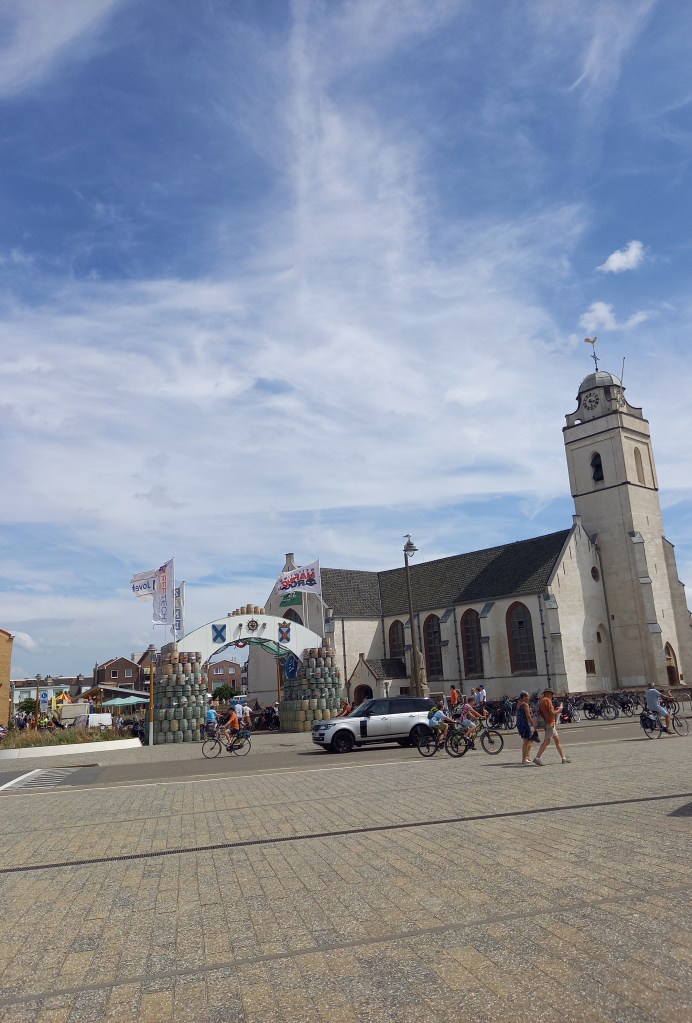
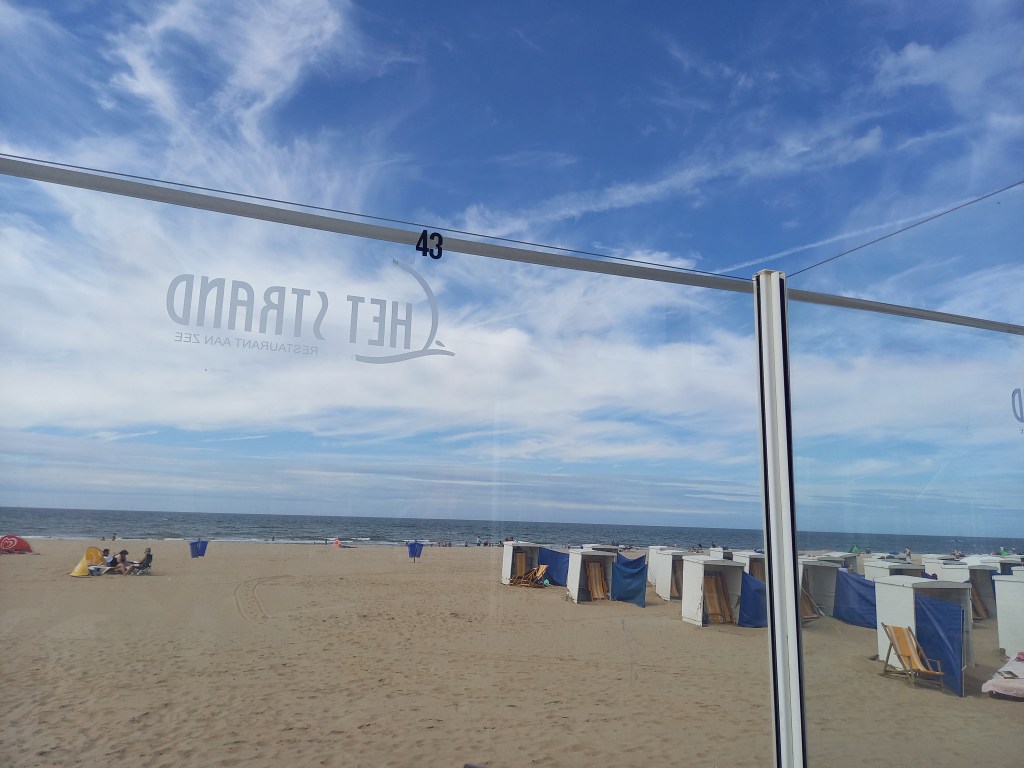
Recently two friends were over from the UK – a Seville reunion. They stayed at Scheveningen, minutes from the beach and boulevard. It was mostly sunny. I pointed out some sights: the red lighthouse, the building with the green shutters, and Seinpostduin – the high dune on which the painter Hendrik Mesdag sat in 1880 to make the preliminary sketches for the commission he’d received for a 360-degree painting.

At one time there were many panoramas. They were expensive to maintain and once photography and film were available, people’s interest declined and most were demolished.

Panorama Mesdag, The Hague (1881) is the world’s oldest surviving panorama in its original location. The painting is over 14m high, has a diameter of 40m and the circumference is 120m2. That makes it the largest painting in the Netherlands.

Scheveningen was then an independent fishing village with its own clothing and dialect. There were about 500 houses and people lived from herring fishing.

When he got the commission, Mesdag was already well-known for his seascapes. Several of these are shown at the Panorama. He wanted the sky to look as though it was the weather on one single day. He made many sketches, also of the houses which were transferred to canvas using a grid. The original glass cylinder in which he sat is shown at Panorama Mesdag.

The Panorama commission was a massive job and Mesdag was fortunate to be able to put a team together: his wife Sientje Mesdag-van Houten who was an established painter in her own right, Théophile de Bock who painted the sky and dunes with broad brush strokes, Bernard Blommers, and George Hendrik Breitner who specialised in painting horses. Mesdag himself focused on the sea and the flat-bottomed boats on the beach.

It took them four months to complete the work. Instead of a signature, Mesdag painted Sientje. She sits on the beach painting under a white parasol. Panorama Mesdag opened on 1 August 1881.

It’s an astonishing experience – come up the wooden staircase and suddenly you stand on the viewing platform: scenery all around you. There is so much rich detail: dozens of boats, horses pulling in the boats, cavalry horses, the sky, the women out with their washing, bathers, the steam train on its way from The Hague, birds.

Because of the glass roof, the weather changes as you are there, and the illusion is complete because the platform is surrounded by real sand with objects on it. You are standing on Seinpostduin, more than 140 years ago.

My thanks to David Cooke, Editor of The High Window, where this poem first appeared.

Panorama Mesdag

Invisible skylights let through the light.
Just as I arrive upstairs, the sun comes out
across the busy beach I know so well.

All those horses. In two neat columns,
the cavalry on exercise, heading south.
Other horses pull the flat-bottomed boats
onto the sand. Fish is being sold straight
from the boats. Women are repairing nets.

Mesdag’s wife has been included.
I know where to look for Sientje, painting
in a folding chair, striped sunshade.

Am I hallucinating the sound of gulls?
I see the seams in the canvas, and I don’t care.
As I go round the wooden platform, here
is the washing laid out on the grass,
a plume of smoke, the empty clog.

Interior with a Table – competition success

My poem Interior with a Table has been awarded equal Fourth Prize in the 2026 Kent & Sussex 2026 Open Poetry Competition. I was delighted, especially as the competition was judged by Mimi Khalvati. She describes the poem as a ‘sensitive example of ekphrastic poetry’. You can read her Judge’s Report here.


The poem was inspired by the 2021 painting of the same title by Vanessa Bell. The date put me in mind of WWI which enters the frame.

You can read the poem here.


Congratulations to the other winners. Most of their poems are already on the website. Jonathan Edwards was awarded the First Prize. His lovely poem My Father Sits his Driving Test’ will appear shortly.

Metamorfosen – poetry


Poëzie Week ran last month in The Netherlands and Flanders, the Dutch-speaking part of Belgium. Events were arranged in libraries, bookshops, schools, etc.


If you spent at least 12,50 Euro on a poetry book, you’d receive a copy of the poetry pamphlet Metamorfosen, written by poet Ellen Deckwitz specially for Poëzieweek and published by het Poëziecentrum, Gent.


Op = Op. So, I dashed to the nearest bookshop and checked at the till copies were still available. You’re not surprised to learn the poetry section was small, but I found the new collection Tussen mij from the poet and artist Maria Barnas, just published .


Ellen Deckwitz is a tireless ambassador for poetry: daily podcast for a radio station, columns, visits to schools and colleges. Her Eerste Hulp bij Poëzie (Poetry First Aid) is an accessible introduction to contemporary poetry. Her poetry has been translated into several languages, and she has received several Dutch awards and in Italy (Premio Campi).


I listened to a short interview she did with Hanna van Binsbergen (monthly podcast of het Poëziecentrum). Some of her poetic influences are Tomas Tranströmer, Sylvia Plath, Ted Hughes, Osip Mandelstam.


She talked about the unrealistic demands placed on romantic love and how friendships have increasingly become important. The nine metamorphoses in the pamphlet challenge the cliché of romantic love, our need for some significant other:


Ooit droomde je van een mens voor jezelf.
Iemand die je geliefde, je ouder, kameraad
of leider kon zijn.


Once you dreamt of a human for yourself. / Someone who could be your lover, your parent, comrade / or leader.


Transformation and metamorphosis as often seen as positive events: the pupa turning into a butterfly, catharsis leading to rebirth, renewal. Deckwitz reminds us that in Ovid’s Metamorphoses many of the metamorphoses do not turn out well – Icarus, Narcissus.


Romantic relationships can be violent: the facts are often also just pleasant machetes – en feiten zijn vaak ook gewoon / prettige machetes.


The person ending things with ‘Sorry, maar –’ changes into an earthworm, while the one left behind ‘jumped furiously up and down in his underpants’ – ‘sprong woedend op en neer in zijn onderbroek‘.

Writing Prompt:


How do you view metamorphosis?
Have you used any myths to inspire your writing? Or folk tales, fairy tales?


I drafted the poem Snow woman on a workshop. When I read through the notes, I realised it refers to the myth of Sisyphus. The poem first appeared on Atrium.

Snow woman

My father didn’t give up.
For many years, he kept going.
He carries the white with bare hands,
rolling the fresh snow uphill.
He shapes and sculpts roundness.

The snow woman stands in the shade,
so my mother has a greyish tinge
from the outset. Six small coals
give her a static smile. She does
not want to live in the shadows.

During the night, sometimes,
her silk scarf disappears. He buys
her new ones. Winter is their season,
spring follows. It’s warming up,
and a long, long time till summer.

My father never asked for help.
Mother starts shedding, and now
she is snowing words, words, words.
It’s soon a white-out.

Riddles – writing prompt


Most of January I was on Lanzarote. I was unwell, so I spent much of my time reading in the Piano Bar of the hotel. Here is a view from the balcony. In the distance is Fuerteventura.

I also forgot about posting the answers to Vasko Popa’s riddles which I posted in December. The riddles are from his collection The Golden Apple, 2010. It’s a round of stories, songs, spells, proverbs & riddles that Popa himself selected from various anthologies of Serbo-Croatian folk literature. Here are the riddles and their answers, followed by another riddle.


Riddles

  1. In one room both bone and flesh grow.
  2. I stretched a gold thread through the wide world and wound it up into a walnut shell.
  3. I shake a tree here, but the fruit falls half an hour away

Answers


1 Egg
2 Eyesight
3 The sound of a bell

    Photo
Photo credit: stevepb via Pixabay

Riddle


With an iron key
I open a green fortress
And drive out the black cattle

Canada is as far away as bibles are – poetry

I was very pleased to see my poem Canada is as far away as bibles are on After. Many thanks to Editor Mark Antony Owen. You can read the poem here.


After publishes ekphrastic poems and my poem was inspired by The Avid Reader, 1949. Rodney Graham (1949 – 2022) was a visual artist, painter, and musician. He made the lightbox in 2011.


We see the middle-aged man / carrying a hat, smoking a pipe, / because Graham inhabits him.’


The Avid Reader, 1949 was one of the works on display at Voorlinden Museum, Wassenaar, the Netherlands in the major exhibition of Graham’s work titled That’s Not Me. An ironic title as Graham appears in all the works – as a builder having a smoke, a lighthouse keeper, historical figure.

Voorlinden is a fabulous museum – more about it some other time.


I was struck by the attention to detail and the scale of the works. The woman is ‘his wife, swing coat, high heels, walks past on the right.’

Having the last word – guest poet

credit: Monika1607 via Piaxabay


Cliff Yates was our guest poet last November. You can read the poems here. As I was going through his New & Selected Poems (The Poetry Business, 2023) to select a set, I came across the poem below.


It’s even sweeter on Valentine’s Day…

from Another Last Word

EXPENSIVE CHOCOLATE

There are eight pieces. She has two
and gives me one. ‘Confiscate this,’
she says, handing over the rest.
‘Hide it, or I’ll be tempted when you’re out.’
When I get back, the drawer’s open,
there’s one piece left, and a note
on a scrap of paper: NOT VERY WELL HIDDEN.

CLEARING UP

She’s cooking Sunday lunch and I’m clearing up.
‘It’s ridiculous,’ I said, ‘you spend time
getting things out of cupboards
and I spend time putting them back in.’
‘Not enough time in my opinion.’

BIRTHDAY

‘You’re being nice,’ she says, ‘you’ll be running
out of steam soon. You’ve been nice
since 7 o’clock, that’s 3 hours, 10 minutes.’

DANCE

‘It’s great the way we dance around each other,’
I said, ‘when we’re getting the meal on.’
‘We only do that because you get in the way.’

SATSUMA

‘I can’t be bothered with this satsuma.’
‘Give it here,’ she says. ‘Can’t peel a satsuma,
can’t peel an egg. We’ve been married how many years,
and I’ve made no progress with you whatsoever.’

WRITING

‘I had to work on that one,’ I said, ‘because
you didn’t actually say that. I am in fact
writing these poems.’ ‘That’s what you think.’

ENTERTAINING

‘Some of these make me sound terrible,’
she says. ‘It’s because you find me so entertaining.
It makes me worse when you start laughing.’

LUNCH

‘Apart from the salad and potatoes,’
I said, ‘what did we have for lunch?’
‘If you can’t remember what we had for lunch
I feel sorry for you.’

GETTING IT RIGHT

‘I’ll get it right one day.’ ‘I doubt it,’ she says.
I laugh. ‘It’s not funny really, is it?’
‘No,’ she says, ‘but at least you’re hopeful.’

PHILOSOPHY

‘You’re too hard on yourself,’ she says,
‘when I wake up I just want a cup of tea
and then I want to be entertained by life.’

FISH

‘What we need is a special pan for fish
and a fish spatula.’ ‘No,’ she says,
‘what we need is for you to eat fish.’

COLOURING PENCILS

She’s at the kitchen table, going at it
with her new colouring pencils.
‘I had some when I was little,’ she says,
‘but I was never let loose. It was always
What’s THAT supposed to be? or Where’s the SKY?

Photo credit: Andrew Taylor

Biography

Cliff Yates was born in Birmingham and has been publishing poetry since the 1980s. His New & Selected Poems (Smith/Doorstop, 2023) brings together work from various collections including Henry’s Clock  (Fenton Aldeburgh First Collection Prize; Poetry Business Book & Pamphlet Competition), Frank Freeman’s Dancing School (Arts Council England Writers Award) and Jam (ACE Grant for the Arts). He taught English at Maharishi School in Skelmersdale and wrote Jumpstart Poetry in the Secondary School during his time as Poetry Society poet-in-residence, following the success of his students in poetry competitions. He has led courses for, among others, the Arvon Foundation and the British Council. Read more on his site here

wetting the ink…guest poet

It’s a great pleasure to introduce this month’s guest poet Julie Mellor.

Julie holds a PhD in creative writing from Sheffield Hallam University and has published two poetry chapbooks with Smith/Doorstop: Breathing Through Our Bones (2012) and Out of the Weather (2017). In 2019 she became interested in haiku, and since then her haiku and haibun have appeared in Blithe Spirit, Frogpond, Modern Haiku, Presence, The Heron’s Nest and Tinywords, as well as two Red Moon anthologies. She recently retired from a career in education, and enjoys walking her dog, attending art classes and playing the banjo.

Here are recent haiku and a haibun with their publication details. You can find more of Julie’s writing on her site here.

Modern Haiku 54.3 (Autumn 2023)

toe-hold weeds
things that were said
years ago

Blithe Spirit 35:2 (May 2025)

long night joining the dots between stars

The Heron’s Nest Summer 2025

wetting the ink
a ghost orchid blooms
from its painted stem

Presence issue 82 (Summer 2025)

morning moon
beside the fretless banjo
pistachio shells

BHS Hope anthology 2025 (ed Neil Sommerville)

butterfly summer
I write a letter
to my future self

Presence 73 – Summer 2022 – and included in Contemporary Haibun 18 (Red Moon Press, 2023)

The Coffin Path

Grass, waist high this morning, and wet with last night’s rain. Brushing past it, my jeans wick the droplets from seeding cock’s-foot and brome. No one else walks this way. Behind the hawthorn hedge is the cemetery. People tend to use the other path, the one that the council mows. Or else they drive – ‘to save their legs’ my mother says. Some days she says she wants to be buried. Other days, she thinks she’d prefer to be cremated and have her ashes scattered next to a memorial bench. No rush to decide, I tell her, trying to make light of things.

elderflowers
pressed in her prayer book
a recipe for wine