Tag Archives: education

The Journal of Imaginary Research


Once, a long time ago, I was an academic psychologist. The Journal of Imaginary Research publishes short works of fiction in the academic genre of the Research Abstract. A poet friend and academic mentioned the journal to me last year.

I was chuffed the editors accepted my piece of imaginary research for issue 11 (2026) which has ‘Shrinkage’ as its theme. There are 58 fascinating abstracts from a range of disciplines. The issue is free to download here.


I also had great fun composing the biography. My alter ego is Dr Melody Rowe.

The impact of childhood belief on adult ability to shrink objects
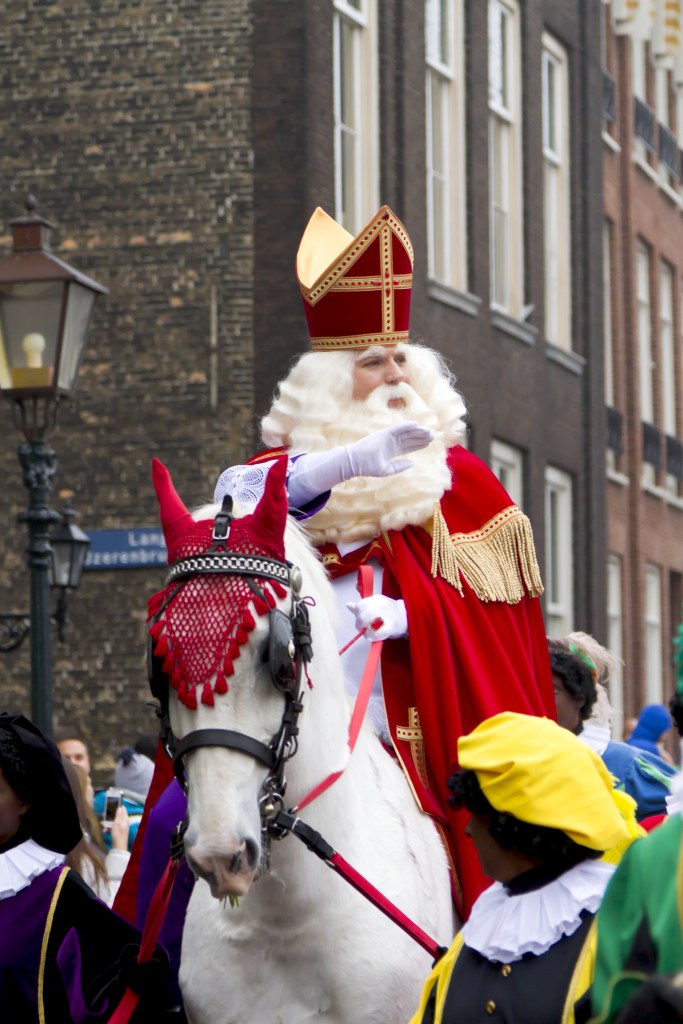
Photo credit Shutterstock 119440741

Abstract

The Netherlands is one of the most densely populated countries in the world. Its inhabitants are taking up more space (obesity). Tiny houses are becoming more popular. It might be beneficial if other objects could be shrunk too (Bottema, 2020).

Most Dutch adults have experienced seeing white horses during December: St Nikolaas uses a white horse for transport. His horse needs to reduce in size rapidly to descend chimneys and leave presents by the fireplace.

It was hypothesized that adults who lost their belief in St Nikolaas at an early age would either be unable to shrink their hobby horse, or take significantly longer to do so, compared with those who held on to their belief longer. Parameters for ‘early’ and ‘late’ loss were established across gender and age. Participants were allocated to groups accordingly. They were presented with a sequence of visual stimuli (images of white horses in different settings) and then instructed to shrink their hobby horse until it fitted within the confidence interval. In countries where Father Christmas and reindeer are significant seasonal characters, the principle of generalization predicts similar results.

Biography

Dr Melody Rowe is a very cross cultural psychologist with a PhD in the luminosity of liminal and ‘thin’ places. They are the Niobe Professor at the University of Tuonela where they continue to conduct ground-breaking research in the oral transmission of swan songs and the impact of trans-generational inheritance of boundary markers. They are Visiting Professor at the University of the Styx where they oversee post-doctoral research. They have published widely in their chosen field and are the author of the best-selling guide Love or leave a liminal place (Nemo T Press, 2016) which was translated into 14 languages.
The best years of our lives – guest poet

To celebrate my friend Kathleen Kummer’s 94th birthday, here is a poem from her debut collection Living below sea level. Poems from the book have featured on the blog before. The cover image is by Shirley Smith, Society of Wood Engravers.

Kathleen’s father was a coal miner. She went to Cambridge to study Modern Languages. She met and married a Dutchman. For several years Kathleen taught French and German at an International School in The Netherlands.

Happy Birthday, Kathleen: Van harte gefeliciteerd met je verjaardag.

The best years of our lives

Passing under the neo-Gothic
redbrick arch, the original bluestockings?
Not quite, but close enough to be given
the run of the Fellows’ drawing room
to sip our pre-prandial sherry, held
in hands we remembered curled for warmth
round mugs of cocoa. The cold tiles loud
with echoes, we followed the murky passage
to Hall, the swimming-pool’s proximity
still worrying, potent with the imagined
smell of bleach. The dinner was,
as expected, reassuringly bad;
the rooms were bleak, the unfamiliar
duvets thin, cot-sized; resilience
was needed for the nocturnal trek to the bathroom.
But none of this detracted one jot
from the utter, heartfelt certainty
that those had been the best years of our lives.

Taking other routes – a poem

Rock church, Lalibela – Heiss via Pixabay

With my birthday coming up, I am posting a poem that celebrates key experiences in my life. These include visiting Lalibela in Ethiopia in 2007, travelling with the friend who set up the Lalibela Educational Trust, to meet the boy I sponsored and his widowed mother. My parents – a church organist father and semi-professional singing mother – did pass on the creative gene, for sure.

Thank you for liking these posts and for following my blog!

St Mark’s Venice – Hermann via Pixabay

Taking other routes

My parents never taught me to swim; didn’t take me skating
on those Christmas-card frozen canals. I have never
been famous, but I have sung in Burgos and Florence,
Vespers in St Mark’s. My singing has made grown men cry.

I have not travelled on ferries, floating from one Greek
island to another, forgetting the name of the day.
I have never stroked a giraffe, nor given birth to a baby boy.
But I have picked redcurrants from the back garden, sharing
rich crops for over twenty years with small black birds.

In Ethiopia I have a son and I sat with him in his Physics class.
And for a few years I was a sailor, snatching a few hours
in Sydney, shopping in Hong Kong. I danced in a grass skirt
and flew across Alaskan glaciers with the man I loved.

Knitting – poem and writing prompt


bike-247394_1920 (1)

Photo credit: cocoparisienne via Pixabay

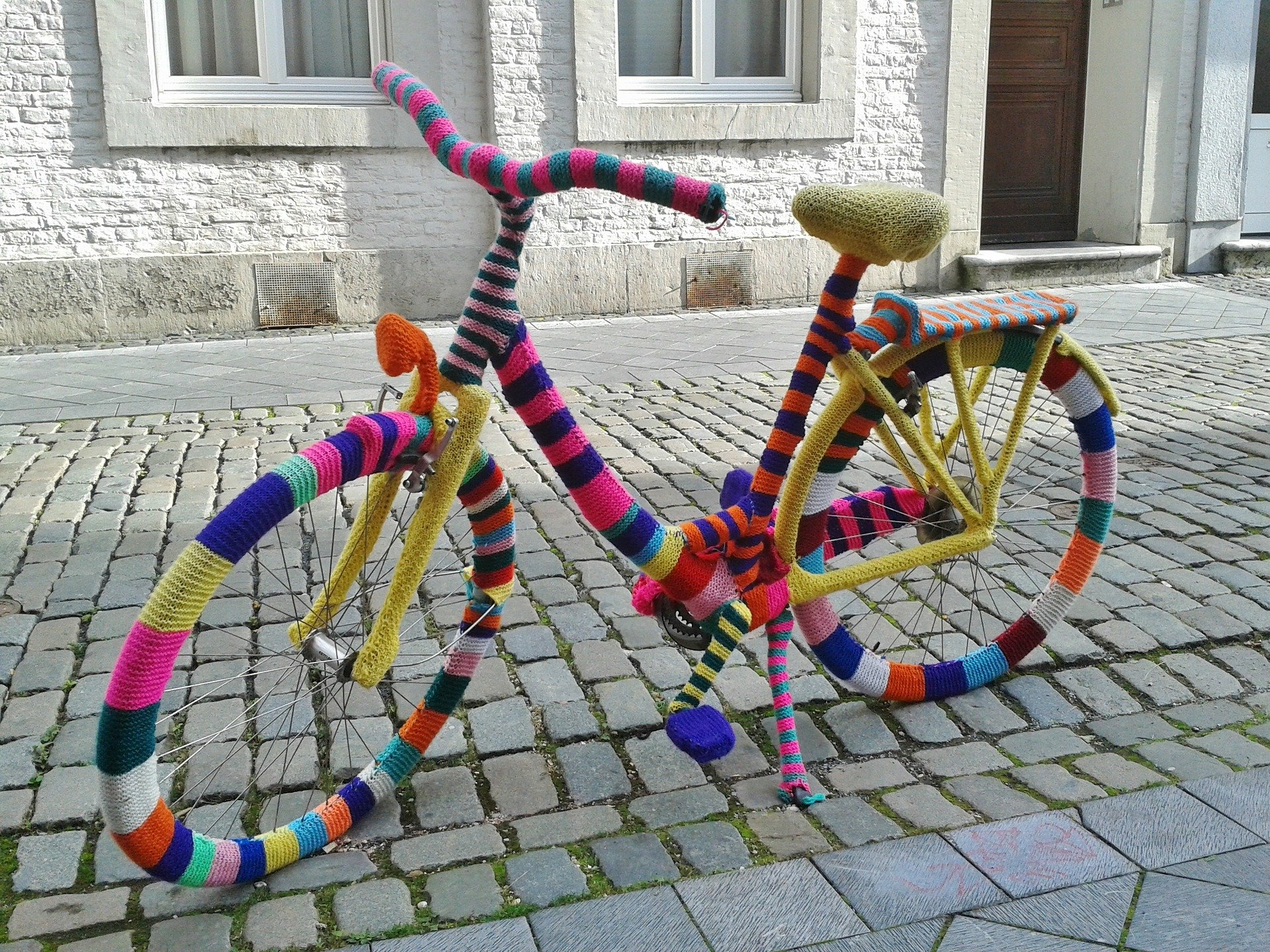
In this region, schools will start tomorrow. Everywhere, there are large white banners up reminding drivers that children are about, on foot or on their bike. For various reasons, I don’t have good memories of my time at primary school. When I think about knitting, or see someone knitting, my stomach contracts. But, don’t you love the bike?


knit-869221_1920

Photo credit: Foundry Co via Pixabay

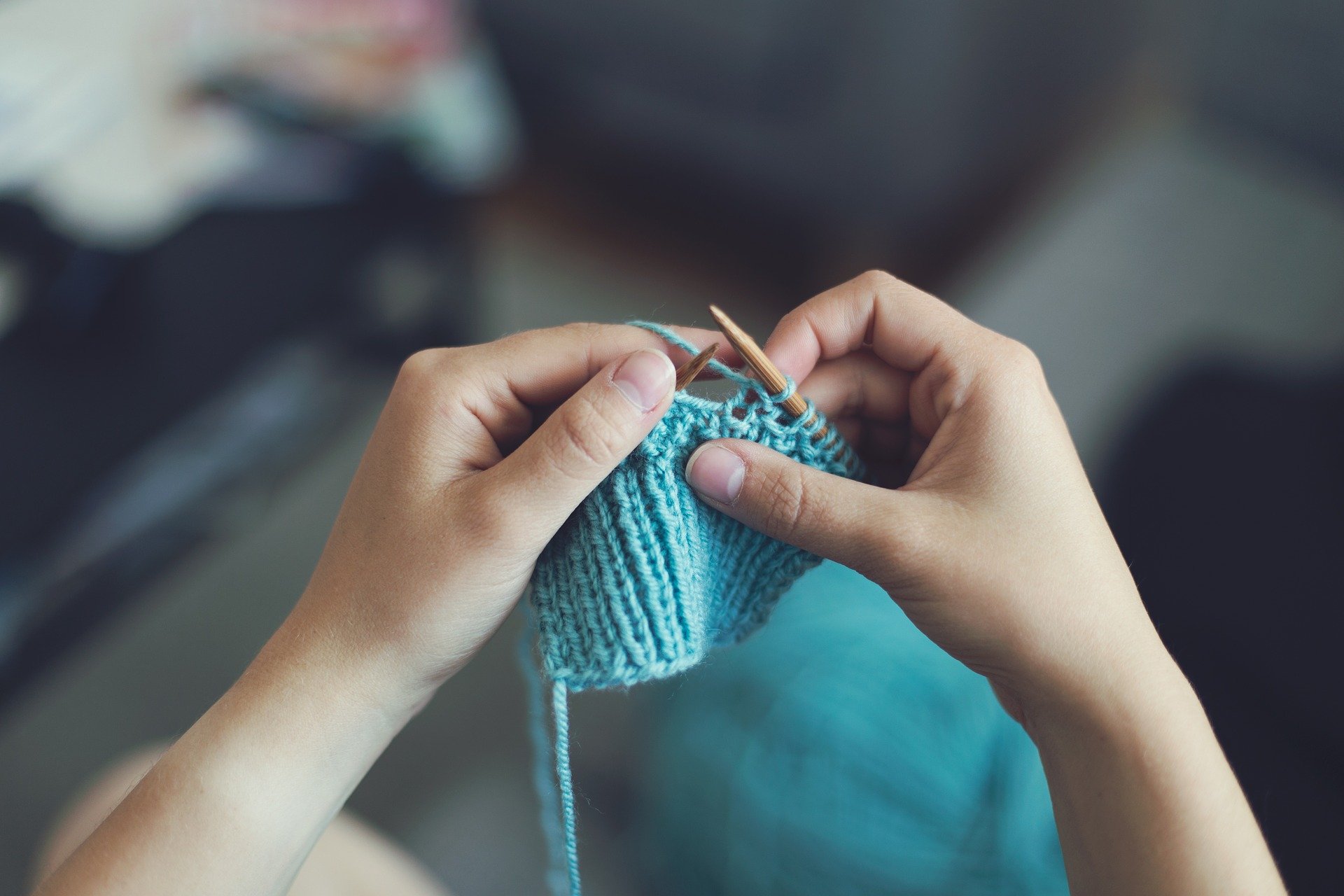
Did you knit this yourself?

It would have been a morning.
Glasses, graying hair in a bun,
typical spinster teacher.

Why ask a question to which you
already know the answer?

Because you had never been able
or willing to show me left-handed knitting.

The few centimetres my mother
had added during the week stood out:

too smooth and regular, too clean,
easily done in her click-clack rhythm.

I watched you unpick it, leaving
me sitting with a pile of curly wool.

Prompt: Was there a subject that you disliked or even hated at school? Was it because of the person who taught you the subject? You may well have written a poem or short story about this already. Is there another poem waiting underneath?