Tag Archives: horses

Panorama Mesdag – favourite museum

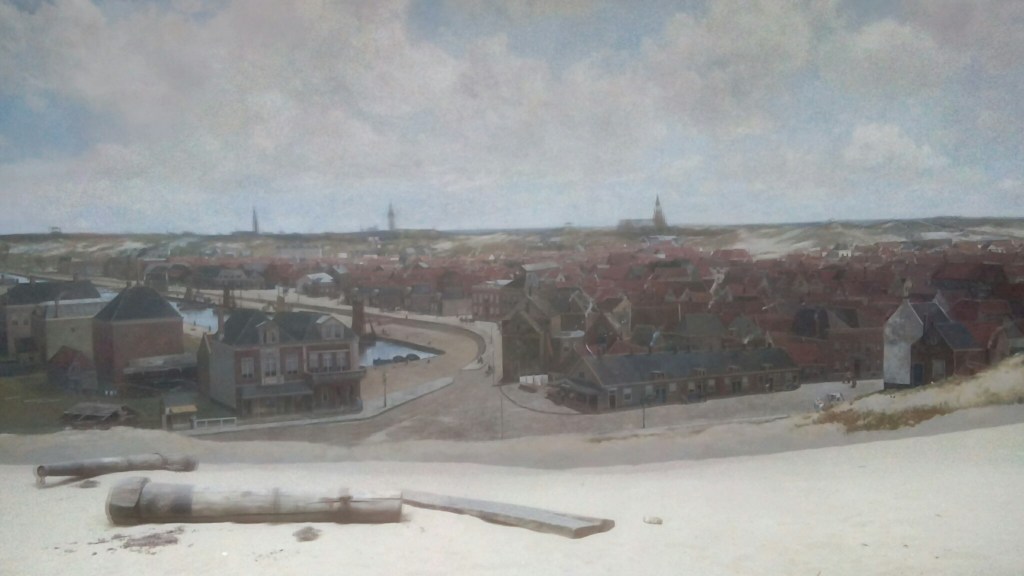
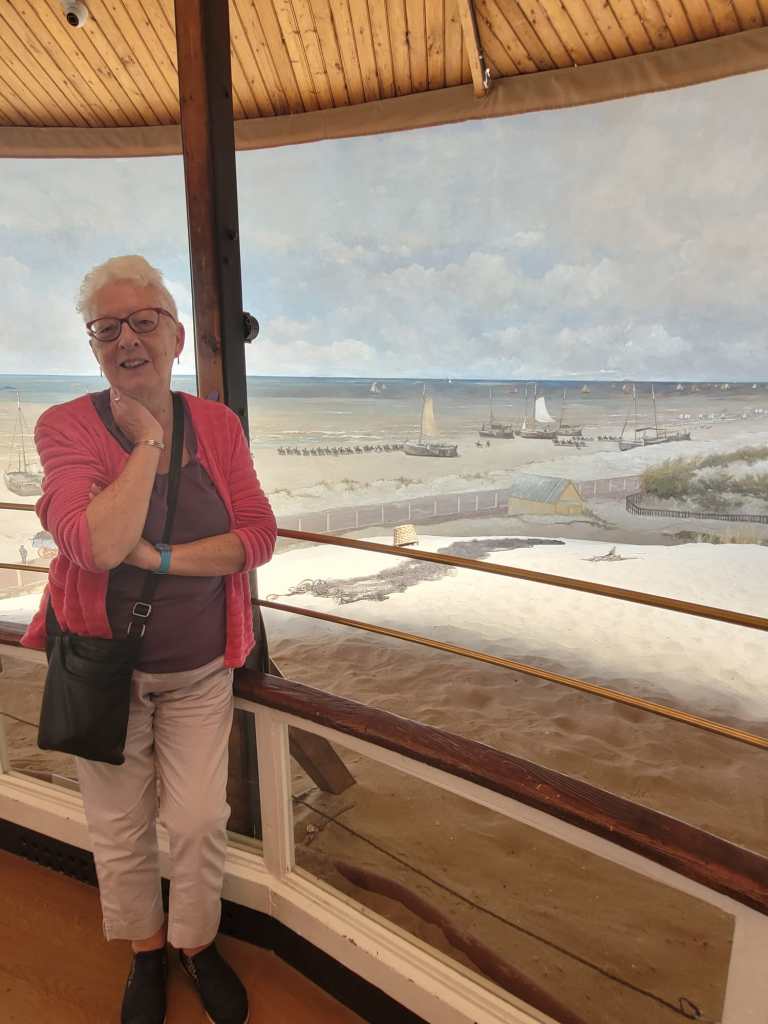
Panorama Mesdag, Scheveningen village with The Hague in background. Credit: T Duijndam.

Recently two friends were over from the UK – a Seville reunion. They stayed at Scheveningen, minutes from the beach and boulevard. It was mostly sunny. I pointed out some sights: the red lighthouse, the building with the green shutters, and Seinpostduin – the high dune on which the painter Hendrik Mesdag sat in 1880 to make the preliminary sketches for the commission he’d received for a 360-degree painting.

At one time there were many panoramas. They were expensive to maintain and once photography and film were available, people’s interest declined and most were demolished.

Panorama Mesdag, The Hague (1881) is the world’s oldest surviving panorama in its original location. The painting is over 14m high, has a diameter of 40m and the circumference is 120m2. That makes it the largest painting in the Netherlands.

Scheveningen was then an independent fishing village with its own clothing and dialect. There were about 500 houses and people lived from herring fishing.

When he got the commission, Mesdag was already well-known for his seascapes. Several of these are shown at the Panorama. He wanted the sky to look as though it was the weather on one single day. He made many sketches, also of the houses which were transferred to canvas using a grid. The original glass cylinder in which he sat is shown at Panorama Mesdag.

The Panorama commission was a massive job and Mesdag was fortunate to be able to put a team together: his wife Sientje Mesdag-van Houten who was an established painter in her own right, Théophile de Bock who painted the sky and dunes with broad brush strokes, Bernard Blommers, and George Hendrik Breitner who specialised in painting horses. Mesdag himself focused on the sea and the flat-bottomed boats on the beach.

It took them four months to complete the work. Instead of a signature, Mesdag painted Sientje. She sits on the beach painting under a white parasol. Panorama Mesdag opened on 1 August 1881.

It’s an astonishing experience – come up the wooden staircase and suddenly you stand on the viewing platform: scenery all around you. There is so much rich detail: dozens of boats, horses pulling in the boats, cavalry horses, the sky, the women out with their washing, bathers, the steam train on its way from The Hague, birds.

Because of the glass roof, the weather changes as you are there, and the illusion is complete because the platform is surrounded by real sand with objects on it. You are standing on Seinpostduin, more than 140 years ago.
My thanks to David Cooke, Editor of The High Window, where this poem first appeared.

Panorama Mesdag

Invisible skylights let through the light.
Just as I arrive upstairs, the sun comes out
across the busy beach I know so well.

All those horses. In two neat columns,
the cavalry on exercise, heading south.
Other horses pull the flat-bottomed boats
onto the sand. Fish is being sold straight
from the boats. Women are repairing nets.

Mesdag’s wife has been included.
I know where to look for Sientje, painting
in a folding chair, striped sunshade.

Am I hallucinating the sound of gulls?
I see the seams in the canvas, and I don’t care.
As I go round the wooden platform, here
is the washing laid out on the grass,
a plume of smoke, the empty clog.
Journey – guest poet

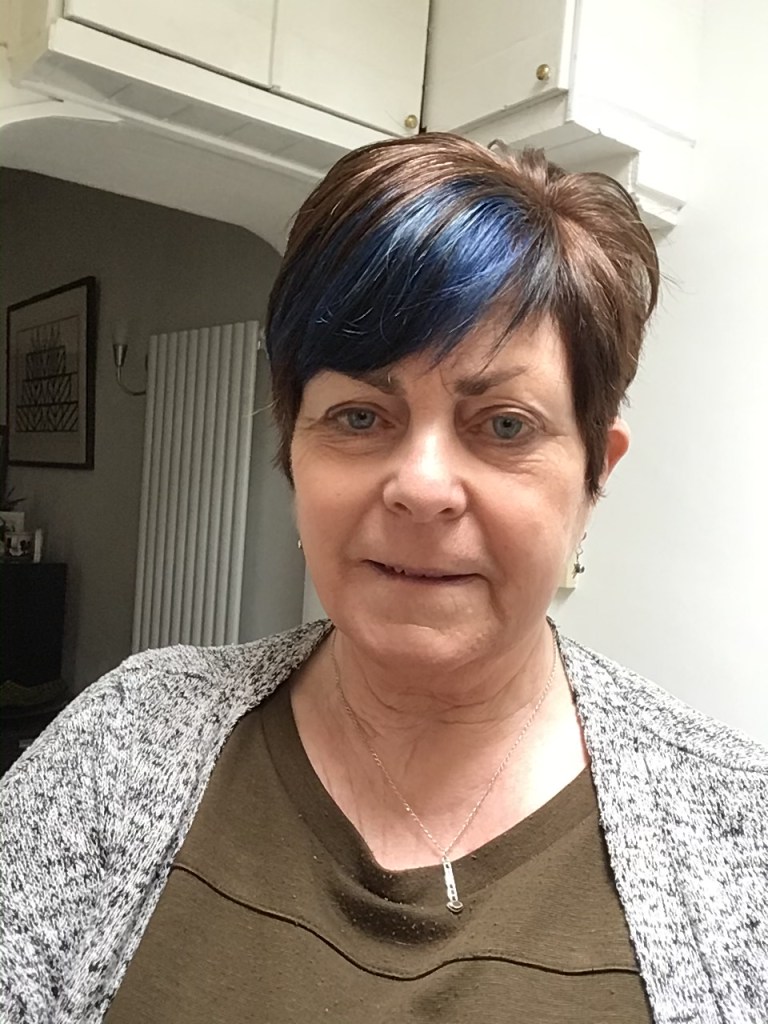
It’s a great pleasure introducing this month’s poet Pat Edwards. We met on Facebook and then discovered we both have a book with Indigo Dreams Publishing.

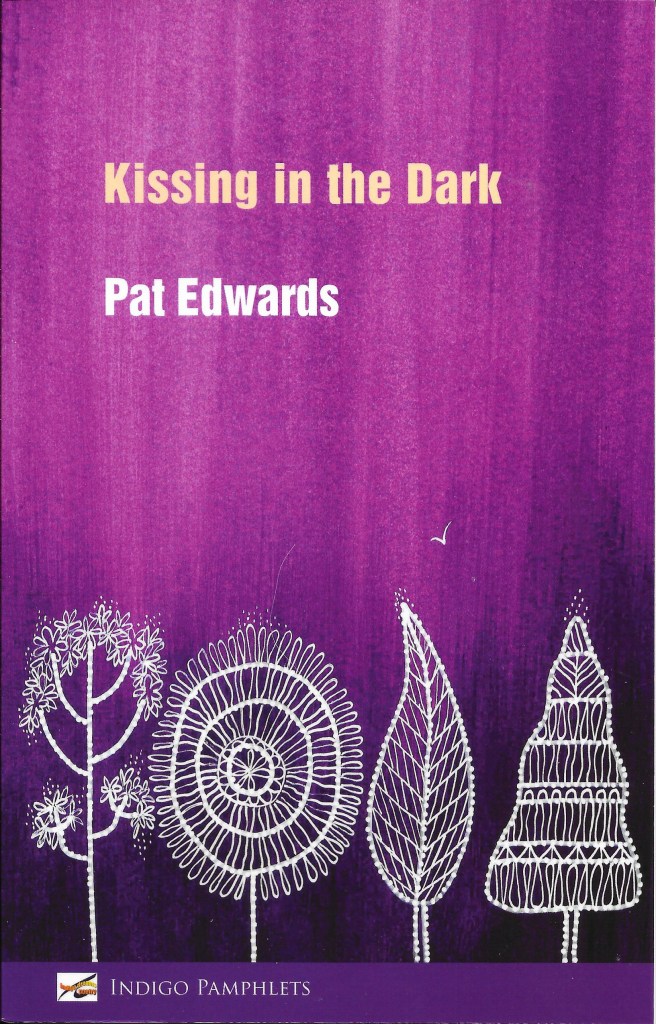
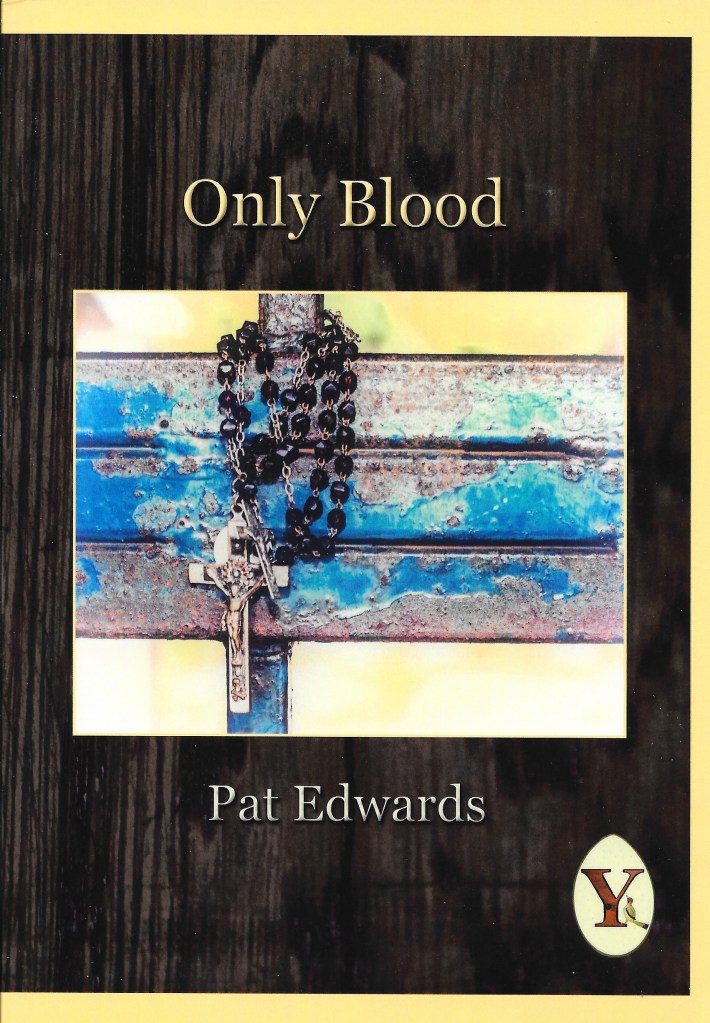
Pat is a writer, reviewer and workshop leader from mid Wales. She also offers a poetry feedback service on her site Gold Dust. Her work has appeared in Magma, Prole, Atrium, IS&T and many others. Pat hosts Verbatim open mic nights during more ‘normal’ times and curates Welshpool Poetry Festival. She has two pamphlets: Only Blood (Yaffle, 2019); Kissing in the Dark (Indigo Dreams Publishing, 2020).

Today is Mother’s Day in many countries. Pat’s dedication for Only Blood reads ‘For Mum and Dad if only we could all try again.’ Here are three poems from Only Blood, followed by Journey, from Kissing in the Dark, in Pat’s honest and compassionate voice.

The year Mum died

She is cutting tiny pieces of foam rubber
to comfort-cushion her feet in pinch-painful shoes.

There’s that look in her eyes, the one I don’t yet understand,
that gives away the cell-division in her breast.

She has a box of keepsakes I’m allowed to sift through:
the silver clasp for keeping sixpences together;
the golden compact that clicks open to reveal a mirror;
the trace of bronze powder that smells like ladies.

Here in 1963 amongst the fullness of her skirt,
I am barely five and only know I love her.

Gems

I want to find my mother’s jewellery,
to lift the lid on a tin box
of paste and pearls;

to find drop earrings that glint,
necklaces that lie on collar bones,
a charm or two for luck.

I want her wedding band,
brooches that once fastened scarves,
all the souvenirs and sentiment.

But I bet the first went to pay the gas,
the second to buy the weekly shop,
the third towards a gambling debt.

Gee-gees

Teenage me always knew when he’d put on a bet.
The channel would get changed,
there would be an urgent tension,
tight as a fist.

We’d sit saying not a word,
for fear speaking would fracture us.
Then, in the closing furlongs,
I’d know for sure.

Dad would bounce on the edge of his seat,
building from a hushed Come on my beauty!
to blatant demand of it.

We would both urge the horse
across the finishing line,
jockey standing in his stirrups,
cracking the whip.

Then the relief.
Let’s get your hair done.
I can buy you a new coat.
As if I was my mother.

Journey

I draw a blue-black line under my eyes,
trace it across the tattoo on my left arm.
I watch it slide down the veins of my leg,
to settle in a grey graffiti pool by my feet.
That’s quite some journey I say out loud,
so the man on the train looks up from
his screen and glares at me like a priest.
My thin mouth flashes a penance smile
back at him and he absolves me I think.
That’s quite some journey I say silently
so the man in my dream looks up from
his book and smiles at me like a friend.
My full mouth offers him a lover’s kiss
which surely changes something I think.
I draw a blue-black line under everything.

They came at night – a war poem

Credit Diane Moss on Pixabay

In the Netherlands, on the evening of 4 May, the war dead will be remembered. Here is my friend Kathleen Kummer’s poem about an event that happened in Holland during the Second World War. Kathleen’s mother-in-law was a published poet.

They came at night

Then there was the night they came for the horses.
There would have been no warning before
the clang of jackboots on the cobbles in the yard
of the outlying farm and the hammering on the door.

By the time they reached the edge of the village,
the farmers were up and had slipped their bare feet
into clogs. Behind the door, they were waiting
for the clattering of the hooves on the road to cease.

Not that there would have been silence as this farmer
moved, if need be at gunpoint, to the stable:
the shifting of hooves, the neighing, the whinnying,
he would know, without finding the words, meant betrayal,

his, as far as the horses knew,
which may be why he came to my mother-in-law’s.
I want that poem you wrote, he said,
that’s being passed round, about the horses.

And now I write mine, seventy years since then,
for when I can’t sleep, I often listen
as the clatter of hooves on those roads in Holland
swells in the peace of a night in Devon.

Here I am walking – poem

trotting-3598639_1280

Photo credit: Digwen on Pixabay


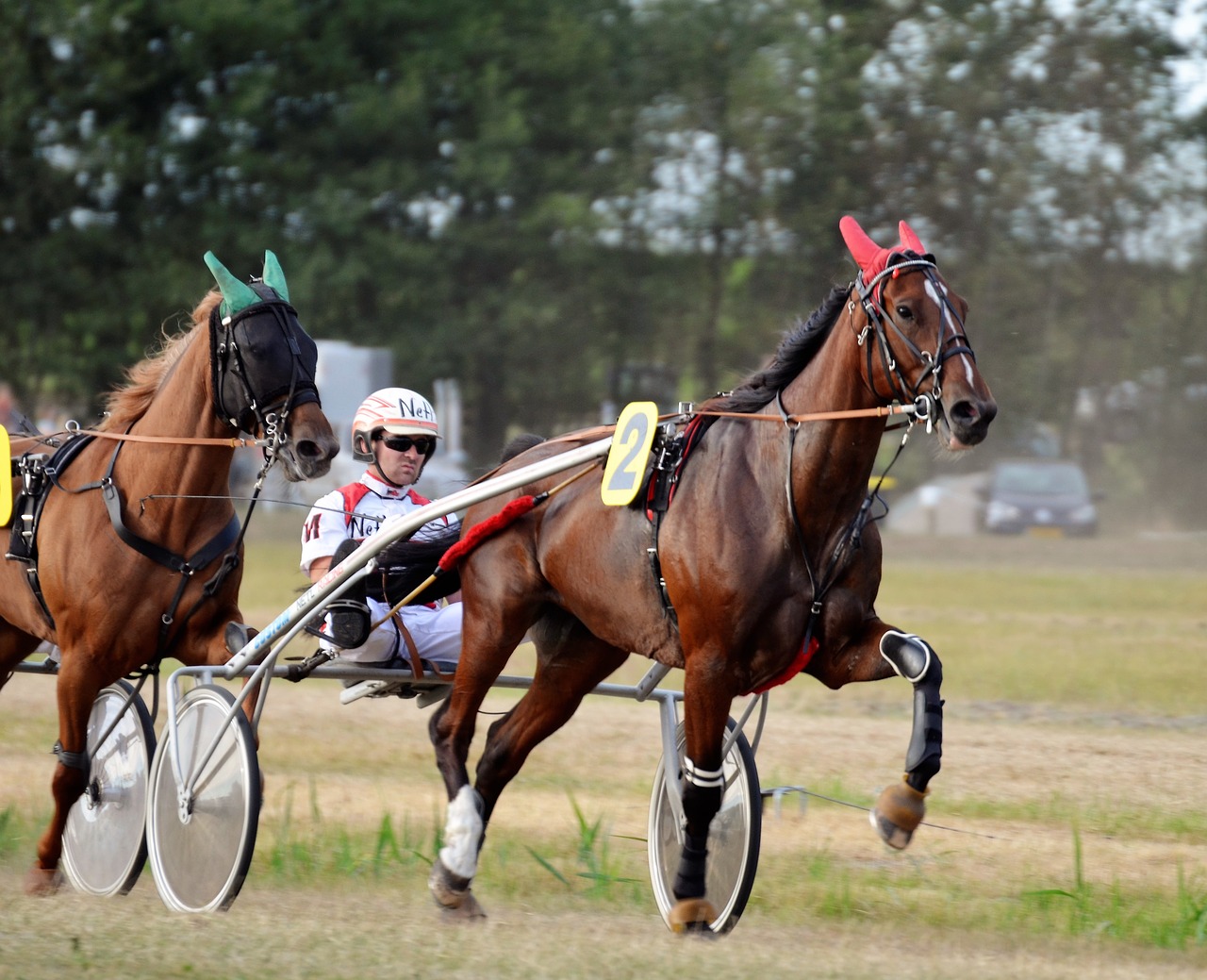
These are my neighbours. Yes, camping Duinhorst backs onto a racecourse. Duindigt opened in 1906. Most of the races held are trotting races, with the jockeys sitting on a sulky as in the picture. Some days I can hear the faint sounds of commentary, or a national anthem at the end of a race. And, very often when I’m out and about I come across horses being exercised. That is where the writing started.  It is the second poem in my second collection Nothing serious, nothing dangerous.

I was going to fly to Holland on 5 April, but things are serious and dangerous. I managed to get a flight out on Wednesday 18 March from Manchester to Schiphol in the Netherlands, and went straight to my caravan. You know from following my blog that I am a Dutch national, long-term resident in the UK. Faced with “social distancing” and a possible four-month’ quarantine, I felt it would be easier in the caravan. It has a small garden and I can go for a bike ride, or a short walk in the nearby dunes – as long as I keep my distance.


Here I am walking …

 
Here I am walking with a small horse.
I found it on the path to the supermarket
where it stood, eyes closed, by yellow gorse.

All this happened a long time ago,
before I was born, before the war,
and the rope in my hand smells of horse.

We can turn to the right, walk over
the dual carriageway, head for the dunes,
four bronze crosses to remember

the war dead and we’ll arrive,
place our feet on the beach
where it’ll soon be night.