
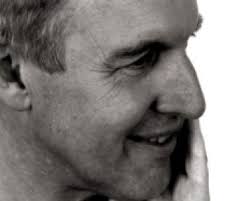
I am delighted to introduce our June guest poet Ian Seed. We met on a writing course where Ian was the guest reader on the 9th of December 2019. I know the exact date because I bought a copy of his translation of The Thief of Talant by Pierre Reverdy and Ian wrote a dedication for me ‘sometimes it’s nice to be a stranger’.
You’ll find Ian’s biography below the four poems. These are from his recent collection Forgetfulness, ‘tragicomic navigation of different forms of loss’. It is beautifully produced by Shearsman Books. Caroline Bird writes: “Ian Seed allows us to ‘stay inside the asking’’, inside a dream half-dreamt, a loss mid-grieved. His elegies expand like half-lit corridors, leading to new selves – or old selves we have forgotten, their ‘cigarettes glowing in the oncoming evening’.”
The collection is in four sections. Section 1 opens with Scattering my Mother’s Ashes – a sequence of nine prose poems. This is followed by the title poem Forgetfulness. Section 2 includes the numbered sequence Jugglers and poems laid out in stanzas, like Unscripted. Section 3 has 20 prose poems of varying length. I found it very hard to choose, but here are Pastoral and Relations.
Forgetfulness
Walking up the mountain, I see my mother sitting on the café terrace of her new care home. She’s looking remarkably young – her hair’s been dyed its old dark colour and someone must have applied a lotion to make her skin all smooth again. Yet she still has that look in her eyes of not knowing where she is anymore. I doubt she will recognise me, but she greets me by name. I tell her I’m on my way to meet a friend at the top of the mountain – I can’t stop for long. She nods, though I’m not sure she’s understood. Deep down we both know she’s no longer alive, but neither of us can bring ourselves to say so.
Unscripted
A heavy snow. The film eyes
of a stranger. This street is absent
from the story of the city
which I cannot recognise, though
my body’s memory can read
its twists and turns, its lines
broken through movement. The shape
of this snowflake resists
the tyranny of completion. I
is the space of the abandoned
intersection, the recorder motionless
for the first time.
Pastoral
after Max Jacob
The three soldiers in their red uniforms were sitting on the river bank, their long rifles laid to rest on the grass. ‘Soldiers are not handsome in themselves, except they can make themselves look as if they are,’ I declared from my perch on a fallen tree trunk nearby. ‘People may say that beard is ugly, but that’s only because it happens not to be in fashion at a particular time.’ I looked at one of the young soldiers – slim, dark hair, blue eyes, whose name I gathered from their conversation I’d listened to earlier was Tom – and went on: ‘But there are some soldiers who are extraordinarily handsome whatever they wear, whatever the fashion.’ I looked at the other two soldiers. ‘And you too can make yourselves handsome with just a few changes. As for me, I’m out of the game now.’
Relations
My grandfather, who had committed suicide, was in an old-fashioned train compartment with me, lying in my arms. I remembered the softness of his woollen suit from my teenage years. He was just as lost as he had been back then after my grandmother died. He was comforted by my holding him, but not sure who either of us was.
Biography
Ian Seed’s recent publications include Forgetfulness (Shearsman, 2026), My Outsize Hank Williams Cowboy Hat, with artwork by Lupo Sol (Sacred Parasite, 2025), The Dice Cup, from the French of Max Jacob (Wakefield, 2023), The River Which Sleep Has Told Me, from the Italian of Ivano Fermini (Fortnightly Review Odd Volumes, 2022), and New York Hotel (Shearsman, 2018), a TLS Book of the Year. To find out more, go to www.ianseed.co.uk

