Tag Archives: poems

Forgetfulness – guest poet Ian Seed

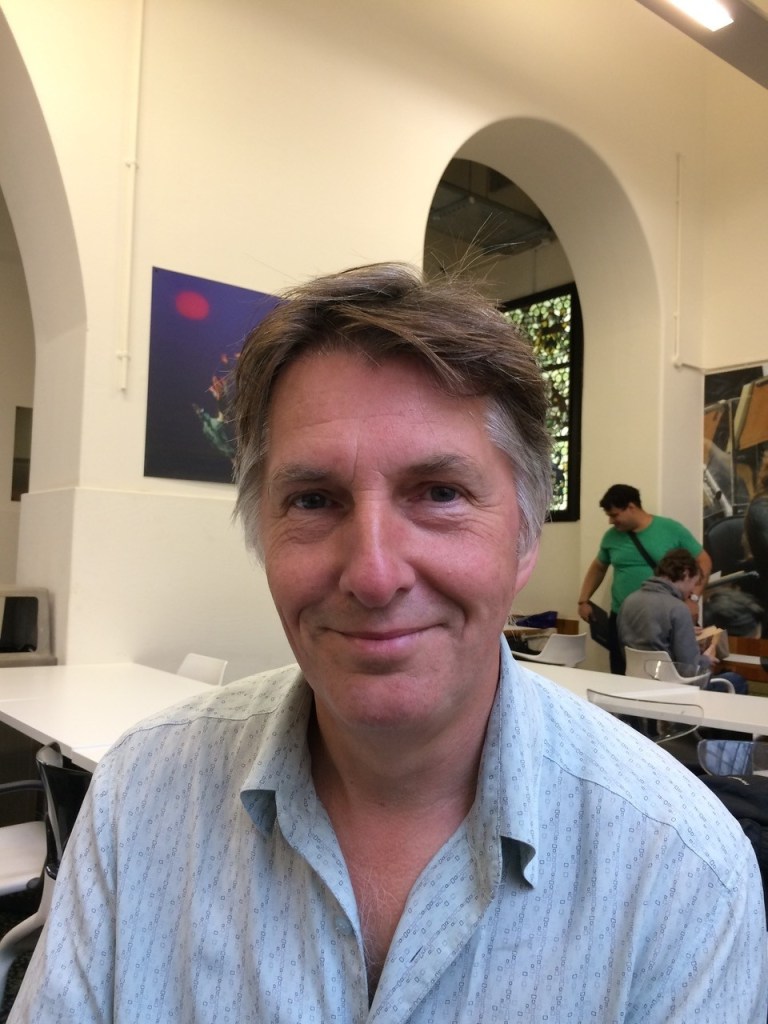
Photo credit: Jonathan Bean, Lancaster Litfest


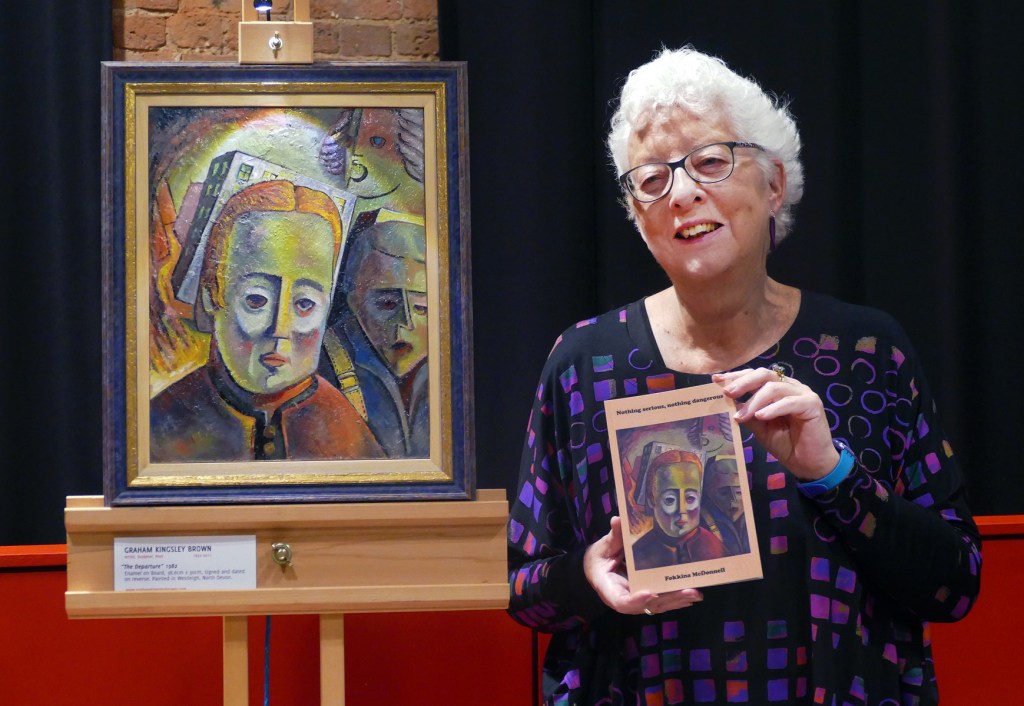
I am delighted to introduce our June guest poet Ian Seed. We met on a writing course where Ian was the guest reader on the 9th of December 2019. I know the exact date because I bought a copy of his translation of The Thief of Talant by Pierre Reverdy and Ian wrote a dedication for me ‘sometimes it’s nice to be a stranger’.


You’ll find Ian’s biography below the four poems. These are from his recent collection Forgetfulness, ‘tragicomic navigation of different forms of loss’. It is beautifully produced by Shearsman Books. Caroline Bird writes: “Ian Seed allows us to ‘stay inside the asking’’, inside a dream half-dreamt, a loss mid-grieved. His elegies expand like half-lit corridors, leading to new selves – or old selves we have forgotten, their ‘cigarettes glowing in the oncoming evening’.”


The collection is in four sections. Section 1 opens with Scattering my Mother’s Ashes – a sequence of nine prose poems. This is followed by the title poem Forgetfulness. Section 2 includes the numbered sequence Jugglers and poems laid out in stanzas, like Unscripted. Section 3 has 20 prose poems of varying length. I found it very hard to choose, but here are Pastoral and Relations.

Forgetfulness

Walking up the mountain, I see my mother sitting on the café terrace of her new care home. She’s looking remarkably young – her hair’s been dyed its old dark colour and someone must have applied a lotion to make her skin all smooth again. Yet she still has that look in her eyes of not knowing where she is anymore. I doubt she will recognise me, but she greets me by name. I tell her I’m on my way to meet a friend at the top of the mountain – I can’t stop for long. She nods, though I’m not sure she’s understood. Deep down we both know she’s no longer alive, but neither of us can bring ourselves to say so.

Unscripted

A heavy snow. The film eyes
of a stranger. This street is absent
from the story of the city

which I cannot recognise, though
my body’s memory can read
its twists and turns, its lines

broken through movement. The shape
of this snowflake resists
the tyranny of completion. I

is the space of the abandoned
intersection, the recorder motionless
for the first time.

Pastoral
after Max Jacob

The three soldiers in their red uniforms were sitting on the river bank, their long rifles laid to rest on the grass. ‘Soldiers are not handsome in themselves, except they can make themselves look as if they are,’ I declared from my perch on a fallen tree trunk nearby. ‘People may say that beard is ugly, but that’s only because it happens not to be in fashion at a particular time.’ I looked at one of the young soldiers – slim, dark hair, blue eyes, whose name I gathered from their conversation I’d listened to earlier was Tom – and went on: ‘But there are some soldiers who are extraordinarily handsome whatever they wear, whatever the fashion.’ I looked at the other two soldiers. ‘And you too can make yourselves handsome with just a few changes. As for me, I’m out of the game now.’

Relations

My grandfather, who had committed suicide, was in an old-fashioned train compartment with me, lying in my arms. I remembered the softness of his woollen suit from my teenage years. He was just as lost as he had been back then after my grandmother died. He was comforted by my holding him, but not sure who either of us was.

Biography

Ian Seed’s recent publications include Forgetfulness (Shearsman, 2026), My Outsize Hank Williams Cowboy Hat, with artwork by Lupo Sol (Sacred Parasite, 2025), The Dice Cup, from the French of Max Jacob (Wakefield, 2023), The River Which Sleep Has Told Me, from the Italian of Ivano Fermini (Fortnightly Review Odd Volumes, 2022), and New York Hotel (Shearsman, 2018), a TLS Book of the Year. To find out more, go to www.ianseed.co.uk

Birthday Party – poem

Today is the birthday of my friend Kathleen Kummer. After several falls, she is now very frail and housebound.

Kathleen and I met on a writing week with the poet Lawrence Sail at the beginning of the century. She had lived and worked in the Netherlands. We became friends. I visited her in Dorchester and in Devon where she moved, aged 79, to be nearer her two daughters.

Kathleen had a body of work when she moved to Devon, and sent a manuscript to Alwyn Marriage at Oversteps Books. They published her debut collection Living below sea level (2012).

I am deeply grateful to Kathleen for our friendship and our poetry connection. Today I’m posting her poem Birthday Party, showing her empathy and eye for telling detail.

Birthday Party

It’s his fortieth birthday. He’s sitting alone. He seems
neither man, not child, nor anything in between.
When he opens his presents, he’s all of these at once,
and happy. (‘What shall I give him?’ ‘Anything’, they’d said.)

Somehow, he’d made it plain he wanted a fish
on his cake. So on top, a flatfish. It looks like a fossil,
all its bones impressed on the green marzipan. A frieze
of stiff, blue icing ripples round the base.

A family group over there on the leather settee
talks about children at college and moving house.
He gazes through and beyond them, remote as those heads
on Easter Island, but jumps up to blow out his candles.

He’s given a card which reads Happy 30th! (‘He won’t know,
don’t worry.’) His hair is receding – he’s beginning to look like
his father, who tomorrow will take him back to the Home
where he has his bedroom and bathroom en suite. (‘Very smart!’).

Life expectancy begins to fall – guest poet


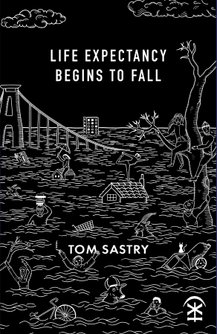
I’m very pleased to introduce this month’s guest poet Tom Sastry. His collection was published to its usual high standards by Nine Arches Press in 2025. The striking cover ‘Half Full’ is by Tom Denbigh, 2025. It’s a contemporary woodcut of the 1607 Bristol Channel Flood image.


Tom Sastry has published one pamphlet and three collections. Carol Ann Duffy said he “makes friendships and love affairs new and strange” and Hera Lindsay Bird call him “a magician of deadpan”. His poems have appeared in The Guardian and Poetry Review. His latest book is Life Expectancy Begins to Fall is described by Jonathan Edwards as “the most important – and certainly the most entertaining – book about the end of the world I’ve yet found”. Tom himself describes it as the perfect birthday present for someone with a sense of humour about their mortality.


The title poem – a sequence of six titled poems, each consisting of six couplets – is at the core of the book. It is linked to the Covid-19 pandemic and government decisions.


The collection is also a short master class on making titles work:

  • How to tell the apocalypse is happening when you get all your news from Instagram
  • Navigating the Peri-Apocalypse with Radical Self-Care
  • The preserved body of a billionaire slowly defrosts in a devastated world


These are strong poems in a variety of form, length and layout. In among the titled poems are untitled poems of six lines in italics. They create a change of tone and voice. The white space gives the reader a chance to catch their breath. Here is an example:

Everyone loves the end of the world
 
We all hope to enjoy the apocalypse 
from a distance. A good storm 
spares the roof but rattles the glass.  
Children know: destruction is funny, sometimes beautiful.

A distant inferno would enchant your night 
if you saw it from the next coast. 
So much torment is shut away, you might even be comforted 
by a Hell with space for your friends. 

We build great telescopes to watch stars die 
send divers to explore drowned cities, give prizes
for pictures of flaming sinkholes 
or bones bleaching by a dry lake. 

An old man reads of a decade he won’t see 
lethal heat, scarcity of food. 
It aches softly, like a sunset.
A new desert at the edge of town, some murders on the news. 

If the world is broken, let it be final:
a vengeful or careless god
snapping continents like biscuits.

What I fear is a Next Day.
The sweeping up and the reckoning.
The sobriety. The resumption.

As I was preparing this post, Tom wrote to me: ‘You can be pessimistic about the drift of world-historical events and still hopeful about human nature and human connection. You can be hopeful about what might happen next week or about the reception of your friend’s new book.  There’s no link between optimism and virtue or between pessimism and cynicism. So that’s really the moral centre of the book – the belief that an age of pessimism doesn’t condemn us to live mean lives. We can live well as pessimists.’

Three more poems from this collection described as ‘part-elegy and part-satire’.

Nothing to do but play cards

If it’s too late to start cathedrals
or trust in a forty-year pension plan

too soon
to snatch the thing to hand
in the name of survival

if we’re too honest
for self-sufficiency
or heroism

and our giddy hours don’t come

if the deed
in our small reach
has no resounding name

let’s call it with our silence
let’s shuffle it again.

Hope buys an absurdly expensive woodland burial plot

She is excited to be rendered
by fungi into tree-food. I feel a sharp
sadness when she says it. I check
it was not an urgent purchase
then ask questions. I learn
the particulars of the site and the price
smile at her joyous cycle of life
and secretly, inwardly
devour it with my scorn.
Life is a guzzling machine
forever eating itself.
Hope – your people need you.
Don’t give up on us.

An increasing incidence of extreme weather events

We watched the charts all week
as the old hurricane’s great lash
curled back across the ocean, not weakening
until we saw Bristol in its path.

The police told us to leave
for the nowhere we had to go
in the nothing we had to get there.
They would take the gloves off for looters.

Abandoned people are always crazy
like a fool who squares up to a storm.
Crazy like us, on the roofs of Easton
waving at the news helicopter

as the studio repeats the warnings
we were apparently ignoring
when we walked onto the M32
in a world already shaking and tearing

for a woman desperate to pass her child
into the mystery of a stranger’s car
which was crammed to the corners
with the old necessities of home.

Sublime Lungs – guest poet

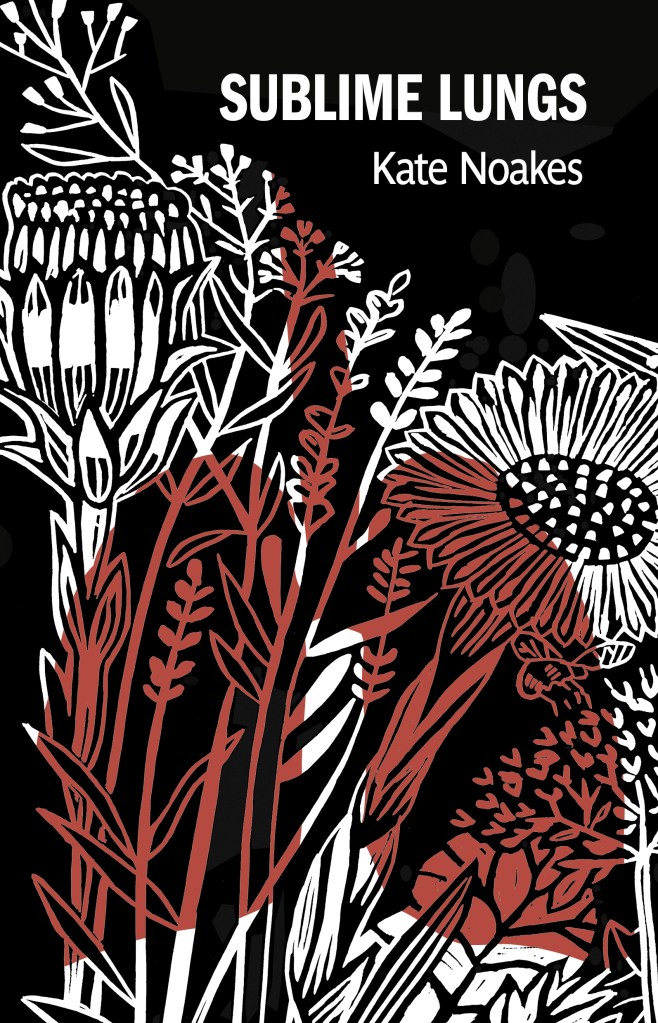
It is a great pleasure introducing guest poet Kate Noakes. The four poems are from her new collection Sublime Lungs, published this month by Two Rivers Press.

Carrie Etter writes ‘With each successive poem, Sublime Lungs expands the scope of how this condition affects one’s experience of the world in poems by turns witty and moving.’

You can find Kate’s biography after the poems. On her website you can also find details of future launches in the UK. The online launch is 24 April.

At a lecture on the lungs

Saying they look like cauliflower
is troublesome. I don’t much like it.
Can’t you imagine some other vegetable
for me to care about?

Describing particulate-caused cell change
as columnar to cobblestone won’t do it either.
These are impossible to traverse in heels
and I’ve broken so many stilettos.

Nor does learning of mucus-producing cells,
on the increase and ready for infection,
given this conjures fat black slugs
smearing themselves around in my chest

and in the coastal redwood fog forests,
banana slugs are choking me.

Bronchospasm, barotrauma, embolism

Is it worth it to see anemones
flowering deep, and multi-coloured fish
which never appear to the snorkeler?

Shall I risk it for sea pens and being dyed
by an octopus shooting to her cave
in an ink cloud?

What chances with vicious
silver barracuda and the inevitable
circling sharks?

Enough of purple jelly blobs
faceting rock pools, or their pink selves
unfurled between the tides.

Masked and wet-suited
on the side of a boat
with an artificial lung

a tank of air that will take me, where?
Heaven or hell. Slowly,
cautiously, let me live to tell.

Kent marsh frogs

Oat gold grass, swathes of rush in purple-brown,
the Oare marshes stretch to the horizon.
Mercurial tides leave a slice of silver water
isolating us from the Isle of Sheppey.

Clouds are quickening and the late summer wind
seeds my eyes – a second wave.
Half-blind with redness, I almost miss
the brackish pond with the largest of frogs

– dinner plates are no exaggeration –
and as for the ring-necked grass snakes
waiting in the surface weeds, I watch their vigil
through hay-fever tears.

A snake lunges. And again. The frog
breathes on through skin or mouth or lungs.

Caunes-Minervois

Swifts squadron the sky from early light.
All day they gorge on the wing, resting
only for seconds on the cream-stone sills
of tight-packed village houses.

They catch their breath quick, quickly
under orange-lichened pantiles and are off.
It’s a wonder their small hearts, their lungs
can cope with such long sorties.

There’s never a hint of wheeze
in this warmth and my chest expands
when I can take in the heady scent
of star jasmine. It’s good

there are men in their potagers,
chivalrous enough to cut a stem of roses –
doubles, old-fashioned, and perfumed
to fill my breath with healing.

Biography


Kate Noakes lives in Bristol and has a PhD from the University of Reading. Her new book (her ninth full collection), Sublime Lungs, is published by Two Rivers Press in April 2026. Bog Queens, a pamphlet from Green Bottle Press, is going to be published in June this year.


 She was elected to the Welsh Academy in 2011. Her content rich website, Boomslang Poetry, is archived by the National Library of Wales. Kate’s first non-fiction title is Real Hay-on-Wye (2022, Seren).


During six years in Paris, she was founding president of Paris Lit Up. Kate acted as a trustee for London literature development agency, Spread the Word, between 2018 and 2022 and she is one third of Bristol poetry performance group, Braid. She programmes the poetry events for the Clifton Literature Festival.

wetting the ink…guest poet

It’s a great pleasure to introduce this month’s guest poet Julie Mellor.

Julie holds a PhD in creative writing from Sheffield Hallam University and has published two poetry chapbooks with Smith/Doorstop: Breathing Through Our Bones (2012) and Out of the Weather (2017). In 2019 she became interested in haiku, and since then her haiku and haibun have appeared in Blithe Spirit, Frogpond, Modern Haiku, Presence, The Heron’s Nest and Tinywords, as well as two Red Moon anthologies. She recently retired from a career in education, and enjoys walking her dog, attending art classes and playing the banjo.

Here are recent haiku and a haibun with their publication details. You can find more of Julie’s writing on her site here.

Modern Haiku 54.3 (Autumn 2023)

toe-hold weeds
things that were said
years ago

Blithe Spirit 35:2 (May 2025)

long night joining the dots between stars

The Heron’s Nest Summer 2025

wetting the ink
a ghost orchid blooms
from its painted stem

Presence issue 82 (Summer 2025)

morning moon
beside the fretless banjo
pistachio shells

BHS Hope anthology 2025 (ed Neil Sommerville)

butterfly summer
I write a letter
to my future self

Presence 73 – Summer 2022 – and included in Contemporary Haibun 18 (Red Moon Press, 2023)

The Coffin Path

Grass, waist high this morning, and wet with last night’s rain. Brushing past it, my jeans wick the droplets from seeding cock’s-foot and brome. No one else walks this way. Behind the hawthorn hedge is the cemetery. People tend to use the other path, the one that the council mows. Or else they drive – ‘to save their legs’ my mother says. Some days she says she wants to be buried. Other days, she thinks she’d prefer to be cremated and have her ashes scattered next to a memorial bench. No rush to decide, I tell her, trying to make light of things.

elderflowers
pressed in her prayer book
a recipe for wine

Day Breaks as a Petrol Station – guest poet

photo credit: Andrew Taylor

It’s a great pleasure to introduce this month’s guest poet Cliff Yates. I met him on an excellent online workshop he ran for the Poetry Business. They published his New & Selected Poems, which brings together poems from five earlier publications – over thirty years of ‘inimitable’ work. Poignancy, economy, humour, a touch of the surreal…

You can find Cliff’s biography and the link to his website below the poems.

Day Breaks as a Petrol Station

Day breaks deliberate as a petrol station
newspapers and expensive flowers
but you’re tired of vacuum-packed sandwiches
and sordid headlines.

On the 15.07 out of Deansgate
she’s reading The Holy Sinner.
The dog opposite smiles
through its muzzle.
Coffee, or maybe something’s on fire
we do appear to be speeding
unless we’re stationary and the landscape’s
rattling past. ‘It’s been a good day,’
she says, ‘it makes up for yesterday.’
‘Why, what happened yesterday?’

Days without rain and suddenly it rains.
Another country, your body’s not your own.
You want to go for a walk. In this?

He threw a stick for the dog in Habberley Valley
the tattoo flew from his arms
landed in the bracken like leaves.

Dog

So many places closed: the off-licence,
the butcher, the corner shop, even
the telephone box screwed shut.
Dog had come a long way, and now what?

The cherry blossom, he noted,
looking up for once from the pavement,
was particularly stunning this year,
maybe it was the same every year

but noticing it, his heart was lifted
and he decided not to be disappointed.
The journey had been arduous, the future
was uncertain, but there is more to life,

he reflected, cocking his leg against the letter box,
than a bowl of fruit on a table.

The Lesson

The nun points out the ones to watch:
the boy in the corner, the girl at the back.
In this class it’s the boy in the middle
who thinks he’s a cat.

Outside, workmen are felling trees.
A bird’s nest tumbles in through the window,
lands on a desk. Inside the nest, a baby bird.
It’s okay it’s okay, the children say,
Brian will know what to do.

The boy who thinks he’s a cat
gathers the bird and, holding it
at arm’s length in the cup of his hands,
heads for the door, the nun behind him
between the silent rows of children
and the bird, as if on cue, lifts up its beak and sings.

Lighthouse

The lighthouse flickers at the end of the pier.
We watch it in our red pyjamas.
Actually, neither of us are wearing red pyjamas.
You’re wearing my blue shirt.

The lighthouse flickers at the end of the pier.
It’s the only thing we can be sure of.
Everything’s uncertain
since you set alight my record collection.

I’m trying to work out an appropriate reaction,
rearranging things in my head to eliminate
all memory of the record collection.
The lighthouse flickers on and off.

Actually it doesn’t, you point out, it just appears to.
You look amazing in my blue shirt.
I haven’t words to describe how good you look
in the light from the lighthouse. Now you’re here

now you’re not. Maybe I should burn
something of yours, you suggest.
Your voice leaves me in the dark.
It doesn’t sound like you when I can’t see you.

Cliff Yates was born in Birmingham and has been publishing poetry since the 1980s. His New & Selected Poems (Smith/Doorstop, 2023) brings together work from various collections including Henry’s Clock  (Fenton Aldeburgh First Collection Prize; Poetry Business Book & Pamphlet Competition), Frank Freeman’s Dancing School (Arts Council England Writers Award) and Jam (ACE Grant for the Arts). He taught English at Maharishi School in Skelmersdale and wrote Jumpstart Poetry in the Secondary School during his time as Poetry Society poet-in-residence, following the success of his students in poetry competitions. He has led courses for, among others, the Arvon Foundation and the British Council.

Cliff’s site: https://cliffyates.wordpress.com/

Books – Unread & Banned

Last year I wrote about the ‘Ongelezen Boeken Club’ (Unread Books Club), a new venture where libraries promoted books on the ‘null list’ – books that have never been taken out.

This year, the ‘Nationale Ongelezen Boekendag’ (National Day of Unread Books) coincides with another new initiative: De Week van het Verboden Boek (The Week of Forbidden Books). Bookshops and libraries throughout the country are showcasing books that have been or are still censored.

On Wikipedia, you can find an article on book censorship, a list of banned books and the main list of books banned by governments. This starts with the Bible and Albania and ends with Yugoslavia.

If I counted correctly: 66 countries. ‘Almost every country places some restrictions on what may be published, although the emphasis and the degree of control differ from country to country and at different periods.’

Wikipedia lists 66 books that have been or are currently banned in India. A small number, relatively speaking. The earliest is a Gujarati translation of Mahatma Gandhi’s book Hind Swaraj. This was banned by the British Authorities in 1909. In August 2025, the Indian Home Department banned 25 books for ‘propagating false narrative and secessionism in Jammu and Kashmir.’

Here in The Netherlands, there is only one book officially banned: Adolf Hitler’s Mein Kampf (1924). In 2014, a bookshop owner in Amsterdam was found to stock and sell the book. There was no prosecution.

However, training for new staff in bookshops routinely includes how to deal with aggressive customers. Library staff find returned books with pages torn out. A Dutch survey last year found that (1 in 7) authors had to deal with aggression, threats, intimidation – much of it online.

Here is the cover of Lale Gul’s debut published in 2021, when she was 23. It’s an autobiographical account of growing up in a strict Islamic family. It became a bestseller and was translated, but Lale has since been in hiding.

If Tallinn is on your bucket list, you can visit the Banned Books Museum while you’re there!

Photo credit: Fuzheado

The Last Corinthians – guest poet

I’m delighted to share poems by Matthew Paul from his new collection with Crooked Spire Press. The poems demonstrate Matthew’s ‘unflinching clarity’, and his ‘fierce attention to detail’. His biography follows the poems and there you can also find a link to his own website.

Spent Matches

Mum lets only Granddad light up in our house.
The second Thursday of every other month,
she fetches Grandma and him over from Sutton.
The chalkhill-blue elegance of the Wedgwood
ashtray rhymes with unfiltered smoke rings
pixilating like Ceefax in the living-room air.

Teatime doesn’t wait for Dad: Hovis, Primula,
Shippam’s fish paste, allotment tomatoes, cress;
mini rolls, Penguins, cremated fruitcake; pots
of Brooke Bond PG Tips; Beryl Ware replaced
by Royal Worcester, on Hay Wain place mats.
Chit-chat wilts like Dad’s California poppies.

Mum fills space with monologues. My brothers’
progress; mine. WRVS activities. Her botched
hysterectomy. We watch Grandma’s must-see,
Crossroads, then ours: ‘Top of the Flops, I call it,’
says Granddad. The outfits, songs, presenters
and Legs & Co. baffle him into silence; except

when Julio Iglesias butchers ‘Begin the Beguine’.
‘Artie Shaw!’ he cries; and his and Grandma’s
memories spool back to bulletins on the wireless,
to Chamberlain’s jubilant declaration of peace.
Barely through the door, Dad re-buttons his coat
to take them home. Granddad beams, ‘Abyssinia!’

Photo credit: Liam Wilkinson

A Common Hand

I don’t have to prove whether I did it or not; if they can’t see it, what kind of damned experts are they? [. . .] I’m not a crook; I’m just doing what people have always done in the history of the world: ever since art was invented, people have made imitations of it.
Eric Hebborn, ‘Portrait of a Master Forger’, Omnibus, BBC TV, 1991

Eric pestles oak gall, gum Arabic, pinches of iron
Sulphate and rain into ink with ‘a gorgeous patina’,
To pen his line on slyly foxed paper, in the styles
Of Pisanello, Poussin and sundry other old masters,
Reshaping preparatory sketches to make pentimenti,
Faking collectors’ monograms as cherries on top.

At junior school, Eric, aged eight, discovered that
Burnt Swan and Vesta matchsticks’ charcoal tips
Burnished imagination’s marks, incurring, firstly,
Welts from a leathering for possessing matches,
Then a three-year stretch in an Essex reformatory
For wilfully setting cloakrooms on fire. A flair for
Painting sees him into art schools, lastly the RA,
Where, though he wins every prize, contemporaries
Remember Eric only as ‘a silent creature’; ‘a joke’.

They would say that, since he’s brought their craft
Into disrepute. ‘Dealers are not interested in art, but
Money,’ he says. ‘The real criminal, if there is one,
Is he who makes the false description; guiltier by far
Than had he manipulated the nib himself. Ignore
The fusspots. Enjoy art, without worrying whether
Attributions are correct.’ Museums have everything
To lose from uncovering Eric’s handiwork; queasily,
They check their acquisitions back to the Sixties
And issue, de haut en bas, highly selective denials.

‘No one is studying art with honesty,’ claims Eric,
Upon the publication of The Art Forger’s Handbook
In Italian. Out in Trastevere three icy nights later,
He stumbles, soaked in Chianti Classico Riserva,
Down a cobbled passage, to his blunt force demise.

In Which I Spend a Fortnight of my West Berlin Summer in 1987 Doing a Few Hours’ Cleaning Per Day in Some Multinational’s HQ

My Iraqi supervisor Zaynab and I enjoy,
for our lingua franca, helpless
amusement. Every day, precisely
at knocking-off time,
we point at the clock, chorus ‘Sechs!’,
then cackle like siblings.

Dieter, fellow cleaner, never gets our jokes.
Just like me, he’s twenty and nearing
the end of a gap year; mandatory,
before enrolment at Humboldt.
Mine’s elective, for my mental health.
He and I view the city’s halves from the roof:
the Wall zigzags like the Western Front.

Afterwards, we take the U-Bahn
—he buys a ticket; I don’t—
to the agency’s office, at Nollendorfplatz.
He translates the clerk: I won’t get paid
until next week. ‘Scheisse,’ I say.
Dieter deadpans: ‘She said,
“Ah, so the English boy
can speak German after all”’

Biography

Matthew Paul hails from South London and lives in South Yorkshire. His second collection, The Last Corinthians, was published by Crooked Spire Press in June 2025. He is also the author of two haiku collections – The Regulars (2006) and The Lammas Lands (2015) – and co-writer/editor (with John Barlow) of Wing Beats: British Birds in Haiku (2008), all published by Snapshot Press. His reviews regularly appear in The Friday Poem and elsewhere. He blogs here.

Mine – guest poet

It’s my pleasure to introduce our May guest poet Jane McKie. We met many years ago on a writing workshop and are still part of an email group. You can find her biography at the end of this post. Cinnamon Press recently published her new poems and I’ve chosen some poems from Mine: vivid, clear embodied images with marvellous economy.

Mine

On nights when the wind drops, I hear it crooning softly,
not like a real bomb. A toothless, barnacled silhouette, wittering
to itself when the tide is low. My friends and I sometimes get close,
daring each other to nudge its rust. But what happens when
the music cuts out? Tonight, the mine’s a mute companion:
whiff of brine, cryptic fist. As my eyelids close, that’s when it—

Kevlar


I am the tattoo of a spider’s web
on a sixteen-year-old girl’s calf.
Traced from a drawing of a photo,
in time, I will thread up her thigh,
over her whole torso, in a riot of
silk that is stronger than Kevlar.

She will wear me like armour:
my vest of ink, her toughest skin.
Who wouldn’t fear a woman
fluent in the language of spiders?
Those twitches in cobwebs
that throb like old wounds.

Dreaming in an age of austerity


Not a single one finished: all mark time
until a rich developer completes the job.
Here, stone knuckles. There, exposed metal rods
stab at the sky like a mech-monster’s fingers.

Not vital or hungry, these resort Titans.
But not quite dead either. Gulls like to roost
in the pockets of them. Gulls dabble bills in
puddles that form from the absence of roofs.

Even small children play in the undead bodies
of imagined buildings, sneaking past tape
to be mummies and daddies in beautiful houses
that shelter insatiable, suckling doll-babies.

Polished malachite


on my desk, riven
with almost-blue, a pool
or algal cistern.

I touch it when I’m sad
and its green eye blinks, rippling
with souterrain light.

Biography


Jane McKie is a Senior Lecturer in Creative Writing at the University of Edinburgh. She has written several poetry collections, including Morocco Rococo (2007), Kitsune (2015), and Quiet Woman, Stay (2020) with Cinnamon. Her most recent full collection is Carnation Lily Lily Rose (Blue Diode, 2023). She lives in Scotland, but was originally from the Sussex coast, which inspired several poems in Mine.

Filling the well, stocking the pond…

It’s been a long time since I’ve been out to fill that well. I’ve had health issues and sat at home with the black dog. The exhibition of Joan Miró’s sculptures at Beelden aan Zee is almost closing. On a cold and sunny Tuesday, I got two trams to Scheveningen.

Pair of lovers playing with almond blossom

Beelden aan Zee is the only Dutch museum specialising in sculpture and it’s in a great setting. The authorities in The Hague insisted that the building should not be visible, so it’s hidden inside a dune, and it is mostly underground. From the terrace you can only see the sea, not the busy boulevard. All the materials have a sandy colour. Through plenty of glass in the roof there is a lot of light.

In his studios by the sea in Mont-roig del Camp and on Mallorca, Miró’s love for sculpture was given a huge boost. The (natural) objects he found on his walks were incorporated into sculptures and assemblages, along with everyday objects. The giant clothes peg (painted synthetic resin) was a design for a prestigious project in Central Park, New York. It would have been at least 14 metres high, though it was never realised.

You can see the objects in this bronze sculpture: a paint tube, plastic bottle, spoon. Miró’s bronze sculptures were created using plastic models that he continued to shape until he found them good enough to cast.

The sculpture Monsieur et madame (Sir and Madam) is made of painted bronze. Two different objects form a couple. A square, red-painted stool stands for the man. On top of it is a rectangular white box with a face on it. The round, black stool represents the woman. It has a yellow egg on it. A playful, archetypical representation of masculinity and femininity.

The Monument is the first sculpture as you enter the main hall. You can see some of the light coming through the roof.

It was hugely inspiring to see how Miró continued to innovate and be curious well into his 70s and 80s.