Tag Archives: poems

Review: Contrapasso by Alexandra Foessinger

Credit: Kev via Pixabay


Contrapasso is the title of the debut collection of Alexandra Fössinger. She is of Italian origin and currently lives in Northern Germany. She writes mostly in English. Many of the poems included have been previously published in the UK and elsewhere, in magazines such as Tears in the Fence, The High Window, The Journal. The cover design – a black bird against a stark white background – is by Daniel Lambert, Art Director of Cephalopress, established in 2018, providing ‘a voice for the marginalised and the voiceless’.


I do not know the author, though I attended her online reading with Q&A. There she explained the background to the poems: her attempt at survival ‘after the imprisonment in the UK of someone dear to me’. This sudden loss may, in part, have coincided with the pandemic and its lockdowns: creating an incarceration for the poet too.


In Dante’s Divine Comedy, contrapasso is the punishment of souls by a process either resembling or contrasting with the sin itself. The collection is in two parts, both preceded by a quotation from Dante’s Inferno. Part 1 covers the period of imprisonment, while poems in Part 2 were written after the person’s release.


Birds for someone who cannot hear is the title of the opening poem and birds appear throughout the collection, as messengers, omens, and symbols: the blackbird frozen in shock, the thrushes in hiding, along with magpies, sparrows, sky larks, great tit, kingfishers, herons, seabirds. The second poem is titled Cell, giving us just the bare numbers:
1,
5,
3,
4,
7,
1,
and ending:
bad luck has brought
and kept you here,
and whether
you’ll walk out

or
be carried in a coffin

is also entirely
a matter of chance
.

The poems are the author’s response to the sudden loss, despair, darkness, pain. We have no life apart from life apart (Sentence); How can I find dreams of oarweed and eelgrass, / bring currents to glide on, as I must, when half / of my body is entangled / on the wrong side of the sea, / how will I know when time says to dive? (Velut luna).

Fössinger has said that she ‘is mostly interested in the spaces between things, the tiny shifts in time, the overlooked, the unsaid.’ Throughout the collection, we find astute observations and statements: la vita assurda: the middle-aged couple / pushing their dog in a pram. (July); that emptiness is best hidden / by a display of tame beauty. (Ambulant).

The strongest poems are those which describe a specific situation, or which have objects as ‘animate scaffold’. The poem Ambulant is in two parts:
I
The house with the Christmas decoration,
and the magnolia tree in bloom,
and the blackbird frozen in shock,
and an ambulance parked in the front garden,

all stand completely still.
People walk by, averting their gaze,
a stoop hammered into their skin –
How many lives will they have lost before,
without ever noticing.

The orange light is beating on the windows
like rain.

Here is Fössinger’s close attention to the overlooked, effective personification, interesting use of language. Not all the poems are so securely grounded, sometimes abstraction obscures their meaning. Other poems would have benefited from being tighter, shorter. The book is a short collection of 31 poems with quite a few blank pages. Some readers might want ‘more poems’ for their ‘pounds’.

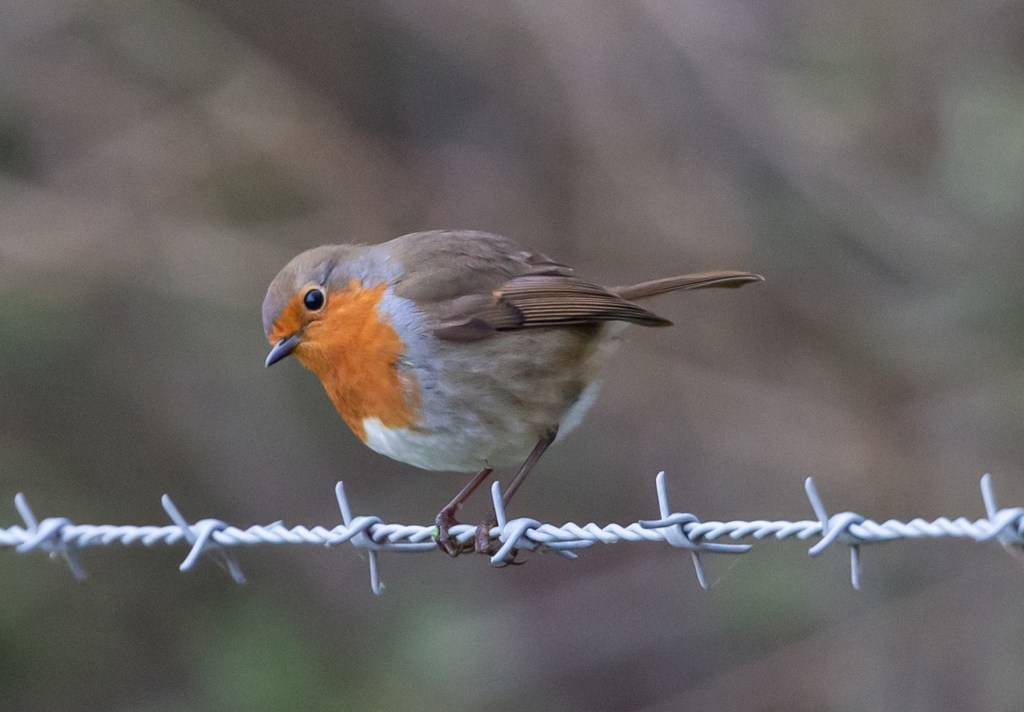
While the poems reflect the poet’s emotional and psychological response to loss and separation, she manages to maintain a careful balance: hope is not abandoned. The recurrent bird theme also provides a framework, an underlying structure. This theme returns in the short closing poem, The robin redbreast. The loved one appears in a dream, as tiny as a bird, and:

Then you grew a beak
with which to pick and sing
and transport worms and roses.

Contrapasso is a confident and authentic debut by a perceptive, astute poet. Her personal tale finds echoes in the reader’s universal story. However long and painful the journey, there can be closure and transformation.

Easter Monday

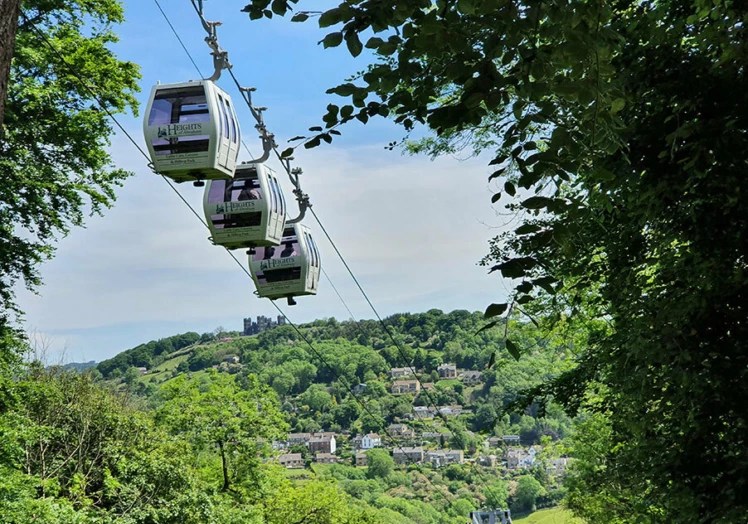
I’ve been sorting and clearing old photos and old poems. It reminded me of trips out into Derbyshire with friends: taking the cable car up to the Heights of Abraham, walking through the historic centre of Buxton. The Buxton Baths date back to Roman times. In the Georgian and Victorian period these were developed. Buxton is the highest market town in England. Easter can be early or late – walking through snow or sitting out in sunshine. Enjoy your Easter, wherever you are.

Buxton Centre

Buxton, 2pm

Here is Buxton Spa, Easter, green hills.
Not a credit card between us.

Good intentions: it’s the year of the Pig.

We’ve been to China, lugged back
soldiers from Xian, wrapped in towels.

Now they’re resting under the Red Cross.

For our next birthdays, we say,
we just want Prosecco, book tokens, no bric-a-brac,

but our hands are restless,
our fingers flick through a tray of rings.

A Reader’s Guide To Time – guest poet

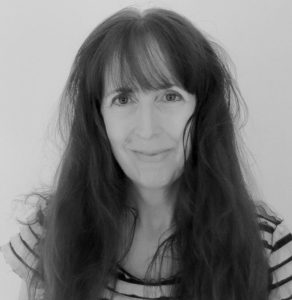
It is a great pleasure to introduce this month’s guest poet Rebecca (Becky) Cullen. Her poem February appeared last month. Becky and I met on a poetry workshop where I bought A Reader’s Guide To Time. This was the winner of the 2021 Live Canon Collection Competition.

Here is Becky’s biography:
Rebecca Cullen has a PhD in Creative and Critical Writing. She was the second poet-in-residence at Newstead Abbey, ancestral home of George Gordon, Lord Byron. Director of the Writing, Reading and Pleasure (WRAP) extracurricular programme at Nottingham Trent University, Rebecca also curates and presents the Notts TV Book Club.

Photo credit: Fabrice Gagos


The collection is divided into eight sections, each representing a different kind of time. Becky ends her prologue with It’s time I love, winding as a cat wraps round an ankle. Here are four poems from Historical Time (n.b. timelines, clocks), Deep Time, Poetic Time (also ‘of Reading’) and Subjective Time (‘of our lives’), respectively.


Paris, Grands Passages

To enter requires trust: you can’t see the end
from the beginning. You can’t see the next beginning.

Shop names are the contents page; each entrance
is a diorama. Post yourself into the future.

At Hotel Chopin, climb the three red stairs.
Would you like to buy a sink? A model of a carousel?

The tiles are monochrome and harlequin.
The gates can keep you out, or keep you in.

In the window of the librarie, two wax children
read a book, sitting in a rowing boat.

Claim a tall-backed chair at the café draped in vines,
warm beneath the glass roofs pinched like fish spines.

The taxidermist stitches swans’ wings to a fox.
Come, watch the past play, hear your heels knock.

Night Fragment

He wakes her with a ball of sorry.
He wants her to hold it, keep it,
as brash and bold as the coin in her lungs.

His sob comes, warms her gut,
the flex of his young arm gone.

In the four o’clock light,
her face is crumpled, dirty.

Garden at Newstead Abbey

Peacocks at Byron’s Pile


I had a dream of Newstead Abbey,
that I was drifting through the garden
and the blowsy flowers were heavy on the walls.

The words are just ahead of me this morning,
the word for a large purple or white blowsy flower,
a climber, and a tree’s branches so they grow

outstretched in two dimensions. Espalier.
Both these things are in my head, somewhere,
but the sparrows roost near the monk’s pond,

which also has its own name,
and overlook the stump of oak on a lawn
where a raven has been adopted by two geese;

they are always in correspondence, everywhere
the remnants of a godforsaken kiss,
the three of them, like this. Clematis.

My Father and I

Sometimes we didn’t get on. The songs I sang
would please his ear. But I would over-act, embarrass him.

Now we go to appointments more often than we go for lunch.
After the last tests he couldn’t be left alone. I spread across one sofa,

he slouched on his, and we watched a documentary on Howard Hughes;
I didn’t know about the aviation or the Hollywood years.

So. We both kept turning up, not giving in.
Lately, I’ve taken to calling him daddy.

Valentine’s Day

Credit: Megan_Barling via Pixabay

This coming Tuesday it’s Valentine’s Day. Here is an early poem that hasn’t featured on the blog before. It was published in the Tees Valley Writer, Autumn 1995, and Highly Commended in their annual competition.

On the beach

Against the sinking sun gulls ride the waves.
Our dogs bark and chase their tails.
Try to run with a lone jogger who braves

the east wind whistling. Your son trails
in your wake, attempts big steps. Laughter peals:
a scene lifted straight from some fairy tale.

Heaped grey boulders mimic a colony of seals.
Not long before love winters in my heart.
I need to tell you how it feels

to be together, yet growing apart.
Your craggy face seems so much older
clouded in a bluish hue. I brace myself to start

as you place a hand on my shoulder
but all I can say is It’s getting colder.

Speak Easy (2) – guest poet


Speak Easy was formed at Stretford’s Sip Club by Dave Hartley in August 2015 as a spoken word open mic before the team of Andy N, Amanda Nicholson and Steve Smythe joined forces to take it over at the end of 2017. The night moved to Chorlton Cum Hardy’s Dulcimer Bar in August 2020 and has carried on being a welcoming, supportive, friendly and encouraging night since welcome to both experienced and newcomers with all acts given equal opportunity to perform with everybody who reads being headliners.

(See the end of the post for details and links to social media for Speak Easy, Andy N, Amanda Nicholson.)

Andy N

Andy N is the author of 8 full length poetry collections including ‘Return to Kemptown’ and ‘The End of Summer’ and co-runs Chorlton Cum Hardy’s always welcoming Spoken Word Open mic night ‘Speak Easy’. He runs / co-runs Podcasts such as Spoken Label, Cloaked in the Shadows and Storytime with Andy & Amanda and does ambient music under the name of Ocean in a Bottle.

Three x Winter Haiku

Walking in darkness
your front door briefly lights up
in the heavy rain. 
*
Ripping out the trees
lighting hit the forest hard
flooding the river
*
Sleeping in winter
the trees hibernate alone
awaiting for Spring. 

*

Amanda Nicholson


Amanda Nicholson is an author, poet, podcast co-host and copywriter. She has written several books as Amanda Steel, including Ghost of Me. Amanda’s poetry has been broadcast on BBC Radio Manchester. She Has a Creative Writing MA, and has had articles published by Jericho Writers, Reader’s Digest UK, Ask.com, and Authors Publish.

Do All These Labels Make Me Look Fat?
 
Like blank sticky labels pressed to my skin
I write on some myself
While people scribble their own words
Over time, the ink fades on some
and others fall off
The one labelled daughter is half peeled off now
Older labels remain stuck fast
But buried by new labels
So people rarely see
Unless they get close enough
And there is always room for more
Some are like tattoos
Only more painful
And others wash away easily

Links
Speak Easy:
Facebook: https://www.facebook.com/speakeasymanchester
Twitter: https://twitter.com/speakspokenword
Instagram: https://www.instagram.com/speakeasypoetryspokenword/
Recordings of Night: https://andyn.bandcamp.com/

Andy N Poet:
His blog: http://onewriterandhispc.blogspot.com/
His books can be found on Amazon etc.
Ocean in a Bottle is at: oceaninabottle.bandcamp.com
Facebook: https://www.facebook.com/andynstorytellerpoet
Twitter: https://twitter.com/aen1mpo
Instagram: https://www.instagram.com/andynpoet/
Tiktok: https://www.tiktok.com/@andynwriter

Amanda Nicholson

Her blog is: https://amandasteelwriter.wordpress.com/
Facebook: https://www.facebook.com/AmandaSteelWriter
Twitter: https://twitter.com/Amanda_S_Writer
Instagram: https://www.instagram.com/amandasteel37/

Ode of sorts…

Last Saturday I had to go to the pharmacy in Playa Blanca, Lanzarote to get some over-the-counter medication. It’s an ode of sorts alright…

Normal service will be resumed…

To ‘my’ condition

I salute you: you have staying power.
You arrived out of nowhere 28 years ago.
How odd you only woke up in Manchester,
while you slept through London.

I refuse to call you mine, the two ‘ ’
symbolise handcuffs, shackles.
On long journeys (flights, trains)
I wear dark trousers, a dark dress.

You have grounded me many times,
I’ve been bent over, clutching my bike,
scared to go to the shops in case I
don’t make it to a loo.

An acronym close to that computer firm.
There are dress codes at IBM, I have you know.
Irritable? Yes, often. I’ve been pissed off,
imagine bowels as a curled-up, snarling cobra.

Syndrome is, I believe, where spectators
gather to see retired pilots take off
in noisy small planes. Banking
is a dangerous manoeuvre.

In Aldeburgh: Poetry

Haibun


Yesterday’s journey: comfortable Eurostar from Rotterdam Centraal, a sit-down at Soho & Co, Liverpool Street Station for food. The unexpected ‘red signal’ at Colchester turned out to be ‘waiting for British Transport Police’. They escorted a couple off the train. Missed connection at Ipswich gives an unexpected hour to mull and ponder. The friendly taxi driver from A2B and warm welcome at The White Lion where the bar is still open.

we smoke fish
open
we catch raw words

Assisted Passage – poem

Eye, Amsterdam

Over half a century ago I shared a room in an Earls Court hostel with three other Dutch women. P&O Lines Ltd had just taken us on as WAPs (Woman Assistant Pursers) and we were to be employed in various offices while waiting for a ship to become available. I did secretarial work for a Scottish marine engineer, struggling to capture the technical terms – about bulkheads of a vessel that was being built at the famous Cammell Laird yard in Birkenhead.

We have kept in touch all those years, and celebrated in the Eye, Amsterdam with lunch in 2019. The film museum is an iconic building just the other side of the railway station. A short ferry journey is a good way to get there. Our plan for an annual reunion had not taken a pandemic into account and now one of us has health issues. Fingers crossed for September!

Our language skills had got us the job: Dutch, English, French and German. The photo is from S.S. ORCADES where I was Supernumerary, translating the news, and holding daily meetings. Here I am with the small group from Germany and Switzerland.

Assisted passage

You’re on F deck aft, an alleyway
away from your spouse,
also sharing with five strangers.

Time to fold over your memories,
freshly laundered. You don’t need
memories where you’re heading.

You saw the Fire Dance in Dakar.
Days of sea, sun, and sky.
Cape Town with Table Mountain.

Nine grey days of swell.
Freemantle, Adelaide,
Melbourne, Sydney.

Shake a leg, show a leg.
You’ll soon be down under.
Your new upside-down lives.

Tomatoes – poem

Credit: Couleur via Pixabay

Fruit & veg, toms, salad, mayo, salmon, ½ loaf … I’ve not yet managed to write a shopping list in Dutch even when the words are shorter (sla) or similar abbreviations (gr & fruit). It’s too much hard work late on a Thursday evening when I’m sitting with a glass of wine (wijn) and contemplating the moving project: flooring, top-down & bottom-up blinds, two chairs – ordered; research on fridge/freezers needed, also a new GP practice and pharmacist.

Here in the Netherlands the distance is important: the GP must be able to get to your home within 10 minutes. That doesn’t mean it’s easy to register. In Scheveningen (where I spent the winter) three practices did not take on new patients or had a four-month’ waiting list. A tomato a day may keep the doctor away …

Tomatoes

I am stepping away from my life,
my life as short as a haiku.
I have turned biographer,
am writing vignettes,
pale green, the length of celery.

My vignettes may concern
elderly mules with dental decay,
the struggle to remember
maternal aunts. I am numbering
my vignettes 1A, 1B, 1C, 1D –
narrow seats in the small airplane
Aer Lingus would use
on the late Saturday flight.

I could write a vignette
about the plastic dummies
they use in ambulance training.
Today I’m going to focus on pretend
tomatoes. My invisible friend
has started her new diet.

Changing Places – guest poet

Carl Tomlinson

It’s a huge pleasure introducing this month’s guest poet Carl Tomlinson. Carl and I met on a w/end poetry workshop some years ago. He was born in Lancashire – where his father’s family had farmed for 150 years. He now lives in Oxfordshire and is a coach and part-time finance director. His poems have been published in magazines, anthologies and online.


From his debut Changing Places I have chosen one poem that has a personal meaning to me: I was living in Southampton in 1976 and my late husband supported our local team. The other four poems are a moving tribute to Carl’s personal land and heritage. The cover picture was taken by him.

Picking sides

FA Cup Final. 1 May 1976. Southampton 1 – 0 Manchester United

Bobby Stokes made me a Red
one Spring day at Wembley.
He broke my heart in a moment
scuffing that shot past Stepney.

Although I wasn’t football mad
you still had to pick a side
and a playground full of Saints fans
said Man United were mine.

Four years after moving South
my accent was still abused.
Flattened vowels lurked in my mouth
and echoed round the school.

All that week I learned their names
eager to share the glory,
but sometimes, as the pundits say,
the Cup’s a fairy story.

Nil-nil at eighty-three minutes,
the telly rings with cheers.
Stokes shoots. He scores. Saints win it.
This was what I’d feared.

Bobby Stokes made me blush deep red
at hymn-time in assembly,
For all the saints, the teacher said.
Every face was turned on me.

Baling

I’d just got my A-levels out of the way
and was spending a week with my Aunt
in the house her grandfather’d built
in the garden behind the farm,
in a place that had seemed like forever, aged eight.
She said “Derek Fitton wants a hand with his hay.”
As kids we had loved helping Grandad,
chasing the baler round Tandle Hill’s haunch
riding the trailer back to the barn
echoing Tarzan calls under the bridge.
We lived with the itching and the seeds in our hair
because that was the way we were made.
It was ten years since the pain of the sale
and I wanted to feel like a farmer again.
Derek was glad of my help that day.
It was fun enough, in a blokeish way.
He gave me a fiver. Later, I drank it away.
The twine cut my fingers, my back complained
the welts sprang up on my arms again.
You wouldn’t know, I guess you’ve never baled
but it’s a different kind of ache when it’s not your hay.

Coming to grief

We were most of the way to Middleton
when I discovered that grief
doesn’t always dress in death.
One of my parents said
that Three Gates Farm –
where six generations had tilled
the last of Lancashire’s silty soil –
was being sold that week.

In the winter of sixty-three
my Grandad made the front page
phoning for a snowplough
because the lane was six foot deep.
Now we were in ‘th’Observer’ again
in the back of the classifieds
along with all the other lots
due ‘Under the Marshall hammer.’

Reading the paper emptied my eyes.
I realised whatever childish plans I’d made
for those fifty acres of gentle land
nudged between mill towns and millstone grit
were to be knocked down
(for twenty-six grand in the end)
in Ye Olde Boar’s Head
by an auctioneer I never met.

And by my father’s teenage need to leave that land
and make his life his own.
And by my uncle’s trying to stay
where I was sure we all belonged.
And by Grandad’s explaining
that even the hencotes would go.
So the scheme to keep one to use as a den,
that went south as well.

The parlour’s long since seen a cow,
there’s nothing like a farm there now
but the breath of beasts on a winter day
and the sweetness of cowshit and hay
surprise that grief back into me.

Inventory

Accounts and correspondence,
attached with failing staples,
complete the detail of a sale
of Live and Dead Farming Stock.

Dead just means inanimate,
not deceased.

Then, in the Particulars, I find the line
that honours my line, and all they left here
‘The land will be seen to be
in a high state of fertility.’

Harvest

“Oh bugger!”, the words thud.
I’ve just put the fork through a spud.

I’m showing our son and daughter
something I learnt from my father
which my Grandad had taught him before.

“You start a bit off, away from the green,
keep the fork away from the tubers,
you want to lift ‘em, not pierce ‘em,
and they’ll not store if you fork ‘em,
they’ll be no good if you fork ‘em’.”

Again the fork sinks, again the soil shifts
and this time a big‘un gets stuck on a tine.
“Oh bugger!” I thud before I’m stood up
and quick as an echo the lad pipes up
with “That’s what our Grandad said
when he put his fork through a spud.”