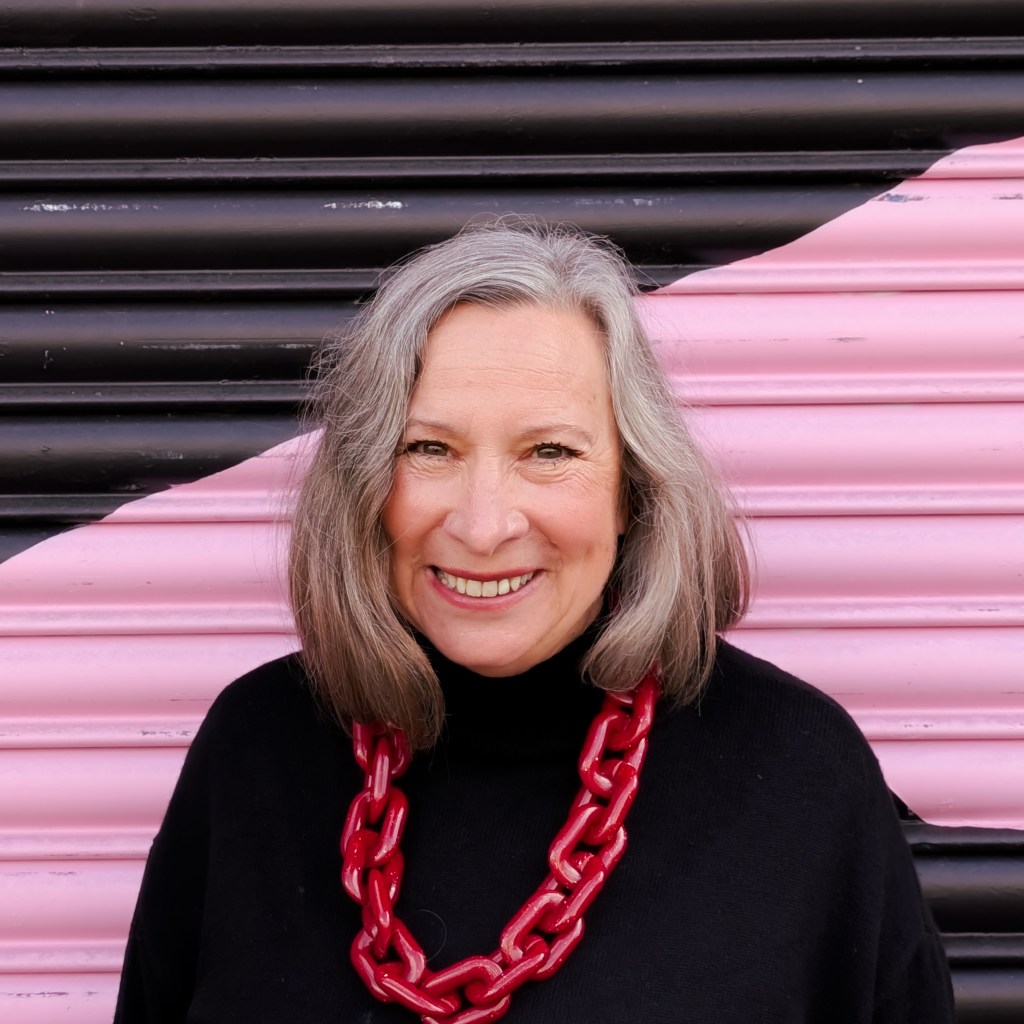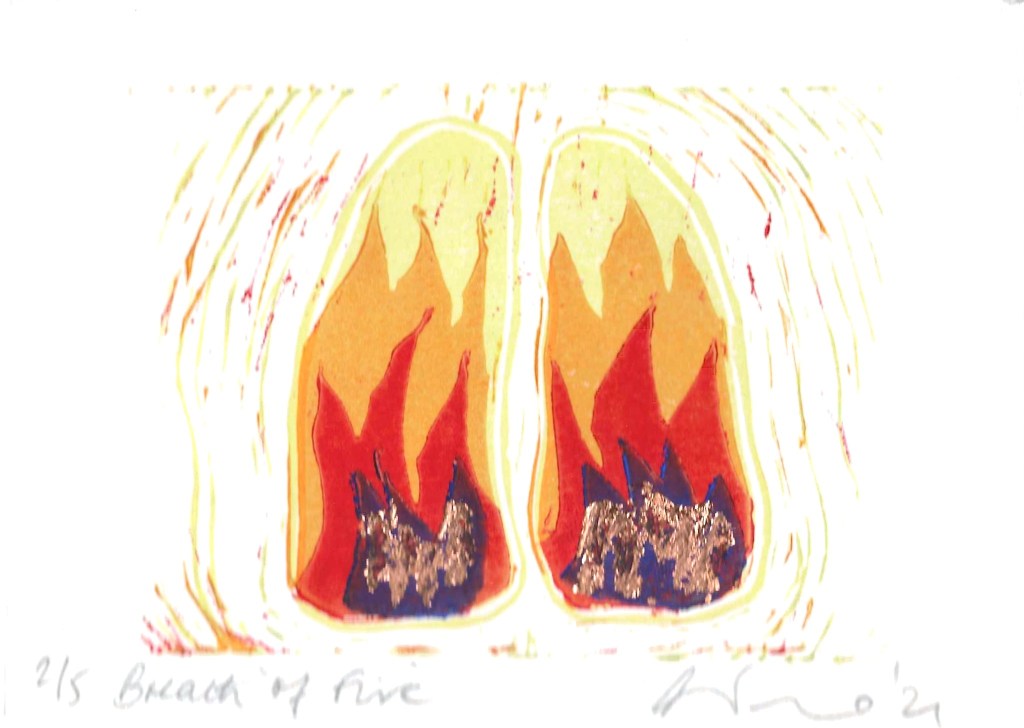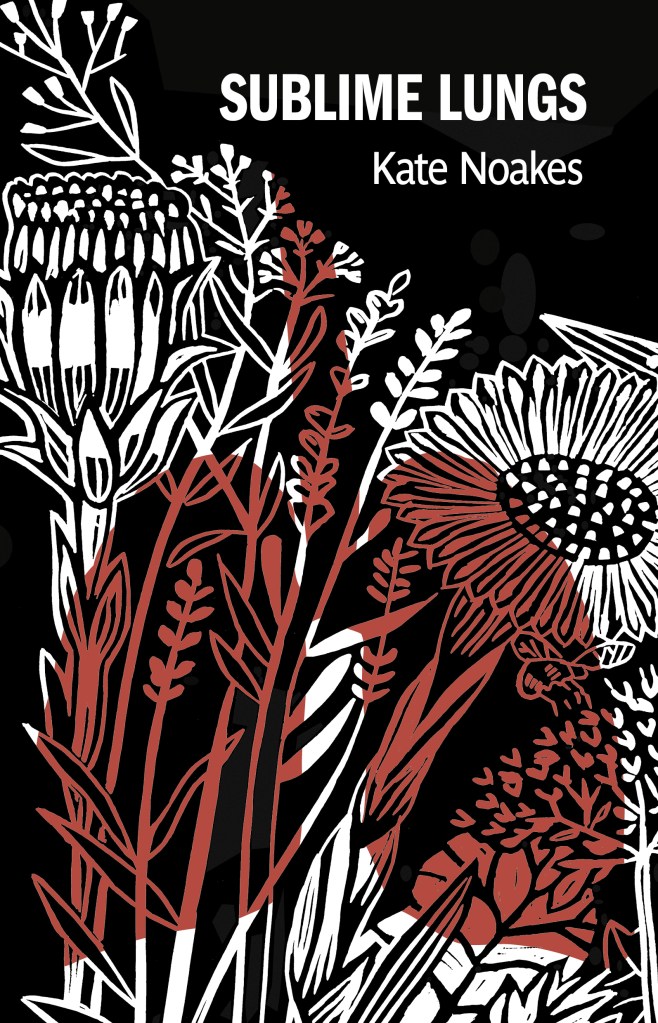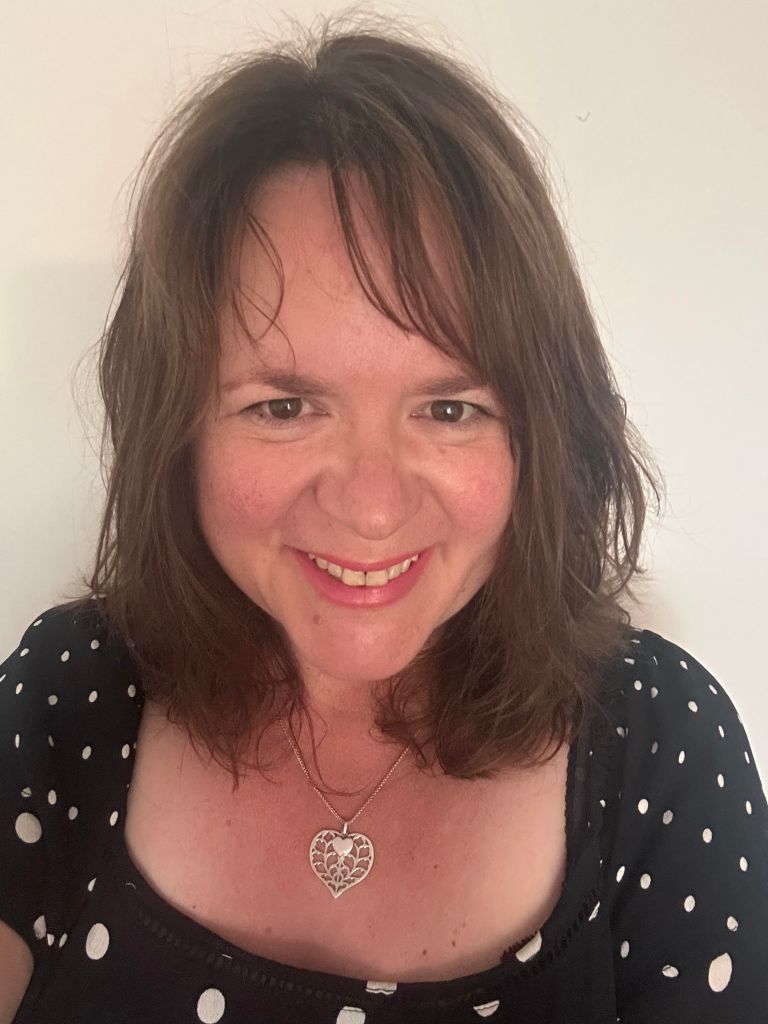
Here is a sample poem by our April guest poet Kate Noakes. The poem is from her new collection Sublime Lungs, which will be published by Two Rivers Press on 21 April. This is her ninth full collection. More poems after Easter.
Kate will read at the Cheltenham Poetry Festival on 14 April. There is an online launch on 24 April. You can find the schedule of online and live launches on Kate’s website
Kate Noakes Breath of Fire
For Easter, try egg blowing
David Attenborough stood on an ostrich egg to demonstrate its strength once. ‘The toughest egg in the world,’ he said. He may even have jumped on it for emphasis.
Of course, no-one had drilled it and sapped its yolk with mega-breaths and an extra-thick straw, which is how it withstood his weight, unlike the three souvenirs we bought in Oudtshorn, their weakness apparent under failing coving.
They smithereened the carpet and needed hand picking, the hoover’s inhalations proved weak. We’d have been better off buying feather dusters from the hawker pitched outside the super-market. They’d have been easier to carry home.
Cliff Yates was our guest poet last November. You can read the poems here. As I was going through his New & Selected Poems (The Poetry Business, 2023) to select a set, I came across the poem below.
It’s even sweeter on Valentine’s Day…
from Another Last Word
EXPENSIVE CHOCOLATE
There are eight pieces. She has two and gives me one. ‘Confiscate this,’ she says, handing over the rest. ‘Hide it, or I’ll be tempted when you’re out.’ When I get back, the drawer’s open, there’s one piece left, and a note on a scrap of paper: NOT VERY WELL HIDDEN.
CLEARING UP
She’s cooking Sunday lunch and I’m clearing up. ‘It’s ridiculous,’ I said, ‘you spend time getting things out of cupboards and I spend time putting them back in.’ ‘Not enough time in my opinion.’
BIRTHDAY
‘You’re being nice,’ she says, ‘you’ll be running out of steam soon. You’ve been nice since 7 o’clock, that’s 3 hours, 10 minutes.’
DANCE
‘It’s great the way we dance around each other,’ I said, ‘when we’re getting the meal on.’ ‘We only do that because you get in the way.’
SATSUMA
‘I can’t be bothered with this satsuma.’ ‘Give it here,’ she says. ‘Can’t peel a satsuma, can’t peel an egg. We’ve been married how many years, and I’ve made no progress with you whatsoever.’
WRITING
‘I had to work on that one,’ I said, ‘because you didn’t actually say that. I am in fact writing these poems.’ ‘That’s what you think.’
ENTERTAINING
‘Some of these make me sound terrible,’ she says. ‘It’s because you find me so entertaining. It makes me worse when you start laughing.’
LUNCH
‘Apart from the salad and potatoes,’ I said, ‘what did we have for lunch?’ ‘If you can’t remember what we had for lunch I feel sorry for you.’
GETTING IT RIGHT
‘I’ll get it right one day.’ ‘I doubt it,’ she says. I laugh. ‘It’s not funny really, is it?’ ‘No,’ she says, ‘but at least you’re hopeful.’
PHILOSOPHY
‘You’re too hard on yourself,’ she says, ‘when I wake up I just want a cup of tea and then I want to be entertained by life.’
FISH
‘What we need is a special pan for fish and a fish spatula.’ ‘No,’ she says, ‘what we need is for you to eat fish.’
COLOURING PENCILS
She’s at the kitchen table, going at it with her new colouring pencils. ‘I had some when I was little,’ she says, ‘but I was never let loose. It was always What’s THAT supposed to be? or Where’s the SKY?’
Photo credit: Andrew Taylor
Biography
Cliff Yates was born in Birmingham and has been publishing poetry since the 1980s. His New & Selected Poems (Smith/Doorstop, 2023) brings together work from various collections including Henry’s Clock (Fenton Aldeburgh First Collection Prize; Poetry Business Book & Pamphlet Competition), Frank Freeman’s Dancing School (Arts Council England Writers Award) and Jam (ACE Grant for the Arts). He taught English at Maharishi School in Skelmersdale and wrote Jumpstart Poetry in the Secondary School during his time as Poetry Society poet-in-residence, following the success of his students in poetry competitions. He has led courses for, among others, the Arvon Foundation and the British Council. Read more on his site here
It’s a great pleasure to introduce this month’s guest poet Cliff Yates. I met him on an excellent online workshop he ran for the Poetry Business. They published his New & Selected Poems, which brings together poems from five earlier publications – over thirty years of ‘inimitable’ work. Poignancy, economy, humour, a touch of the surreal…
You can find Cliff’s biography and the link to his website below the poems.
Day Breaks as a Petrol Station
Day breaks deliberate as a petrol station newspapers and expensive flowers but you’re tired of vacuum-packed sandwiches and sordid headlines.
On the 15.07 out of Deansgate she’s reading The Holy Sinner. The dog opposite smiles through its muzzle. Coffee, or maybe something’s on fire we do appear to be speeding unless we’re stationary and the landscape’s rattling past. ‘It’s been a good day,’ she says, ‘it makes up for yesterday.’ ‘Why, what happened yesterday?’
Days without rain and suddenly it rains. Another country, your body’s not your own. You want to go for a walk. In this?
He threw a stick for the dog in Habberley Valley the tattoo flew from his arms landed in the bracken like leaves.
Dog
So many places closed: the off-licence, the butcher, the corner shop, even the telephone box screwed shut. Dog had come a long way, and now what?
The cherry blossom, he noted, looking up for once from the pavement, was particularly stunning this year, maybe it was the same every year
but noticing it, his heart was lifted and he decided not to be disappointed. The journey had been arduous, the future was uncertain, but there is more to life,
he reflected, cocking his leg against the letter box, than a bowl of fruit on a table.
The Lesson
The nun points out the ones to watch: the boy in the corner, the girl at the back. In this class it’s the boy in the middle who thinks he’s a cat.
Outside, workmen are felling trees. A bird’s nest tumbles in through the window, lands on a desk. Inside the nest, a baby bird. It’s okay it’s okay, the children say, Brian will know what to do.
The boy who thinks he’s a cat gathers the bird and, holding it at arm’s length in the cup of his hands, heads for the door, the nun behind him between the silent rows of children and the bird, as if on cue, lifts up its beak and sings.
Lighthouse
The lighthouse flickers at the end of the pier. We watch it in our red pyjamas. Actually, neither of us are wearing red pyjamas. You’re wearing my blue shirt.
The lighthouse flickers at the end of the pier. It’s the only thing we can be sure of. Everything’s uncertain since you set alight my record collection.
I’m trying to work out an appropriate reaction, rearranging things in my head to eliminate all memory of the record collection. The lighthouse flickers on and off.
Actually it doesn’t, you point out, it just appears to. You look amazing in my blue shirt. I haven’t words to describe how good you look in the light from the lighthouse. Now you’re here
now you’re not. Maybe I should burn something of yours, you suggest. Your voice leaves me in the dark. It doesn’t sound like you when I can’t see you.
Cliff Yates was born in Birmingham and has been publishing poetry since the 1980s. His New & Selected Poems (Smith/Doorstop, 2023) brings together work from various collections including Henry’s Clock (Fenton Aldeburgh First Collection Prize; Poetry Business Book & Pamphlet Competition), Frank Freeman’s Dancing School (Arts Council England Writers Award) and Jam (ACE Grant for the Arts). He taught English at Maharishi School in Skelmersdale and wrote Jumpstart Poetry in the Secondary School during his time as Poetry Society poet-in-residence, following the success of his students in poetry competitions. He has led courses for, among others, the Arvon Foundation and the British Council.
Last year I wrote about the ‘Ongelezen Boeken Club’ (Unread Books Club), a new venture where libraries promoted books on the ‘null list’ – books that have never been taken out.
This year, the ‘Nationale Ongelezen Boekendag’ (National Day of Unread Books) coincides with another new initiative: De Week van het Verboden Boek(The Week of Forbidden Books). Bookshops and libraries throughout the country are showcasing books that have been or are still censored.
On Wikipedia, you can find an article on book censorship, a list of banned books and the main list of books banned by governments. This starts with the Bible and Albania and ends with Yugoslavia.
If I counted correctly: 66 countries. ‘Almost every country places some restrictions on what may be published, although the emphasis and the degree of control differ from country to country and at different periods.’
Wikipedia lists 66 books that have been or are currently banned in India. A small number, relatively speaking. The earliest is a Gujarati translation of Mahatma Gandhi’s book Hind Swaraj. This was banned by the British Authorities in 1909. In August 2025, the Indian Home Department banned 25 books for ‘propagating false narrative and secessionism in Jammu and Kashmir.’
Here in The Netherlands, there is only one book officially banned: Adolf Hitler’s Mein Kampf (1924). In 2014, a bookshop owner in Amsterdam was found to stock and sell the book. There was no prosecution.
However, training for new staff in bookshops routinely includes how to deal with aggressive customers. Library staff find returned books with pages torn out. A Dutch survey last year found that (1 in 7) authors had to deal with aggression, threats, intimidation – much of it online.
Here is the cover of Lale Gul’s debut published in 2021, when she was 23. It’s an autobiographical account of growing up in a strict Islamic family. It became a bestseller and was translated, but Lale has since been in hiding.
If Tallinn is on your bucket list, you can visit the Banned Books Museum while you’re there!
I’m delighted to share poems by Matthew Paul from his new collection with Crooked Spire Press. The poems demonstrate Matthew’s ‘unflinching clarity’, and his ‘fierce attention to detail’. His biography follows the poems and there you can also find a link to his own website.
Spent Matches
Mum lets only Granddad light up in our house. The second Thursday of every other month, she fetches Grandma and him over from Sutton. The chalkhill-blue elegance of the Wedgwood ashtray rhymes with unfiltered smoke rings pixilating like Ceefax in the living-room air.
Teatime doesn’t wait for Dad: Hovis, Primula, Shippam’s fish paste, allotment tomatoes, cress; mini rolls, Penguins, cremated fruitcake; pots of Brooke Bond PG Tips; Beryl Ware replaced by Royal Worcester, on Hay Wain place mats. Chit-chat wilts like Dad’s California poppies.
Mum fills space with monologues. My brothers’ progress; mine. WRVS activities. Her botched hysterectomy. We watch Grandma’s must-see, Crossroads, then ours: ‘Top of the Flops, I call it,’ says Granddad. The outfits, songs, presenters and Legs & Co. baffle him into silence; except
when Julio Iglesias butchers ‘Begin the Beguine’. ‘Artie Shaw!’ he cries; and his and Grandma’s memories spool back to bulletins on the wireless, to Chamberlain’s jubilant declaration of peace. Barely through the door, Dad re-buttons his coat to take them home. Granddad beams, ‘Abyssinia!’
Photo credit: Liam Wilkinson
A Common Hand
I don’t have to prove whether I did it or not; if they can’t see it, what kind of damned experts are they? [. . .] I’m not a crook; I’m just doing what people have always done in the history of the world: ever since art was invented, people have made imitations of it. Eric Hebborn, ‘Portrait of a Master Forger’, Omnibus, BBC TV, 1991
Eric pestles oak gall, gum Arabic, pinches of iron Sulphate and rain into ink with ‘a gorgeous patina’, To pen his line on slyly foxed paper, in the styles Of Pisanello, Poussin and sundry other old masters, Reshaping preparatory sketches to make pentimenti, Faking collectors’ monograms as cherries on top.
At junior school, Eric, aged eight, discovered that Burnt Swan and Vesta matchsticks’ charcoal tips Burnished imagination’s marks, incurring, firstly, Welts from a leathering for possessing matches, Then a three-year stretch in an Essex reformatory For wilfully setting cloakrooms on fire. A flair for Painting sees him into art schools, lastly the RA, Where, though he wins every prize, contemporaries Remember Eric only as ‘a silent creature’; ‘a joke’.
They would say that, since he’s brought their craft Into disrepute. ‘Dealers are not interested in art, but Money,’ he says. ‘The real criminal, if there is one, Is he who makes the false description; guiltier by far Than had he manipulated the nib himself. Ignore The fusspots. Enjoy art, without worrying whether Attributions are correct.’ Museums have everything To lose from uncovering Eric’s handiwork; queasily, They check their acquisitions back to the Sixties And issue, de haut en bas, highly selective denials.
‘No one is studying art with honesty,’ claims Eric, Upon the publication of The Art Forger’s Handbook In Italian. Out in Trastevere three icy nights later, He stumbles, soaked in Chianti Classico Riserva, Down a cobbled passage, to his blunt force demise.
In Which I Spend a Fortnight of my West Berlin Summer in 1987 Doing a Few Hours’ Cleaning Per Day in Some Multinational’s HQ
My Iraqi supervisor Zaynab and I enjoy, for our lingua franca, helpless amusement. Every day, precisely at knocking-off time, we point at the clock, chorus ‘Sechs!’, then cackle like siblings.
Dieter, fellow cleaner, never gets our jokes. Just like me, he’s twenty and nearing the end of a gap year; mandatory, before enrolment at Humboldt. Mine’s elective, for my mental health. He and I view the city’s halves from the roof: the Wall zigzags like the Western Front.
Afterwards, we take the U-Bahn —he buys a ticket; I don’t— to the agency’s office, at Nollendorfplatz. He translates the clerk: I won’t get paid until next week. ‘Scheisse,’ I say. Dieter deadpans: ‘She said, “Ah, so the English boy can speak German after all”’
Biography
Matthew Paul hails from South London and lives in South Yorkshire. His second collection, The Last Corinthians, was published by Crooked Spire Press in June 2025. He is also the author of two haiku collections – The Regulars (2006) and The Lammas Lands (2015) – and co-writer/editor (with John Barlow) of Wing Beats: British Birds in Haiku (2008), all published by Snapshot Press. His reviews regularly appear in The Friday Poem and elsewhere. He blogs here.
It’s an enormous pleasure to introduce this month’s guest poet Pam Thompson. Pam and I met 13 years ago on an extended writing course. You can find her biography below the poems. These are from Pam’s prize-winning pamphlet and show the range of her writing. The Paper Swans pamphlet competition was judged by John McCullough: ‘Sub/urban Legends gripped me because of the way it marries poignancy with a really bold imagination and stylistic flair’. The intriguing cover image is also by Pam.
Explorers, Antarctica, 1901
The leader sits on the sledge. He never does this. It’s against the rules of the expedition but now there are no rules.
Two huskies – the two remaining huskies, they ate the rest – sit either side like imperial lions.
The ship is stuck in frozen waves. The crew are starving or dead but this photo will be evidence that they reached their destination.
The photographer in the black hood. Stepping back. Pulling the cord. The flash.
Self Portrait as Fulang Chang
Freedom, chica, is all. I’ll wear the mandarin’s hat and silk waistcoat, eat all the honeyed grapes, to stay favoured, like a first-born.
I perch on her left shoulder, always on guard, never at ease. I bare my teeth and scream, at Diego and the village dogs.
I am the brush passer, ear for her secrets, but I am all chat, you know, teller of her tales though she isn’t one to keep schtum.
The bloody hearts we paint will drip onto the Blue House floor.
Fête Galante
Take the bus from outside the Water Margin Chinese restaurant—or from where it used to be in 1974—allow plenty of time. You’re at work in Lewis’s, folding up school shirts badly, cramming them back in their packaging; in a History of Art lecture looking at a slide of Fragonard’s ‘The Swing’. The bus will be full, people will be smoking on the top deck, so will you. This must be your stop. Is it everybody’s stop? You join the flow—you think of Tracy Emin’s tent with the names of all the people she ever slept with, or is it her messy bed you’re thinking of. All the beds you ever slept in. Lewis’s. All the shops you ever worked in. And the canteen in the factory where the men always patronised you. Here—you say to the tiny chef—you scrub the bloody burnt pans. All the patronising men you ever worked for—they all get off the bus. You watch them cross London Road. You haven’t moved very far. The Water Margin is the water’s margin and you wonder how this pond, this lake, this sea, arrived in the city. There are willows, and, over there, a fête galante, a woman on a swing, being pushed and pulled, higher and harder, by all the people she ever slept with.
Biography
Pam Thompson is a writer, educator and reviewer based in Leicester. She is a Hawthornden Fellow. Her works include The Japan Quiz (Redbeck Press, 2009) and Show Date and Time, (Smith|Doorstop, 2006). Her collection, Strange Fashion, was published by Pindrop Press in 2017. Pam was winner of the 2023 Paper Swans Pamphlet Competition and her winning pamphlet, Sub/urban Legends (Paper Swans Press) was published in March 2025.
It’s my pleasure to introduce this month’s guest poet Patrick Wright. Patrick and I met years ago at Manchester Poets. Earlier this month his poem Archive, inspired by Anselm Kiefer, featured on the blog. You’ll find Patrick’s biography at the end of the post.
Today I’m sharing more poems from his substantial collection Exit Strategy, a ‘vivid exploration of grief and loss’. Tamar Yoseloff said of the collection: ‘Patrick Wright is one of those rare poets who can translate the complex images of visual artists into precise and pitch-perfect language.’
Patrick has been inspired by artists past and present (Rousseau, Klee, Rachel Whitehead, J M W Turner), to mention some well-known names.
The collection uses a wide range of forms (couplets, tercets, stanza, sonnet, ghazal, prose poem) and makes excellent use of white space through columns and indents. WordPress can’t do justice to formatting. Therefore, I’ve chosen poems with a more traditional lay-out.
COLD DARK MATTER
After Cornelia Parker
Thanks to you I am learning to see again through a sparseness of particles—
like how I learned to listen to an eyelid twitch once yes and twice no through a coma.
Darkness I’ve come to realise is a privilege— known at 4am & sleepless
the sun rising like a scalpel & turning the room purple.
Somehow, we go on & somehow it never ends & we go on like a double pendulum.
Perhaps love is like this fixed explosion. Perhaps you’re nearer now than the word belief.
SHADOW OF A GIRL PLAYING WITH A HULA HOOP After Giorgio de Chirico
It used to scare me, what this girl is doing, or those around her, off in the blind field. Seemingly a girl playing with a hula hoop, or just a shadow, no source, just a shadow next to a wagon, its backdrop here a dusty plaza. Somewhere, I feel, from an upstairs room, an eye looks at me. Somewhere, off screen, a murder is taking place, this shade a clue. Even so, things are too belated now, this girl clearly a phantom and not a muse, like she’s in a toy shop or inside its puzzle, no girl playing so nonchalant with a hoop. The sun, at these times, is no longer a sun, more likely a lamp. My fingers are syllables. And this pine table where the postcard sits is full of knots, staring like gods from above.
ROBERT RAUSCHENBERG’S UNTITLED
& already I see alpines prise their way through the brutalist grey of Chernobyl floors. Through the sarcophagus they reach for sunlight. Maybe we only learn what the burn of graphite means once blind. I know you better after knowing disaster.
I’ve studied the colour theories of Goethe and Albers where the wheel & the wheel of life are a way to feel closer. I am the stalk through the fallout, one that insists on pushing its way & one that’s been patient. On the surface we share the mark of detonation.
They say a town like this is void though one pulse of a deer’s heart makes it a plenum. A full spectrum will reveal itself only when you’ve pledged to cease hurting. Through this I see what you saw when the sun set & made shades on a radiator. We are both on the side of art.
WINTER LANDSCAPE WITH SKATERS AND BIRD TRAP After Pieter Bruegel the Elder
I find no pleasure in the ice. Everything about me lies still—save for murmurations.
Peasants weave between trees: each crystalline like coral on a seabed.
I give you a winter landscape in place of a mirror. The bird trap is my heart.
Soon it will be still, a skull in a crypt, lit by candles. My hills are a wishbone. They undulate under great tension.
The skaters are insouciant, crows peck their shadows. My face startles—a chance alignment of stars.
Skaters are on slippery ground and if they should slip, they have nothing to cling onto.
Biography
Patrick Wright’s poems have appeared in Poetry Ireland, Poetry Wales, The North, Gutter, and The London Magazine. His debut collection, Full Sight of Her, was published in 2020 by Eyewear and nominated for the John Pollard Prize. His pamphlet, Nullaby (2017), was also published by Eyewear. His second collection, Exit Strategy (2025), was published by Broken Sleep Books. He teaches English and Creative Writing at the Open University.
Aus Herzen und Hirnen spriessen die Halme der Nacht, 2019-2020. Oil, acrylic, emulsion, shellac, straw, gold leaf, wood and metal on canvas. Dims: 471 x 841,5 x 36 cm. Collection Voorlinden.
Our guest poet this month is Patrick Wright. As I was reading his collection Exit Strategy (Broken Sleep Books, 2024) I came upon the poem Archive and discovered that Patrick and I are both very interested in Kiefer’s work.
For me one of the highlights last year was visiting Bilderstreit, a major exhibition of Kiefer’s work at Voorlinden Museum, The Netherlands. A few weeks earlier I had watched the documentary that Wim Wenders made about Anselm Kiefer. I was blown away too by the film: it’s in black-and-white and one can watch it through 3D glasses.
Kiefer was born during the bombing raids in the final months of WWII. For him, everything exists somewhere in the cycle of death and rebirth. Whenever he creates a new work, he knows that one day he will destroy it: attacking it with a flamethrower, axe, bolt cutter, or red-hot liquid lead.
ARCHIVE After Anselm Kiefer
Before his landscapes scorched by war and history, paintings of straw and glue, your golden hair, Margarethe, before ‘Death Fugue’, I was back at school, deep winter. In the yard blew a few stray crisp packets; seagulls pecked at crumbs. The annex and fence had the look of an abandoned camp, in Polish hinterlands. Through a cloakroom window I peered, looking for a ghost of myself, then at a ghost of myself, as the sun poked out from a cloud and the contours of bulimia gazed back, in sepia tones. I saw the bullies too, with razored eyebrows, piercings, fists in my gut, spit on my shoulder, the stench of Lynx, using queer as an insult. With my SLR, I clicked more in hope than expectation. I fumbled with fixative, the stop bath, the gelatin swell. My negatives solarised. I kept re-visiting as a witness. Those days, I bit the inside of my lip, stubbed cigarettes out on my arm. When the dysmorphic class photos were framed, still as that winter, your golden hair, said the Kiefer print, your golden hair, Margarethe.
It is a pleasure to introduce our February guest poet Rob Miles. I do not know Rob personally: we have been Facebook friends for some time. I bought a copy of his recent collection Dimmet which was published by Broken Sleep Books. See below the poems for Rob’s biography.
The glorious cover image of a murmuration was designed by Aaron Kent. Dimmet is a West Country word for dusk, twilight. Katherine Towers notes of the collection: ‘These are poems of great precision and delicacy’. I’ve chosen four poems which demonstrate these qualities.
Dimmet
His hands still bronzed, still baling-raw. His voice no longer snared, whisper-low as decades ago, in this same field, he guided me
to not disturb that horse; circling quietly, its half-scattered straw an ingot melting, and my thin flames no match for such a sunset anyway.
*
On this, another near-to-night, it’s clear that he has no more kept his mind from wayward sparks than I have closed my eyes
before any fading fire, ever since recalled a slow white shadow steady on its dial in the always almost dark.
Café Poem
Just when I think there is nothing so boring
as someone else’s childhood a toddler
in dungarees is guided around our table
by his puppeteer parent, arms up, in a vertical sky-dive, or
like a drunk, when walking is more about not falling
every step forward rewarded with a double high five.
I whispered to the dog
that she’d been a winner a Crufts champion
at least twice. Once she saw off a Dobermann, burglars, a werewolf
even the odd Sasquatch. I reminded her
as her old eyes darkened that she had saved lives.
Making Way
A keeper, you said of the house, but I’d sensed everything trying to make its way: those errant velvet fingers from your orchid pots; the oak putting on its chain mail of ivy and moss and losing; the birds we fed still pinned to their shadows; crisp wasps electrocuted by views through grubby double glazing, and you just weeks before, showing your wrists as if uncuffed, asking for my thoughts on a fragrance.
Biography
Rob Miles is from South Devon, and he lives in Leeds where he is Fellow in Film Studies in the Centre for World Cinemas and Digital Cultures at The University of Leeds. His poetry has appeared widely in magazines and anthologies, recently in Stand, New Welsh Review, The Scores, Spelt, 14 Magazine, Ink Sweat and Tears, One Hand Clapping, Poetry Wales, and four Candlestick Press pamphlets. He has won various awards including the Philip Larkin Prize, judged by Don Paterson, the Resurgence International Ecopoetry Prize, judged by Jo Shapcott and Imtiaz Dharker, and the Poets & Players Prize, judged by Sinéad Morrissey.
Lucy Newlyn describes Dimmet as ‘the best collection of contemporary poetry I have read in a long while’, and John Glenday writes: ‘When it’s done as well as this, there’s nowhere on earth poetry can’t go.’
A seasonal poem and sampler by Rebecca Cullen who is our March guest poet. It’s from her collection A Reader’s Guide To Time. I very much enjoyed Rebecca’s take on February and hope you do too.