Tag Archives: children

Guest poet – Alexandra Corrin-Tachibana


It’s an enormous pleasure introducing this month’s guest poet. We met a while ago when I attended one of Alexandra’s online courses. She’s an inspiring tutor.


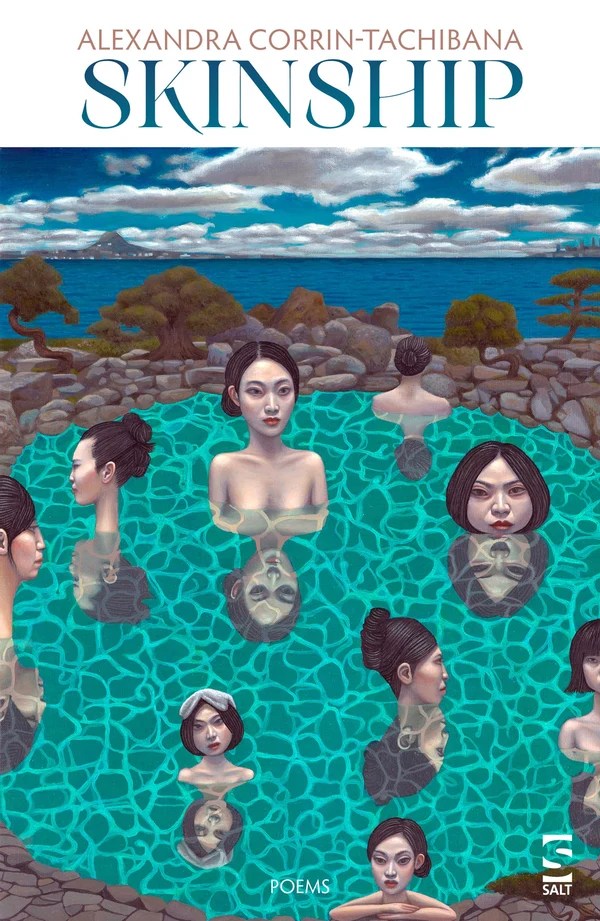
You’ll find her biography at the end of this post, with links to two more poems. This week Alexandra’s second collection with Salt is published. Skinship is a full collection: formally innovative in using and adapting traditional Japanese forms (haiku, tanka, senryu, haibun, and zuihitsu). I was particularly struck by the ‘burning haibun’.


The poems are ‘rooted in Alexandra’s lived experience of Japan’ and rich, poignant and memorable. There is a well-judged balance of humour and sadness. It’s not surprising that many of the poems have already been published and successful in competitions.


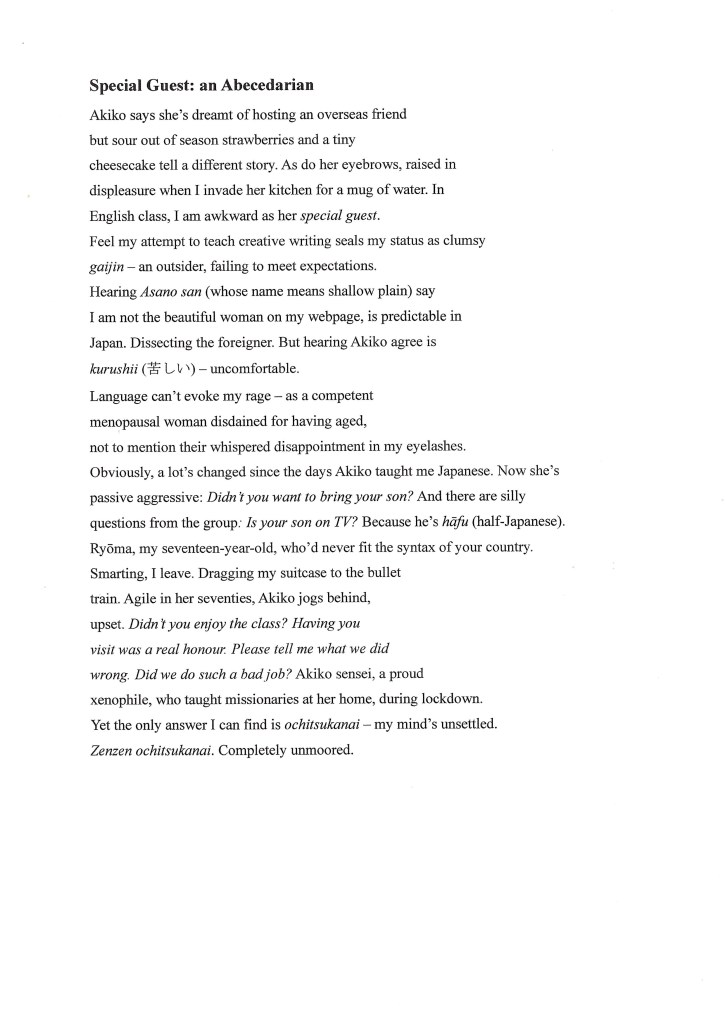
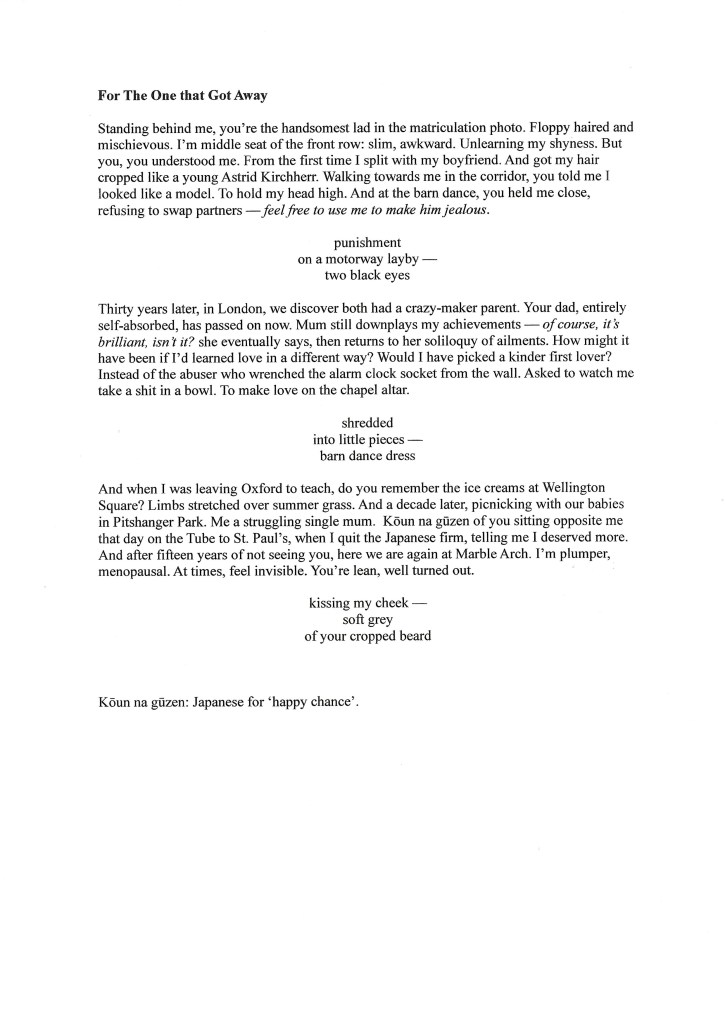
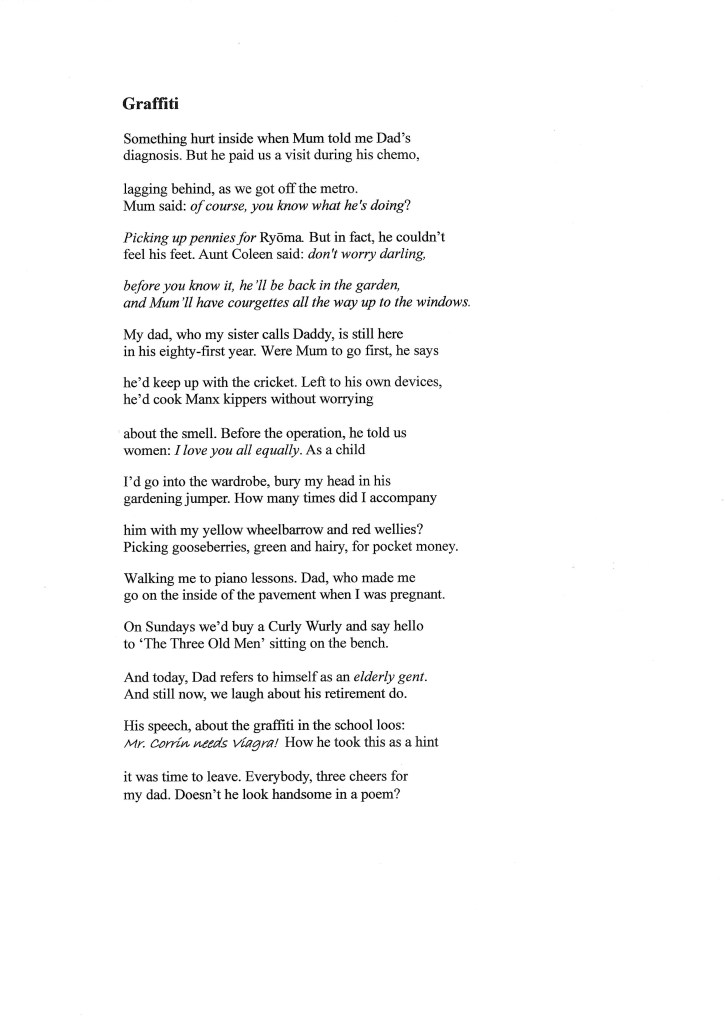
Here are the three poems which I chose from my long shortlist. To preserve the original features, the poems are presented as images.
Biography

Alexandra Corrin-Tachibana is the author of two poetry collections: Sing Me Down from the Dark and Skinship, both published by Salt publishing.

This year, she won the Frome Festival Crysse Morrison Poetry Prize, as well as Verve’s February Poem of the Month competition, was placed third, by Mimi Khalvati, in the Kent and Sussex competition, and shortlisted for the Wolves Lit Festival competition. She is shortlisted for the 2026 Forwards Prize for Best Single Written Poem, for her poem, Madam Gout, originally published by Magma.

Alexandra lived in Japan for 10 years and has Masters’ degrees in Japanese Language and Culture and in Writing Poetry. She is based in Newcastle-upon-Tyne and teaches for The Poetry School and The Poetry Business. Her most recent work is published or forthcoming in Pennine Platform, The North, Vervacious anthology (Verve Poetry Press), The Alchemy Spoon, and online in And Other Poems.

Links to recent poems:
Pillow Book Talk: a zuihitsu for Sei Shonagon

Learning from a Mischief

Flying a kite – guest poet

My friend Kathleen Kummer recently had her 95th birthday. We have had a weekly telephone call since the start of the first lockdown in March 2020. Kathleen’s poems from her collection Living below sea level have featured here before.


Flying a kite refers to the ‘90s, as the grandson is now in his thirties. He lives abroad, but regularly visits. A variation on the villanelle form, the poem successfully blends the personal and the universal.

Flying a kite

My grandson and I are flying his kite.
Though we stand on the earth’s green rim in spring,
there’ll be talk of wars on the news tonight.

We have climbed the steep meadow, have not taken fright
at the notice, Beware of the Bull. Larks sing
as my grandson and I are flying his kite.

We have coaxed it upwards, where wind and light
give life to what was a limp, gaudy thing.
Time enough for reports of the fighting tonight.

Its streamers rippling, the wind just right,
it rides the skies, a jocular king.
My grandson and I are flying his kite.

These skies are empty, but for the flight
of buzzards and invisible larks on the wing.
The skies they will show on the news tonight

will be apocalyptic, eerily bright
with the clever ways of destroying and killing
to which the whole world claims the right.
I am watching my grandson wind in his kite.

World Animal Day

Photo credit: Artcats via Pixabay


World Animal Day was started in 1925. I was looking for an animal poem in my file. Looking back on this experience, we might question the animal welfare aspect. The horse seemed happy enough at the time.

Circus

The Arabian thoroughbred
and his blue-blood spinster
lodged with a middle-aged couple
living in the Dutch bible belt.

My parents despatched
my younger brother and me
that summer to acquire
circus skills in two weeks.

Each morning a child took
turns standing on the horse
as it walked round the ring
inside the stuffy canvas tent.

In the afternoons we swam
in the local pool, tried to get
the couple’s fat ponies to obey.
There were prayers, a lot of eggs.

By the end of the holiday we
balanced, arms outstretched,
on the trotting horse. We swung
off and on as it cantered.