Tag Archives: Travel

The Last Corinthians

I’m delighted to share three poems by Matthew Paul from his new collection with Crooked Spire Press. The poems demonstrate Matthew’s ‘unflinching clarity’, and his ‘fierce attention to detail’. His biography follows the poems and there you can also find a link to his own website.

Spent Matches

Mum lets only Granddad light up in our house.
The second Thursday of every other month,
she fetches Grandma and him over from Sutton.
The chalkhill-blue elegance of the Wedgwood
ashtray rhymes with unfiltered smoke rings
pixilating like Ceefax in the living-room air.

Teatime doesn’t wait for Dad: Hovis, Primula,
Shippam’s fish paste, allotment tomatoes, cress;
mini rolls, Penguins, cremated fruitcake; pots
of Brooke Bond PG Tips; Beryl Ware replaced
by Royal Worcester, on Hay Wain place mats.
Chit-chat wilts like Dad’s California poppies.

Mum fills space with monologues. My brothers’
progress; mine. WRVS activities. Her botched
hysterectomy. We watch Grandma’s must-see,
Crossroads, then ours: ‘Top of the Flops, I call it,’
says Granddad. The outfits, songs, presenters
and Legs & Co. baffle him into silence; except

when Julio Iglesias butchers ‘Begin the Beguine’.
‘Artie Shaw!’ he cries; and his and Grandma’s
memories spool back to bulletins on the wireless,
to Chamberlain’s jubilant declaration of peace.
Barely through the door, Dad re-buttons his coat
to take them home. Granddad beams, ‘Abyssinia!’

Photo credit: Liam Wilkinson

A Common Hand

I don’t have to prove whether I did it or not; if they can’t see it, what kind of damned experts are they? [. . .] I’m not a crook; I’m just doing what people have always done in the history of the world: ever since art was invented, people have made imitations of it.
Eric Hebborn, ‘Portrait of a Master Forger’, Omnibus, BBC TV, 1991

Eric pestles oak gall, gum Arabic, pinches of iron
Sulphate and rain into ink with ‘a gorgeous patina’,
To pen his line on slyly foxed paper, in the styles
Of Pisanello, Poussin and sundry other old masters,
Reshaping preparatory sketches to make pentimenti,
Faking collectors’ monograms as cherries on top.

At junior school, Eric, aged eight, discovered that
Burnt Swan and Vesta matchsticks’ charcoal tips
Burnished imagination’s marks, incurring, firstly,
Welts from a leathering for possessing matches,
Then a three-year stretch in an Essex reformatory
For wilfully setting cloakrooms on fire. A flair for
Painting sees him into art schools, lastly the RA,
Where, though he wins every prize, contemporaries
Remember Eric only as ‘a silent creature’; ‘a joke’.

They would say that, since he’s brought their craft
Into disrepute. ‘Dealers are not interested in art, but
Money,’ he says. ‘The real criminal, if there is one,
Is he who makes the false description; guiltier by far
Than had he manipulated the nib himself. Ignore
The fusspots. Enjoy art, without worrying whether
Attributions are correct.’ Museums have everything
To lose from uncovering Eric’s handiwork; queasily,
They check their acquisitions back to the Sixties
And issue, de haut en bas, highly selective denials.

‘No one is studying art with honesty,’ claims Eric,
Upon the publication of The Art Forger’s Handbook
In Italian. Out in Trastevere three icy nights later,
He stumbles, soaked in Chianti Classico Riserva,
Down a cobbled passage, to his blunt force demise.

In Which I Spend a Fortnight of my West Berlin Summer in 1987 Doing a Few Hours’ Cleaning Per Day in Some Multinational’s HQ

My Iraqi supervisor Zaynab and I enjoy,
for our lingua franca, helpless
amusement. Every day, precisely
at knocking-off time,
we point at the clock, chorus ‘Sechs!’,
then cackle like siblings.

Dieter, fellow cleaner, never gets our jokes.
Just like me, he’s twenty and nearing
the end of a gap year; mandatory,
before enrolment at Humboldt.
Mine’s elective, for my mental health.
He and I view the city’s halves from the roof:
the Wall zigzags like the Western Front.

Afterwards, we take the U-Bahn
—he buys a ticket; I don’t—
to the agency’s office, at Nollendorfplatz.
He translates the clerk: I won’t get paid
until next week. ‘Scheisse,’ I say.
Dieter deadpans: ‘She said,
“Ah, so the English boy
can speak German after all”’

Biography

Matthew Paul hails from South London and lives in South Yorkshire. His second collection, The Last Corinthians, was published by Crooked Spire Press in June 2025. He is also the author of two haiku collections – The Regulars (2006) and The Lammas Lands (2015) – and co-writer/editor (with John Barlow) of Wing Beats: British Birds in Haiku (2008), all published by Snapshot Press. His reviews regularly appear in The Friday Poem and elsewhere. He blogs here.

Revisiting Sadness and Loneliness


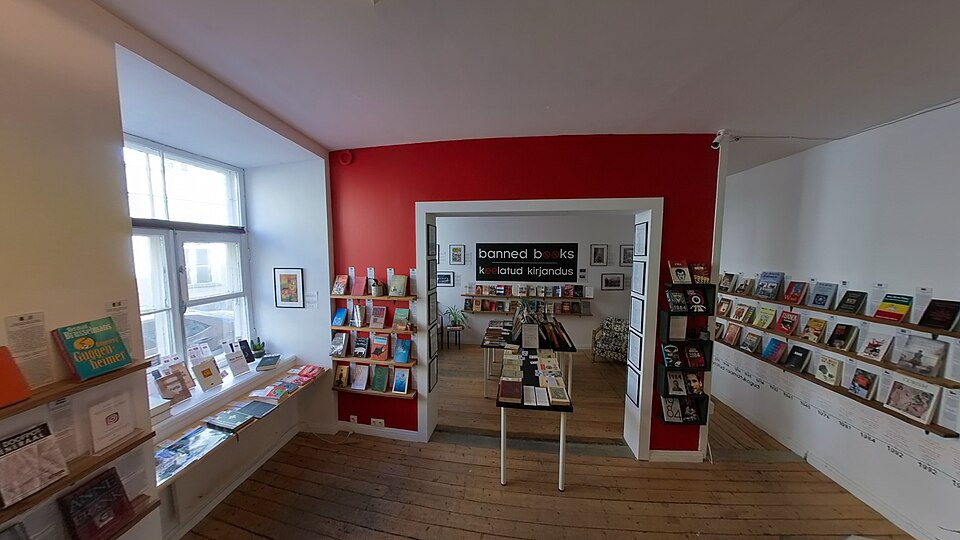
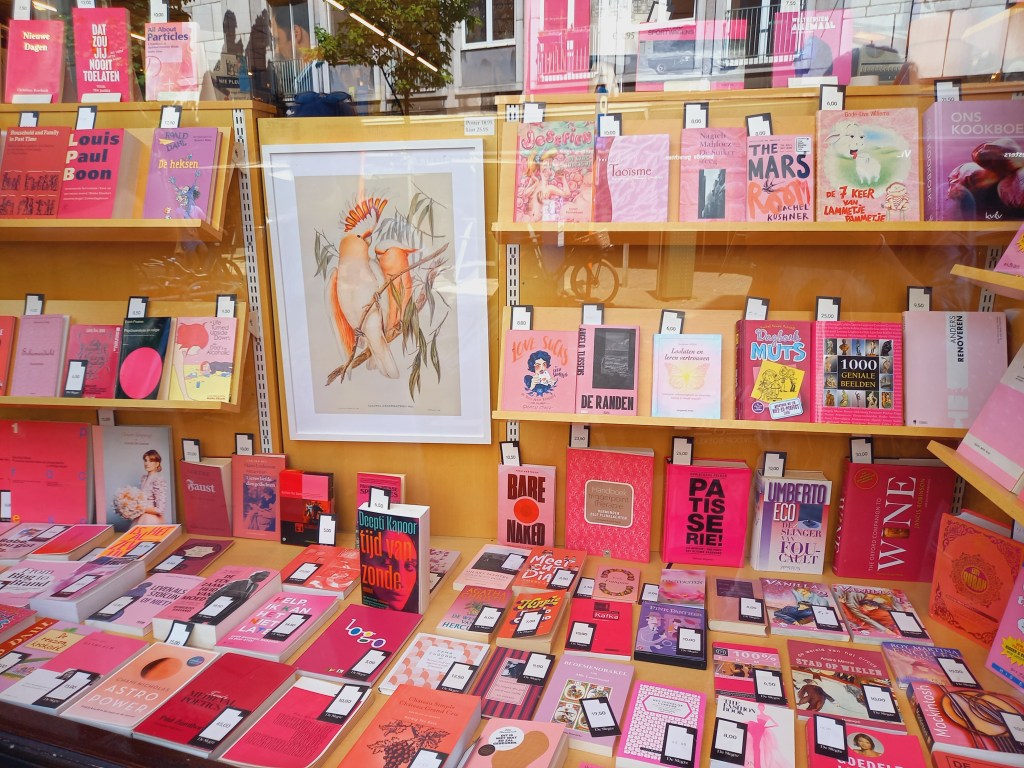
Recently, I had a short reunion with the friend I met 35 years ago during a holiday to China. Our reunion last year was in Ghent, Belgium. I was very pleased to discover a branch of De Slegte, second-hand bookshop, in the same street as our hotel. I’d come by train with a rucksack: spending was modest.


I lent Eleven Kinds of Loneliness by Richard Yates to my friend, so she had reading material for her journey back to the UK. I am a keen reader of short stories, glad to have the paperback returned to me. I enjoyed these: the mundane sadness of domestic life.


As the blurb says: ‘a haunting mosaic of the 1950s, the era when the American dream was finally coming true – and just beginning to ring a little hollow.’ Yes, it’s bleak, like Raymond Carver without the humour. Yates had a difficult childhood and suffered from TB which must have coloured his view of life.


Yates is probably best known for his first novel Revolutionary Road. It was published in 1961 and an instant success. The 2008 film with Kate Winslet and Leonardo DiCaprio was true to the book.

Bookshop De Slegte, Ghent, Belgium

Mary Ruefle’s My Private Property (2016) includes 11 short pieces about Sadness which are spread throughout the book. Here is an extract from Granta’s website:
‘Red sadness never appears sad . . . it appears in flashes of passion, anger, fear, inspiration and courage, in dark unsellable visions; it is an upside-down penny concealed beneath a tea cosy.’


Writing prompt


Go with loneliness or sadness if it appeals. Or choose another emotion/feeling you would like or not like to write about. Choose a few colours which you like and a few you don’t. What comes out of the melting pot? In her prose poems, Ruefle mixes the descriptions of concrete objects with some abstraction, and off-beat imagery: Grey sadness is the sadness of paper clips and rubber bands, of rain and squirrels and chewing gum,….

Yellow sadness is the surprise sadness. It {….} is the confusing sadness of the never-ending and the evanescent…

Archive

Aus Herzen und Hirnen spriessen die Halme der Nacht, 2019-2020. Oil, acrylic, emulsion, shellac, straw, gold leaf, wood and metal on canvas. Dims: 471 x 841,5 x 36 cm. Collection Voorlinden.

Our guest poet this month is Patrick Wright. As I was reading his collection Exit Strategy (Broken Sleep Books, 2024) I came upon the poem Archive and discovered that Patrick and I are both very interested in Kiefer’s work.

For me one of the highlights last year was visiting Bilderstreit, a major exhibition of Kiefer’s work at Voorlinden Museum, The Netherlands. A few weeks earlier I had watched the documentary that Wim Wenders made about Anselm Kiefer. I was blown away too by the film: it’s in black-and-white and one can watch it through 3D glasses.

Kiefer was born during the bombing raids in the final months of WWII. For him, everything exists somewhere in the cycle of death and rebirth. Whenever he creates a new work, he knows that one day he will destroy it: attacking it with a flamethrower, axe, bolt cutter, or red-hot liquid lead.

ARCHIVE
After Anselm Kiefer

Before his landscapes scorched by war and history, paintings of straw
and glue, your golden hair, Margarethe, before ‘Death Fugue’, I was back at
school, deep winter. In the yard blew a few stray crisp packets; seagulls
pecked at crumbs. The annex and fence had the look of an abandoned
camp, in Polish hinterlands. Through a cloakroom window I peered,
looking for a ghost of myself, then at a ghost of myself, as the sun
poked out from a cloud and the contours of bulimia gazed back, in
sepia tones. I saw the bullies too, with razored eyebrows, piercings,
fists in my gut, spit on my shoulder, the stench of Lynx, using queer
as an insult. With my SLR, I clicked more in hope than expectation.
I fumbled with fixative, the stop bath, the gelatin swell. My negatives
solarised. I kept re-visiting as a witness. Those days, I bit the inside
of my lip, stubbed cigarettes out on my arm. When the dysmorphic
class photos were framed, still as that winter, your golden hair, said the
Kiefer print, your golden hair, Margarethe.

Saved by bankruptcy

Photo credit: Pieter van Marion, NL

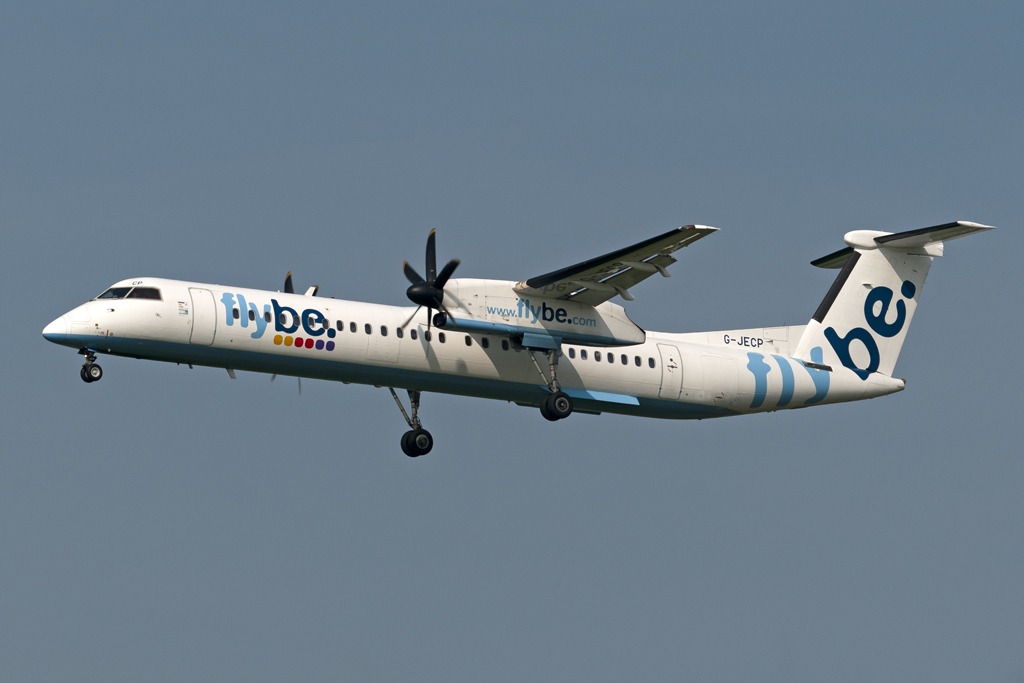
I had booked return flights Manchester – Exeter to visit my poet friend Kathleen. My trip was going to be in the third week of March 2020. On the 5th of March Flybe filed for administration and ceased all operations immediately. I lost £65, but I was very relieved: If I had flown to Exeter, I might well have been stuck in Devon as that first lockdown started…


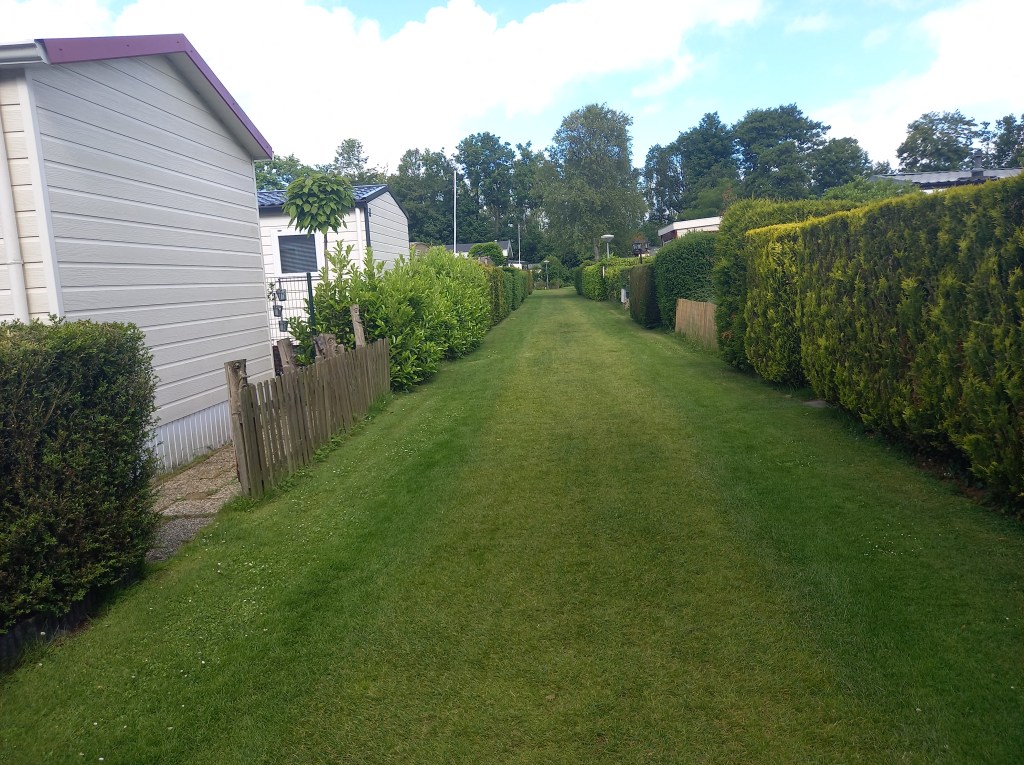
On Sunday 15 March I learned the British government was considering a compulsory quarantine. The next day I emailed the owner of the campsite asking if I could arrive early. He replied immediately. I booked a flight, transferred money, packed, agonised over which poetry books to take to my ‘desert island’ near The Hague. I flew to Schiphol on the Wednesday. The local buses already had the area near the driver closed off with white-red plastic.


Here are two poems about that first lockdown:

The departure

Half a century condensed into Brexit, pandemic.
At the threat of a four-month’ compulsory
quarantine I fled to my bolthole in Holland.

Six months of safety in a static caravan,
waking to birdsong each morning,
shielded from the sun by the golden elm.
I walked my daily rounds on the grass lanes.

Forsythia, tulips, narcissi, rhododendron,
pyracantha, salvia, rock rose, asters:
the seasons’ steady markers. From a distance
I waved to neighbours finally arriving.

In the cupboard of the spare room
lay the letter confirming my ‘settled status’
on the other side of the North Sea.

The undertakers

A double spread in the paper
features a large photo.

This man, in his thirties, a narrow
horizontal moustache, soft smile.

He sits in a wooden boat, his right hand
resting on a plain white coffin.

People are asked to email text and selfies.
Made into cards, these are placed on the coffin.

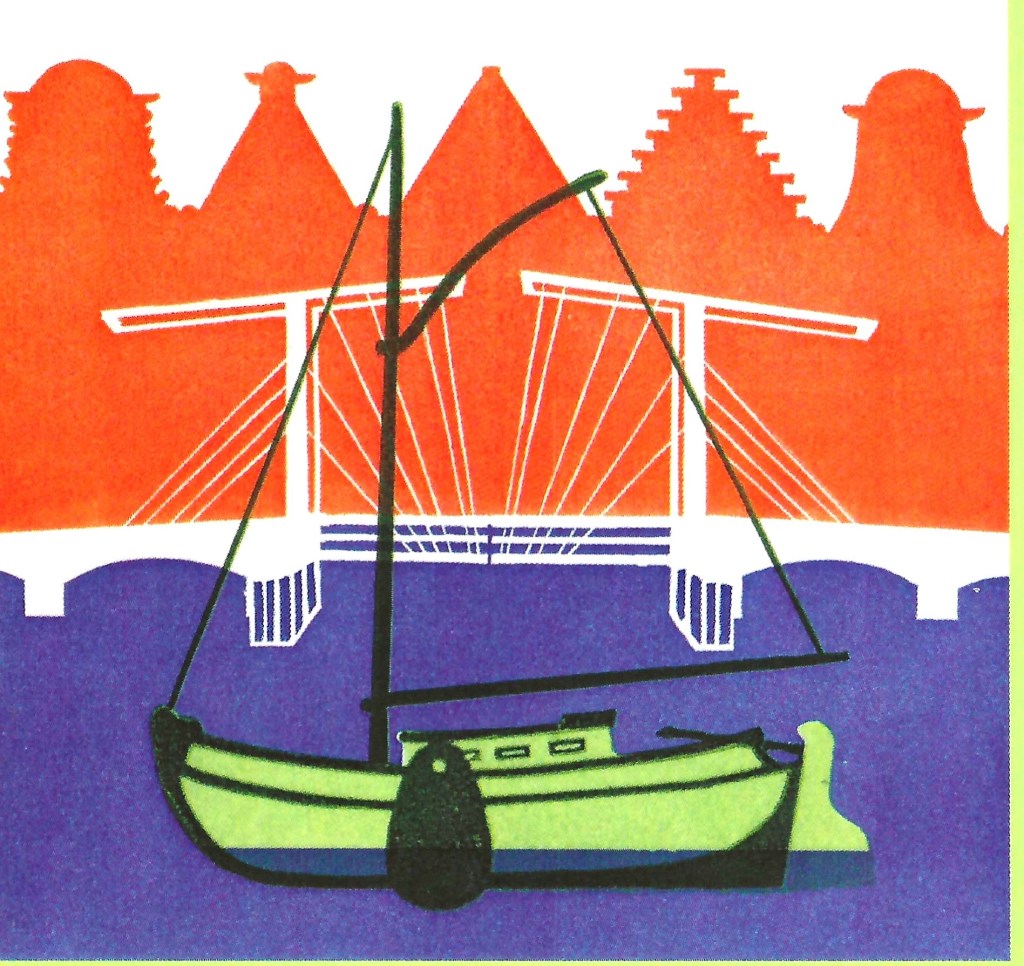
He is based in Amsterdam, will transport
you safely through the canals.

That undertaker has just opened a crematorium.
He also owns a chain of hotels.

The pandemic has cut the numbers allowed
to be in the room. There is livestreaming.

People, he says, are glad of it.
The intimacy makes it easier to speak.

At the end of September 2020, the campsite closed. I got a Covid test somewhere in the centre of The Hague and flew back to Manchester.

Late lockdown poem

I wake up and know, of course,
that I am not a morning person.
The sound of rain, of course,
and fewer sirens as people
are supposed to be at home.
My lifelines are the same, of course:
motto, comfort break, medication.
Of course, I think about exercise,
settle for Composer of the Week,
dead, of course.

Marie-Louise Park, Didsbury, Manchester, UK

A postage stamp, Joshua calls it

He’s right and there’s traffic noise
from the main road and people
with dogs on long leads,
but not all the benches
are dedicated to the dead,
Marie-Louise is a pretty name
for a park and the 43 Airport bus
is a hybrid and no-one much
was going to the airport
that autumn: I often had the bus
to myself, both ways.

Friday, 13 March 2020

Tuesday, 3 March 2020

As I was updating the website recently, I was reminded of the lovely interview that Andy N Poet did that very Friday. He came to the flat in Manchester where I then lived. On the 3rd of March I had launched a pamphlet and my second collection at the International Anthony Burgess Foundation. The launch was one of the reasons for the interview. Andy has now done several hundred interviews. You can find them all on Spokenlabel.bandcam.com Here is the link to my interview: SpokenLabel

When I listened to the interview this week, it felt spooky at times. Early February 2020 I had received confirmation of my ‘settled status’. I told Andy that I hoped to spend ‘most of the summer’ in my caravan in The Netherlands, that I couldn’t immediately tell him who my ‘desert island’ poets would be. At one point Andy mentioned the ‘virus’.

Here is a poem about that Friday from Kate Noakes who is our guest poet this month. The poem is from her 2024 Chalking the Pavement published by Broken Sleep Books.

The sick spring

Thirteenth March, a Friday with which comes
a most lauded play, Stoppard’s last contract:
Vienna, and a family succumbs,
fortunes and losses in Leopoldstadt.

I am treated to the stalls by a friend
of a friend, a nice man I do not know.
His cancelled cultural holiday ends
with a short email critique of the show.

I give him scenes, chronology, pictures,
timings avoiding history’s clichés;
how I stepped into busy Leicester Square
with foreboding that hurried me away,

and how I scurried home to a semi-death:
headache, sore throat, cough and struggle for breath.

Sleight of Mind

Image via Pixabay, courtesy Gregory Delaunay

It is a great pleasure to introduce this month’s guest poet David Bingham. We first met many years ago through the British Haiku Society. David was President of the Society from 2020-2022, and in 2020 he was the winner of the British Haiku Society International Haibun Prize. His poetry appears regularly in a wide variety of magazines. See below for further details.

The haiku have all been previously published: in Presence, Blithe Spirit, or Time Haiku. The tanka first appeared in Blithe Spirit and the BHS Tanka Anthology 2022, while the haibun was the winner of the British Haiku Society International Ken and Noragh Jones Haibun Award, 2017. I hope you enjoy the selection.

Haiku

a lifetime
overcoming gravity –
still it gets me down

Private Keep Out
molehills on both sides
of the fence

clear night sky –
lights from both the living
and the dead

away
in the wind …
the word-filled air

is there a word for it?
the sound swans make
when they fly

late spring meadow…
within the yellow
the blue of summer

storming
the old hill fort – bluebells  
and celandine

inland sea
the wash from our boat
moves the border

stream through sunlight through stream

closing over
trails in algae where
the ducks have been

I turn
to call the dog …
then remember

Euston Station –
my skin ripples
in the hand drier

an apology…
the predictive text writes
it for me

Tanka

sun shine
and motorway spray –
I drive through
rainbows
to be with you

silently together
after all that talk
watching swallows
hawk for flies over
the meadow

on waking
I turn my dreams
inside out
letting the seams show
for the rest of the day

doors left
wide open revealing
an unlit space
nothing here to steal
but the darkness

Haibun

Sleight of Mind 
 
Some people need to know how he pulls the shining light bulbs from his mouth, levitates above the stage or escapes from a straightjacket.
 
Me, I like the mystery of it; the explanations are always so mundane. True magic lies in the imagination. Switching off the rational mind. Letting yourself go and trusting the conjuror.
 
I do it with words. Like how I brought you here. Even if you asked me, I couldn’t tell you how it’s done.
 
snowdrops …
mistaking ‘what is’
for ‘what isn’t’


Biography

David Bingham’s debut poetry collection The Chatter of Crows was published by Offa’s Press in October 2014 and in 2020 he was the winner of the British Haiku Society International Haibun Prize.

His poetry appears regularly in a wide variety of magazines, including Blithe SpiritTime Haiku and Presence and in anthologies, including: the Wenlock Poetry Festival anthologies for 2012, 2014, 2015 and 2016; Beyond Words, 2018 and where silence becomes song, 2019, the International Haiku Conference Anthology, published by the British Haiku Society; In the Sticks, 2021 and Away with the Birds, published by Offa’s Press; In Snow and Rain, 2022, an anthology of tanka published by the British Haiku Society; and Festival in a Book, published by the Wenlock Poetry Festival, 2023.

At different times, he was editor of both Borderlines and Blithe Spirit magazines and joint editor of the haiku and related genres anthologies Ripening Cherries, published by Offa’s Press, 2019 and Shining Wind published by the British Haiku Society, 2024.

He has read his work in arts centres, pubs, theatres, on local radio and poetry and literature festivals. He has read at City Voices in Wolverhampton, Country Voices in Shropshire and as a member of Green Wood Haiku at the BHS International Haiku Conference in St Albans in June 2019.
 
As part of the humorous poetry double act, Bingham and Woodall, he has performed at the Wolverhampton Lit Fest and Comedy Festivals in 2017 and 2018, and at the Ironbridge Festival in 2019.


Breakfast

Here in The Netherlands Kookboekenweek (Cookery Books Week) has just ended. A recent annual event, it’s designed to promote cookery books. Bookshops and libraries organise workshops, lectures, and tasting events. Of course, it’s all to encourage people to buy books as presents for December: St Nicolaas and Kerstmis.


Professionals shortlisted six books (Vietnamese, Japanese, Indian, Italian (2), and baking skills). They’ve chosen Bloem Suiker Boter, by Nicola Lamb, translated into Dutch. I’m going with Breakfast, a poem celebrating poetry and friendship.

Breakfast

Bridie would be in the kitchen,
barking with Finn and Tara
in a metal cage under the table.
I’m in your backroom, sheepskin
on the seat of the wooden chair,
just gone 9 o’clock this Tuesday.

You’ve made the scrambled eggs
exactly as I like them, with enough
mustard and fresh chives.
Now you’re coming in with yours,
followed by your small dogs
who settle on the settee, by the fire.

We catch up over this monthly meal.
Soon we’ll sit silently behind our laptops,
typing up poems from old notebooks.
Now eating toast with ginger preserve,
I look out of the window; the smiling
Buddha is lit up by the sun.

Flying a kite

My friend Kathleen Kummer recently had her 95th birthday. We have had a weekly telephone call since the start of the first lockdown in March 2020. Kathleen’s poems from her collection Living below sea level have featured here before.


Flying a kite refers to the ‘90s, as the grandson is now in his thirties. He lives abroad, but regularly visits. A variation on the villanelle form, the poem successfully blends the personal and the universal.

Flying a kite

My grandson and I are flying his kite.
Though we stand on the earth’s green rim in spring,
there’ll be talk of wars on the news tonight.

We have climbed the steep meadow, have not taken fright
at the notice, Beware of the Bull. Larks sing
as my grandson and I are flying his kite.

We have coaxed it upwards, where wind and light
give life to what was a limp, gaudy thing.
Time enough for reports of the fighting tonight.

Its streamers rippling, the wind just right,
it rides the skies, a jocular king.
My grandson and I are flying his kite.

These skies are empty, but for the flight
of buzzards and invisible larks on the wing.
The skies they will show on the news tonight

will be apocalyptic, eerily bright
with the clever ways of destroying and killing
to which the whole world claims the right.
I am watching my grandson wind in his kite.

Boxes

It’s good to get an acceptance and even better when it’s prompt! Thanks to Paul Brookes for accepting this poem and two others for his online poetry journal The Starbeck Orion. You’ll find it here: the 880.substack.com. Issue 4 is themed. Current contributions are open themed.


You will be asked what your favourite constellation is. I bought the domain name acaciapublications in the early 90s, so you won’t be surprised that Camelopardalis is mine. It is a large but faint constellation of the northern sky representing a giraffe.


The poem was written from a prompt on the Boxes workshop with Graham Mort. WordPress wanted to make it a list, which messed up the numbers the lines had. We like a non-sequitur…

Boxes

I declined it. The man in black nodded, walked back to the horse.

Boy, am I glad I can feel my legs.

There must always be doors for the pleasure of opening them. Cats know this.

Boardroom brown, expensive pens, hand-rolled cigars, promises on parchment.

On display in the glass case: the motorbike, black-and-white photos, three bullets.

Groundswell – so little land, so much water.

Was I not meant to see the deep scarlet lining?

A tribute

This post is a tribute to my brother Theo who died early on Tuesday morning in hospital. On the evening of Friday 28 June, he went out with his wife Ancilla to celebrate their 52nd wedding anniversary. After a lovely meal he had a fall in which he sustained serious brain damage. I spent time with him on the Saturday. Ancilla and my nephew were with him when he died.


It was only last autumn, when a MRI scan was taken for other purposes, that my brother learned that he had the rare condition of multiple cavernomas. This explains the paralysis and subsequent sudden hearing loss. The poem 1962 was published in my debut collection Another life.


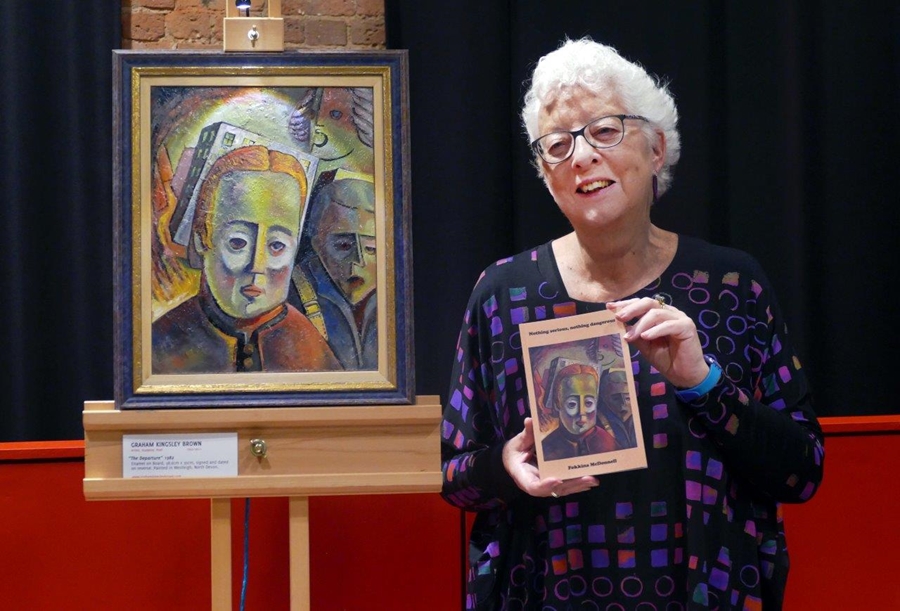
My brother had a rich and full life. The photo was taken in 2019 when he and Ancilla both received honours (Member of the Order of Oranje-Nassau) in recognition of decades of charity and community service.

1962

Alexander Eduard (coppersmith
in the bible and van Beinum,
the famous conductor).
Our Irish setter had been given
the names of an unborn child.

A ward of six, our parent’s daily
drive, almost an hour each way.
Neurologist, paralysis,
lumbar puncture, nausea
.

Grandfather owned an electrical shop
(double-fronted on the main street),
gave my brother a beige-brown radio.

The specialist allowed our red
Irish setter to visit my brother,
celebrating his fourteenth birthday
in the academic hospital in Leiden.

Three months later he arrived home,
just in time for Sint Nikolaas.
My brother still limped and his crown
was marked by two scars at right angles,
the space between dipped and dented.
A few days later grandfather came
to take his radio back.