Tag Archives: Haiku

Sleight of Mind

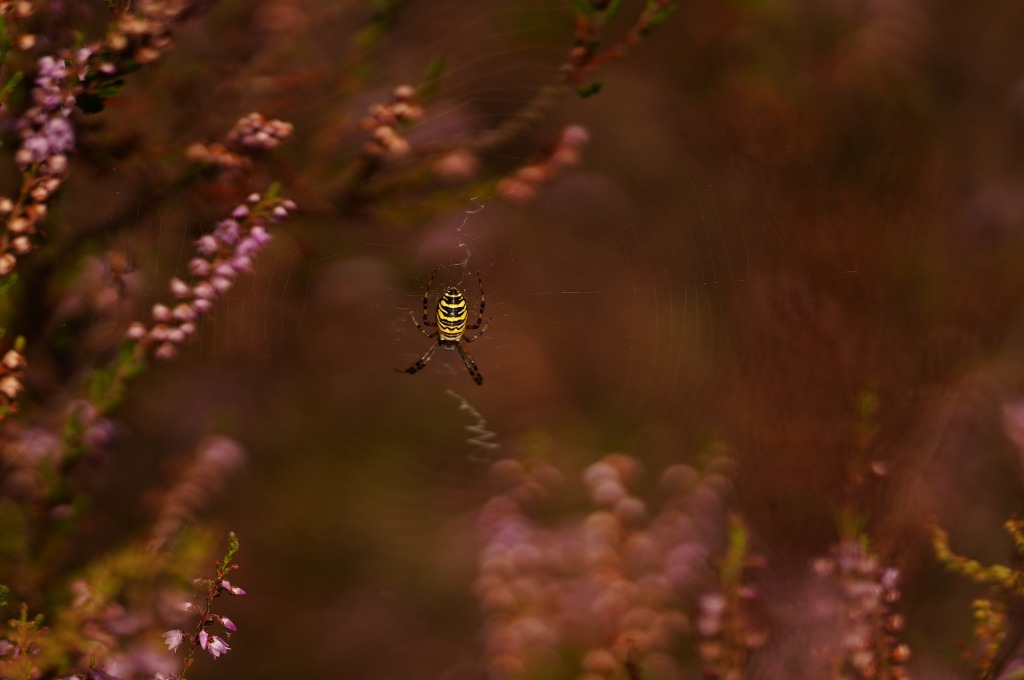
Image via Pixabay, courtesy Gregory Delaunay

It is a great pleasure to introduce this month’s guest poet David Bingham. We first met many years ago through the British Haiku Society. David was President of the Society from 2020-2022, and in 2020 he was the winner of the British Haiku Society International Haibun Prize. His poetry appears regularly in a wide variety of magazines. See below for further details.

The haiku have all been previously published: in Presence, Blithe Spirit, or Time Haiku. The tanka first appeared in Blithe Spirit and the BHS Tanka Anthology 2022, while the haibun was the winner of the British Haiku Society International Ken and Noragh Jones Haibun Award, 2017. I hope you enjoy the selection.

Haiku

a lifetime
overcoming gravity –
still it gets me down

Private Keep Out
molehills on both sides
of the fence

clear night sky –
lights from both the living
and the dead

away
in the wind …
the word-filled air

is there a word for it?
the sound swans make
when they fly

late spring meadow…
within the yellow
the blue of summer

storming
the old hill fort – bluebells  
and celandine

inland sea
the wash from our boat
moves the border

stream through sunlight through stream

closing over
trails in algae where
the ducks have been

I turn
to call the dog …
then remember

Euston Station –
my skin ripples
in the hand drier

an apology…
the predictive text writes
it for me

Tanka

sun shine
and motorway spray –
I drive through
rainbows
to be with you

silently together
after all that talk
watching swallows
hawk for flies over
the meadow

on waking
I turn my dreams
inside out
letting the seams show
for the rest of the day

doors left
wide open revealing
an unlit space
nothing here to steal
but the darkness

Haibun

Sleight of Mind 
 
Some people need to know how he pulls the shining light bulbs from his mouth, levitates above the stage or escapes from a straightjacket.
 
Me, I like the mystery of it; the explanations are always so mundane. True magic lies in the imagination. Switching off the rational mind. Letting yourself go and trusting the conjuror.
 
I do it with words. Like how I brought you here. Even if you asked me, I couldn’t tell you how it’s done.
 
snowdrops …
mistaking ‘what is’
for ‘what isn’t’


Biography

David Bingham’s debut poetry collection The Chatter of Crows was published by Offa’s Press in October 2014 and in 2020 he was the winner of the British Haiku Society International Haibun Prize.

His poetry appears regularly in a wide variety of magazines, including Blithe SpiritTime Haiku and Presence and in anthologies, including: the Wenlock Poetry Festival anthologies for 2012, 2014, 2015 and 2016; Beyond Words, 2018 and where silence becomes song, 2019, the International Haiku Conference Anthology, published by the British Haiku Society; In the Sticks, 2021 and Away with the Birds, published by Offa’s Press; In Snow and Rain, 2022, an anthology of tanka published by the British Haiku Society; and Festival in a Book, published by the Wenlock Poetry Festival, 2023.

At different times, he was editor of both Borderlines and Blithe Spirit magazines and joint editor of the haiku and related genres anthologies Ripening Cherries, published by Offa’s Press, 2019 and Shining Wind published by the British Haiku Society, 2024.

He has read his work in arts centres, pubs, theatres, on local radio and poetry and literature festivals. He has read at City Voices in Wolverhampton, Country Voices in Shropshire and as a member of Green Wood Haiku at the BHS International Haiku Conference in St Albans in June 2019.
 
As part of the humorous poetry double act, Bingham and Woodall, he has performed at the Wolverhampton Lit Fest and Comedy Festivals in 2017 and 2018, and at the Ironbridge Festival in 2019.


To Live Here

This month’s guest slot is for poems from To Live Here, an anthology of haiku published by The Wee Sparrow Press. The Press was founded by Claire Thom. 100% of the proceeds of their anthologies are given to charity.

The anthology is edited by Giorgia Di Pancrazio & Katherine E Winnick. The lovely cover and illustrations are by Scottish artist Colin Thom.

To Live Here is “A collection of haiku on the theme of home, which explores the many facets of human experience, from the mundane to the sublime. Featuring the work of talented poets from around the world, this anthology invites readers to reflect on the beauty and complexity of the world we inhabit.”

Salford Loaves and Fishes, a charity supporting the homeless, has already received over £600. The anthology is available through Amazon – ISBN 9788409528165. I’m grateful to Francis Attard and Julie Mellor for permission to share their haiku.

sandy beach
turtles lay clutches of eggs
off-shore breeze

Francis Attard, Malta

three cornered field
the generations
who farmed here

Julie Mellor

on the verge a stork stepping out

Fokkina McDonnell

as if thrown by a boy

Here is the second selection of poems by Judy Kendall, our June guest poet. She lived and worked in Japan for almost seven years. Cinnamon Press published four collections of her haiku and ‘mainstream’ poems. You can find her biography below her writing.

Poems:


The First Fountain Ever Placed In A Japanese Garden

for my mother

more than half
is the sound of it
as it splashes on the stone rim

this is the part
the thousands of photographs
will never reach

their takers stop
to make a frieze
and then move on

no chance of hearing
the other half
clapping its moving shadow in the trees

the shudder
when the leaves
follow the foam

which drops, unmoved
as if thrown by a boy
to fall through air

diluting
dissolving
into parts


Note:
The first fountain in a Japanese garden was built in Kenroku en, Kanazawa, in 1861


Driving To Noto

Men are better says Toshi I know
no they are not says I (I also know)
and so we argue to the tip of Noto

To Suzu where the wood huts slump in shock
plopped suddenly in frocks of snow
and the sea is whipped to icicles of frenzy

Over a nabe pot of fish and cabbage
(Toshi warns me not to call it cabbage
for it is the vastly superior hakusai)
our host asks me my age

Taken aback
(I`m older than he thought
more single), he inquires
don’t you like men?

So I assure him
only frequent country-moving
has prevented me from choosing
one of them

The returning road is white, wide as a field
the ditches spread themselves with frosting
and the windscreen blanks out like a blizzard

Toshi scrapes at the iced-up wipers singing
to himself, waving me in

Midwinter hangs in the boughs

The pine trees are bent nearly in two
laden with second helpings

(earlier version published in Ambit)

Short poem, haiku and tanka from The Drier The Brighter (Cinnamon Press, 2007):

Poem:

5 am

these cold skies
cheating the dawn,

these bits of tree,
blocks of houses too close to houses,
shrouded people, shrinking in the weather.

Haiku:

too much autumn
the reds are almost scorching now
a mouth brimming with leaves

tanka:

leaving.

not one stick of furniture
in the room.
in the heart,

no tears.

(previously published in Presence)

Biography:

Judy Kendall worked as an English lecturer at Kanazawa University in Japan for nearly seven years. When she first went to Japan she was a practicing playwright but she soon began to focus on poetry and haiku, kickstarted by an invitation to to participate in a collaborative translation of Miyaiki Eiko’s haiku. This became the bilingual publication Suiko /The Water Jar. Since then she has been writing haiku and haibun along with other poetic and prose forms. The haiku mode has informed her four Cinnamon Press poetry collections, particularly Joy Change – composed while she was in Japan. She has won several poetry awards, recently receiving a 2019 Genjuan International Haibun An Cottage prize, and is the essays and bilingual translations editor for Presence haiku journal. She has also run the Yorkshire/Lancashire haiku group.

She is Reader in English and Creative Writing at Salford University, and aside from haiku and haibun, works as a poet, poetry translator and visual text exponent. She has published several articles and books on the translation and creative process, including ‘Jo Ha Kyu and Fu Bi Xing; Reading|Viewing Haiku’ in Juxtapositions, 1 (2). She is currently putting the finishing touches to a monograph for Edinburgh University Press on Where Language Thickens (focusing on the threshold between articulation and inarticulation in language – a threshold in which haiku itself is surely situated).

a horizon of lilies

It’s a great pleasure to introduce this month’s guest poet Judy Kendall. We met many years ago through our membership of the Yorkshire/Lancashire Haiku group. Judy lived and worked in Japan for nearly seven years. Cinnamon Press published four collections – containing haiku and ‘mainstream’ poems. You can read Judy’s full biography further down. I’ll post a second selection of Judy’s writing next month.

Haiku published in Presence

shades of blue distance in the fells

afternoon off 
red grouse in flight 
almost grazing the heather

moorland air
just after a curlew’s call
liquid fresh—

travelling light
I will my neighbor
to turn the page

(published in Presence and selected for Red Moon Best English Language anthology)

Short poems or ‘vegetable’ haiku published in insatiable carrot (Cinnamon Press, 2015)

[Many of these have featured on Incredible Edible Todmorden’s Edible Poetry site and on or around the town]

tall green mild and meek
not quite the full onion
the gentle leek

hairy bitter cress
going wild
among
the cabbages

snug by the wall
the one the pennine wind forgot
Todmorden’s first apricot

taken apart, the cabbage
becomes all heart
and leaves

chunky, nobbly-eyed
the potato says ‘hi,
will you be my friend?’

Haiku and poems from Joy Change (Cinnamon Press, 2010)
Haiku:

wooden geta
the water quivers with carp
a horizon of lilies

sickle moon, yellow
and black, on my way
back to the heart

(still international haiku competition)

watching the breath come
and go, who am I but
a broken bit of star?

(still international haiku competition)

drifting
mountains shoulder the sky
blotches of pine

(Asahi Shimbun)

Biography

Judy Kendall worked as an English lecturer at Kanazawa University in Japan for nearly seven years. When she first went to Japan she was a practicing playwright but she soon began to focus on poetry and haiku, kickstarted by an invitation to to participate in a collaborative translation of Miyaiki Eiko’s haiku. This became the bilingual publication Suiko /The Water Jar. Since then she has been writing haiku and haibun along with other poetic and prose forms. The haiku mode has informed her four Cinnamon Press poetry collections, particularly Joy Change – composed while she was in Japan. She has won several poetry awards, recently receiving a 2019 Genjuan International Haibun An Cottage prize, and is the essays and bilingual translations editor for Presence haiku journal.

She is Reader in English and Creative Writing at Salford University, and aside from haiku and haibun, works as a poet, poetry translator and visual text exponent. She has published several articles and books on the translation and creative process, including ‘Jo Ha Kyu? and Fu Bi Xing; Reading|Viewing Haiku’ in Juxtapositions, 1 (2). She is currently putting the finishing touches to a monograph for Edinburgh University Press on Where Language Thickens (focusing on the threshold between articulation and inarticulation in language – a threshold in which haiku itself is surely situated).

Books, books, books…

World Book Day is on the 23rd of April. In the UK it takes place on the 2nd of March to avoid clashes with spring school holidays and St. Georges’ Day.


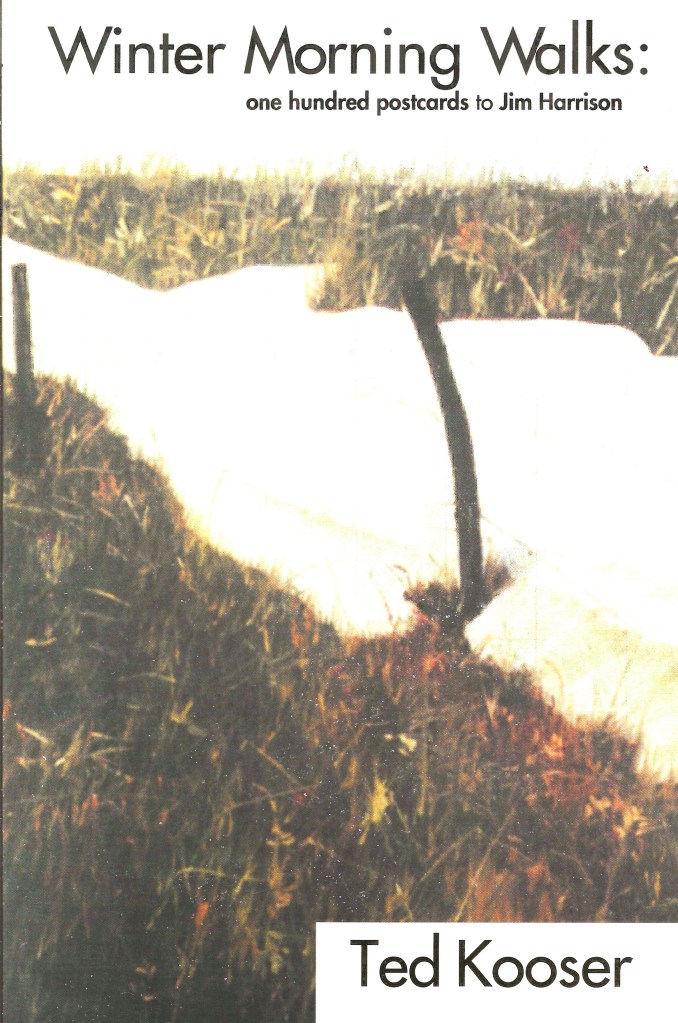
A fellow poet introduced me to the American poet Ted Kooser, now in his early 80s. His style is accomplished, yet extremely simple. My current bedtime reading is his poetry collection Winter Morning Walks: one hundred postcards to Jim Harrison (Carnegie Mellon University Press, 2001).


In the late 90s Kooser developed cancer. He gave up his insurance job and writing. When he began to write again, it was to paste daily poems on postcards he sent to his friend and fellow writer Jim Harrison. In the preface, Kooser tells us ‘I began to take a two-mile walk each morning. I’d been told by my radiation oncologist to stay out of the sun for a year because of skin sensitivity, so I exercised before dawn, hiking the isolated country roads near where I live.’ These country roads are in Nebraska.


The poems cover a period from 9 November until 20 March. In the poems Kooser doesn’t directly talk about the illness. He does so through metaphor. All the poems include a brief description of the weather. The clear and precise observation gives them a haiku quality.


Here is his postcard for march 5:

Very windy and cold.


A flock of robins bobs in the top
of a wind-tossed tree,
with every robin facing north
and the sky flying into their faces.
But this is not straightforwardness,
nor is it courage, nor an example
of purpose and direction
against insurmountable odds.
They perch like this
to keep their feathers smooth.

coming light

I am very glad to introduce this month’s guest poet Sheila Butterworth. We met many years ago, in that Yorks/Lancs Branch of the BHS. I let Sheila introduce herself and her haiku.

“Winning the Leeds Waterstones Haiku Competition in 2000, organised by the Yorks/Lancs Branch of the British Haiku Society, introduced me to the world of haiku poets, workshops, journals and a network of local poets with whom to chew the haiku fat. I have since had poems published in Blithe Spirit, Presence, The Snapshot Press Haiku Calendar, Wales Haiku Journal and The Red Moon Anthology.

Most of my haiku come out of the everyday experiences of life within a mile of my edge of village doorstep where I have lived for 40 years. This is where I notice those things that have most meaning to make haiku. The familiar environment highlights the nuances of change in place, in time and in me and this is when haiku happen.”

coming light
the bubble and trill
of robin and wren

high street dawn
the smell of sweet dough
folds into the fog

morning mizzle
molehills spatter
the spring pasture

planting potatoes
startled sparrows
scatter in the quickthorn

summer rain
the shining bole
of a sapling ash

evening sun
the shadow of the wood
fills the field

standing out
in the half light
borage blue

passing by
the old doctor
walks into the wind

the white tip
of a fox’s tail
above the snow

instead
I blow the dust
from a bowl of sea glass

Three shorts – writing prompt

Credit: Mammiya via PIxabay


1
I discovered Pome only a couple of months ago and am enjoying the poems very much: an interesting range and they are short, even very short. As I understand it, Matthew (Matt) Ogle originally posted the poems some years ago and the project has restarted via Tiny Letter.


Here is an Issa haiku, translated by Robert Hass. Since I am a paid-up member of the Society for the Prevention of Cruelty to House Dust, it speaks to me …


Don’t worry, spiders,
I keep house
casually

2
Monostich – a poem or epigram of one single line. The title is important and may be long, longer even than the poem. My recent example from a course I’m doing:


While it rained, we went out and put the poster on trees and lamp posts in the neighbourhood


It needs heart and courage (lebh in Hebrew) to wear a pochet with conviction.

3
Here is a short poem by Carl Tomlinson from his Changing Places. It has a haiku-like quality. Carl is the May guest poet. I look forward to sharing more of his poems with you then.

August


All along the bridleway
some kind of rain
is trying to shake off the wind.
The land feels thinned.

first in the office – haiku

Matthew Paul is one of a small number of poets who write both haiku and longer poems. A selection of the latter was featured here on 5 July 2020.

On Lammas Day here is his selection from The Lammas Lands, beautifully produced by Snapshot Press, followed by his thoughts on writing both haiku and longer poems. I relate to the bugbear he mentions!

The Lammas Lands

first in the office
my whistling echoes
up the stairwell

onto my fingers the rust of the farmyard gate

school’s out
the riverbank flush
with tansy florets
 

the last sun
across the lammas lands
perennial asters

cobweb morning
the merest outline
of ship funnels

two years old
she grasps with both hands
the autumn wind

through an angler’s pipe-smoke rising jays

touch of sleet—
making space for
the guide dog

white skies
a hare skedaddles
over Wealden clay

*

I discovered haiku at the age of 15 or 16, firstly through an English teacher at school and then by reading The Dharma Bums, Desolation Angels and The Penguin Book of Japanese Verse. I tried writing them shortly afterwards, at pretty much the same time I started writing longer poems. I’ve written both fairly regularly since then, though I went through a long period – from 1990, when the British Haiku Society was founded, until 2010 – in which I concentrated more on haiku. In the last 10 years, my focus, as a writer – as opposed to editor or reviewer – has been much more on longer poems.
 
For me, the engagement needed for one is rather different to the other. Being able to write effective and affective haiku stems from being in the moment, using all your senses to pick up on what you’re experiencing and finding a charge between two different objects/elements which you are perceiving at the same time. ‘Desk’ haiku are almost always obvious and lacking the spark born from real sensory experience.


Longer poems can, of course, also have content born of, or responding to, ‘the moment’ and can therefore be haiku-esque in how they treat their subject-matter – Imagism was often like that, and haiku itself was born from longer forms. But longer poems for me have much more space and freedom to move back and forth through time and, if necessary, tell a story, whereas haiku can’t do that in any meaningful way because of their intrinsic brevity.


My longer poems are probably more likely to be mini-stories than those of most poets precisely because of the freedom they afford which isn’t available within the form of the haiku. (I should add that achieving any consensus among English-language haiku poets about the essential qualities of haiku has repeatedly been proven to be impossible!)
 
One of my bugbears is that longer-form poets often use what they think of as haiku as a means simply to sharpen their powers of perception, as if it’s child’s play. Whilst that may well work for some people, I feel that approach rather misses the point of haiku. Like any art form, it takes a long time to become adept at it, albeit that an ‘apprentice’ haiku poet can have a freshness of perception which is often labelled “beginner’s mind”.


On the whole, though, I find it annoying when poets put their first, usually clunky attempts at haiku out on social media or, worse still, into print. Haiku in English do not have to be – though they can – be written as three lines of five-seven-five syllables. It’s common sense, isn’t it, that the essence and power of haiku aren’t derived from syllable-counting, but from direct, lived experience. Like many haiku poets, I have reservations about even calling my haiku ‘haiku’, because the original Japanese art-form is so freighted with Japanese culture and history – and translators from the Japanese into English invariably repeat the mistakes of previous translators!

Almost hidden by grass – haiku

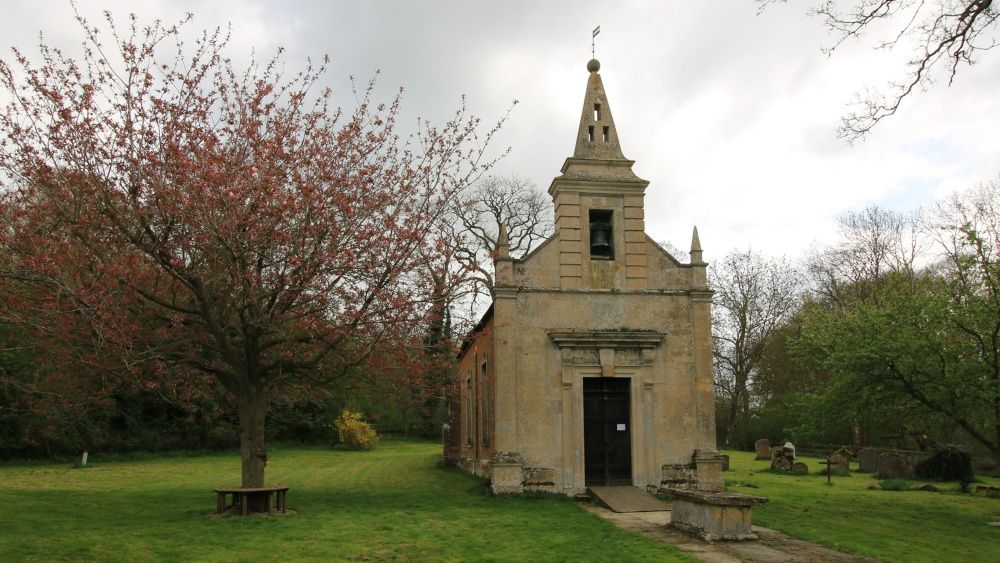
St John’s Church, Little Gidding, Huntingdonshire

It is 20 years since I visited Little Gidding, as the mid-week trip on a one-week course at Madingley, part of Cambridge University. Our tutor that week was the poet Lawrence Sail. Last Sunday I featured four poems from his collection Guises. That week I also met Kathleen Kummer who has become a good friend. Her poems have featured here over the last few months.

Little Gidding is famous for being the fourth and final poem of T S Eliot’s Four Quartets. Eliot had visited Little Gidding in 1936. The title refers to a small Anglican community in Huntingdonshire, established by Nicholas Farrar in the 17th Century.

I wrote the short sequence of haiku during my visit. It was published in Presence magazine.

Almost hidden by grass

following her
across the field
a white butterfly

almost hidden by grass
three wooden crosses

the church bell
covered
in pigeon droppings

pink geranium petals
a droning plane

on the terrace
calling us old, advanced –
the toothless guide

finding the pigsties
number one boarded up

as we leave
sunlight
on the font

Little Gidding, August 2001

Solstice – a haiku

It is almost Solstice, the day in December that means the most to me: the shortest day, the gradual turn towards the light.

I will celebrate with a short meditation, then some music and mulled wine. I send you warm wishes for Solstice, Christmas and for the New Year. Thank you all for your support and your comments. On Sunday 3 January I will post again.

The marvellous illustration is by gdizerega on Pixabay, and the winter solstice haiku by Matthew Paul. It was first published in The Haiku Calendar 2014.

winter solstice
the street-cleaner picks up                              
a glass half full