Category Archives: Writing Prompt

Blossoming and Abundance – poetry, writing prompt

Credit: Watercolour by Prawny on PIxabay

The 10th edition of Poëzieweek (Poetry Week) has just ended. Over 120 activities happened in The Netherlands and Vlaanderen (the Northern, Dutch-speaking part of Belgium). Some of these will continue during the year.


The theme this time was Nature. During any year there are a several ‘book’ weeks in The Netherlands and readers can claim a free book when they purchase up to a given amount. As poetry books are expensive here, the sum of Euro 12,50 was easily reached!

The Dutch-Palestinian author and actor Ramsey Nasr was commissioned to write the poetry gift this year. He is well-known, as he was the Dichter des Vaderlands (the unofficial title for poet laureate) during 2009 – 2012.


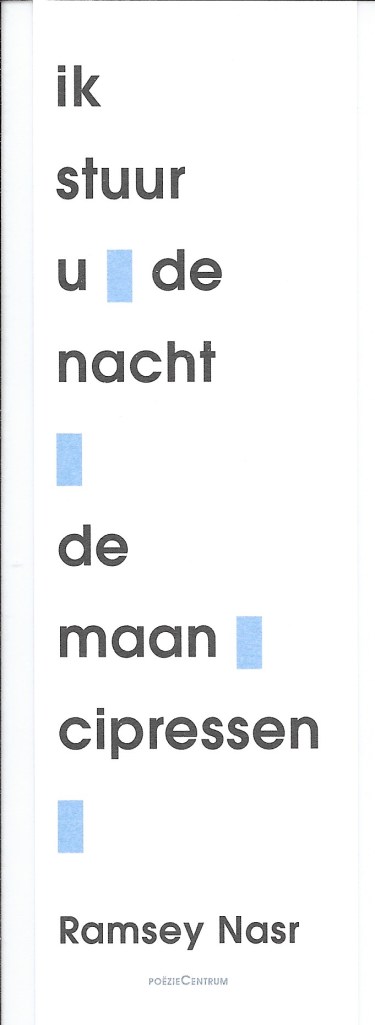
The pamphlet with 10 poems is well produced on quality paper. It’s based on the hundreds of letters Van Gogh wrote from his youth until his death in 1890. Under the motto Blossoming and Abundance, the poet has selected and re-arranged Van Gogh’s words. The two blue horizontal lines on the cover indicate caesuras. These return in the text as thin blue vertical lines, showing where Nasr has deleted a word or several phrases from the original text.


I love how Ramsey Nasr has distilled the essence of Van Gogh. It is a very interesting way of using found material. Here are my translations of a few parts of some of his poems.


(3)
let us | find a task
that forces us to quietly | sit
busy with work that is simpler
than | tasks that | are useful

(4)

i am no better than another |
am not like a street pump | from stone | or iron |

(6)

i send you | the night |
the moon | cypresses |
(5)

it cannot | remain like it is now |
burn rather than choke |
a door must be open or closed
something in-between i do not understand

(10)

the mediterranean has a colour like | mackerel |
you don’t know | if it is green or purple
you don’t know | if it is blue for a second later
the constantly changing reflection has
taken on a pink or grey tinge |

Miniature French Suite – writing prompt

Credit: fsHH on Pixabay

It’s a rainy weekend here in Holland. So, I’m writing the blog piece for this month’s guest poet: Steve Waling. That reminds me of this poem which I wrote on a short workshop with Steve. And it was in January 2011 that I heard the countertenor Andreas Scholl sing in the Bridgewater Hall in Manchester, UK. It’s such an experience seeing and hearing your heroes live!

Writing prompt: Combining a place and the music you (might) have heard there. Or, you could use write a miniature suite, like I did. Or, the end of the poem could come back full-circle to the beginning.

Miniature French Suite

Allemande

Do you mind if I borrow your man?
The old one with the beard that has
sparrows nesting in it. It’s only
for the Open Gardens weekend.
He needs to wear something
beige-brown, corduroy and I’ll
provide food. Tell him to wear
a cap or a southwester – something
to keep the fledglings dry.
He can hum to them. It might rain,
it could snow, warm boots.
Rameau or Telemann, I don’t mind.

Sarabande

Rameau or Telemann, I don’t mind.
A countertenor can’t be that choosy.
A voice like that is a rare find
but keeping it alive and strong taxes
me and my agent, bless her.
She tells me to let go of worries
and fears. It’s her domain to get
me engagements, book flights,
the new portrait and such.
She says a voice like mine is a horse,
that needs to be whispered to,
not broken in.

ErikTanghe on Pixabay

Gigue

I’m warming up in an empty church,
on a grey Sunday afternoon.
It’s winter, the radiators gurgle,
the conductor is late.
I let my eyes wander in order
to keep my thoughts at rest
but now they take flight,
filling the gallery, the arches
and the painting of the old one
with the beard that has
sparrows nesting in it.

(published in Another life, Oversteps Books, 2016)

Gratitude and Forgiveness … writing prompt

Happy New Year to you all.

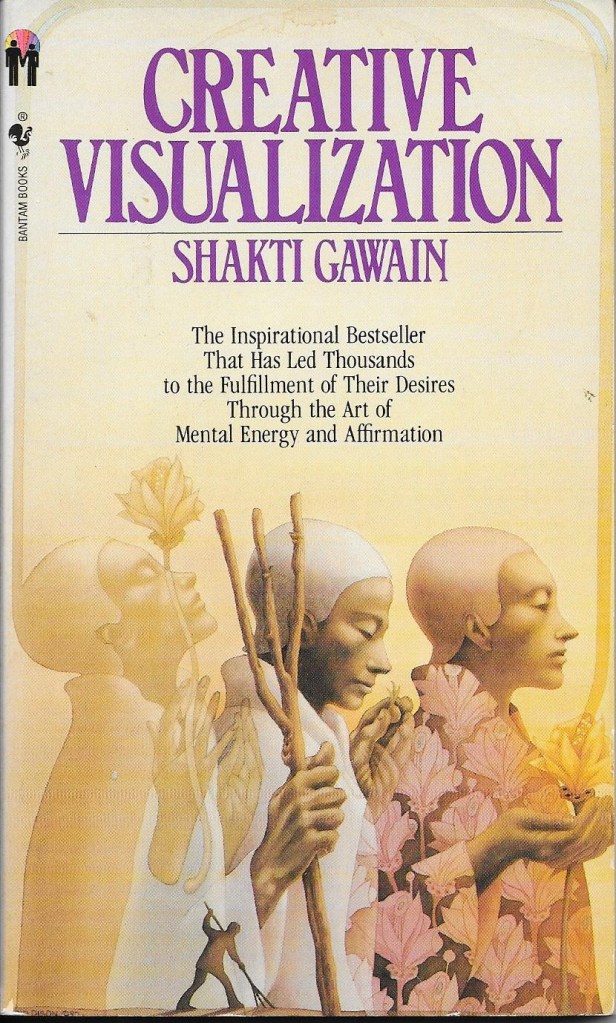
Twice a year, early July, on or close to my birthday, and on New Year’s Eve, I sit down and write a gratitude list. Being alive and kicking: always the first item. It’s a practice I got from the classic Creative Visualization by Shakti Gawain. I have the 1982 Bantam edition, with that special yellowing-pages smell.

The Dutch couple below made the paper. Most days they put a gratitude note in a glass jar. On NYE with a glass of wine and music in the background, they take items out and read them to each other. Of course, it’s often the small things: the colleague who did your work when you were ill, a kind note from someone when you needed it, a hug, waking up with a body that’s just doing its job, a walk in the forest. Ah yes, that was a special moment they say to each other.

Two more things I am grateful for are the acceptance by Broken Sleep Books of the manuscript Remembering / Disease. Here are the names of other poets and writers with a book out with BSB this year.

Matthew Stewart publishes an annual list of Best UK Poetry Blogs on his site Rogue Strands. I was chuffed that this blog is one of five ‘top notch newcomers’. You can read the full list here. Matthew lives between Extremadura, Spain and West Sussex. His collection, The Knives of Villalejo, is published with Eyewear and a recent Poetry News Book of the Year selection.

Here are two short prompts. In the current issue (27) of the online poetry magazine Allegro, editor Sally Long, the opening stanza of the poem by John Grey caught my eye. For Gratitude I’ve chosen the opening stanza of Joy Harjo’s poem Perhaps the World Ends Here.

Forgiveness

The woman with the forgiveness
is out there in the world somewhere.

Gratitude

The world begins at a kitchen table. No matter what, we must eat to live.

Adopt a Christmas tree – writing prompt

Adopteer een Kerstboom


This week I saw a feature on tv about various adoption schemes here in The Netherlands. One of those, Adopteer een Kerstboom, now has 3,000 people who have adopted a Christmas tree. There is a waiting list: it takes five years for a tree to be tall and big enough for adoption. Each tree carries a metal tag with a number, so that the adopters know it’s their tree. Many people have given their tree a name. They pay a small deposit on collection in November from one of 13 locations, and trees are returned in January when they are planted back in their slot. The fee goes up a little each year the taller the trees get.


I think it’s a great scheme! Season’s Greetings to you all. Thank you for following my blog and for your comments. A short seasonal poem:

I’ve never been to that desert island
though the removal firm sends me
a bill each month for the books I left there.
I’ve never been to Iceland for that green light,
nor Lapland for those dogs and sledges,
but I have kissed Father Christmas.

Writing Prompt 1: a six-line poem that includes, in different lines, an animal, a country, a place in nature, a concrete object (like my book).

Writing Prompt 2: What name would you give your adopted Christmas tree? Write a short ode to Julian or Emily, or ….

W G Sebald -writing prompt

This week it is 20 years since the writer W G (Max) Sebald died, aged 57.
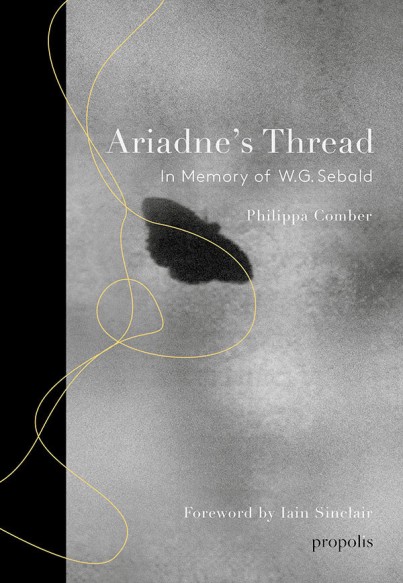
Propolis, the publishing arm of Norwich-based The Book Hive, published Ariadne’s Thread: In Memory of W G Sebald (2014). This memoir was written by Philippa Comber. She met Sebald in 1981 in Norwich where they both lived. They hit it off and became friends.


Philippa and I met in Manchester late 2004 at a series of poetry workshops and we hit it off too: both practising psychotherapists with several shared interests. I remember Philippa telling me she was planning a visit to the German museum dedicated to Sebald to read the letters that she had sent him over the years.


Sebald died in a road-traffic accident near Norwich. According to the coroner’s report, he had died of a heart attack before colliding with a lorry. Memory, loss of memory, decay, exile are the main themes of his books with their unique blend of fact, recollection, and fiction.

Writing Prompt: My poem is in 14 lines. Yours can be shorter. Do include ‘I do know’ and ‘I don’t know’ at least twice in each stanza.

Knowing and not knowing

I know I mustn’t eat grapefruit as it interferes
with the effect of the medication. I don’t need to know
the Table of Chemical Elements, though I do know
that a few elements have recently been added and
Rutherfordium is one of them.

I know and remember the view of the Wash and the silver
ribbon of the Broads as the plane turns. I don’t know
the names of narrowboats and yachts, but I do know
that the beach huts in Wells-next-the-Sea are on stilts.

I know someone who was a good friend of W G Sebald
and that her letters to Max are archived in a museum
near Stuttgart. I know where I was when I heard on
the radio that Sebald had died: the A17 heading for Norwich,
just before a round-about.

On the bright side, there’s always – writing prompt

Credit: Geralt via Pixabay

This week I’ve been going through my files and folders with poems, deleting old ones that aren’t going anywhere, finding forgotten ones, losing others because I changed the title but not the filename – you get my drift.

Prompt: Here’s a sort-of-abecedarian list poem. What would be in your alphabet?

On the bright side, there’s always:

avocados and the alphabet, a
bridge over troubled water and
chocolate, Fairtrade or not,
days which travel at their own pace into
evening and other
favourite places like Venice, beaches, the
glorious counter tenor voice of Andreas Scholl,
hairdressers who waited for us,
ink to waste, as the poet has it,
jazz, all that jazz,
kilograms to worry about,
lessons that return until learned,
maria, martini, marina,
nautical miles and naughty but nice.
Oh, let’s stop, there is a
picnic bench with a view, think of
questions, the certainty of death, taxes,
rescuers in anoraks, accompanied by
sniffer dogs, so we’re fit again to
tango, show us a leg or two,
uniformed bouncers taking them off,
victory which will be ours and
whiskey or gin, double measures, that
xtra mile we will go.
Y, the fork in the road and Frost.
ZZZ, a comfy bed for a rest.

Table 64 – writing prompt

Credit: Pexels on Pixabay

This week my friend Valerie celebrated her birthday. We met 30 years ago on a residential week in Spain. To celebrate our friendship, here is a short poem in which we’re together. Bowler’s is a very large indoor and outdoor carboot sale location in Manchester.


That Generation Game is a tv game show in which teams of two family members, but from a different generation compete. The winners see a conveyor belt with goodies wobble past. No worries: if they can’t remember them all, the studio audience will shout to help …

Table 64

We carried the plastic crates and cardboard
boxes into Bowlers at bloody six o’clock.
The locusts, proper traders, picked items
from the piles we carried, threw us
pound coins and a few fivers.

The early flurry was good and then it was
like the Generation Game in reverse:
suitcases went, a pile of books, glasses,
a wok, costume jewellery, some cuddly toys.
We sat back in our folding chairs like regulars,
holding off sleep.

Writing Prompt: Did you do a car boot sale with a friend? Were you a market trader (for real or in your dreams)? Did you go to an auction of lost property? What is the object that you lost or found?

Stonemason – writing prompt

Credit: Ray Miller via PIxabay

Here in Scheveningen, the seaside district of The Hague, it’s a wet Sunday. Tomorrow it’ll be World Animal Day. Here is a short poem with wet animals, inspired by seeing the peregrine falcons at Norwich Cathedral. It’s from my pamphlet A Stolen Hour, published by Grey Hen Press.

Prompt: What animal(s) did inspire you? Where did you first see it? What day was it?

Stonemason

I am the last stonemason.
Green water spouts from
the gargoyle to my left.
I am hidden up here
with the two peregrines,
sodden on their cathedral nest.

My apprentice didn’t come today.
Black sky, lightning and
the distant rumbling of armies
advancing, retreating.
I count hours on my arthritic fingers.

The shoplifter and the hermit – writing prompt

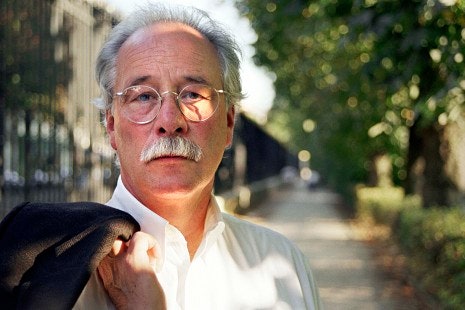
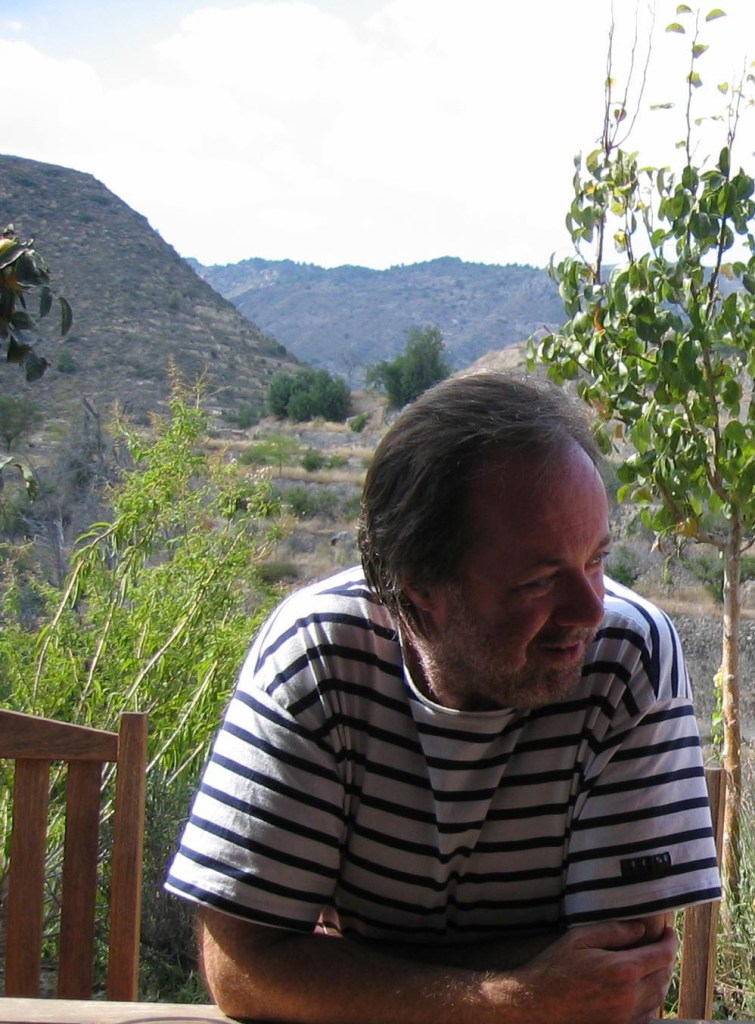
It is three years since the poet Matthew Sweeney died. I was fortunate of having a whole week with him at the wonderful Almassera Vella, Spain in 2006. I learned a great deal. The photo was taken in the garden by the infinity pool.


One of my favourite books about writing is Teach Yourself Writing Poetry. It was written by Matthew and his friend and poet John Hartley Williams. It is packed with exercises, and I love the book because in between the exercises there is dialogue, chat, discussion. I can hear their voices as they talk (I’m sure over a glass of wine). Wit and poignancy.

Prompt:

The Hermit was written on a workshop. We were given Sweeney’s poem The Shoplifter and asked to think about someone with an unusual occupation and what life would be like for them when they retired. Both the shoplifter and hermit now live by the sea. Sweeney’s shoplifter has ‘fronds of marijuana’ outside, has ‘learned the use of coins’ and has a use for all those books:


His books come in useful now
as each time he has shinned

with an aerial up the chimney
Viking wind has ripped it down.

The Hermit


The hermit had to be retired
for health and safety reasons.

He was flown out of the desert,
given a dictionary and glasses.

He is renting an old longhouse,
leaves doors and windows open

so he can smell the cool air,
but still he cannot sleep.

The postman was his first visitor.
Mail lies piled up by the gate.

The grains of sand on the beach
make him feel homesick even now.

By the light of a candle he may
be able to look in the mirror, but not yet.

(first published in Another life, Oversteps Books, 2016)

Item – poem and writing prompt

Photo credit Stux via Pixabay

This week I am featuring another one of Kathleen Kummer’s poem. It’s short and the neutral title belies the heart-breaking content. The poem is addressed to her adult son.

Item

You left behind: your silver spoon –
there are days when I stir my coffee with it;
the drawing of yourself with the Mona Lisa eyes;
I sometimes wonder how you got the chestnut avenue
from that angle, and I’m suddenly happy, as though
you’d just sauntered in from school and were upstairs
moving your table, shouting down you were hungry;
all the photographs of you – if I flicked the pages
fast enough, would those in the top right-hand corner,
at least, spring jerkily into life?

Item: a bank account – didn’t you need
the money? Your sisters; me. People hope
I don’t mind them asking about you. As if
in a language I’m learning, I say, no, I don’t mind.

Prompt: What item do you still need to write about, even if a part of you doesn’t want to? To whom are you writing?