Category Archives: Writing Prompt

Stonemason – writing prompt

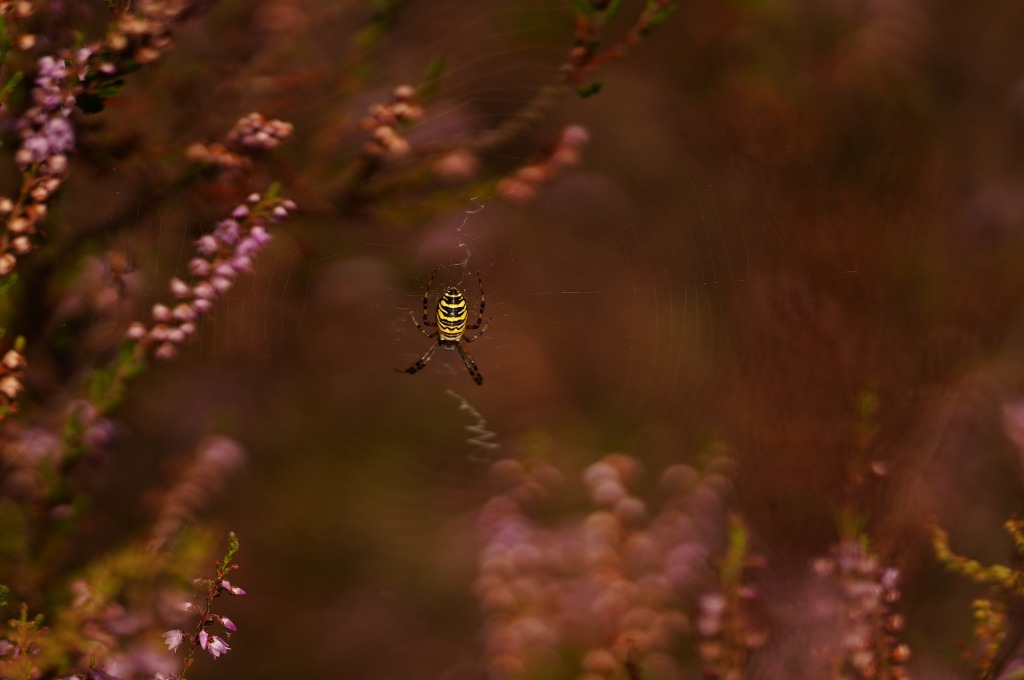
Credit: Ray Miller via PIxabay

Here in Scheveningen, the seaside district of The Hague, it’s a wet Sunday. Tomorrow it’ll be World Animal Day. Here is a short poem with wet animals, inspired by seeing the peregrine falcons at Norwich Cathedral. It’s from my pamphlet A Stolen Hour, published by Grey Hen Press.

Prompt: What animal(s) did inspire you? Where did you first see it? What day was it?

Stonemason

I am the last stonemason.
Green water spouts from
the gargoyle to my left.
I am hidden up here
with the two peregrines,
sodden on their cathedral nest.

My apprentice didn’t come today.
Black sky, lightning and
the distant rumbling of armies
advancing, retreating.
I count hours on my arthritic fingers.

The shoplifter and the hermit – writing prompt

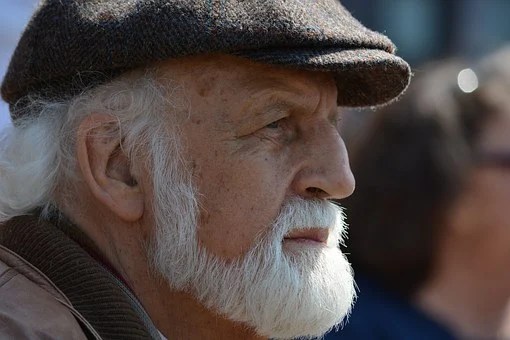
It is three years since the poet Matthew Sweeney died. I was fortunate of having a whole week with him at the wonderful Almassera Vella, Spain in 2006. I learned a great deal. The photo was taken in the garden by the infinity pool.


One of my favourite books about writing is Teach Yourself Writing Poetry. It was written by Matthew and his friend and poet John Hartley Williams. It is packed with exercises, and I love the book because in between the exercises there is dialogue, chat, discussion. I can hear their voices as they talk (I’m sure over a glass of wine). Wit and poignancy.

Prompt:

The Hermit was written on a workshop. We were given Sweeney’s poem The Shoplifter and asked to think about someone with an unusual occupation and what life would be like for them when they retired. Both the shoplifter and hermit now live by the sea. Sweeney’s shoplifter has ‘fronds of marijuana’ outside, has ‘learned the use of coins’ and has a use for all those books:


His books come in useful now
as each time he has shinned

with an aerial up the chimney
Viking wind has ripped it down.

The Hermit


The hermit had to be retired
for health and safety reasons.

He was flown out of the desert,
given a dictionary and glasses.

He is renting an old longhouse,
leaves doors and windows open

so he can smell the cool air,
but still he cannot sleep.

The postman was his first visitor.
Mail lies piled up by the gate.

The grains of sand on the beach
make him feel homesick even now.

By the light of a candle he may
be able to look in the mirror, but not yet.

(first published in Another life, Oversteps Books, 2016)

Item – poem and writing prompt

Photo credit Stux via Pixabay

This week I am featuring another one of Kathleen Kummer’s poem. It’s short and the neutral title belies the heart-breaking content. The poem is addressed to her adult son.

Item

You left behind: your silver spoon –
there are days when I stir my coffee with it;
the drawing of yourself with the Mona Lisa eyes;
I sometimes wonder how you got the chestnut avenue
from that angle, and I’m suddenly happy, as though
you’d just sauntered in from school and were upstairs
moving your table, shouting down you were hungry;
all the photographs of you – if I flicked the pages
fast enough, would those in the top right-hand corner,
at least, spring jerkily into life?

Item: a bank account – didn’t you need
the money? Your sisters; me. People hope
I don’t mind them asking about you. As if
in a language I’m learning, I say, no, I don’t mind.

Prompt: What item do you still need to write about, even if a part of you doesn’t want to? To whom are you writing?

Eating a Croissant in a Graveyard – writing prompt

St Mary’s, Totnes in Devon

For Easter Sunday I have chosen this poem by my friend Kathleen Kummer. The title is intriguing, the details are precise: we sense they are based on the poet’s own experience. Then there is the reference to that well-known Stanley Spencer painting of the Resurrection. You can see it here. Does it work for you as a prompt?

I asked Kathleen about the graveyard. It’s part of St. Mary’s Church, a Grade I listed building in the centre of Totnes, Devon. Perhaps, I could have worked it out for myself: the poem mentions the iconic ‘steep hill’ in Totnes. Kathleen and I have walked up and down it many times, and hope we can do so again soon. Easter Greetings to you all!

Eating a Croissant in a Graveyard

I’m eating a croissant in a graveyard, grassed over.
People come here to rest, eat a sandwich.
(I wish I’d bought something less flighty, like
a scone or an Eccles cake.) The graves
are few and not recent. There’s a table-top tomb,
ideal for a picnic, but respect is shown:
low voices, no chirrup from a mobile phone;
people sit on the wall or the grass. I’m expecting
that Labrador to cock his leg, but he doesn’t.

Across the street, the bustle of the market
just reaches us, and I think of the dead
around me, of how this town was theirs,
that they walked up the steep hill, stopping
to speak to their friends about their simple,
complicated lives. When I close my eyes,
I see them clambering out of their graves,
as in that Resurrection painting
by Stanley Spencer, looking dazed,
but as if their discomfiture won’t last long,
with the green hills they knew around them,
the sky blue and summery. And surely
the warm-hearted townsfolk will welcome the dead.

It’s as if I’ve banished them by opening my eyes.
The place is empty, but for two men
in wheelchairs, parked with their backs to the view.

High Street, Totnes in Devon

Fairy tale – a poem

photo credit: Enrique Meseguer, via Pixabay

On a writing workshop last weekend, I introduced Vasco Popa’s The Golden Apple: a round of stories, songs, spells, proverbs & riddles. I have been using some of the riddles and proverbs as writing prompts.

Vasco Popa (1922-1991) was Serbia’s greatest modern poet. Ted Hughes was an admirer of his work and wrote the introduction to his Collected Poems. Popa collected folk tales from many sources. He found a rich inspiration for his own poems in this “eternally living wellspring of folk poetry” which he combined with vivid imagery and a touch of the surreal.

Here are two riddles from The Golden Apple. The answers are at the end of the blog.

With an iron key
I open a green fortress
And drive out the black cattle

A horse with its pack goes into a house and comes out of it, but its tail never goes in.

Vasco Popa

Popa’s Collected Poems inspired my poem Fairy tale. It was first published in erbacce and then in my debut collection Another life (Oversteps Books Ltd, 2016).

Fairy tale

Someone needs to go to
a deep cupboard in a dark room
the others wait outside

The first one becomes
a grandmother with a stoop
then someone else steals
her white lace cap her smile
her soft voice
they go to lie still in a deep dark
bed in a cold room

Then someone else walks a long
way through the wood, across
the saddled serpent under a cold
sheet of dark clouds

That someone is dressed in crimson
already – it will save time
the old one will rescue the red girl
but they will not have enough
bricks to finish the job

after that someone else will get to be hungry
and someone will always be eaten

Answers to the riddles: Watermelon, Spoon.

Hunters on the Hill – writing prompt

One year ago I received an email in Dutch from poet Elsa Fischer. She had read my second collection and related to the poems about the Second World War. Elsa and I have kept in touch by email. Her poems were featured here on 24 May 2020 – the end of that month we were going to meet in person in The Hague ..

A 1,000-piece jigsaw of Pieter Bruegel the Elder’s Hunters on the Hill is waiting in the hall – a present for a friend. Seeing it there reminded me that Elsa and I have both written a poem inspired by that painting from the Kunsthistorisches Museum in Vienna. On its website you can see all the works by Bruegel that still exist from their 2018 exhibition.

Prompt: Choose the same painting, another work by Bruegel. Or work from the cover design of a jigsaw …

Jonathan McAloon published a fascinating article on Artsy “The Deadly Truth Behind Pieter Bruegel Elder’s Idyllic Landscapes” (4/2/2019). The winter of 1564-65 was the coldest winter of the century. Europe was living in what’s now called the “Little Ice Age”. It would be so cold that rivers froze enough for local people to have rent-free marketplaces on them. Frozen birds fell from the sky, people could enjoy themselves skating. There were also food shortages, resulting in illness and riots.

Elsa’s poem Hunters was published in the journal Poetry Salzburg Review. Mine is in the pamphlet A Stolen Hour (Grey Hen Press, 2020). We’ve both taken the viewpoint of someone in the landscape.

Hunters

I’ve come to feast again on Flemish grotesque
at the peasant wedding and Shrove Tuesday’s kermis.

To watch the hunters as they bring in the kill,
the trails of blood not far from where I stand

for cover. I hear branches and shrubs and ice
breaking and feel no pity until the knives release

a medieval agony of entrails, shimmering,
steaming, on to the floor of the estaminet.

The heady beer explodes, the pissoir smells.
I grab a cue at the billiard table. I am seventeen.

Piercing the cold like the crow’s flight I escape
into the northern twilight, away from memories.

In a far corner

It is a clear afternoon.
I hear children laughing,
the clacking of skittles,
skates carving the ice.

I know it is Friday and hear
the silence of crows.
My bones are strong,
my wife is in good health.

I do not yet know that
on the hill the hunters
with their wet and tired dogs
are heading for home.

I think about my wife,
heavy with child, her apron
as white as the snow
under my feet.

I see plumes of breath from my lips,
as though I’m a horse with plough.
Branches on my shoulder creak, shudder.
I’m yoked to this life.

Snow – writing prompt

Oak bark, by 2999492 via PIxabay

I hope that you have had a safe and good transition into 2021. Twice this week I pulled open the white vertical blinds to see a thin layer of snow. It does not often snow in Manchester; snow comes sooner to the hills around it where some of my poet friends live.

Perhaps that’s why I enjoy encountering snow in poems. One of my favourites is the poem Snow by Louis MacNeice, with that fourth line World is suddener than we fancy it. You can read it on the Poetry Foundation website here

My short poem is below.

Snow

1

I arrive suddenly
yet will always linger
in the shadows of trees, drystone walls.

Over time I make a blanket
to purify, a silent pause
for you to hear your heartbeat.

2

From the York train I noticed
crumpled sheets of dingy grey.

The April sun does not reach
the entrance of tunnels,
behind the wrinkled wood.

Snow depends on shadows,
a mare keeping her foal close by.

Prompt: You can choose to write a short poem, or two linked poems about snow. If you like, include a line from one of my poems.

Knitting – poem and writing prompt


bike-247394_1920 (1)

Photo credit: cocoparisienne via Pixabay

In this region, schools will start tomorrow. Everywhere, there are large white banners up reminding drivers that children are about, on foot or on their bike. For various reasons, I don’t have good memories of my time at primary school. When I think about knitting, or see someone knitting, my stomach contracts. But, don’t you love the bike?


knit-869221_1920

Photo credit: Foundry Co via Pixabay

Did you knit this yourself?

It would have been a morning.
Glasses, graying hair in a bun,
typical spinster teacher.

Why ask a question to which you
already know the answer?

Because you had never been able
or willing to show me left-handed knitting.

The few centimetres my mother
had added during the week stood out:

too smooth and regular, too clean,
easily done in her click-clack rhythm.

I watched you unpick it, leaving
me sitting with a pile of curly wool.

Prompt: Was there a subject that you disliked or even hated at school? Was it because of the person who taught you the subject? You may well have written a poem or short story about this already. Is there another poem waiting underneath?

A man with a frown – poem and writing prompt

rain-3518956_640

Photo credit: Pixabay

It is March, so here is an example of personification. It comes from a workshop: we were asked to choose a month and write about it, as though it was a person.  Do you see March as a man too? Does his emotional state reflect typical March weather?


March

He is a man with a frown,
walking in a military
manner. He is the eldest
son of a Rossendale baker, who
married young and placed his hopes
on other people’s shoulders.

He studied accountancy at a redbrick
in the Midlands, ironed shirts himself,
lost his accent, met a nurse
in town one night, got drunk,
a lower second degree, a baby,
a small semi in the suburbs.

Last year he didn’t get a rise,
didn’t get promotion either.
He thinks about renewing insurance,
calculates the cost of divorce,
puts his hands in his pockets and
strides over the zebra crossing.

He often feels like going crazy, going
off with a woman half his age, living
in the south of France, but he walks
back to the empty house, hiding
under a large black umbrella,
cursing under his breath.

Ink wasters

pen 2

The late poet Gerard Benson coined this term for the warm-up, stream-of-consciousness exercise at the start of a workshop: Start writing, don’t stop writing, don’t think, just keep the pen moving.

If you’re familiar with The Artist’s Way, then you have the Morning Pages in your toolkit. To me, the Morning Pages are still more of a “dumping” ground of grumpy stuff, Aargh – not a morning person and never will be….

At a workshop the tutor or facilitator gives a starting line and sets you off. But, how do you create that effect when you’re by yourself? How do you nudge your self on to the track? Here are some options I’ve used:

Liminal lines
The immediacy of being on a threshold of sorts, for example:
Standing on the flood line I noticed…
When I stepped into the room…
Waiting on the platform there was…

Lines that open onto the unexpected, the other side
I turned the corner and then…
As I opened the door…
At the back of the cupboard…
I thought I saw…., but….
I never even once…
It was that dream again…
Sometimes you’ll think of…
No telling what arrived here in the night…

Unlikely/Doomsday scenarios
It hadn’t stopped snowing for thirty years…
It rained for ninety days, then suddenly….
The morning after the storm…
Your body lies on the floor, with or without you…

Juxtapositions
I have an envelope with pieces of paper, some with names of rooms in a house, others with objects, others with abstract nouns. So, we might get hallway, stapler, vanity. Off we go just putting those together in some way or another.

List poems
We’re not expected to write a “proper” list poem with a story arc, a development, an argument. Just a list of anything will do. Six lines is a good starting point, six things I would never eat for breakfast. Then another day there could be a list of the opposite: breakfast favourites (scrambled eggs and my poet friend E told me to add mustard and some dill, homemade porridge with berries, and I’ve just found out that one berry is one calorie, so I’ll have a few more, and strong black coffee in the mug with lavender fields on it. That mug was given to me by a lodger who’d had wanted to become a nun, but then decided to train as a nurse instead….)

Borrowed lines
Using opening lines from poems often work. I have typed up a batch of these, cut them out and put them inside an envelope. Picking one out gives the surprise effect that just reading it in the book doesn’t give.

I’m signed up with the Academy of American Poets for poem-a-day. I really like getting a surprise poem in my inbox every day and sometimes use the title or the opening for my warm-up. Yesterday’s poem started Imagine your heart is just a ball. Go to poetry.org to sign up. Similarly, there may be good “triggers” from other websites – on-line magazines, poetry publishers. A recent newsletter from Carcanet showed Snow in C Sharp Minor which I found intriguing and could have used as a prompt. It is a poem from Errant by Gabriel Levin.

And there is always Carl Sandburg’s This morning I looked at the map of the day…

Sometimes ink wasters can be developed and turn into a poem. It’s rare for one to be a complete poem straight-away. That’s a bonus. Below is one of those. It was published in The North, No 48.

On the town

In the time it took to buy a birthday card, a special
80th birthday card, they had arrived in a long, black limousine,
jumped out, set fire to the hotel and released wicker
baskets. The flying baskets with wicker wings chopped
tops of trees, trees falling on traffic lights – chaos everywhere
and in the middle of it the small bronze statue.
A smiling woman holding doves covered in birdshit.
The wind howling, sirens crying like the end of the world had come.
And me and that card that had cost me £2.99 and nowhere
to buy stamps, no letter box to post it.