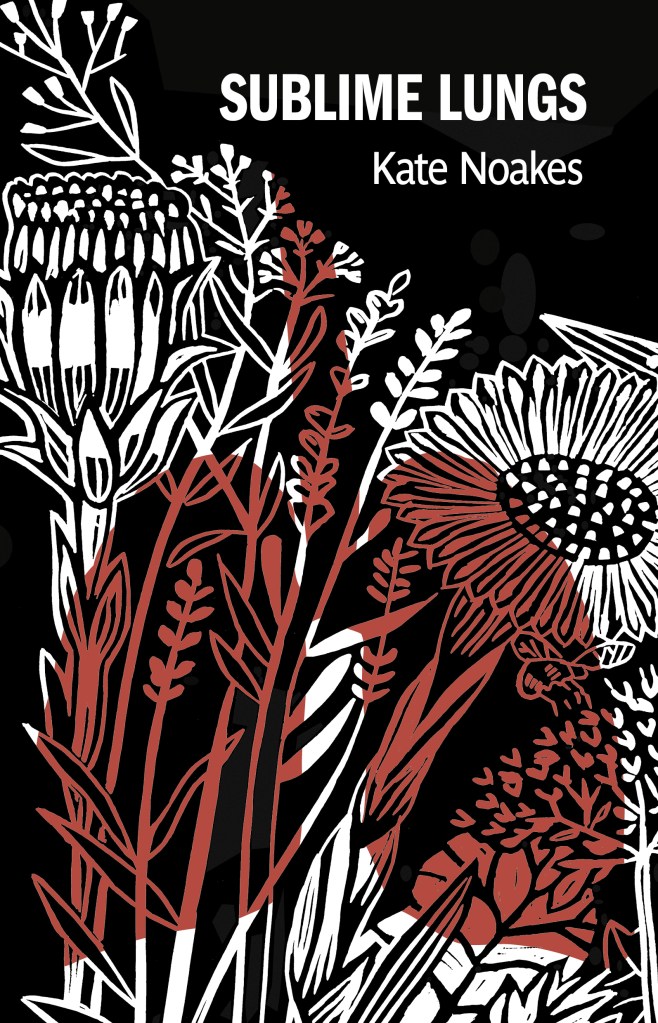
Here is a sample poem by our April guest poet Kate Noakes. The poem is from her new collection Sublime Lungs, which will be published by Two Rivers Press on 21 April. This is her ninth full collection. More poems after Easter.
Kate will read at the Cheltenham Poetry Festival on 14 April. There is an online launch on 24 April. You can find the schedule of online and live launches on Kate’s website
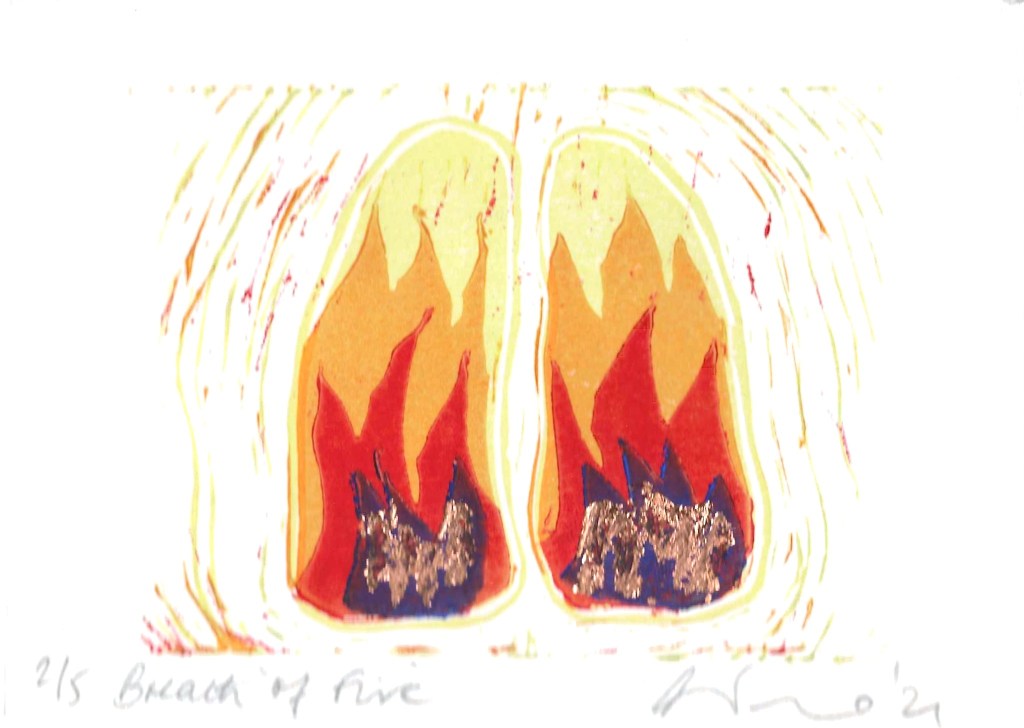
Kate Noakes Breath of Fire
For Easter, try egg blowing
David Attenborough stood on an ostrich egg to demonstrate its strength once. ‘The toughest egg in the world,’ he said. He may even have jumped on it for emphasis.
Of course, no-one had drilled it and sapped its yolk with mega-breaths and an extra-thick straw, which is how it withstood his weight, unlike the three souvenirs we bought in Oudtshorn, their weakness apparent under failing coving.
They smithereened the carpet and needed hand picking, the hoover’s inhalations proved weak. We’d have been better off buying feather dusters from the hawker pitched outside the super-market. They’d have been easier to carry home.
Cliff Yates was our guest poet last November. You can read the poems here. As I was going through his New & Selected Poems (The Poetry Business, 2023) to select a set, I came across the poem below.
It’s even sweeter on Valentine’s Day…
from Another Last Word
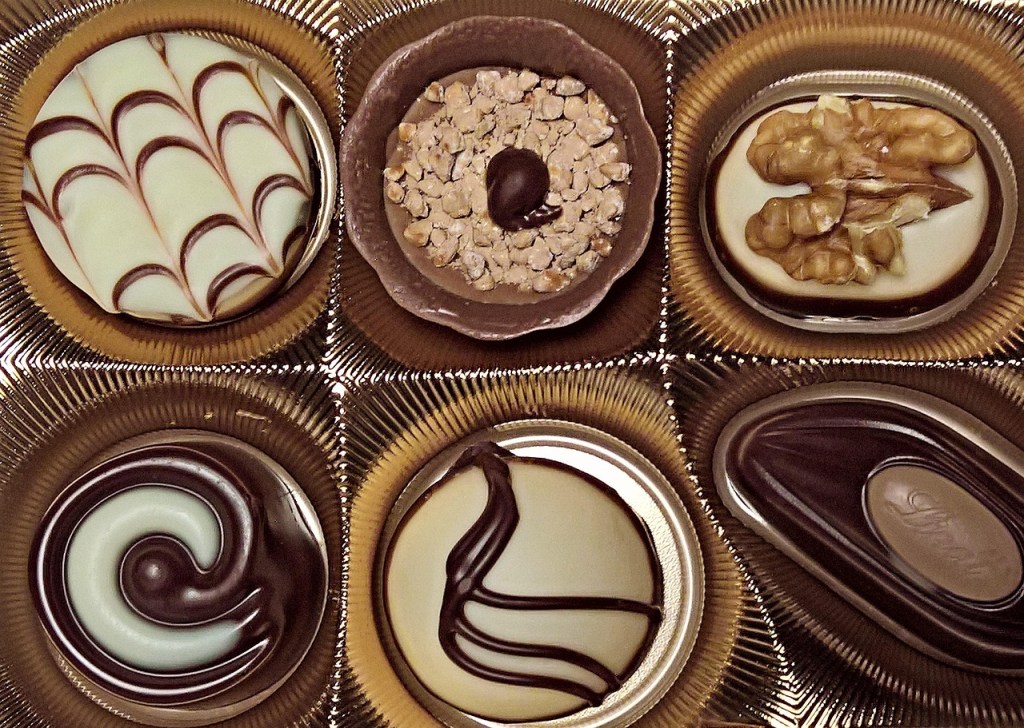
EXPENSIVE CHOCOLATE
There are eight pieces. She has two and gives me one. ‘Confiscate this,’ she says, handing over the rest. ‘Hide it, or I’ll be tempted when you’re out.’ When I get back, the drawer’s open, there’s one piece left, and a note on a scrap of paper: NOT VERY WELL HIDDEN.
CLEARING UP
She’s cooking Sunday lunch and I’m clearing up. ‘It’s ridiculous,’ I said, ‘you spend time getting things out of cupboards and I spend time putting them back in.’ ‘Not enough time in my opinion.’
BIRTHDAY
‘You’re being nice,’ she says, ‘you’ll be running out of steam soon. You’ve been nice since 7 o’clock, that’s 3 hours, 10 minutes.’
DANCE
‘It’s great the way we dance around each other,’ I said, ‘when we’re getting the meal on.’ ‘We only do that because you get in the way.’
SATSUMA
‘I can’t be bothered with this satsuma.’ ‘Give it here,’ she says. ‘Can’t peel a satsuma, can’t peel an egg. We’ve been married how many years, and I’ve made no progress with you whatsoever.’
WRITING
‘I had to work on that one,’ I said, ‘because you didn’t actually say that. I am in fact writing these poems.’ ‘That’s what you think.’
ENTERTAINING
‘Some of these make me sound terrible,’ she says. ‘It’s because you find me so entertaining. It makes me worse when you start laughing.’
LUNCH
‘Apart from the salad and potatoes,’ I said, ‘what did we have for lunch?’ ‘If you can’t remember what we had for lunch I feel sorry for you.’
GETTING IT RIGHT
‘I’ll get it right one day.’ ‘I doubt it,’ she says. I laugh. ‘It’s not funny really, is it?’ ‘No,’ she says, ‘but at least you’re hopeful.’
PHILOSOPHY
‘You’re too hard on yourself,’ she says, ‘when I wake up I just want a cup of tea and then I want to be entertained by life.’
FISH
‘What we need is a special pan for fish and a fish spatula.’ ‘No,’ she says, ‘what we need is for you to eat fish.’
COLOURING PENCILS
She’s at the kitchen table, going at it with her new colouring pencils. ‘I had some when I was little,’ she says, ‘but I was never let loose. It was always What’s THAT supposed to be? or Where’s the SKY?’
Photo credit: Andrew Taylor
Biography
Cliff Yates was born in Birmingham and has been publishing poetry since the 1980s. His New & Selected Poems (Smith/Doorstop, 2023) brings together work from various collections including Henry’s Clock (Fenton Aldeburgh First Collection Prize; Poetry Business Book & Pamphlet Competition), Frank Freeman’s Dancing School (Arts Council England Writers Award) and Jam (ACE Grant for the Arts). He taught English at Maharishi School in Skelmersdale and wrote Jumpstart Poetry in the Secondary School during his time as Poetry Society poet-in-residence, following the success of his students in poetry competitions. He has led courses for, among others, the Arvon Foundation and the British Council. Read more on his site here
It’s a great pleasure to introduce this month’s guest poet Julie Mellor.
Julie holds a PhD in creative writing from Sheffield Hallam University and has published two poetry chapbooks with Smith/Doorstop: Breathing Through Our Bones (2012) and Out of the Weather (2017). In 2019 she became interested in haiku, and since then her haiku and haibun have appeared in Blithe Spirit, Frogpond, Modern Haiku, Presence, The Heron’s Nest and Tinywords, as well as two Red Moon anthologies. She recently retired from a career in education, and enjoys walking her dog, attending art classes and playing the banjo.
Here are recent haiku and a haibun with their publication details. You can find more of Julie’s writing on her site here.
Modern Haiku 54.3 (Autumn 2023)
toe-hold weeds things that were said years ago
Blithe Spirit 35:2 (May 2025)
long night joining the dots between stars
The Heron’s Nest Summer 2025
wetting the ink a ghost orchid blooms from its painted stem
Presence issue 82 (Summer 2025)
morning moon beside the fretless banjo pistachio shells
BHS Hope anthology 2025 (ed Neil Sommerville)
butterfly summer I write a letter to my future self
Presence 73 – Summer 2022 – and included in Contemporary Haibun 18 (Red Moon Press, 2023)
The Coffin Path
Grass, waist high this morning, and wet with last night’s rain. Brushing past it, my jeans wick the droplets from seeding cock’s-foot and brome. No one else walks this way. Behind the hawthorn hedge is the cemetery. People tend to use the other path, the one that the council mows. Or else they drive – ‘to save their legs’ my mother says. Some days she says she wants to be buried. Other days, she thinks she’d prefer to be cremated and have her ashes scattered next to a memorial bench. No rush to decide, I tell her, trying to make light of things.
elderflowers pressed in her prayer book a recipe for wine
Many thanks to Kathleen Mcphilemy for including three of my poems in episode 37 of Poetry Worth Hearingor you can listen on Youtube, Audible and Spotify.
One of the poems is his ashes on a corner.
The theme was hiding and/or seeking. The episode is 60 minutes. The first half hour or so is an interesting interview with poet Nancy Campbell who talks about her residency on Greenland among other things. The interview and Nancy’s poems bookend poems by Guy Jones, Zelda Cahill-Patten, Lesley Saunders, Pat Winslow, Richard Lister, Dinah Livingstone, and Sarah Mnatzaganian.
The theme for the next episode is all things ‘eco’. Send up to four minutes of unpublished poems (text and sound file) plus a short biography to poetryworthhearing@gmail.com by 18 January 2026. Find more information on poetryworthhearing.biz.
his ashes on a corner
of the dining table by the small square votive container the discreet undertaker’s logo
she greets him will have a glass at six his ashes waiting with us for borders to open
It’s a great pleasure to introduce this month’s guest poet Cliff Yates. I met him on an excellent online workshop he ran for the Poetry Business. They published his New & Selected Poems, which brings together poems from five earlier publications – over thirty years of ‘inimitable’ work. Poignancy, economy, humour, a touch of the surreal…
You can find Cliff’s biography and the link to his website below the poems.
Day Breaks as a Petrol Station
Day breaks deliberate as a petrol station newspapers and expensive flowers but you’re tired of vacuum-packed sandwiches and sordid headlines.
On the 15.07 out of Deansgate she’s reading The Holy Sinner. The dog opposite smiles through its muzzle. Coffee, or maybe something’s on fire we do appear to be speeding unless we’re stationary and the landscape’s rattling past. ‘It’s been a good day,’ she says, ‘it makes up for yesterday.’ ‘Why, what happened yesterday?’
Days without rain and suddenly it rains. Another country, your body’s not your own. You want to go for a walk. In this?
He threw a stick for the dog in Habberley Valley the tattoo flew from his arms landed in the bracken like leaves.
Dog
So many places closed: the off-licence, the butcher, the corner shop, even the telephone box screwed shut. Dog had come a long way, and now what?
The cherry blossom, he noted, looking up for once from the pavement, was particularly stunning this year, maybe it was the same every year
but noticing it, his heart was lifted and he decided not to be disappointed. The journey had been arduous, the future was uncertain, but there is more to life,
he reflected, cocking his leg against the letter box, than a bowl of fruit on a table.
The Lesson
The nun points out the ones to watch: the boy in the corner, the girl at the back. In this class it’s the boy in the middle who thinks he’s a cat.
Outside, workmen are felling trees. A bird’s nest tumbles in through the window, lands on a desk. Inside the nest, a baby bird. It’s okay it’s okay, the children say, Brian will know what to do.
The boy who thinks he’s a cat gathers the bird and, holding it at arm’s length in the cup of his hands, heads for the door, the nun behind him between the silent rows of children and the bird, as if on cue, lifts up its beak and sings.
Lighthouse
The lighthouse flickers at the end of the pier. We watch it in our red pyjamas. Actually, neither of us are wearing red pyjamas. You’re wearing my blue shirt.
The lighthouse flickers at the end of the pier. It’s the only thing we can be sure of. Everything’s uncertain since you set alight my record collection.
I’m trying to work out an appropriate reaction, rearranging things in my head to eliminate all memory of the record collection. The lighthouse flickers on and off.
Actually it doesn’t, you point out, it just appears to. You look amazing in my blue shirt. I haven’t words to describe how good you look in the light from the lighthouse. Now you’re here
now you’re not. Maybe I should burn something of yours, you suggest. Your voice leaves me in the dark. It doesn’t sound like you when I can’t see you.
Cliff Yates was born in Birmingham and has been publishing poetry since the 1980s. His New & Selected Poems (Smith/Doorstop, 2023) brings together work from various collections including Henry’s Clock (Fenton Aldeburgh First Collection Prize; Poetry Business Book & Pamphlet Competition), Frank Freeman’s Dancing School (Arts Council England Writers Award) and Jam (ACE Grant for the Arts). He taught English at Maharishi School in Skelmersdale and wrote Jumpstart Poetry in the Secondary School during his time as Poetry Society poet-in-residence, following the success of his students in poetry competitions. He has led courses for, among others, the Arvon Foundation and the British Council.
This coming Wednesday are the elections for the ‘Tweede Kamer van de Staten Generaal’ – the lower house of parliament.
All over the country, boards have appeared with the 24 political parties. In large cities and towns each party has its own board. In small towns, like mine, the one shown.
On Friday, a pale grey sheet of A1-sized paper arrived by post: names of candidates for the 25 parties. So much detail: it’s essential to orient yourself beforehand. Otherwise, you’d spend too much time in your cubicle on the day, and there will be queues. When I voted in the last elections (November 2023), I couldn’t fold the paper back into its original roadmap shape…
The Dutch are famed for their tolerance. I find that puzzling, but then I spent most of my life outside The Netherlands.
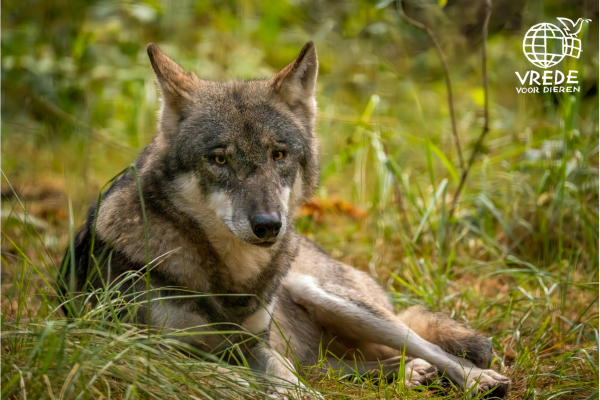
A few months ago, a new political party ‘Vrede voor Dieren’ (Peace for Animals) was established. They split from the original ‘Partij van de Dieren’ (Party of the Animals) because the leader of the PvdD (initially pacifist) changed their views and now supports re-armament. The new VvD rejects re-armament in principle.
You don’t need to have read Animal Farm to think that an animal’s view of pacifism is probably Will I be eaten or not? (paraphrasing a Dutch novelist).
Confidence in politics and politicans
Confidence in politics is at an all-time low. In the August 2025 polls it ranged from 4% – 9%. Some 25% of those polled were floating voters. There are several reasons for that.
Photo credit: MabelAmber via Pixabay
Time lost in the polder…
The ‘polder’ model is the pragmatic recognition of pluriformity. Time is needed to achieve consensus: people will need to polder. However, this verb has a negative connotation in relation to politics. An election will be followed by months of sitting and talking, walking and talking. A ‘formateur’ will facilitate the process. Meanwhile, the previous coalition is just ‘care taking’ and keeps things ticking over.
It also takes several months to organise an election, typically four to five.
The coalition Rutte II was the first cabinet that completed its full four-year term since 1998. Its starting date was 5 November 2021. Since then, just over two years were spent on forming the next three coalitions.
Not lasting the course…
Rutte III – the full cabinet resigned over the child benefit scandal. A parliamentary enquiry had found that officials had knowingly and systematically deprived people who were legitimate claimants. Thousands of people have still not been compensated.
Rutte IV – resigned over fundamental disagreements regarding immigration measures.
Schoof – An unstable coalition from the start: two parties (the Boer Burger Beweging or BBB) and the NSC (Nieuw Sociaal Contract) both new to government and both struggling to get enough credible candidates for their seats. With Wilders of the PVV (Partij voor de Vrijheid) who’d walked out of an earlier coalition government. Seen as a ‘bunch of amateurs bickering amongst themselves.’
Not tackling the crucial issues
The Hague is a long way from the northern province of Groningen where thousands of people have been waiting for over a decade for compensation. (The subsidence caused to properties caused by fracking. Another parliamentary enquiry.) Just an example.
This time I’m a floating voter. So, I’ll go and have another coffee, inspect that grey form a little closer!
It is a pleasure and a privilege to share three poems from Wendy Klein’s new pamphlet Having Her Cake, published by Grey Hen Press. The pamphlet is dedicated to Barbara Cox (1943 – 2019). Several poems give us vivid details about their lifelong friendship. However, the focus is Barbara’s ‘physician assisted’ death. The opening poem starts: Barbara never knows what time it is in Britain. California calling ends: the kindly California law / on assisted dying / I tell her I’m coming.
Having her Cake
The chocolate cake, left over from her annual pre-Christmas do sits on a large white china plate, dwindling in size day by day, an unwashed fork lying next to it, a temptation to any passers-by, though no one ever sees anyone else eating it and it would have been sacrilege to open the cutlery drawer, select a clean fork, place the used one in the sink or the dishwasher, but someone on the third day I’m there removes the plate, crumb-covered and sticky, replaces it with a tidy paper version tucking the now over-large piece of cling-film around the edges clumsily, carelessly, as if it no longer mattered, as if at any moment it could be binned plate and all.
What you can’t wake
The dead. No, not even the dogs, grumbling at being shut in their crates, beside her bed peering through the grate, eyes full of reproach.
No, you can’t wake the dead, but the not-quite-dead are too awake, their eyes peeled until the last, their flesh jumpy, their muscles braced.
Beneficiary
Released from the need to worry for herself, she frets about the falling stock market on behalf of her beneficiary, a willowy young hairdresser, the daughter she never had, who will inherit everything: the rambling shambolic bungalow with its million and one flaws: the water pressure that shuts down the whole system when the shower is on, necessitating bouts of shouting, water, water if someone so much as turns on a tap to rinse a cup, brushes teeth, flushes the toilet in any other part of the house — a second-hand Honda Jazz, a rusting dishwasher, a dog run which looks like a concentration camp for canines, meant to be protection from ‘critters out there,’ and the stock market falling, falling, falling.
Biography
Widely published and the winner of many prizes, Wendy Klein is a retired psychotherapist, born in New York and brought up in California. Since leaving the U.S. in 1964, she has lived in Sweden, France, Germany, and England. Her writing has been influenced by early family upheaval resulting from her mother’s death when she was nine months old, her nomadic years as a young single mother and subsequent travel. She has published three collections: Cuba in the Blood (2009) and Anything in Turquoise (2013) from Cinnamon Press, and Mood Indigo (2016), from Oversteps Books., plus a new and selected, Out of the Blue (2019) from The High Window Press. Her first pamphlet Let Battle Commence (2020) from Dempsey & Windle, was based on her great grandfather’s letters home while serving as a Confederate Officer in the US Civil War. She shares her work on https://www.cronepoet.com.
Last year I wrote about the ‘Ongelezen Boeken Club’ (Unread Books Club), a new venture where libraries promoted books on the ‘null list’ – books that have never been taken out.
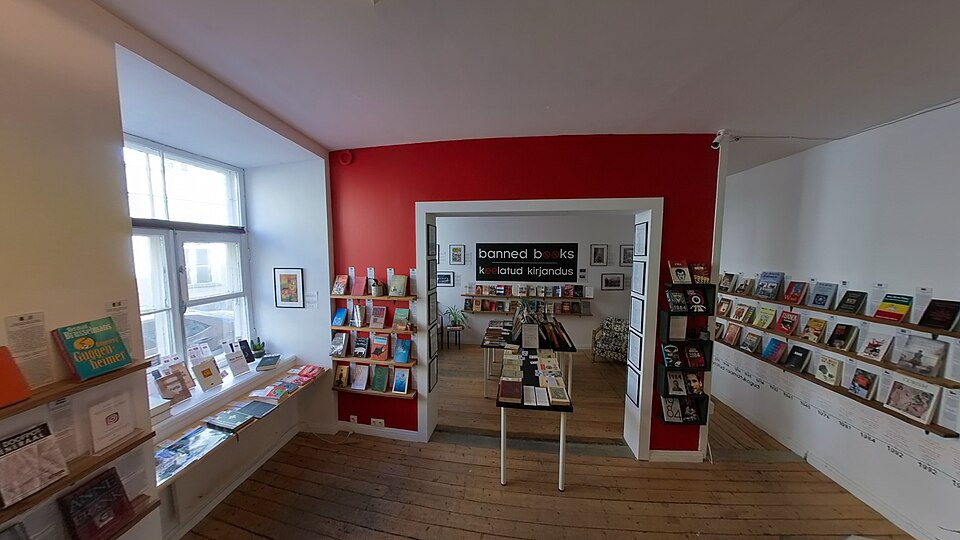
This year, the ‘Nationale Ongelezen Boekendag’ (National Day of Unread Books) coincides with another new initiative: De Week van het Verboden Boek(The Week of Forbidden Books). Bookshops and libraries throughout the country are showcasing books that have been or are still censored.
On Wikipedia, you can find an article on book censorship, a list of banned books and the main list of books banned by governments. This starts with the Bible and Albania and ends with Yugoslavia.
If I counted correctly: 66 countries. ‘Almost every country places some restrictions on what may be published, although the emphasis and the degree of control differ from country to country and at different periods.’
Wikipedia lists 66 books that have been or are currently banned in India. A small number, relatively speaking. The earliest is a Gujarati translation of Mahatma Gandhi’s book Hind Swaraj. This was banned by the British Authorities in 1909. In August 2025, the Indian Home Department banned 25 books for ‘propagating false narrative and secessionism in Jammu and Kashmir.’
Here in The Netherlands, there is only one book officially banned: Adolf Hitler’s Mein Kampf (1924). In 2014, a bookshop owner in Amsterdam was found to stock and sell the book. There was no prosecution.
However, training for new staff in bookshops routinely includes how to deal with aggressive customers. Library staff find returned books with pages torn out. A Dutch survey last year found that (1 in 7) authors had to deal with aggression, threats, intimidation – much of it online.
Here is the cover of Lale Gul’s debut published in 2021, when she was 23. It’s an autobiographical account of growing up in a strict Islamic family. It became a bestseller and was translated, but Lale has since been in hiding.
If Tallinn is on your bucket list, you can visit the Banned Books Museum while you’re there!
I’m delighted to share poems by Matthew Paul from his new collection with Crooked Spire Press. The poems demonstrate Matthew’s ‘unflinching clarity’, and his ‘fierce attention to detail’. His biography follows the poems and there you can also find a link to his own website.
Spent Matches
Mum lets only Granddad light up in our house. The second Thursday of every other month, she fetches Grandma and him over from Sutton. The chalkhill-blue elegance of the Wedgwood ashtray rhymes with unfiltered smoke rings pixilating like Ceefax in the living-room air.
Teatime doesn’t wait for Dad: Hovis, Primula, Shippam’s fish paste, allotment tomatoes, cress; mini rolls, Penguins, cremated fruitcake; pots of Brooke Bond PG Tips; Beryl Ware replaced by Royal Worcester, on Hay Wain place mats. Chit-chat wilts like Dad’s California poppies.
Mum fills space with monologues. My brothers’ progress; mine. WRVS activities. Her botched hysterectomy. We watch Grandma’s must-see, Crossroads, then ours: ‘Top of the Flops, I call it,’ says Granddad. The outfits, songs, presenters and Legs & Co. baffle him into silence; except
when Julio Iglesias butchers ‘Begin the Beguine’. ‘Artie Shaw!’ he cries; and his and Grandma’s memories spool back to bulletins on the wireless, to Chamberlain’s jubilant declaration of peace. Barely through the door, Dad re-buttons his coat to take them home. Granddad beams, ‘Abyssinia!’
Photo credit: Liam Wilkinson
A Common Hand
I don’t have to prove whether I did it or not; if they can’t see it, what kind of damned experts are they? [. . .] I’m not a crook; I’m just doing what people have always done in the history of the world: ever since art was invented, people have made imitations of it. Eric Hebborn, ‘Portrait of a Master Forger’, Omnibus, BBC TV, 1991
Eric pestles oak gall, gum Arabic, pinches of iron Sulphate and rain into ink with ‘a gorgeous patina’, To pen his line on slyly foxed paper, in the styles Of Pisanello, Poussin and sundry other old masters, Reshaping preparatory sketches to make pentimenti, Faking collectors’ monograms as cherries on top.
At junior school, Eric, aged eight, discovered that Burnt Swan and Vesta matchsticks’ charcoal tips Burnished imagination’s marks, incurring, firstly, Welts from a leathering for possessing matches, Then a three-year stretch in an Essex reformatory For wilfully setting cloakrooms on fire. A flair for Painting sees him into art schools, lastly the RA, Where, though he wins every prize, contemporaries Remember Eric only as ‘a silent creature’; ‘a joke’.
They would say that, since he’s brought their craft Into disrepute. ‘Dealers are not interested in art, but Money,’ he says. ‘The real criminal, if there is one, Is he who makes the false description; guiltier by far Than had he manipulated the nib himself. Ignore The fusspots. Enjoy art, without worrying whether Attributions are correct.’ Museums have everything To lose from uncovering Eric’s handiwork; queasily, They check their acquisitions back to the Sixties And issue, de haut en bas, highly selective denials.
‘No one is studying art with honesty,’ claims Eric, Upon the publication of The Art Forger’s Handbook In Italian. Out in Trastevere three icy nights later, He stumbles, soaked in Chianti Classico Riserva, Down a cobbled passage, to his blunt force demise.
In Which I Spend a Fortnight of my West Berlin Summer in 1987 Doing a Few Hours’ Cleaning Per Day in Some Multinational’s HQ
My Iraqi supervisor Zaynab and I enjoy, for our lingua franca, helpless amusement. Every day, precisely at knocking-off time, we point at the clock, chorus ‘Sechs!’, then cackle like siblings.
Dieter, fellow cleaner, never gets our jokes. Just like me, he’s twenty and nearing the end of a gap year; mandatory, before enrolment at Humboldt. Mine’s elective, for my mental health. He and I view the city’s halves from the roof: the Wall zigzags like the Western Front.
Afterwards, we take the U-Bahn —he buys a ticket; I don’t— to the agency’s office, at Nollendorfplatz. He translates the clerk: I won’t get paid until next week. ‘Scheisse,’ I say. Dieter deadpans: ‘She said, “Ah, so the English boy can speak German after all”’
Biography
Matthew Paul hails from South London and lives in South Yorkshire. His second collection, The Last Corinthians, was published by Crooked Spire Press in June 2025. He is also the author of two haiku collections – The Regulars (2006) and The Lammas Lands (2015) – and co-writer/editor (with John Barlow) of Wing Beats: British Birds in Haiku (2008), all published by Snapshot Press. His reviews regularly appear in The Friday Poem and elsewhere. He blogs here.
The original wind phone, photo credit Matthew Komatsu
It’s a year ago today that my brother died. If grief is love with nowhere to go, the wind phone can be a place for those feelings to land, even momentarily.
The initiative was started in Japan by garden designer Itaru Sasaki in Otsuchi Prefecture in 2010. Sasaki said: ‘Because my thoughts couldn’t be relayed over a regular phone line, I wanted them to be carried on the wind.’ Hence the name Kaze no denwa’ – phone of the wind. The disconnected old-style rotary telephone allowed him to deal with grief after his cousin’s death of cancer.
Sasaki: ‘When your heart is filled with grief or some kind of burden, you aren’t in tune with your senses. You’re closed off like curtains have been pulled around you. After you empty your heart a little bit, you might be able to hear some birds singing again.’
The following year close to 20,000 people were killed by the earthquake and tsunami. In Tokohu 10% of the population died. Sasaki allowed local people to use the wind phone. Over 30,000 people have made the journey to this telephone since, and wind phones have been set up in other countries. The wind phone also provided inspiration for films and novels.
Amy Dawson (USA) lost her daughter Emily to terminal illness in 2020. She learned about wind phones and now devotes much of her time to maintaining a listing of wind phones worldwide, providing advice and resources. The current total is just over 400. Not all calls are to a deceased. People make calls about other losses. Go to her website for more information. There is also an article on Colossal
The first wind phone in The Netherlands was placed in 2019. There are now eight, with a further eight being planned. The locations include Haarlem – the town where my brother and sister-in-law lived before moving to the nearby village of Spaarndam.
I imagine a wind phone, the black cord snipped, in the dunes of Wijk aan Zee – where I’ll celebrate my special birthday this weekend, and where my brother and I spent much time as children during the summer vacation.