Tag Archives: The Netherlands

Archive – guest poet – art

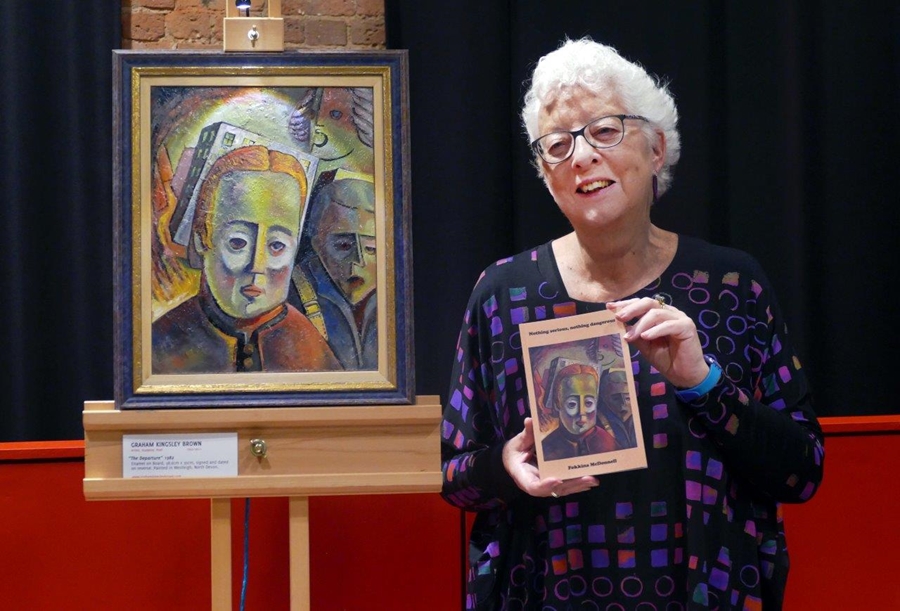
Aus Herzen und Hirnen spriessen die Halme der Nacht, 2019-2020. Oil, acrylic, emulsion, shellac, straw, gold leaf, wood and metal on canvas. Dims: 471 x 841,5 x 36 cm. Collection Voorlinden.

Our guest poet this month is Patrick Wright. As I was reading his collection Exit Strategy (Broken Sleep Books, 2024) I came upon the poem Archive and discovered that Patrick and I are both very interested in Kiefer’s work.

For me one of the highlights last year was visiting Bilderstreit, a major exhibition of Kiefer’s work at Voorlinden Museum, The Netherlands. A few weeks earlier I had watched the documentary that Wim Wenders made about Anselm Kiefer. I was blown away too by the film: it’s in black-and-white and one can watch it through 3D glasses.

Kiefer was born during the bombing raids in the final months of WWII. For him, everything exists somewhere in the cycle of death and rebirth. Whenever he creates a new work, he knows that one day he will destroy it: attacking it with a flamethrower, axe, bolt cutter, or red-hot liquid lead.

ARCHIVE
After Anselm Kiefer

Before his landscapes scorched by war and history, paintings of straw
and glue, your golden hair, Margarethe, before ‘Death Fugue’, I was back at
school, deep winter. In the yard blew a few stray crisp packets; seagulls
pecked at crumbs. The annex and fence had the look of an abandoned
camp, in Polish hinterlands. Through a cloakroom window I peered,
looking for a ghost of myself, then at a ghost of myself, as the sun
poked out from a cloud and the contours of bulimia gazed back, in
sepia tones. I saw the bullies too, with razored eyebrows, piercings,
fists in my gut, spit on my shoulder, the stench of Lynx, using queer
as an insult. With my SLR, I clicked more in hope than expectation.
I fumbled with fixative, the stop bath, the gelatin swell. My negatives
solarised. I kept re-visiting as a witness. Those days, I bit the inside
of my lip, stubbed cigarettes out on my arm. When the dysmorphic
class photos were framed, still as that winter, your golden hair, said the
Kiefer print, your golden hair, Margarethe.
Saved by bankruptcy

Photo credit: Pieter van Marion, NL

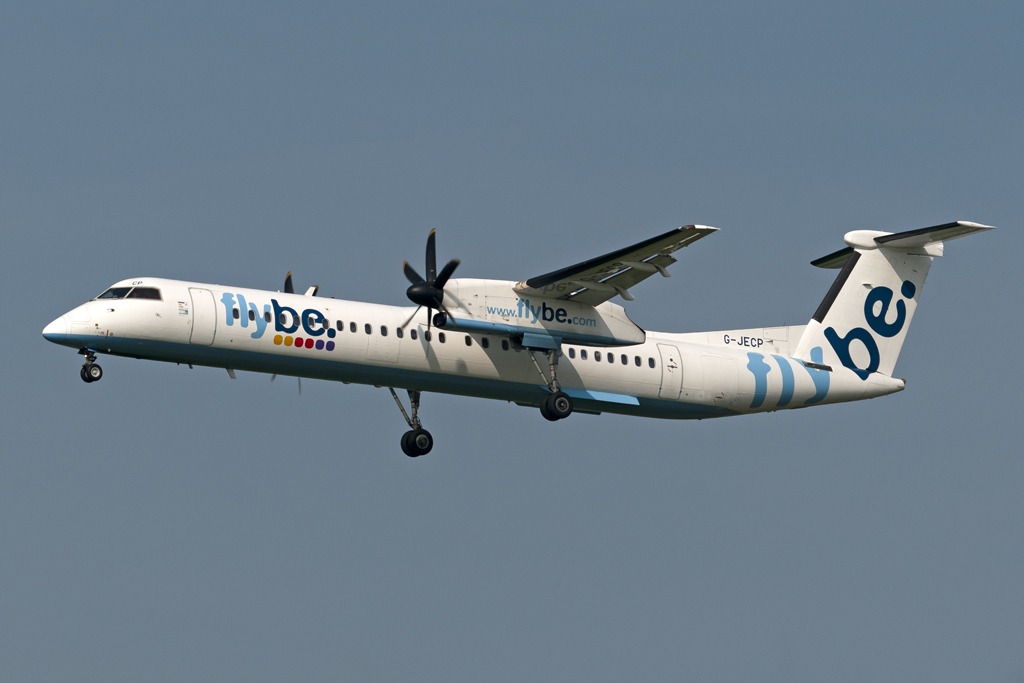
I had booked return flights Manchester – Exeter to visit my poet friend Kathleen. My trip was going to be in the third week of March 2020. On the 5th of March Flybe filed for administration and ceased all operations immediately. I lost £65, but I was very relieved: If I had flown to Exeter, I might well have been stuck in Devon as that first lockdown started…


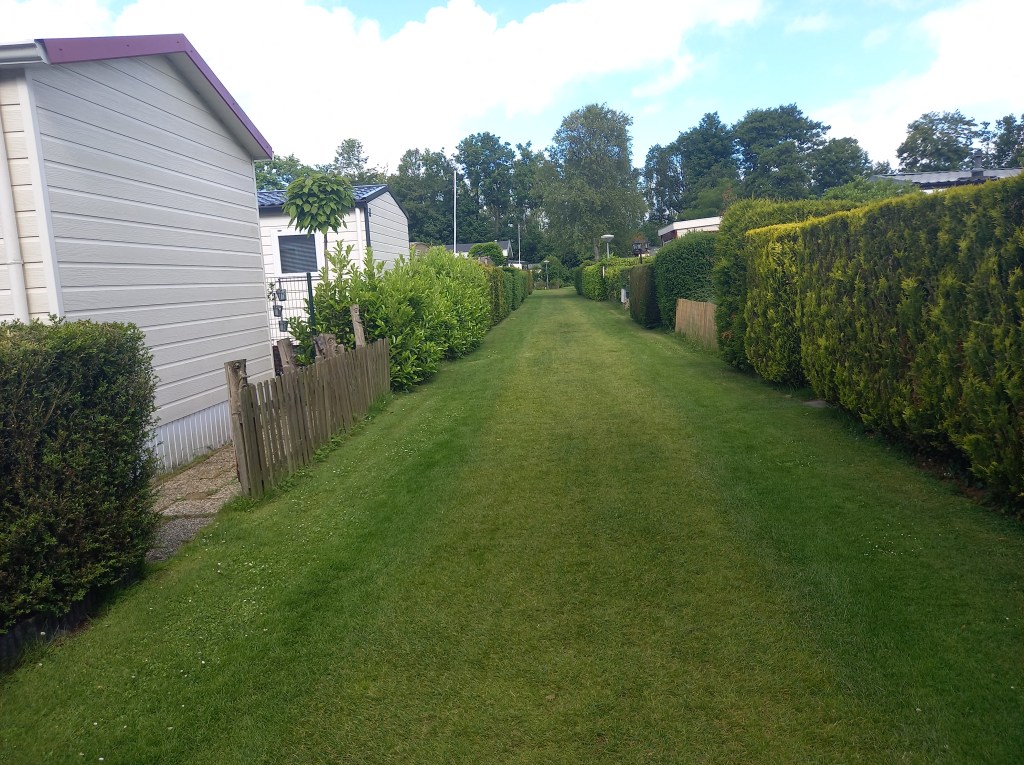
On Sunday 15 March I learned the British government was considering a compulsory quarantine. The next day I emailed the owner of the campsite asking if I could arrive early. He replied immediately. I booked a flight, transferred money, packed, agonised over which poetry books to take to my ‘desert island’ near The Hague. I flew to Schiphol on the Wednesday. The local buses already had the area near the driver closed off with white-red plastic.


Here are two poems about that first lockdown:

The departure

Half a century condensed into Brexit, pandemic.
At the threat of a four-month’ compulsory
quarantine I fled to my bolthole in Holland.

Six months of safety in a static caravan,
waking to birdsong each morning,
shielded from the sun by the golden elm.
I walked my daily rounds on the grass lanes.

Forsythia, tulips, narcissi, rhododendron,
pyracantha, salvia, rock rose, asters:
the seasons’ steady markers. From a distance
I waved to neighbours finally arriving.

In the cupboard of the spare room
lay the letter confirming my ‘settled status’
on the other side of the North Sea.

The undertakers

A double spread in the paper
features a large photo.

This man, in his thirties, a narrow
horizontal moustache, soft smile.

He sits in a wooden boat, his right hand
resting on a plain white coffin.

People are asked to email text and selfies.
Made into cards, these are placed on the coffin.

He is based in Amsterdam, will transport
you safely through the canals.

That undertaker has just opened a crematorium.
He also owns a chain of hotels.

The pandemic has cut the numbers allowed
to be in the room. There is livestreaming.

People, he says, are glad of it.
The intimacy makes it easier to speak.

At the end of September 2020, the campsite closed. I got a Covid test somewhere in the centre of The Hague and flew back to Manchester.

Late lockdown poem

I wake up and know, of course,
that I am not a morning person.
The sound of rain, of course,
and fewer sirens as people
are supposed to be at home.
My lifelines are the same, of course:
motto, comfort break, medication.
Of course, I think about exercise,
settle for Composer of the Week,
dead, of course.

Marie-Louise Park, Didsbury, Manchester, UK

A postage stamp, Joshua calls it

He’s right and there’s traffic noise
from the main road and people
with dogs on long leads,
but not all the benches
are dedicated to the dead,
Marie-Louise is a pretty name
for a park and the 43 Airport bus
is a hybrid and no-one much
was going to the airport
that autumn: I often had the bus
to myself, both ways.

Friday, 13 March 2020

Tuesday, 3 March 2020

As I was updating the website recently, I was reminded of the lovely interview that Andy N Poet did that very Friday. He came to the flat in Manchester where I then lived. On the 3rd of March I had launched a pamphlet and my second collection at the International Anthony Burgess Foundation. The launch was one of the reasons for the interview. Andy has now done several hundred interviews. You can find them all on Spokenlabel.bandcam.com Here is the link to my interview: SpokenLabel

When I listened to the interview this week, it felt spooky at times. Early February 2020 I had received confirmation of my ‘settled status’. I told Andy that I hoped to spend ‘most of the summer’ in my caravan in The Netherlands, that I couldn’t immediately tell him who my ‘desert island’ poets would be. At one point Andy mentioned the ‘virus’.

Here is a poem about that Friday from Kate Noakes who is our guest poet this month. The poem is from her 2024 Chalking the Pavement published by Broken Sleep Books.

The sick spring

Thirteenth March, a Friday with which comes
a most lauded play, Stoppard’s last contract:
Vienna, and a family succumbs,
fortunes and losses in Leopoldstadt.

I am treated to the stalls by a friend
of a friend, a nice man I do not know.
His cancelled cultural holiday ends
with a short email critique of the show.

I give him scenes, chronology, pictures,
timings avoiding history’s clichés;
how I stepped into busy Leicester Square
with foreboding that hurried me away,

and how I scurried home to a semi-death:
headache, sore throat, cough and struggle for breath.

Breakfast

Here in The Netherlands Kookboekenweek (Cookery Books Week) has just ended. A recent annual event, it’s designed to promote cookery books. Bookshops and libraries organise workshops, lectures, and tasting events. Of course, it’s all to encourage people to buy books as presents for December: St Nicolaas and Kerstmis.


Professionals shortlisted six books (Vietnamese, Japanese, Indian, Italian (2), and baking skills). They’ve chosen Bloem Suiker Boter, by Nicola Lamb, translated into Dutch. I’m going with Breakfast, a poem celebrating poetry and friendship.

Breakfast

Bridie would be in the kitchen,
barking with Finn and Tara
in a metal cage under the table.
I’m in your backroom, sheepskin
on the seat of the wooden chair,
just gone 9 o’clock this Tuesday.

You’ve made the scrambled eggs
exactly as I like them, with enough
mustard and fresh chives.
Now you’re coming in with yours,
followed by your small dogs
who settle on the settee, by the fire.

We catch up over this monthly meal.
Soon we’ll sit silently behind our laptops,
typing up poems from old notebooks.
Now eating toast with ginger preserve,
I look out of the window; the smiling
Buddha is lit up by the sun.

The unread book

Earlier this year, a group of artists in The Netherlands set up the Ongelezen Boeken Club (Unread Books Club). It is a sad fact that many library books are never borrowed. Currently, there is an exhibition in a public library in Amsterdam featuring some of their unread books.

Upstairs, around 200.000 books are on loan. If a book is not taken out during a period of two to three years, it moves onto the ‘null list’ and disappears downstairs. Here a good 400.000 books are stored along 24 km of shelving. At the exhibition, there is an old-fashioned telephone on which visitors can ring and reserve one of the unread books on the ‘nul lijst’.

The artists have declared Thursday 19 September as the first Nationale Ongelezen Boekendag (National Unread Books Day).

There is the concept of the anti-library: a collection of unread books as a research tool, as an ode to everything one wants to explore. Related to that is Tsundoku, acquiring reading materials and letting them pile up. Many poets I know feel somewhat guilty about new poetry books piling up.

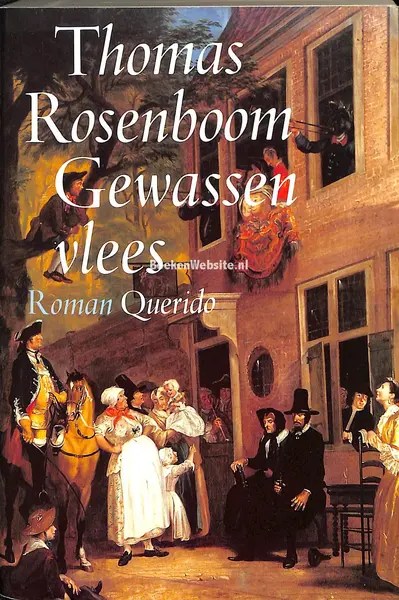
This is the cover of a historical novel, Gewassen Vlees, by Thomas Rosenboom. It won the dutch Libris prize (worth 50,000 Euros) in 1995. It’s over 700 pages long. I am never going to read it. A friend gave it to me. He died in 2000 and that’s the reason it’s still taking up shelf space.

When Sunday is not a day of rest

Photo Anton van Daal

A poem that has two fathers in it, with a photo of the actual building.

When Sunday is not a day of rest

Two narrow wooden benches form the arena.
Both gladiators enter through the main left door.
The one with the brown perm has an entourage:
three boys (one with red hair), a girl with braces,
and the eldest son with glasses, the creepy smile
inherited from his father, a businessman with butter
in his mouth who happens to be our uncle.
As church elder, he’ll collect in the interval,
holds out a long wooden pole with black velvet bag.
Both gladiators buy at Stoutebeek,
the town’s upmarket department store.

Our gladiator has better legs, better posture,
a striking hat, which makes up for just three of us.
She is a semi-professional singer.
Our gladiator chose to marry the controller
of church proceedings – the organist.
Outside, afterwards, the light ammunition
of smiles, air kisses and compliments.

Writing prompt

‘Sundays could feel very threadbare’ (Claire Keegan, Small things like these).

What is Sunday for you? A day you look forward to; a day you wish would pass quickly?

Is there another day that has special meaning to you – positive or negative?

Exhibitions

I’ve just renewed my annual Museum pass. With a typical entry fee of 15 Euros, it’s well worth it: over 400 Dutch museums take part. There is usually a top-up fee for major exhibitions. I wrote the prose poem on a recent workshop.

Exhibitions

You can’t just wake up and decide to visit an exhibition. Not a major show. You must book a ticket online beforehand and choose a time slot. I managed to get one, Saturday lunchtime, for the Manhattan Masters. Rembrandt, aged 52, poster boy.

I was way too early (I’d gone with Astrid to collect her prize from the Xmas competition and have our photo taken) so I ended up buying books in all three bookshops near the Mauritshuis. Manhattan Masters, ten paintings over from New York while the Frick is being refurbished. The Fricks went to Europe to buy, do the grand tour. They were booked to travel back on the Titanic. She sprained her ankle and they postponed.

I won’t even tell you about the Vermeer at the Rijksmuseum, the coloured lines on the floor, everyone taking photos, the horse-tooth woman who needed to be in the photo with the painting. I gave up after 30 minutes. I think it’s well-known that the exhibitions of prehistoric art take place in replica caves with fake bones and spotlights on those red hand prints and bison on the walls. I’ll give it a miss. I’ll order the catalogue and a pack of six postcards from the museum shop online.

Friendship

Friendship is the theme of this year’s Poetry Week, celebrated in The Netherlands and the Flemish-speaking part of Belgium through 400+ events. It starts on Thursday 26 January. Miriam Van Hee (B) and Hester Knibbe (NL), two poets who have been friends for almost 40 years were commissioned to write five poems each for a book. In a recent interview they said that trust and curiosity are key elements for a friendship to endure and last.

Anyone who spends over 12,50 Euro on poetry books during Poetry Week will be given a copy. It’s not hard to spend that sort of money, as poetry books are expensive in The Netherlands!

Here is my poem on the theme of friendship: memories of a long weekend in Vienna in 1994.

Vienna

I would gladly return,
walk with Wendy through
the rain to the museum,
see the Hunters on the Hill –
tired, wet dogs, in the Little Ice Age
when frozen birds fell from the sky.

I would gladly go back there,
view grey buildings slide past,
hear the clanging bell.
Schwedenplatz, umsteigen.
A trolley bus securely attached
to the two lines above.

Storks and happiness…

Credit: Michael Schwarzenberger via PIxabay

Storks are said to bring happiness. The bird has been the official emblem of The Hague for centuries. Until the beginning of the last century, storks with clipped wings walked the many fish markets in the city, keeping the streets clean.

I hope this new year will bring health and happiness to you and those you hold dear. The poem is from my new collection Remembering / Disease published last October by Broken Sleep Books. It first appeared in the online magazine Dust, edited by Tara Wheeler.

Storks also feature in my poem High wind. It was selected as one of 20 poems by a jury for the Poetry Archive’s Poetry Archive Now! Wordview 2022. You can see and hear me read it here.

Waiting

The water meadows
are waiting
for the storks to return

always invisible
the other side
of her face

in this book
there is snow
on every page

even an old potato
can be turned
into a Christmas stamp

the naming of colours
is not a science.
I vote for bird’s nest grey

FEET – guest poet


One of the most enjoyable things I did recently was read the manuscript of FEET. Elsa Fischer had asked if I would write a ‘blurb’ for her collection coming out a few weeks from now. Elsa’s poems from her two pamphlets (Palmistry in Karachi, Hourglass) have featured here in May 2020.


erbacce press in Liverpool run an annual poetry competition. In 2012 I was a runner-up and had 12 poems in the quarterly magazine, along with an interview. There were around 6,000 other entries. This year over 15,000 poets worldwide sent a selection of their work. Elsa’s submission was one of three to achieve publication.


Elsa was a young child in The Netherlands during WW2 and her collection includes some poems about that experience. Here is Hunger Winter about the winter 1944/45, followed by the poem Remembrance Sunday.

Veteranendag, Den Haag


Since 2005, the last Saturday in June has become ‘Veteranendag’, a day to honour the more than 100,000 Dutch veterans. There is a flypast and a parade of over 3,500 serving soldiers, several forces’ orchestras, old and new equipment. On the Malieveld, the large green area near The Hague central station, are marquees and vehicles. A good PR opportunity: the army, navy and air force all need recruits …

Hunger winter


To blunt the pangs of hunger
my mother would copy recipes.
In her wartime diary, between salmon
mousse and boeuf bourguignon I find
the birthdays of uncles and aunts,
lists of friends, their ‘phone numbers
in four digits. Crossed out the names
of those who perished. Lines of French
poetry: how dawn had chased the night
the poet would have wanted to last longer.
A list of socks, hats, underwear and who
she knitted for. A monthly record of her
bleeding. Exclamation marks around my
name on a page in September.

Remembrance Sunday


One hundred years old.
And two months, he adds
and in my regiment
the last man standing.
Holding a globe
he points at El Alamein.
That was a good one, he says.
Grins.