Tag Archives: sea

Mine

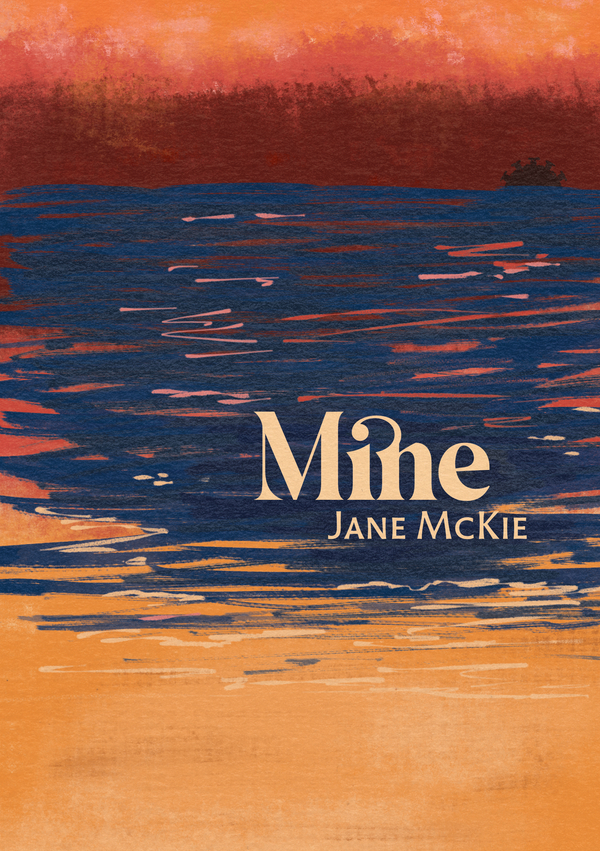
It’s my pleasure to introduce our May guest poet Jane McKie. We met many years ago on a writing workshop and are still part of an email group. You can find her biography at the end of this post. Cinnamon Press recently published her new poems and I’ve chosen some poems from Mine: vivid, clear embodied images with marvellous economy.

Mine

On nights when the wind drops, I hear it crooning softly,
not like a real bomb. A toothless, barnacled silhouette, wittering
to itself when the tide is low. My friends and I sometimes get close,
daring each other to nudge its rust. But what happens when
the music cuts out? Tonight, the mine’s a mute companion:
whiff of brine, cryptic fist. As my eyelids close, that’s when it—

Kevlar


I am the tattoo of a spider’s web
on a sixteen-year-old girl’s calf.
Traced from a drawing of a photo,
in time, I will thread up her thigh,
over her whole torso, in a riot of
silk that is stronger than Kevlar.

She will wear me like armour:
my vest of ink, her toughest skin.
Who wouldn’t fear a woman
fluent in the language of spiders?
Those twitches in cobwebs
that throb like old wounds.

Dreaming in an age of austerity


Not a single one finished: all mark time
until a rich developer completes the job.
Here, stone knuckles. There, exposed metal rods
stab at the sky like a mech-monster’s fingers.

Not vital or hungry, these resort Titans.
But not quite dead either. Gulls like to roost
in the pockets of them. Gulls dabble bills in
puddles that form from the absence of roofs.

Even small children play in the undead bodies
of imagined buildings, sneaking past tape
to be mummies and daddies in beautiful houses
that shelter insatiable, suckling doll-babies.

Polished malachite


on my desk, riven
with almost-blue, a pool
or algal cistern.

I touch it when I’m sad
and its green eye blinks, rippling
with souterrain light.
Biography


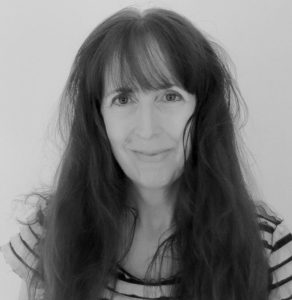
Jane McKie is a Senior Lecturer in Creative Writing at the University of Edinburgh. She has written several poetry collections, including Morocco Rococo (2007), Kitsune (2015), and Quiet Woman, Stay (2020) with Cinnamon. Her most recent full collection is Carnation Lily Lily Rose (Blue Diode, 2023). She lives in Scotland, but was originally from the Sussex coast, which inspired several poems in Mine.

Had I not been lonely …

Matthew Sweeney, 2006


When I saw a post by ‘Albert’ on Twitter with this quote by L S Lowry: Had I not been lonely I would not have seen what I did, it reminded me of this poem by Matthew Sweeney. A fine ekphrastic poem that moves beyond description, as it enters into dialogue with the artist about their work.

I have a few ekphrastic poems that need expanding in some way, so I’m going to do some research and explore how I could incorporate the artist’s own words into those poem. Is this something you might do with your own writing? If you’re a painter, photographer, sculptor, do poems inspire you?


Here are the two parts of Matthew Sweeney’s poem Dialogue with an Artist

Matthew died in 2018, his poems are still with us.

Dialogue with an Artist

THE LONELY
Incorporating the words of L.S. Lowry

I used to paint the sea, but never a shore,
and nobody was sailing on it. It wasn’t even
the sea, it was just my own loneliness.

It’s all there, you know. It’s all in the sea.
The battle is there, the inevitability of it all,
the purpose. When I switched to people

they were all lonely. Crowds are the
loneliest thing of all, I say. Every individual
in them is a stranger to everyone else.

I would stand for hours in one spot
and scores of little kids who hadn’t had
a wash for weeks would group round me.

Had I not been lonely, none of my work
would have happened. I should not have
done what I’ve done, or seen what I’ve seen.

There’s something grotesque in me and I
can’t help it. I’m drawn to others who are
like that. They’re very real people. It’s just

I’m attracted to sadness and there are some
very sad things. These people are ghostly
figures. They’re my mood, they’re myself.

Lately, I started a big self-portrait. I thought
I won’t want this thing, no one will, so
I went and turned it into a grotesque head.

MEMO TO LOWRY

You’re right, there are grotesques who shine
a dark light that lures us like how the sirens
tried to lure Odysseus, and yes, maybe we
ourselves are among the grotesques, but
there are also the beautiful who, if we’re
lucky, save us from ourselves, and validate
the sun’s light, and maybe also the moon’s.

Poetry in Aldeburgh

Scheveningen, S Hermann/F Richter on Pixabay

On Monday, my journey to the other side of the North Sea involved five different modes of transport: taxi from Aldeburgh to Ipswich, National Express coach to Standsted Airport, Easyjet flight to Schiphol, Intercity to Den Haag Centraal, tram to the flat. All clockwork, no delays. It was dark when I got back home.


Taking part in the ‘live’ Poetry in Aldeburgh Festival has been a joyous experience. The highlight was the reading Our Whole Selves with poet friends. Poet Kathy Pimlott and I wrote several blog pieces about the readings, workshops, performances, open mic. These will soon be on the official website. A big thank you to the small organising team which managed to arrange a wonderful programme.


The poems I read were from my new collection Remembering / Disease, published by Broken Sleep Books last month. I opened my set with Nautical Miles (from my collection Nothing serious, nothing dangerous). When I looked at an old photo, I saw that only Hoek van Holland is ‘less than a hundred’ nautical miles. Good reminder that poetic truth matters more than the accurate facts…

Nautical miles

Outside the Sailors’ Reading Room, the sign:

thin wooden planks, painted white:
Den Helder, IJmuiden, Hoek van Holland.

Across the horizon, they are less than a hundred
nautical miles from Southwold in Suffolk

where the narrow beach of pebbles –
grey, brown, black mostly –

is held together
by couplets of groynes, slimy green.

Both our languages have the word strand.

Note: The Sailors’ Reading Room, Southwold is a Grade II listed building from 1864 and still a refuge for sailors and fishermen.

In Aldeburgh: Poetry

Haibun


Yesterday’s journey: comfortable Eurostar from Rotterdam Centraal, a sit-down at Soho & Co, Liverpool Street Station for food. The unexpected ‘red signal’ at Colchester turned out to be ‘waiting for British Transport Police’. They escorted a couple off the train. Missed connection at Ipswich gives an unexpected hour to mull and ponder. The friendly taxi driver from A2B and warm welcome at The White Lion where the bar is still open.

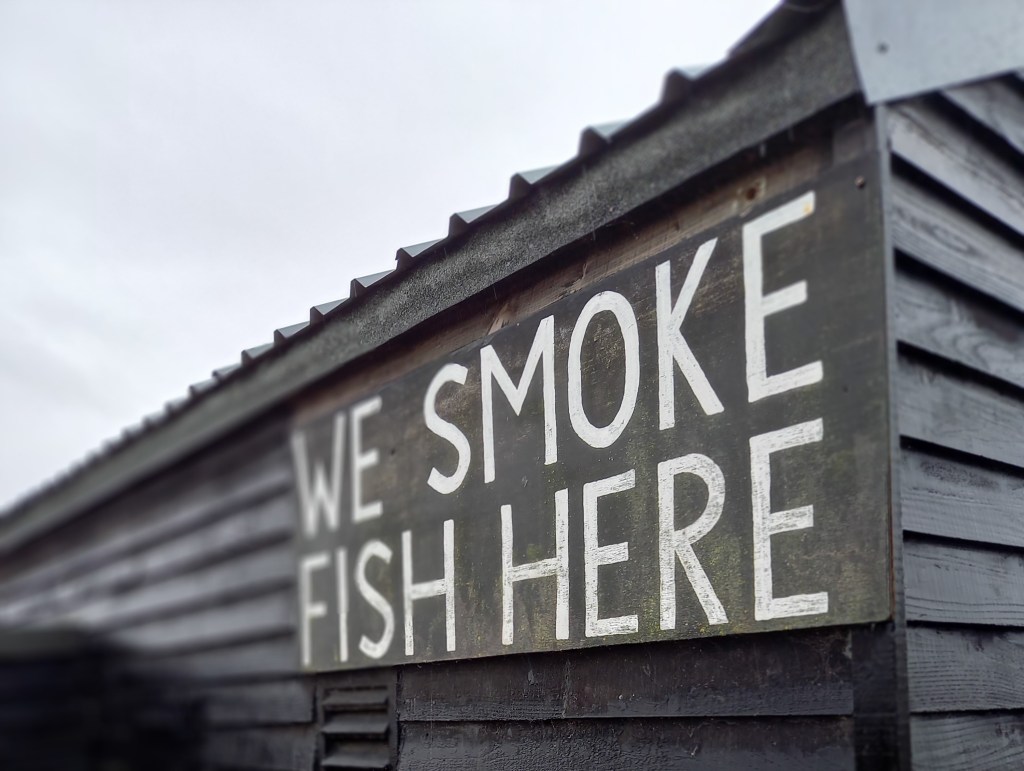
we smoke fish
open
we catch raw words

Assisted Passage – poem

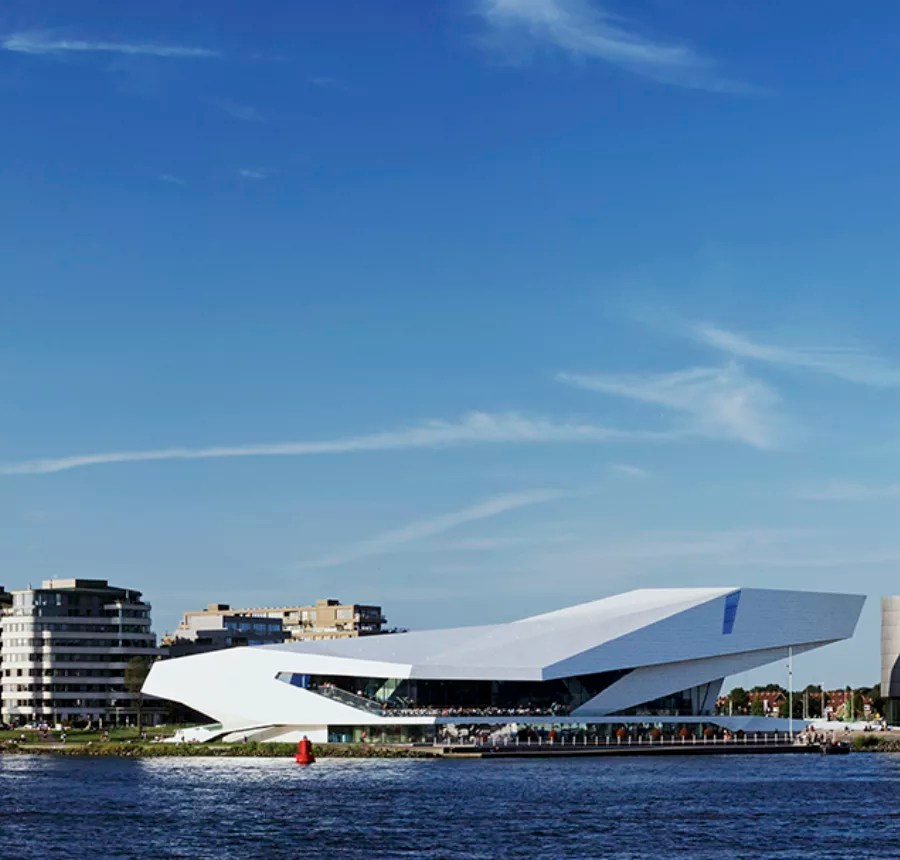
Eye, Amsterdam

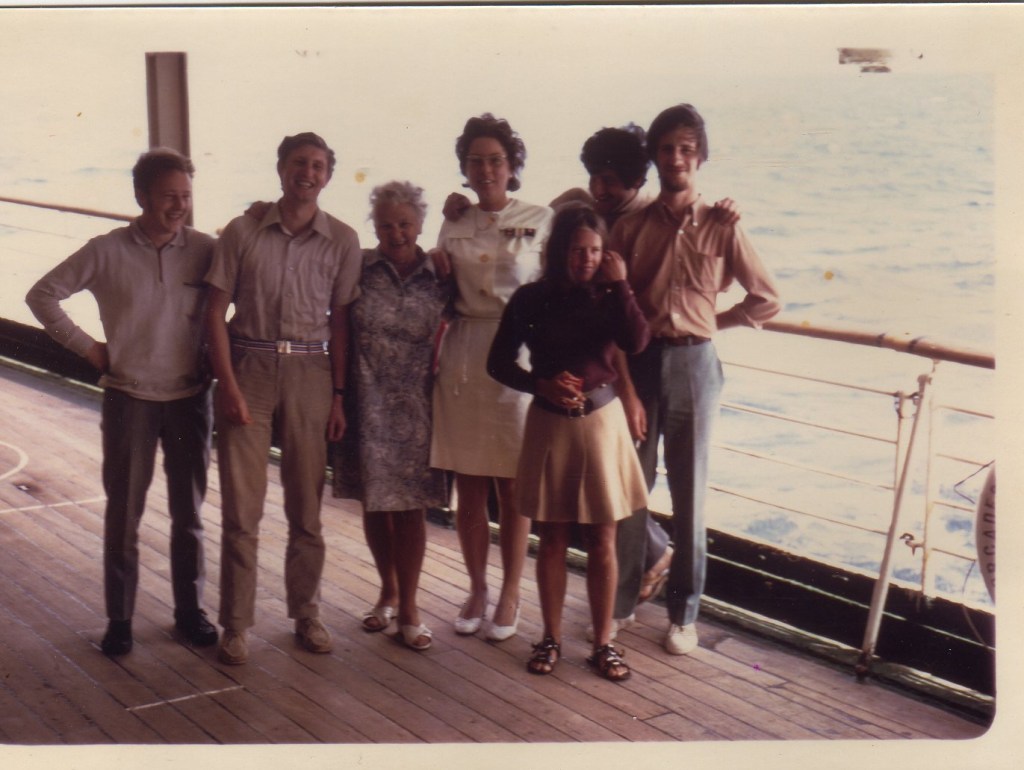
Over half a century ago I shared a room in an Earls Court hostel with three other Dutch women. P&O Lines Ltd had just taken us on as WAPs (Woman Assistant Pursers) and we were to be employed in various offices while waiting for a ship to become available. I did secretarial work for a Scottish marine engineer, struggling to capture the technical terms – about bulkheads of a vessel that was being built at the famous Cammell Laird yard in Birkenhead.

We have kept in touch all those years, and celebrated in the Eye, Amsterdam with lunch in 2019. The film museum is an iconic building just the other side of the railway station. A short ferry journey is a good way to get there. Our plan for an annual reunion had not taken a pandemic into account and now one of us has health issues. Fingers crossed for September!

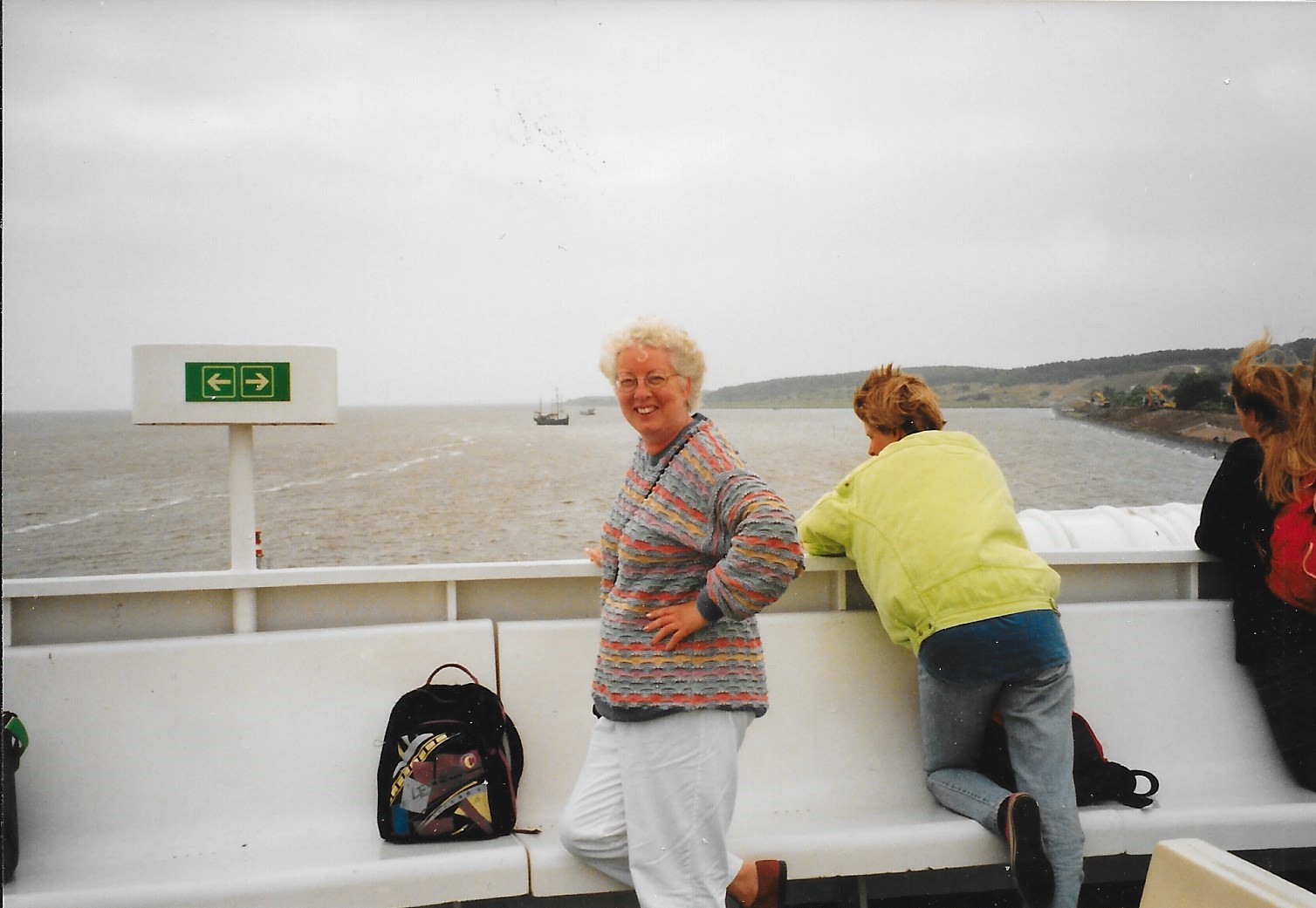
Our language skills had got us the job: Dutch, English, French and German. The photo is from S.S. ORCADES where I was Supernumerary, translating the news, and holding daily meetings. Here I am with the small group from Germany and Switzerland.

Assisted passage

You’re on F deck aft, an alleyway
away from your spouse,
also sharing with five strangers.

Time to fold over your memories,
freshly laundered. You don’t need
memories where you’re heading.

You saw the Fire Dance in Dakar.
Days of sea, sun, and sky.
Cape Town with Table Mountain.

Nine grey days of swell.
Freemantle, Adelaide,
Melbourne, Sydney.

Shake a leg, show a leg.
You’ll soon be down under.
Your new upside-down lives.

De Kop van de Haven – poem

Credit: R van Lonkhuizen

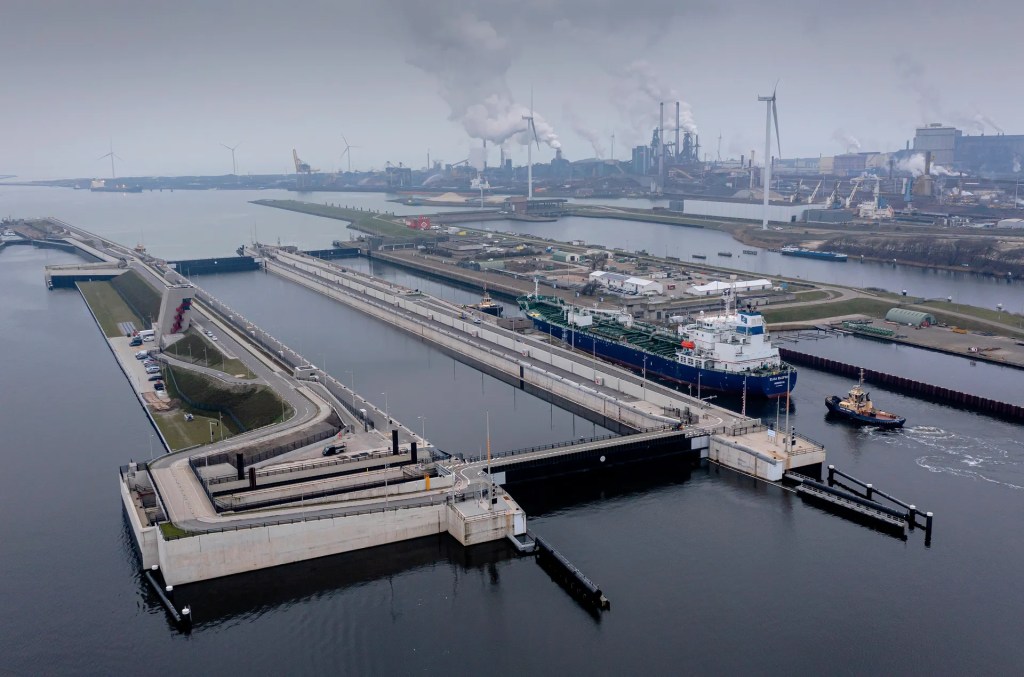
On Wednesday this week King Willem-Alexander opened the Zeesluis Ijmuiden. These new sea locks, built alongside the existing locks, are the largest in the world: 500 metres long, 70 metres wide and 18 metres deep. The existing locks were nearing the end of their life and becoming too small for the huge vessels heading for Amsterdam.


A major design fault was discovered. This resulted in excess cost of almost three million Euro and the grand opening almost three years overdue. Now ships can pass independently from the tides. But, with the cruise ships entering the locks, so does a lot more salt water… and are those towering liners still wanted?


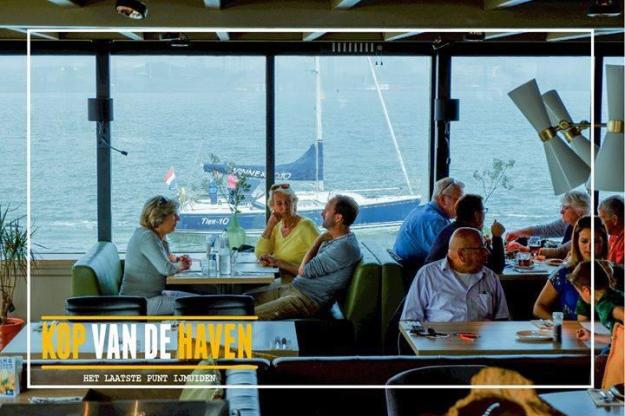
A splendid view of it all can be had a little further out. The last time I had lunch there was, probably, in 2011 – that Icelandic volcano had closed air space. I managed to get a shared cabin on the ferry to Newcastle and treated my friend to lunch as a thank-you.

De Kop van de Haven, Ijmuiden
for Trieneke


It’s not a pub, it’s not in the UK.
It’s right by the tall chimneys
of the steel works, once Royal
Dutch, now Tata. The canal
to Amsterdam was dug by
unemployed men and now
there’s a gleaming ferry terminal:
Christmas shopping in Newcastle.

Fish is fish is fresh is fresh with
a view of water and waves and
smoke and boats and barges
and ships and liners and the wind.
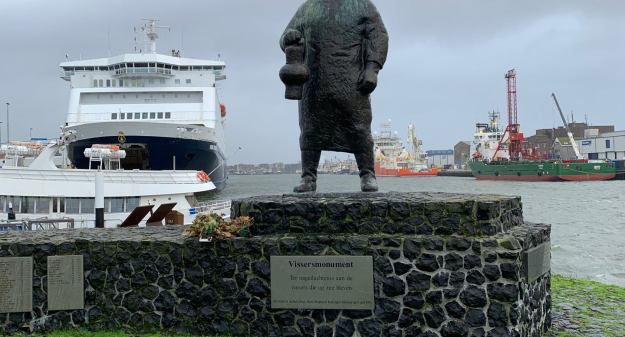
Outside on the head of the harbour
the bronze fisherman holding
a storm lantern in his right hand.

Vlieland – Birthday island


Vlieland island


Earlier this week I celebrated my birthday. Up to 10 visitors are now allowed onto the camp site for parties and birthdays. However, I decided to celebrate over a 10-day period: some days the weather has been autumnal – cold, wet and windy. Inside the caravan I wouldn’t have been able to guarantee the 1m social distance. Besides, after months of social isolation, lockdown, shielding, I was desperate for proper contact and conversation with family and close friends. It was a marvellous extended week!

I vividly remember another birthday. With a close friend I had an overnight stay on Vlieland, one of the Frisian Islands in the Wadden Sea. We travelled by ferry from Harlingen (a peaceful 90-minute journey), stayed overnight in Hotel De Wadden that once was the island’s marine college, rented bikes, ate fish and chips, bought cranberries which grow there. We were blessed with the weather: sunny and a breeze.


A major storm in 1296 separated Vlieland from the mainland. It’s hard to imagine how important the island once was: in the 17th century hundreds of trading and whaling ships would have been afloat nearby. The tides and winds have shifted and changed the shape of the island. Now, it is only about 12 kms long and 2 kms wide at best and, mostly dependent on tourism. Visitors are not allowed to bring a car across – bring your own bike or rent one!

Vlieland ferry


Vlieland

Empty days
cycling on white paths
crushed shells
bless the lighthouse
on this island

Full nights
dreams of fishes
frogs, berries, seals
the white ferry
resting

Birthday
blessed July
sky, salt breeze
You look younger
on this island

A cylinder full of the rushing sea …


Mesdag 4

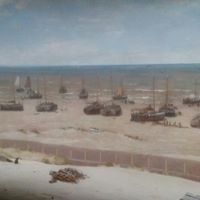
Panorama Mesdag is a cylindrical painting, more than 14 metres high and 120 metres in circumference. It’s a view of the sea, the dunes and Scheveningen village as it was in 1881. It’s the oldest 19th century panorama in the world in its original site.

Ever since getting my caravan in Holland, I’ve been visiting several times a year. When I am standing on the circular viewing platform in the centre, I know I’m just 14 metres away from the canvas. I know it’s all an illusion, but I can hear sea gulls, I get the salty tang, I see clouds pass by and the sun break through.

Mesdag 3

Painting the enormous canvas was a team effort: Hendrik Willem Mesdag with his wife Sientje and various able painters from the Hague. Other panoramas portray violent scenes (the battle at Waterloo, the Crucifixion of Christ). Here it’s visible silence, still as the hourglass (Dante Gabriel Rossetti), the tranquility of everyday life. A few fishermen are messing about with their nets, the boats are beached, the cavalry are walking their horses on the sand, women are chatting in a doorway, a dog lies down quietly.

Before the camping closes and I lock up my caravan, I will go and stand on that viewing platform again and say my goodbyes to Panorama Mesdag. The poem is by my friend Keith Lander.


Mesdag trieneke

The Mesdag Panorama
after a panoramic painting by Mesdag in The Hague

I’m on a school trip to The Hague
transfixed by the Mesdag Panorama,
especially the seascape stretching away
from the viewpoint on the man-made sandhill,
with fishing boats moored on the vast beach,
a troop of cavalry men in training,
and, joy of joys, a donkey ride.

When no one is looking I climb
over the railings onto the sandhill
and, without looking back, skip away
laughing and tumbling down the slope
towards the beach, the north sea breeze
in my hair, to run behind the military
and have endless rides on the donkeys.

Forty years later, a bored business man
with time to spare before an appointment,
I visit the Panorama and remember
I’ve been there before as a schoolboy.
As I stare at the seascape again I see
the boats on the beach, the military men
and a lost boy waving from the donkey ride.