Tag Archives: nature

Storks and happiness…

Credit: Michael Schwarzenberger via PIxabay

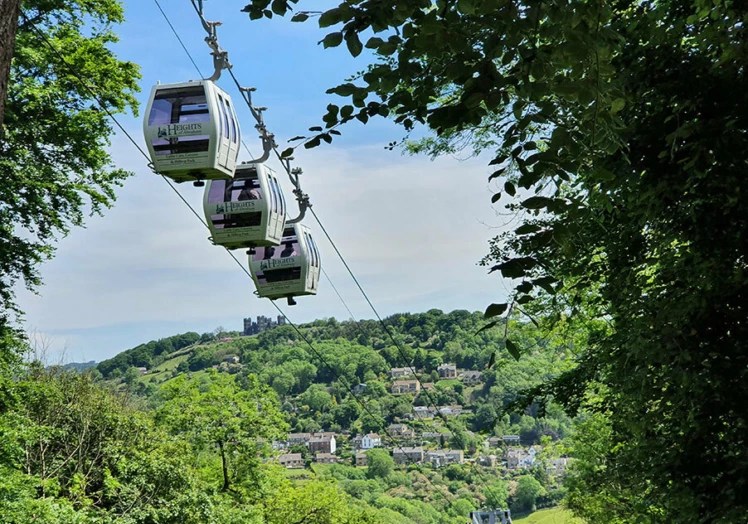
Storks are said to bring happiness. The bird has been the official emblem of The Hague for centuries. Until the beginning of the last century, storks with clipped wings walked the many fish markets in the city, keeping the streets clean.

I hope this new year will bring health and happiness to you and those you hold dear. The poem is from my new collection Remembering / Disease published last October by Broken Sleep Books. It first appeared in the online magazine Dust, edited by Tara Wheeler.

Storks also feature in my poem High wind. It was selected as one of 20 poems by a jury for the Poetry Archive’s Poetry Archive Now! Wordview 2022. You can see and hear me read it here.

Waiting

The water meadows
are waiting
for the storks to return

always invisible
the other side
of her face

in this book
there is snow
on every page

even an old potato
can be turned
into a Christmas stamp

the naming of colours
is not a science.
I vote for bird’s nest grey

Above Redmires – guest poet

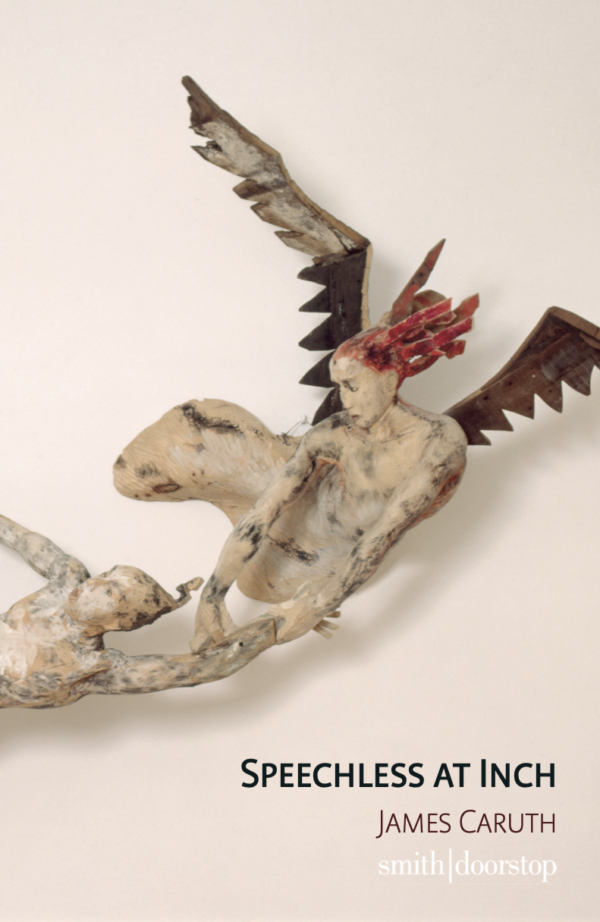
The poems of James (Jim) Caruth have featured on the blog before. Here is the link. Last year his new collection, Speechless at Inch, was published by smith/doorstop. It was shortlisted for The Derek Walcott Poetry Prize 2023.

The striking cover image is of Janet Mullarney’s The Straight and Narrow. Made in 1991 of painted wood, it measures 228 x 320 x 137 cm. It’s in the collection of the Irish Museum of Modern Art.

Here is a seasonal poem from Speechless at Inch:

Above Redmires

It was mid-December, a back road
through the low hills that nurse
the city’s northern edge, when I came upon

a flock of black-faced ewes
crowded in a corner of a field,
a squeeze of tattered wool and clouded breath.

I stopped the car to look around,
searching for a dog slipped the leash
or a fox tasting the air along the hedgerows

but as far as I could see
there was no other living thing
between those frightened sheep and me.

Biography

James Caruth was born in Belfast but has lived in Sheffield for over thirty years. He has had several pamphlets and a collection published: A Stone’s Throw (Staple Press, 2007), Marking the Lambs (Smith/Doorstop, 2012), The Death of Narrative (Smith/Doorstop, 2014) and Narrow Water (Poetry Salzburg, 2017).

Winter Sun Speaks – guest poet

I am delighted to feature the poem Winter Sun Speaks by Maggie Reed. We first met on a residential workshop several years ago. The picture of winter sun is also by Maggie.

Winter Sun Speaks

I birth my cry through cloud layers
push my weight low over the southern horizon,
strident, desperate, slanting over the hills
forking through trees, splintering ice.
I blind drivers on the school run.

How I ache for summer skies, to leap and arch
over the earth, spread light, energy and love.

But for now my shriek, my low level beam, insists
my right for the few hours I’m allowed
to crisp up these dark winter days.

Biography:

Maggie Reed lives in the Malvern Hills, Worcestershire, having spent much of her life in Cumbria. Her current collection Let Small Wings Fly was self-published in 2021 to accompany the Arts Council funded travelling art exhibition ‘Mappa Marches’ that visited libraries and art centres across Herefordshire throughout 2022.

She has been published in several journals, including The North, Orbis, Poetry Birmingham, Pennine Platform, Three Drops from a Cauldron and Poetry Village, and has been included in anthologies such as This Place I Know (Handstand Press, 2018), Places of Poetry (One World, 2019), When All This is Over (Calder Valley Poetry, 2020), Poetry of Worcestershire (Offas Press, 2019) and In the Sticks (Offas Press, 2021). She won the Poem and a Pint competition (judge, Carrie Etter) in 2019.

Crab Snowglobe – guest poet

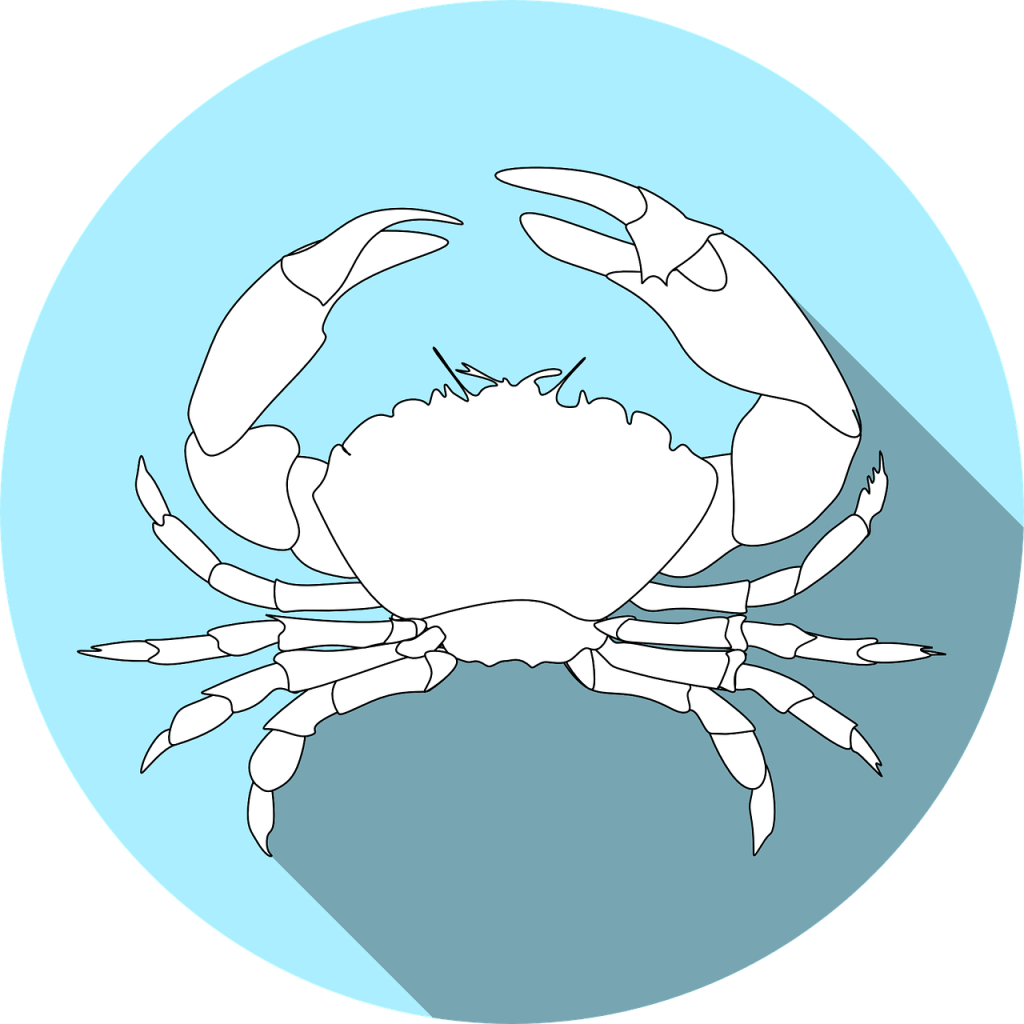
Credit: Kurious via PIxabay

Each Sunday in December there will be seasonal poems on the blog. For a few years I lived in the Withington area of Manchester, so I recognised the shop mentioned in Annie Muir’s poem. It’s from her pamphlet New Year’s Eve, published by Broken Sleep Books in 2021.

Crab Snowglobe

Thrown in with shoelaces and paracetamol,
a souvenir from Copson Street pound shop –

this rusty orange crab on a rock
with specks of glitter resting

in every nook and cranny.
Around the base there are footprints in sand

and another, smaller crab,
exactly alike except I can touch it.

Inside your hard, glass globe
you seem to be in some other dimension

like the reflection in a mirror,
or memory.

Either dormant or ecstatic –
when I shake you up

it is for a moment New Year’s Eve,
your pincers grasping to catch the confetti

that floats around your head
in kaleidoscope slow motion.

Then, when each piece has fallen, you wait
for something else to happen.

Biography


Annie Muir lives in Glasgow. Her debut pamphlet New Year’s Eve was published by Broken Sleep Books. Pre-pandemic she handed out poems on the street outside local libraries, and she has a podcast – Time for one Poem – aimed at complete beginners to poetry.
@time41poem

Poetry in Aldeburgh

Scheveningen, S Hermann/F Richter on Pixabay

On Monday, my journey to the other side of the North Sea involved five different modes of transport: taxi from Aldeburgh to Ipswich, National Express coach to Standsted Airport, Easyjet flight to Schiphol, Intercity to Den Haag Centraal, tram to the flat. All clockwork, no delays. It was dark when I got back home.


Taking part in the ‘live’ Poetry in Aldeburgh Festival has been a joyous experience. The highlight was the reading Our Whole Selves with poet friends. Poet Kathy Pimlott and I wrote several blog pieces about the readings, workshops, performances, open mic. These will soon be on the official website. A big thank you to the small organising team which managed to arrange a wonderful programme.


The poems I read were from my new collection Remembering / Disease, published by Broken Sleep Books last month. I opened my set with Nautical Miles (from my collection Nothing serious, nothing dangerous). When I looked at an old photo, I saw that only Hoek van Holland is ‘less than a hundred’ nautical miles. Good reminder that poetic truth matters more than the accurate facts…

Nautical miles

Outside the Sailors’ Reading Room, the sign:

thin wooden planks, painted white:
Den Helder, IJmuiden, Hoek van Holland.

Across the horizon, they are less than a hundred
nautical miles from Southwold in Suffolk

where the narrow beach of pebbles –
grey, brown, black mostly –

is held together
by couplets of groynes, slimy green.

Both our languages have the word strand.

Note: The Sailors’ Reading Room, Southwold is a Grade II listed building from 1864 and still a refuge for sailors and fishermen.

coming light – guest poet

I am very glad to introduce this month’s guest poet Sheila Butterworth. We met many years ago, in that Yorks/Lancs Branch of the BHS. I let Sheila introduce herself and her haiku.

“Winning the Leeds Waterstones Haiku Competition in 2000, organised by the Yorks/Lancs Branch of the British Haiku Society, introduced me to the world of haiku poets, workshops, journals and a network of local poets with whom to chew the haiku fat. I have since had poems published in Blithe Spirit, Presence, The Snapshot Press Haiku Calendar, Wales Haiku Journal and The Red Moon Anthology.

Most of my haiku come out of the everyday experiences of life within a mile of my edge of village doorstep where I have lived for 40 years. This is where I notice those things that have most meaning to make haiku. The familiar environment highlights the nuances of change in place, in time and in me and this is when haiku happen.”

coming light
the bubble and trill
of robin and wren

high street dawn
the smell of sweet dough
folds into the fog

morning mizzle
molehills spatter
the spring pasture

planting potatoes
startled sparrows
scatter in the quickthorn

summer rain
the shining bole
of a sapling ash

evening sun
the shadow of the wood
fills the field

standing out
in the half light
borage blue

passing by
the old doctor
walks into the wind

the white tip
of a fox’s tail
above the snow

instead
I blow the dust
from a bowl of sea glass

In Aldeburgh: Poetry

Haibun


Yesterday’s journey: comfortable Eurostar from Rotterdam Centraal, a sit-down at Soho & Co, Liverpool Street Station for food. The unexpected ‘red signal’ at Colchester turned out to be ‘waiting for British Transport Police’. They escorted a couple off the train. Missed connection at Ipswich gives an unexpected hour to mull and ponder. The friendly taxi driver from A2B and warm welcome at The White Lion where the bar is still open.

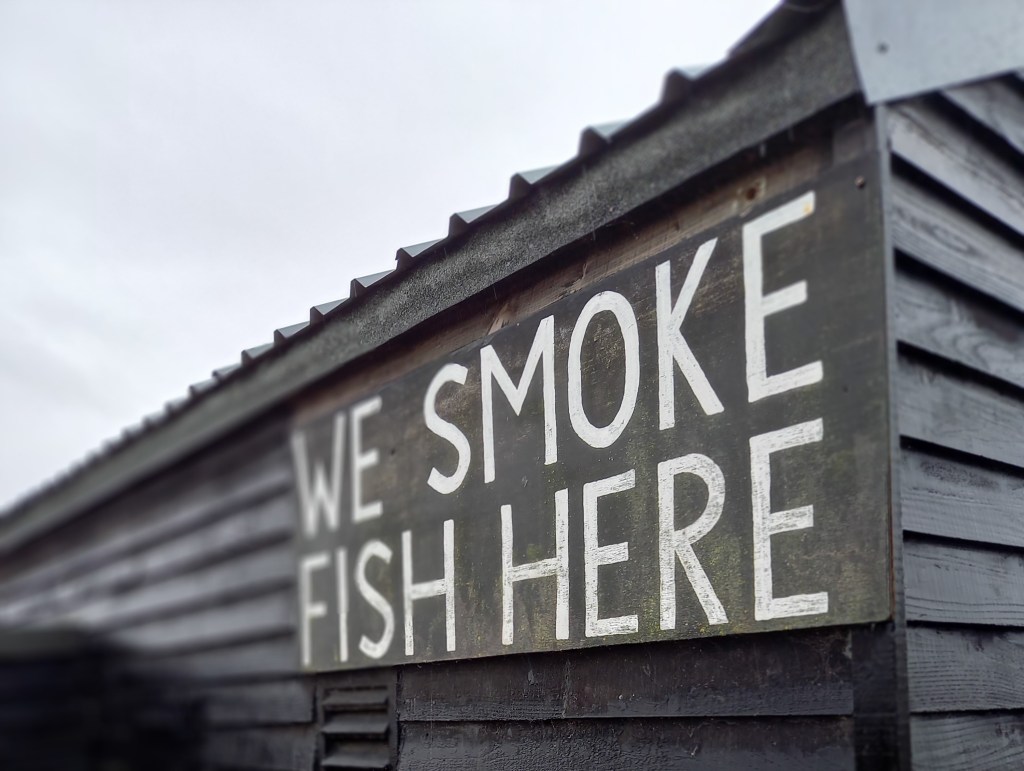
we smoke fish
open
we catch raw words

Still Life with Octopus – guest poet

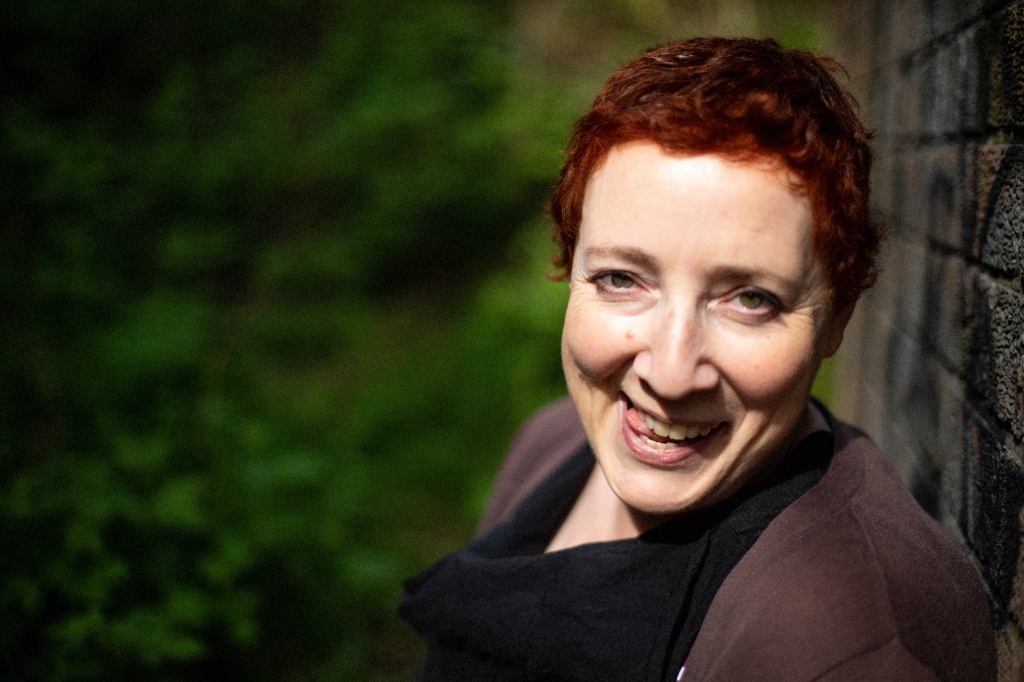
Photo credit: Grace Gelder

It is a great pleasure to introduce this month’s guest poet Tania Hershman. I met Tania a few years ago when I attended a series of workshops she gave on flash fiction. She is a generous, inspiring tutor. I have chosen four different poems from her new collection.

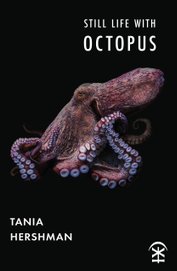
Tania Hershman’s second poetry collection, Still Life with Octopus, was published by Nine Arches Press in July 2022, and her debut novel, Go On, a hybrid “fictional-memoir-in-collage” will be published by Broken Sleep Books on 17 November 2022. Her poetry pamphlet, How High Did She Fly, was joint winner of Live Canon’s 2019 Poetry Pamphlet Competition and her hybrid particle-physics-inspired book ‘and what if we were all allowed to disappear’ was published by Guillemot Press in March 2020.

Tania is also the author of a poetry collection, a poetry chapbook and three short story collections, and co-author of Writing Short Stories: A Writers’ & Artists’ Companion (Bloomsbury, 2014). She is co-creator of the @OnThisDayShe Twitter account, co-author of the On This Day She book (John Blake, 2021), and has a PhD in creative writing inspired by particle physics. As writer-in-residence for Arvon for Autumn 22-Winter 23, Tania has curated a programme of readings, workshops and talks, both online and in person. Find out more at http://www.taniahershman.com

Still Life With Octopus (II)

I only asked her once to climb inside a jar for me. (Before we met, I’d watched all the videos of those experiments.) She sighed but did it, said I could screw the lid, released herself easily. You could become any shape you want, I said. She said nothing. One arm sent itself out to switch the kettle on. While she made us tea, I put the jar back in the cupboard, feeling that slight ache from too much sitting in my hip bones, my lower back, where fixed part meets fixed part of me.

Standardized Patient*

Today I am your
lower back pain. Listen,
I have all the details, will
not veer

from the script. Tomorrow
I will be your cancer
of the kidneys. Next week,

I may be your
one-legged skier (I know,
I know). Whose pain
is this?

*Standardized patient simulation lets medical students practice on people trained to play patients.

And then God

sends someone else’s
Jewish grandmother
to stop me

with a question about birds
I can’t answer. She says – as if
this is her river – I’ve never

seen you here before,
then presses for my
exact address. Instead

of the usual, Such a nice
girl, no husband?, she asks,
No dog? I don’t know why

I tell her then
that I’m a poet, but
the gleam in her eyes

warns me this
is the point
to leave, the unasked

dancing on the path
between us: Will you
make a poem out of me?

Middle of the Night

Night asks me
to wake up. What?
I say. Night whispers
darkly, something
about cats coming in
and out, a baby five
doors down. You
want company? I ask.
Night nods. I get up

and we make tea. Too
early, the cat mutters
as we pass. Night
and I get back
into bed. I’m fine
now, Night says.

Cover design: Ben Rothery

Note: Peter Godfrey-Smith, Other Minds: The Octopus and the Evolution of Intelligent Life (William Collins, 2017).

An egg does not fight a rock – Malagasy Proverb

Sorting out boxes with books that moved with me from the UK, I found this small pamphlet. Manchester poets Steve Waling and Francesca Pridham edited poems by members of Manchester Poets. Copies were sold at the Didsbury Festival to raise funds.

Here Fran tells us about her connection with the Madagascar Development Funds and shares some wonderful proverbs – writing prompts for your poems, flash fiction, short stories.

Madagascar

“My first contact with Madagascar came in 2013, when my husband, interested primarily in the country’s unique wildlife, persuaded me to take part in a trekking holiday there. The scenery is awe inspiring. A melting pot situated between Asia, Africa and Australia, Madagascar is the mysterious land of the ancient baobab tree, a land where pachypodiums thrive, the cat-like fossa hunts and lemurs swing from tree to tree. The most revered lemur, the Indri’s strange call wails through the rainforests, echoing the ancient isolation of the island.

The people

Despite this beauty, what however most caught my heart were the people. There is little infrastructure in the country and most villages consist of a small collection of adobe houses made from the spectacular red mud that Madagascar is famous for. The people have nothing, just the land they live on and any livestock, such as chickens or the zebu cattle that represent their wealth. Their generosity and welcome though is infectious. I gave a biscuit to a small child, four others appeared instantly, and the biscuit was shared immediately.

Credit: Puabar via Pixabay

Water

Their water supplies are often limited to streams that trickle into small muddy ponds, polluted sometimes by cattle who too have to use the water. Standing by the side of a small dirt track nearing the end of my trekking holiday I drank thirstily from a litre bottle of water I’d brought with me. Staggering down the track was an old man with his grandson, pulling and pushing at a makeshift trolley, carrying four battered plastic water containers. They had walked five miles to the nearest water supplies and were coming back to the village. 

Credit: via Pixabay

The Madagascar Development Fund

When I returned to England, I started raising money to develop water supplies and build wells in Madagascar. We are lucky enough to work with The Madagascar Development Fund, a small charity run by the ex British Ambassador to Madagascar and have provided enough money now for four wells. The charity specialises in small projects which because of the charity’s experience are achievable and can bypass the complicated political situation in the country. 

We have been lucky enough to attend the opening of one of the wells where we were welcomed into the village by singing, dancing, and drumming. We were given a welcome feast and a poem, written specially for the event was read by a young man, resplendent in what looked like a doctor’s white coat!

Malagasy Proverbs

The Madagascan culture is infectious!  Their proverbs or ohabolana capture the learning and wisdom of centuries, inspiring both thought and writing! Enjoy the poems they produce!”

Truth is like sugar cane: even if you chew it for a long time it is still sweet.
Words are like eggs; when they are hatched they have wings.
Like the chameleon keep one eye on the future and one eye on the past.
Let your love be like the misty rains coming softly but flooding the river.
Those who know how to swim are the ones who sink.
Don’t be like a shadow: a constant companion, but not a comrade.
An egg does not fight a rock.
Only thin dogs become wild.
A canoe does not know who is king: when it turns over everybody gets wet.

Tree frog – haiku

Credit: David Dixon

Manchester Museum, part of the Victoria University of Manchester is closed for a 15 million redevelopment. It will open February 2023. Part of the Museum is the Vivarium, home to some of the most critically endangered neotropical species. Some years ago, a good friend became a sponsor and, by way of thank-you, she was invited to bring someone along for a ‘behind the scenes’ visit to the Vivarium.

Credit: Katja via Pixabay


The Department is a key player in the education about, and conservation of such beautiful creatures as the Lemur Leaf Frog, Yellow-eyed Leaf Frog, and the Splendid Leaf Frog. It was thrilling to have the small creature sit quietly in the palm of my hand.

Tree frog

Here is the coolness of its orange feet
splayed onto my hand. The slow bulge
of its breathing throat. Two unblinking eyes
the colour of black Morello cherries.