Tag Archives: nature

Fieldfare, blown off course, early spring

A lively and intriguing title for a poem sequence by our guest poet Lydia Harris. Her work has featured here before (March 2019). This sequence is from her new collection Objects for Private Devotion, beautifully produced by Pindrop Press, published last year. Lydia lives in the Orkney island of Westray. Many of the poem sequences in her new book focus on local culture, people, nature, objects – such as the prayer nut which provides the cover image.

The sequence about the fieldfare is inspired by the great Serbian poet Vasco Popa. The Blackbird’s Field is also a sequence, from Popa’s Collected Poems, close on 400 pages – drawing on folk tale, surrealist fable, personal anecdote, and tribal myth.

Fieldfare, blown off course, early spring

After Vasco Popa 

My Fieldfare

He’s made of bone pins.
He’s a book inside a box
with a beak-shaped lid.
A snapped-shut lock.

He Makes Landfall

at Hagock where the Scollays
ploughed in patches,
wore tracks with their boots,
gulped spring water,
built their house.

Body

His muscles hurtle
from rump to neb.

First Song

The sky is my eye,
earth my egg.
From Noup to the Ness
in the turn of my head.

How I know him

His underwing flashes,
he wheels before settling
on plough or pasture.

His Manners

When the tide is asleep
he swallows it.
His wings are granite
with a hundred eyes.

Second Song

Bone grinds skin,
stone splits grain.

His Passion

Flames again.
He thinks he is clay.
The sea wrought him
like a mace head,
speckled, banded,
half-way done.
Bird before he was bird.

Third Song

Snapped flint,
water-worn
sea pebble.

His Dress Code

He squints through an eye mask,
lifts his mottled back through west winds,
across north winds.

A Flagstone in the Wall Speaks to Him

Grapple with my grain.
My night surfaces.
Tap the lichen from my face.
Draw silver from my base.

Lament

I’ve lost my folk,
my night ships,
my dear blood,
thick then thin,
night bird, stray bird.

Tongue

A whip of liver-coloured flesh
sheathed in the coffin of his beak.

His Heart

Its flicker forms ice,
his own padlocked air.
His map of the wind
stiff with frost
in the skirts of an old storm.

He Takes His Leave

Fooled by the moon.
He’s lost his bearings,
like the night boat.
We need to talk
on the edge of sight.

Biography: Lydia Harris lives in the Orkney island of Westray. Her first pamphlet Glad not to be the corpse was published by Smiths Knoll in 2012. In 2017 she held a Scottish Book Trust New Writers’ Award. Her pamphlet A Small Space was placed first in the Paper Swans competition 2020.

Austere beauty

I was deeply saddened to learn of the death of Louise Glück. She is, perhaps, best known for her poetry collection The Wild Iris, which was published in 1992 and for which she received the Pulitzer Prize. The title poem opens the book: At the end of my suffering / there was a door.

Her 2014 collection Faithful and Virtuous Night, also from Carcanet, gave me both comfort and confidence as I was struggling to complete the manuscript of Remembering / Disease. ‘You enter the world of this spellbinding book through one of its many dreamlike portals, and each time you enter it’s the same place but it has been arranged differently.’ Each time I entered this world, I felt closer to home.

Glück was awarded the Nobel Prize in 2020 for her ‘unmistakable poetic voice that with austere beauty makes individual existence universal’.

The title poem Faithful and Virtuous Night is a long poem, over 10 pages, consisting of short stanzas. It ends:

I think here I will leave you. It has come to seem
there is no perfect ending.
Indeed, there are infinite endings.
Or, perhaps, once one begins,
there are only endings.

Favourite objects

Credit: geralt via Pixabay

A prose poem of mine was published in # 185 of orbis magazine. The inspiration may, in part, have come from reading the long prose poem 12 O’Clock News by Elizabeth Bishop.

It refers to eight items in her room, with a gooseneck lamp standing in for the moon. The first section ends ‘Visibility is poor. Nevertheless, we shall try to give you some idea of the lay of the land and the present situation.’

I love the humour in it. Here is the description of a pile of mss: ‘A slight landslide occurred in the northwest about an hour ago. The exposed soil appears to be of poor quality: almost white, calcareous and shaly. There are believed to have been no casualties.’

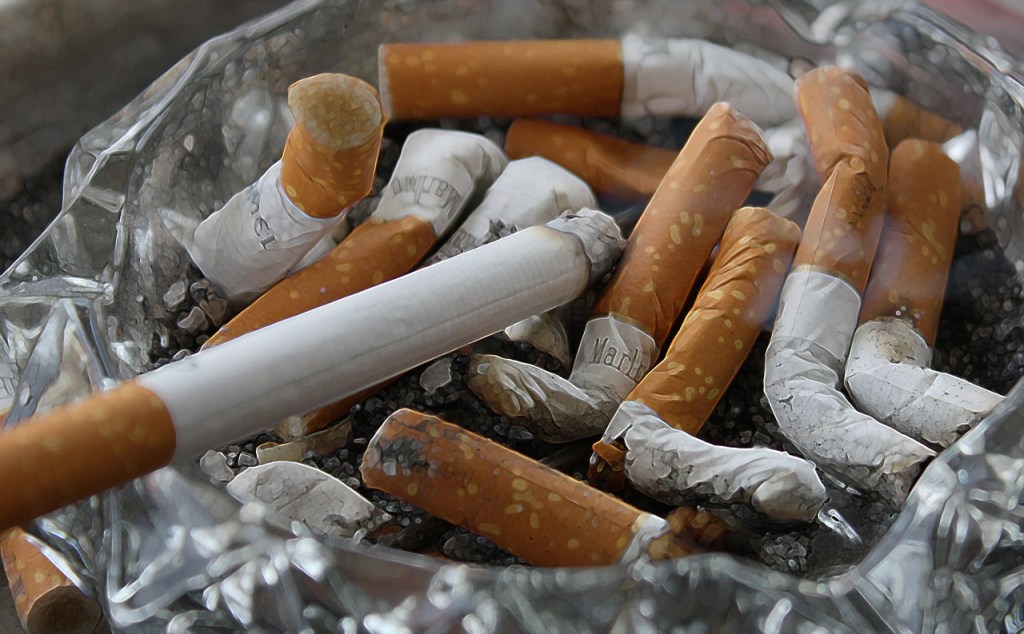
Bishop’s prose poem changes tone as it continues. With the final object, ashtray, we’re suddenly in a warzone; there are dead bodies, corrupt leaders are mentioned. It’s even more devastating because of the ordinariness of the object.

Animate and inanimate objects relating to J Abraham

The favourite mug

Waisted, Nile green, curved handle, fit for purpose: dishwasher proof; delicate gold lettering The Frog Prince, on both sides: black frog, gold crown. I admit to one shadow side: pangs of jealousy when on Sundays I see him take out the old cup-and-saucer. Mr Abraham is a bachelor, but tells visitors he has been married twice, to the same woman. In fact, he is an inspector of taxes.

The handkerchief

With a yellowing initial I do not get many outings. It was a proud moment last Friday, row H in the stalls, aisle seat. A Bruckner motet. That gentleman called ‘J’ keeps concert programmes in a special box file. Used to sing in a choir, but has given up on Him upstairs.

The ashtray

My life as a masochist, the short version. I am clean and I have barely any burn marks. To make matters worse, I was moved to the shed. Technically, it’s a Summer House, but no windows, so no tax is payable. He should be told that non-smokers too can die of lung cancer. I am praying for a relapse.

The moustache

Hegel, Kant, Wittgenstein, Hume, Locke, Rousseau, Voltaire. Cogito, ergo sum. Sum, ergo cogito. A butterfly can remember its life as a chrysalis, and I have full cognisance at cellular level of my previous manifestations. JA grows me specially, once a year, for a charitable purpose. This year I have a Teutonic shape. The flecks of grey soften my appearance. Mug, handkerchief, ashtray – they will end up in a grey bin, or at The Red Cross. I will have the last laugh.

The newspaper cutting

Protected by a plastic wallet, I’m a piece from The Guardian 08.05.12. How we made … Break Down: Artist Michael Landy on how he and his collaborator destroyed all 7,227 of his possessions. Need I say more?

Had I not been lonely …

Matthew Sweeney, 2006


When I saw a post by ‘Albert’ on Twitter with this quote by L S Lowry: Had I not been lonely I would not have seen what I did, it reminded me of this poem by Matthew Sweeney. A fine ekphrastic poem that moves beyond description, as it enters into dialogue with the artist about their work.

I have a few ekphrastic poems that need expanding in some way, so I’m going to do some research and explore how I could incorporate the artist’s own words into those poem. Is this something you might do with your own writing? If you’re a painter, photographer, sculptor, do poems inspire you?


Here are the two parts of Matthew Sweeney’s poem Dialogue with an Artist

Matthew died in 2018, his poems are still with us.

Dialogue with an Artist

THE LONELY
Incorporating the words of L.S. Lowry

I used to paint the sea, but never a shore,
and nobody was sailing on it. It wasn’t even
the sea, it was just my own loneliness.

It’s all there, you know. It’s all in the sea.
The battle is there, the inevitability of it all,
the purpose. When I switched to people

they were all lonely. Crowds are the
loneliest thing of all, I say. Every individual
in them is a stranger to everyone else.

I would stand for hours in one spot
and scores of little kids who hadn’t had
a wash for weeks would group round me.

Had I not been lonely, none of my work
would have happened. I should not have
done what I’ve done, or seen what I’ve seen.

There’s something grotesque in me and I
can’t help it. I’m drawn to others who are
like that. They’re very real people. It’s just

I’m attracted to sadness and there are some
very sad things. These people are ghostly
figures. They’re my mood, they’re myself.

Lately, I started a big self-portrait. I thought
I won’t want this thing, no one will, so
I went and turned it into a grotesque head.

MEMO TO LOWRY

You’re right, there are grotesques who shine
a dark light that lures us like how the sirens
tried to lure Odysseus, and yes, maybe we
ourselves are among the grotesques, but
there are also the beautiful who, if we’re
lucky, save us from ourselves, and validate
the sun’s light, and maybe also the moon’s.

as if thrown by a boy

Here is the second selection of poems by Judy Kendall, our June guest poet. She lived and worked in Japan for almost seven years. Cinnamon Press published four collections of her haiku and ‘mainstream’ poems. You can find her biography below her writing.

Poems:


The First Fountain Ever Placed In A Japanese Garden

for my mother

more than half
is the sound of it
as it splashes on the stone rim

this is the part
the thousands of photographs
will never reach

their takers stop
to make a frieze
and then move on

no chance of hearing
the other half
clapping its moving shadow in the trees

the shudder
when the leaves
follow the foam

which drops, unmoved
as if thrown by a boy
to fall through air

diluting
dissolving
into parts


Note:
The first fountain in a Japanese garden was built in Kenroku en, Kanazawa, in 1861


Driving To Noto

Men are better says Toshi I know
no they are not says I (I also know)
and so we argue to the tip of Noto

To Suzu where the wood huts slump in shock
plopped suddenly in frocks of snow
and the sea is whipped to icicles of frenzy

Over a nabe pot of fish and cabbage
(Toshi warns me not to call it cabbage
for it is the vastly superior hakusai)
our host asks me my age

Taken aback
(I`m older than he thought
more single), he inquires
don’t you like men?

So I assure him
only frequent country-moving
has prevented me from choosing
one of them

The returning road is white, wide as a field
the ditches spread themselves with frosting
and the windscreen blanks out like a blizzard

Toshi scrapes at the iced-up wipers singing
to himself, waving me in

Midwinter hangs in the boughs

The pine trees are bent nearly in two
laden with second helpings

(earlier version published in Ambit)

Short poem, haiku and tanka from The Drier The Brighter (Cinnamon Press, 2007):

Poem:

5 am

these cold skies
cheating the dawn,

these bits of tree,
blocks of houses too close to houses,
shrouded people, shrinking in the weather.

Haiku:

too much autumn
the reds are almost scorching now
a mouth brimming with leaves

tanka:

leaving.

not one stick of furniture
in the room.
in the heart,

no tears.

(previously published in Presence)

Biography:

Judy Kendall worked as an English lecturer at Kanazawa University in Japan for nearly seven years. When she first went to Japan she was a practicing playwright but she soon began to focus on poetry and haiku, kickstarted by an invitation to to participate in a collaborative translation of Miyaiki Eiko’s haiku. This became the bilingual publication Suiko /The Water Jar. Since then she has been writing haiku and haibun along with other poetic and prose forms. The haiku mode has informed her four Cinnamon Press poetry collections, particularly Joy Change – composed while she was in Japan. She has won several poetry awards, recently receiving a 2019 Genjuan International Haibun An Cottage prize, and is the essays and bilingual translations editor for Presence haiku journal. She has also run the Yorkshire/Lancashire haiku group.

She is Reader in English and Creative Writing at Salford University, and aside from haiku and haibun, works as a poet, poetry translator and visual text exponent. She has published several articles and books on the translation and creative process, including ‘Jo Ha Kyu and Fu Bi Xing; Reading|Viewing Haiku’ in Juxtapositions, 1 (2). She is currently putting the finishing touches to a monograph for Edinburgh University Press on Where Language Thickens (focusing on the threshold between articulation and inarticulation in language – a threshold in which haiku itself is surely situated).

Birthday

This coming week it’s my birthday. I’m taking family out to lunch near where I was born: a lovely bistro near the water. Here is a poem that I wrote on an excellent workshop with the poet Kei Miller.

My name

Even in the Netherlands my name is rare.
It comes from the Northern provinces,
a bleak windy place near the sea, near Germany.

People of the North grow tall to stand up to gales
that whistle, across bare fields, into your face.
A name so rare it’s not in the book of names.

I inherited this name from a grandmother
who was often ill to spite her husband.
I heard him shout behind the shop in a town

named after the beaver. Beavers on the façade
of the vegetable canning factory, the foundry roof.
My name means strong like the teeth of a beaver.

No, it doesn’t. I wish it did. Most children born
just after the war had bad teeth because
of the hunger winter: eating tulip bulbs to survive.

I wish I was named after the beaver, or the giraffe,
an animal strong enough to shatter a lion’s skull
with a single blow of its hooves.

In Dutch my name means people, folk or even
battle folk. My grandmother died at 55.
I’m beyond that age. I am an animal after all.

a horizon of lilies

It’s a great pleasure to introduce this month’s guest poet Judy Kendall. We met many years ago through our membership of the Yorkshire/Lancashire Haiku group. Judy lived and worked in Japan for nearly seven years. Cinnamon Press published four collections – containing haiku and ‘mainstream’ poems. You can read Judy’s full biography further down. I’ll post a second selection of Judy’s writing next month.

Haiku published in Presence

shades of blue distance in the fells

afternoon off 
red grouse in flight 
almost grazing the heather

moorland air
just after a curlew’s call
liquid fresh—

travelling light
I will my neighbor
to turn the page

(published in Presence and selected for Red Moon Best English Language anthology)

Short poems or ‘vegetable’ haiku published in insatiable carrot (Cinnamon Press, 2015)

[Many of these have featured on Incredible Edible Todmorden’s Edible Poetry site and on or around the town]

tall green mild and meek
not quite the full onion
the gentle leek

hairy bitter cress
going wild
among
the cabbages

snug by the wall
the one the pennine wind forgot
Todmorden’s first apricot

taken apart, the cabbage
becomes all heart
and leaves

chunky, nobbly-eyed
the potato says ‘hi,
will you be my friend?’

Haiku and poems from Joy Change (Cinnamon Press, 2010)
Haiku:

wooden geta
the water quivers with carp
a horizon of lilies

sickle moon, yellow
and black, on my way
back to the heart

(still international haiku competition)

watching the breath come
and go, who am I but
a broken bit of star?

(still international haiku competition)

drifting
mountains shoulder the sky
blotches of pine

(Asahi Shimbun)

Biography

Judy Kendall worked as an English lecturer at Kanazawa University in Japan for nearly seven years. When she first went to Japan she was a practicing playwright but she soon began to focus on poetry and haiku, kickstarted by an invitation to to participate in a collaborative translation of Miyaiki Eiko’s haiku. This became the bilingual publication Suiko /The Water Jar. Since then she has been writing haiku and haibun along with other poetic and prose forms. The haiku mode has informed her four Cinnamon Press poetry collections, particularly Joy Change – composed while she was in Japan. She has won several poetry awards, recently receiving a 2019 Genjuan International Haibun An Cottage prize, and is the essays and bilingual translations editor for Presence haiku journal.

She is Reader in English and Creative Writing at Salford University, and aside from haiku and haibun, works as a poet, poetry translator and visual text exponent. She has published several articles and books on the translation and creative process, including ‘Jo Ha Kyu? and Fu Bi Xing; Reading|Viewing Haiku’ in Juxtapositions, 1 (2). She is currently putting the finishing touches to a monograph for Edinburgh University Press on Where Language Thickens (focusing on the threshold between articulation and inarticulation in language – a threshold in which haiku itself is surely situated).

Review: Contrapasso by Alexandra Foessinger

Credit: Kev via Pixabay


Contrapasso is the title of the debut collection of Alexandra Fössinger. She is of Italian origin and currently lives in Northern Germany. She writes mostly in English. Many of the poems included have been previously published in the UK and elsewhere, in magazines such as Tears in the Fence, The High Window, The Journal. The cover design – a black bird against a stark white background – is by Daniel Lambert, Art Director of Cephalopress, established in 2018, providing ‘a voice for the marginalised and the voiceless’.


I do not know the author, though I attended her online reading with Q&A. There she explained the background to the poems: her attempt at survival ‘after the imprisonment in the UK of someone dear to me’. This sudden loss may, in part, have coincided with the pandemic and its lockdowns: creating an incarceration for the poet too.


In Dante’s Divine Comedy, contrapasso is the punishment of souls by a process either resembling or contrasting with the sin itself. The collection is in two parts, both preceded by a quotation from Dante’s Inferno. Part 1 covers the period of imprisonment, while poems in Part 2 were written after the person’s release.


Birds for someone who cannot hear is the title of the opening poem and birds appear throughout the collection, as messengers, omens, and symbols: the blackbird frozen in shock, the thrushes in hiding, along with magpies, sparrows, sky larks, great tit, kingfishers, herons, seabirds. The second poem is titled Cell, giving us just the bare numbers:
1,
5,
3,
4,
7,
1,
and ending:
bad luck has brought
and kept you here,
and whether
you’ll walk out

or
be carried in a coffin

is also entirely
a matter of chance
.

The poems are the author’s response to the sudden loss, despair, darkness, pain. We have no life apart from life apart (Sentence); How can I find dreams of oarweed and eelgrass, / bring currents to glide on, as I must, when half / of my body is entangled / on the wrong side of the sea, / how will I know when time says to dive? (Velut luna).

Fössinger has said that she ‘is mostly interested in the spaces between things, the tiny shifts in time, the overlooked, the unsaid.’ Throughout the collection, we find astute observations and statements: la vita assurda: the middle-aged couple / pushing their dog in a pram. (July); that emptiness is best hidden / by a display of tame beauty. (Ambulant).

The strongest poems are those which describe a specific situation, or which have objects as ‘animate scaffold’. The poem Ambulant is in two parts:
I
The house with the Christmas decoration,
and the magnolia tree in bloom,
and the blackbird frozen in shock,
and an ambulance parked in the front garden,

all stand completely still.
People walk by, averting their gaze,
a stoop hammered into their skin –
How many lives will they have lost before,
without ever noticing.

The orange light is beating on the windows
like rain.

Here is Fössinger’s close attention to the overlooked, effective personification, interesting use of language. Not all the poems are so securely grounded, sometimes abstraction obscures their meaning. Other poems would have benefited from being tighter, shorter. The book is a short collection of 31 poems with quite a few blank pages. Some readers might want ‘more poems’ for their ‘pounds’.

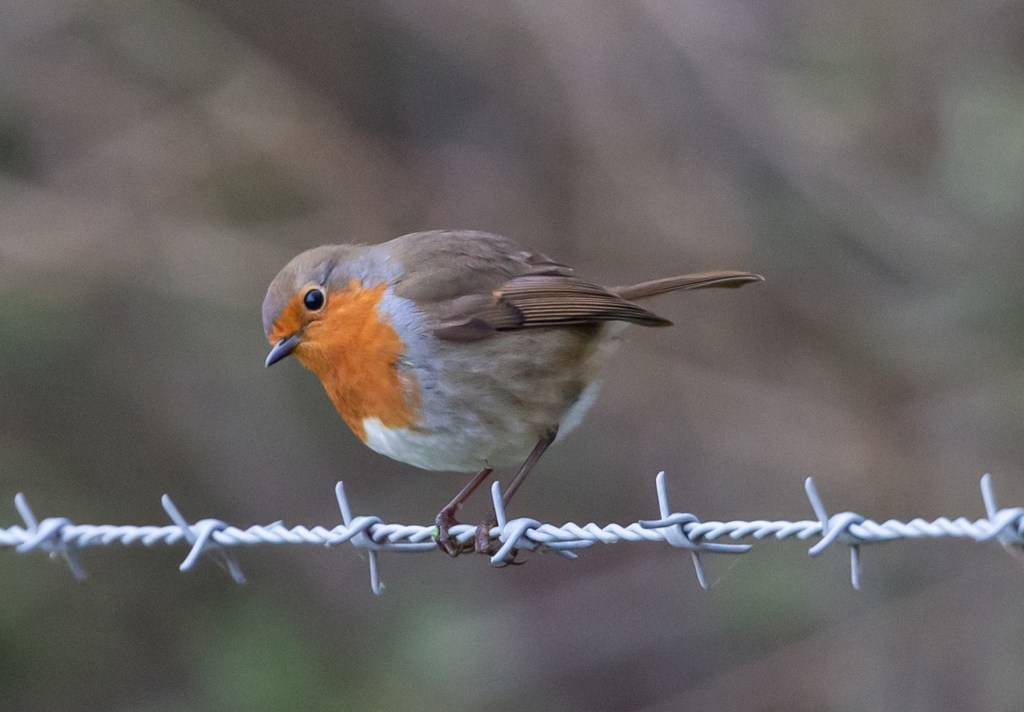
While the poems reflect the poet’s emotional and psychological response to loss and separation, she manages to maintain a careful balance: hope is not abandoned. The recurrent bird theme also provides a framework, an underlying structure. This theme returns in the short closing poem, The robin redbreast. The loved one appears in a dream, as tiny as a bird, and:

Then you grew a beak
with which to pick and sing
and transport worms and roses.

Contrapasso is a confident and authentic debut by a perceptive, astute poet. Her personal tale finds echoes in the reader’s universal story. However long and painful the journey, there can be closure and transformation.

Easter Monday

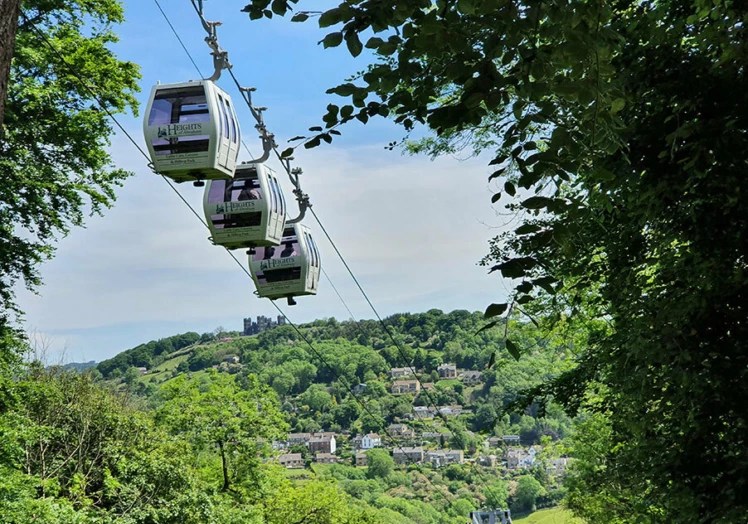
I’ve been sorting and clearing old photos and old poems. It reminded me of trips out into Derbyshire with friends: taking the cable car up to the Heights of Abraham, walking through the historic centre of Buxton. The Buxton Baths date back to Roman times. In the Georgian and Victorian period these were developed. Buxton is the highest market town in England. Easter can be early or late – walking through snow or sitting out in sunshine. Enjoy your Easter, wherever you are.

Buxton Centre

Buxton, 2pm

Here is Buxton Spa, Easter, green hills.
Not a credit card between us.

Good intentions: it’s the year of the Pig.

We’ve been to China, lugged back
soldiers from Xian, wrapped in towels.

Now they’re resting under the Red Cross.

For our next birthdays, we say,
we just want Prosecco, book tokens, no bric-a-brac,

but our hands are restless,
our fingers flick through a tray of rings.

Storks and happiness…

Credit: Michael Schwarzenberger via PIxabay

Storks are said to bring happiness. The bird has been the official emblem of The Hague for centuries. Until the beginning of the last century, storks with clipped wings walked the many fish markets in the city, keeping the streets clean.

I hope this new year will bring health and happiness to you and those you hold dear. The poem is from my new collection Remembering / Disease published last October by Broken Sleep Books. It first appeared in the online magazine Dust, edited by Tara Wheeler.

Storks also feature in my poem High wind. It was selected as one of 20 poems by a jury for the Poetry Archive’s Poetry Archive Now! Wordview 2022. You can see and hear me read it here.

Waiting

The water meadows
are waiting
for the storks to return

always invisible
the other side
of her face

in this book
there is snow
on every page

even an old potato
can be turned
into a Christmas stamp

the naming of colours
is not a science.
I vote for bird’s nest grey