Tag Archives: nature

Chalking the Pavement

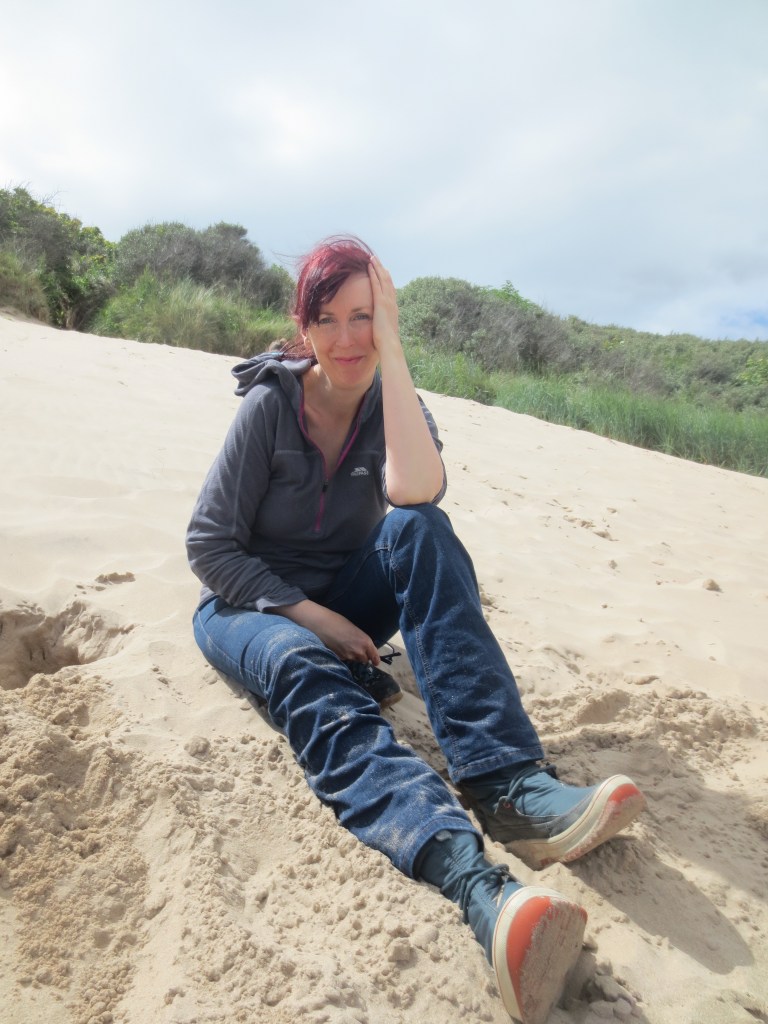
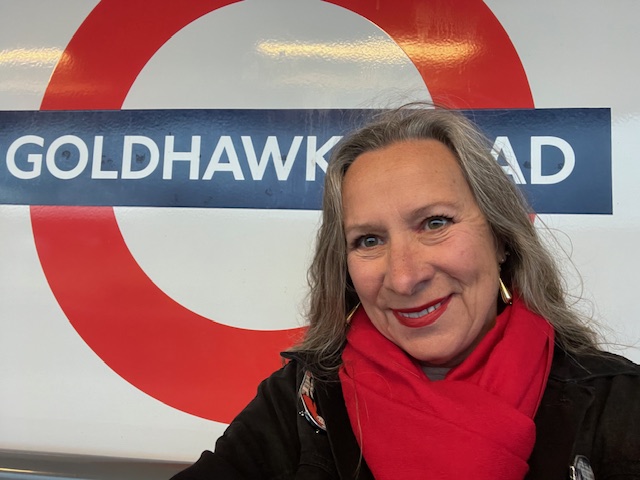
It is a great pleasure to introduce this month’ guest poet Kate Noakes. Kate and I met during the first lockdown on Zoom (a group set up by a fellow poet). Kate Noakes’ most recent collection is Goldhawk Road (Two Rivers Press, 2023). Her website is www.boomslangpoetry.blogspot.com. She lives in Bristol.

Earlier this month Kate’s poem The Sick Spring appeared on the blog. It is from her pamphlet, Chalking the Pavement, published by Broken Sleep Books in 2024. At the heart of the book is Field Notes 2020. Field Notes has 65 entries: observations of life during the first lockdown in the form of prose poems.

I’ve chosen five, from the beginning and end of the sequence. All of them show Kate’s acute attention to detail as she ‘captures the soon-forgotten details of the changes to our lives’.

Field Notes 2020

Children are rediscovering, or discovering, the pleasures of chalking the pavement with hearts and messages of love for the NHS. Hopscotch has the thrill of the new, but neither the girl nor her mother knows how to play it. I look around for a handy stone. None are at arm’s length.

*

The slates pathing my garden are sleek with wet. Dust is dampened. This morning after weeks of early summer-in-spring is a change and a good one. I’ll rest indoors trying not to dwell on my friend’s friend: just two years older than us and dead. All day the blackbirds have busied about the garden in search of nesting materials. Such industry, even in the constant day-drip of rain.

*

My neighbour tells me he’s been scaled back to three days a week with attendant pay cut, yet considers himself lucky; most staff in his firm having been let go, along with eight percent of those in hospitality.

*

A windy day for children to learn or relearn the small pleasure of flying a kite. Prescriptions need at least a week’s notice and the pharmacist tells me there is some drug rationing. We have learned that a life is worth sixty thousand pounds; in case you’re ever wondered. And again there is no surprise in discovering that some people believe rules only apply to others.

*

I want my day to always start with a fishing heron and a cormorant drying its wings on the foreshore near the bridge, the tide running out, and the sun brilliant on the water. White stripes on the river path every two metres are a constant presence that it is hard to ignore.
Saved by bankruptcy

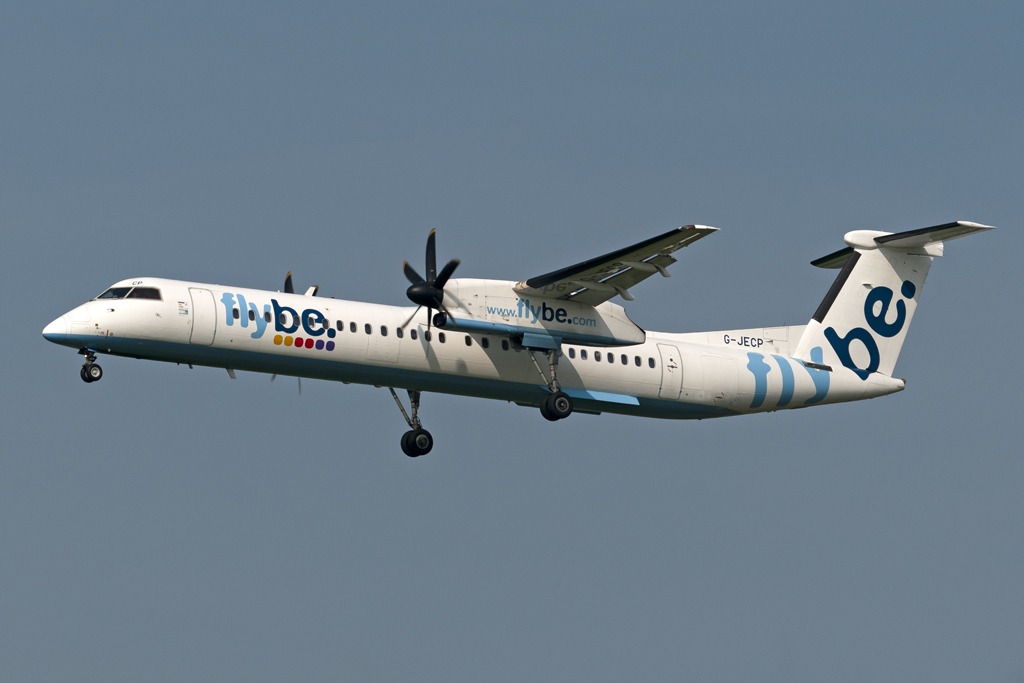
Photo credit: Pieter van Marion, NL

I had booked return flights Manchester – Exeter to visit my poet friend Kathleen. My trip was going to be in the third week of March 2020. On the 5th of March Flybe filed for administration and ceased all operations immediately. I lost £65, but I was very relieved: If I had flown to Exeter, I might well have been stuck in Devon as that first lockdown started…


On Sunday 15 March I learned the British government was considering a compulsory quarantine. The next day I emailed the owner of the campsite asking if I could arrive early. He replied immediately. I booked a flight, transferred money, packed, agonised over which poetry books to take to my ‘desert island’ near The Hague. I flew to Schiphol on the Wednesday. The local buses already had the area near the driver closed off with white-red plastic.


Here are two poems about that first lockdown:

The departure

Half a century condensed into Brexit, pandemic.
At the threat of a four-month’ compulsory
quarantine I fled to my bolthole in Holland.

Six months of safety in a static caravan,
waking to birdsong each morning,
shielded from the sun by the golden elm.
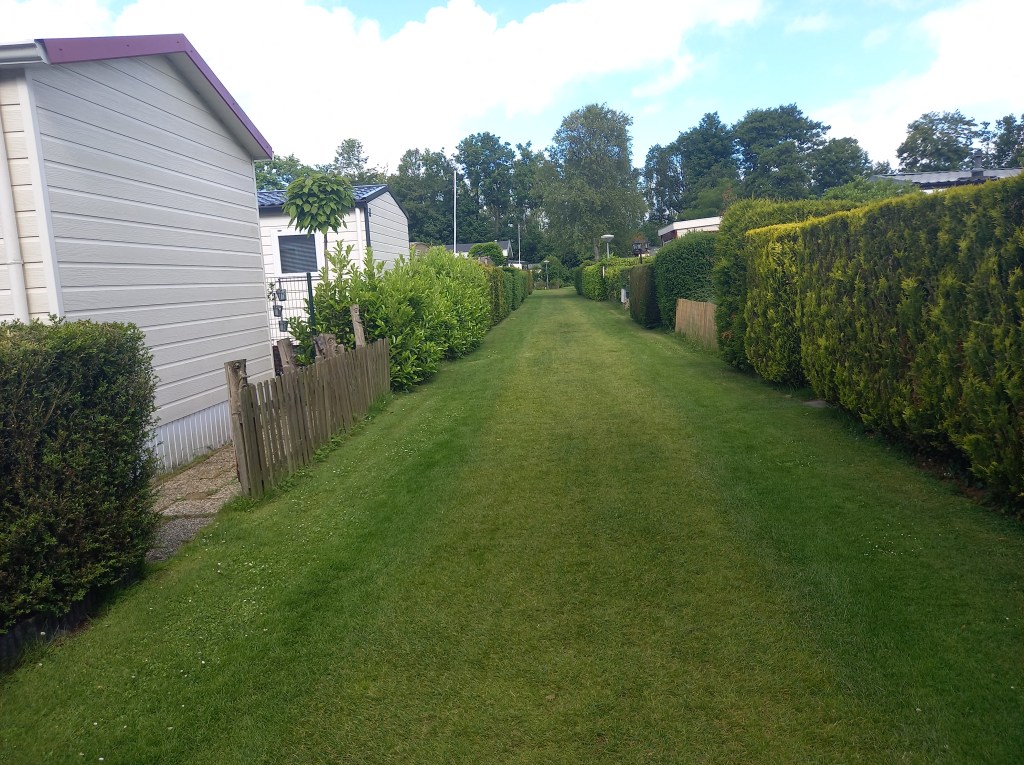
I walked my daily rounds on the grass lanes.

Forsythia, tulips, narcissi, rhododendron,
pyracantha, salvia, rock rose, asters:
the seasons’ steady markers. From a distance
I waved to neighbours finally arriving.

In the cupboard of the spare room
lay the letter confirming my ‘settled status’
on the other side of the North Sea.

The undertakers

A double spread in the paper
features a large photo.

This man, in his thirties, a narrow
horizontal moustache, soft smile.

He sits in a wooden boat, his right hand
resting on a plain white coffin.

People are asked to email text and selfies.
Made into cards, these are placed on the coffin.

He is based in Amsterdam, will transport
you safely through the canals.

That undertaker has just opened a crematorium.
He also owns a chain of hotels.

The pandemic has cut the numbers allowed
to be in the room. There is livestreaming.

People, he says, are glad of it.
The intimacy makes it easier to speak.

At the end of September 2020, the campsite closed. I got a Covid test somewhere in the centre of The Hague and flew back to Manchester.

Late lockdown poem

I wake up and know, of course,
that I am not a morning person.
The sound of rain, of course,
and fewer sirens as people
are supposed to be at home.
My lifelines are the same, of course:
motto, comfort break, medication.
Of course, I think about exercise,
settle for Composer of the Week,
dead, of course.

Marie-Louise Park, Didsbury, Manchester, UK

A postage stamp, Joshua calls it

He’s right and there’s traffic noise
from the main road and people
with dogs on long leads,
but not all the benches
are dedicated to the dead,
Marie-Louise is a pretty name
for a park and the 43 Airport bus
is a hybrid and no-one much
was going to the airport
that autumn: I often had the bus
to myself, both ways.

Friday, 13 March 2020

Tuesday, 3 March 2020

As I was updating the website recently, I was reminded of the lovely interview that Andy N Poet did that very Friday. He came to the flat in Manchester where I then lived. On the 3rd of March I had launched a pamphlet and my second collection at the International Anthony Burgess Foundation. The launch was one of the reasons for the interview. Andy has now done several hundred interviews. You can find them all on Spokenlabel.bandcam.com Here is the link to my interview: SpokenLabel

When I listened to the interview this week, it felt spooky at times. Early February 2020 I had received confirmation of my ‘settled status’. I told Andy that I hoped to spend ‘most of the summer’ in my caravan in The Netherlands, that I couldn’t immediately tell him who my ‘desert island’ poets would be. At one point Andy mentioned the ‘virus’.

Here is a poem about that Friday from Kate Noakes who is our guest poet this month. The poem is from her 2024 Chalking the Pavement published by Broken Sleep Books.

The sick spring

Thirteenth March, a Friday with which comes
a most lauded play, Stoppard’s last contract:
Vienna, and a family succumbs,
fortunes and losses in Leopoldstadt.

I am treated to the stalls by a friend
of a friend, a nice man I do not know.
His cancelled cultural holiday ends
with a short email critique of the show.

I give him scenes, chronology, pictures,
timings avoiding history’s clichés;
how I stepped into busy Leicester Square
with foreboding that hurried me away,

and how I scurried home to a semi-death:
headache, sore throat, cough and struggle for breath.

Dimmet


It is a pleasure to introduce our February guest poet Rob Miles. I do not know Rob personally: we have been Facebook friends for some time. I bought a copy of his recent collection Dimmet which was published by Broken Sleep Books. See below the poems for Rob’s biography.

The glorious cover image of a murmuration was designed by Aaron Kent. Dimmet is a West Country word for dusk, twilight. Katherine Towers notes of the collection: ‘These are poems of great precision and delicacy’. I’ve chosen four poems which demonstrate these qualities.

Dimmet

His hands still bronzed, still
baling-raw. His voice
no longer snared, whisper-low
as decades ago, in this same field, he guided me

to not disturb that horse; circling
quietly, its half-scattered straw
an ingot melting, and my thin flames no match
for such a sunset anyway.

*

On this, another near-to-night, it’s clear
that he has no more kept his mind
from wayward sparks than I
have closed my eyes

before any fading fire, ever since recalled
a slow white shadow
steady on its dial
in the always almost dark.

Café Poem

Just when I think there is nothing
so boring

as someone else’s childhood
a toddler

in dungarees is guided
around our table

by his puppeteer parent, arms
up, in a vertical sky-dive, or

like a drunk, when walking
is more about not falling

every step forward
rewarded with a double high five.

I whispered to the dog

that she’d been a winner
a Crufts champion
 
at least twice. Once
she saw off a Dobermann, burglars, a werewolf
 
even the odd Sasquatch.
I reminded her

as her old eyes darkened     
that she had saved lives.

Making Way

A keeper, you said of the house, but I’d sensed everything
trying to make its way: those errant velvet fingers
from your orchid pots; the oak
putting on its chain mail of ivy and moss
and losing; the birds we fed still pinned
to their shadows; crisp wasps
electrocuted by views
through grubby double glazing, and you
just weeks before, showing your wrists
as if uncuffed, asking for my thoughts on a fragrance.

Biography

Rob Miles is from South Devon, and he lives in Leeds where he is Fellow in Film Studies in the Centre for World Cinemas and Digital Cultures at The University of Leeds. His poetry has appeared widely in magazines and anthologies, recently in Stand, New Welsh Review, The Scores, Spelt, 14 Magazine, Ink Sweat and Tears, One Hand Clapping, Poetry Wales, and four Candlestick Press pamphlets. He has won various awards including the Philip Larkin Prize, judged by Don Paterson, the Resurgence International Ecopoetry Prize, judged by Jo Shapcott and Imtiaz Dharker, and the Poets & Players Prize, judged by Sinéad Morrissey.

Lucy Newlyn describes Dimmet as ‘the best collection of contemporary poetry I have read in a long while’, and John Glenday writes: ‘When it’s done as well as this, there’s nowhere on earth poetry can’t go.’

Sleight of Mind

Image via Pixabay, courtesy Gregory Delaunay

It is a great pleasure to introduce this month’s guest poet David Bingham. We first met many years ago through the British Haiku Society. David was President of the Society from 2020-2022, and in 2020 he was the winner of the British Haiku Society International Haibun Prize. His poetry appears regularly in a wide variety of magazines. See below for further details.

The haiku have all been previously published: in Presence, Blithe Spirit, or Time Haiku. The tanka first appeared in Blithe Spirit and the BHS Tanka Anthology 2022, while the haibun was the winner of the British Haiku Society International Ken and Noragh Jones Haibun Award, 2017. I hope you enjoy the selection.

Haiku

a lifetime
overcoming gravity –
still it gets me down

Private Keep Out
molehills on both sides
of the fence

clear night sky –
lights from both the living
and the dead

away
in the wind …
the word-filled air

is there a word for it?
the sound swans make
when they fly

late spring meadow…
within the yellow
the blue of summer

storming
the old hill fort – bluebells  
and celandine

inland sea
the wash from our boat
moves the border

stream through sunlight through stream

closing over
trails in algae where
the ducks have been

I turn
to call the dog …
then remember

Euston Station –
my skin ripples
in the hand drier

an apology…
the predictive text writes
it for me

Tanka

sun shine
and motorway spray –
I drive through
rainbows
to be with you

silently together
after all that talk
watching swallows
hawk for flies over
the meadow

on waking
I turn my dreams
inside out
letting the seams show
for the rest of the day

doors left
wide open revealing
an unlit space
nothing here to steal
but the darkness

Haibun

Sleight of Mind 
 
Some people need to know how he pulls the shining light bulbs from his mouth, levitates above the stage or escapes from a straightjacket.
 
Me, I like the mystery of it; the explanations are always so mundane. True magic lies in the imagination. Switching off the rational mind. Letting yourself go and trusting the conjuror.
 
I do it with words. Like how I brought you here. Even if you asked me, I couldn’t tell you how it’s done.
 
snowdrops …
mistaking ‘what is’
for ‘what isn’t’


Biography

David Bingham’s debut poetry collection The Chatter of Crows was published by Offa’s Press in October 2014 and in 2020 he was the winner of the British Haiku Society International Haibun Prize.

His poetry appears regularly in a wide variety of magazines, including Blithe SpiritTime Haiku and Presence and in anthologies, including: the Wenlock Poetry Festival anthologies for 2012, 2014, 2015 and 2016; Beyond Words, 2018 and where silence becomes song, 2019, the International Haiku Conference Anthology, published by the British Haiku Society; In the Sticks, 2021 and Away with the Birds, published by Offa’s Press; In Snow and Rain, 2022, an anthology of tanka published by the British Haiku Society; and Festival in a Book, published by the Wenlock Poetry Festival, 2023.

At different times, he was editor of both Borderlines and Blithe Spirit magazines and joint editor of the haiku and related genres anthologies Ripening Cherries, published by Offa’s Press, 2019 and Shining Wind published by the British Haiku Society, 2024.

He has read his work in arts centres, pubs, theatres, on local radio and poetry and literature festivals. He has read at City Voices in Wolverhampton, Country Voices in Shropshire and as a member of Green Wood Haiku at the BHS International Haiku Conference in St Albans in June 2019.
 
As part of the humorous poetry double act, Bingham and Woodall, he has performed at the Wolverhampton Lit Fest and Comedy Festivals in 2017 and 2018, and at the Ironbridge Festival in 2019.


After the Rites and Sandwiches

It is a privilege and a great pleasure to share three poems by Kathy Pimlott from her third pamphlet with The Emma Press, published this month. It is ‘an honest, lyrical and nuanced journey through the complexity of bereavement’. The poem What I do with you now you’re dead was longlisted for the National Poetry Competition 2023. Further down you’ll find Kathy’s biography and links to her website.

Death Admin I

Your demise constitutes a third off council tax;
the removal of a vote you seldom cast and then
only to be contrary; write-off of a modest overdraft;
the bill for an overpaid pension. Tell Us Once promises
it will be a doddle. It is not. I repeat time and again
in spoken and in written words to the indifferent
or distracted, He has died. What do I need to do?

What I do with you now you’re dead

The Queen is dead too and on her way to a proper tomb.
Everything’s shut and there’s nothing on tv, but the sun
comes out so I go to the mimosa tree where, months ago,
I dumped, in a laughing panic, dumped, about a quarter
of your ashes and ran away, the illicit thrill exactly what
you would have wanted. Today, with a flask, shortbread,

I’ve come because, while I don’t love the Queen, it seems
like a fitting thing to do. This royal park is empty, quiet,
allowing me to cry all through its splendid long borders
with their harmonious purple and blue planting until,
on a near-enough bench, I sit. By my feet, Lamb’s Ears
offer silky comfort, as does the pile of pistachio shells,

little coracles, showing someone sat here eating a bagful.
You kept your shells in the pockets of your gardening coat
which I emptied out before taking it to the charity shop
with your best shoes. The mimosa’s not out of course
but its ferny leaves show promise of the glory to come.
A robin perches closer than he should, inspects me,

then accepts a crumb or two. Your ashes have disappeared,
no longer so alarmingly burnt-bone visible, so very there.
They say the old Queen’s coffin is oak, lined with lead.
Three-quarters of you is still in the back of the wardrobe.
A crow chases off my robin. So much peril. It’s enough
to be sitting thumbing Lamb’s Ears, thinking about you.

The Passing Visit

A friend came by from Brussels and we talked of our dead
or rather about what they leave behind, the stuff in storage,

the binding strands. I told him more than I’d told most,
of how (and I said, then rejected, the word tumultuous),

how textured our long, long marriage had been and by textured
I meant bumpy, dropped stitches, amateur darning. I told him

how often you fell in and out of love and how I left and returned
more than once. Perhaps because I didn’t care enough, I said.

And perhaps I didn’t. There was something he wasn’t telling me
but the sun was out and we walked the courtyards and backways

of the neighbourhood, crossed the bridge, watching the sky whiten
and the coloured lamps in the trees come on. We spoke of cities,

their pleasures. The comfort I find in the river. How Brussels’ Senne
is covered over, subterranean. Of moving along and clearing out.

Biography

Kathy Pimlott has two previous pamphlets with The Emma Press: Goose Fair Night (2016) and Elastic Glue (2019). Her debut full collection, the small manoeuvres, was published by Verve Poetry Press (2022). Her work is widely published in magazines and anthologies, and she has been longlisted, placed and has won several poetry prizes.

Kathy’s website

The Friday Poem

Slow Movement

It is an immense pleasure to present this month’s guest poet Sarah Mnatzaganian. Poems from her award-winning pamphlet Lemonade in the Armenian Quarter were featured here before. Today’s poems were chosen from the dozen that were included in Slow Movement, an exquisite small journal designed, created and stitched by poet Maria Isakova Bennett. The photo of the cover doesn’t quite do it justice.

The sequence was one of four winners in the 2022/2023 Coast to Coast to Coast poetry prize. Maria wrote ‘Slow Movement is a sensuous sequence of love poems expressed through the colours, sounds, materials, and obsessions of cello making and sailing.’ The sequence is dedicated to Robin, the cello maker; poems were previously published (Poetry Wales, Magma, Poetry Salzburg).

Bogle

Two wedges of maple are ready for the vice.
The cello maker scans the silken surfaces for flaws
but the wood looks clean as buttermilk.

He leans and pushes translucent ribbons,
tissue paper thin, through the plane’s grey mouth.
Stops. A failed twig-hole, a dark finger of incipient rot

points from the joint accusingly. He groans,
grabs a back-arch template, offers it to the knot.
Smiles. He’ll outwit the bogle this time.

He heats hide-glue in the pot and rubs the joint
until it gels and bites, the halves aligned and left to dry.
Next week, he’ll flip the plate like a stranded tortoise

and hunt the blemish with his keenest gouge
until he holds a hollow brindled shell,
bogle-ridden wood chips snapping at his feet.

Laying up

Salt-bitten snap shackles slump down the forestay
and surrender to the pull of his thumbs.
He drags an impossibility of canvas over the guard rail
while I hug the rest free of the wire.

The sail crumples like a giant wedding dress,
crocodile-toothed with zigzag thread. It’s time
to climb down to the queasy buoyancy of the old
polystyrene pontoon, to stand fifteen feet from him

and guess where in this pale tangle of cloth to grip
with my left hand; how far to reach with my right.
We’ll tighten the white distances between us
and fold each crease over into a taut edge

until we make a concertina of the sail. He’ll nod
and fold his end towards me, two foot at a time.
I’ll do the same for him until our halves meet
and lie without stretch or slack,

my luff to his leech, head to his foot,
clew to his tack, throat to his peak.

Bridge

He’s in the kitchen, leaning over the hob,
dropping a bridge blank into the frying pan.

I start to speak but know he can’t reply.
He’s counting down the seconds till it’s time to flip

the steaming bridge, to press and count again.
Twenty, twenty, ten, ten, five, five. Done.

He stands the bridge to cool. Takes the next.
I’ll kiss him then, to pass annealing time.

Twenty to please my tongue and lips. Twenty
more to tighten breasts and scalp. Ten, ten

to spice my skin. His free fingers stroke a slow
five, five around my willing ear.

My family and other birds

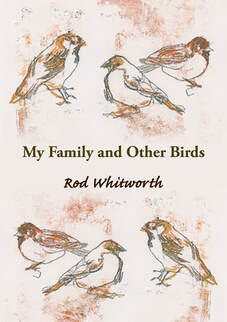
It’s a great pleasure introducing this month’s guest poet: Rod Whitworth. We first met, probably, a good decade or so ago. His poems have been widely published and successful in competitions. One of these, the poignant Demobbed was featured here on 30 May, 2021. Rod recently launched his first full collection My family and other birds. I’ve chosen a selection of poems on the themes of family and birds and, of course, jazz.

Tandem in Holland

On that day, your smile
hung like a sunrise
over the polders.

And on that day, your voice
greeted me like blackbirds
singing to claim and to yield.

And on that day, your touch
thrilled like a breeze
from the pine trees.

And that day brought the knowledge
of itself and knew
that it was this day.

Portrait of my grandfather, accompanied

The daft smile, wide as a spiv, tells us
Sunday afternoon, after a slow left-arm morning
and Chester’s Best in the Cotton Tree.
You’re sitting in the sun on the donkey-stoned
front step of Number 51
in undone waistcoat, collarless shirt, felt slippers,
a Capstan Full Strength drooped from a trailing hand.
This is happiness: transported
from your brother Llewelyn who never left the Somme,
from crying all the way home after delivering jam and marmalade
to shops in Coventry the day after it was blitzed.

On your right knee: me, plump
as a queen’s cushion, wide-eyed,
in Auntie-Louie-knitted rompers,
not knowing any of this.

Names you know, names

It was Rod, the other one,
the one who listened to American radio
on his Communist dad’s short wave,
who, one bright April morning
between the 53 bus stop and school, said
You’ve got to listen to this bloke,
a pianist, Thelonious Monk.
He’s something else. Another world.
I told him no-one could be called
Thelonious Monk. It took me
two years to find out he was right,
on both counts. What he didn’t know though
was that Monk’s middle name was Sphere.
By the time I knew that,
the car Rod was travelling in
had crashed into the lamp post.

One for…

He was walking away
when I noticed the wings.

Furled they were, but still
visible against the dark blue

hoodie. I don’t believe in angels
but it does make you think.

I called him back, asked him to intercede.
You’re asking a lot from a magpie

he croaked, then flew off.
Made me feel sorrowful.

I wished he’d had a friend.

Biography

Rod Whitworth was born in Ashton-under-Lyne in 1943, and has done a number of jobs, including teaching maths (for 33 years) and working in traffic censuses (the job that kept him on the streets). He currently works as a medical rôle-player. Rod has been writing poetry for a few years and has had work published in a number of journals and anthologies. His first collection, My family and other birds, was published by Vole Books in 2024. He now lives in Oldham and is still tyrannised by commas.

To Live Here

This month’s guest slot is for poems from To Live Here, an anthology of haiku published by The Wee Sparrow Press. The Press was founded by Claire Thom. 100% of the proceeds of their anthologies are given to charity.

The anthology is edited by Giorgia Di Pancrazio & Katherine E Winnick. The lovely cover and illustrations are by Scottish artist Colin Thom.

To Live Here is “A collection of haiku on the theme of home, which explores the many facets of human experience, from the mundane to the sublime. Featuring the work of talented poets from around the world, this anthology invites readers to reflect on the beauty and complexity of the world we inhabit.”

Salford Loaves and Fishes, a charity supporting the homeless, has already received over £600. The anthology is available through Amazon – ISBN 9788409528165. I’m grateful to Francis Attard and Julie Mellor for permission to share their haiku.

sandy beach
turtles lay clutches of eggs
off-shore breeze

Francis Attard, Malta

three cornered field
the generations
who farmed here

Julie Mellor

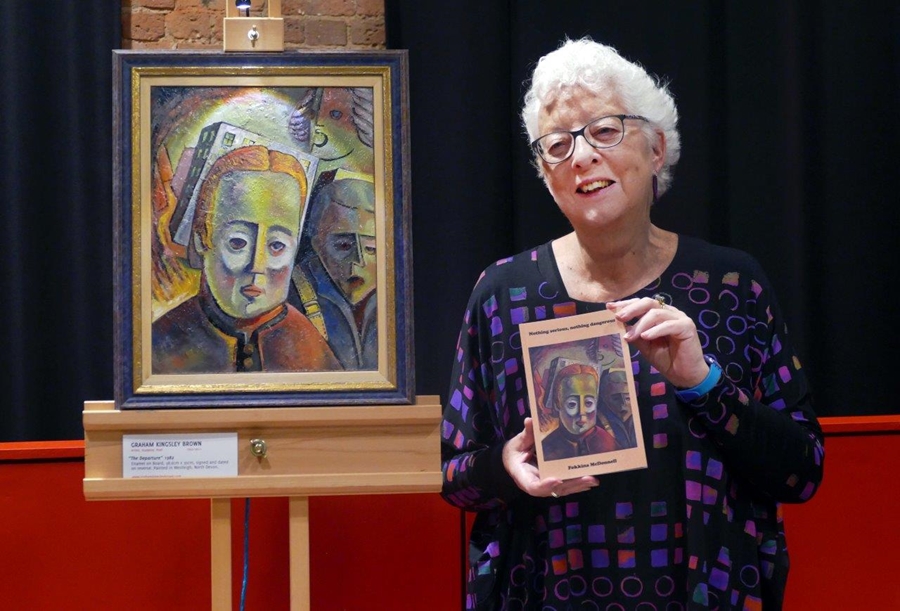
on the verge a stork stepping out

Fokkina McDonnell

Carnation Lily Lily Rose

It’s a great pleasure to feature four poems from our guest poet Jane McKie. Her collection Carnation Lily Lily Rose was published by Blue Diode earlier this year. The title and title poem are after John Singer Sargent’s painting of the same name. Each word is also the heading of the four sections of the book.

The collection includes a range of poetic forms and shapes: prose poems, a concrete poem, long and thin poems. We meet couplets and triplets, striking titles: Cairn to a Dead Biker, X-Ray of a Deer’s Skull. The poems crackle with energy and vitality. The book is ‘a hymn to all the different kinds of connective tissue that lightly, but firmly, weave us into the fabric of our own and others’ lives’. (David Kinloch).

Lord, Make Me an Instrument

Here the clouds outrun land: greyer, fleeter,
casting their shadows on the estuary and making
mud move at their speed, blown rather than
fixed, flexing with light / dark / light / dark,
sea-blite at the edges to catch the odd discarded
fag butt. Sea pea, clover, yellow vetch.

Further out, the flattened eelgrass – a trammelled
thatch without the tide; with it, upstanding,
like proud speech. Into this landscape creeps
a man following redshank, black-tailed godwits;
watch him huddle – glimmer of a struck match.
Winged souls call to the crackle of his breath.

Sand

Tonight, I’m in an arbour designed
by an artist who moonlights as a gardener.

Our host’s aesthetic sixth sense is spot on:
look how the roses jostle the frame,
how the lattice pins them like pretty moths.
A drink in one’s hand is compulsory.

And we guests are laughing, playing up
a hunger that may be on the wane,
but holds us, tonight, as snug as palms
around glasses. It is brilliant, this garden,
and familiar, as if it is not a garden at all
but a gateway, and we are not guests
at a middle-aged party but school-leavers
on a promised, delicious brink.

Tonight, if you sliced me open,
you would find a swirl of glitter:
all the shades of the sand
at Alum bay squeezed
into one miniature glass lighthouse.

Antigravity

They hover along pavements, barelegged,
on Mini Micro scooters, a flock of them –

the best of us. Hovering in shirtsleeves, hearts
and mouths open before guile sets in.

Don’t they feel the cold? Hovering to class
like motes in light.

On this unbearable, ordinary day, we mothers
can’t stop them lifting off the ground,

their small hands to their mouths
as they giggle, spitting out milk teeth,

growing too quickly. Catch onto
their waistbands and don’t let go.

Harness

I think of the invisible harness that hitches us, one to the other,
how it signifies both baggage and provision;

how, in the past, I have slipped the harness
and tested freedom, finding it overrated;

how mood is a harness, like gravity, pitching our orbits
a little off-kilter;

how sometimes the harness pinches and we are inclined
to worry it, fidgeting, even to tear at it;

how we trust the harness to repair itself like skin.

Biography

Jane McKie works as a Senior Lecturer in Creative Writing at the University of Edinburgh. Her first collection, Morocco Rococo (Cinnamon Press) was awarded the 2008 Sundial/Scottish Arts Council prize for best first book of 2007. Recent collections include Quiet Woman Stay (Cinnamon Press, 2020) and Jawbreaker (2021) which won the Wigtown Poetry Festival’s Alastair Reid’s Pamphlet Prize 2021.

Jane, as a member of the Edinburgh-based Shore Poets, facilitates poetry readings and music. She is interested in collaboration across forms, writes with 12, a collective of women writers, and with Edinburgh’s genre spoken word group Writers’ Bloc.