Tag Archives: health

Review: Contrapasso by Alexandra Foessinger

Credit: Kev via Pixabay


Contrapasso is the title of the debut collection of Alexandra Fössinger. She is of Italian origin and currently lives in Northern Germany. She writes mostly in English. Many of the poems included have been previously published in the UK and elsewhere, in magazines such as Tears in the Fence, The High Window, The Journal. The cover design – a black bird against a stark white background – is by Daniel Lambert, Art Director of Cephalopress, established in 2018, providing ‘a voice for the marginalised and the voiceless’.


I do not know the author, though I attended her online reading with Q&A. There she explained the background to the poems: her attempt at survival ‘after the imprisonment in the UK of someone dear to me’. This sudden loss may, in part, have coincided with the pandemic and its lockdowns: creating an incarceration for the poet too.


In Dante’s Divine Comedy, contrapasso is the punishment of souls by a process either resembling or contrasting with the sin itself. The collection is in two parts, both preceded by a quotation from Dante’s Inferno. Part 1 covers the period of imprisonment, while poems in Part 2 were written after the person’s release.


Birds for someone who cannot hear is the title of the opening poem and birds appear throughout the collection, as messengers, omens, and symbols: the blackbird frozen in shock, the thrushes in hiding, along with magpies, sparrows, sky larks, great tit, kingfishers, herons, seabirds. The second poem is titled Cell, giving us just the bare numbers:
1,
5,
3,
4,
7,
1,
and ending:
bad luck has brought
and kept you here,
and whether
you’ll walk out

or
be carried in a coffin

is also entirely
a matter of chance
.

The poems are the author’s response to the sudden loss, despair, darkness, pain. We have no life apart from life apart (Sentence); How can I find dreams of oarweed and eelgrass, / bring currents to glide on, as I must, when half / of my body is entangled / on the wrong side of the sea, / how will I know when time says to dive? (Velut luna).

Fössinger has said that she ‘is mostly interested in the spaces between things, the tiny shifts in time, the overlooked, the unsaid.’ Throughout the collection, we find astute observations and statements: la vita assurda: the middle-aged couple / pushing their dog in a pram. (July); that emptiness is best hidden / by a display of tame beauty. (Ambulant).

The strongest poems are those which describe a specific situation, or which have objects as ‘animate scaffold’. The poem Ambulant is in two parts:
I
The house with the Christmas decoration,
and the magnolia tree in bloom,
and the blackbird frozen in shock,
and an ambulance parked in the front garden,

all stand completely still.
People walk by, averting their gaze,
a stoop hammered into their skin –
How many lives will they have lost before,
without ever noticing.

The orange light is beating on the windows
like rain.

Here is Fössinger’s close attention to the overlooked, effective personification, interesting use of language. Not all the poems are so securely grounded, sometimes abstraction obscures their meaning. Other poems would have benefited from being tighter, shorter. The book is a short collection of 31 poems with quite a few blank pages. Some readers might want ‘more poems’ for their ‘pounds’.

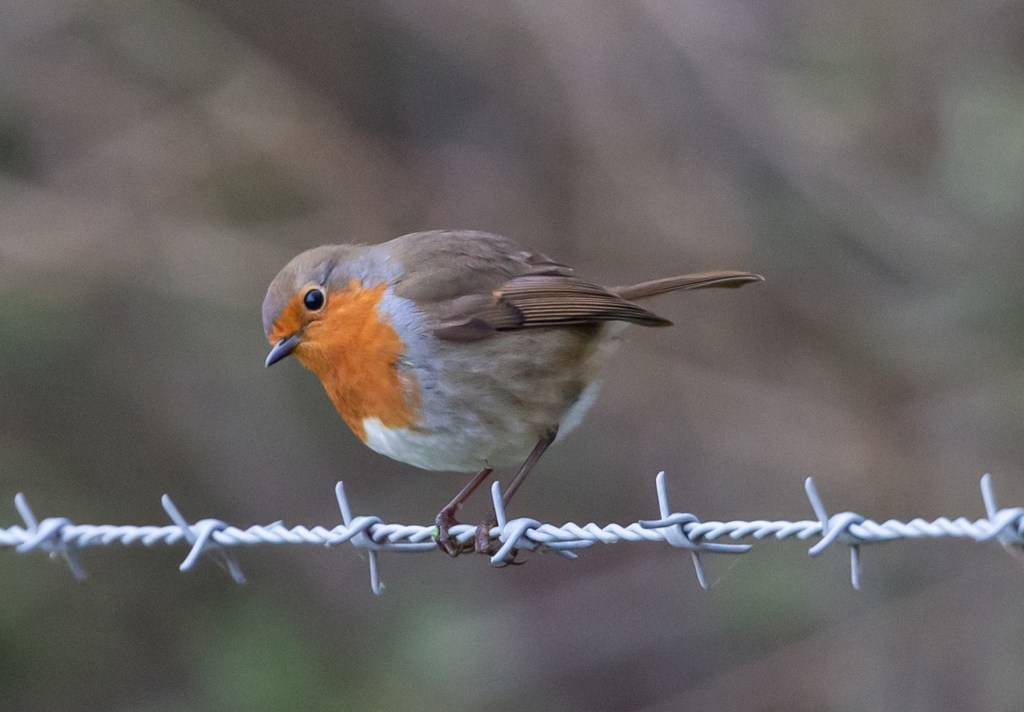
While the poems reflect the poet’s emotional and psychological response to loss and separation, she manages to maintain a careful balance: hope is not abandoned. The recurrent bird theme also provides a framework, an underlying structure. This theme returns in the short closing poem, The robin redbreast. The loved one appears in a dream, as tiny as a bird, and:

Then you grew a beak
with which to pick and sing
and transport worms and roses.

Contrapasso is a confident and authentic debut by a perceptive, astute poet. Her personal tale finds echoes in the reader’s universal story. However long and painful the journey, there can be closure and transformation.
Books, books, books…

World Book Day is on the 23rd of April. In the UK it takes place on the 2nd of March to avoid clashes with spring school holidays and St. Georges’ Day.


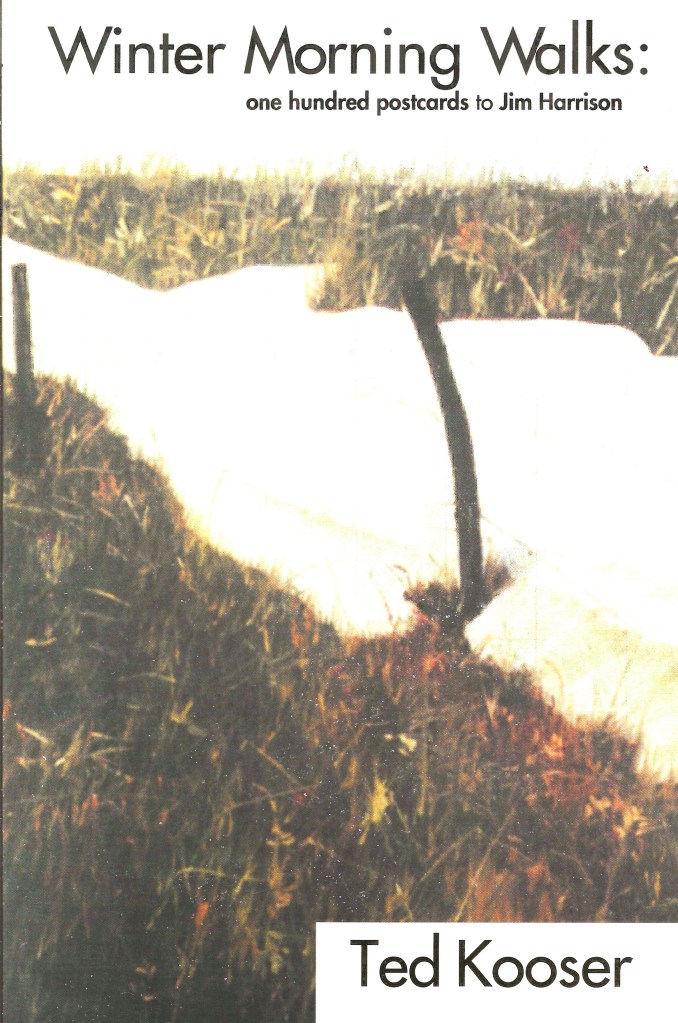
A fellow poet introduced me to the American poet Ted Kooser, now in his early 80s. His style is accomplished, yet extremely simple. My current bedtime reading is his poetry collection Winter Morning Walks: one hundred postcards to Jim Harrison (Carnegie Mellon University Press, 2001).


In the late 90s Kooser developed cancer. He gave up his insurance job and writing. When he began to write again, it was to paste daily poems on postcards he sent to his friend and fellow writer Jim Harrison. In the preface, Kooser tells us ‘I began to take a two-mile walk each morning. I’d been told by my radiation oncologist to stay out of the sun for a year because of skin sensitivity, so I exercised before dawn, hiking the isolated country roads near where I live.’ These country roads are in Nebraska.


The poems cover a period from 9 November until 20 March. In the poems Kooser doesn’t directly talk about the illness. He does so through metaphor. All the poems include a brief description of the weather. The clear and precise observation gives them a haiku quality.


Here is his postcard for march 5:

Very windy and cold.


A flock of robins bobs in the top
of a wind-tossed tree,
with every robin facing north
and the sky flying into their faces.
But this is not straightforwardness,
nor is it courage, nor an example
of purpose and direction
against insurmountable odds.
They perch like this
to keep their feathers smooth.

Ode of sorts…

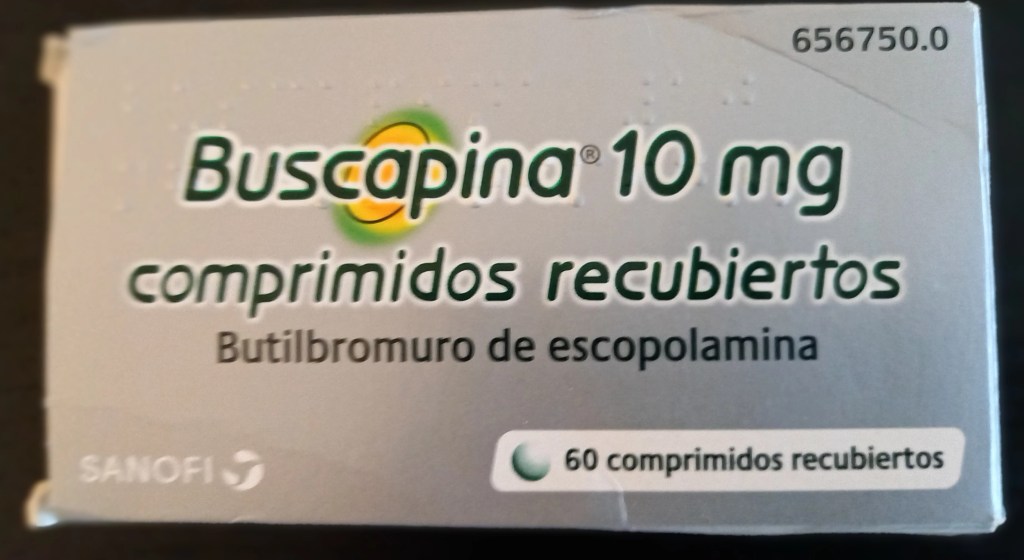
Last Saturday I had to go to the pharmacy in Playa Blanca, Lanzarote to get some over-the-counter medication. It’s an ode of sorts alright…

Normal service will be resumed…

To ‘my’ condition

I salute you: you have staying power.
You arrived out of nowhere 28 years ago.
How odd you only woke up in Manchester,
while you slept through London.

I refuse to call you mine, the two ‘ ’
symbolise handcuffs, shackles.
On long journeys (flights, trains)
I wear dark trousers, a dark dress.

You have grounded me many times,
I’ve been bent over, clutching my bike,
scared to go to the shops in case I
don’t make it to a loo.

An acronym close to that computer firm.
There are dress codes at IBM, I have you know.
Irritable? Yes, often. I’ve been pissed off,
imagine bowels as a curled-up, snarling cobra.

Syndrome is, I believe, where spectators
gather to see retired pilots take off
in noisy small planes. Banking
is a dangerous manoeuvre.

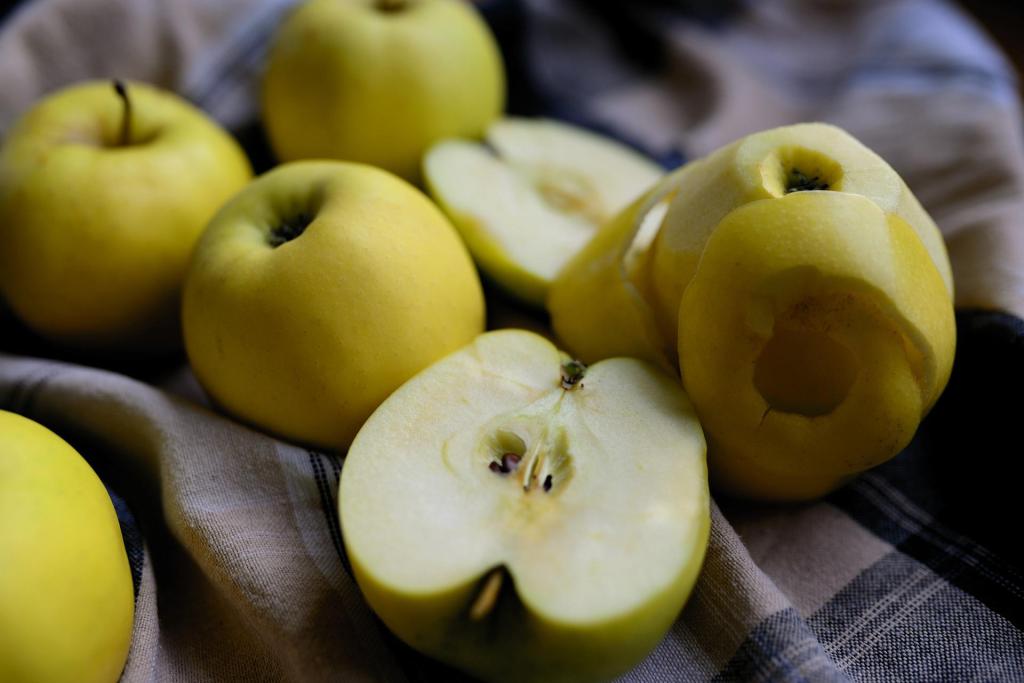
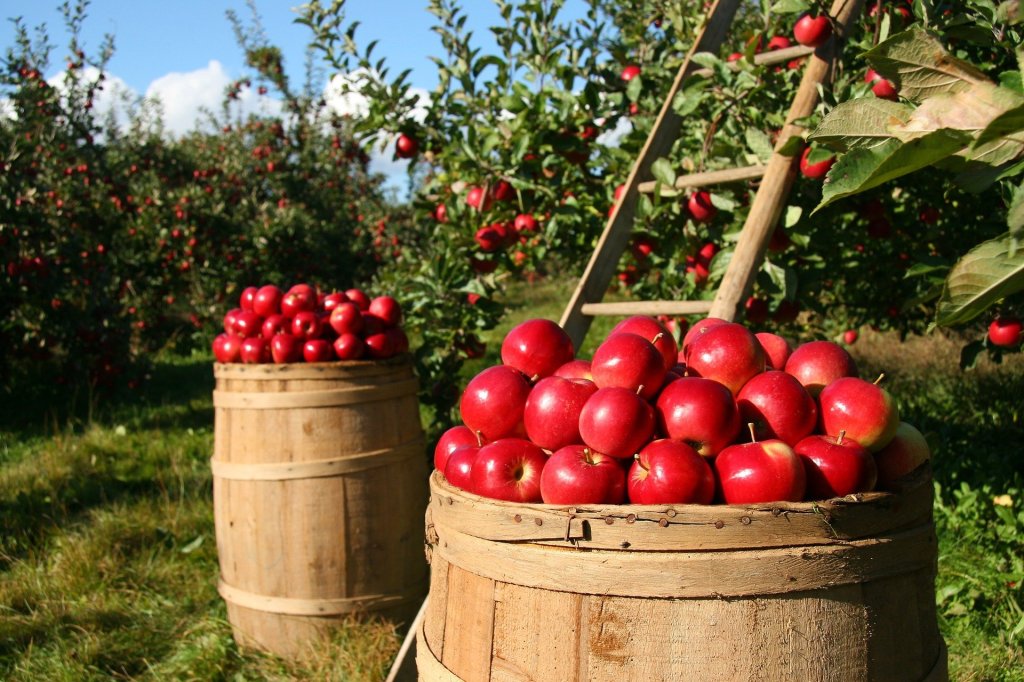
National Apple Day – poem

Credit: Congerdesign via Pixabay


National Apple Day falls on the 21st of October. It was created in the UK by the charity Common Ground in Covent Garden, London on 21 October 1990 to raise awareness about the importance of diversity in different communities. Apparently, there are about 7,500 varieties of apple grown globally. In my local Hoogvliet supermarket I can find six: Kanzi, Pink Lady, Golden Delicious, Granny Smith, Royal Gala and Jazz.

Celebrations take place in the UK throughout October, so go to a fair, take part in an apple peeling contest, bake or eat an apple pie. Here in the Netherlands, traditional Appeltaart always has a good dose of warm spices – cinnamon, ginger, nutmeg. They are baked in a spring form and have a lattice crust. I will have mine with a good dollop of sweet whipped cream, thank you.


My poem is somewhat melancholy. It has the feel of a tanka – the first three lines giving a description, with emotion and reflection in the last two lines.

carefully quartering
soft red apples
into a compostable bag –
I still wait for the letter
that will never come

Turn Up the Ocean – poems

It’s four years this month since the poet Tony Hoagland died. Turn Up the Ocean was published posthumously this year.

The blurb on the back says ‘Over the course of his celebrated career, Tony Hoagland ventured fearlessly into the unlit alleys of emotion and experience. The poems [ … ] examine with mordant wit the reality of living and dying in a time and culture that conspire to erase our inner lives.’


The mordant wit can be found in some of the titles:

  • Four Beginnings for an Apocalyptic Novel of Manners
  • Why I Like the Hospital
  • On Why I Must Decline To Receive The Prayers You Say You Are Constantly Sending


The last few lines of this poem are:


And could you stop burning so many candles, please?


My god, think how many hours and hours and hours –
think of how hard those bees worked
to make all that wax!

Hoagland’s poems often go just over the page and here are the last few lines of Gorgon:

Your job is to stay calm.
Your job is to watch and take notes,
to go on looking.

Your job is to not be turned into stone.

Tomatoes – poem

Credit: Couleur via Pixabay

Fruit & veg, toms, salad, mayo, salmon, ½ loaf … I’ve not yet managed to write a shopping list in Dutch even when the words are shorter (sla) or similar abbreviations (gr & fruit). It’s too much hard work late on a Thursday evening when I’m sitting with a glass of wine (wijn) and contemplating the moving project: flooring, top-down & bottom-up blinds, two chairs – ordered; research on fridge/freezers needed, also a new GP practice and pharmacist.

Here in the Netherlands the distance is important: the GP must be able to get to your home within 10 minutes. That doesn’t mean it’s easy to register. In Scheveningen (where I spent the winter) three practices did not take on new patients or had a four-month’ waiting list. A tomato a day may keep the doctor away …

Tomatoes

I am stepping away from my life,
my life as short as a haiku.
I have turned biographer,
am writing vignettes,
pale green, the length of celery.

My vignettes may concern
elderly mules with dental decay,
the struggle to remember
maternal aunts. I am numbering
my vignettes 1A, 1B, 1C, 1D –
narrow seats in the small airplane
Aer Lingus would use
on the late Saturday flight.

I could write a vignette
about the plastic dummies
they use in ambulance training.
Today I’m going to focus on pretend
tomatoes. My invisible friend
has started her new diet.

Changing the clocks

Credit: Brigitte via PIxabay

We moved into wintertime last night. A good time for a poem that mentions clocks. For over 12 years three friends and I met monthly at each other’s houses to write, taking turns to host and find sample poems. This came from one of those sessions. It’s published in the pamphlet A Stolen Hour, Grey Hen Press, 2020. The poem was also Highly Commended in the 2016 Manchester Cathedral poetry competition. It was a privilege to read it during the prize-giving at the cathedral.

A la Hafiz

For just one minute of the day
open all the windows.
Let your mind run alone,
like a foal that has never
known fields without fences.

For just one minute of the day
let your body rest in a place
where other people run past,
so that they have the permission
they need to go and play.

For just one minute of the day
go and sit within sight of a large clock.
Remember how the three hands
are always trying to catch up with each other.
Feel your compassion grow. Be still.

With all the rest of your time
make bread, make beds, make love.
Do what is needed and then close
the windows. You are already
looking upon yourself more as God does.

Satsumas – a poem

credit: Kie-ker via Pixabay

In the Netherlands it was National Vegetable- and Fruit Day on Thursday 14 October. The front cover of the weekly free paper was a large colour photo of three local shop owners encouraging us to ‘go for colour’ – have some fruit or veg to deal with the afternoon ‘dip’.


The Dutch love their tomatoes: it’s the most popular vegetable, making up of 10% of vegetables bought. The Dutch are eating a little more fruit and veg this year, compared to last year. The most popular fruit was the banana. Probably because fewer apples were harvested.

Credit: Lumix2004 via Pixabay


The poem Satsumas was published in my debut collection Another life, by Oversteps Books in 2016. I wrote it on a workshop where the tutor suggested that ‘half a sestina might be called a satsuma’. I’m always grateful for prompts!

Satsumas


The mandarin is also a clementine, or a seedless tangerine.
They must not be confused with the satsuma, first
exported from the province Satsuma in Japan.

The men and women of the Fruit-and-Veg Marketing Board
are introducing their successes: the Orkney, a type
of button mushroom, but a clear ice-white and stoic.
There is the Argyle, an improved form of celery with
lower water content, therefore less stringy and greener.
The Devon is already being exported to Japan:
a small, tasty apple, dark red, square and stackable.

No-one mentions the Wicklow with a taste like ratatouille
after a fortnight in the fridge, or the Sark, a long, sour,
brown hairy thing lying at the back in wooden crates.

2pm Appointment – a poem


The Safe Place or Special Place exercise is an essential part of the preparation phase of EMDR, before the client or patient starts the processing of the traumatic memory.

Today is World Mental Health Day. Below is my sonnet about EMDR (Eye Movement Desensitisation and Reprocessing). EMDR is a a proven trauma treatment which has been NICE-recommended in the UK since 2005. In 2013 it was also listed as a recommended trauma treatment on the website of the World Health Organisation (WHO).

The poem is included in my pamphlet A Stolen Hour, published by Grey Hen Press, 2020.

2 pm Appointment

Holding a fingertip to his right ear;
this is the worst part of the memory:
all bright, vivid. He is still forced to see
and feel the machete: cold steel, cold fear

Now he dreams, cannot sleep, was driven here
by his wife. Four or five men, he tells me,
balaclavas, jumped from a van. Now he
lies with a blanket of guilt, but it’s clear
to me that he wants to become the man
that he was. That he did the best he could.

As you’ve come through pain and grief in the past,
you can do that again. Sounds and sights can
go. We’ll create your Safe Place now. I’ll put
you in for next week. This stuff will go, fast.

Saturday mornings – poem

Maison de Bonneterie, Amsterdam

On Friday I had my second vaccination (Pfizer). I have felt ok, a bit tired and feverish. By way of a treat, a good childhood memory.

The “selling fur coats” took place in Amsterdam, in Maison de Bonneterie: a small chain of high-end fashion stores. The building in Amsterdam was designed by a well-known Dutch architect with an interior in the style of Louis XVI (the Sun King of France), an imposing staircase and a glass roof.

It closed in 2014, after 125 years of uninterrupted service to the elegant public. The Amsterdam store is a national listed building and now used as a location for events.

Saturday mornings


We’ve been waiting in silence.
It’s just the three of us.
Mother’s away in a city, selling fur coats.
The radio crackles, but here comes father
with blue beakers, hot chocolate,
curled cream on top, and the bread
he has baked on his day off.

Tomorrow he’ll be on the balcony
playing the organ; we’ll be below.
Today he is the son of a master baker.
We’ll have the bread with butter
and jam, red strawberries,
shiny against the golden crust.