Tag Archives: family

27 June, the day after her birthday

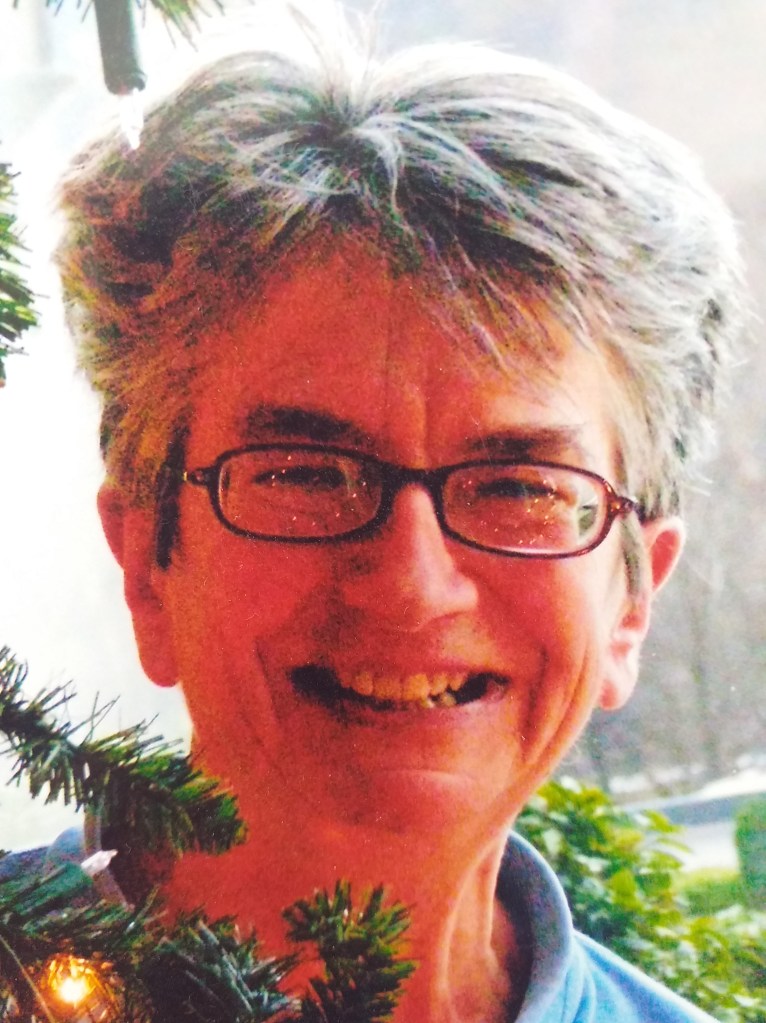
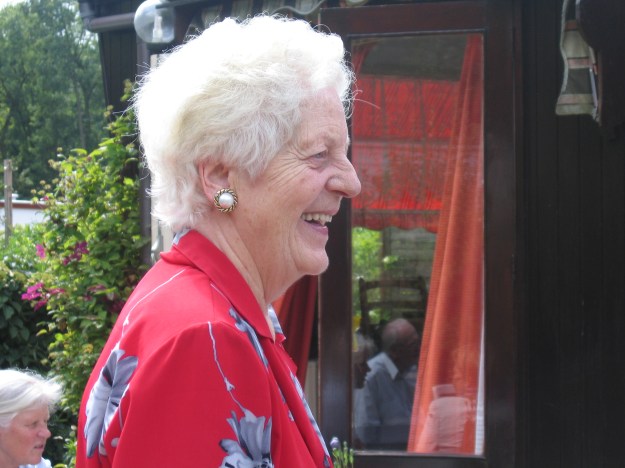
Today would have been my mother’s birthday. The photo was taken at my 60th birthday party which I celebrated in the garden of my friend’s caravan – the one I was to inherit just three years later.

The poem describes a time when my mother was still living independently. As I lived in England, the opportunities to help were limited. I happened to be over in the Netherlands.

27 June, the day after her birthday

I’d left a note on her bedside table
Don’t eat, don’t drink when you wake up.
We walk arm in arm, it’s warm already.
The doctor lives two houses down.
A blue Scandinavian cotton dress,
chunky necklace and earrings to match.
My mother does not look eighty-one.

That blood test done, we sit and face him.
Slightly raised, but no need to worry.
How are you keeping he asks my mother
who smiles, puts on her usual pose, I’m fine,
while I shake my head silently.

She’s leafing through her diary.
It says, Doctor, 8 o’clock.
We’ve been, now it’s time for coffee.
I want to go upstairs to pack.
Before you go, just one question
The matt-green door frame cuts the scene.
I wave, but she frowns at her diary.

Lemonade in the Armenian Quarter – guest poet

This month’s guest poet is Sarah Mnatzaganian. We first met on a Poetry Business residential workshop a few years ago. Sarah is an Anglo Armenian poet based in Ely, UK. She grew up in rural Wiltshire and in her late teens spent each summer with her father’s family in the Armenian Quarter of Jerusalem.

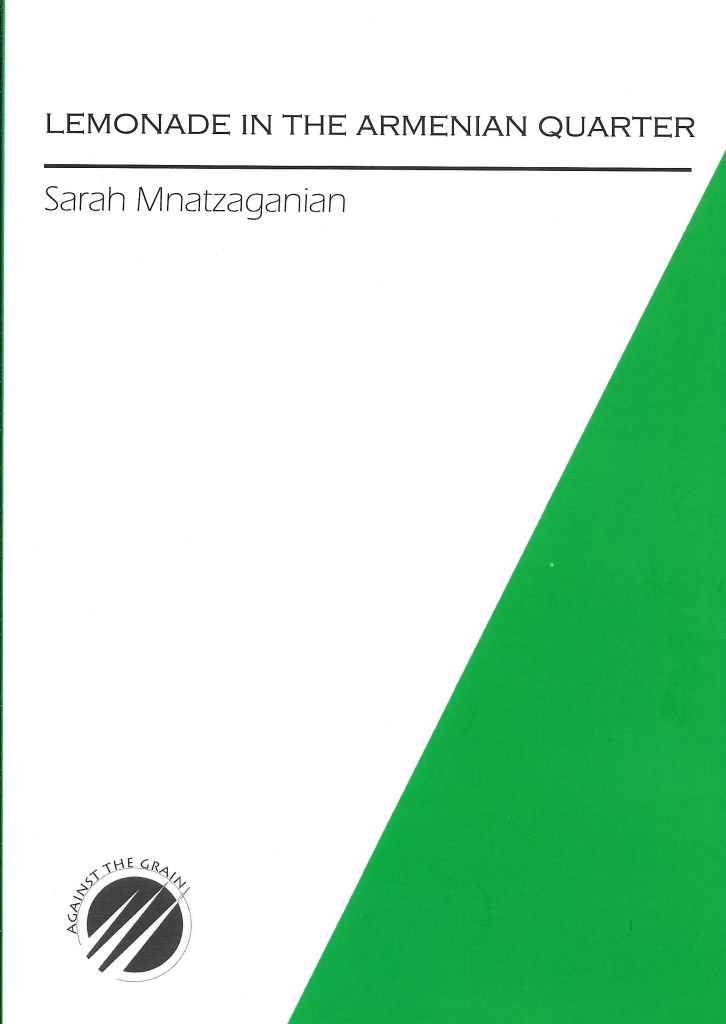
Her debut pamphlet, Lemonade in the Armenian Quarter, is published by Against the Grain Press. Sarah’s work has appeared in The North, The Rialto, Poetry News, Poetry Wales, Poetry Salzburg Review, Magma, Pennine Platform, London Grip, Atrium, and many anthologies. She was a winner in the Poetry Society’s winter 2020 members’ competition on the theme of ‘Youth’ and won the inaugural Spelt nature poetry competition in 2021.

In the 2022 Saboteur Awards Sarah’s debut with its ‘wonderfully moving poems’ gained the award for Best Poetry Pamphlet.

Lemonade in the Armenian Quarter

Uncle Hagop planted lemon trees outside his house
where small passionate tortoises collide each spring
with the hollow pock of a distant tennis match.

At night his ripest lemons dropped into a crackle
of leaves. He grunted through the cardamom-coffee kitchen
into the courtyard to fill his hands with fruit.

Auntie soothed the juice with syrup and iced water.
Uncle drank, clacked his tongue and sang, My Heart
Will Go On, his head thrown back like a songbird.

The lemons lay thick last February. My sister filled a bag
for Uncle. She put a smooth yellow oval into his hand
and helped him lift it to his face to smell the zest.

Dad asked the nurse for sugar and a knife. He cut,
squeezed, stirred. See, Hagop, I’m making lemonade
from your trees. Watched his brother smile, sip, sleep.

Egg Time

To my mother, Madeleine

Give me an egg, round as childhood.
I’ll tap its innocent shell; push sideways
through its Humpty Dumpty head to find
a core of molten gold or the dry pollen
of a hardened heart. May this teaspoon
teach my tongue the taste of lunch hour
on a school day when I’m six, hugging
the bump under mum’s dungarees.
How did the morning go? Watching her
butter home-made bread. Reading aloud
while the baby kicks. Back down the lane
for the lonely end of playtime, her love
like albumen around my ears and in
my eyes. Voices water-slow. Whistle
blown from the other side of the world.

Juice

To my father, Apraham

Every time I set spade against turf,
you’re there, cutting grass-topped cliffs
into our borders, neat as the Normandy coast.

You snatch sweat from your face
and ask for Lemon, half a lemon,
squeezed, with water please, darling,
it quenches the thirst.

I silently sing each syllable to myself
in your voice, like no other voice,
licking the ‘l’ in half almost as long as in lemon,
expressing the juice of each word with your verve,
crushing the fruit’s face into ridged glass
and clouding cold water with the sharpness you crave.
Each sucked finger stings.

Now I want to watch your dark throat dance
while you drink.

At the end of my suffering / there was a door

Have you ever hated anyone enough
to ask an iris leaf to turn into a sword
sharp as the new moon, cold as a snowdrop,
irresistible as spring grass growing disorderly,
before it’s mown to match the wishes of one
demanding pair of eyes? Don’t lose focus.

Take one, narrow, curved iris leaf and hold it up.
If the heart you want to penetrate is hard enough
to steal a country and the lives from its people;
if that heart won’t learn the wisdom of the iris,
the snowdrop and the moon – that life is mutable –
then that heart will feel the leaf turn to steel
and, to grant your wish, will stop beating.

The iris will flower blue and yellow, as it should,
for the people returning to their country,
as they should, and there will be no blood
on your hands.

The title is a quotation from The Wild Iris by Louise Glück.

Adopt a Christmas tree – writing prompt

Adopteer een Kerstboom


This week I saw a feature on tv about various adoption schemes here in The Netherlands. One of those, Adopteer een Kerstboom, now has 3,000 people who have adopted a Christmas tree. There is a waiting list: it takes five years for a tree to be tall and big enough for adoption. Each tree carries a metal tag with a number, so that the adopters know it’s their tree. Many people have given their tree a name. They pay a small deposit on collection in November from one of 13 locations, and trees are returned in January when they are planted back in their slot. The fee goes up a little each year the taller the trees get.


I think it’s a great scheme! Season’s Greetings to you all. Thank you for following my blog and for your comments. A short seasonal poem:

I’ve never been to that desert island
though the removal firm sends me
a bill each month for the books I left there.
I’ve never been to Iceland for that green light,
nor Lapland for those dogs and sledges,
but I have kissed Father Christmas.

Writing Prompt 1: a six-line poem that includes, in different lines, an animal, a country, a place in nature, a concrete object (like my book).

Writing Prompt 2: What name would you give your adopted Christmas tree? Write a short ode to Julian or Emily, or ….

St Nikolaas

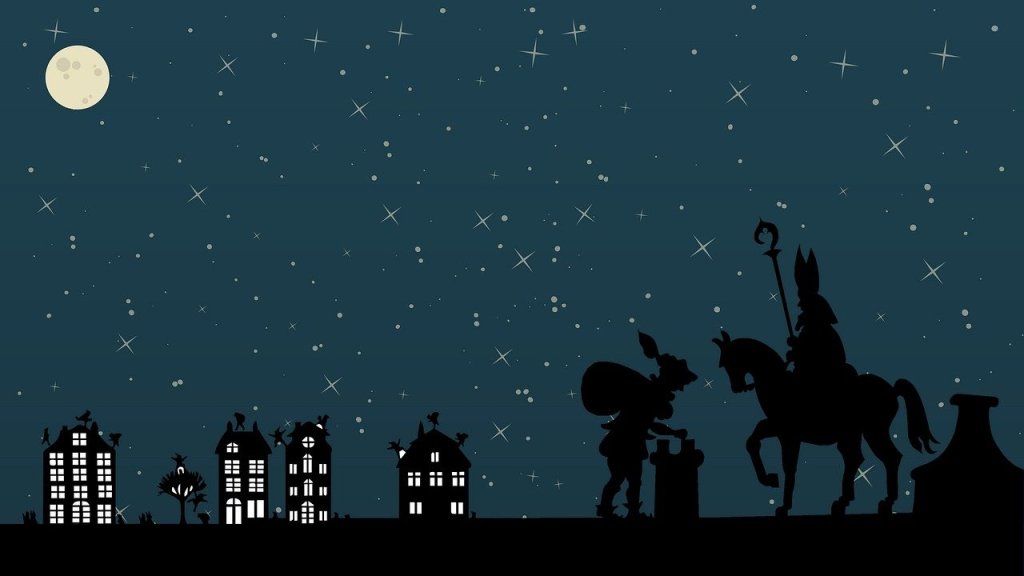
Credit: RvT 1625, via Pixabay

Tomorrow will be his birthday. Traditionally, children were allowed to put a shoe (with a carrot for the horse) by the fire on the night of the 5th. Over time, it has become tradition to celebrate the evening of the 5th. And over time, children put out their shoe earlier and earlier …

Somewhere in a photo album there is a small black-and-white picture, somewhere in a box in storage. Here is the poem, anyway, from my debut collection Another life, Oversteps Books Ltd, 2016.

St Nikolaas, 5 December 1957

We’re crowded in our dining room.
Grandmother has closed her face.
There’s me in pyjamas, smiling.
I’m next to my father’s father.
His heart will give out soon.
I’ve just been given a book:
animal stories with illustrations.

My brother too smiles, because
our mother isn’t there.
She may be in the kitchen
or upstairs, ill, thinking
about walking out on us.
My father has taken this photo.
He too will have closed his face.

World Animal Day

Photo credit: Artcats via Pixabay


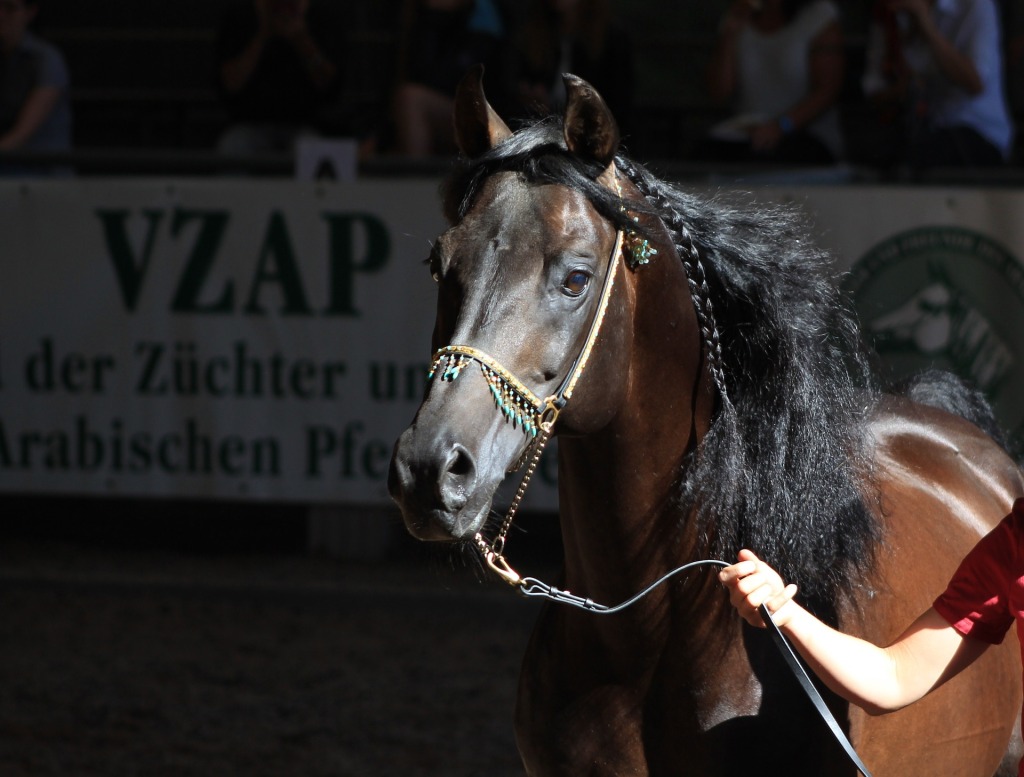
World Animal Day was started in 1925. I was looking for an animal poem in my file. Looking back on this experience, we might question the animal welfare aspect. The horse seemed happy enough at the time.

Circus

The Arabian thoroughbred
and his blue-blood spinster
lodged with a middle-aged couple
living in the Dutch bible belt.

My parents despatched
my younger brother and me
that summer to acquire
circus skills in two weeks.

Each morning a child took
turns standing on the horse
as it walked round the ring
inside the stuffy canvas tent.

In the afternoons we swam
in the local pool, tried to get
the couple’s fat ponies to obey.
There were prayers, a lot of eggs.

By the end of the holiday we
balanced, arms outstretched,
on the trotting horse. We swung
off and on as it cantered.

Neighbours Day – poem

Photo Credit: andrewlloydgordon via Pixabay

Yesterday was Neighbours Day here in the Netherlands. The Neighbours Day initiative was started in 2005 by Douwe Egberts, one of the traditional Dutch coffee makers: social contact starts with a cup of coffee. A few years later they were joined by a charity called Oranjefonds. Each year they provide funds, support and advice for a large range of social and community activities, such as Dutch language support for refugees, mentoring, club houses for the old and young.

During the lockdown earlier this year, many new initiatives were started by people volunteering in their own street or local area. A good fit with this annual initiative. My neighbours here on the camping have cut their hedges and have gone home. My day always starts with a good cup of coffee made in a cafetiere. It happens to be D.E. – a firm started in 1753 in a small shop in Friesland, a northern province.

Earlier this year I talked with my brother about events in our childhood. This memory came up.

Getting to know the neighbours

We’re snoozing after lunch
in a Sunday afternoon garden.
One of our family, still awake,
sees silent orange flames rising
that side of the opaque glass.

It’ll be a small insurance claim.
As evening turns pink, the old
Belgian couple walk their Borzoi.

Photo credit: akunnen via PIaxabay

Southwold, Suffolk

Image (2)

Beach huts in Southwold, Suffolk

Later today, I’m on a ‘virtual’ writing weekend. Part of the preparatory work was to write a 16-word poem about a place on the coast, but not about Whitby – which is where we will be based ‘virtually’. That brought back memories of my many visits to Southwold in Suffolk. The expensive beach huts there are legendary. The smell of beer brewing at the local Adnams Brewery is an acquired taste!

Several times we rented Shrimp Cottage, at the front. Whoever stayed in the main bedroom on the first floor, had a view of the sea from their bed. We were the women I met on holiday in China, as one of our regular reunions. I’ve also stayed there with friends from Manchester and, twice, my brother and his family in the Netherlands got the ferry to Harwich and made the short drive up the coast.

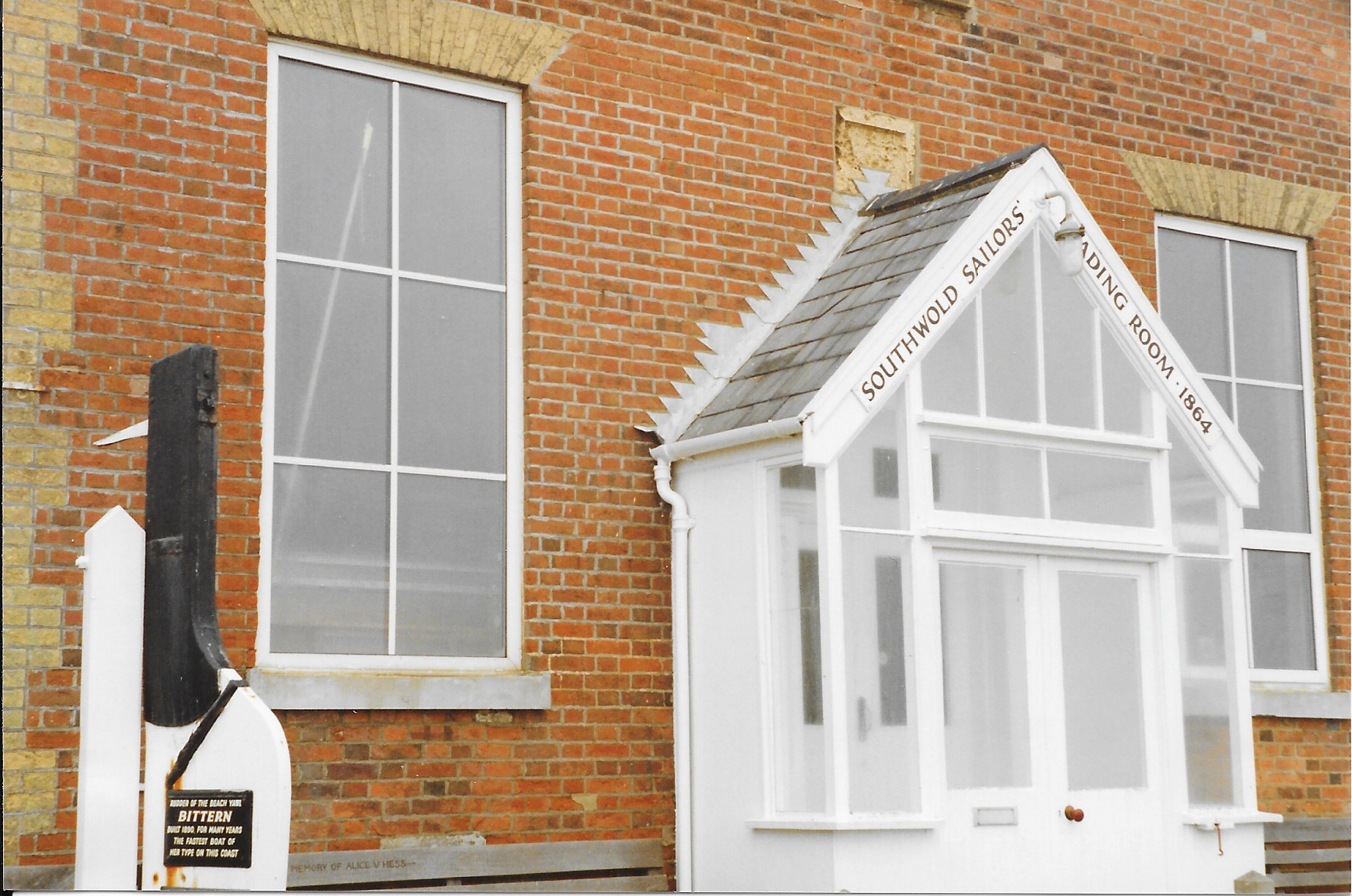
Southwold Sailors Reading Room


I visited Southwold in all seasons. There was just one house between Shrimp Cottage and the Sailors’ Reading Room – a Grade II listed building from 1864 and still a refuge for sailors and fishermen. Another forty footsteps took us to the Lord Nelson pub. The poem is included in my second collection Nothing serious, nothing dangerous, published by Indigo Dreams Publishing Ltd  in November 2019.


Southwold posts


Nautical miles
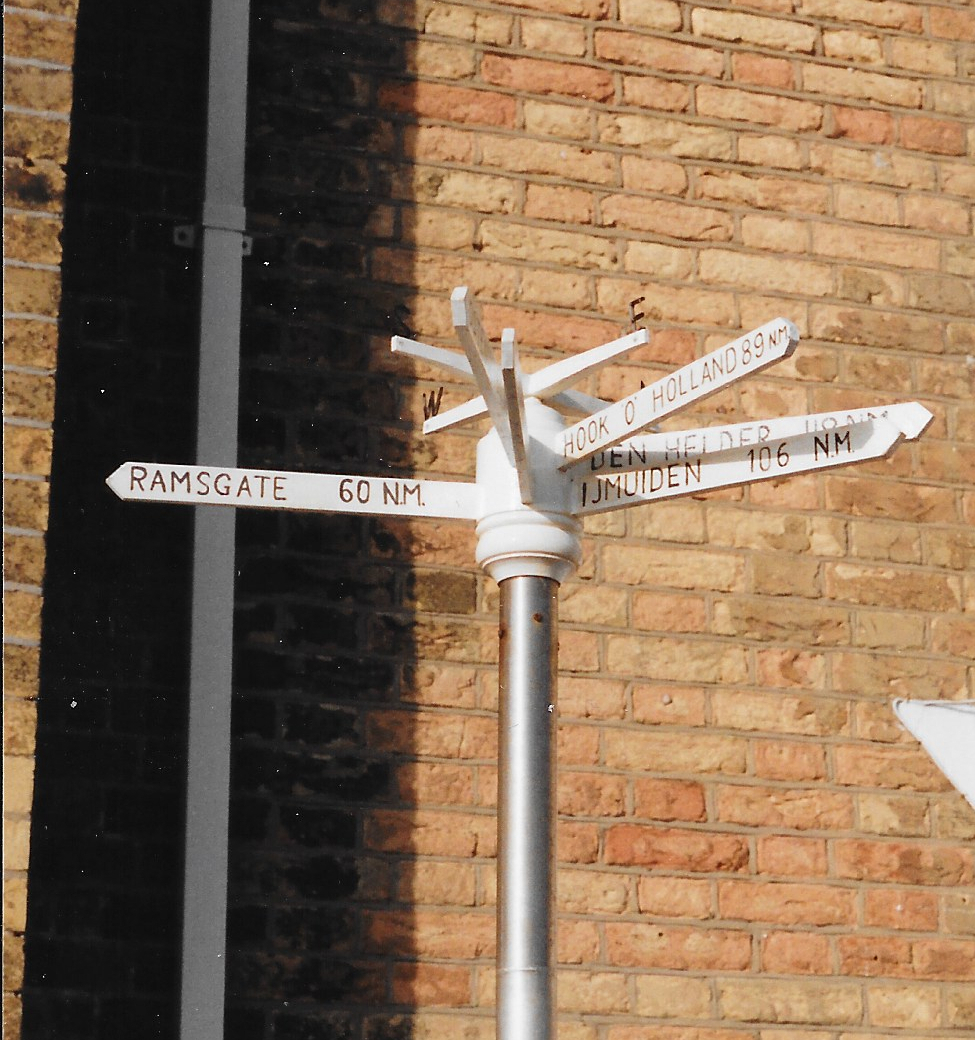
The sign outside the Sailors’ Reading Room is

a series of thin wooden planks, painted white:
Den Helder, IJmuiden, Hoek van Holland.

Across the horizon, they are less than a hundred
nautical miles from Southwold in Suffolk

where the narrow beach of pebbles –
grey, brown, black mostly –

is held together
by couplets of groynes, slimy green.

Both our languages have the word strand.