Tag Archives: death

Poetry Worth Hearing

Many thanks to Kathleen Mcphilemy for including three of my poems in episode 37 of Poetry Worth Hearing or you can listen on Youtube, Audible and Spotify.

One of the poems is his ashes on a corner.


The theme was hiding and/or seeking. The episode is 60 minutes. The first half hour or so is an interesting interview with poet Nancy Campbell who talks about her residency on Greenland among other things. The interview and Nancy’s poems bookend poems by Guy Jones, Zelda Cahill-Patten, Lesley Saunders, Pat Winslow, Richard Lister, Dinah Livingstone, and Sarah Mnatzaganian.


The theme for the next episode is all things ‘eco’. Send up to four minutes of unpublished poems (text and sound file) plus a short biography to poetryworthhearing@gmail.com by 18 January 2026. Find more information on poetryworthhearing.biz.

his ashes on a corner

of the dining table
by the small square
votive container
the discreet
undertaker’s logo

she greets him
will have a glass
at six his ashes
waiting with us
for borders to open

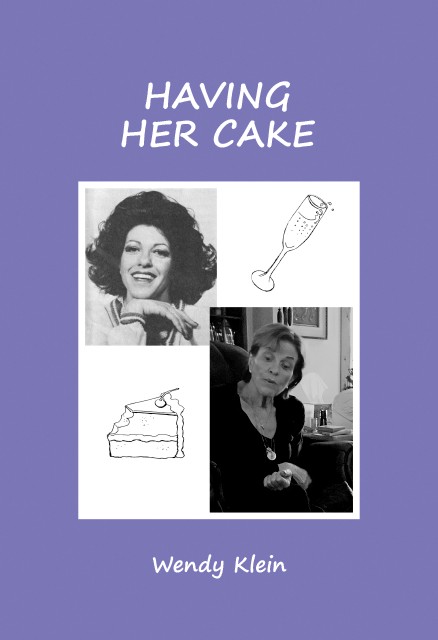
Having Her Cake


It is a pleasure and a privilege to share three poems from Wendy Klein’s new pamphlet Having Her Cake, published by Grey Hen Press. The pamphlet is dedicated to Barbara Cox (1943 – 2019). Several poems give us vivid details about their lifelong friendship. However, the focus is Barbara’s ‘physician assisted’ death. The opening poem starts: Barbara never knows what time it is in Britain. California calling ends: the kindly California law / on assisted dying / I tell her I’m coming.

Having her Cake

The chocolate cake, left over
from her annual pre-Christmas do
sits on a large white china plate,
dwindling in size day by day,
an unwashed fork lying next to it,
a temptation to any passers-by,
though no one ever sees
anyone else eating it
and it would have been sacrilege
to open the cutlery drawer,
select a clean fork,
place the used one in the sink
or the dishwasher, but someone
on the third day I’m there removes
the plate, crumb-covered and sticky,
replaces it with a tidy paper version
tucking the now over-large piece
of cling-film around the edges
clumsily, carelessly, as if
it no longer mattered, as if
at any moment it could be binned
plate and all.

What you can’t wake

The dead. No, not even the dogs,
grumbling at being shut
in their crates, beside her bed
peering through the grate, eyes
full of reproach.

No, you can’t wake the dead,
but the not-quite-dead
are too awake, their eyes
peeled until the last,
their flesh jumpy,
their muscles braced.

Beneficiary

Released from the need to worry
for herself, she frets
about the falling stock market
on behalf of her beneficiary,
a willowy young hairdresser,
the daughter she never had,
who will inherit everything:
the rambling shambolic bungalow
with its million and one flaws:
the water pressure that shuts down
the whole system when the shower is on,
necessitating bouts of shouting,
water, water if someone so much as
turns on a tap to rinse a cup,
brushes teeth, flushes the toilet
in any other part of the house —
a second-hand Honda Jazz,
a rusting dishwasher, a dog run
which looks like a concentration camp
for canines, meant to be protection
from ‘critters out there,’
and the stock market falling,
falling, falling.

Biography


Widely published and the winner of many prizes, Wendy Klein is a retired psychotherapist, born in New York and brought up in California. Since leaving the U.S. in 1964, she has lived in Sweden, France, Germany, and England. Her writing has been influenced by early family upheaval resulting from her mother’s death when she was nine months old, her nomadic years as a young single mother and subsequent travel. She has published three collections: Cuba in the Blood (2009) and Anything in Turquoise (2013) from Cinnamon Press, and Mood Indigo (2016), from Oversteps Books., plus a new and selected, Out of the Blue (2019) from The High Window Press. Her first pamphlet Let Battle Commence (2020) from Dempsey & Windle, was based on her great grandfather’s letters home while serving as a Confederate Officer in the US Civil War. She shares her work on https://www.cronepoet.com.

Wind phone

The original wind phone, photo credit Matthew Komatsu


It’s a year ago today that my brother died. If grief is love with nowhere to go, the wind phone can be a place for those feelings to land, even momentarily.


The initiative was started in Japan by garden designer Itaru Sasaki in Otsuchi Prefecture in 2010. Sasaki said: ‘Because my thoughts couldn’t be relayed over a regular phone line, I wanted them to be carried on the wind.’ Hence the name Kaze no denwa’ – phone of the wind. The disconnected old-style rotary telephone allowed him to deal with grief after his cousin’s death of cancer.


Sasaki: ‘When your heart is filled with grief or some kind of burden, you aren’t in tune with your senses. You’re closed off like curtains have been pulled around you. After you empty your heart a little bit, you might be able to hear some birds singing again.’


The following year close to 20,000 people were killed by the earthquake and tsunami. In Tokohu 10% of the population died. Sasaki allowed local people to use the wind phone. Over 30,000 people have made the journey to this telephone since, and wind phones have been set up in other countries. The wind phone also provided inspiration for films and novels.


Amy Dawson (USA) lost her daughter Emily to terminal illness in 2020. She learned about wind phones and now devotes much of her time to maintaining a listing of wind phones worldwide, providing advice and resources. The current total is just over 400. Not all calls are to a deceased. People make calls about other losses. Go to her website for more information. There is also an article on Colossal


The first wind phone in The Netherlands was placed in 2019. There are now eight, with a further eight being planned. The locations include Haarlem – the town where my brother and sister-in-law lived before moving to the nearby village of Spaarndam.


I imagine a wind phone, the black cord snipped, in the dunes of Wijk aan Zee – where I’ll celebrate my special birthday this weekend, and where my brother and I spent much time as children during the summer vacation.

empty sky
sand piling up
rustle of marram grass

Exit Strategy

It’s my pleasure to introduce this month’s guest poet Patrick Wright. Patrick and I met years ago at Manchester Poets. Earlier this month his poem Archive, inspired by Anselm Kiefer, featured on the blog. You’ll find Patrick’s biography at the end of the post.

Today I’m sharing more poems from his substantial collection Exit Strategy, a ‘vivid exploration of grief and loss’. Tamar Yoseloff said of the collection: ‘Patrick Wright is one of those rare poets who can translate the complex images of visual artists into precise and pitch-perfect language.’

Patrick has been inspired by artists past and present (Rousseau, Klee, Rachel Whitehead, J M W Turner), to mention some well-known names.

The collection uses a wide range of forms (couplets, tercets, stanza, sonnet, ghazal, prose poem) and makes excellent use of white space through columns and indents. WordPress can’t do justice to formatting. Therefore, I’ve chosen poems with a more traditional lay-out.

COLD DARK MATTER

After Cornelia Parker

Thanks to you I am learning to see again
through a sparseness of particles—

like how I learned to listen to an eyelid
twitch once yes and twice no through a coma.

Darkness I’ve come to realise is a privilege—
known at 4am & sleepless

the sun rising like a scalpel
& turning the room purple.

Somehow, we go on & somehow it never ends
& we go on like a double pendulum.

Perhaps love is like this fixed explosion.
Perhaps you’re nearer now than the word belief.

SHADOW OF A GIRL PLAYING WITH A HULA HOOP
After Giorgio de Chirico

It used to scare me, what this girl is doing,
or those around her, off in the blind field.
Seemingly a girl playing with a hula hoop,
or just a shadow, no source, just a shadow
next to a wagon, its backdrop here a dusty
plaza. Somewhere, I feel, from an upstairs
room, an eye looks at me. Somewhere, off
screen, a murder is taking place, this shade
a clue. Even so, things are too belated now,
this girl clearly a phantom and not a muse,
like she’s in a toy shop or inside its puzzle,
no girl playing so nonchalant with a hoop.
The sun, at these times, is no longer a sun,
more likely a lamp. My fingers are syllables.
And this pine table where the postcard sits
is full of knots, staring like gods from above.

ROBERT RAUSCHENBERG’S UNTITLED

& already I see alpines
prise their way through the brutalist grey
of Chernobyl floors. Through the sarcophagus
they reach for sunlight. Maybe we only learn
what the burn of graphite means once blind.
I know you better after knowing disaster.

I’ve studied the colour theories
of Goethe and Albers where the wheel
& the wheel of life are a way to feel closer.
I am the stalk through the fallout, one that insists
on pushing its way & one that’s been patient.
On the surface we share the mark of detonation.

They say a town like this is void
though one pulse of a deer’s heart
makes it a plenum. A full spectrum will reveal
itself only when you’ve pledged to cease
hurting. Through this I see what you saw
when the sun set & made shades on a radiator.
We are both on the side of art.

WINTER LANDSCAPE WITH SKATERS AND BIRD TRAP
After Pieter Bruegel the Elder


I find no pleasure in the ice.
Everything about me lies still—save for murmurations.

Peasants weave between trees: each crystalline
like coral on a seabed.

I give you a winter landscape in place of a mirror.
The bird trap is my heart.

Soon it will be still, a skull in a crypt, lit by candles.
My hills are a wishbone. They undulate under great tension.

The skaters are insouciant, crows peck their shadows.
My face startles—a chance alignment of stars.

Skaters are on slippery ground
and if they should slip, they have nothing to cling onto.

Biography


Patrick Wright’s poems have appeared in Poetry Ireland, Poetry Wales, The North, Gutter, and The London Magazine. His debut collection, Full Sight of Her, was published in 2020 by Eyewear and nominated for the John Pollard Prize. His pamphlet, Nullaby (2017), was also published by Eyewear. His second collection, Exit Strategy (2025), was published by Broken Sleep Books. He teaches English and Creative Writing at the Open University.

Archive

Aus Herzen und Hirnen spriessen die Halme der Nacht, 2019-2020. Oil, acrylic, emulsion, shellac, straw, gold leaf, wood and metal on canvas. Dims: 471 x 841,5 x 36 cm. Collection Voorlinden.

Our guest poet this month is Patrick Wright. As I was reading his collection Exit Strategy (Broken Sleep Books, 2024) I came upon the poem Archive and discovered that Patrick and I are both very interested in Kiefer’s work.

For me one of the highlights last year was visiting Bilderstreit, a major exhibition of Kiefer’s work at Voorlinden Museum, The Netherlands. A few weeks earlier I had watched the documentary that Wim Wenders made about Anselm Kiefer. I was blown away too by the film: it’s in black-and-white and one can watch it through 3D glasses.

Kiefer was born during the bombing raids in the final months of WWII. For him, everything exists somewhere in the cycle of death and rebirth. Whenever he creates a new work, he knows that one day he will destroy it: attacking it with a flamethrower, axe, bolt cutter, or red-hot liquid lead.

ARCHIVE
After Anselm Kiefer

Before his landscapes scorched by war and history, paintings of straw
and glue, your golden hair, Margarethe, before ‘Death Fugue’, I was back at
school, deep winter. In the yard blew a few stray crisp packets; seagulls
pecked at crumbs. The annex and fence had the look of an abandoned
camp, in Polish hinterlands. Through a cloakroom window I peered,
looking for a ghost of myself, then at a ghost of myself, as the sun
poked out from a cloud and the contours of bulimia gazed back, in
sepia tones. I saw the bullies too, with razored eyebrows, piercings,
fists in my gut, spit on my shoulder, the stench of Lynx, using queer
as an insult. With my SLR, I clicked more in hope than expectation.
I fumbled with fixative, the stop bath, the gelatin swell. My negatives
solarised. I kept re-visiting as a witness. Those days, I bit the inside
of my lip, stubbed cigarettes out on my arm. When the dysmorphic
class photos were framed, still as that winter, your golden hair, said the
Kiefer print, your golden hair, Margarethe.

Chalking the Pavement

It is a great pleasure to introduce this month’ guest poet Kate Noakes. Kate and I met during the first lockdown on Zoom (a group set up by a fellow poet). Kate Noakes’ most recent collection is Goldhawk Road (Two Rivers Press, 2023). Her website is www.boomslangpoetry.blogspot.com. She lives in Bristol.

Earlier this month Kate’s poem The Sick Spring appeared on the blog. It is from her pamphlet, Chalking the Pavement, published by Broken Sleep Books in 2024. At the heart of the book is Field Notes 2020. Field Notes has 65 entries: observations of life during the first lockdown in the form of prose poems.

I’ve chosen five, from the beginning and end of the sequence. All of them show Kate’s acute attention to detail as she ‘captures the soon-forgotten details of the changes to our lives’.

Field Notes 2020

Children are rediscovering, or discovering, the pleasures of chalking the pavement with hearts and messages of love for the NHS. Hopscotch has the thrill of the new, but neither the girl nor her mother knows how to play it. I look around for a handy stone. None are at arm’s length.

*

The slates pathing my garden are sleek with wet. Dust is dampened. This morning after weeks of early summer-in-spring is a change and a good one. I’ll rest indoors trying not to dwell on my friend’s friend: just two years older than us and dead. All day the blackbirds have busied about the garden in search of nesting materials. Such industry, even in the constant day-drip of rain.

*

My neighbour tells me he’s been scaled back to three days a week with attendant pay cut, yet considers himself lucky; most staff in his firm having been let go, along with eight percent of those in hospitality.

*

A windy day for children to learn or relearn the small pleasure of flying a kite. Prescriptions need at least a week’s notice and the pharmacist tells me there is some drug rationing. We have learned that a life is worth sixty thousand pounds; in case you’re ever wondered. And again there is no surprise in discovering that some people believe rules only apply to others.

*

I want my day to always start with a fishing heron and a cormorant drying its wings on the foreshore near the bridge, the tide running out, and the sun brilliant on the water. White stripes on the river path every two metres are a constant presence that it is hard to ignore.

After the Rites and Sandwiches

It is a privilege and a great pleasure to share three poems by Kathy Pimlott from her third pamphlet with The Emma Press, published this month. It is ‘an honest, lyrical and nuanced journey through the complexity of bereavement’. The poem What I do with you now you’re dead was longlisted for the National Poetry Competition 2023. Further down you’ll find Kathy’s biography and links to her website.

Death Admin I

Your demise constitutes a third off council tax;
the removal of a vote you seldom cast and then
only to be contrary; write-off of a modest overdraft;
the bill for an overpaid pension. Tell Us Once promises
it will be a doddle. It is not. I repeat time and again
in spoken and in written words to the indifferent
or distracted, He has died. What do I need to do?

What I do with you now you’re dead

The Queen is dead too and on her way to a proper tomb.
Everything’s shut and there’s nothing on tv, but the sun
comes out so I go to the mimosa tree where, months ago,
I dumped, in a laughing panic, dumped, about a quarter
of your ashes and ran away, the illicit thrill exactly what
you would have wanted. Today, with a flask, shortbread,

I’ve come because, while I don’t love the Queen, it seems
like a fitting thing to do. This royal park is empty, quiet,
allowing me to cry all through its splendid long borders
with their harmonious purple and blue planting until,
on a near-enough bench, I sit. By my feet, Lamb’s Ears
offer silky comfort, as does the pile of pistachio shells,

little coracles, showing someone sat here eating a bagful.
You kept your shells in the pockets of your gardening coat
which I emptied out before taking it to the charity shop
with your best shoes. The mimosa’s not out of course
but its ferny leaves show promise of the glory to come.
A robin perches closer than he should, inspects me,

then accepts a crumb or two. Your ashes have disappeared,
no longer so alarmingly burnt-bone visible, so very there.
They say the old Queen’s coffin is oak, lined with lead.
Three-quarters of you is still in the back of the wardrobe.
A crow chases off my robin. So much peril. It’s enough
to be sitting thumbing Lamb’s Ears, thinking about you.

The Passing Visit

A friend came by from Brussels and we talked of our dead
or rather about what they leave behind, the stuff in storage,

the binding strands. I told him more than I’d told most,
of how (and I said, then rejected, the word tumultuous),

how textured our long, long marriage had been and by textured
I meant bumpy, dropped stitches, amateur darning. I told him

how often you fell in and out of love and how I left and returned
more than once. Perhaps because I didn’t care enough, I said.

And perhaps I didn’t. There was something he wasn’t telling me
but the sun was out and we walked the courtyards and backways

of the neighbourhood, crossed the bridge, watching the sky whiten
and the coloured lamps in the trees come on. We spoke of cities,

their pleasures. The comfort I find in the river. How Brussels’ Senne
is covered over, subterranean. Of moving along and clearing out.

Biography

Kathy Pimlott has two previous pamphlets with The Emma Press: Goose Fair Night (2016) and Elastic Glue (2019). Her debut full collection, the small manoeuvres, was published by Verve Poetry Press (2022). Her work is widely published in magazines and anthologies, and she has been longlisted, placed and has won several poetry prizes.

Kathy’s website

The Friday Poem

Austere beauty

I was deeply saddened to learn of the death of Louise Glück. She is, perhaps, best known for her poetry collection The Wild Iris, which was published in 1992 and for which she received the Pulitzer Prize. The title poem opens the book: At the end of my suffering / there was a door.

Her 2014 collection Faithful and Virtuous Night, also from Carcanet, gave me both comfort and confidence as I was struggling to complete the manuscript of Remembering / Disease. ‘You enter the world of this spellbinding book through one of its many dreamlike portals, and each time you enter it’s the same place but it has been arranged differently.’ Each time I entered this world, I felt closer to home.

Glück was awarded the Nobel Prize in 2020 for her ‘unmistakable poetic voice that with austere beauty makes individual existence universal’.

The title poem Faithful and Virtuous Night is a long poem, over 10 pages, consisting of short stanzas. It ends:

I think here I will leave you. It has come to seem
there is no perfect ending.
Indeed, there are infinite endings.
Or, perhaps, once one begins,
there are only endings.

Hard Drive


It is a great privilege to share Paul Stephenson’s poems here. His debut collection was published by Carcanet in June this year. See the end of this post for Paul’s biography and details of his three poetry pamphlets.


When his partner suddenly died, life changed utterly for Paul Stephenson. In Hard Drive a prologue and epilogue hold six parts of almost equal length. These poems take the reader through the journey of grief: Signature, Officialdom, Clearing Shelves, Covered Reservoir, Intentions, Attachment.


‘A noted formalist, with a flair for experiment, pattern and the use of constraints’, Paul also has a talent for intriguing titles: Other people who died at 38; Better Verbs for Scattering; We weren’t married. He was my civil partner.


There is a great variety of form: erasure poems, use of indents and columns, haibun, prose poems, alongside the narrative poems which range in length from three lines to the five-page poem Your Brain. Unfortunately, WordPress can’t do justice to the poems which need formatting.


I have chosen four poems from four parts: What Jean saw, Battleships, On mailing a lock of his hair to America, belatedly, and Putting It Out There. Battleships is a particular favourite – precise and poignant.

What Jean Saw


Through the letterbox
the little bald patch of you
asleep on the floor

Battleships

I must sort his room, a room as full
of ships as any room could be, clear up
the battle waging on open seas.

I imagine them, christened one summer afternoon,
careering down their slipway
ironclad onto polished parquet.

Red and blue ships strewn – mile-long,
laden with guided missiles,
locked onto my feet, closing in on my knees.

Picking up a ship, I cup it, poor target,
slide a knife in the cracks
between floorboards to extricate others.

No mayday for these navies in trouble,
these heavily manned fleets,
their broadsides struck, hulls torn and listing.

For the scuttled and sunk, damaged
and wrecked, the ships reported missing,
I bag them up and think charity.

No more games here.
No more torpedoes in crossfire – hit!
His room a tidy horizon, the radar blank.

On mailing a lock of his hair to America, belatedly

Would his hair be worth it?
Would his hair provide comfort?
Would his hair cause upset?
Would his hair be an act of violence?
Would his hair destroy their day?

Would his hair survive the journey?
Would his hair have to declare itself?
Would his hair be seized?
Would his hair still shine?
Would his hair be hair after all this time?

Putting It Out There

So here I am worrying myself to death
about commodifying your death,
arranging and sequencing your death,
curating the left and right pages of your death,
deciding which parts of your death to leave out.

Here I am again, giving a title to your death,
choosing an attractive cover for your death,
(will your death have French flaps?)
writing intelligent-sounding blurb for your death,
thinking how we might best promote your death,
who might best be willing to endorse it.

Still me, waiting to be sent a proof of your death.
I’ll need an eye for detail to check your death for typos.
I’ve got to get it right – the finger-feel,
the texture of the paper of the pages of your death,
ensure a sharp jet black for your death’s ink.
(I’m wondering about the numbers in your death’s ISBN).

Before I sign off on your death – your death done,
and wait for a box with hard copies of your death
and organize things to launch your death – finally,
then wait, for reviews of your death (hopefully considered),
to be told how well your death has sold.

Biography

Paul Stephenson studied modern languages and linguistics, then European studies. He has published three pamphlets: Those People (Smith/Doorstop, 2015), which won the Poetry Business pamphlet competition; The Days that Followed Paris (HappenStance, 2016), written after the November 2015 terrorist attacks; and Selfie with Waterlilies (Paper Swans Press, 2017). He is a University teacher and researcher living between Cambridge and Brussels.

website: paulstep.com / Twitter: @stephenson_pj / Instagram: paulstep456

Turn Up the Ocean – poems

It’s four years this month since the poet Tony Hoagland died. Turn Up the Ocean was published posthumously this year.

The blurb on the back says ‘Over the course of his celebrated career, Tony Hoagland ventured fearlessly into the unlit alleys of emotion and experience. The poems [ … ] examine with mordant wit the reality of living and dying in a time and culture that conspire to erase our inner lives.’


The mordant wit can be found in some of the titles:

  • Four Beginnings for an Apocalyptic Novel of Manners
  • Why I Like the Hospital
  • On Why I Must Decline To Receive The Prayers You Say You Are Constantly Sending


The last few lines of this poem are:


And could you stop burning so many candles, please?


My god, think how many hours and hours and hours –
think of how hard those bees worked
to make all that wax!

Hoagland’s poems often go just over the page and here are the last few lines of Gorgon:

Your job is to stay calm.
Your job is to watch and take notes,
to go on looking.

Your job is to not be turned into stone.