Category Archives: Reviews

Revisiting Sadness and Loneliness


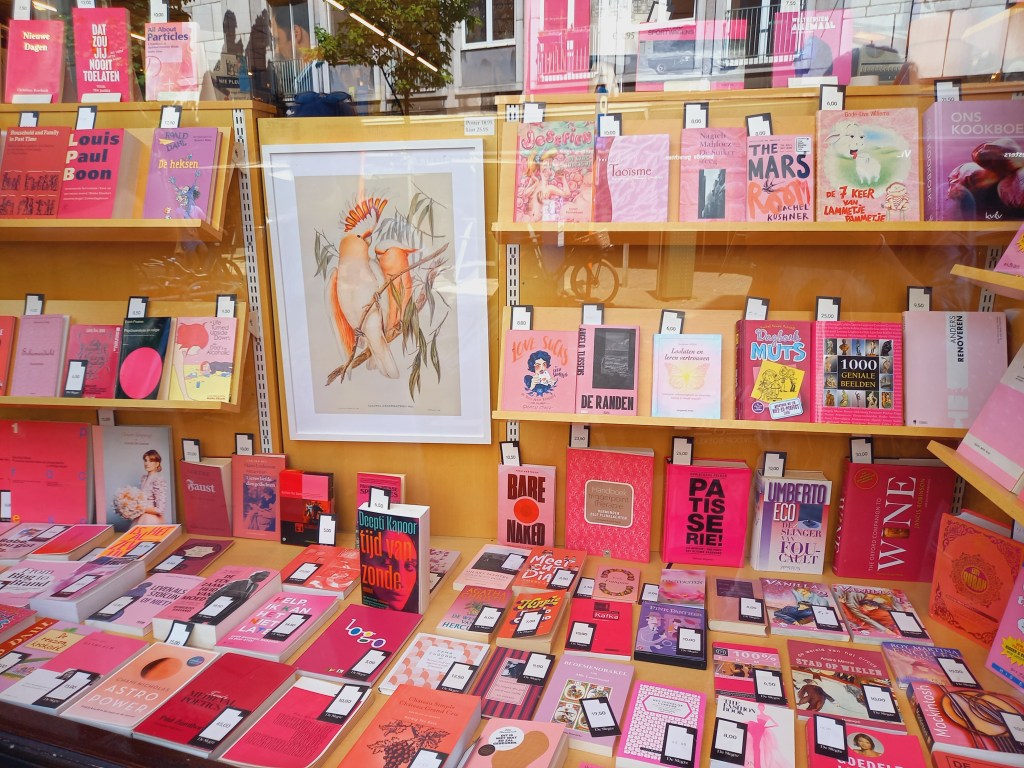
Recently, I had a short reunion with the friend I met 35 years ago during a holiday to China. Our reunion last year was in Ghent, Belgium. I was very pleased to discover a branch of De Slegte, second-hand bookshop, in the same street as our hotel. I’d come by train with a rucksack: spending was modest.


I lent Eleven Kinds of Loneliness by Richard Yates to my friend, so she had reading material for her journey back to the UK. I am a keen reader of short stories, glad to have the paperback returned to me. I enjoyed these: the mundane sadness of domestic life.


As the blurb says: ‘a haunting mosaic of the 1950s, the era when the American dream was finally coming true – and just beginning to ring a little hollow.’ Yes, it’s bleak, like Raymond Carver without the humour. Yates had a difficult childhood and suffered from TB which must have coloured his view of life.


Yates is probably best known for his first novel Revolutionary Road. It was published in 1961 and an instant success. The 2008 film with Kate Winslet and Leonardo DiCaprio was true to the book.

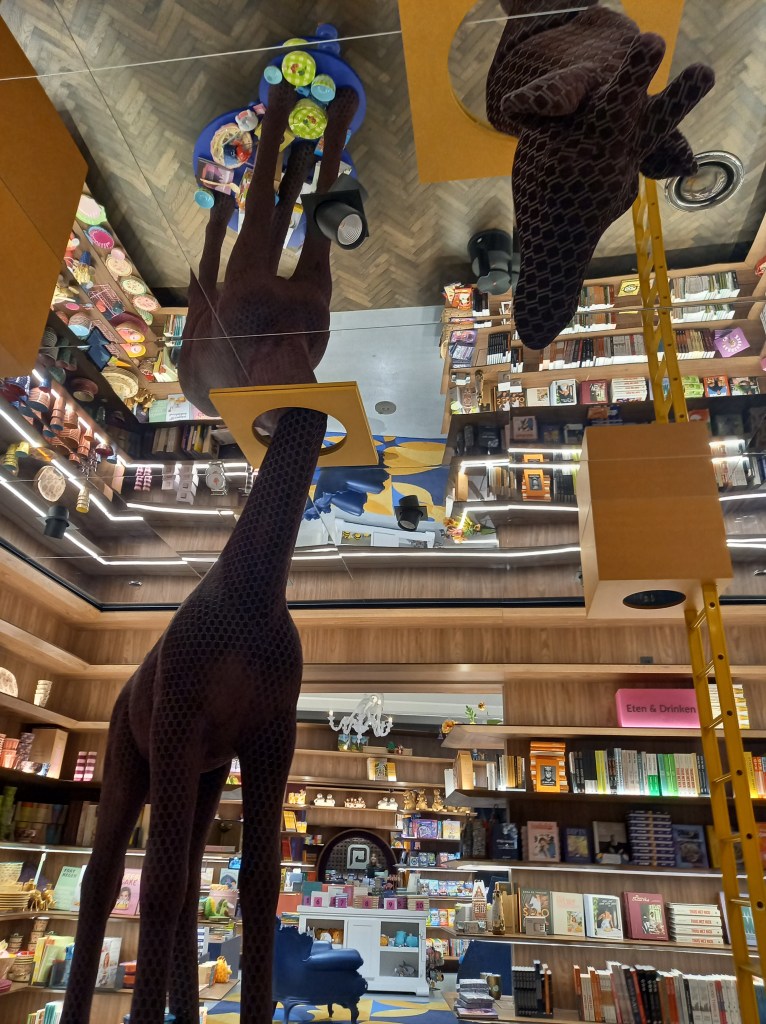
Bookshop De Slegte, Ghent, Belgium

Mary Ruefle’s My Private Property (2016) includes 11 short pieces about Sadness which are spread throughout the book. Here is an extract from Granta’s website:
‘Red sadness never appears sad . . . it appears in flashes of passion, anger, fear, inspiration and courage, in dark unsellable visions; it is an upside-down penny concealed beneath a tea cosy.’


Writing prompt


Go with loneliness or sadness if it appeals. Or choose another emotion/feeling you would like or not like to write about. Choose a few colours which you like and a few you don’t. What comes out of the melting pot? In her prose poems, Ruefle mixes the descriptions of concrete objects with some abstraction, and off-beat imagery: Grey sadness is the sadness of paper clips and rubber bands, of rain and squirrels and chewing gum,….

Yellow sadness is the surprise sadness. It {….} is the confusing sadness of the never-ending and the evanescent…

Exit Strategy

It’s my pleasure to introduce this month’s guest poet Patrick Wright. Patrick and I met years ago at Manchester Poets. Earlier this month his poem Archive, inspired by Anselm Kiefer, featured on the blog. You’ll find Patrick’s biography at the end of the post.

Today I’m sharing more poems from his substantial collection Exit Strategy, a ‘vivid exploration of grief and loss’. Tamar Yoseloff said of the collection: ‘Patrick Wright is one of those rare poets who can translate the complex images of visual artists into precise and pitch-perfect language.’

Patrick has been inspired by artists past and present (Rousseau, Klee, Rachel Whitehead, J M W Turner), to mention some well-known names.

The collection uses a wide range of forms (couplets, tercets, stanza, sonnet, ghazal, prose poem) and makes excellent use of white space through columns and indents. WordPress can’t do justice to formatting. Therefore, I’ve chosen poems with a more traditional lay-out.

COLD DARK MATTER

After Cornelia Parker

Thanks to you I am learning to see again
through a sparseness of particles—

like how I learned to listen to an eyelid
twitch once yes and twice no through a coma.

Darkness I’ve come to realise is a privilege—
known at 4am & sleepless

the sun rising like a scalpel
& turning the room purple.

Somehow, we go on & somehow it never ends
& we go on like a double pendulum.

Perhaps love is like this fixed explosion.
Perhaps you’re nearer now than the word belief.

SHADOW OF A GIRL PLAYING WITH A HULA HOOP
After Giorgio de Chirico

It used to scare me, what this girl is doing,
or those around her, off in the blind field.
Seemingly a girl playing with a hula hoop,
or just a shadow, no source, just a shadow
next to a wagon, its backdrop here a dusty
plaza. Somewhere, I feel, from an upstairs
room, an eye looks at me. Somewhere, off
screen, a murder is taking place, this shade
a clue. Even so, things are too belated now,
this girl clearly a phantom and not a muse,
like she’s in a toy shop or inside its puzzle,
no girl playing so nonchalant with a hoop.
The sun, at these times, is no longer a sun,
more likely a lamp. My fingers are syllables.
And this pine table where the postcard sits
is full of knots, staring like gods from above.

ROBERT RAUSCHENBERG’S UNTITLED

& already I see alpines
prise their way through the brutalist grey
of Chernobyl floors. Through the sarcophagus
they reach for sunlight. Maybe we only learn
what the burn of graphite means once blind.
I know you better after knowing disaster.

I’ve studied the colour theories
of Goethe and Albers where the wheel
& the wheel of life are a way to feel closer.
I am the stalk through the fallout, one that insists
on pushing its way & one that’s been patient.
On the surface we share the mark of detonation.

They say a town like this is void
though one pulse of a deer’s heart
makes it a plenum. A full spectrum will reveal
itself only when you’ve pledged to cease
hurting. Through this I see what you saw
when the sun set & made shades on a radiator.
We are both on the side of art.

WINTER LANDSCAPE WITH SKATERS AND BIRD TRAP
After Pieter Bruegel the Elder


I find no pleasure in the ice.
Everything about me lies still—save for murmurations.

Peasants weave between trees: each crystalline
like coral on a seabed.

I give you a winter landscape in place of a mirror.
The bird trap is my heart.

Soon it will be still, a skull in a crypt, lit by candles.
My hills are a wishbone. They undulate under great tension.

The skaters are insouciant, crows peck their shadows.
My face startles—a chance alignment of stars.

Skaters are on slippery ground
and if they should slip, they have nothing to cling onto.

Biography


Patrick Wright’s poems have appeared in Poetry Ireland, Poetry Wales, The North, Gutter, and The London Magazine. His debut collection, Full Sight of Her, was published in 2020 by Eyewear and nominated for the John Pollard Prize. His pamphlet, Nullaby (2017), was also published by Eyewear. His second collection, Exit Strategy (2025), was published by Broken Sleep Books. He teaches English and Creative Writing at the Open University.

After the Rites and Sandwiches

It is a privilege and a great pleasure to share three poems by Kathy Pimlott from her third pamphlet with The Emma Press, published this month. It is ‘an honest, lyrical and nuanced journey through the complexity of bereavement’. The poem What I do with you now you’re dead was longlisted for the National Poetry Competition 2023. Further down you’ll find Kathy’s biography and links to her website.

Death Admin I

Your demise constitutes a third off council tax;
the removal of a vote you seldom cast and then
only to be contrary; write-off of a modest overdraft;
the bill for an overpaid pension. Tell Us Once promises
it will be a doddle. It is not. I repeat time and again
in spoken and in written words to the indifferent
or distracted, He has died. What do I need to do?

What I do with you now you’re dead

The Queen is dead too and on her way to a proper tomb.
Everything’s shut and there’s nothing on tv, but the sun
comes out so I go to the mimosa tree where, months ago,
I dumped, in a laughing panic, dumped, about a quarter
of your ashes and ran away, the illicit thrill exactly what
you would have wanted. Today, with a flask, shortbread,

I’ve come because, while I don’t love the Queen, it seems
like a fitting thing to do. This royal park is empty, quiet,
allowing me to cry all through its splendid long borders
with their harmonious purple and blue planting until,
on a near-enough bench, I sit. By my feet, Lamb’s Ears
offer silky comfort, as does the pile of pistachio shells,

little coracles, showing someone sat here eating a bagful.
You kept your shells in the pockets of your gardening coat
which I emptied out before taking it to the charity shop
with your best shoes. The mimosa’s not out of course
but its ferny leaves show promise of the glory to come.
A robin perches closer than he should, inspects me,

then accepts a crumb or two. Your ashes have disappeared,
no longer so alarmingly burnt-bone visible, so very there.
They say the old Queen’s coffin is oak, lined with lead.
Three-quarters of you is still in the back of the wardrobe.
A crow chases off my robin. So much peril. It’s enough
to be sitting thumbing Lamb’s Ears, thinking about you.

The Passing Visit

A friend came by from Brussels and we talked of our dead
or rather about what they leave behind, the stuff in storage,

the binding strands. I told him more than I’d told most,
of how (and I said, then rejected, the word tumultuous),

how textured our long, long marriage had been and by textured
I meant bumpy, dropped stitches, amateur darning. I told him

how often you fell in and out of love and how I left and returned
more than once. Perhaps because I didn’t care enough, I said.

And perhaps I didn’t. There was something he wasn’t telling me
but the sun was out and we walked the courtyards and backways

of the neighbourhood, crossed the bridge, watching the sky whiten
and the coloured lamps in the trees come on. We spoke of cities,

their pleasures. The comfort I find in the river. How Brussels’ Senne
is covered over, subterranean. Of moving along and clearing out.

Biography

Kathy Pimlott has two previous pamphlets with The Emma Press: Goose Fair Night (2016) and Elastic Glue (2019). Her debut full collection, the small manoeuvres, was published by Verve Poetry Press (2022). Her work is widely published in magazines and anthologies, and she has been longlisted, placed and has won several poetry prizes.

Kathy’s website

The Friday Poem

The unread book

Earlier this year, a group of artists in The Netherlands set up the Ongelezen Boeken Club (Unread Books Club). It is a sad fact that many library books are never borrowed. Currently, there is an exhibition in a public library in Amsterdam featuring some of their unread books.

Upstairs, around 200.000 books are on loan. If a book is not taken out during a period of two to three years, it moves onto the ‘null list’ and disappears downstairs. Here a good 400.000 books are stored along 24 km of shelving. At the exhibition, there is an old-fashioned telephone on which visitors can ring and reserve one of the unread books on the ‘nul lijst’.

The artists have declared Thursday 19 September as the first Nationale Ongelezen Boekendag (National Unread Books Day).

There is the concept of the anti-library: a collection of unread books as a research tool, as an ode to everything one wants to explore. Related to that is Tsundoku, acquiring reading materials and letting them pile up. Many poets I know feel somewhat guilty about new poetry books piling up.

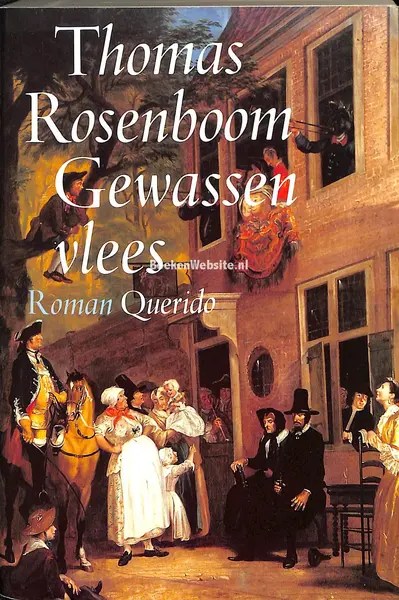
This is the cover of a historical novel, Gewassen Vlees, by Thomas Rosenboom. It won the dutch Libris prize (worth 50,000 Euros) in 1995. It’s over 700 pages long. I am never going to read it. A friend gave it to me. He died in 2000 and that’s the reason it’s still taking up shelf space.

Too Much Mirch

It’s an enormous pleasure to introduce our guest poet. Safia and I met on a Poetry Business workshop a few years ago.

Safia Khan is a newly qualified doctor and poet. Her debut pamphlet (Too Much Mirch, Smith | Doorstop) won the 2021 New Poet’s Prize. Safia’s full biography can be found below her stunning poems.

Dave

Let’s discharge him today.
We’re wasting a bed keeping him here,
I know a lost cause when I see one.

No need to biopsy, it’s clearly end-stage.
Sadly, not much we can do at this point,
best to discharge him today.

He’s asked, but don’t bother with a referral
to Addiction Services – he won’t engage.
Trust me, I know a lost cause when I see one.

Before you book his cab, tell him he needs
to break the cycle. Record it, otherwise
we can’t discharge him today.

His notes say no fixed abode. He mentioned
a daughter. I doubt she’ll take him in this state,
that’s a lost cause if I’ve ever seen one.

Social services have called twice now.
The daughter asked why she wasn’t contacted.
I said they told me to discharge him,
they knew a lost cause when they saw one.

On Placement

I donned mask, visor, and apron,
washed my hands the right way,

correctly identified an osteophyte
at the acromioclavicular joint,

imagined the right diagnosis,
asserted the wrong ones,

was humbled like pines after avalanche,
inspected behind the curtain,

tried not to register relief
when hers looked like mine,

translated incorrectly, blamed my parents
for speaking English in the house.

I donned mask, visor, and apron,
washed my hands the right way,


noted an antibiotic prescription
for a young wife’s sudden death,

and a son’s hanging decades later,
ate fish and chips during a discussion


on seven-year old M, presenting with
pain down there (by his cousin),

taken into care after being removed
for witnessing Mum’s self-immolation.

After, I wiped
the mushy peas from my mouth.

I donned mask, visor, and apron,
washed my hands the right way,

vaccinated death in a red dressing gown,
touched its eggshell, auscultated its yolk.

I have heard ghosts blooming like spring mist
through my stethoscope.

River
(After Selima Hill
)

Other people’s mothers
shout at them in public,
I cry in the car on the way
back from dinner.
Other people’s mothers
don’t cremate their
daughters with a look.
My mother opens
like the seed of a tree.

I am sorry, she says.
You are right. But
other people’s mothers
had the chance
to be daughters.
Other people’s mothers
were softened by rivers.
I had to be bedrock
all my life.

I am sorry
you can feel silt
in my love,
but know you are
water to me.
Wherever you run
I’ll run under you,
holding the current
like no one else can.

But where are you really from?

Clay. A shapeshifting clot of blood. A kernel inside the first shell-
breath of God. Primordial soup, reduced to its atoms after being
brought to boil. The same place as the stars and birds, where
everything that ever existed was wrapped in tin foil and microwaved
into being. An iron ballerina, pirouetting round the Sun and sweating
out the Oceans. Mountains formed in an ice tray mould. A patch of
grass that drifted from elsewhere. A patch of grass still drifting. Like a
refugee with amnesia, I cannot recall home, though once in a while, I
catch its fragrance on the wind.


Biography:

Safia Khan is a newly qualified doctor and poet. Her debut pamphlet (Too Much Mirch, Smith | Doorstop) won the 2021 New Poet’s Prize. Her work has been published in various journals and anthologies including The North, BATH MAGG, Poetry Wales, Introduction X: The Poetry Business Book of New Poets (New Poets List), We’re All in It Together: Poems for a disUnited Kingdom (Grist), Dear Life (Hive), Surfing the Twilight (Hive).

She has been commissioned to write poetry for the University of Huddersfield and The British Library. Safia has performed her work widely, including as a headliner for Off The Shelf Festival. She has delivered poetry workshops for The Poetry Business, and seminars for the University of Oxford on the role of poetry as patient advocacy. Safia has been invited to deliver a creative writing teaching series with Nottingham Trent University’s WRAP Program, as their featured writer for 2023. 


refugee with amnesia, I cannot recall home, though once in a while, I
catch its fragrance on the wind.

FEET – poems


One of the most enjoyable things I did recently was read the manuscript of FEET. Elsa Fischer had asked if I would write a ‘blurb’ for her collection coming out a few weeks from now. Elsa’s poems from her two pamphlets (Palmistry in Karachi, Hourglass) have featured here in May 2020.


erbacce press in Liverpool run an annual poetry competition. In 2012 I was a runner-up and had 12 poems in the quarterly magazine, along with an interview. There were around 6,000 other entries. This year over 15,000 poets worldwide sent a selection of their work. Elsa’s submission was one of three to achieve publication.


Elsa was a young child in The Netherlands during WW2 and her collection includes some poems about that experience. Here is Hunger Winter about the winter 1944/45, followed by the poem Remembrance Sunday.

Veteranendag, Den Haag


Since 2005, the last Saturday in June has become ‘Veteranendag’, a day to honour the more than 100,000 Dutch veterans. There is a flypast and a parade of over 3,500 serving soldiers, several forces’ orchestras, old and new equipment. On the Malieveld, the large green area near The Hague central station, are marquees and vehicles. A good PR opportunity: the army, navy and air force all need recruits …

Hunger winter


To blunt the pangs of hunger
my mother would copy recipes.
In her wartime diary, between salmon
mousse and boeuf bourguignon I find
the birthdays of uncles and aunts,
lists of friends, their ‘phone numbers
in four digits. Crossed out the names
of those who perished. Lines of French
poetry: how dawn had chased the night
the poet would have wanted to last longer.
A list of socks, hats, underwear and who
she knitted for. A monthly record of her
bleeding. Exclamation marks around my
name on a page in September.

Remembrance Sunday


One hundred years old.
And two months, he adds
and in my regiment
the last man standing.
Holding a globe
he points at El Alamein.
That was a good one, he says.
Grins.

Gratitude and Forgiveness … writing prompt

Happy New Year to you all.

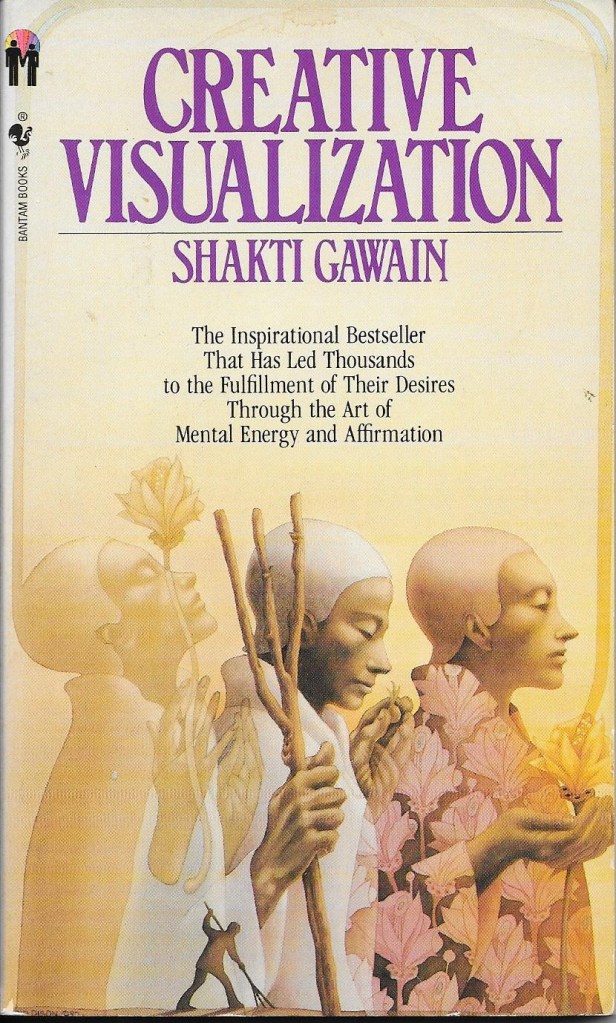
Twice a year, early July, on or close to my birthday, and on New Year’s Eve, I sit down and write a gratitude list. Being alive and kicking: always the first item. It’s a practice I got from the classic Creative Visualization by Shakti Gawain. I have the 1982 Bantam edition, with that special yellowing-pages smell.

The Dutch couple below made the paper. Most days they put a gratitude note in a glass jar. On NYE with a glass of wine and music in the background, they take items out and read them to each other. Of course, it’s often the small things: the colleague who did your work when you were ill, a kind note from someone when you needed it, a hug, waking up with a body that’s just doing its job, a walk in the forest. Ah yes, that was a special moment they say to each other.

Two more things I am grateful for are the acceptance by Broken Sleep Books of the manuscript Remembering / Disease. Here are the names of other poets and writers with a book out with BSB this year.

Matthew Stewart publishes an annual list of Best UK Poetry Blogs on his site Rogue Strands. I was chuffed that this blog is one of five ‘top notch newcomers’. You can read the full list here. Matthew lives between Extremadura, Spain and West Sussex. His collection, The Knives of Villalejo, is published with Eyewear and a recent Poetry News Book of the Year selection.

Here are two short prompts. In the current issue (27) of the online poetry magazine Allegro, editor Sally Long, the opening stanza of the poem by John Grey caught my eye. For Gratitude I’ve chosen the opening stanza of Joy Harjo’s poem Perhaps the World Ends Here.

Forgiveness

The woman with the forgiveness
is out there in the world somewhere.

Gratitude

The world begins at a kitchen table. No matter what, we must eat to live.

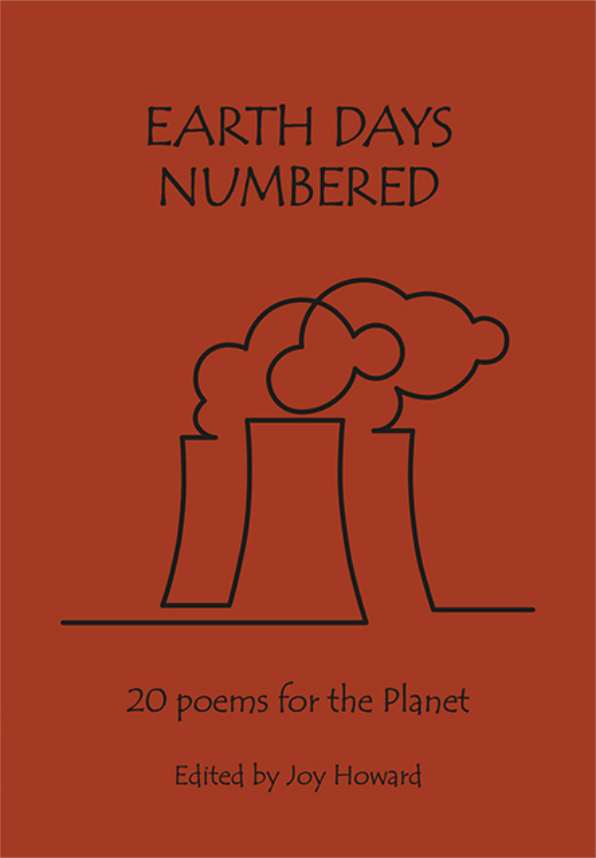
Earth Days Numbered – new anthology

I am very pleased to have a poem in this pamphlet which, along with its companion Counting Down the Days, has just been published by Grey Hen Press. Joy Howard, the editor, has done a great job of producing these two anthologies: allowing older women poets to show their support for the younger generation.

All proceeds from the sales of the two books will go to supporting the work of the UK Youth Climate Coalition. Below is my poem to give you a taster.

Paternoster

Some survivors live on the edge in cars,
dented, rusted ridges, blown tyres,
a towel drying on the steering wheel.
Much of life now is waiting and standing in line,
but Paternoster tells us it was often so in the Old Life.

Strong men searched among the rubble,
found saucepans, leather boots, shoulder bags.
Once a black wooden box called Schimmel
which Paternoster says means white horse.
Papaver grows inside that piano now.

Horses stand by the narrow river, kick sand.
One brown mare is with foal.
Our Friesian cows give us white gold most days.
We are waiting for rain, for a sign.
Men play a game of stone, paper, scissors.

I stroke the flute I made from bone.
I must be careful not to dream.
We trained the rats to smell landmines.
Paternoster remembers grapefruit,
a bitter yellow ball, the colour of sun.

Olympic Cyclists – a poem

Photo credit: Grace Sail

This month’s poet is Lawrence Sail. We met 20 years ago when he tutored a week-long course at Madingley Hall, part of Cambridge University. We have kept in touch and I was delighted with his endorsement of my second collection Nothing serious nothing dangerous.

Lawrence Sail has written thirteen books of poems; Waking Dreams: New & Selected Poems (Bloodaxe Books, 2010) was a Poetry Book Society Special Commendation. His publications include the anthology First and Always: Poems for Great Ormond Street Children’s Hospital (Faber, 1988), and two books of essays, Cross-Currents (Enitharmon, 2005) and The Key to Clover (Shoestring Press, 2013). He has written two memoirs, both published by Impress Books: Sift (2010) and Accidentals, the latter illustrated by his daughter, Erica Sail, and published in December 2020.

He was chairman of the Arvon Foundation from 1991 to 1994, has directed the Cheltenham Festival of Literature and was on the management committee of the Society of Authors from 2007 to 2011. He was awarded a Hawthornden Fellowship in 1992, and an Arts Council Writer’s Bursary the following year. In 2004 he received a Cholmondeley Award for his poetry. He is a Fellow of the Royal Society of Literature.

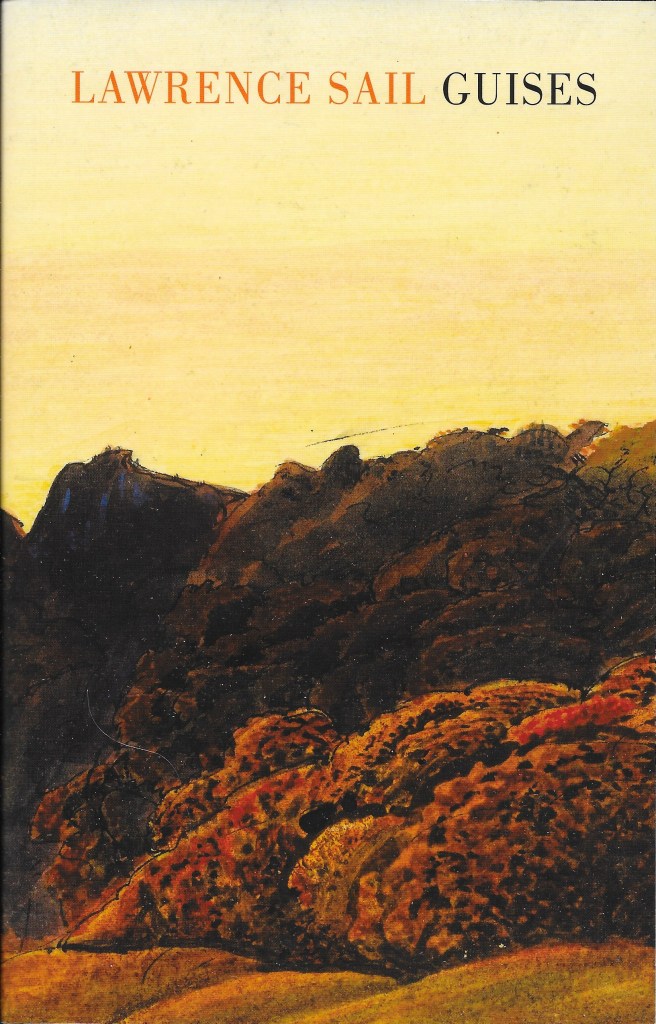
I’ve selected four poems from Guises, Lawrence’s most recent collection, published by Bloodaxe Books in early 2020. They show his close observation skills, precision of imagery, interest in art and in life – what is and what was lost. Understatement is used to great effect in Journey.

Cover painting: detail of Yellow Twilight
by Samuel Palmer

Radishes
‘What do I know of man’s destiny? I could tell you more about radishes.’ Samuel Beckett

Bunched tightly –
no sign of
the flowers with
their four petals

At one end, weak
and tatty leaves
that soon wilt,
ill with yellow

At the other
a wisp of root,
vestigial tail
thinly curling

Their cylinders, white
and carmine, harbour
a residue
of soil’s sourness

Their gifts? Crispness and
surprise – from
their pure white core
they bite back: like destiny

Olympic Cyclists

Start at the nape
with the helmet that tapers so finely
and looks designed
for a new occipital shape –
it must come straight out of
a dream played
on an oval board, under lights

Everything comes second
to aero-dynamics, kinetics –
it is not always easy
to tell where the cycle ends
and the rider begins. They become
one curve among
many, parts of one thought

– which bends their spines,
stares from the rounds of the goggles,
pumps the pedals,
blurs the black wheels’ outlines;
which has them swoop flightily
down the banked track
sudden as a hawk stooping

Such oneness, wholly
integrated – as in
the fado singer’s
tremble of husky melancholy,
or the grounded delight of lovers
before they reel
out of the charmed circle

Giacometti’s Cat

Its head to body to tail
is one long, mean
horizontal hoisted
on the spindly twin trestles
of its best feet forward

A nerve-bundle fused in bronze
it lives apart, locked
in a trance of stealth
as it probes the air ahead
taking nothing for granted

Journey

I am travelling to meet you again –
through morning air burnt
to a clarity you would admire

And of course my mind has stored
a certain amount of baggage
accrued in the course of time

It includes a small rucksack
you once wore, and the sweep
of your arm, stressing a point

As well as the passion with which
you embark on serious discussion
with, sometimes, an emphatic blink

Yet almost as vivid is the thought
of the platform as it will look
after the train has gone

The shine of the rails snaking
away, a soft breeze, the atmosphere
intent but free of intention

On the far side of you waits
an absence charged and changed
that I do not want to re-settle

Lying in bed with my life – poem

Credit: Myriams Photos via PIxabay

Can’t you sleep either? After a dark year,
many old friends gone, I thought I heard you sing
outside the window
inches from my ear. Who are you singing for
this time of night? Did I dream you?

This is the first stanza of Ruth Padel’s poem Night Singing in a Time of Plague. You can read the full poem on the Poetry Society’s site here. It is a response to John Keats’ poem Ode to a Nightingale. The poem was commissioned as part of the Keats200 bicentenary – a celebration of Keats’ life, works and legacy.

We are close to the first anniversary of the pandemic. The borders of the Netherlands remain closed to visitors from the UK. I have been sleeping less well for weeks now. Here is Kathleen Kummer’s poem, also about the difficulty of finding sleep.

Lying in bed with my life

I am lying in bed with my life.
It is one of those sleepless night when I chafe
at its bulk alongside me. It will fill the hours
with my clan of northerners and sundry others.
I shall speak for them all, the living and the dead.

I know the words, which I’m good at repressing
when they were my own and unkind. I shout Cut
if the scene is unbearable, switch on the lamp
to get rid of it, a shame, as I might still have seen
my mother’s harebell-blue eyes and the family
wearing each other’s hats at a picnic.

The curtain at last turns grey and grainy,
and my life rolls up fast with a click inside me.
I’m reminded of that when my daughter says
I don’t suppose you’ve got a decent tape-measure?