I’ve just renewed my annual Museum pass. With a typical entry fee of 15 Euros, it’s well worth it: over 400 Dutch museums take part. There is usually a top-up fee for major exhibitions. I wrote the prose poem on a recent workshop.
Exhibitions
You can’t just wake up and decide to visit an exhibition. Not a major show. You must book a ticket online beforehand and choose a time slot. I managed to get one, Saturday lunchtime, for the Manhattan Masters. Rembrandt, aged 52, poster boy.
I was way too early (I’d gone with Astrid to collect her prize from the Xmas competition and have our photo taken) so I ended up buying books in all three bookshops near the Mauritshuis. Manhattan Masters, ten paintings over from New York while the Frick is being refurbished. The Fricks went to Europe to buy, do the grand tour. They were booked to travel back on the Titanic. She sprained her ankle and they postponed.
I won’t even tell you about the Vermeer at the Rijksmuseum, the coloured lines on the floor, everyone taking photos, the horse-tooth woman who needed to be in the photo with the painting. I gave up after 30 minutes. I think it’s well-known that the exhibitions of prehistoric art take place in replica caves with fake bones and spotlights on those red hand prints and bison on the walls. I’ll give it a miss. I’ll order the catalogue and a pack of six postcards from the museum shop online.
It’s a great pleasure to introduce my guest poet Judith Wilkinson. Judith and I are both members of the Groningen Stanza. It had been meeting through Zoom for over a year, and in March I went up to meet her and the other members in person.
Judith Wilkinson is a British poet and award-winning translator, living in Groningen, the Netherlands. She has published three collections of her own poetry with Shoestring Press: Tightrope Dancer (2010), Canyon Journey (2016) and In Desert (2021). Some of the poems in Tightrope Dancer have been performed by the London dance-theatre company The Kosh.
Wilkinson is also a translator of Dutch and Flemish poetry, including Toon Tellegen’s Raptors (Carcanet Press 2011), which was awarded the Popescu Prize for European poetry in translation. Other awards include the Brockway Prize and the David Reid Translation Prize.
The poems in this selection are from In Desert, which explores various desert experiences, solitary journeys in which people are thrown back on their own resources. ‘The Risks You Take’ and ‘The Tuareg’s Journey’ form part of a longer sequence inspired by a Dutch expedition through the Sahara.
IMAGINING GEORGIA O’KEEFFE AT HER GHOST RANCH
‘My pleasant disposition likes the world with nobody in it.’ (Georgia O’Keeffe)
I will never tire of the desert, its severe hillsides, punctuated with mesquite, its unsentimental trees, shrouded in dust.
Now that he has left me for another, a few owls and a mourning dove are all that splinter the silence spreading before me like a horizon.
I don’t need more mourning, I want to walk across the bristly desert floor that the ocean turned into, arrange some black stones in my yard into a cordate shape I’ll call My Heart.
I was shipwrecked here a few times in my life and found restoration under a pitiless sky. Having let all the waters pour away, the desert unwrapped me, and my flint faith, bound to the Badlands rolling from my door.
I set my easel in plains of cinnabar and flax so I can explore the palette of solitude, capture mandarin-dusted mountains, staggered against sky, cliffs isolated in space, rising from the plateaux in banana and persimmon and cream, undulating mounds striated with celadon and a lavender mist coating the distance.
Every day I scour the ground for fossil seashells, little definite ghost-houses, air-havens I could live in.
I’m free to gather the bleached bones of the desert: deer horn, horse’s pelvis, ram’s skull, splaying them open like butterflies, dipping them in bouquets of wildflowers, suspending them above the ever-looming Pedernal.
This morning I trekked far into the Black Place because I could, because it was difficult, because fear and pain were expecting me.
When I got back I grabbed the ladder by the shed and leaned it against the evening sky. It needed nothing.
THE RISKS YOU TAKE
‘The true contemplative is he who has risked his mind in the desert.’ (Thomas Merton, Letter to Dom Francis Decroix)
Can I extract myself from you? Someone called you a few degrees short of bipolar, always urgent, pouncing on life, difficult not to love.
When depression settles on you, you travel beyond reach, going far out to some rocky, arid place, peopled by spectres and you stay there, stubbornly studying them, letting them haunt you, before coming back to tell the tale that restores you to your life.
There is so much of you, that you crowd out my patch of wilderness, that space where I too risk my mind for the sake of the inexplicable.
After months of turbulence I’m regaining some composure, breathing in what the desert offers – although I’m not sure I want all my prayers to go to the gods of serenity.
Absorbing this swathe of wilderness, I wonder if this is what I want for myself, the wide, wild courage to leave you, your tempests, your risks
THE TUAREG’S JOURNEY
Lost, not lost, in the ténéré, desert of loneliness, where the Kel Essuf spook us till we’re adrift on the empty side of home, as time sifts, dunes lapse.
Without GPS, without coordinates, we measure grass blades, we focus without a compass. With an infinite politeness to the desert we can tell a reliable groove in the sand from a wind-distorted one, extract logic from a shrub, tell the lie of the land by a bloom’s impermanence, take our direction from sun and moon and all the stars constellated in our heads.
We will never find Gewas, the Lost Oasis, we will always find Gewas in the middle of the trackless ténéré.
Lost and not lost, so lost that we’re at home
Note: Kel Essuf: anthropomorphic spirits; Ténéré: Tuareg word for desert, wilderness; Gewas: the Lost Oasis that figures in many Tuareg legends.
Credit: Ondrej Sponiar via Pixabay
THE WHOLE MOSAIC – A DAY IN THE ATACAMA DESERT
‘Why are there archaeologists and astronomers in one place? Because in the Atacama the past is more accessible than elsewhere.’ Patricio Guzmán, Nostalgia for the Light (film documentary)
At the observatory an astronomer scans the sky for treasure: clusters of stars, nebulas, planets, comets like those that watered the earth, or the death throes of a supernova, hatching our atoms. Here the Chilean sky is so translucent he can almost finger the stars, pull them down to eye-height, unravel the energy prizing them apart, as if the story, from start to finish, was his birthright.
In this salt-steeped land an archaeologist studies strata of sand and rock underpinned by meteorites distorting the direction of his compass. Tenacity got him this far, leading him to rock face carved by pre-Columbian shepherds, whose mummified remains he gathers up, tracing each part to its origin. He finds a petrified lake, fish frozen in time, and an ancient trade route from the high plains to the sea, where caravans of llamas once found their way.
Near the ruins of a concentration camp, women sift through the desert, decade after decade, in search of loved ones. Stumbling on Pinochet’s mass graves, they piece together splinters worlds apart, bleached by the calcinating sun. ‘I found a piece of my brother there and spent a morning with his foot, stroking it, though it smelled of decay, hoping to find the whole mosaic that was my brother.’
Nuri Rosegg had seen publicity about my online reading for Writers in the Bath, Sheffield. This led them to my website. Nuri loves the UK and, pre-Brexit, used to visit often. Nuri’s website can be found below her poem. There are also three poems on the Visual Verse website.
Below is Nuri’s poem, inspired by my poem Britain, from the Anthology Welcome to Britain.
BRITAIN
Britain is a fedora hat, opera- And theatre-tried. In this modern era Dramas turn into comedies.
This country is a glass of ginger wine: Tangy wetness without a spine. Alas, the love for self-harm is mega-big.
Britain is a decaying cherry tree Turning its back on the sea. The City, such a cold-hearted cherry pit.
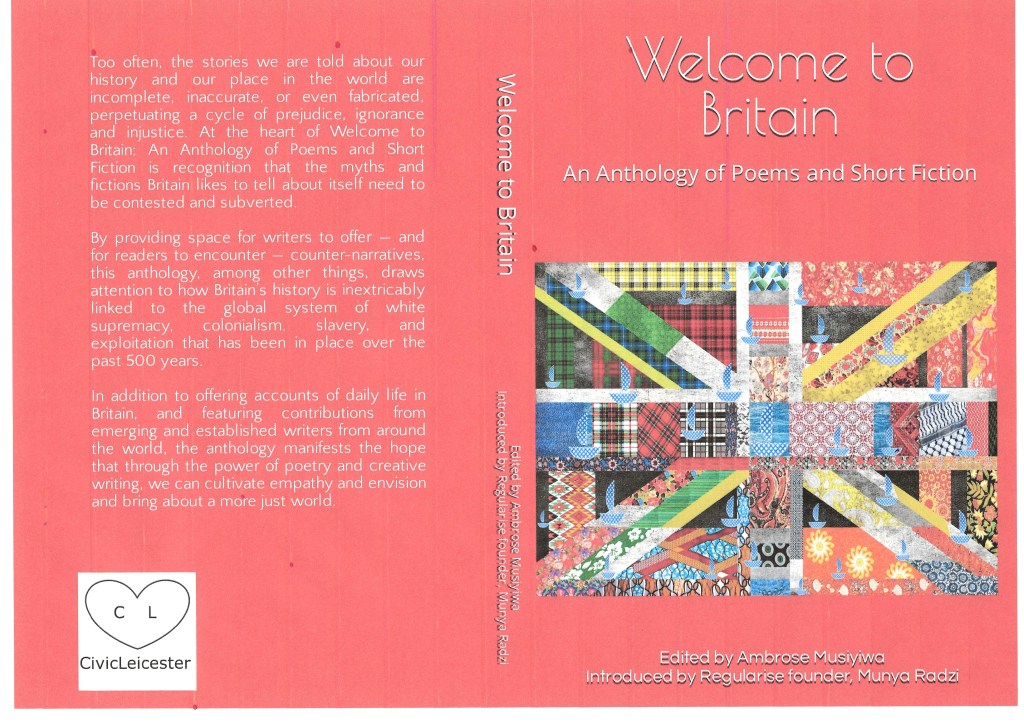
The striking cover of Welcome to Britain: An Anthology of Poems and Short Fiction is Gil Mualem-Doron’s New Union Flag which re-imagines the Union Jack. The anthology manifests the hope that through the power of poetry and creative writing, we can cultivate empathy and envision and bring about a more just world.
Congratulations to the other contributors: emerging and established writers from around the world. Huge thanks to Editor Ambrose Musiyiwa of CivicLeicester. Three of my poems were chosen: Going bananas, an Abecedarian poem about Brexit, In Blighty, a Golden Shovel poem, and Britain which appears below.
Britain
Britain is a homburg hat that will produce a rabbit if you ask nicely.
This country is a parking ticket on a rainy day: bright yellow with small, smudged writing.
Britain is an apple, stolen or fallen from an unkempt tree: not enough to make a wholesome pie.
Contrapasso is the title of the debut collection of Alexandra Fössinger. She is of Italian origin and currently lives in Northern Germany. She writes mostly in English. Many of the poems included have been previously published in the UK and elsewhere, in magazines such as Tears in the Fence, The High Window, The Journal. The cover design – a black bird against a stark white background – is by Daniel Lambert, Art Director of Cephalopress, established in 2018, providing ‘a voice for the marginalised and the voiceless’.
I do not know the author, though I attended her online reading with Q&A. There she explained the background to the poems: her attempt at survival ‘after the imprisonment in the UK of someone dear to me’. This sudden loss may, in part, have coincided with the pandemic and its lockdowns: creating an incarceration for the poet too.
In Dante’s Divine Comedy, contrapasso is the punishment of souls by a process either resembling or contrasting with the sin itself. The collection is in two parts, both preceded by a quotation from Dante’s Inferno. Part 1 covers the period of imprisonment, while poems in Part 2 were written after the person’s release.
Birds for someone who cannot hear is the title of the opening poem and birds appear throughout the collection, as messengers, omens, and symbols: the blackbird frozen in shock, the thrushes in hiding, along with magpies, sparrows, sky larks, great tit, kingfishers, herons, seabirds. The second poem is titled Cell, giving us just the bare numbers: 1, 5, 3, 4, 7, 1, and ending: bad luck has brought and kept you here, and whether you’ll walk out or be carried in a coffin is also entirely a matter of chance.
The poems are the author’s response to the sudden loss, despair, darkness, pain. Wehave no life apart from life apart (Sentence); How can I find dreams of oarweed and eelgrass, / bring currents to glide on, as I must, when half / of my body is entangled / on thewrong side of the sea, / how will I know when time says to dive? (Velut luna).
Fössinger has said that she ‘is mostly interested in the spaces between things, the tiny shifts in time, the overlooked, the unsaid.’ Throughout the collection, we find astute observations and statements: la vita assurda: the middle-aged couple / pushing their dog in a pram. (July); that emptiness is best hidden / by a display of tame beauty. (Ambulant).
The strongest poems are those which describe a specific situation, or which have objects as ‘animate scaffold’. The poem Ambulant is in two parts: I The house with the Christmas decoration, and the magnolia tree in bloom, and the blackbird frozen in shock, and an ambulance parked in the front garden, all stand completely still. People walk by, averting their gaze, a stoop hammered into their skin – How many lives will they have lost before, without ever noticing. The orange light is beating on the windows like rain.
Here is Fössinger’s close attention to the overlooked, effective personification, interesting use of language. Not all the poems are so securely grounded, sometimes abstraction obscures their meaning. Other poems would have benefited from being tighter, shorter. The book is a short collection of 31 poems with quite a few blank pages. Some readers might want ‘more poems’ for their ‘pounds’.
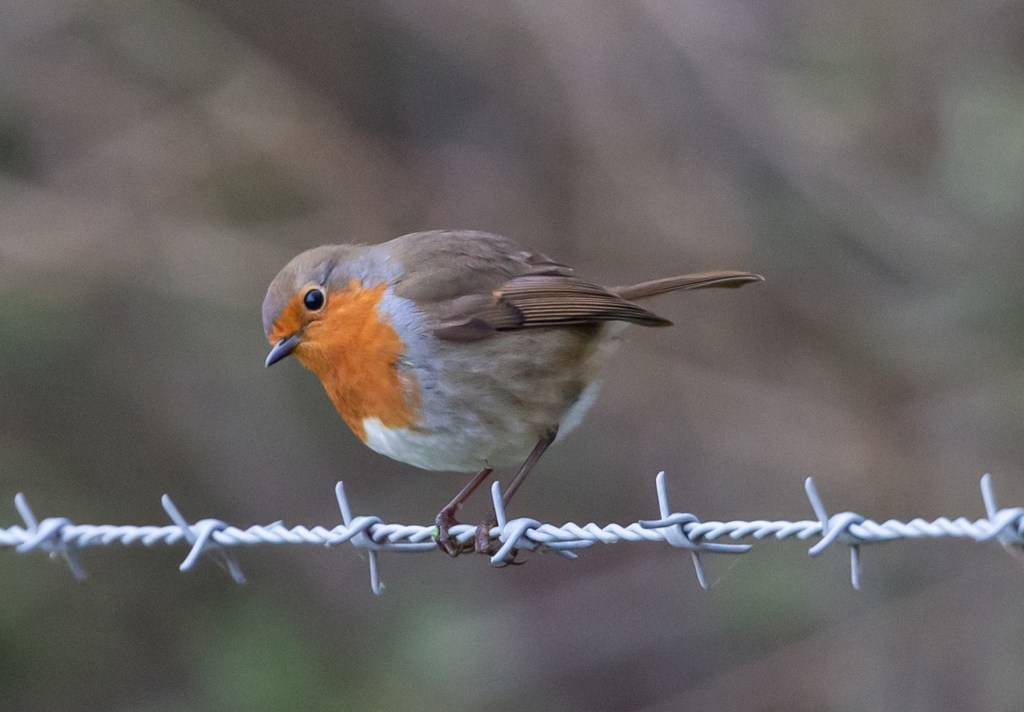
While the poems reflect the poet’s emotional and psychological response to loss and separation, she manages to maintain a careful balance: hope is not abandoned. The recurrent bird theme also provides a framework, an underlying structure. This theme returns in the short closing poem, The robin redbreast. The loved one appears in a dream, as tiny as a bird, and:
Then you grew a beak with which to pick and sing and transport worms and roses.
Contrapasso is a confident and authentic debut by a perceptive, astute poet. Her personal tale finds echoes in the reader’s universal story. However long and painful the journey, there can be closure and transformation.
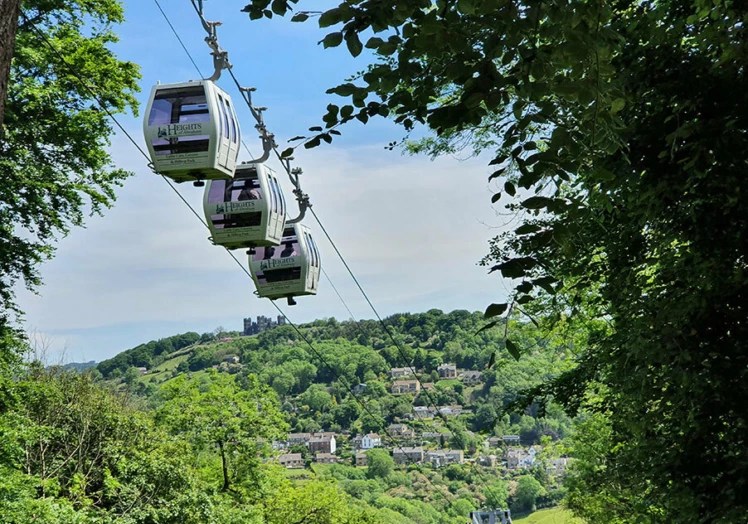
I’ve been sorting and clearing old photos and old poems. It reminded me of trips out into Derbyshire with friends: taking the cable car up to the Heights of Abraham, walking through the historic centre of Buxton. The Buxton Baths date back to Roman times. In the Georgian and Victorian period these were developed. Buxton is the highest market town in England. Easter can be early or late – walking through snow or sitting out in sunshine. Enjoy your Easter, wherever you are.
Buxton Centre
Buxton, 2pm
Here is Buxton Spa, Easter, green hills. Not a credit card between us.
Good intentions: it’s the year of the Pig.
We’ve been to China, lugged back soldiers from Xian, wrapped in towels.
Now they’re resting under the Red Cross.
For our next birthdays, we say, we just want Prosecco, book tokens, no bric-a-brac,
but our hands are restless, our fingers flick through a tray of rings.
This coming Tuesday it’s Valentine’s Day. Here is an early poem that hasn’t featured on the blog before. It was published in the Tees Valley Writer, Autumn 1995, and Highly Commended in their annual competition.
On the beach
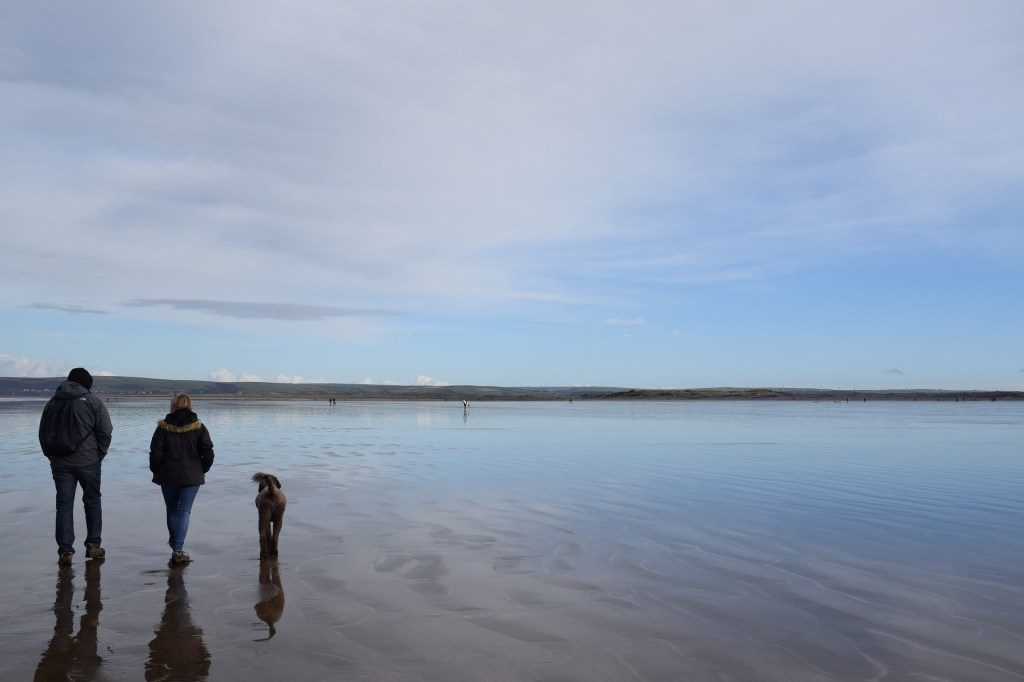
Against the sinking sun gulls ride the waves. Our dogs bark and chase their tails. Try to run with a lone jogger who braves
the east wind whistling. Your son trails in your wake, attempts big steps. Laughter peals: a scene lifted straight from some fairy tale.
Heaped grey boulders mimic a colony of seals. Not long before love winters in my heart. I need to tell you how it feels
to be together, yet growing apart. Your craggy face seems so much older clouded in a bluish hue. I brace myself to start
as you place a hand on my shoulder but all I can say is It’s getting colder.
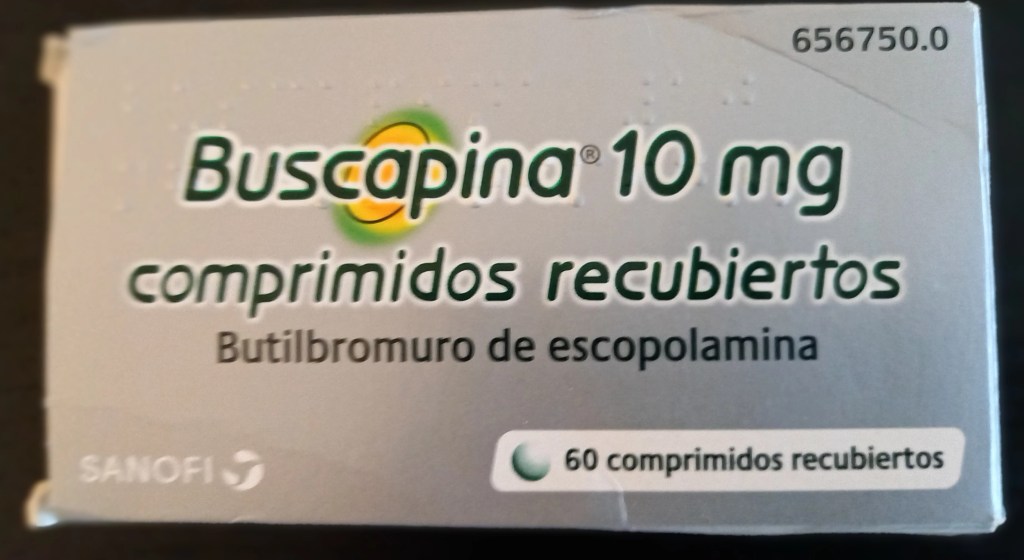
Last Saturday I had to go to the pharmacy in Playa Blanca, Lanzarote to get some over-the-counter medication. It’s an ode of sorts alright…
Normal service will be resumed…
To ‘my’ condition
I salute you: you have staying power. You arrived out of nowhere 28 years ago. How odd you only woke up in Manchester, while you slept through London.
I refuse to call you mine, the two ‘ ’ symbolise handcuffs, shackles. On long journeys (flights, trains) I wear dark trousers, a dark dress.
You have grounded me many times, I’ve been bent over, clutching my bike, scared to go to the shops in case I don’t make it to a loo.
An acronym close to that computer firm. There are dress codes at IBM, I have you know. Irritable? Yes, often. I’ve been pissed off, imagine bowels as a curled-up, snarling cobra.
Syndrome is, I believe, where spectators gather to see retired pilots take off in noisy small planes. Banking is a dangerous manoeuvre.
Storks are said to bring happiness. The bird has been the official emblem of The Hague for centuries. Until the beginning of the last century, storks with clipped wings walked the many fish markets in the city, keeping the streets clean.
I hope this new year will bring health and happiness to you and those you hold dear. The poem is from my new collection Remembering / Disease published last October by Broken Sleep Books. It first appeared in the online magazine Dust, edited by Tara Wheeler.
Storks also feature in my poem High wind. It was selected as one of 20 poems by a jury for the Poetry Archive’s Poetry Archive Now! Wordview 2022. You can see and hear me read it here.
Waiting
The water meadows are waiting for the storks to return
always invisible the other side of her face
in this book there is snow on every page
even an old potato can be turned into a Christmas stamp
the naming of colours is not a science. I vote for bird’s nest grey
My thanks to poet Annie Muir for this seasonal poem from her pamphlet New Year’s Eve. Best wishes for your own New Year’s Eve – wherever you are. See you in 2023.
Enxaneta
In Barcelona it is 38 degrees and a little girl screams with mimicked joy –
she is all eyelashes, all eyes, all teeth and gums and tongue.
I hate her through the eyes of her big sister: half a plastic broken heart tied around my neck,
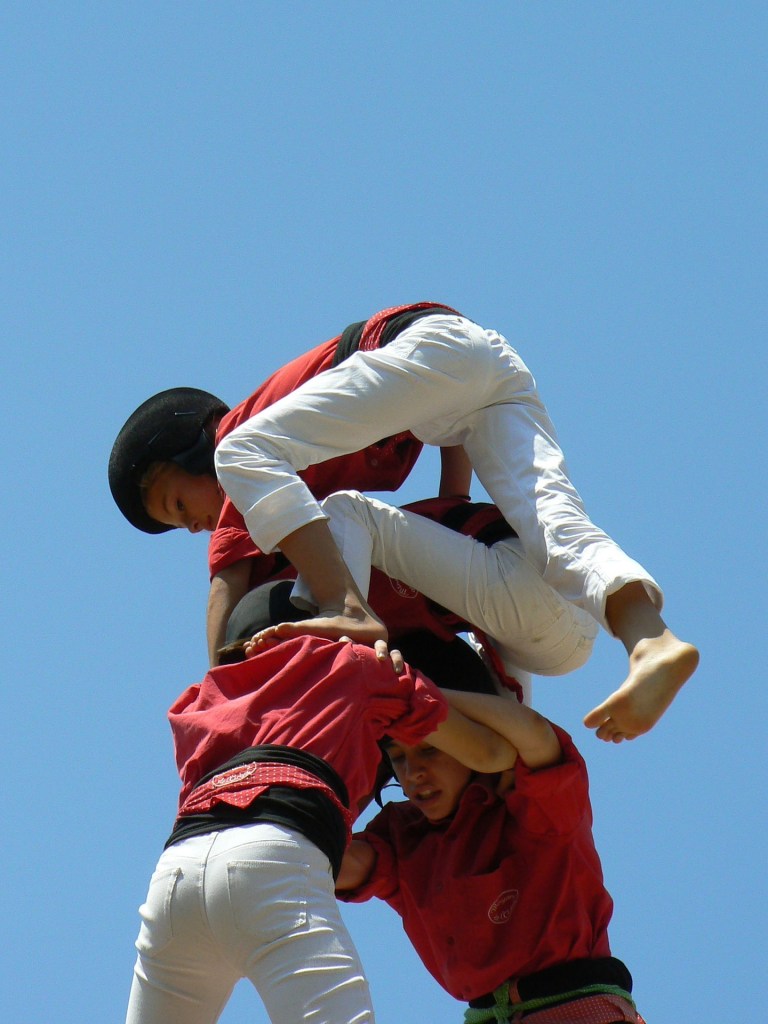
I climb a fence to watch the castellers. They huddle, arms up as if reaching for a throat,
others climb them like stairs, feet clinging to backs like tadpoles on their first legs,
it doesn’t stop, more like ants than people but with muscle and bone and white trousers,
two little girls heading for top, one takes her place below, the other
is no longer a child but the star at the top of a Christmas tree,
her arm pointing up is the man on the moon, a clock striking midnight on New Year’s Eve.
She slides down the legs of her supporters, relieving the mountains of tension from their shoulders.
Biography
Annie Muir lives in Glasgow. Her debut pamphlet New Year’s Eve was published by Broken Sleep Books. Pre-pandemic she handed out poems on the street outside local libraries, and has a podcast – Time for one Poem – aimed at complete beginners to poetry. @time41poem





 Acacia Publications