Tag Archives: mothers

as if thrown by a boy

Here is the second selection of poems by Judy Kendall, our June guest poet. She lived and worked in Japan for almost seven years. Cinnamon Press published four collections of her haiku and ‘mainstream’ poems. You can find her biography below her writing.

Poems:


The First Fountain Ever Placed In A Japanese Garden

for my mother

more than half
is the sound of it
as it splashes on the stone rim

this is the part
the thousands of photographs
will never reach

their takers stop
to make a frieze
and then move on

no chance of hearing
the other half
clapping its moving shadow in the trees

the shudder
when the leaves
follow the foam

which drops, unmoved
as if thrown by a boy
to fall through air

diluting
dissolving
into parts


Note:
The first fountain in a Japanese garden was built in Kenroku en, Kanazawa, in 1861


Driving To Noto

Men are better says Toshi I know
no they are not says I (I also know)
and so we argue to the tip of Noto

To Suzu where the wood huts slump in shock
plopped suddenly in frocks of snow
and the sea is whipped to icicles of frenzy

Over a nabe pot of fish and cabbage
(Toshi warns me not to call it cabbage
for it is the vastly superior hakusai)
our host asks me my age

Taken aback
(I`m older than he thought
more single), he inquires
don’t you like men?

So I assure him
only frequent country-moving
has prevented me from choosing
one of them

The returning road is white, wide as a field
the ditches spread themselves with frosting
and the windscreen blanks out like a blizzard

Toshi scrapes at the iced-up wipers singing
to himself, waving me in

Midwinter hangs in the boughs

The pine trees are bent nearly in two
laden with second helpings

(earlier version published in Ambit)

Short poem, haiku and tanka from The Drier The Brighter (Cinnamon Press, 2007):

Poem:

5 am

these cold skies
cheating the dawn,

these bits of tree,
blocks of houses too close to houses,
shrouded people, shrinking in the weather.

Haiku:

too much autumn
the reds are almost scorching now
a mouth brimming with leaves

tanka:

leaving.

not one stick of furniture
in the room.
in the heart,

no tears.

(previously published in Presence)

Biography:

Judy Kendall worked as an English lecturer at Kanazawa University in Japan for nearly seven years. When she first went to Japan she was a practicing playwright but she soon began to focus on poetry and haiku, kickstarted by an invitation to to participate in a collaborative translation of Miyaiki Eiko’s haiku. This became the bilingual publication Suiko /The Water Jar. Since then she has been writing haiku and haibun along with other poetic and prose forms. The haiku mode has informed her four Cinnamon Press poetry collections, particularly Joy Change – composed while she was in Japan. She has won several poetry awards, recently receiving a 2019 Genjuan International Haibun An Cottage prize, and is the essays and bilingual translations editor for Presence haiku journal. She has also run the Yorkshire/Lancashire haiku group.

She is Reader in English and Creative Writing at Salford University, and aside from haiku and haibun, works as a poet, poetry translator and visual text exponent. She has published several articles and books on the translation and creative process, including ‘Jo Ha Kyu and Fu Bi Xing; Reading|Viewing Haiku’ in Juxtapositions, 1 (2). She is currently putting the finishing touches to a monograph for Edinburgh University Press on Where Language Thickens (focusing on the threshold between articulation and inarticulation in language – a threshold in which haiku itself is surely situated).
Travels with my daughter – poem

It’s a great pleasure to introduce this month’s guest poet Mary Chuck. Mary and I first met on a poetry workshop in Manchester and we have met on such workshops many times since, including a splendid one at the Almassera Vella, Spain.

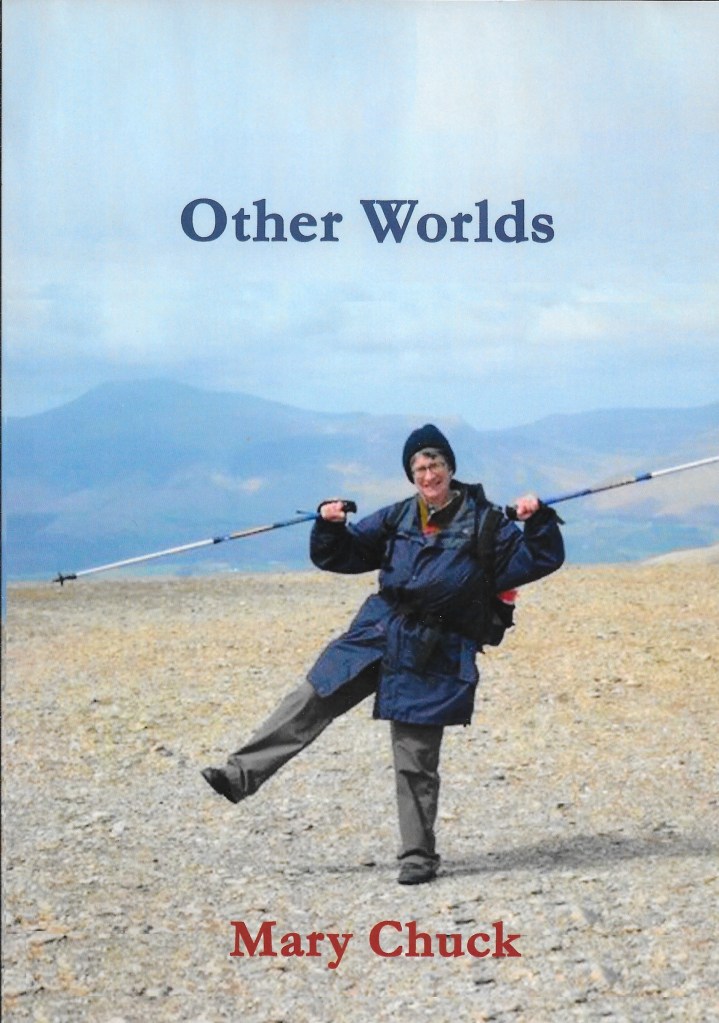
Mary Chuck started writing poetry when she retired after 30 years working in Secondary Schools, starting by teaching chemistry.  While she was working her need to escape and let some-one else do the organising took her on many walking holidays in different parts of the world. She is still an active governor at a local primary school and has just completed twelve years as a Trustee of the Wordsworth Trust. She has been writing poetry with several groups, attending workshops and going on residentials with a variety of poets, but most often with Peter and Ann Sansom at the Poetry Business.

I’ve chosen four poems from Mary’s debut collection Other Worlds (Dempsey & Windle, 2021). Mary will have a belated Zoom launch with two poet friends on Tuesday 23 August. Contact Dempsey & Windle for a link.

Migration

His people came from Russia and Lithuania,
their passports always changing, not because they moved
but because their countries became other countries.

His people were Jews, Ashkenazy Jews.
They came from the East,
driven south and west over centuries
until finally they fled from the Pale.

Long after my grandfather settled in England,
and long before he was naturalised,
he was able, once again, to be Lithuanian.
His mother’s people were White Russians
or maybe they had ten white horses?

My father married out.
Her people were not Jews.

They came from Shropshire,
farmers, and one was a stationmaster.
They were not the chosen people.
Her people were not so interesting.

Jammu-Kashmir

He tells me that his father was Kashmiri
but now he can’t go back and I describe
to him what Srinagar was like
before unrest made it unsafe to go;

I tell him how we only went because
the flight to Leh was cancelled due to clouds,
and how luxurious it was,
staying on house boats on Dal Lake;

how we were shown around the lake and lay
with curtains to protect us from the sun,
on cushions on a wooden boat, a shikara,
and saw the floating gardens there;

tell him how pink the lotus flowers were
and how the Mughal gardens, full of scents
I didn’t recognise, were
different from the spice stalls in the street;

how the couple in one garden, keen to speak
in English, asked me about my life,
how they were sad my family
had not arranged a marriage – then I stopped.

I knew I’d gone on far too long. His eyes
glazed over as he looked beyond me, said
I never knew my dad
I never really wanted to.

Travels with my Daughter

I’m not really sure
when the balance altered,
when I knew for certain
our relationship had changed.

Perhaps somewhere north of Peshawar
after we drove up the Khyber Pass
with an escort carrying a Kalashnikov,
arrogant, in the front seat of the car

and after we bought an alcohol licence
in the hotel, and she flirted
in the swimming pool, with a young man
who claimed he was the brother of Imran Khan

but maybe before the landslide
which closed the road, when she carried
a tiny baby across the rubble, impossible
for its mother wearing a burkha.

We crossed a bridge over a ravine at night,
before the house of the drunken engineer.
She had been talking easily in Urdu to the driver;
we turned and reversed, then advanced

more slowly, about nothing she said
as we jolted across – then on the other side –
He had heard that the bridge was rotten,
but I told him it would be fine.

A well-worn track on Kerridge Ridge

Another glorious Saturday morning
needing to be out, needing to be walking
to be moving rhythmically across the hillside
up to White Nancy, through the kissing gate,
ignoring the brambles, skirting the quarry,
following the well-worn track on the back of Kerridge Ridge
head down muttering to myself long before anyone
might have thought I was phoning
going over and over conversations I have had
or might have had
over and over thinking if only

until, hearing the hint of a cough
I feel warm breath on my face
and lift my head to find myself looking
at a moist, brown, eye
above a large, brass, ring
in the nose of an enormous bull.

I breathe, slowly.
I look around.
It is a glorious Saturday morning.

27 June, the day after her birthday

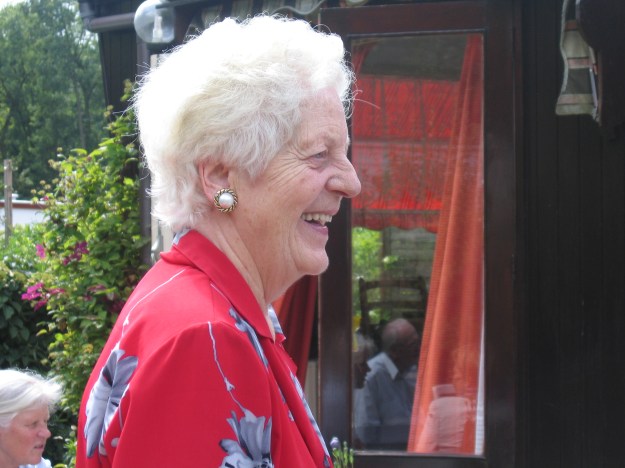
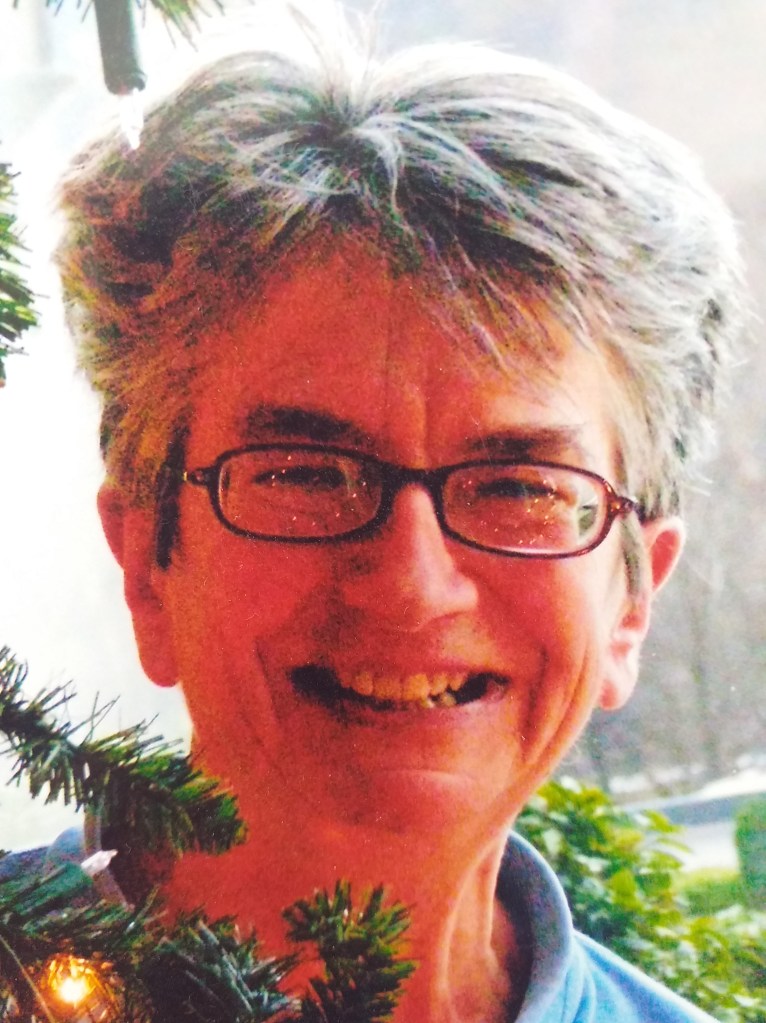
Today would have been my mother’s birthday. The photo was taken at my 60th birthday party which I celebrated in the garden of my friend’s caravan – the one I was to inherit just three years later.

The poem describes a time when my mother was still living independently. As I lived in England, the opportunities to help were limited. I happened to be over in the Netherlands.

27 June, the day after her birthday

I’d left a note on her bedside table
Don’t eat, don’t drink when you wake up.
We walk arm in arm, it’s warm already.
The doctor lives two houses down.
A blue Scandinavian cotton dress,
chunky necklace and earrings to match.
My mother does not look eighty-one.

That blood test done, we sit and face him.
Slightly raised, but no need to worry.
How are you keeping he asks my mother
who smiles, puts on her usual pose, I’m fine,
while I shake my head silently.

She’s leafing through her diary.
It says, Doctor, 8 o’clock.
We’ve been, now it’s time for coffee.
I want to go upstairs to pack.
Before you go, just one question
The matt-green door frame cuts the scene.
I wave, but she frowns at her diary.

Every Day I Promise Myself – poems

It’s a great pleasure introducing this month’s poet: Rachel Davies. We met through poetry workshops in Manchester many years ago.

Rachel Davies has had several jobs including nurse, teacher and head-teacher. She thinks retirement is the best job she’s ever had because it gave her time to pursue her poetry. She is widely published in journals and anthologies and has been a prize-winner in several poetry competitions.

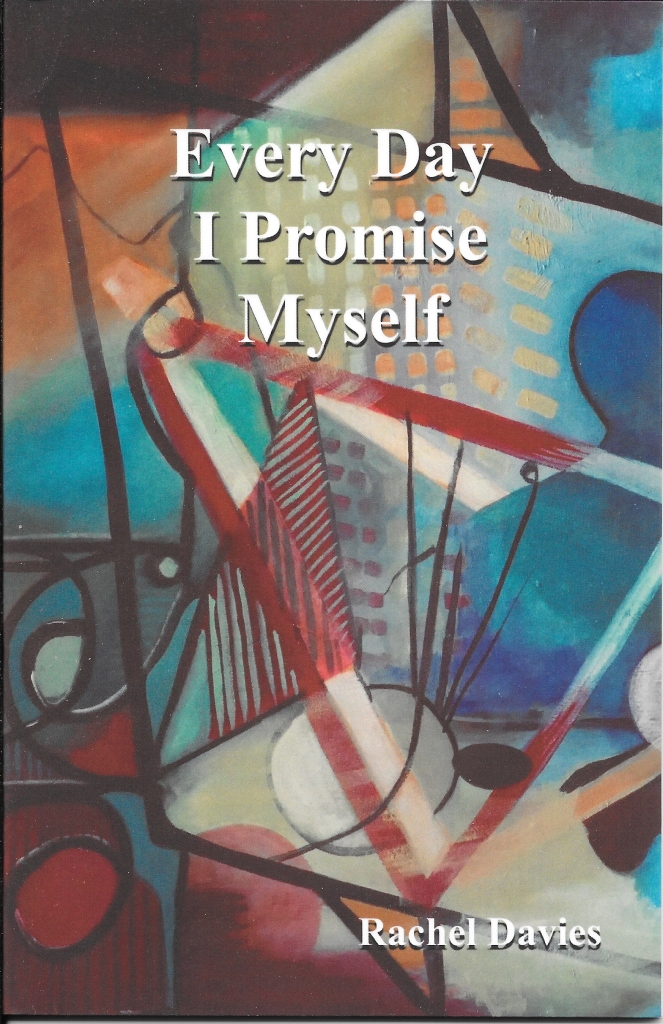
Her debut pamphlet, Every Day I Promise Myself, was published by 4Word Press in December 2020 and she is currently seeking a home for her second pamphlet, Mole. Rachel is co-ordinator of the Poetry Society Stanza for East Manchester and Tameside. She has an MA in Creative Writing and a PhD in contemporary poetry, both from Manchester Metropolitan University. Originally from the Cambridgeshire fens, she now lives in Saddleworth with her partner and two cats.

I hope you enjoy my selection of four poems from the pamphlet.

Alternative Mother #4
Jean

For fun, you push me round the lounge
on the Ewbank till I beg you to stop, teach me
hula hoop, two-ball, how it’s good to laugh.

You soothe my knees with Germolene,
say a hug helps, say it’s alright to cry.
You know the healing power of a biscuit.

You hand-sew my wedding dress,
stitch into a secret seam a blue satin ribbon,
a lock of your own hair, all the love it takes.

You take my daughter out, keep her
for bedtime stories, forget to bring her home
so I worry she’s followed the rabbit down the hole.

You make me dance, even on those days
when the music died in me. You teach me
the euphoria of champagne.

You bake scones so light they float down
to your granddaughters like hot-air balloons.

Alternative Mother #8
Ted

Sometimes dreams can be nightmares.

You wanted most of yourself to be buried, to become
an enrichment of the fenland soil you loved so much,
your heart and lungs to be thrown into Whittlesey Wash
to feed the eels you knitted your nets for.

Oh, you were generous. You gave me some peonies once,
dug up from your garden. You shook the soil off though—
that soil’s worth three thousand pounds an acre you said.
I looked for the smile but there wasn’t one.

One night your skeleton grew out of the earth like a myth.

Breaking the Line

The blood red sky
sheds tears. Fresh milk
curdles. Now I know

my heartbroken father
left the house with
chisel, mallet — after dark

he’s out there hammering
like a minor god. Grief begins
to surface from the cold stone.

To St Ives, a Love Poem
Halloween 2014

Even though November is a black dog sitting at your feet
and your beaches lay crushed under the weight of mist

and your shoreline roars at the passing of summer
and your white horses rise on their hind legs

till your fishing boats get seasick; even though your trees
shed tears like baubles and your shops drip gifts like rain

and your cobbled streets and narrow alleys wind
around me like a clock and your posters announce

Fair Wednesday as if all other days are cheats
and your bistros display fish with eyes wide as heaven,

scared as hell, and your railway bridge yells
do what makes you happy and it feels like a tall order;

even though your choughs are impatient for pilchard
your huers won’t see today from the Baulking House

still you open your arms and kiss my cheeks in welcome.

Item – poem and writing prompt

Photo credit Stux via Pixabay

This week I am featuring another one of Kathleen Kummer’s poem. It’s short and the neutral title belies the heart-breaking content. The poem is addressed to her adult son.

Item

You left behind: your silver spoon –
there are days when I stir my coffee with it;
the drawing of yourself with the Mona Lisa eyes;
I sometimes wonder how you got the chestnut avenue
from that angle, and I’m suddenly happy, as though
you’d just sauntered in from school and were upstairs
moving your table, shouting down you were hungry;
all the photographs of you – if I flicked the pages
fast enough, would those in the top right-hand corner,
at least, spring jerkily into life?

Item: a bank account – didn’t you need
the money? Your sisters; me. People hope
I don’t mind them asking about you. As if
in a language I’m learning, I say, no, I don’t mind.

Prompt: What item do you still need to write about, even if a part of you doesn’t want to? To whom are you writing?

Journey – a poem

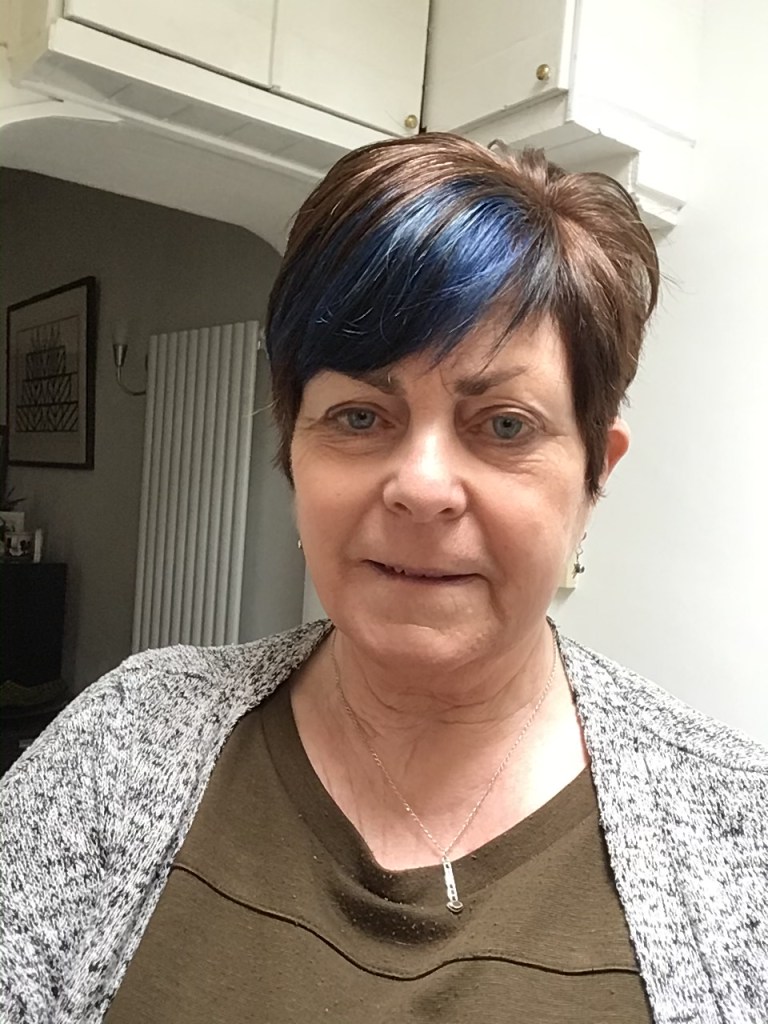
It’s a great pleasure introducing this month’s poet Pat Edwards. We met on Facebook and then discovered we both have a book with Indigo Dreams Publishing.

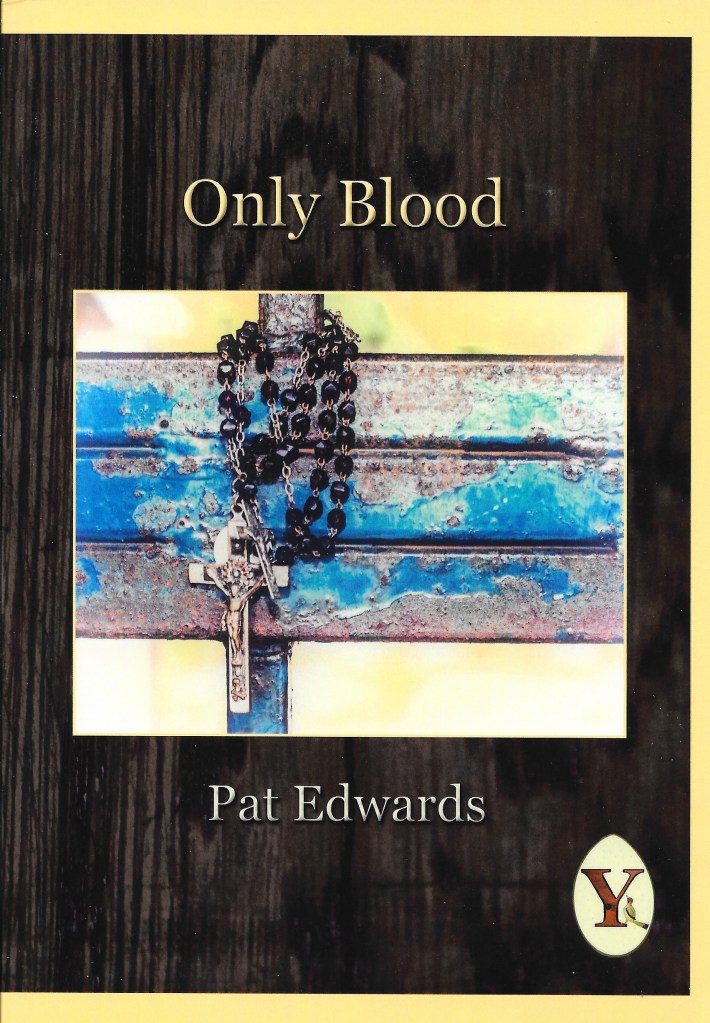
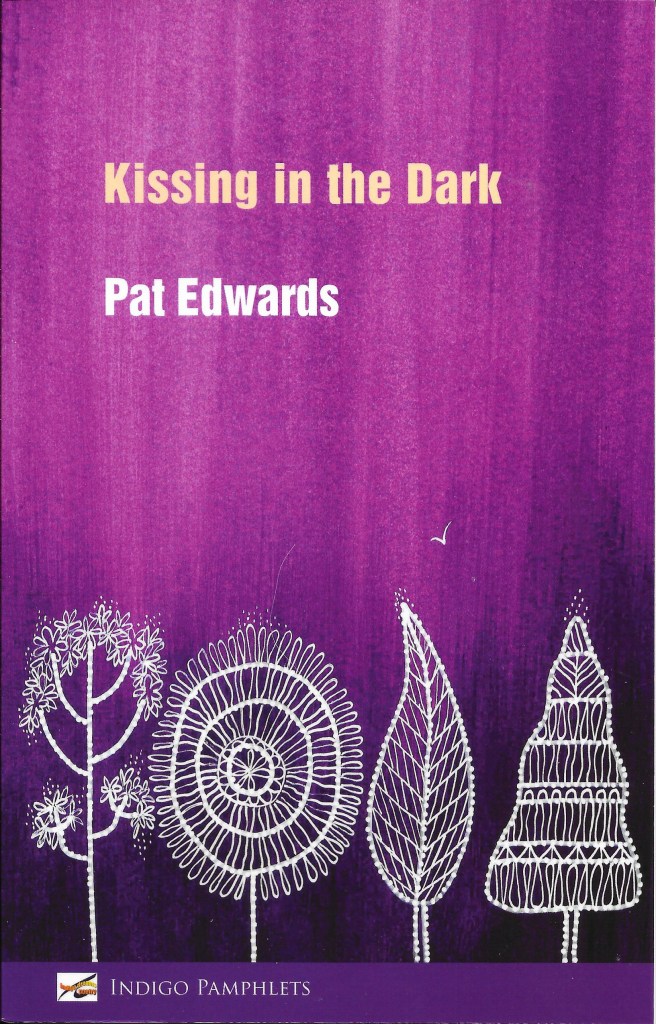
Pat is a writer, reviewer and workshop leader from mid Wales. She also offers a poetry feedback service on her site Gold Dust. Her work has appeared in Magma, Prole, Atrium, IS&T and many others. Pat hosts Verbatim open mic nights during more ‘normal’ times and curates Welshpool Poetry Festival. She has two pamphlets: Only Blood (Yaffle, 2019); Kissing in the Dark (Indigo Dreams Publishing, 2020).

Today is Mother’s Day in many countries. Pat’s dedication for Only Blood reads ‘For Mum and Dad if only we could all try again.’ Here are three poems from Only Blood, followed by Journey, from Kissing in the Dark, in Pat’s honest and compassionate voice.

The year Mum died

She is cutting tiny pieces of foam rubber
to comfort-cushion her feet in pinch-painful shoes.

There’s that look in her eyes, the one I don’t yet understand,
that gives away the cell-division in her breast.

She has a box of keepsakes I’m allowed to sift through:
the silver clasp for keeping sixpences together;
the golden compact that clicks open to reveal a mirror;
the trace of bronze powder that smells like ladies.

Here in 1963 amongst the fullness of her skirt,
I am barely five and only know I love her.

Gems

I want to find my mother’s jewellery,
to lift the lid on a tin box
of paste and pearls;

to find drop earrings that glint,
necklaces that lie on collar bones,
a charm or two for luck.

I want her wedding band,
brooches that once fastened scarves,
all the souvenirs and sentiment.

But I bet the first went to pay the gas,
the second to buy the weekly shop,
the third towards a gambling debt.

Gee-gees

Teenage me always knew when he’d put on a bet.
The channel would get changed,
there would be an urgent tension,
tight as a fist.

We’d sit saying not a word,
for fear speaking would fracture us.
Then, in the closing furlongs,
I’d know for sure.

Dad would bounce on the edge of his seat,
building from a hushed Come on my beauty!
to blatant demand of it.

We would both urge the horse
across the finishing line,
jockey standing in his stirrups,
cracking the whip.

Then the relief.
Let’s get your hair done.
I can buy you a new coat.
As if I was my mother.

Journey

I draw a blue-black line under my eyes,
trace it across the tattoo on my left arm.
I watch it slide down the veins of my leg,
to settle in a grey graffiti pool by my feet.
That’s quite some journey I say out loud,
so the man on the train looks up from
his screen and glares at me like a priest.
My thin mouth flashes a penance smile
back at him and he absolves me I think.
That’s quite some journey I say silently
so the man in my dream looks up from
his book and smiles at me like a friend.
My full mouth offers him a lover’s kiss
which surely changes something I think.
I draw a blue-black line under everything.