Very pleased to have my first acceptance from Black Nore Review. Thanks to editor Ben Banyard.
Tag Archives: love
Dimmet

It is a pleasure to introduce our February guest poet Rob Miles. I do not know Rob personally: we have been Facebook friends for some time. I bought a copy of his recent collection Dimmet which was published by Broken Sleep Books. See below the poems for Rob’s biography.

The glorious cover image of a murmuration was designed by Aaron Kent. Dimmet is a West Country word for dusk, twilight. Katherine Towers notes of the collection: ‘These are poems of great precision and delicacy’. I’ve chosen four poems which demonstrate these qualities.
Dimmet
His hands still bronzed, still
baling-raw. His voice
no longer snared, whisper-low
as decades ago, in this same field, he guided me
to not disturb that horse; circling
quietly, its half-scattered straw
an ingot melting, and my thin flames no match
for such a sunset anyway.
*
On this, another near-to-night, it’s clear
that he has no more kept his mind
from wayward sparks than I
have closed my eyes
before any fading fire, ever since recalled
a slow white shadow
steady on its dial
in the always almost dark.
Café Poem
Just when I think there is nothing
so boring
as someone else’s childhood
a toddler
in dungarees is guided
around our table
by his puppeteer parent, arms
up, in a vertical sky-dive, or
like a drunk, when walking
is more about not falling
every step forward
rewarded with a double high five.
I whispered to the dog
that she’d been a winner
a Crufts champion
at least twice. Once
she saw off a Dobermann, burglars, a werewolf
even the odd Sasquatch.
I reminded her
as her old eyes darkened
that she had saved lives.
Making Way
A keeper, you said of the house, but I’d sensed everything
trying to make its way: those errant velvet fingers
from your orchid pots; the oak
putting on its chain mail of ivy and moss
and losing; the birds we fed still pinned
to their shadows; crisp wasps
electrocuted by views
through grubby double glazing, and you
just weeks before, showing your wrists
as if uncuffed, asking for my thoughts on a fragrance.
Biography
Rob Miles is from South Devon, and he lives in Leeds where he is Fellow in Film Studies in the Centre for World Cinemas and Digital Cultures at The University of Leeds. His poetry has appeared widely in magazines and anthologies, recently in Stand, New Welsh Review, The Scores, Spelt, 14 Magazine, Ink Sweat and Tears, One Hand Clapping, Poetry Wales, and four Candlestick Press pamphlets. He has won various awards including the Philip Larkin Prize, judged by Don Paterson, the Resurgence International Ecopoetry Prize, judged by Jo Shapcott and Imtiaz Dharker, and the Poets & Players Prize, judged by Sinéad Morrissey.
Lucy Newlyn describes Dimmet as ‘the best collection of contemporary poetry I have read in a long while’, and John Glenday writes: ‘When it’s done as well as this, there’s nowhere on earth poetry can’t go.’
Filling the well, stocking the pond…
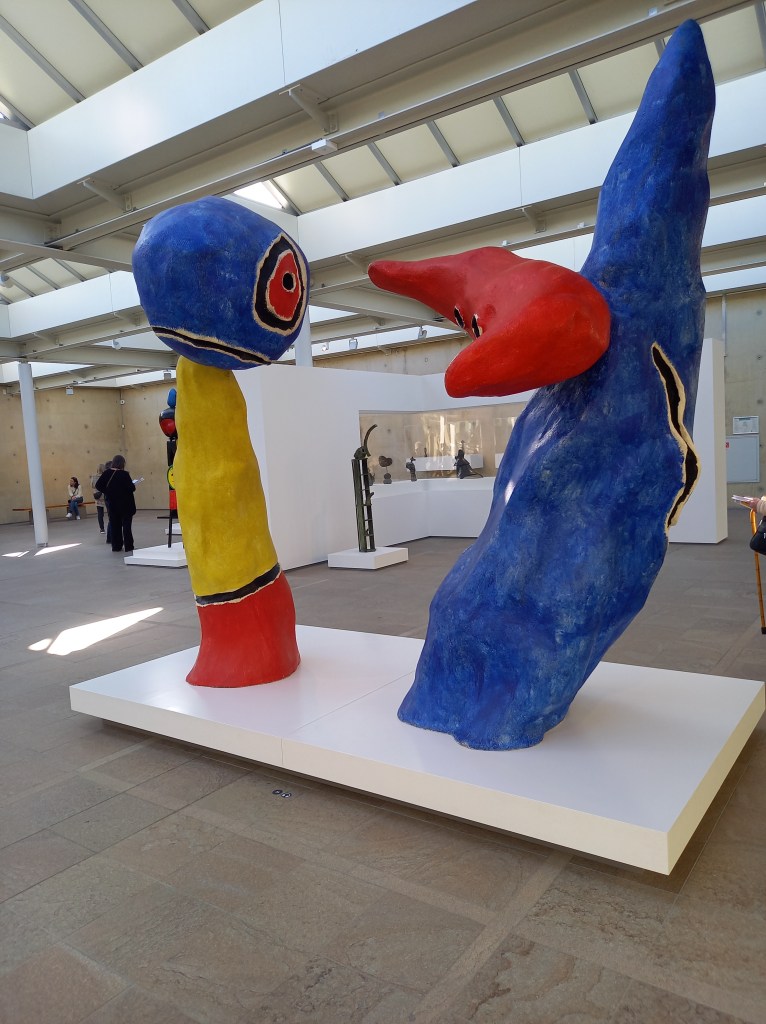
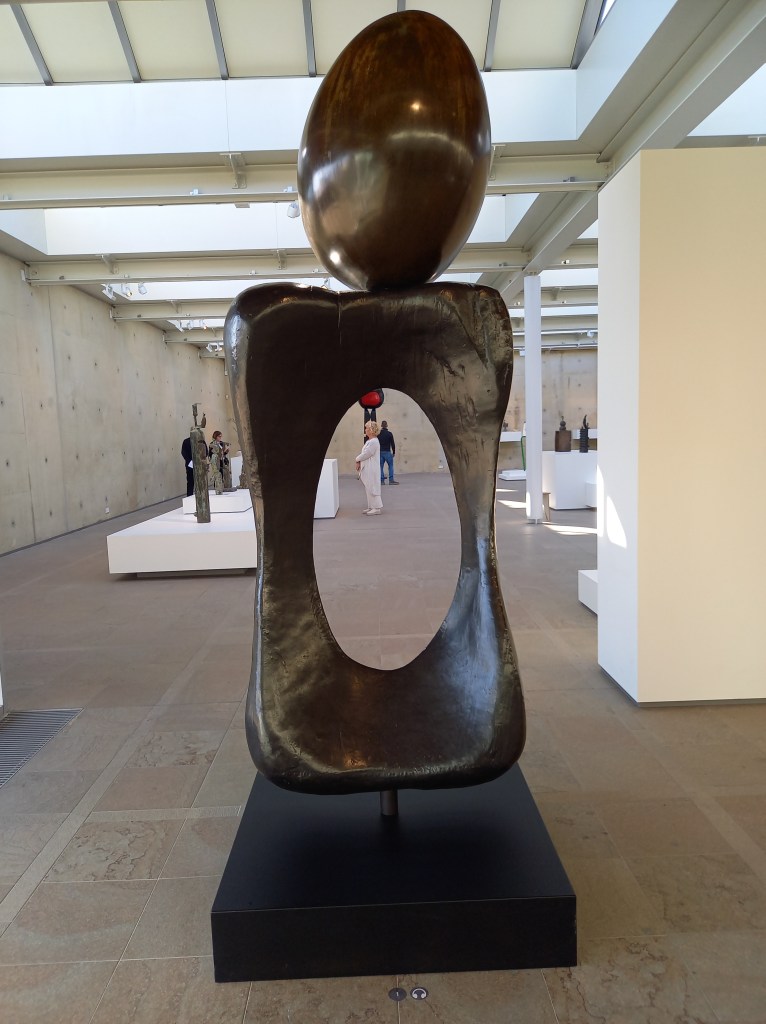
It’s been a long time since I’ve been out to fill that well. I’ve had health issues and sat at home with the black dog. The exhibition of Joan Miró’s sculptures at Beelden aan Zee is almost closing. On a cold and sunny Tuesday, I got two trams to Scheveningen.

Beelden aan Zee is the only Dutch museum specialising in sculpture and it’s in a great setting. The authorities in The Hague insisted that the building should not be visible, so it’s hidden inside a dune, and it is mostly underground. From the terrace you can only see the sea, not the busy boulevard. All the materials have a sandy colour. Through plenty of glass in the roof there is a lot of light.

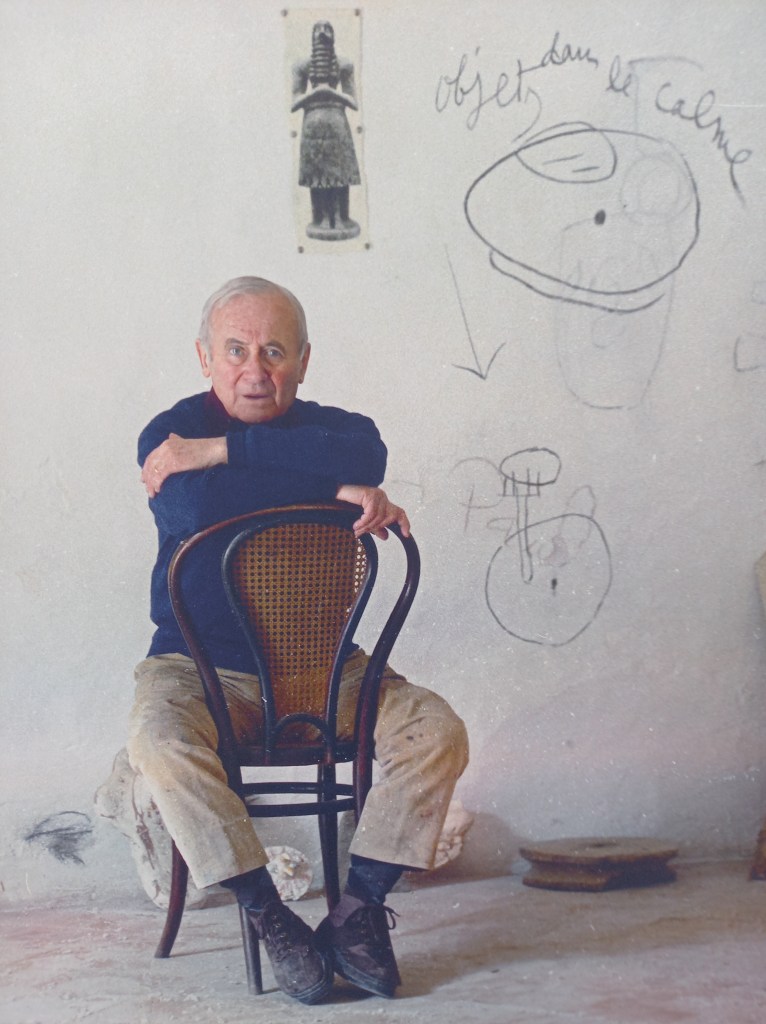
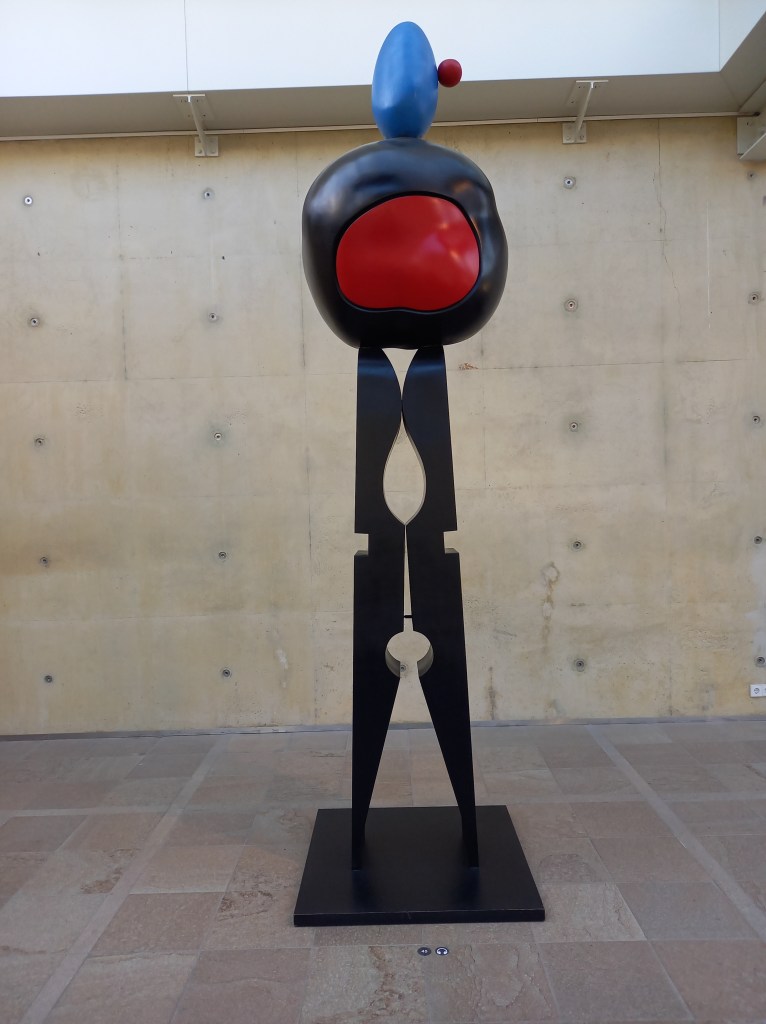
In his studios by the sea in Mont-roig del Camp and on Mallorca, Miró’s love for sculpture was given a huge boost. The (natural) objects he found on his walks were incorporated into sculptures and assemblages, along with everyday objects. The giant clothes peg (painted synthetic resin) was a design for a prestigious project in Central Park, New York. It would have been at least 14 metres high, though it was never realised.

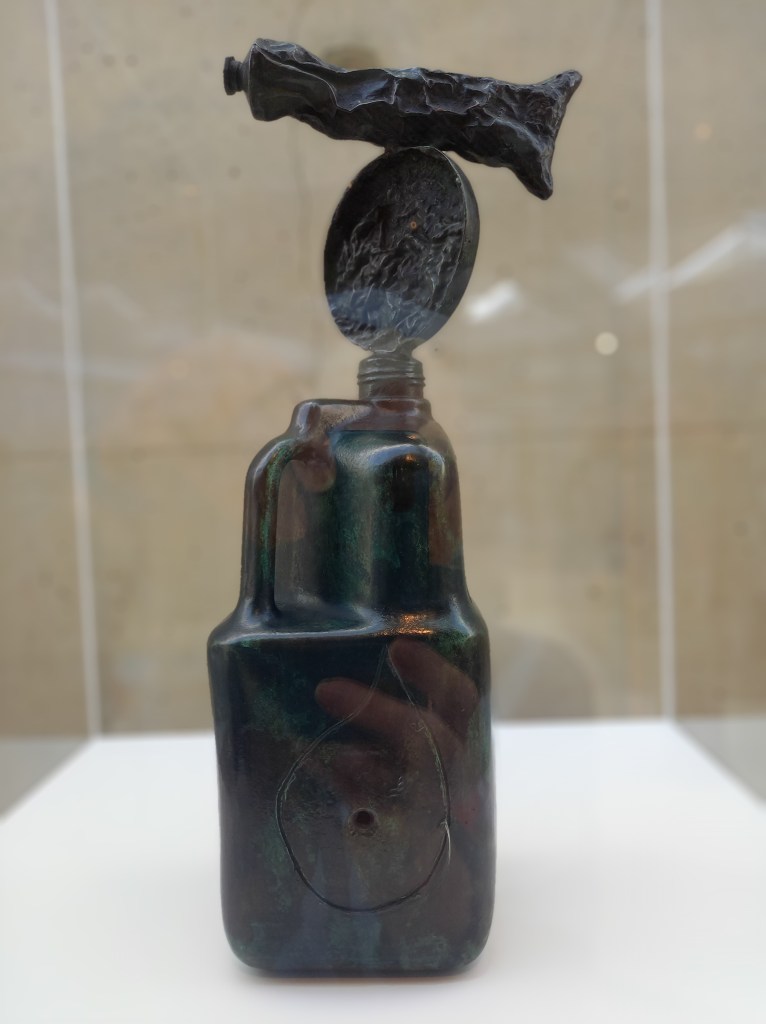
You can see the objects in this bronze sculpture: a paint tube, plastic bottle, spoon. Miró’s bronze sculptures were created using plastic models that he continued to shape until he found them good enough to cast.

The sculpture Monsieur et madame (Sir and Madam) is made of painted bronze. Two different objects form a couple. A square, red-painted stool stands for the man. On top of it is a rectangular white box with a face on it. The round, black stool represents the woman. It has a yellow egg on it. A playful, archetypical representation of masculinity and femininity.

The Monument is the first sculpture as you enter the main hall. You can see some of the light coming through the roof.

It was hugely inspiring to see how Miró continued to innovate and be curious well into his 70s and 80s.
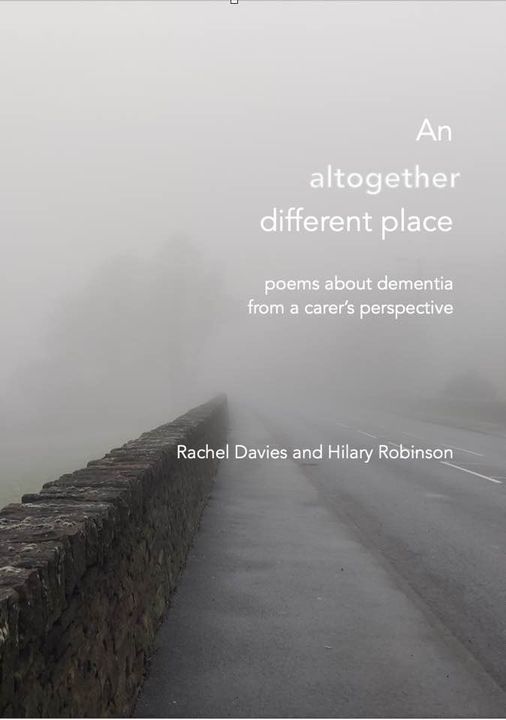
An altogether different place

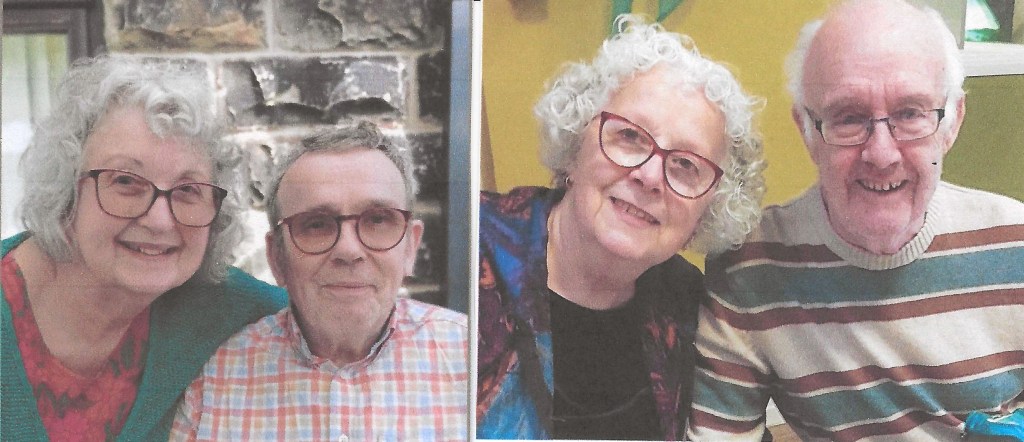
Rachel Davies and Hilary Robinson have been friends for over 20 years. Friends call them the ‘poetry twins’. They are both accomplished poets and you can find their biography below.
An altogether different place, published by Beautiful Dragons Squared, is a joint project. In 2022 Hilary’s husband was diagnosed with vascular dementia; in 2023 Rachel’s partner with dementia and Lewy bodies. In the introduction they write ‘dementia is a catalogue of cruel diseases’. Living with and caring for someone with dementia ‘you come to know grief by slow degrees’. Through poetry Hilary and Rachel ‘found a joint space to laugh, cry, find context and write out their experiences’.
The collection is sold to raise essential research funds for dementia charities in the UK. It is a privilege to share a selection of the poems here: Brainworm and Seven ways of looking at a husband are by Hilary. Rachel wrote Degrees of Challenge and This is not a poem about dementia which was awarded 2nd place in the Hippocrates Prize 2024.
Brainworm
There are many crap poems online for those who care for loved ones with dementia. Dementia has a symbolic flower – the unimaginative forget-me-not. I’ll have none of that shit. I want the gristle of it, the offal, brain-spatter, white matter of it. Show me the MRI with extensive vascular changes, let me count the dead parts of the brain so I can explain, daily, what ails my love. I watch Dirty Great Machines, find Big Bertha in Seattle, tunnelling machine on steroids moving at thirty five feet a day. Something has wormed its way into the tiny vessels inside his head over years and now whole sections of his once-sharp brain have died. It’s our Golden Wedding Anniversary this year. I don’t know who I’ll be celebrating with.
Seven ways of looking at a husband
1
Straight on. Taking in his 2-day grey beard,
his nostril hair and ear fuzz. His smile.
2
Side profile. Noticing his cute nose,
the same shape as our daughter’s.
3
From the bedroom door. Noting
the cocoon he’s made of the duvet.
4
Across the kitchen. See, he’s forgotten
how to toast his fruit tea cake, make coffee.
5
From the driver’s seat. Clocking his wince
as you pull out safely onto the busy main road.
6
Across the care home corridor. Seeing his smile grow,
then his arm around you, his whiskery kiss.
7
On the care home terrace. Look, he can’t turn
his head to where you point. Misses the squirrel.

Degrees of Challenge
I’m watching you struggle to break the seal
on an ice cream wrapper and I think of the time
you redesigned the roof of Piccadilly Station,
worked in millimetres to ensure each pane of glass
fitted exactly into the space you’d drawn for it.
I remember the night you clipped on a safety harness,
climbed onto the roof to inspect each perfect joint,
came home buzzing but satisfied at day break.
Tomorrow you’ll shuffle out to the Age UK minibus,
the driver watching you don’t slip on the wet steps;
but tonight you’re making a major task
of breaking into a Mini Magnum. I know better
than to offer help; eventually you’ll pass it to me,
say I’m sorry, I can’t seem to
This is not a poem about dementia
I am opening the windows and doors
letting in fresh air to blow dementia
down the lane like giant tumble weed
I am clearing out drawers and wardrobes
filling black bags with hallucinations
donating them all to the Age UK shop
I am having the Lewy bodies serviced
unblocking its pipes flushing confusion
down the drain with the incontinent waste
I am partying like there’s no dementia
raising a cake with bicarb of dementia
licking up the fluffy dementia crumbs
I am sleeping peacefully in the quiet night
dreaming a poem that has absolutely
nothing to do with dementia
Biographies
Rachel Davies is a mother, grandmother and great-grandmother and a retired primary school headteacher. Her poetry is widely published in journals and anthologies and has been a prize-winner in several poetry competitions, most recently, the Hippocrates Prize 2024. A selection of her work was published in Some Mothers Do… (Dragon Spawn Press 2018). Her debut pamphlet, Every Day I Promise Myself, was published by 4Word Press in December 2020. Since retiring she has achieved an MA in Creative Writing and a PhD in contemporary poetry, both from Manchester Metropolitan University.
Hilary Robinson has lived in Saddleworth for most of her life. She met her husband, David, at secondary school. She gained a BA (Distinction) and a PGCE and became a primary school teacher. After a successful career, Hilary retired and started a Creative Writing (Poetry) MA at Manchester Metropolitan University and gained a distinction. Her poetry is published in print and online journals, and in several anthologies. Her poetry has also been set to music by RNCM students of composition. In 2018 some of her problems were published by Dragons Spawn as Some Mothers Do… and this was followed in June 2021 by her first solo pamphlet, Revelation, published by 4Word Press.
Slow Movement

It is an immense pleasure to present this month’s guest poet Sarah Mnatzaganian. Poems from her award-winning pamphlet Lemonade in the Armenian Quarter were featured here before. Today’s poems were chosen from the dozen that were included in Slow Movement, an exquisite small journal designed, created and stitched by poet Maria Isakova Bennett. The photo of the cover doesn’t quite do it justice.
The sequence was one of four winners in the 2022/2023 Coast to Coast to Coast poetry prize. Maria wrote ‘Slow Movement is a sensuous sequence of love poems expressed through the colours, sounds, materials, and obsessions of cello making and sailing.’ The sequence is dedicated to Robin, the cello maker; poems were previously published (Poetry Wales, Magma, Poetry Salzburg).
Bogle
Two wedges of maple are ready for the vice.
The cello maker scans the silken surfaces for flaws
but the wood looks clean as buttermilk.
He leans and pushes translucent ribbons,
tissue paper thin, through the plane’s grey mouth.
Stops. A failed twig-hole, a dark finger of incipient rot
points from the joint accusingly. He groans,
grabs a back-arch template, offers it to the knot.
Smiles. He’ll outwit the bogle this time.
He heats hide-glue in the pot and rubs the joint
until it gels and bites, the halves aligned and left to dry.
Next week, he’ll flip the plate like a stranded tortoise
and hunt the blemish with his keenest gouge
until he holds a hollow brindled shell,
bogle-ridden wood chips snapping at his feet.
Laying up
Salt-bitten snap shackles slump down the forestay
and surrender to the pull of his thumbs.
He drags an impossibility of canvas over the guard rail
while I hug the rest free of the wire.
The sail crumples like a giant wedding dress,
crocodile-toothed with zigzag thread. It’s time
to climb down to the queasy buoyancy of the old
polystyrene pontoon, to stand fifteen feet from him
and guess where in this pale tangle of cloth to grip
with my left hand; how far to reach with my right.
We’ll tighten the white distances between us
and fold each crease over into a taut edge
until we make a concertina of the sail. He’ll nod
and fold his end towards me, two foot at a time.
I’ll do the same for him until our halves meet
and lie without stretch or slack,
my luff to his leech, head to his foot,
clew to his tack, throat to his peak.
Bridge
He’s in the kitchen, leaning over the hob,
dropping a bridge blank into the frying pan.
I start to speak but know he can’t reply.
He’s counting down the seconds till it’s time to flip
the steaming bridge, to press and count again.
Twenty, twenty, ten, ten, five, five. Done.
He stands the bridge to cool. Takes the next.
I’ll kiss him then, to pass annealing time.
Twenty to please my tongue and lips. Twenty
more to tighten breasts and scalp. Ten, ten
to spice my skin. His free fingers stroke a slow
five, five around my willing ear.

Cromer, June

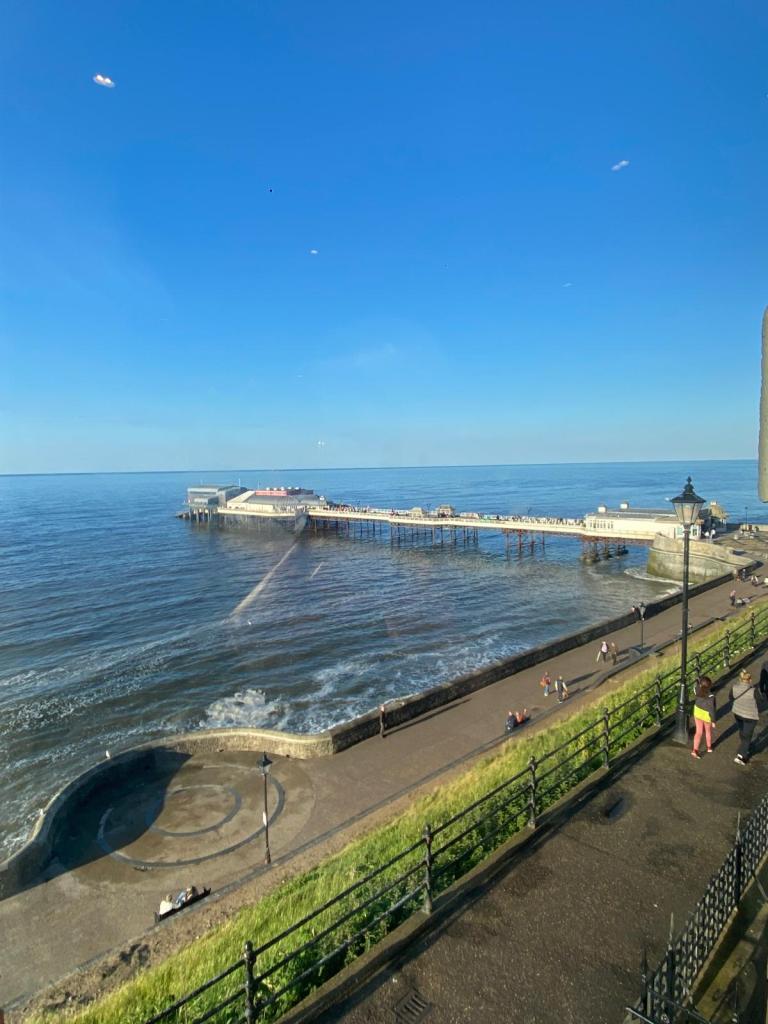
As the church bells began ringing, we were off – like thoroughbreds out of the starting boxes. We’d arrived on Saturday, inspected the spacious and comfortable rental property. Then enjoyed a delicious fish dinner at No. 1 Cromer Upstairs.
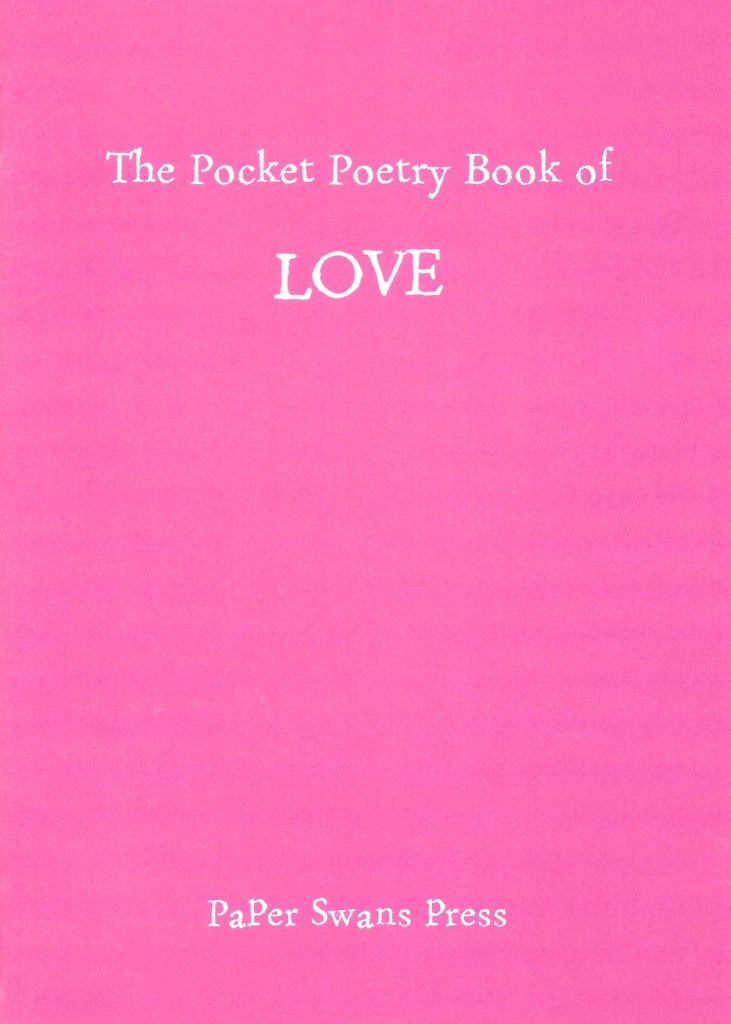
My morning flight from Schiphol landed at Norwich. The views of the coast and the Broads reminded me of other times. The poem was first published in The Pocket Poetry Book of LOVE (Paper Swans Press, 2018).
With love to my five talented poet friends…
Cromer, August
Curved around Cromer Pier a twitching mass of legs,
sturdy calves, socks, sandals. Fathers scoop up bait,
wind black thread onto pink plastic spools.
An old couple, in matching anoraks,
watch a thin man, wheelchair-bound.
He shakily lifts his thermos flask.
I thought of you then and the creaking stair lift,
the plastic roll-up seat, raising her in and out of the bath.
The small wooden cart you made
so she can travel through the orchard
inspecting the new fruit with her crooked hands.

Valentine’s Day

This coming Tuesday it’s Valentine’s Day. Here is an early poem that hasn’t featured on the blog before. It was published in the Tees Valley Writer, Autumn 1995, and Highly Commended in their annual competition.
On the beach
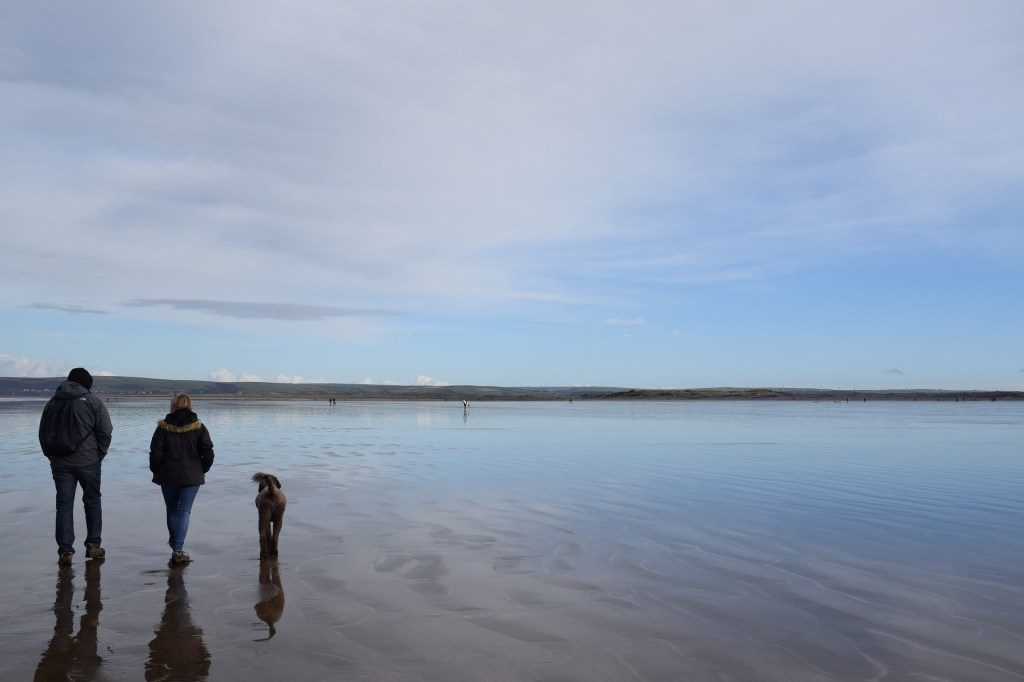
Against the sinking sun gulls ride the waves.
Our dogs bark and chase their tails.
Try to run with a lone jogger who braves
the east wind whistling. Your son trails
in your wake, attempts big steps. Laughter peals:
a scene lifted straight from some fairy tale.
Heaped grey boulders mimic a colony of seals.
Not long before love winters in my heart.
I need to tell you how it feels
to be together, yet growing apart.
Your craggy face seems so much older
clouded in a bluish hue. I brace myself to start
as you place a hand on my shoulder
but all I can say is It’s getting colder.
National Apple Day – poem

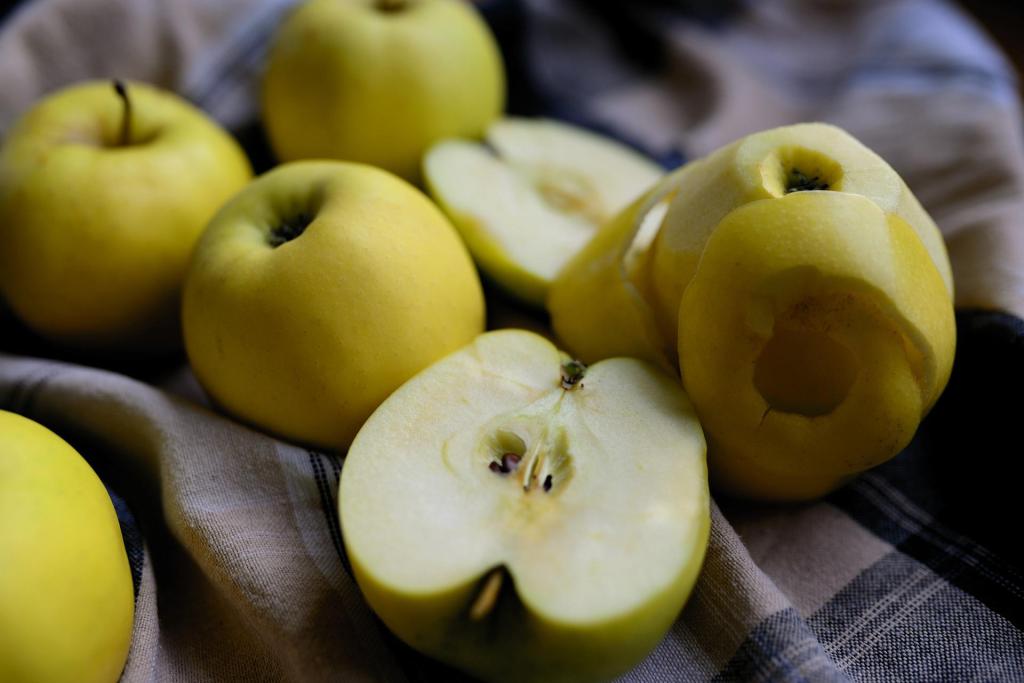
National Apple Day falls on the 21st of October. It was created in the UK by the charity Common Ground in Covent Garden, London on 21 October 1990 to raise awareness about the importance of diversity in different communities. Apparently, there are about 7,500 varieties of apple grown globally. In my local Hoogvliet supermarket I can find six: Kanzi, Pink Lady, Golden Delicious, Granny Smith, Royal Gala and Jazz.
Celebrations take place in the UK throughout October, so go to a fair, take part in an apple peeling contest, bake or eat an apple pie. Here in the Netherlands, traditional Appeltaart always has a good dose of warm spices – cinnamon, ginger, nutmeg. They are baked in a spring form and have a lattice crust. I will have mine with a good dollop of sweet whipped cream, thank you.
My poem is somewhat melancholy. It has the feel of a tanka – the first three lines giving a description, with emotion and reflection in the last two lines.
carefully quartering
soft red apples
into a compostable bag –
I still wait for the letter
that will never come
Cuckoo and egg – guest poet
It’s an immense pleasure introducing this month’s guest poet Ramona Herdman. We met a few years ago on a residential workshop and are members of a group that meets weekly online.

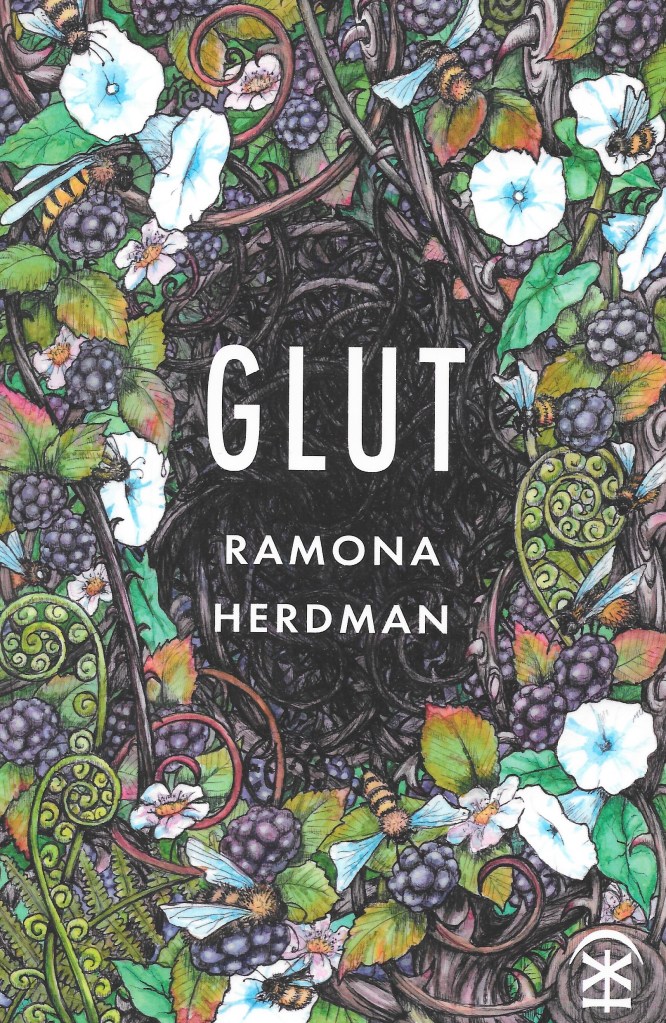
Ramona Herdman’s recent publications are Glut (Nine Arches Press), A warm and snouting thing (The Emma Press) and Bottle (HappenStance Press). Ramona lives in Norwich and is a committee member for Café Writers. She tweets @ramonaherdman
I have selected four poems from Glut, beautifully produced by Nine Arches Press, to give you a flavour of these darkly funny, bittersweet poems. I hope my choices also show their ‘quiet ferocity’ (Philip Gross). Below the poems you’ll find links to a blog about the cover (by Jacky Howson) and to a video with Ramona reading Blackberrying and Congratulations. Glorious is the word!
Blackberrying
Blooded young, we waded
into the hooked shallows of hedges,
caught up and cut in our toddler blundering, dirty
with gritty juice and dotted-line scratches.
We without-ritual British, we atheists.
Hippies’ children, grown up
in the world they believe they changed –
we have blackberrying as our sacrament.
At school, neater children wouldn’t eat the berries,
said their mothers said no, said
they had worms in that would eat our insides
and poke out of our bumholes.
Now we go every year, like it’s Midnight Mass.
We avoid the dog zone at the bottom of the bushes.
Tell each other that by Michaelmas
the Devil will have pissed them bitter.
We take offal-heavy carrier bags of berries
to our parents, too old now for all that bother.
We pick the children out of the tangled footings.
We cook pies and crumbles in our own kitchens,
competently. We placate the gods.

Cuckoo and egg
It’s hard to soft-boil an egg in another woman’s kitchen –
even the water is different.
It’s our first ‘family’ holiday together.
She makes me a soft-boiled egg with a lot of fanfare
and the whole breakfast-table gets involved in the hoo-hah.
And there’s a performance of trust in cracking it –
the risk of a wet white, the opposite risk
of a solid yolk. We’re on the edge
of an ovation when it turns out perfect.
I eat it hot, like a heart.
It’s not me taking the minutes
It’s not me anymore escorting visitors
from the front desk. I don’t fill the water jugs
and make sure the glasses aren’t too dirty.
I sometimes buy the biscuits, now there’s no budget.
It’s not me too scared to ask a question
or supply a fact, wondering if I’m allowed
a view or am just a transcription machine.
A man once told me working with women
had taught him not to interrupt. It’s a terrible world.
I told him working with men had taught me
to keep on talking, slightly louder. Try
interrupting and you’ll get to see
the flying-galleon belly of my argument
as I lift off cathedral-high over you.
Don’t dare to talk over my people,
including the young woman taking minutes,
who is well on her way to wherever she wants,
who could take your eye out with her wit.
The meetings are my meetings now.
Two death in the afternoons, please
Dad, now you’re dead you scare me.
Every time I think about stepping into traffic
I think of you building your glass castle,
cornershop-whisky-bottle by cornershop-whisky-bottle.
I had to do one of those questionnaires recently:
How many times in the last month has your drinking
stopped you doing things you needed or wanted to do?
I put zero, Dad, proud nothing. They never ask
about the times the drink makes living possible.
I think of your kitchen-drinking nights, how you told me
you didn’t get hangovers anymore
and I was too young to reply.
When I’m scared, Dad, I know a gluey-gold inch
of brandy or one gin and tonic’s scouring effervescence
will lift me to arm’s-length from caring, will calm me
in a bubble of slight incapacity.
The old dread, Dad – I think now you carried it
like a wolf in your stomach.
The drink quiets it, but it doesn’t drown.
I recently learned another cocktail by Hemingway –
‘Death in the afternoon’, champagne and absinthe.
You’d find the name as funny as I do.
He recommended three or five in slow succession.
When I make them, I toast him. He’s family.
Dad, you’re nothing now.
It’s only the thought of your life that scares me.
But if there were an afterlife I’d meet you there, happy hour.
It’d be dimlit and we’d sit low in a booth and they’d keep
bringing the drinks in fine heavy glasses
and no one would interrupt to say this wasn’t actually heaven,
this delicious blunting of feeling, this merciful cessation,
and that there was something outside that was better –
like walking out on the seafront together, wind and water-roar
and saying something risky and being understood.
Links:
To buy the book
An interesting blog piece about the design of the cover
Ramona reads Congratulations
Ramona reading Blackberrying
Outside, the Box – poems

I am delighted to introduce this month’s guest poet Sue Kindon. We met on Zoom during lockdown 1, through a mutual poet friend.
Sue Kindon lives and writes in the French Pyrenees. An enthusiastic member of the local slam team, her greatest achievement to date is an award for a poem in French.
Kindon was Runner Up in the 2021 Ginkgo Prize (for Eco-poetry); and has two pamphlets to her name – She who pays the piper (Three Drops Press, 2017) and Outside, the Box (4Word Press, 2019). The poems in the latter were sparked by the box moth plague that devastated the landscape a few years ago.
I’ve selected five poems from Outside, the Box, to give you a taste of the range and humanity of Sue’s poems.

Box Moth (Cydalima perspectalis)
white moths haunt each hedge
all summer their larvae gorge
on our ancient ways
The House of Running Water
We’re so far off the mains, I cross myself,
or is it my reflection? Our drinking water
isn’t purified, sobbing in glugs
from a faery underworld
just beyond the spring line.
Boils, frogs, plagues of grass snakes
are there none. The kitchen tap
dispenses an incessant stream
in spite of some newly-converted saint
bottled up in supermarket plastic.
Every day an elven-prince
strikes rock with his divining rod
and sets loose unchlorinated magic:
we drink deep, until our inner walls
cascade with the stuff.
I could never return, now my mind
is clean as the washing on the line.
Townsfolk have forgotten
how the old world flows.
It must be something in the water.
Bernadette
I thought of you as a sister
from the start.
You were the one who insisted
I worked in the shade, you saw
that my fair skin reddened
in the southern sun trap
of the presbytery walls.
Your straight larkspur back
bent for hours as you laboured
to remove chiendent and petty spurge.
You would go missing
for a quick smoke
outside the tall grey gates
of our temporary eden, and I felt
the loss, sure as the last petals
falling from the climbing rose.
Then you’d be back,
tending the last geranium
and offering a kind word
I might not understand.
So much more I wanted to say:
and now I’m gaining confidence
with the language, it’s already
winter, and the gates are shut.
On Safari
Death came to me as a zebra
crossing my path. I’m not ready yet,
I said, and he stepped aside.
As I passed by, I admired
the pull of perfect stripes,
the kiss of dark mane
and I was nearly fooled
by his op-art trompe-l’oeil invitation
to step into his black-and-white-wash skin
and set down my bright sorrow.
I was dazzled by the glow
of skeletal zebra ribs
until I saw the shadow
of famished lion at the tunnel mouth
and smelt the jitter of my blood on parted lips.
Jardin de Curé – Damage Limitation
Our prayers have kept the moth at bay –
and careful spraying – chemicals
have underplayed their part.
The volunteers have withered up
or died. A few stalwarts
welcome late summer visitors
but when it comes to weeding,
they pull the flax
and leave the nipplewort.
Nettles flourish by the chapel wall.
Self-seeded marjoram
annexes the cabbage plot.
At least the box hedge is intact.
Our prayers have kept the moth at bay.