Tag Archives: books

Books – Unread & Banned

Last year I wrote about the ‘Ongelezen Boeken Club’ (Unread Books Club), a new venture where libraries promoted books on the ‘null list’ – books that have never been taken out.

This year, the ‘Nationale Ongelezen Boekendag’ (National Day of Unread Books) coincides with another new initiative: De Week van het Verboden Boek (The Week of Forbidden Books). Bookshops and libraries throughout the country are showcasing books that have been or are still censored.

On Wikipedia, you can find an article on book censorship, a list of banned books and the main list of books banned by governments. This starts with the Bible and Albania and ends with Yugoslavia.

If I counted correctly: 66 countries. ‘Almost every country places some restrictions on what may be published, although the emphasis and the degree of control differ from country to country and at different periods.’

Wikipedia lists 66 books that have been or are currently banned in India. A small number, relatively speaking. The earliest is a Gujarati translation of Mahatma Gandhi’s book Hind Swaraj. This was banned by the British Authorities in 1909. In August 2025, the Indian Home Department banned 25 books for ‘propagating false narrative and secessionism in Jammu and Kashmir.’

Here in The Netherlands, there is only one book officially banned: Adolf Hitler’s Mein Kampf (1924). In 2014, a bookshop owner in Amsterdam was found to stock and sell the book. There was no prosecution.

However, training for new staff in bookshops routinely includes how to deal with aggressive customers. Library staff find returned books with pages torn out. A Dutch survey last year found that (1 in 7) authors had to deal with aggression, threats, intimidation – much of it online.

Here is the cover of Lale Gul’s debut published in 2021, when she was 23. It’s an autobiographical account of growing up in a strict Islamic family. It became a bestseller and was translated, but Lale has since been in hiding.

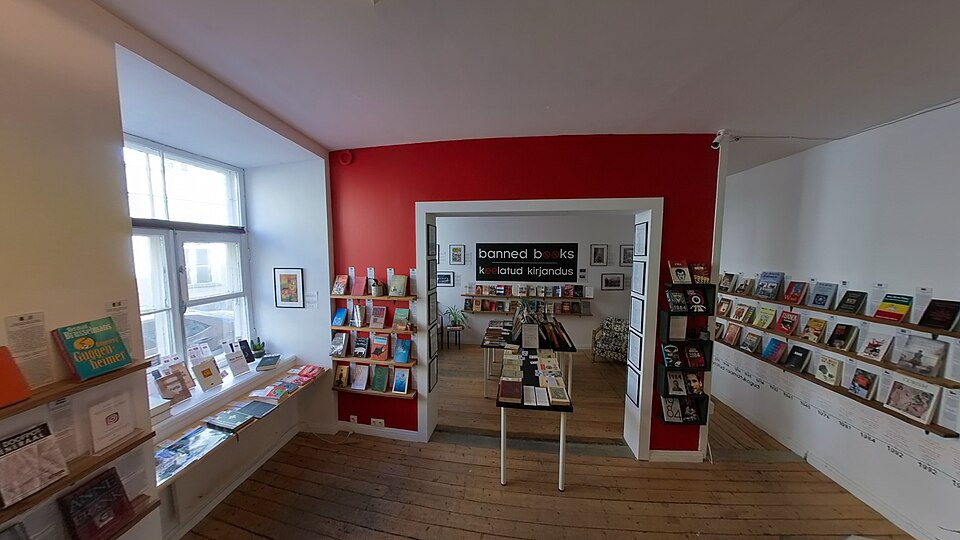
If Tallinn is on your bucket list, you can visit the Banned Books Museum while you’re there!

Photo credit: Fuzheado

Saved by bankruptcy

Photo credit: Pieter van Marion, NL

I had booked return flights Manchester – Exeter to visit my poet friend Kathleen. My trip was going to be in the third week of March 2020. On the 5th of March Flybe filed for administration and ceased all operations immediately. I lost £65, but I was very relieved: If I had flown to Exeter, I might well have been stuck in Devon as that first lockdown started…


On Sunday 15 March I learned the British government was considering a compulsory quarantine. The next day I emailed the owner of the campsite asking if I could arrive early. He replied immediately. I booked a flight, transferred money, packed, agonised over which poetry books to take to my ‘desert island’ near The Hague. I flew to Schiphol on the Wednesday. The local buses already had the area near the driver closed off with white-red plastic.


Here are two poems about that first lockdown:

The departure

Half a century condensed into Brexit, pandemic.
At the threat of a four-month’ compulsory
quarantine I fled to my bolthole in Holland.

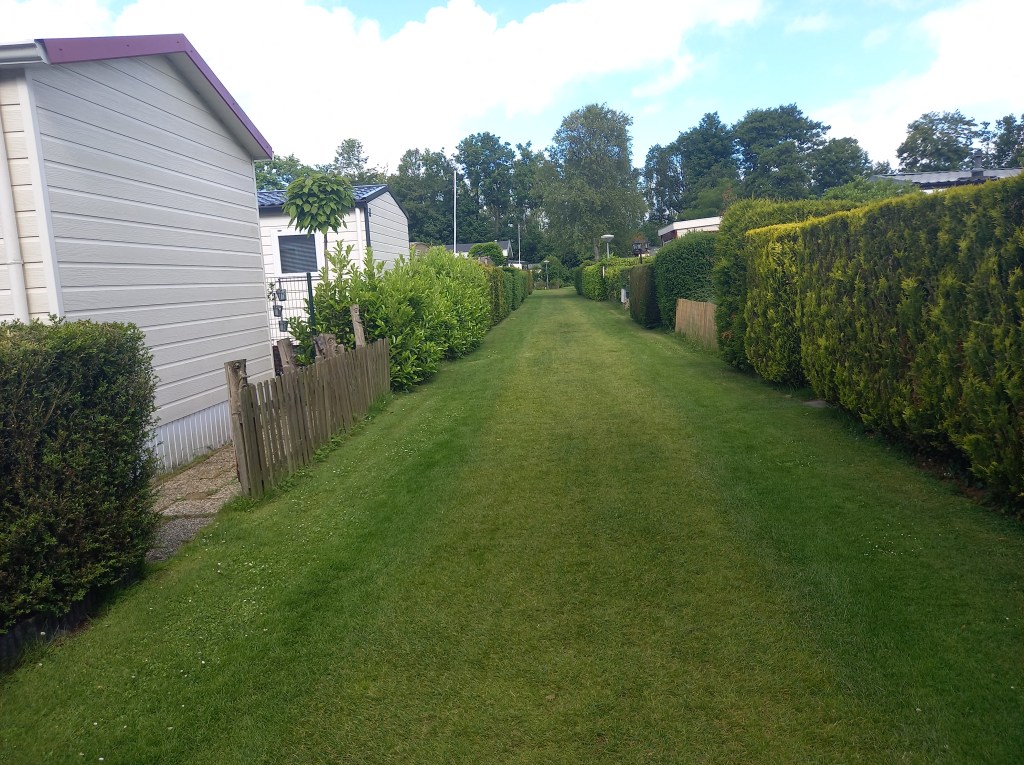
Six months of safety in a static caravan,
waking to birdsong each morning,
shielded from the sun by the golden elm.
I walked my daily rounds on the grass lanes.

Forsythia, tulips, narcissi, rhododendron,
pyracantha, salvia, rock rose, asters:
the seasons’ steady markers. From a distance
I waved to neighbours finally arriving.

In the cupboard of the spare room
lay the letter confirming my ‘settled status’
on the other side of the North Sea.

The undertakers

A double spread in the paper
features a large photo.

This man, in his thirties, a narrow
horizontal moustache, soft smile.

He sits in a wooden boat, his right hand
resting on a plain white coffin.

People are asked to email text and selfies.
Made into cards, these are placed on the coffin.

He is based in Amsterdam, will transport
you safely through the canals.

That undertaker has just opened a crematorium.
He also owns a chain of hotels.

The pandemic has cut the numbers allowed
to be in the room. There is livestreaming.

People, he says, are glad of it.
The intimacy makes it easier to speak.

At the end of September 2020, the campsite closed. I got a Covid test somewhere in the centre of The Hague and flew back to Manchester.

Late lockdown poem

I wake up and know, of course,
that I am not a morning person.
The sound of rain, of course,
and fewer sirens as people
are supposed to be at home.
My lifelines are the same, of course:
motto, comfort break, medication.
Of course, I think about exercise,
settle for Composer of the Week,
dead, of course.

Marie-Louise Park, Didsbury, Manchester, UK

A postage stamp, Joshua calls it

He’s right and there’s traffic noise
from the main road and people
with dogs on long leads,
but not all the benches
are dedicated to the dead,
Marie-Louise is a pretty name
for a park and the 43 Airport bus
is a hybrid and no-one much
was going to the airport
that autumn: I often had the bus
to myself, both ways.

Breakfast

Here in The Netherlands Kookboekenweek (Cookery Books Week) has just ended. A recent annual event, it’s designed to promote cookery books. Bookshops and libraries organise workshops, lectures, and tasting events. Of course, it’s all to encourage people to buy books as presents for December: St Nicolaas and Kerstmis.


Professionals shortlisted six books (Vietnamese, Japanese, Indian, Italian (2), and baking skills). They’ve chosen Bloem Suiker Boter, by Nicola Lamb, translated into Dutch. I’m going with Breakfast, a poem celebrating poetry and friendship.

Breakfast

Bridie would be in the kitchen,
barking with Finn and Tara
in a metal cage under the table.
I’m in your backroom, sheepskin
on the seat of the wooden chair,
just gone 9 o’clock this Tuesday.

You’ve made the scrambled eggs
exactly as I like them, with enough
mustard and fresh chives.
Now you’re coming in with yours,
followed by your small dogs
who settle on the settee, by the fire.

We catch up over this monthly meal.
Soon we’ll sit silently behind our laptops,
typing up poems from old notebooks.
Now eating toast with ginger preserve,
I look out of the window; the smiling
Buddha is lit up by the sun.

The unread book

Earlier this year, a group of artists in The Netherlands set up the Ongelezen Boeken Club (Unread Books Club). It is a sad fact that many library books are never borrowed. Currently, there is an exhibition in a public library in Amsterdam featuring some of their unread books.

Upstairs, around 200.000 books are on loan. If a book is not taken out during a period of two to three years, it moves onto the ‘null list’ and disappears downstairs. Here a good 400.000 books are stored along 24 km of shelving. At the exhibition, there is an old-fashioned telephone on which visitors can ring and reserve one of the unread books on the ‘nul lijst’.

The artists have declared Thursday 19 September as the first Nationale Ongelezen Boekendag (National Unread Books Day).

There is the concept of the anti-library: a collection of unread books as a research tool, as an ode to everything one wants to explore. Related to that is Tsundoku, acquiring reading materials and letting them pile up. Many poets I know feel somewhat guilty about new poetry books piling up.

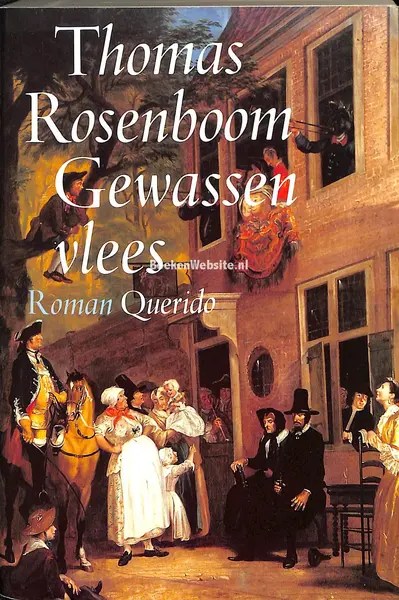
This is the cover of a historical novel, Gewassen Vlees, by Thomas Rosenboom. It won the dutch Libris prize (worth 50,000 Euros) in 1995. It’s over 700 pages long. I am never going to read it. A friend gave it to me. He died in 2000 and that’s the reason it’s still taking up shelf space.

Mothering Sunday – a poem

Credit: Silviarita via Pixabay

Today It’s Mothering Sunday in the UK and Ireland, and Summer Time begins. I want to thank Hilary Robinson for letting me share her poem, a gentle homeward journey with rich detail. It also shows how a strong title pulls the reader in. Hilary is the guest poet next month with more poems from her poetry debut Revelation.

Things I Say to my Mum in the Nursing Home

Let’s go to Verdon’s for a quarter of sweets—
American Cream Soda, Rainbow Crystals.
Let me taste the Sarsaparilla Drops,
Fruit Salads, Flying saucers, Cherry Lips.

Walk me up to Marsden’s — I’ll sink
my fingers into dried peas, watch
as butter’s cut and patted into shape;
sugar’s wrapped in rough blue bags.

Take me to the monkey-nut shop
after an hour in Northmoor Library,
breathing in the leather, old-book smell,
where the men scour papers for good news.

Hold my hand, take me to the park
so I can swing high, standing up,
or roly-poly down the slopes,
risk roundabouts, the Wedding Cake.

Take me back to our backyard,
to the tin bath hung on an outside wall,
to my stiff, hard dolls, my teddy bear.
Pass me my square of pink flannelette.

Table 64 – writing prompt

Credit: Pexels on Pixabay

This week my friend Valerie celebrated her birthday. We met 30 years ago on a residential week in Spain. To celebrate our friendship, here is a short poem in which we’re together. Bowler’s is a very large indoor and outdoor carboot sale location in Manchester.


That Generation Game is a tv game show in which teams of two family members, but from a different generation compete. The winners see a conveyor belt with goodies wobble past. No worries: if they can’t remember them all, the studio audience will shout to help …

Table 64

We carried the plastic crates and cardboard
boxes into Bowlers at bloody six o’clock.
The locusts, proper traders, picked items
from the piles we carried, threw us
pound coins and a few fivers.

The early flurry was good and then it was
like the Generation Game in reverse:
suitcases went, a pile of books, glasses,
a wok, costume jewellery, some cuddly toys.
We sat back in our folding chairs like regulars,
holding off sleep.

Writing Prompt: Did you do a car boot sale with a friend? Were you a market trader (for real or in your dreams)? Did you go to an auction of lost property? What is the object that you lost or found?