Today is the publication day of my third collection. This evening, starting at 19:30 UK time, there will be a Zoom launch, organised by the publisher, Broken Sleep Books. There is a link on their website to Eventbrite.
Four other poets will also be reading, to launch their pamphlet or collection: Caleb Parkin, Chrissy Williams, Taylor Strickland, and Chris Laoutaris.
The manuscript was awarded a Northern Writers’ Award from New Writing North in June 2020. That raised my spirits during the lockdown. It was a unanimous decision by the Board of Broken Sleep Books to accept the collection for publication. The delicate cover design by Aaron Kent is a great match for the minimalist content.
My poems and I have found at Broken Sleep Books, and I am looking forward very much to the reading this evening.
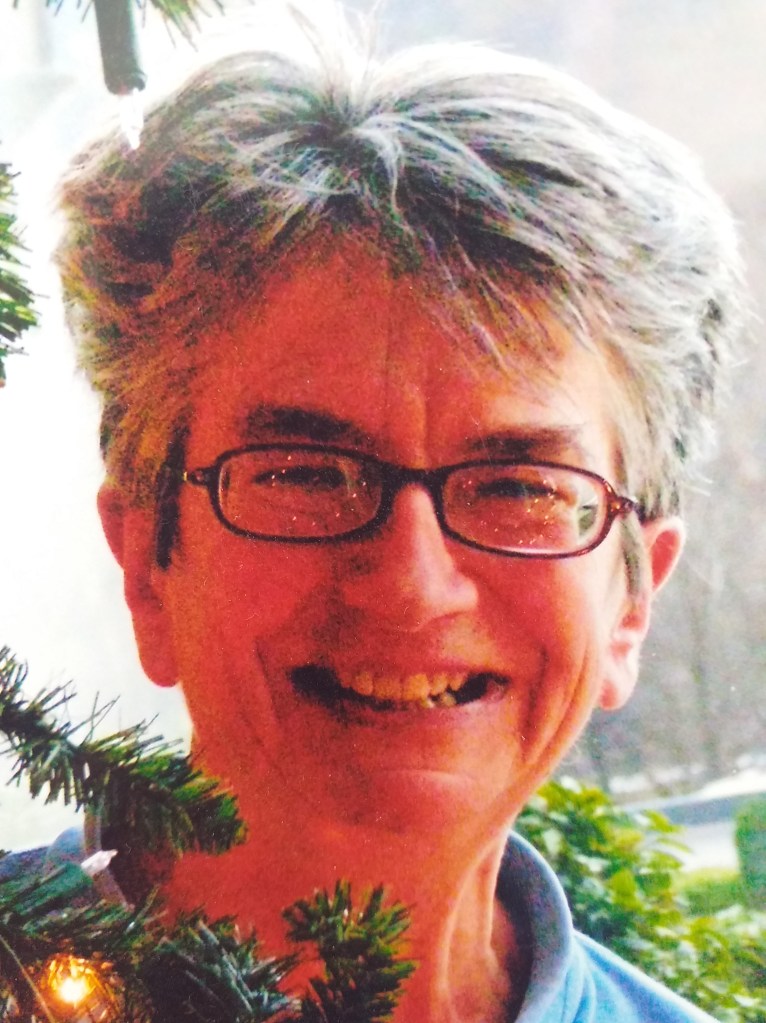
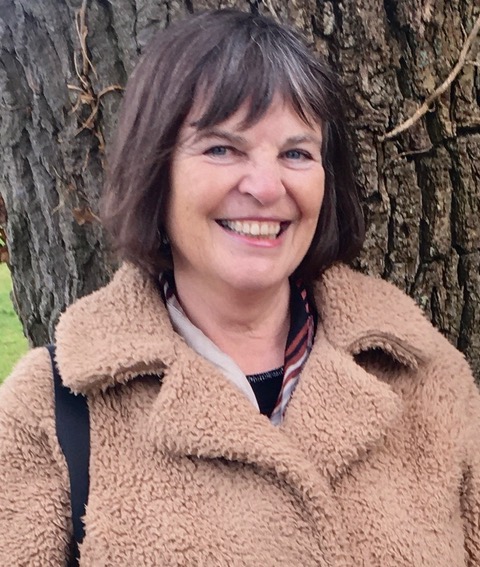
It’s a great pleasure to introduce this month’s guest poet Mary Chuck. Mary and I first met on a poetry workshop in Manchester and we have met on such workshops many times since, including a splendid one at the Almassera Vella, Spain.
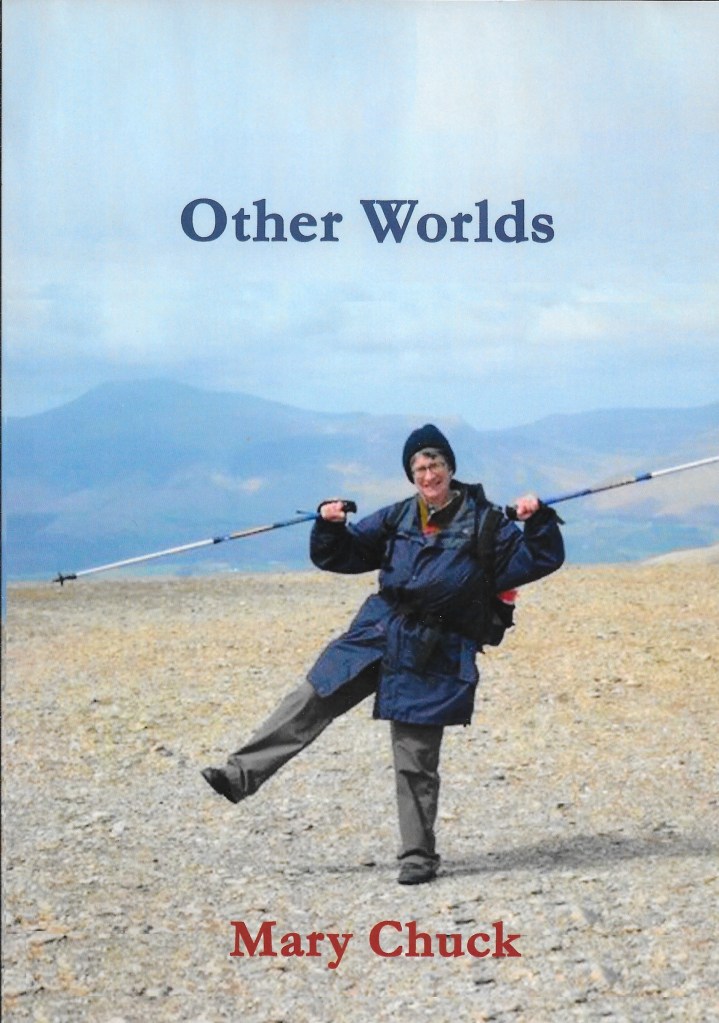
Mary Chuck started writing poetry when she retired after 30 years working in Secondary Schools, starting by teaching chemistry. While she was working her need to escape and let some-one else do the organising took her on many walking holidays in different parts of the world. She is still an active governor at a local primary school and has just completed twelve years as a Trustee of the Wordsworth Trust. She has been writing poetry with several groups, attending workshops and going on residentials with a variety of poets, but most often with Peter and Ann Sansom at the Poetry Business.
I’ve chosen four poems from Mary’s debut collection Other Worlds (Dempsey & Windle, 2021). Mary will have a belated Zoom launch with two poet friends on Tuesday 23 August. Contact Dempsey & Windle for a link.
Migration
His people came from Russia and Lithuania, their passports always changing, not because they moved but because their countries became other countries.
His people were Jews, Ashkenazy Jews. They came from the East, driven south and west over centuries until finally they fled from the Pale.
Long after my grandfather settled in England, and long before he was naturalised, he was able, once again, to be Lithuanian. His mother’s people were White Russians or maybe they had ten white horses?
My father married out. Her people were not Jews.
They came from Shropshire, farmers, and one was a stationmaster. They were not the chosen people. Her people were not so interesting.
Jammu-Kashmir
He tells me that his father was Kashmiri but now he can’t go back and I describe to him what Srinagar was like before unrest made it unsafe to go;
I tell him how we only went because the flight to Leh was cancelled due to clouds, and how luxurious it was, staying on house boats on Dal Lake;
how we were shown around the lake and lay with curtains to protect us from the sun, on cushions on a wooden boat, a shikara, and saw the floating gardens there;
tell him how pink the lotus flowers were and how the Mughal gardens, full of scents I didn’t recognise, were different from the spice stalls in the street;
how the couple in one garden, keen to speak in English, asked me about my life, how they were sad my family had not arranged a marriage – then I stopped.
I knew I’d gone on far too long. His eyes glazed over as he looked beyond me, said I never knew my dad I never really wanted to.
Travels with my Daughter
I’m not really sure when the balance altered, when I knew for certain our relationship had changed.
Perhaps somewhere north of Peshawar after we drove up the Khyber Pass with an escort carrying a Kalashnikov, arrogant, in the front seat of the car
and after we bought an alcohol licence in the hotel, and she flirted in the swimming pool, with a young man who claimed he was the brother of Imran Khan
but maybe before the landslide which closed the road, when she carried a tiny baby across the rubble, impossible for its mother wearing a burkha.
We crossed a bridge over a ravine at night, before the house of the drunken engineer. She had been talking easily in Urdu to the driver; we turned and reversed, then advanced
more slowly, about nothing she said as we jolted across – then on the other side – He had heard that the bridge was rotten, but I told him it would be fine.
A well-worn track on Kerridge Ridge
Another glorious Saturday morning needing to be out, needing to be walking to be moving rhythmically across the hillside up to White Nancy, through the kissing gate, ignoring the brambles, skirting the quarry, following the well-worn track on the back of Kerridge Ridge head down muttering to myself long before anyone might have thought I was phoning going over and over conversations I have had or might have had over and over thinking if only…
until, hearing the hint of a cough I feel warm breath on my face and lift my head to find myself looking at a moist, brown, eye above a large, brass, ring in the nose of an enormous bull.
I breathe, slowly. I look around. It is a glorious Saturday morning.
We moved into wintertime last night. A good time for a poem that mentions clocks. For over 12 years three friends and I met monthly at each other’s houses to write, taking turns to host and find sample poems. This came from one of those sessions. It’s published in the pamphlet A Stolen Hour, Grey Hen Press, 2020. The poem was also Highly Commended in the 2016 Manchester Cathedral poetry competition. It was a privilege to read it during the prize-giving at the cathedral.
A la Hafiz
For just one minute of the day open all the windows. Let your mind run alone, like a foal that has never known fields without fences.
For just one minute of the day let your body rest in a place where other people run past, so that they have the permission they need to go and play.
For just one minute of the day go and sit within sight of a large clock. Remember how the three hands are always trying to catch up with each other. Feel your compassion grow. Be still.
With all the rest of your time make bread, make beds, make love. Do what is needed and then close the windows. You are already looking upon yourself more as God does.
My friend and poet Kathleen Kummer will have her birthday soon. We have visited the Dartington Estate in Devon several times: to hear the then Poet Laureate Sir Andrew Motion read, to listen to music during the Music Summer School & Festival which was established in 1947. Alwyn Marriage of Oversteps Books invited me to read during the Ways with Words Literary Festival. It was wonderful seeing people out on the lawn, resting in deckchairs, or queuing up to get their book signed by famous authors.
Dartington Hall is a spectacular Grade I listed building. The gardens are grade II listed: a sculpture by Henry Moore, a yew tree that is 1500 years old and a row of sweet chestnut trees believed to be about 400 years old. The gardens are a delight in every season. Here is Kathleen’s poem about the gardens.
The Tiltyard, Dartington Hall Gardens
That summer day
That summer day at Dartington, everything familiar, beautiful: the corrugation of the bark of ancient trees, the sun behind the scarlet maple leaves, the swathes of wildflowers in the glades, warm to the touch the might buttocks of Henry Moore’s reclining figure, the bench, its oak smooth, silver, following the stone wall’s curve, on which we sat. Unexpected, the robin landing next to us, a fledgling, plump, who stayed ten, fifteen minutes until his mother called him. And, in the little wave of sadness which washed over us, because he looked so young, indivisible as water is, this swell of happiness.
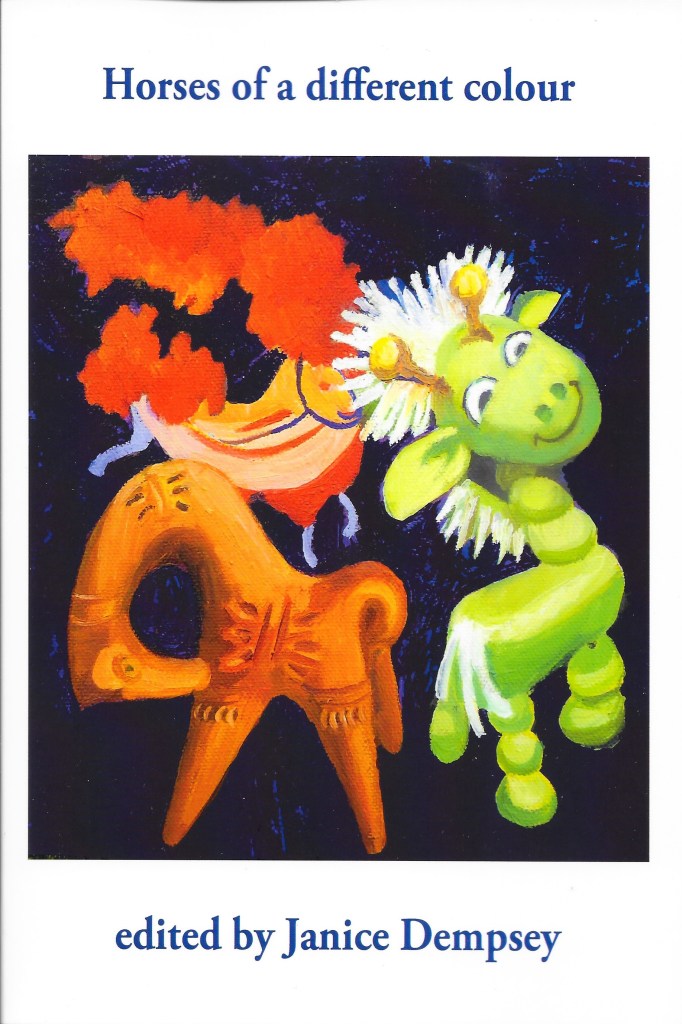
It was a lovely surprise to get this anthology ahead of schedule, so I could read it before leaving for the Netherlands. Dempsey & Windle organise an annual competition, with options to enter single poems as well as a batch of 10 to win publication of a pamphlet. The anthology has poems by the winners of both categories, as well as the highly commended and longlisted poems. I was glad to have my tribute to a poet friend included. On Thursday 10 June in the evening there will be a reading on Zoom with a number of poets reading. Contact Dempsey & Windle for the link.
This poem by fellow poet Rod Whitworth has it first publication in the same anthology. Rod and I met several years ago on writing workshops. I admire its economy and delicacy. It’s not surprising it gained a 2nd prize.
Demobbed
Go on. Hold his hand. You’ll be all right. I looked at the man in the new suit they’d told me was my dad and I walked at his side, hands in my pockets.
We stepped into the street, his right hand steering Megan’s pram with ease and command past Cropper’s with the pigeons, and I walked at his side, hands in my pockets.
Down Platting Brew, round the curve over the culverted brook and a hard shove to the road to Daisy Nook, me walking at his side, hands in my pockets.
Past the milk farm – Whitehead’s – and the field with the pond and reeds, the greying April snow. I walked, my right hand warm in his left hand.
The day we switched off the machine, I told him they’d arrested Pinochet, though he was past cheering, and he lay, his right hand cold in my left hand.
On a writing workshop last weekend, I introduced Vasco Popa’s The Golden Apple: a round of stories, songs, spells, proverbs & riddles. I have been using some of the riddles and proverbs as writing prompts.
Vasco Popa (1922-1991) was Serbia’s greatest modern poet. Ted Hughes was an admirer of his work and wrote the introduction to his Collected Poems. Popa collected folk tales from many sources. He found a rich inspiration for his own poems in this “eternally living wellspring of folk poetry” which he combined with vivid imagery and a touch of the surreal.
Here are two riddles from The Golden Apple. The answers are at the end of the blog.
With an iron key I open a green fortress And drive out the black cattle
A horse with its pack goes into a house and comes out of it, but its tail never goes in.
Vasco Popa
Popa’s Collected Poems inspired my poem Fairy tale. It was first published in erbacce and then in my debut collection Another life (Oversteps Books Ltd, 2016).
Fairy tale
Someone needs to go to a deep cupboard in a dark room the others wait outside
The first one becomes a grandmother with a stoop then someone else steals her white lace cap her smile her soft voice they go to lie still in a deep dark bed in a cold room
Then someone else walks a long way through the wood, across the saddled serpent under a cold sheet of dark clouds
That someone is dressed in crimson already – it will save time the old one will rescue the red girl but they will not have enough bricks to finish the job
after that someone else will get to be hungry and someone will always be eaten
It is a great pleasure to introduce this month’s poet. Alex Josephy and I met last November. We both read at the ‘virtual’ Poetry in Aldeburgh festival, along with poets Sharon Black and Christopher North – all of us with a connection to Europe.
Alex lives in London and Italy. Her collection Naked Since Faversham was published by Pindrop Press in 2020. Other work includes White Roads, poems set in Italy, Paekakariki Press, 2018, and Other Blackbirds, Cinnamon Press, 2016. Her poems have won the McLellan and Battered Moons prizes, and have appeared in magazines and anthologies in the UK and Italy.
As part of the Poetry School Mixed Borders scheme, she has been poet-in-residence at Rainham Hall, Essex, and in Markham Square, London. Alex is a poetry mentor and writes reviews for publications such as Envoi and London Grip. Find out more on her website: http://www.alexjosephy.eu
I have chosen four poems from Naked Since Faversham which show the range of her work. I hope they speak to you, as they did to me.
Grasshopper, Castelvecchio
Stalled between diagonal slats, you’re a dry hull, ridge-backed
as if whittled from a vine stem, forelegs splayed to grip the ledge
you’ve chosen for shelter. Hail made me close the shutters;
that’s when I noticed you, remote in winter torpor. When I woke
you were still here, a cold wedge interrupting the light.
Each time I pass I look for you, imagine how the frost
deepens, fills your hollows; hear no rasp of song, no longing
for green. Cavalletta, little horse, I hope we’ll see the spring.
A Word in Your Ear
Cielo, the heaven of unimportant things: half an hour together
in the usual bar. It’s a light still on when the morning sky
starts to remember blue. Cielo, just look at the shape of it:
five strokes, a hasty dot, slight enough to skim a canvas
on a brush-tip, watery peaks and arcs. That fluent curve –
a sudden smile, stand-offish verticals, and then a hug.
A little bite of something sweet and quick – cielo, cielo, ce l’ho!
warbles the pastry cook. His cielo is yeast that swells the heart
of a brioche, opens rooms of warm air in a bread roll.
Going Up
At the door I pause to salute the white plastic vessel. Press
the panel, cupping a palm beneath. The blessing flows;
I wring my hands, fold them, gather a fearful breath, hope
for the best. Together we can fight infection. Shed what I’ve carried,
invisible on the wheezy bus. This is a clean hand zone. Trace finger bone
to knuckle, heart line to life line. Catch a whiff of spirit,
hurry through Reception, head for the silver lift.
Therapy
Take thistledown, hold it in the bowl of your palms. Feel it tingle like Spumante.
No, it can’t mend your heart, but it will float you to the surface of your skin.
Each time you long for your child across the ocean, find a river
or a canal., worn stone steps down to the towpath. Accept
a kingfisher’s quick shot of blue, a moorhen’s buoyancy; how easily
they dive, come up somewhere unexpected, sleeved in a twist of air.
Earlier this week I read for Todmorden Wednesday Writers. The Zoom event was well attended, with the open mic attracting poets from UK and abroad. I still want to abolish January – blogged about that before. The Todmorden poets liked this November poem. The pumpkin picture perfectly represents how I’m feeling right now – lockdown in November!
November
The month that offers only Halloween and All Souls’ Day. That Danish hygge nonsense – an IKEA trick to sell more scented candles, cocoa, woollen blankets with a Nordic pattern. All those Scandinavian series – Killing, The Bridge, different actors playing Wallander, every instalment set in November. Groundhog month. Lit-up pumpkins will never warm the knuckles of your heart. Every November day is an odyssey. To be away twenty years and be recognised only by a mangy old dog. Check your bonfire for hedgehogs, remember Battersea Dogs & Cats Home in your will. Do away with Christmas.
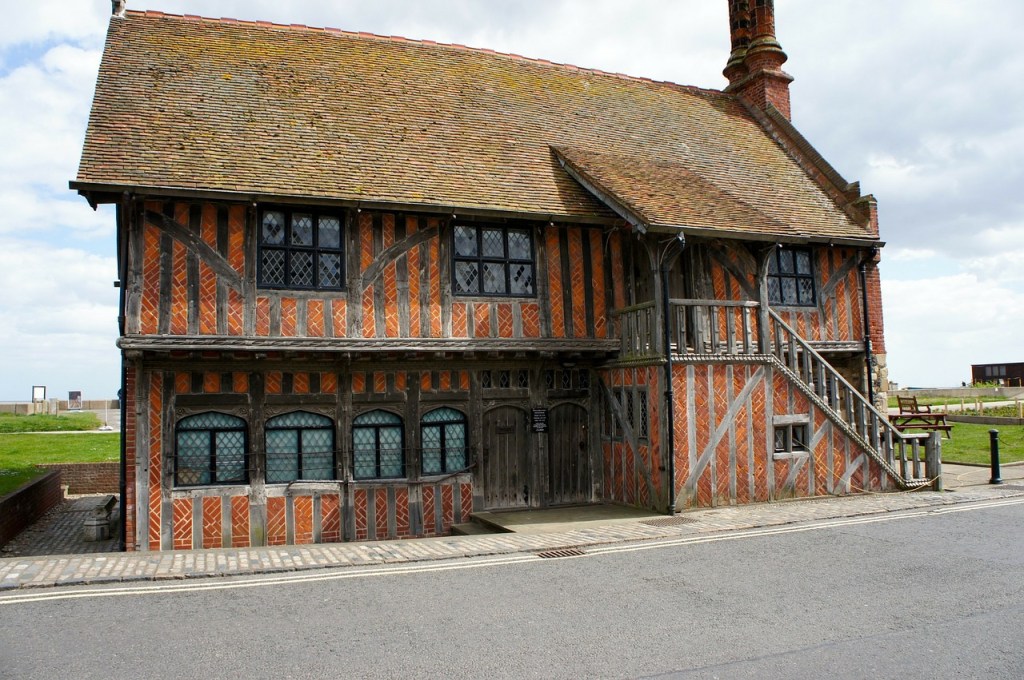
Moot Hall, Aldeburgh, Suffolk. Photo in public domain
I’m delighted to be reading at Poetry in Aldeburgh. The reading, called Between Places: Britain and Europe, will take place on Saturday 14 November, 12:00 – 13:00 London time. Also reading will be poets Sharon Black (France), Alex Josephy (Italy) and Christopher North (Spain).
The readings are free to attend. You just need to register at the Poetry in Aldeburgh website, to get a link to the Zoom event. The Festival runs from Friday to Sunday.
I will be reading new work, written in my caravan in the Netherlands during the last six months. When I selected the poems, I came across one which reminded me of “Poetry in the Plague Year”. Jim Bennett of the Poetry Kit set up this project. It’s an international project with contributions from many countries: https://www.poetrykit.org/plague.htm
My short poem, written on 29 March, is below.
Credit: marcart via Pixabay
Poem
CORE i3, a blue laptop, my lifeline to the world. How to fill the time until sunset?
If he was here…no, he is someone’s husband now. The only snow, spiraea in the hedge.
All that’s well will end. My friend Helen emailed There’ll be a cremation, no ceremony
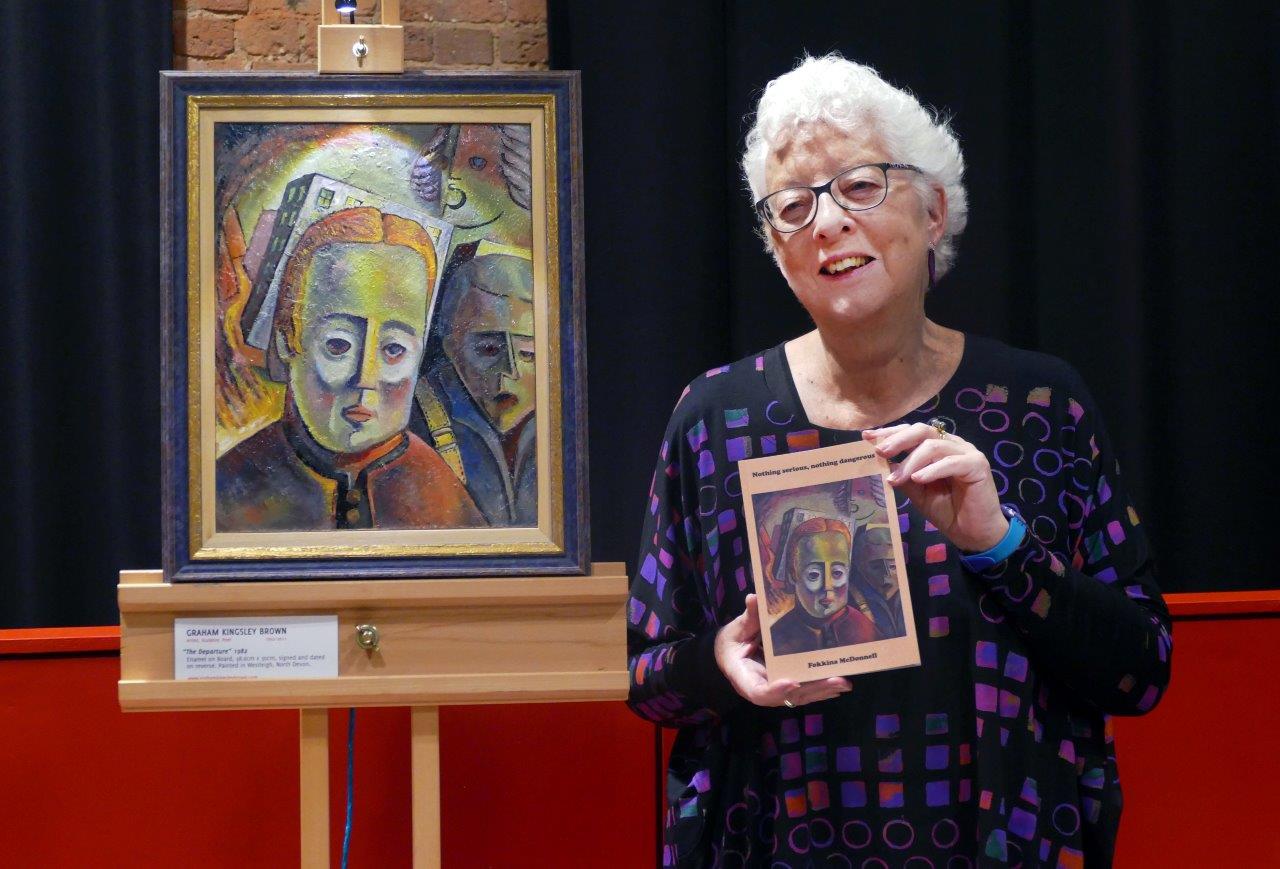
The Departure, book and me (Photo: copyright Sophie J Brown)
Here I am with my second collection Nothing serious, nothing dangerous at the launch, held at the International Anthony Burgess Foundation, Manchester on the 3rd of March. It was a wonderful occasion, made very special by Graham Kingsley Brown’s painting The Departure being there too.
His daughter Sophie Brown (herself a talented artist) designed this website. Visit www.grahamkingsleybrown.com and click on the Curator’s Diary for her account of the launch and to read what the meaning of the painting may be (entry 28 November 2019).
Below is the first poem of the book. This may well be the ferry from Harwich, UK to Hook of Holland, the Netherlands. A ferry crossing is a departure of a kind …
Ferry crossing
Two people sit at a table by an oblong picture window.
Sun lights up their hands which are curled round coffee cups.
The window is made of safety glass. There have been announcements:
location of lifebelts, life rafts, long and short blast of a horn.
While words are hidden at the obscure side of imagination,
other people are queuing for lunch or buying alcohol in the shop.
The folded hands are the back of playing cards, The Queen of Spades, operas, novellas, the shortest of short stories.
It is not strange to see these cards turn into sea gulls.
A white ferry is a city where nothing is permanent.