Tag Archives: Travel

Sirens

Credit: AdAdriaans via Pixabay


Tomorrow is the first Monday of the month when the 4,000+ alarms through the Netherlands are tested. This alarm-and-warning system was set up after the Second World War. The monthly test stopped after the fall of the Berlin Wall in 1989, and for a period the sirens were only tested once a year. The government wanted to introduce a warning system by mobile telephone, but this did not prove effective. So, from September 2003 the monthly sounds can be heard for exactly 1 minute and 26 seconds.

The alarms aren’t rung if the first Monday falls on a religious or national public holiday, or on the national Remembrance Day of 4 May. This month, the Dutch people will be reminded beforehand that the sound is just a test.


On Monday I am sending the final manuscript of my collection Remembering / Disease to Aaron Kent at Broken Sleep Books. I have chosen a poem from the new book that includes a siren and want to thank Isabelle Kenyon of Fly on the Wall Press for first selecting it.

Credit: TBIT via Pixabay

Voice

I’m scared of the voice that tells me to let go of the wheel
it’s an old man’s harsh gritty cold pushing me
that time Monday sunny A487 heading for Porthmadog

black figures carry bags home whatever home might mean

silence only sirens calling the dog-end of the year

falling is kind of doing something
you can fall sideways head-first backwards
I have worked all these years to stay upright
running like a rabbit on a metal track

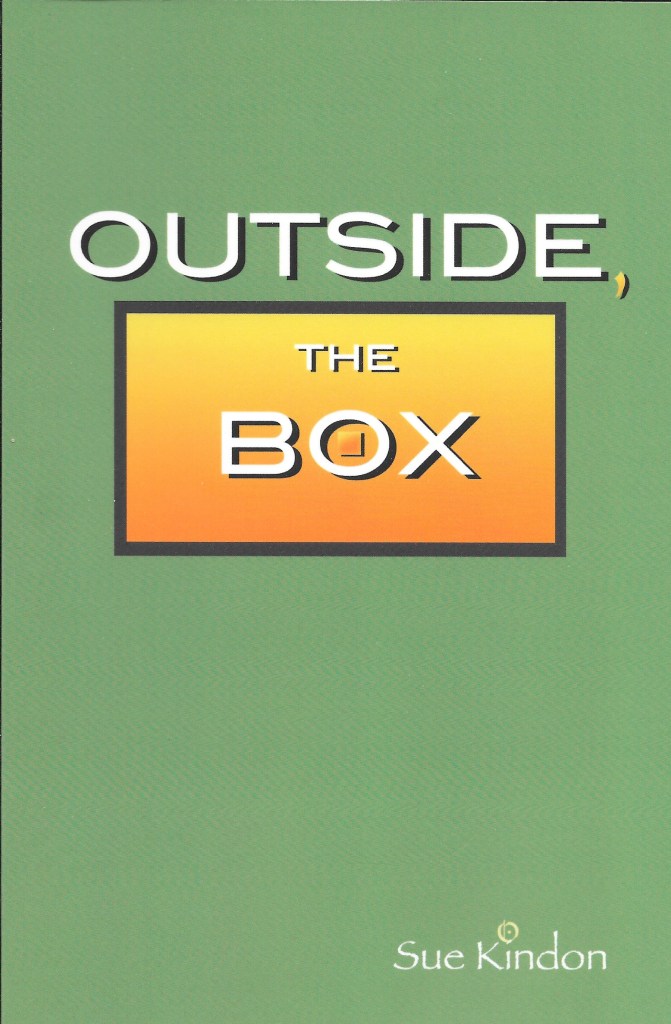
Outside, the Box – guest poet

I am delighted to introduce this month’s guest poet Sue Kindon. We met on Zoom during lockdown 1, through a mutual poet friend.


Sue Kindon lives and writes in the French Pyrenees. An enthusiastic member of the local slam team, her greatest achievement to date is an award for a poem in French. 


Kindon was Runner Up in the 2021 Ginkgo Prize (for Eco-poetry); and has two pamphlets to her name – She who pays the piper (Three Drops Press, 2017) and Outside, the Box (4Word Press, 2019). The poems in the latter were sparked by the box moth plague that devastated the landscape a few years ago.


I’ve selected five poems from Outside, the Box, to give you a taste of the range and humanity of Sue’s poems.

Box Moth (Cydalima perspectalis)

white moths haunt each hedge
all summer their larvae gorge
on our ancient ways

The House of Running Water

We’re so far off the mains, I cross myself,
or is it my reflection? Our drinking water
isn’t purified, sobbing in glugs
from a faery underworld
just beyond the spring line.
Boils, frogs, plagues of grass snakes
are there none. The kitchen tap
dispenses an incessant stream
in spite of some newly-converted saint
bottled up in supermarket plastic.
Every day an elven-prince
strikes rock with his divining rod
and sets loose unchlorinated magic:
we drink deep, until our inner walls
cascade with the stuff.

I could never return, now my mind
is clean as the washing on the line.
Townsfolk have forgotten
how the old world flows.
It must be something in the water.

Bernadette

I thought of you as a sister
from the start.
You were the one who insisted
I worked in the shade, you saw
that my fair skin reddened
in the southern sun trap
of the presbytery walls.
Your straight larkspur back
bent for hours as you laboured
to remove chiendent and petty spurge.

You would go missing
for a quick smoke
outside the tall grey gates
of our temporary eden, and I felt
the loss, sure as the last petals
falling from the climbing rose.
Then you’d be back,
tending the last geranium
and offering a kind word
I might not understand.

So much more I wanted to say:
and now I’m gaining confidence
with the language, it’s already
winter, and the gates are shut.

On Safari

Death came to me as a zebra
crossing my path. I’m not ready yet,
I said, and he stepped aside.

As I passed by, I admired
the pull of perfect stripes,
the kiss of dark mane

and I was nearly fooled
by his op-art trompe-l’oeil invitation
to step into his black-and-white-wash skin

and set down my bright sorrow.
I was dazzled by the glow
of skeletal zebra ribs

until I saw the shadow
of famished lion at the tunnel mouth
and smelt the jitter of my blood on parted lips.

Jardin de Curé – Damage Limitation

Our prayers have kept the moth at bay –
and careful spraying – chemicals
have underplayed their part.

The volunteers have withered up
or died. A few stalwarts
welcome late summer visitors
but when it comes to weeding,
they pull the flax
and leave the nipplewort.

Nettles flourish by the chapel wall.
Self-seeded marjoram
annexes the cabbage plot.

At least the box hedge is intact.
Our prayers have kept the moth at bay.

De Kop van de Haven – poem

Credit: R van Lonkhuizen

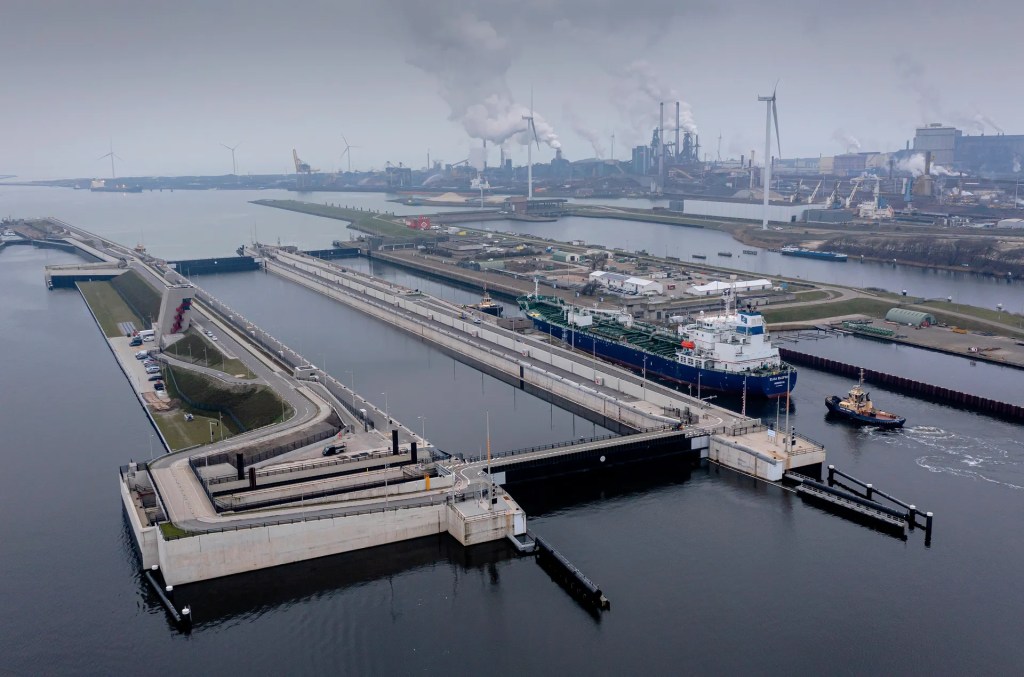
On Wednesday this week King Willem-Alexander opened the Zeesluis Ijmuiden. These new sea locks, built alongside the existing locks, are the largest in the world: 500 metres long, 70 metres wide and 18 metres deep. The existing locks were nearing the end of their life and becoming too small for the huge vessels heading for Amsterdam.


A major design fault was discovered. This resulted in excess cost of almost three million Euro and the grand opening almost three years overdue. Now ships can pass independently from the tides. But, with the cruise ships entering the locks, so does a lot more salt water… and are those towering liners still wanted?


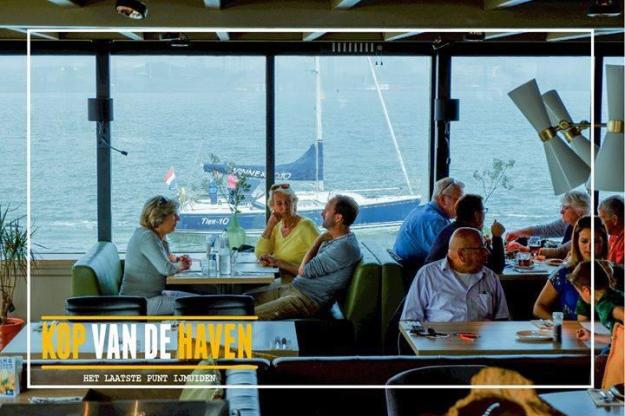
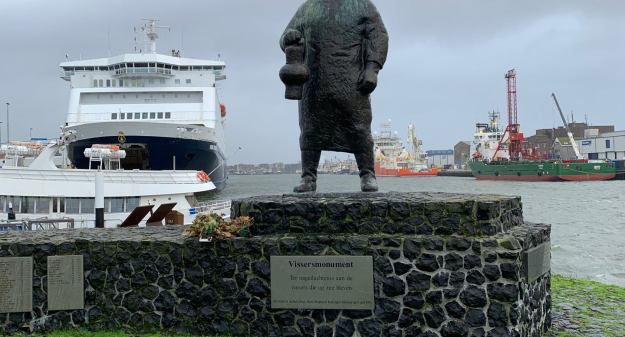
A splendid view of it all can be had a little further out. The last time I had lunch there was, probably, in 2011 – that Icelandic volcano had closed air space. I managed to get a shared cabin on the ferry to Newcastle and treated my friend to lunch as a thank-you.

De Kop van de Haven, Ijmuiden
for Trieneke


It’s not a pub, it’s not in the UK.
It’s right by the tall chimneys
of the steel works, once Royal
Dutch, now Tata. The canal
to Amsterdam was dug by
unemployed men and now
there’s a gleaming ferry terminal:
Christmas shopping in Newcastle.

Fish is fish is fresh is fresh with
a view of water and waves and
smoke and boats and barges
and ships and liners and the wind.
Outside on the head of the harbour
the bronze fisherman holding
a storm lantern in his right hand.

Tulips from Amsterdam

Credit: Kang-min Liu,  Creative Commons Attribution 2.0 Generic license


Today is dovetailed between yesterday’s National Tulip Day and Blue Monday. Nationale Tulpen Dag is an initiative started by Dutch tulip growers 10 years ago. On the third Saturday of January, about 200, 000 tulips are placed on the Dam Square in Amsterdam. These free flowers start the tulip season. This year people will be handed two bunches and are asked to give one to someone else – share the happiness.

Credit: WCoda on Pixabay


Research seems to have pinpointed the third Monday in January as the worst day of the year. There was some easing of the lockdown here in The Netherlands. However, the hospitality and cultural sector are still closed. I’m leaning more towards being blue …
Here is my poem about tulips.

Extraordinary Popular Delusions and the Madness of Crowds

They’ve not yet reached one of the tulips,
the central one of this display.
You can imagine a window, if you like.
Five parrot tulips lean towards the light.
Degrees of purpling. The ants appear
half-way up the bulb-shaped vase.
I’ve left the thin pencil lines
indicating a flat surface.
Look closely and you’ll see this vase
should tumble, fall or slip.
Three fingers’ width, water level
in the glass. Greying water extracted.
The tulips were a present.
You can count the ants, if you like.

Note: This is the title of a watercolour painting, donated by the (anonymous) artist to Manchester Art Gallery. The poem was published in my second collection Nothing serious, nothing dangerous (Indigo Dreams Publishing, 2019).

Miniature French Suite – writing prompt

Credit: fsHH on Pixabay

It’s a rainy weekend here in Holland. So, I’m writing the blog piece for this month’s guest poet: Steve Waling. That reminds me of this poem which I wrote on a short workshop with Steve. And it was in January 2011 that I heard the countertenor Andreas Scholl sing in the Bridgewater Hall in Manchester, UK. It’s such an experience seeing and hearing your heroes live!

Writing prompt: Combining a place and the music you (might) have heard there. Or, you could use write a miniature suite, like I did. Or, the end of the poem could come back full-circle to the beginning.

Miniature French Suite

Allemande

Do you mind if I borrow your man?
The old one with the beard that has
sparrows nesting in it. It’s only
for the Open Gardens weekend.
He needs to wear something
beige-brown, corduroy and I’ll
provide food. Tell him to wear
a cap or a southwester – something
to keep the fledglings dry.
He can hum to them. It might rain,
it could snow, warm boots.
Rameau or Telemann, I don’t mind.

Sarabande

Rameau or Telemann, I don’t mind.
A countertenor can’t be that choosy.
A voice like that is a rare find
but keeping it alive and strong taxes
me and my agent, bless her.
She tells me to let go of worries
and fears. It’s her domain to get
me engagements, book flights,
the new portrait and such.
She says a voice like mine is a horse,
that needs to be whispered to,
not broken in.

ErikTanghe on Pixabay

Gigue

I’m warming up in an empty church,
on a grey Sunday afternoon.
It’s winter, the radiators gurgle,
the conductor is late.
I let my eyes wander in order
to keep my thoughts at rest
but now they take flight,
filling the gallery, the arches
and the painting of the old one
with the beard that has
sparrows nesting in it.

(published in Another life, Oversteps Books, 2016)

W G Sebald -writing prompt

This week it is 20 years since the writer W G (Max) Sebald died, aged 57.
Propolis, the publishing arm of Norwich-based The Book Hive, published Ariadne’s Thread: In Memory of W G Sebald (2014). This memoir was written by Philippa Comber. She met Sebald in 1981 in Norwich where they both lived. They hit it off and became friends.


Philippa and I met in Manchester late 2004 at a series of poetry workshops and we hit it off too: both practising psychotherapists with several shared interests. I remember Philippa telling me she was planning a visit to the German museum dedicated to Sebald to read the letters that she had sent him over the years.


Sebald died in a road-traffic accident near Norwich. According to the coroner’s report, he had died of a heart attack before colliding with a lorry. Memory, loss of memory, decay, exile are the main themes of his books with their unique blend of fact, recollection, and fiction.

Writing Prompt: My poem is in 14 lines. Yours can be shorter. Do include ‘I do know’ and ‘I don’t know’ at least twice in each stanza.

Knowing and not knowing

I know I mustn’t eat grapefruit as it interferes
with the effect of the medication. I don’t need to know
the Table of Chemical Elements, though I do know
that a few elements have recently been added and
Rutherfordium is one of them.

I know and remember the view of the Wash and the silver
ribbon of the Broads as the plane turns. I don’t know
the names of narrowboats and yachts, but I do know
that the beach huts in Wells-next-the-Sea are on stilts.

I know someone who was a good friend of W G Sebald
and that her letters to Max are archived in a museum
near Stuttgart. I know where I was when I heard on
the radio that Sebald had died: the A17 heading for Norwich,
just before a round-about.

Every Day I Promise Myself – guest poet

It’s a great pleasure introducing this month’s poet: Rachel Davies. We met through poetry workshops in Manchester many years ago.

Rachel Davies has had several jobs including nurse, teacher and head-teacher. She thinks retirement is the best job she’s ever had because it gave her time to pursue her poetry. She is widely published in journals and anthologies and has been a prize-winner in several poetry competitions.

Her debut pamphlet, Every Day I Promise Myself, was published by 4Word Press in December 2020 and she is currently seeking a home for her second pamphlet, Mole. Rachel is co-ordinator of the Poetry Society Stanza for East Manchester and Tameside. She has an MA in Creative Writing and a PhD in contemporary poetry, both from Manchester Metropolitan University. Originally from the Cambridgeshire fens, she now lives in Saddleworth with her partner and two cats.

I hope you enjoy my selection of four poems from the pamphlet.

Alternative Mother #4
Jean

For fun, you push me round the lounge
on the Ewbank till I beg you to stop, teach me
hula hoop, two-ball, how it’s good to laugh.

You soothe my knees with Germolene,
say a hug helps, say it’s alright to cry.
You know the healing power of a biscuit.

You hand-sew my wedding dress,
stitch into a secret seam a blue satin ribbon,
a lock of your own hair, all the love it takes.

You take my daughter out, keep her
for bedtime stories, forget to bring her home
so I worry she’s followed the rabbit down the hole.

You make me dance, even on those days
when the music died in me. You teach me
the euphoria of champagne.

You bake scones so light they float down
to your granddaughters like hot-air balloons.

Alternative Mother #8
Ted

Sometimes dreams can be nightmares.

You wanted most of yourself to be buried, to become
an enrichment of the fenland soil you loved so much,
your heart and lungs to be thrown into Whittlesey Wash
to feed the eels you knitted your nets for.

Oh, you were generous. You gave me some peonies once,
dug up from your garden. You shook the soil off though—
that soil’s worth three thousand pounds an acre you said.
I looked for the smile but there wasn’t one.

One night your skeleton grew out of the earth like a myth.

Breaking the Line

The blood red sky
sheds tears. Fresh milk
curdles. Now I know

my heartbroken father
left the house with
chisel, mallet — after dark

he’s out there hammering
like a minor god. Grief begins
to surface from the cold stone.

To St Ives, a Love Poem
Halloween 2014

Even though November is a black dog sitting at your feet
and your beaches lay crushed under the weight of mist

and your shoreline roars at the passing of summer
and your white horses rise on their hind legs

till your fishing boats get seasick; even though your trees
shed tears like baubles and your shops drip gifts like rain

and your cobbled streets and narrow alleys wind
around me like a clock and your posters announce

Fair Wednesday as if all other days are cheats
and your bistros display fish with eyes wide as heaven,

scared as hell, and your railway bridge yells
do what makes you happy and it feels like a tall order;

even though your choughs are impatient for pilchard
your huers won’t see today from the Baulking House

still you open your arms and kiss my cheeks in welcome.

On the bright side, there’s always – writing prompt

Credit: Geralt via Pixabay

This week I’ve been going through my files and folders with poems, deleting old ones that aren’t going anywhere, finding forgotten ones, losing others because I changed the title but not the filename – you get my drift.

Prompt: Here’s a sort-of-abecedarian list poem. What would be in your alphabet?

On the bright side, there’s always:

avocados and the alphabet, a
bridge over troubled water and
chocolate, Fairtrade or not,
days which travel at their own pace into
evening and other
favourite places like Venice, beaches, the
glorious counter tenor voice of Andreas Scholl,
hairdressers who waited for us,
ink to waste, as the poet has it,
jazz, all that jazz,
kilograms to worry about,
lessons that return until learned,
maria, martini, marina,
nautical miles and naughty but nice.
Oh, let’s stop, there is a
picnic bench with a view, think of
questions, the certainty of death, taxes,
rescuers in anoraks, accompanied by
sniffer dogs, so we’re fit again to
tango, show us a leg or two,
uniformed bouncers taking them off,
victory which will be ours and
whiskey or gin, double measures, that
xtra mile we will go.
Y, the fork in the road and Frost.
ZZZ, a comfy bed for a rest.

Lighting Out, poems to answer the dark

Beautiful Dragons Collaboration

A parcel arrived this week. Friends in Manchester sent on poetry magazines and books. Among them was my copy of Lighting Out, poems to answer the dark. In the words of the editor, Rebecca Bilkau:

‘We won’t speak about the dark times we’ve had, or the dark times that might come. This little anthology is about reclaiming the stage for the bright stuff … resilience, hope, spidery optimism, pardonable puns, rare and shameless clarity. Think of it as a route map, made by 80-odd poets, to Light Out of the blues, the shadows, the virus, the storm and binge TV. Shine along, oh do.’

Lighting Out is the tenth publication in the Beautiful Dragons Collaboration: ISBN: 978-68564-902-9. A year ago I started learning Swedish on Duolingo, just for the hell of it. I got to a 292-day streak with the encouragement of that little green owl …

Flying with the little green owl –
my 95-day streak with Duolingo (Svenska)

Vintern är den vita årstiden.
Winter is the white season.
Keep going! Practice makes perfect.
Författaren skriver på ett papper.
The author writes on a sheet of paper.
Good effort!
Barnen har många leksaker.
The children have many toys.
Don’t give up.
På lordagar tittar jag alltid på tv.
On Saturdays I always watch tv.
Great work! Let’s make this a bit harder.
Vi går ofta till museum.
We often go to the museum.
I believe in you.
Hur många personer är det på stranden?
How many people are there on the beach?
Awesome! You’re working hard and learning new words.
Jag lär mig långsamt.
I am learning slowly.
I’m so proud of you.

Table 64 – writing prompt

Credit: Pexels on Pixabay

This week my friend Valerie celebrated her birthday. We met 30 years ago on a residential week in Spain. To celebrate our friendship, here is a short poem in which we’re together. Bowler’s is a very large indoor and outdoor carboot sale location in Manchester.


That Generation Game is a tv game show in which teams of two family members, but from a different generation compete. The winners see a conveyor belt with goodies wobble past. No worries: if they can’t remember them all, the studio audience will shout to help …

Table 64

We carried the plastic crates and cardboard
boxes into Bowlers at bloody six o’clock.
The locusts, proper traders, picked items
from the piles we carried, threw us
pound coins and a few fivers.

The early flurry was good and then it was
like the Generation Game in reverse:
suitcases went, a pile of books, glasses,
a wok, costume jewellery, some cuddly toys.
We sat back in our folding chairs like regulars,
holding off sleep.

Writing Prompt: Did you do a car boot sale with a friend? Were you a market trader (for real or in your dreams)? Did you go to an auction of lost property? What is the object that you lost or found?