Tag Archives: Travel

Lemonade in the Armenian Quarter

This month’s guest poet is Sarah Mnatzaganian. We first met on a Poetry Business residential workshop a few years ago. Sarah is an Anglo Armenian poet based in Ely, UK. She grew up in rural Wiltshire and in her late teens spent each summer with her father’s family in the Armenian Quarter of Jerusalem.

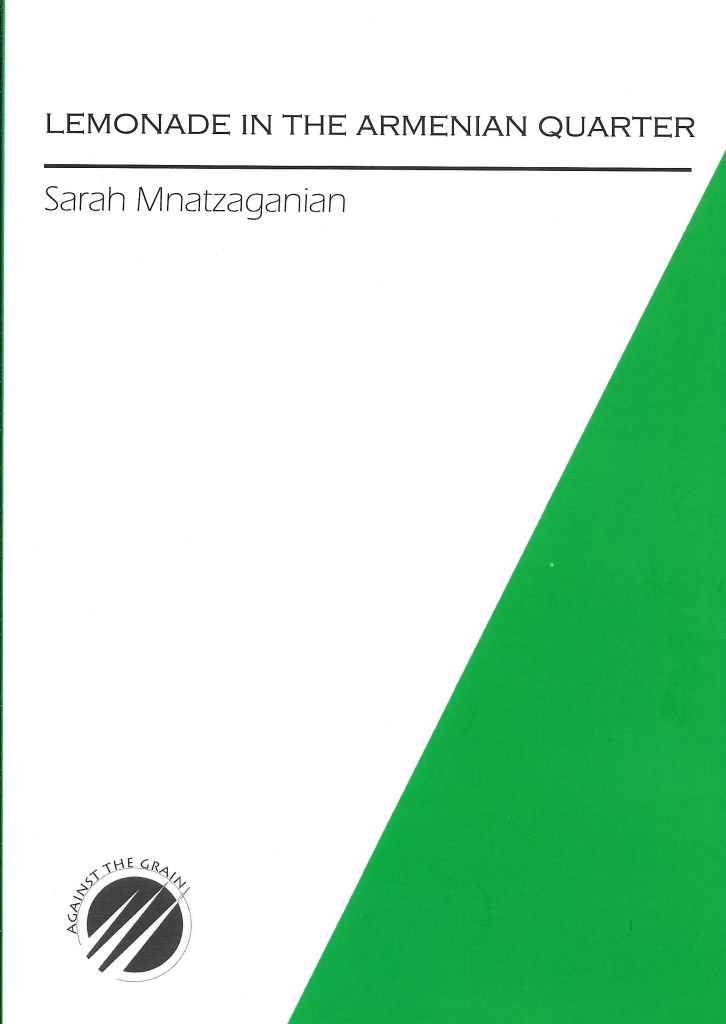
Her debut pamphlet, Lemonade in the Armenian Quarter, is published by Against the Grain Press. Sarah’s work has appeared in The North, The Rialto, Poetry News, Poetry Wales, Poetry Salzburg Review, Magma, Pennine Platform, London Grip, Atrium, and many anthologies. She was a winner in the Poetry Society’s winter 2020 members’ competition on the theme of ‘Youth’ and won the inaugural Spelt nature poetry competition in 2021.

In the 2022 Saboteur Awards Sarah’s debut with its ‘wonderfully moving poems’ gained the award for Best Poetry Pamphlet.

Lemonade in the Armenian Quarter

Uncle Hagop planted lemon trees outside his house
where small passionate tortoises collide each spring
with the hollow pock of a distant tennis match.

At night his ripest lemons dropped into a crackle
of leaves. He grunted through the cardamom-coffee kitchen
into the courtyard to fill his hands with fruit.

Auntie soothed the juice with syrup and iced water.
Uncle drank, clacked his tongue and sang, My Heart
Will Go On, his head thrown back like a songbird.

The lemons lay thick last February. My sister filled a bag
for Uncle. She put a smooth yellow oval into his hand
and helped him lift it to his face to smell the zest.

Dad asked the nurse for sugar and a knife. He cut,
squeezed, stirred. See, Hagop, I’m making lemonade
from your trees. Watched his brother smile, sip, sleep.

Egg Time

To my mother, Madeleine

Give me an egg, round as childhood.
I’ll tap its innocent shell; push sideways
through its Humpty Dumpty head to find
a core of molten gold or the dry pollen
of a hardened heart. May this teaspoon
teach my tongue the taste of lunch hour
on a school day when I’m six, hugging
the bump under mum’s dungarees.
How did the morning go? Watching her
butter home-made bread. Reading aloud
while the baby kicks. Back down the lane
for the lonely end of playtime, her love
like albumen around my ears and in
my eyes. Voices water-slow. Whistle
blown from the other side of the world.

Juice

To my father, Apraham

Every time I set spade against turf,
you’re there, cutting grass-topped cliffs
into our borders, neat as the Normandy coast.

You snatch sweat from your face
and ask for Lemon, half a lemon,
squeezed, with water please, darling,
it quenches the thirst.

I silently sing each syllable to myself
in your voice, like no other voice,
licking the ‘l’ in half almost as long as in lemon,
expressing the juice of each word with your verve,
crushing the fruit’s face into ridged glass
and clouding cold water with the sharpness you crave.
Each sucked finger stings.

Now I want to watch your dark throat dance
while you drink.

At the end of my suffering / there was a door

Have you ever hated anyone enough
to ask an iris leaf to turn into a sword
sharp as the new moon, cold as a snowdrop,
irresistible as spring grass growing disorderly,
before it’s mown to match the wishes of one
demanding pair of eyes? Don’t lose focus.

Take one, narrow, curved iris leaf and hold it up.
If the heart you want to penetrate is hard enough
to steal a country and the lives from its people;
if that heart won’t learn the wisdom of the iris,
the snowdrop and the moon – that life is mutable –
then that heart will feel the leaf turn to steel
and, to grant your wish, will stop beating.

The iris will flower blue and yellow, as it should,
for the people returning to their country,
as they should, and there will be no blood
on your hands.

The title is a quotation from The Wild Iris by Louise Glück.

Whistling for Stalin – poem

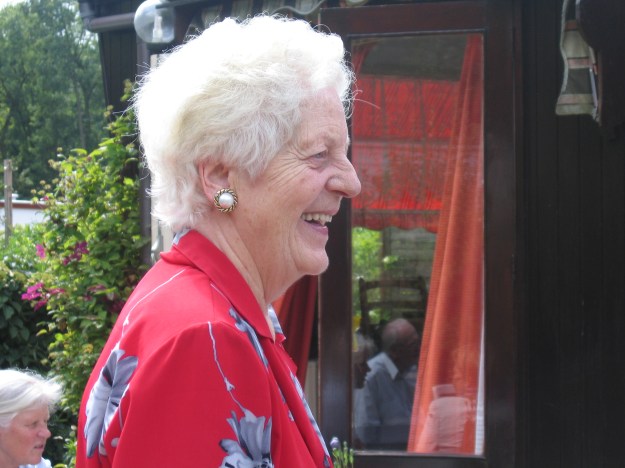
This w/end my poet friend Kathleen Kummer will be celebrating her 94th birthday. We first met 20 years ago on a writing week held near Cambridge. Kathleen lived and worked in The Netherlands after marrying a Dutchman.

To mark her special day, I’m posting a poem from her debut collection Living below sea level, published by Oversteps Books. The poem first appeared in the original 14 magazine, edited by Mike Loveday.

Whistling for Stalin

Circus performer summoned to the dacha,
you arrived empty-handed, no sign of the treasure
at the tip of your tongue. The signal was given,
you pursed your lips, made them a channel,
floated a tune on a cushion of air,
like a bird in a cage, lusciously trilling.
They sat around in their white, belted tunics,
he and his henchmen, legs stretched out rigid,
but ready to jack-knife to a Georgian folk song.

Did your whistling enliven the poker-face,
make it genial? When he clicked his fingers,
your tune slid back into its voice-box.
How much did you know about Uncle Joe?
When you whistle, you’re bound to sound carefree.

Assisted Passage – poem

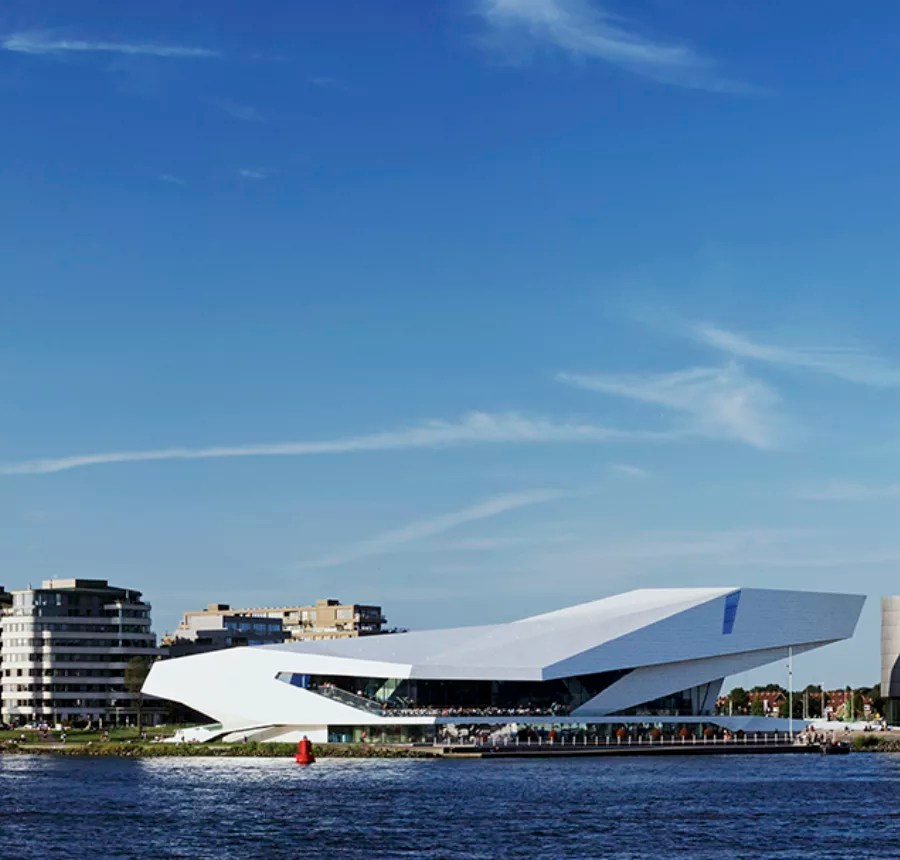
Eye, Amsterdam

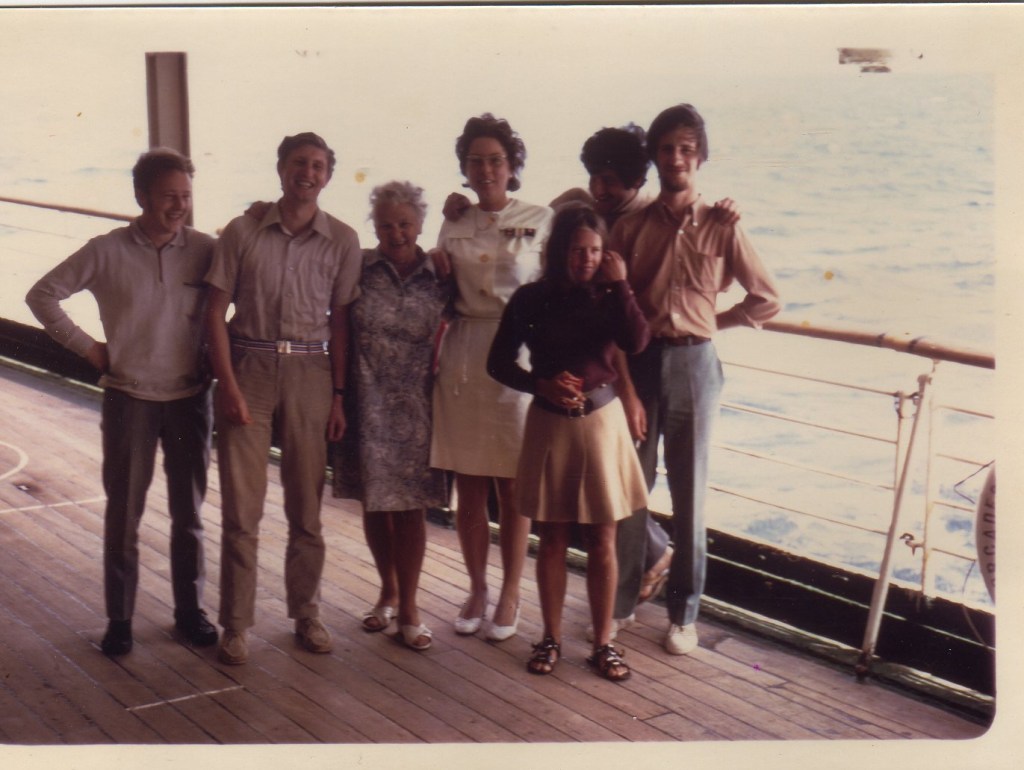
Over half a century ago I shared a room in an Earls Court hostel with three other Dutch women. P&O Lines Ltd had just taken us on as WAPs (Woman Assistant Pursers) and we were to be employed in various offices while waiting for a ship to become available. I did secretarial work for a Scottish marine engineer, struggling to capture the technical terms – about bulkheads of a vessel that was being built at the famous Cammell Laird yard in Birkenhead.

We have kept in touch all those years, and celebrated in the Eye, Amsterdam with lunch in 2019. The film museum is an iconic building just the other side of the railway station. A short ferry journey is a good way to get there. Our plan for an annual reunion had not taken a pandemic into account and now one of us has health issues. Fingers crossed for September!

Our language skills had got us the job: Dutch, English, French and German. The photo is from S.S. ORCADES where I was Supernumerary, translating the news, and holding daily meetings. Here I am with the small group from Germany and Switzerland.

Assisted passage

You’re on F deck aft, an alleyway
away from your spouse,
also sharing with five strangers.

Time to fold over your memories,
freshly laundered. You don’t need
memories where you’re heading.

You saw the Fire Dance in Dakar.
Days of sea, sun, and sky.
Cape Town with Table Mountain.

Nine grey days of swell.
Freemantle, Adelaide,
Melbourne, Sydney.

Shake a leg, show a leg.
You’ll soon be down under.
Your new upside-down lives.

Changing Places – poems

Carl Tomlinson

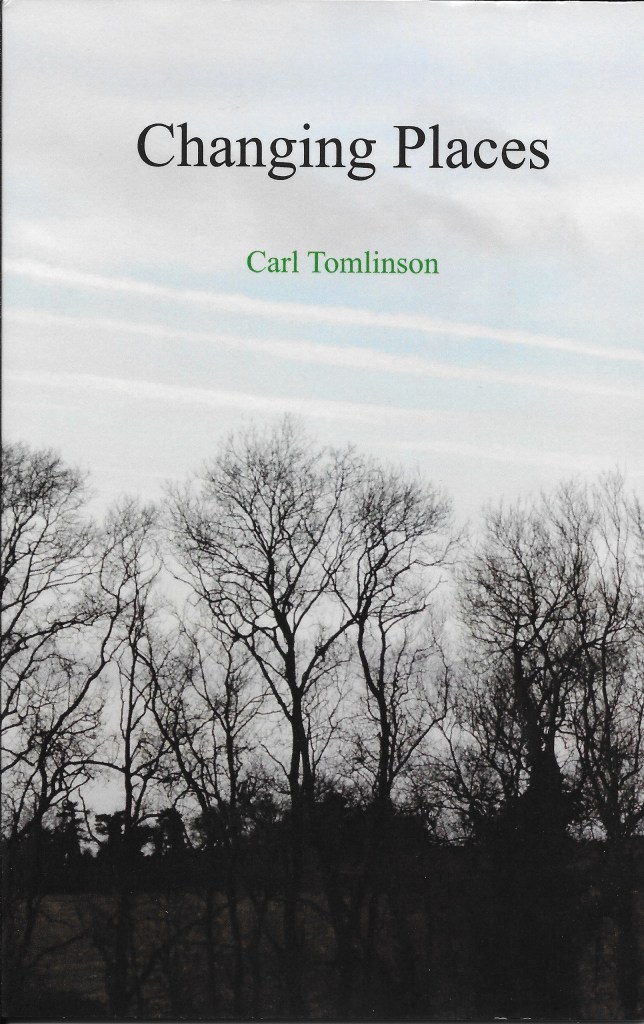
It’s a huge pleasure introducing this month’s guest poet Carl Tomlinson. Carl and I met on a w/end poetry workshop some years ago. He was born in Lancashire – where his father’s family had farmed for 150 years. He now lives in Oxfordshire and is a coach and part-time finance director. His poems have been published in magazines, anthologies and online.


From his debut Changing Places I have chosen one poem that has a personal meaning to me: I was living in Southampton in 1976 and my late husband supported our local team. The other four poems are a moving tribute to Carl’s personal land and heritage. The cover picture was taken by him.

Picking sides

FA Cup Final. 1 May 1976. Southampton 1 – 0 Manchester United

Bobby Stokes made me a Red
one Spring day at Wembley.
He broke my heart in a moment
scuffing that shot past Stepney.

Although I wasn’t football mad
you still had to pick a side
and a playground full of Saints fans
said Man United were mine.

Four years after moving South
my accent was still abused.
Flattened vowels lurked in my mouth
and echoed round the school.

All that week I learned their names
eager to share the glory,
but sometimes, as the pundits say,
the Cup’s a fairy story.

Nil-nil at eighty-three minutes,
the telly rings with cheers.
Stokes shoots. He scores. Saints win it.
This was what I’d feared.

Bobby Stokes made me blush deep red
at hymn-time in assembly,
For all the saints, the teacher said.
Every face was turned on me.

Baling

I’d just got my A-levels out of the way
and was spending a week with my Aunt
in the house her grandfather’d built
in the garden behind the farm,
in a place that had seemed like forever, aged eight.
She said “Derek Fitton wants a hand with his hay.”
As kids we had loved helping Grandad,
chasing the baler round Tandle Hill’s haunch
riding the trailer back to the barn
echoing Tarzan calls under the bridge.
We lived with the itching and the seeds in our hair
because that was the way we were made.
It was ten years since the pain of the sale
and I wanted to feel like a farmer again.
Derek was glad of my help that day.
It was fun enough, in a blokeish way.
He gave me a fiver. Later, I drank it away.
The twine cut my fingers, my back complained
the welts sprang up on my arms again.
You wouldn’t know, I guess you’ve never baled
but it’s a different kind of ache when it’s not your hay.

Coming to grief

We were most of the way to Middleton
when I discovered that grief
doesn’t always dress in death.
One of my parents said
that Three Gates Farm –
where six generations had tilled
the last of Lancashire’s silty soil –
was being sold that week.

In the winter of sixty-three
my Grandad made the front page
phoning for a snowplough
because the lane was six foot deep.
Now we were in ‘th’Observer’ again
in the back of the classifieds
along with all the other lots
due ‘Under the Marshall hammer.’

Reading the paper emptied my eyes.
I realised whatever childish plans I’d made
for those fifty acres of gentle land
nudged between mill towns and millstone grit
were to be knocked down
(for twenty-six grand in the end)
in Ye Olde Boar’s Head
by an auctioneer I never met.

And by my father’s teenage need to leave that land
and make his life his own.
And by my uncle’s trying to stay
where I was sure we all belonged.
And by Grandad’s explaining
that even the hencotes would go.
So the scheme to keep one to use as a den,
that went south as well.

The parlour’s long since seen a cow,
there’s nothing like a farm there now
but the breath of beasts on a winter day
and the sweetness of cowshit and hay
surprise that grief back into me.

Inventory

Accounts and correspondence,
attached with failing staples,
complete the detail of a sale
of Live and Dead Farming Stock.

Dead just means inanimate,
not deceased.

Then, in the Particulars, I find the line
that honours my line, and all they left here
‘The land will be seen to be
in a high state of fertility.’

Harvest

“Oh bugger!”, the words thud.
I’ve just put the fork through a spud.

I’m showing our son and daughter
something I learnt from my father
which my Grandad had taught him before.

“You start a bit off, away from the green,
keep the fork away from the tubers,
you want to lift ‘em, not pierce ‘em,
and they’ll not store if you fork ‘em,
they’ll be no good if you fork ‘em’.”

Again the fork sinks, again the soil shifts
and this time a big‘un gets stuck on a tine.
“Oh bugger!” I thud before I’m stood up
and quick as an echo the lad pipes up
with “That’s what our Grandad said
when he put his fork through a spud.”

Three shorts – writing prompt

Credit: Mammiya via PIxabay


1
I discovered Pome only a couple of months ago and am enjoying the poems very much: an interesting range and they are short, even very short. As I understand it, Matthew (Matt) Ogle originally posted the poems some years ago and the project has restarted via Tiny Letter.


Here is an Issa haiku, translated by Robert Hass. Since I am a paid-up member of the Society for the Prevention of Cruelty to House Dust, it speaks to me …


Don’t worry, spiders,
I keep house
casually

2
Monostich – a poem or epigram of one single line. The title is important and may be long, longer even than the poem. My recent example from a course I’m doing:


While it rained, we went out and put the poster on trees and lamp posts in the neighbourhood


It needs heart and courage (lebh in Hebrew) to wear a pochet with conviction.

3
Here is a short poem by Carl Tomlinson from his Changing Places. It has a haiku-like quality. Carl is the May guest poet. I look forward to sharing more of his poems with you then.

August


All along the bridleway
some kind of rain
is trying to shake off the wind.
The land feels thinned.

Trying – writing prompt

Madingley Hall, near Cambridge

Yesterday I talked with friends about Cambridge. That brought back memories of a one-week workshop at Madingley Hall with the poet Lawrence Sail. Madingley Hall is a 16th Century building just a few miles from Cambridge. It is set in seven acres of splendid gardens and grounds, designed by the famous Capability Brown in the 18th Century.The weather was good the week I was there and we would all find a quiet corner outside and get writing.

Credit: Pasja1000 via Pixabay

Writing prompt

One of the exercises was about personification. We mentally went through the alphabet and stopped at a letter that resonated with us. What kind of life does that letter have? What do they want and what is difficult for them?

The poem Trying was published in my debut Another life (Oversteps Books Ltd, 2016).

Trying

Trying not to be like
one who has gone before.
Allocated a slot
at the back of the queue:
a circle dancer with a club foot.

Striving to become
the symbol of perfection.
Dragging a tail,
leaving tiny furrows
on the rough terrain.

Trying then to hide
in foreign places.
Archaic words spoken with a twang:
Qua, quorum, quota, quasi.

A cold place they tell me.
Quebec.

Sirens

Credit: AdAdriaans via Pixabay


Tomorrow is the first Monday of the month when the 4,000+ alarms through the Netherlands are tested. This alarm-and-warning system was set up after the Second World War. The monthly test stopped after the fall of the Berlin Wall in 1989, and for a period the sirens were only tested once a year. The government wanted to introduce a warning system by mobile telephone, but this did not prove effective. So, from September 2003 the monthly sounds can be heard for exactly 1 minute and 26 seconds.

The alarms aren’t rung if the first Monday falls on a religious or national public holiday, or on the national Remembrance Day of 4 May. This month, the Dutch people will be reminded beforehand that the sound is just a test.


On Monday I am sending the final manuscript of my collection Remembering / Disease to Aaron Kent at Broken Sleep Books. I have chosen a poem from the new book that includes a siren and want to thank Isabelle Kenyon of Fly on the Wall Press for first selecting it.

Credit: TBIT via Pixabay

Voice

I’m scared of the voice that tells me to let go of the wheel
it’s an old man’s harsh gritty cold pushing me
that time Monday sunny A487 heading for Porthmadog

black figures carry bags home whatever home might mean

silence only sirens calling the dog-end of the year

falling is kind of doing something
you can fall sideways head-first backwards
I have worked all these years to stay upright
running like a rabbit on a metal track

Outside, the Box – poems

I am delighted to introduce this month’s guest poet Sue Kindon. We met on Zoom during lockdown 1, through a mutual poet friend.


Sue Kindon lives and writes in the French Pyrenees. An enthusiastic member of the local slam team, her greatest achievement to date is an award for a poem in French. 


Kindon was Runner Up in the 2021 Ginkgo Prize (for Eco-poetry); and has two pamphlets to her name – She who pays the piper (Three Drops Press, 2017) and Outside, the Box (4Word Press, 2019). The poems in the latter were sparked by the box moth plague that devastated the landscape a few years ago.


I’ve selected five poems from Outside, the Box, to give you a taste of the range and humanity of Sue’s poems.

Box Moth (Cydalima perspectalis)

white moths haunt each hedge
all summer their larvae gorge
on our ancient ways

The House of Running Water

We’re so far off the mains, I cross myself,
or is it my reflection? Our drinking water
isn’t purified, sobbing in glugs
from a faery underworld
just beyond the spring line.
Boils, frogs, plagues of grass snakes
are there none. The kitchen tap
dispenses an incessant stream
in spite of some newly-converted saint
bottled up in supermarket plastic.
Every day an elven-prince
strikes rock with his divining rod
and sets loose unchlorinated magic:
we drink deep, until our inner walls
cascade with the stuff.

I could never return, now my mind
is clean as the washing on the line.
Townsfolk have forgotten
how the old world flows.
It must be something in the water.

Bernadette

I thought of you as a sister
from the start.
You were the one who insisted
I worked in the shade, you saw
that my fair skin reddened
in the southern sun trap
of the presbytery walls.
Your straight larkspur back
bent for hours as you laboured
to remove chiendent and petty spurge.

You would go missing
for a quick smoke
outside the tall grey gates
of our temporary eden, and I felt
the loss, sure as the last petals
falling from the climbing rose.
Then you’d be back,
tending the last geranium
and offering a kind word
I might not understand.

So much more I wanted to say:
and now I’m gaining confidence
with the language, it’s already
winter, and the gates are shut.

On Safari

Death came to me as a zebra
crossing my path. I’m not ready yet,
I said, and he stepped aside.

As I passed by, I admired
the pull of perfect stripes,
the kiss of dark mane

and I was nearly fooled
by his op-art trompe-l’oeil invitation
to step into his black-and-white-wash skin

and set down my bright sorrow.
I was dazzled by the glow
of skeletal zebra ribs

until I saw the shadow
of famished lion at the tunnel mouth
and smelt the jitter of my blood on parted lips.

Jardin de Curé – Damage Limitation

Our prayers have kept the moth at bay –
and careful spraying – chemicals
have underplayed their part.

The volunteers have withered up
or died. A few stalwarts
welcome late summer visitors
but when it comes to weeding,
they pull the flax
and leave the nipplewort.

Nettles flourish by the chapel wall.
Self-seeded marjoram
annexes the cabbage plot.

At least the box hedge is intact.
Our prayers have kept the moth at bay.

De Kop van de Haven – poem

Credit: R van Lonkhuizen

On Wednesday this week King Willem-Alexander opened the Zeesluis Ijmuiden. These new sea locks, built alongside the existing locks, are the largest in the world: 500 metres long, 70 metres wide and 18 metres deep. The existing locks were nearing the end of their life and becoming too small for the huge vessels heading for Amsterdam.


A major design fault was discovered. This resulted in excess cost of almost three million Euro and the grand opening almost three years overdue. Now ships can pass independently from the tides. But, with the cruise ships entering the locks, so does a lot more salt water… and are those towering liners still wanted?


A splendid view of it all can be had a little further out. The last time I had lunch there was, probably, in 2011 – that Icelandic volcano had closed air space. I managed to get a shared cabin on the ferry to Newcastle and treated my friend to lunch as a thank-you.

De Kop van de Haven, Ijmuiden
for Trieneke


It’s not a pub, it’s not in the UK.
It’s right by the tall chimneys
of the steel works, once Royal
Dutch, now Tata. The canal
to Amsterdam was dug by
unemployed men and now
there’s a gleaming ferry terminal:
Christmas shopping in Newcastle.

Fish is fish is fresh is fresh with
a view of water and waves and
smoke and boats and barges
and ships and liners and the wind.
Outside on the head of the harbour
the bronze fisherman holding
a storm lantern in his right hand.

Tulips from Amsterdam

Credit: Kang-min Liu,  Creative Commons Attribution 2.0 Generic license


Today is dovetailed between yesterday’s National Tulip Day and Blue Monday. Nationale Tulpen Dag is an initiative started by Dutch tulip growers 10 years ago. On the third Saturday of January, about 200, 000 tulips are placed on the Dam Square in Amsterdam. These free flowers start the tulip season. This year people will be handed two bunches and are asked to give one to someone else – share the happiness.

Credit: WCoda on Pixabay


Research seems to have pinpointed the third Monday in January as the worst day of the year. There was some easing of the lockdown here in The Netherlands. However, the hospitality and cultural sector are still closed. I’m leaning more towards being blue …
Here is my poem about tulips.

Extraordinary Popular Delusions and the Madness of Crowds

They’ve not yet reached one of the tulips,
the central one of this display.
You can imagine a window, if you like.
Five parrot tulips lean towards the light.
Degrees of purpling. The ants appear
half-way up the bulb-shaped vase.
I’ve left the thin pencil lines
indicating a flat surface.
Look closely and you’ll see this vase
should tumble, fall or slip.
Three fingers’ width, water level
in the glass. Greying water extracted.
The tulips were a present.
You can count the ants, if you like.

Note: This is the title of a watercolour painting, donated by the (anonymous) artist to Manchester Art Gallery. The poem was published in my second collection Nothing serious, nothing dangerous (Indigo Dreams Publishing, 2019).