
It’s been a long time since I’ve been out to fill that well. I’ve had health issues and sat at home with the black dog. The exhibition of Joan Miró’s sculptures at Beelden aan Zee is almost closing. On a cold and sunny Tuesday, I got two trams to Scheveningen.
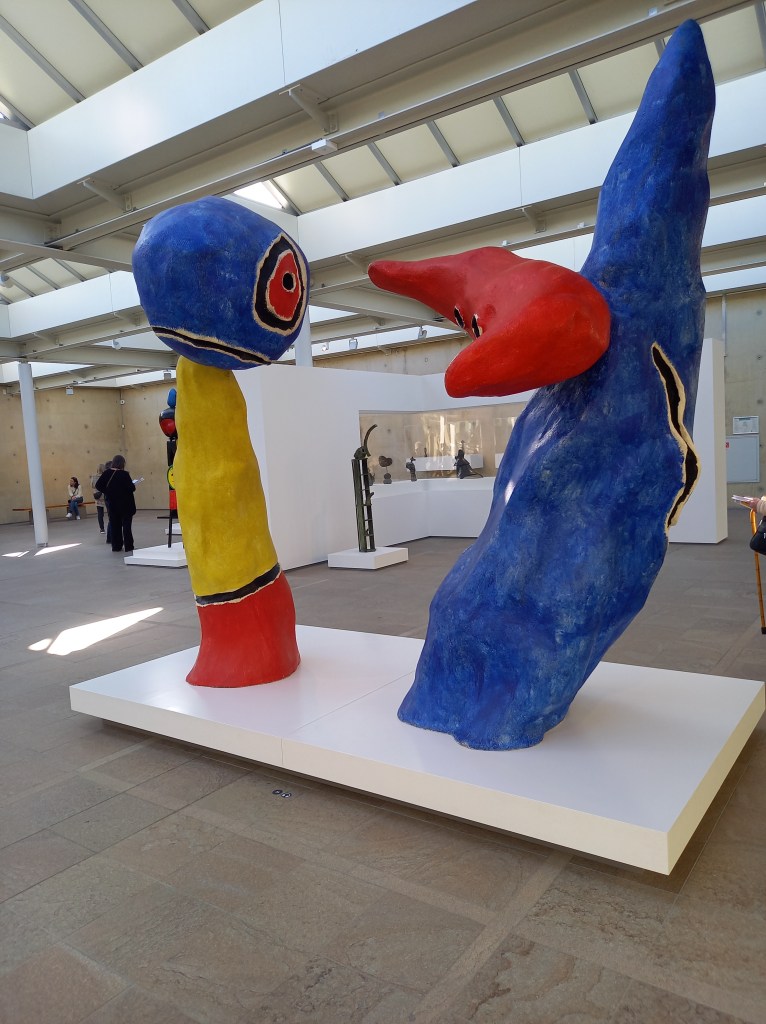
Beelden aan Zee is the only Dutch museum specialising in sculpture and it’s in a great setting. The authorities in The Hague insisted that the building should not be visible, so it’s hidden inside a dune, and it is mostly underground. From the terrace you can only see the sea, not the busy boulevard. All the materials have a sandy colour. Through plenty of glass in the roof there is a lot of light.
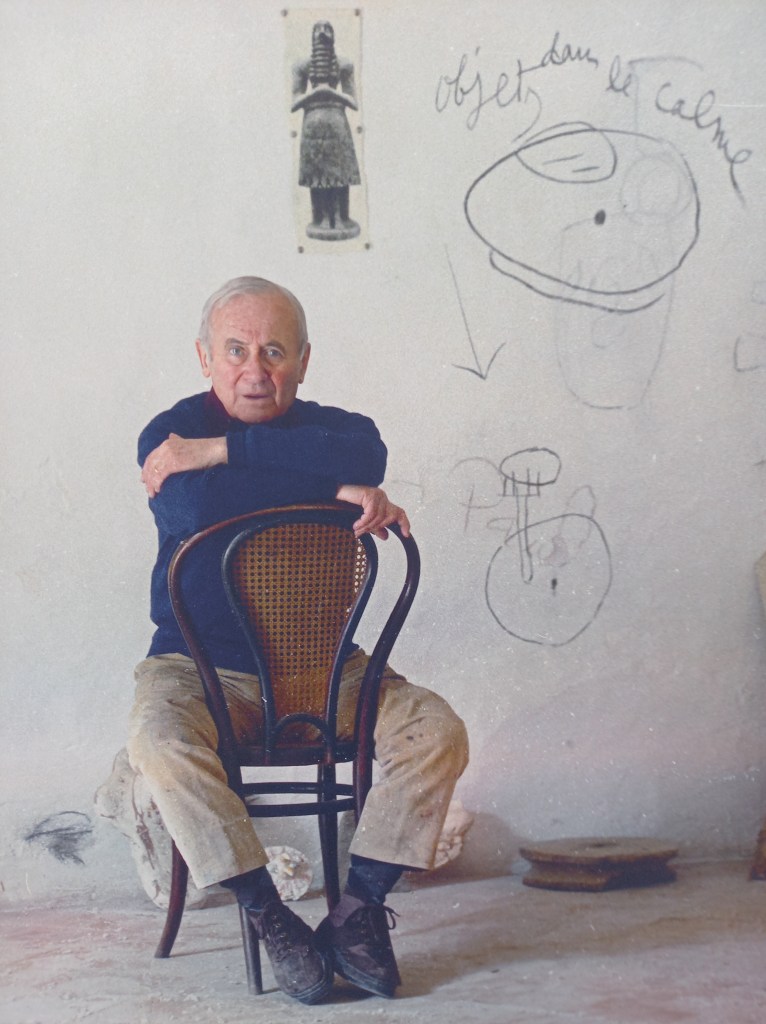
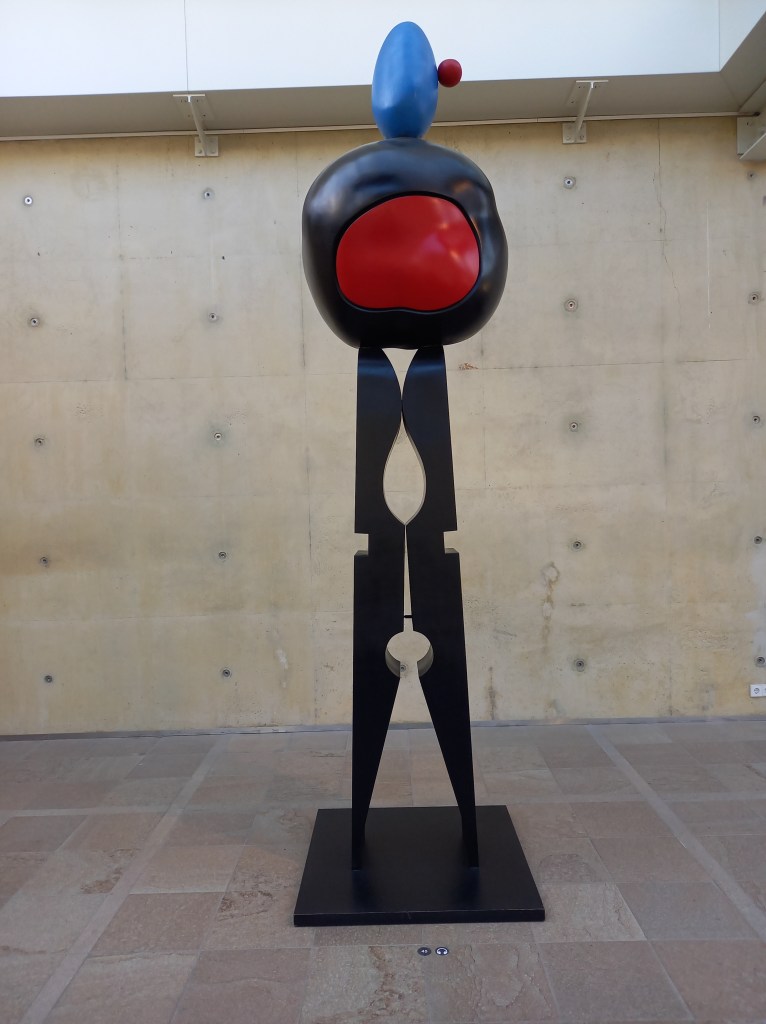
In his studios by the sea in Mont-roig del Camp and on Mallorca, Miró’s love for sculpture was given a huge boost. The (natural) objects he found on his walks were incorporated into sculptures and assemblages, along with everyday objects. The giant clothes peg (painted synthetic resin) was a design for a prestigious project in Central Park, New York. It would have been at least 14 metres high, though it was never realised.
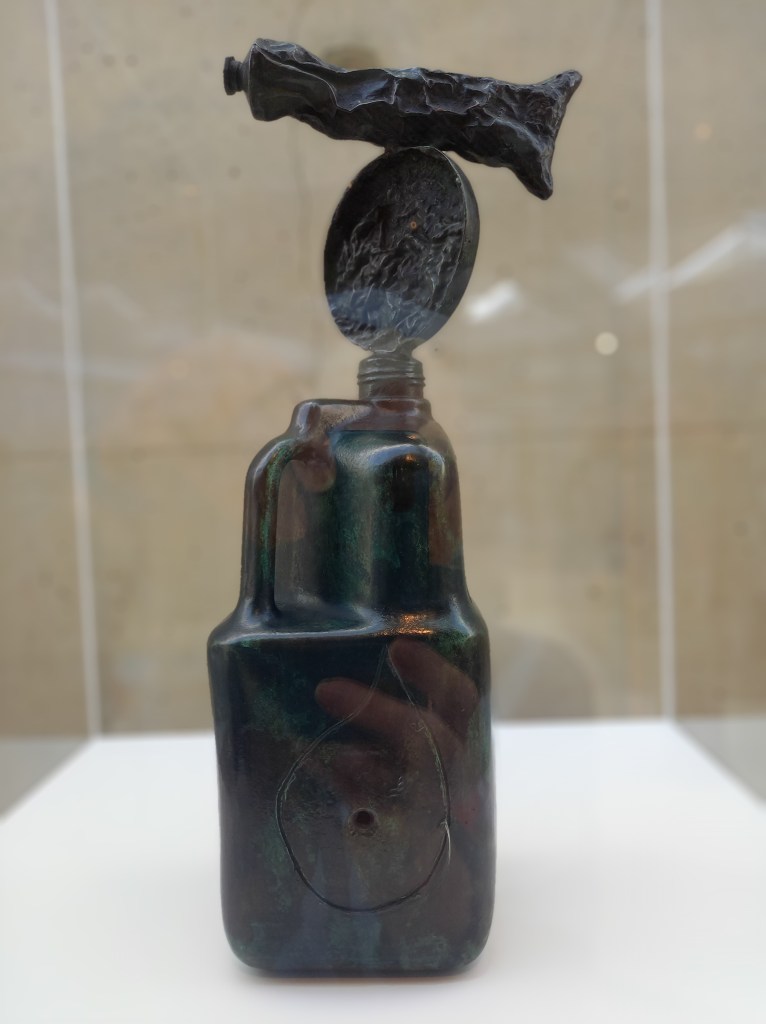
You can see the objects in this bronze sculpture: a paint tube, plastic bottle, spoon. Miró’s bronze sculptures were created using plastic models that he continued to shape until he found them good enough to cast.
The sculpture Monsieur et madame (Sir and Madam) is made of painted bronze. Two different objects form a couple. A square, red-painted stool stands for the man. On top of it is a rectangular white box with a face on it. The round, black stool represents the woman. It has a yellow egg on it. A playful, archetypical representation of masculinity and femininity.

The Monument is the first sculpture as you enter the main hall. You can see some of the light coming through the roof.
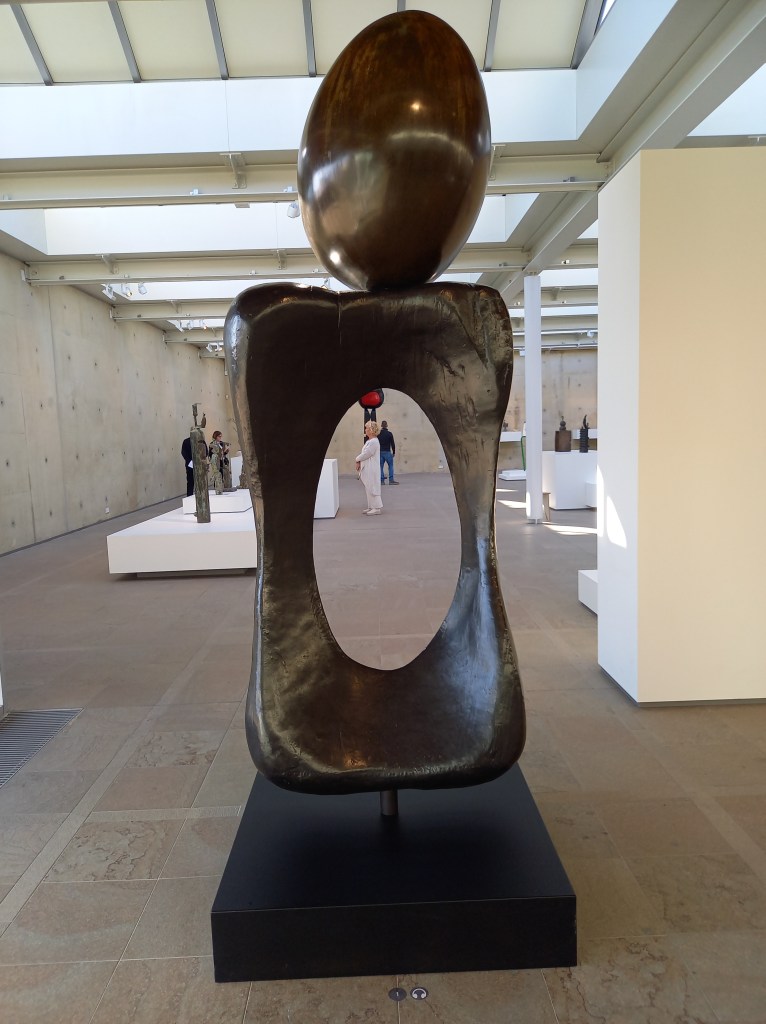
It was hugely inspiring to see how Miró continued to innovate and be curious well into his 70s and 80s.




 Acacia Publications