Tag Archives: Poetry

After midnight – haiku

DSC00273


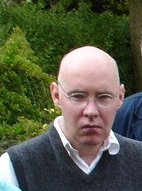
A few days ago I learned that Stuart Quine died in hospital of Covid-19.  His haiku were featured on my blog in September last year, under the heading A glint of wolf. You can read them here

Stuart himself provided the biographical notes and he made the selection of one-line haiku.

Here in the caravan in the Netherlands I found a copy of Presence from July 2019 with the one-line haiku below.  I am grateful to have known him.

after midnight firelight playing the accordion keys

Here I am walking – poem

trotting-3598639_1280

Photo credit: Digwen on Pixabay


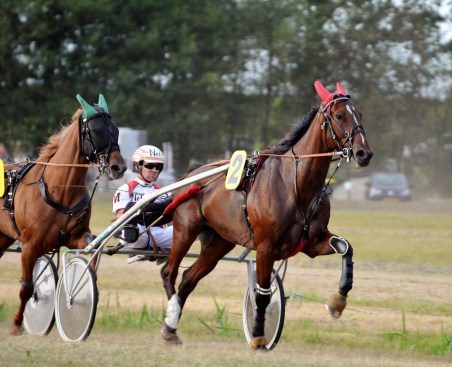
These are my neighbours. Yes, camping Duinhorst backs onto a racecourse. Duindigt opened in 1906. Most of the races held are trotting races, with the jockeys sitting on a sulky as in the picture. Some days I can hear the faint sounds of commentary, or a national anthem at the end of a race. And, very often when I’m out and about I come across horses being exercised. That is where the writing started.  It is the second poem in my second collection Nothing serious, nothing dangerous.

I was going to fly to Holland on 5 April, but things are serious and dangerous. I managed to get a flight out on Wednesday 18 March from Manchester to Schiphol in the Netherlands, and went straight to my caravan. You know from following my blog that I am a Dutch national, long-term resident in the UK. Faced with “social distancing” and a possible four-month’ quarantine, I felt it would be easier in the caravan. It has a small garden and I can go for a bike ride, or a short walk in the nearby dunes – as long as I keep my distance.


Here I am walking …

 
Here I am walking with a small horse.
I found it on the path to the supermarket
where it stood, eyes closed, by yellow gorse.

All this happened a long time ago,
before I was born, before the war,
and the rope in my hand smells of horse.

We can turn to the right, walk over
the dual carriageway, head for the dunes,
four bronze crosses to remember

the war dead and we’ll arrive,
place our feet on the beach
where it’ll soon be night.

Chaos – poem

airport-4922358_1280

Photo credit: oho725 on Pixabay

Poetry readings and workshops have been cancelled. People are panic-buying pasta and toilet paper. A few friends have cancelled lunch dates: I have an empty diary.  So, I have started packing boxes for my move later this year, while listening to the radio. My flight is booked on 5th of April and I hope that the borders are still open by then. I can blog over in the Netherlands just as I can here: I have Wifi inside the caravan. If I become ill, it’s easier to self-isolate over there.

Meanwhile, here is a short poem about chaos. It first appeared in The North magazine and was later published in my debut collection Another life. Look after yourself, keep safe and look out for those around you.

 
On the town

In the time it took to buy a birthday card, a special
80th birthday card, they had arrived in a long, black limousine,
jumped out, set fire to the hotel and released wicker
baskets. The flying baskets with wicker wings chopped
tops of trees, trees falling on traffic lights – chaos everywhere
and in the middle of it the small bronze statue.
A smiling woman holding doves covered in bird shit.
The wind howling, sirens crying like the end of the world had come.
And me and that card that had cost me £2.99 and nowhere
to buy stamps, no letter box to post it.

Ferry crossing – poem

Fokkina_McDonnell_Poetry_Launch_3March2020_with_GKB_Painting (002)

The Departure, book and me (Photo: copyright Sophie J Brown)

 
Here I am with my second collection Nothing serious, nothing dangerous at the launch, held at the International Anthony Burgess Foundation, Manchester on the 3rd of March. It was a wonderful occasion, made very special by Graham Kingsley Brown’s painting The Departure being there too.

His daughter Sophie Brown (herself a talented artist) designed this website. Visit www.grahamkingsleybrown.com and click on the Curator’s Diary for her account of the launch and to read what the meaning of the painting may be (entry 28 November 2019).

Below is the first poem of the book. This may well be the ferry from Harwich, UK to Hook of Holland, the Netherlands. A ferry crossing is a departure of a kind …


Ferry crossing

Two people sit at a table by an oblong picture window.
Sun lights up their hands which are curled round coffee cups.

The window is made of safety glass. There have been announcements:
location of lifebelts, life rafts, long and short blast of a horn.

While words are hidden at the obscure side of imagination,
other people are queuing for lunch or buying alcohol in the shop.

The folded hands are the back of playing cards, The Queen of Spades,                                    operas, novellas, the shortest of short stories.

It is not strange to see these cards turn into sea gulls.
A white ferry is a city where nothing is permanent.

A man with a frown – poem and writing prompt

rain-3518956_640

Photo credit: Pixabay

It is March, so here is an example of personification. It comes from a workshop: we were asked to choose a month and write about it, as though it was a person.  Do you see March as a man too? Does his emotional state reflect typical March weather?


March

He is a man with a frown,
walking in a military
manner. He is the eldest
son of a Rossendale baker, who
married young and placed his hopes
on other people’s shoulders.

He studied accountancy at a redbrick
in the Midlands, ironed shirts himself,
lost his accent, met a nurse
in town one night, got drunk,
a lower second degree, a baby,
a small semi in the suburbs.

Last year he didn’t get a rise,
didn’t get promotion either.
He thinks about renewing insurance,
calculates the cost of divorce,
puts his hands in his pockets and
strides over the zebra crossing.

He often feels like going crazy, going
off with a woman half his age, living
in the south of France, but he walks
back to the empty house, hiding
under a large black umbrella,
cursing under his breath.

The small Japanese corner


Scan0023


How strange to see the notification of someone’s birthday on Facebook
when they are no longer there to receive your greeting … Sumiko Morimoto
and I met in 2014.


The small Japanese corner

Howell was all packed, to return to live in Japan,
and as keen as always to win the karaoke contest.
He’d been brushing up, but Sumiko too knew
how to soft sing sakura, sakura

Now and then I see her mother’s old blue fan
on the shelf in my Japanese corner, beside the blue
mug Howell gave me, with the names of fishes,
Sumiko’s delicate New Year card with pigs and piglets.

She’d been well looked after at Rydal Hall, when she
went up to the Lakes, wanting at last to see the small
cottage of Wordsworth, her hero, whom she’d studied.
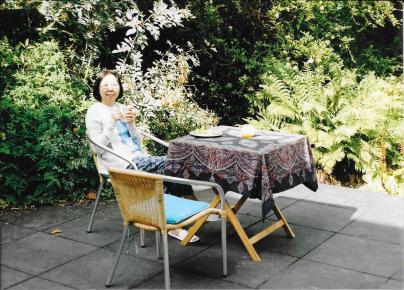
Here is the photo of her smiling over breakfast in my garden.

Worried about Sumiko, Howell’s email two months ago,
the illness she is fighting. Here’s another email …
If I finally decide to fly to Osaka, it’ll just be Howell
and me, eating his favourite okonomiyaki pancake.

Celebrating …

Dublin photo

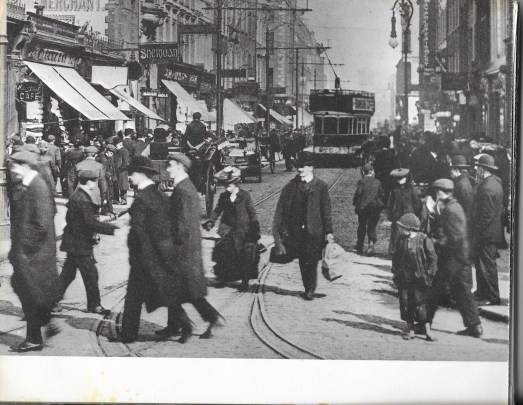
North Earl Street, Dublin, 1904

I am celebrating! Just two working days after I applied, the Home Office emailed me confirmation of my “settled status” in the UK. Hence a post with a food poem …

This stew combines two foods known since the earliest Irish literature. Bacon (tinne or senshaille) is mentioned many times in the medieval Vision of MacConglinne, as are sausages, particularly called Maróc, and another called Indrechtán. Leeks and oatmeal were no doubt used in the earliest form of Coddle, but since the eighteenth century, potatoes and onion have supplanted them.

The recipe for Dublin Coddle is in my copy of A Taste of Ireland in Food and in Pictures by Theodora Fitzgibbon. The magnificent black-and-white pictures (some of them well over a hundred years old) had been found “heaven knows where – by Miss Fitzgibbon’s husband, George Morrison, creator of the Gael-Linn films on 1916 and the civil war”. The book was published in 1968 and, having married a Dublin man, and believing that saying about the “way to a man’s heart” I bought it shortly after we married in 1973.

The poem was included in Sweet Tongues: Crocus book of food poems, published by Commonword in 2013.

 
Dublin Coddle

Saturday supper is a savoury stew.
Sausages, and slices of bacon.
Potatoes and onion supplanted
the oatmeal and leek. Enough stock

to barely cover, season to taste,
simmer slowly, let the liquid reduce.
Tears run down the steamy window.
Chopping parsley holds the pain.

One of us poured a steady Guinness;
the other already lost in the black
and salty taste of waiting.
Between us the open cookery book:

a small black and white picture,
North Earl Street, Dublin, 1904.
Blurred images of men in coats
and caps, horse-drawn cart, a sunny day.

A couple crosses the tramlines.
He carries bags in both hands.
She, to the right of him,
looks down to safely place her feet.


The Outsider


unnamed

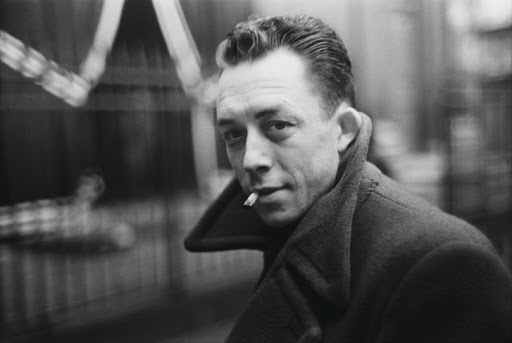
Albert Camus


It seemed fitting to spend 31 January (Brexit Day) with a good old friend. She has the modern smart phone needed to scan my Dutch passport. It was good to have moral support: I had a crying fit during the identity check part of the application. Luckily, I only started crying after she’d taken my photo which the Home Office staff/system will check against the photo in the passport!  And the automatic check on my National Insurance (NI) number confirmed that I was eligible to apply for “settled” status.

I’ve been resident in the UK since 1973 and I have close friends here and my writing, but it has felt less and less like home after the 2016 referendum.

At secondary school (Gymnasium) we learned English, German and French and we crawled at a snail’s pace through l’Étranger, the 1942 novel by Albert Camus which is a classic in world literature.  Camus developed the philosophical concept of Absurdism and the way he died in a car accident, aged 46, could be considered absurd.

The poem is from my debut collection Another life, published by Oversteps Books Ltd in 2016.

On reaching his 102nd Birthday

He always liked his drink,
so it’s no surprise that Albert went North,
that unused train ticket in his pocket.

He is said to have died in a car crash,
but police do know people who
walk away and without a scratch.

After walking for weeks, he reached Norway
where the days are short
and the nights are made for alcohol.

Camus lived in a modest house
with a butcher’s block in the kitchen
where he cut reindeer and smoked.

A flock of swans flew through his dreams,
so he married the next woman to walk past,
taught her two sons to play football.

She taught him to sleep soundly at last.
A pied-noir at rest under the Herring Lights,
on the cold edge of man’s world.

Yellowish green and faint red glowing,
these arcs and rays and curtains of gas,
the fight against dawn and the sun.

Snow still in sight


Scan0012

 
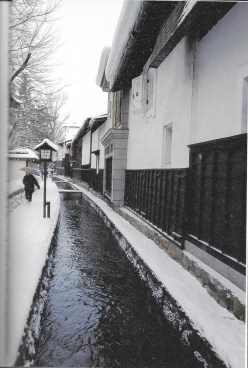
snow still in sight
the water becomes less cold
in this castle town

yuki nokori tsutsu mizu nurumu jokamachi

(haiku by Kiyo)

This castle town may be located somewhere deep in the mountains in the northern part of Japan. Snow still remains on the surrounding steep mountains, but the snowmelt water flows peacefully in the river running through the town. We can imagine the lives of the lord who owned this castle and its dwellers, which may not have been so peaceful all the time.

One of my bookshelves is filled with books and magazines on haiku, tanka, renga and renku. One of them is very special to me: Haiku. The poetic key to Japan by Mutsuo Takahashi, Hakudo Inoue and Kazuya Takaoka, published in 2003. It suddenly arrived several months after a Japanese postgraduate student who had shared my house had returned home.

Each haiku is accompanied by a wonderful colour picture, a brief explanation, the original Japanese text and the version in Romaji. Is late January too early for a spring haiku? I hope not!

Ambulance Ride – guest poet


Carole B

 
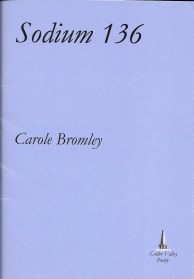
Many of the poems in the pamphlet Sodium 136 were written in Hull Royal Infirmary where Carole Bromley had pituitary surgery in 2018. I first met Carole on a writing week in 2004. It is a privilege to feature four of the poems. The pamphlet was produced and published by Calder Valley Press in 2019 and a donation from every copy sold will be made to The Pituitary Foundation. Many of the poems had already been published in magazines, and several have been commended or placed in competitions.

The testimonial by the poet Clare Shaw: “If poetry’s work is to speak to the universal through the particular, then Sodium 136 is a triumph. With the profound insight of personal experience, Carole Bromley captures the complex experience of serious illness, affording equal worth to the mundane and terrible with a beautiful and uncompromising directness. This is not just a record of physical suffering – it is a powerful and profoundly intelligent exploration of grief, gratitude, fear, love, and joy. Poetry at its best.”

 
Ambulance Ride

My Poetry Society bag is on my lap,
Take if you must this little bag of dreams;
the drip hung from a hook. A jolt
as the gurney hits the hoist, that blast of air.
We’ll soon get you warmed up. They ask me
which route I would take. The driver says
he thinks he’ll put the flasher on but not the siren.
After three minutes the siren goes on too.
I can’t be doing with traffic jams!
I watch as we go through every red light.
The ambulance man gives me a sick bowl,
apologises for the bumpiness of the ride,
holds the gurney steady with his foot,
fills in a pink form, gives me a pain killer,
tells me about his earlier calls, the RTA,
the one-year-old he drew a face on a glove for,
says he and his wife wanted kids but it never happened.
When we arrive on the ward I feel lost.
A man walks up and down like a zombie,
his spine and head held up in a cage.
In my bay two women with bandaged scalps
vomit in cardboard bowls. I tell the nurse
I feel like bolting. She says I know it’s not
as nice as York. The ambulance man points
That’s why I could never be a patient.
How do you sleep with one pillow?


Consent Form

The registrar reminds me of the dangers,
scaring me all over again.
Blindness, stroke, death is the gist.
He’s not anxious to proceed
on his own decision-making;
he needs to patient to do the hard part.

With the consultant it’s different.
He’s so young his baby’s only two weeks old
and so handsome he cuts a dash on the ward round.
He weighs up the pros and cons when the posse
of students have moved on with their clip boards,
their crack-of-dawn observation of the sick.

I’m not good at decisions at the best of times
and this is not the best of times
so I say What would you advise me
if I was your wife? He says
You could lose your sight. I’d go ahead.
I say Give me the pen.
 

Sodium 136
Visiting Time

In here everyone talks to the dead.
Some speak aloud, Barry calls to his son;
Enid, who, after having her hip done
broke the other one getting out of bed,
talks to her late husband, telling him
This is the worst pain and I’m not joking
and I, inside my head, talk to my mum
which is ironic as we barely spoke.

I’m sorry I didn’t buy you the dressed
crab that awful lunchtime. You guessed,
as I did not, that it would be your last,
afterwards you’d eat little and then less
then not even sips out of a beaker,
just me wielding the sponge on a stick.


Sodium 136

A new form of torture
to raise my sodium level
which is dangerously low.
They measure out five glasses
of water into my jug
to last me till midnight,
write 1 litre fluid restriction
on the board over my bed
so the tea trolley passes me by,
the milk-shake woman doesn’t come,
the pourer of custard shakes her head.
Slowly the level creeps up.
After five days I’m fantasising
about gulping cartons of juice.
I have a tug of war with a nurse,
will not let go of the jug
which she wants to remove,
tell her if I wanted to cheat
I could put my head under the tap
and drink. I win, the jug stays.
The tea lady leaves me half a cup
and whispers I won’t tell them, love.
I do not touch it. 117, 118,
123, 124 and then, overnight,
SODIUM 136. I weep with joy.
They rub out the notice.
I gulp down glass after ice-cold glass.