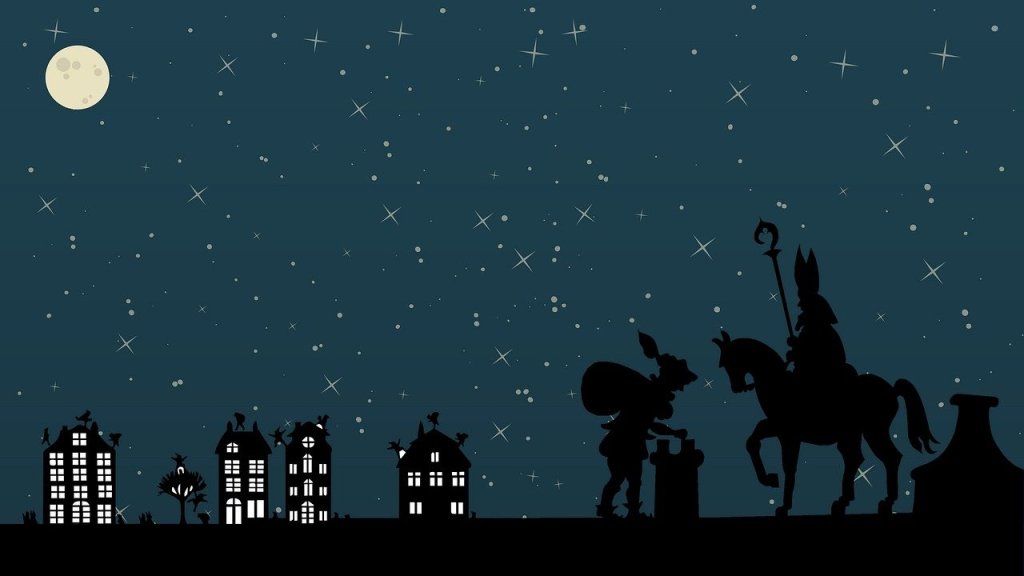
Tomorrow will be his birthday. Traditionally, children were allowed to put a shoe (with a carrot for the horse) by the fire on the night of the 5th. Over time, it has become tradition to celebrate the evening of the 5th. And over time, children put out their shoe earlier and earlier …
Somewhere in a photo album there is a small black-and-white picture, somewhere in a box in storage. Here is the poem, anyway, from my debut collection Another life, Oversteps Books Ltd, 2016.
St Nikolaas, 5 December 1957
We’re crowded in our dining room. Grandmother has closed her face. There’s me in pyjamas, smiling. I’m next to my father’s father. His heart will give out soon. I’ve just been given a book: animal stories with illustrations.
My brother too smiles, because our mother isn’t there. She may be in the kitchen or upstairs, ill, thinking about walking out on us. My father has taken this photo. He too will have closed his face.
It’s a great pleasure introducing this month’s poet: Rachel Davies. We met through poetry workshops in Manchester many years ago.
Rachel Davies has had several jobs including nurse, teacher and head-teacher. She thinks retirement is the best job she’s ever had because it gave her time to pursue her poetry. She is widely published in journals and anthologies and has been a prize-winner in several poetry competitions.
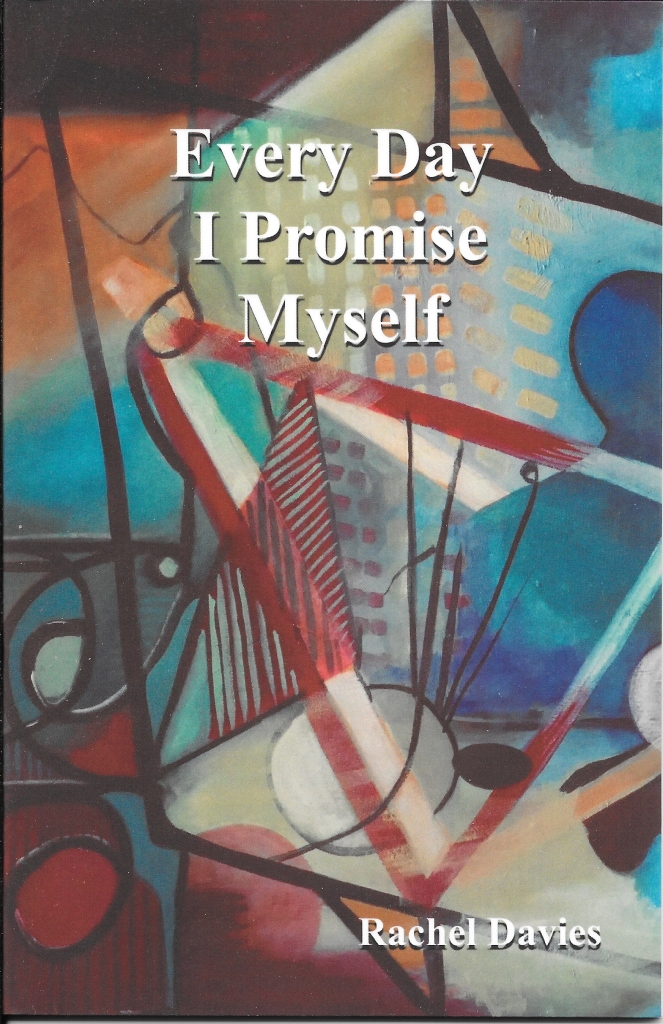
Her debut pamphlet, Every Day I Promise Myself, was published by 4Word Press in December 2020 and she is currently seeking a home for her second pamphlet, Mole. Rachel is co-ordinator of the Poetry Society Stanza for East Manchester and Tameside. She has an MA in Creative Writing and a PhD in contemporary poetry, both from Manchester Metropolitan University. Originally from the Cambridgeshire fens, she now lives in Saddleworth with her partner and two cats.
I hope you enjoy my selection of four poems from the pamphlet.
Alternative Mother #4 Jean
For fun, you push me round the lounge on the Ewbank till I beg you to stop, teach me hula hoop, two-ball, how it’s good to laugh.
You soothe my knees with Germolene, say a hug helps, say it’s alright to cry. You know the healing power of a biscuit.
You hand-sew my wedding dress, stitch into a secret seam a blue satin ribbon, a lock of your own hair, all the love it takes.
You take my daughter out, keep her for bedtime stories, forget to bring her home so I worry she’s followed the rabbit down the hole.
You make me dance, even on those days when the music died in me. You teach me the euphoria of champagne.
You bake scones so light they float down to your granddaughters like hot-air balloons.
Alternative Mother #8 Ted
Sometimes dreams can be nightmares.
You wanted most of yourself to be buried, to become an enrichment of the fenland soil you loved so much, your heart and lungs to be thrown into Whittlesey Wash to feed the eels you knitted your nets for.
Oh, you were generous. You gave me some peonies once, dug up from your garden. You shook the soil off though— that soil’s worth three thousand pounds an acre you said. I looked for the smile but there wasn’t one.
One night your skeleton grew out of the earth like a myth.
Breaking the Line
The blood red sky sheds tears. Fresh milk curdles. Now I know
my heartbroken father left the house with chisel, mallet — after dark
he’s out there hammering like a minor god. Grief begins to surface from the cold stone.
To St Ives, a Love Poem Halloween 2014
Even though November is a black dog sitting at your feet and your beaches lay crushed under the weight of mist
and your shoreline roars at the passing of summer and your white horses rise on their hind legs
till your fishing boats get seasick; even though your trees shed tears like baubles and your shops drip gifts like rain
and your cobbled streets and narrow alleys wind around me like a clock and your posters announce
Fair Wednesday as if all other days are cheats and your bistros display fish with eyes wide as heaven,
scared as hell, and your railway bridge yells do what makes you happy and it feels like a tall order;
even though your choughs are impatient for pilchard your huers won’t see today from the Baulking House
still you open your arms and kiss my cheeks in welcome.
This week I’ve been going through my files and folders with poems, deleting old ones that aren’t going anywhere, finding forgotten ones, losing others because I changed the title but not the filename – you get my drift.
Prompt: Here’s a sort-of-abecedarian list poem. What would be in your alphabet?
On the bright side, there’s always:
avocados and the alphabet, a bridge over troubled water and chocolate, Fairtrade or not, days which travel at their own pace into evening and other favourite places like Venice, beaches, the glorious counter tenor voice of Andreas Scholl, hairdressers who waited for us, ink to waste, as the poet has it, jazz, all that jazz, kilograms to worry about, lessons that return until learned, maria, martini, marina, nautical miles and naughty but nice. Oh, let’s stop, there is a picnic bench with a view, think of questions, the certainty of death, taxes, rescuers in anoraks, accompanied by sniffer dogs, so we’re fit again to tango, show us a leg or two, uniformed bouncers taking them off, victory which will be ours and whiskey or gin, double measures, that xtra mile we will go. Y, the fork in the road and Frost. ZZZ, a comfy bed for a rest.
A parcel arrived this week. Friends in Manchester sent on poetry magazines and books. Among them was my copy of Lighting Out,poems to answer the dark. In the words of the editor, Rebecca Bilkau:
‘We won’t speak about the dark times we’ve had, or the dark times that might come. This little anthology is about reclaiming the stage for the bright stuff … resilience, hope, spidery optimism, pardonable puns, rare and shameless clarity. Think of it as a route map, made by 80-odd poets, to Light Out of the blues, the shadows, the virus, the storm and binge TV. Shine along, oh do.’
Lighting Out is the tenth publication in the Beautiful Dragons Collaboration: ISBN: 978-68564-902-9. A year ago I started learning Swedish on Duolingo, just for the hell of it. I got to a 292-day streak with the encouragement of that little green owl …
Flying with the little green owl – my 95-day streak with Duolingo (Svenska)
Vintern är den vita årstiden. Winter is the white season. Keep going! Practice makes perfect. Författaren skriver på ett papper. The author writes on a sheet of paper. Good effort! Barnen har många leksaker. The children have many toys. Don’t give up. På lordagar tittar jag alltid på tv. On Saturdays I always watch tv. Great work! Let’s make this a bit harder. Vi går ofta till museum. We often go to the museum. I believe in you. Hur många personer är det på stranden? How many people are there on the beach? Awesome! You’re working hard and learning new words. Jag lär mig långsamt. I am learning slowly. I’m so proud of you.
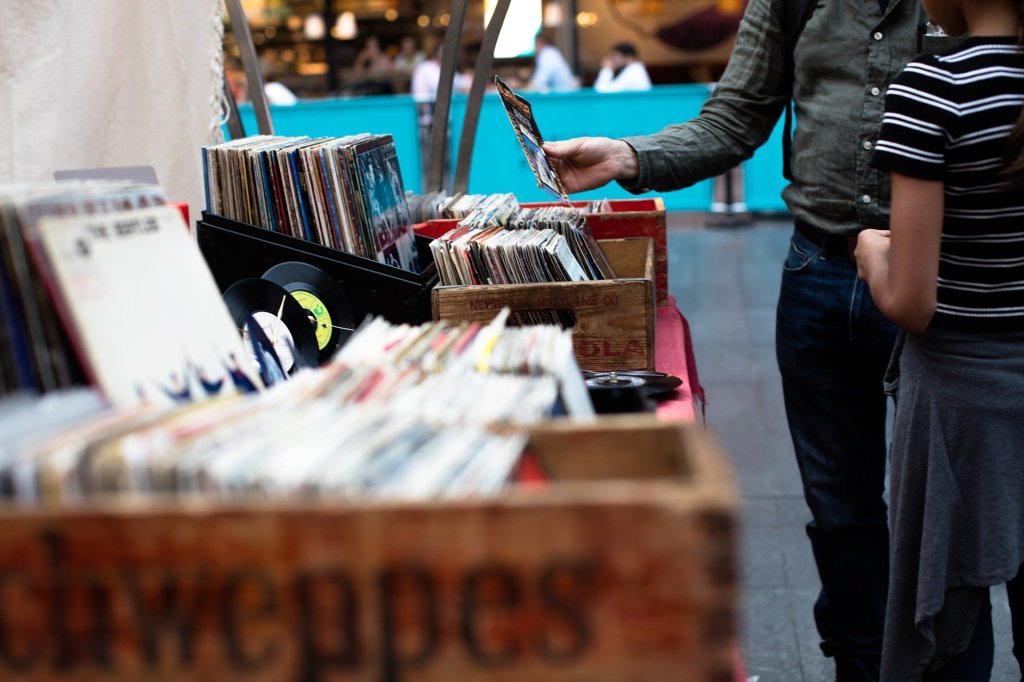
This week my friend Valerie celebrated her birthday. We met 30 years ago on a residential week in Spain. To celebrate our friendship, here is a short poem in which we’re together. Bowler’s is a very large indoor and outdoor carboot sale location in Manchester.
That Generation Game is a tv game show in which teams of two family members, but from a different generation compete. The winners see a conveyor belt with goodies wobble past. No worries: if they can’t remember them all, the studio audience will shout to help …
Table 64
We carried the plastic crates and cardboard boxes into Bowlers at bloody six o’clock. The locusts, proper traders, picked items from the piles we carried, threw us pound coins and a few fivers.
The early flurry was good and then it was like the Generation Game in reverse: suitcases went, a pile of books, glasses, a wok, costume jewellery, some cuddly toys. We sat back in our folding chairs like regulars, holding off sleep.
Writing Prompt: Did you do a car boot sale with a friend? Were you a market trader (for real or in your dreams)? Did you go to an auction of lost property? What is the object that you lost or found?
We moved into wintertime last night. A good time for a poem that mentions clocks. For over 12 years three friends and I met monthly at each other’s houses to write, taking turns to host and find sample poems. This came from one of those sessions. It’s published in the pamphlet A Stolen Hour, Grey Hen Press, 2020. The poem was also Highly Commended in the 2016 Manchester Cathedral poetry competition. It was a privilege to read it during the prize-giving at the cathedral.
A la Hafiz
For just one minute of the day open all the windows. Let your mind run alone, like a foal that has never known fields without fences.
For just one minute of the day let your body rest in a place where other people run past, so that they have the permission they need to go and play.
For just one minute of the day go and sit within sight of a large clock. Remember how the three hands are always trying to catch up with each other. Feel your compassion grow. Be still.
With all the rest of your time make bread, make beds, make love. Do what is needed and then close the windows. You are already looking upon yourself more as God does.
It is my pleasure to introduce this month’s poet: Ken Evans. Ken and I met some years ago at writing workshops in Manchester. I hope you enjoy these new poems.
Ken longlisted in the National Poetry Competition this year, and in 2015, while doing a Poetry Master’s in Manchester. In 2018, Ken won the Kent & Sussex competition. His poems feature in Magma, 14, Under the Radar, Envoi, The Lighthouse Literary Journal, The High Window, Obsessed with Pipework, and The Interpreter’s House.
In 2016, Ken won the Battered Moons Competition and was runner-up in Poets & Players. A first pamphlet, ‘The Opposite of Defeat’ appeared in 2016. Ken’s first collection, ‘True Forensics’ in 2018. He’s thinking he may be close to finishing a second collection…
A Mirroring
A tiny hop on one leg when you see me, a straightening to rise and bob, then a small correction, mid-
air, as you pivot yourself to steady, like a dust-devil swaying over tarmac after days of brown desert.
Your black leather jacket and red blouse, a grey plait across one shoulder, all thought through before, but for a moment,
I glimpse the girl in a classroom drawing, a pink tongue seeming to swing your attentive, cross-hatching pencil-hand from side
to side: the fleshy dark mirror of your jacket. Supple and barely touching, we hug and pull back with comradely smiles, but you catch
my thought as it forms, like a cloud in a cleaned window, before looking up, to see the thing itself.
Forever, the Light from Sirius Sirius, the brightest star in the sky, whose light takes 9 years to reach Earth
Earth, I left a voicemail, my umpty-eighth. Must I really draw a picture, me that loves you, as the flip-side of your silver coin? I am not who set out, nine years ago. I am not the me I left behind, and you are not the you I came to talk to then, but you can see my same light now, crystalline, falling.
Tracks
A tendency to see the deceased’s room as empty is a control mechanism, when it’s no more void than
a December garden at four-twenty, the light running out of the day’s green bottle faster than
drips down a window, though in fact, calls thread the blackening sky and hedges: an owl more than
clearing its throat for the nightshift, or the longer than usual high call of a wren, louder even than
the distant, reverse warning alarm on a lorry at the steel factory, red lights more piercing than
crows commenting from the chimney pots. The room itself is bare, a white-out, rather than
featureless. A glass door throws what light there is on the carpet, naked and pinker where divots
from what was chair legs puncture the fibres, the hollows suggesting how she faced one way
so many unfurling days, the pile threadbare where her slippers marked the apex of a star
in front of her, tracks now damped by towels and steamed with an iron to raise back the flush,
though not all obey. Lines left by a Welsh dresser still bear her weight, the not-yet-gone of her,
the thoroughfare of a ruined city where I am an unguided tourist greeted ceremonially
at the eastern gate by a roaring lion with a nose lost to weathering, running due west in a straight line
to the red sunset, only the weeds in the mortar noting the location, the sub-divisions of the hours.
The Final Invoice from the Co-Op A part-found poem
for bringing the deceased into our care in working hours; for private use of the Chapel of Rest; for care and preparation of the deceased before the funeral; for provision of a hearse and three personnel for the service; for choice of a Simple coffin; a Minister’s and a Doctor’s fee; for a non-witnessed scattering of the ashes in the Garden of Remembrance. Note: none of the above subject to VAT.
It’s false then that, ‘nothing can be said to be certain, except death and taxes,’ Benjamin Franklin or Daniel Defoe, whoever it was wrote that. What we remember of our lost may yet be false: a conservator before it was a cause or fashion, she dunked tea bags twice, marked the coffee on a jar with the stub of an HB pencil, and saved her hearing-aid batteries for birdsong. She’d dance with one hand on her stick, for such a deal – ‘Look, no VAT on dying, a saving of 20% – Bingo!’
In the Netherlands it was National Vegetable- and Fruit Day on Thursday 14 October. The front cover of the weekly free paper was a large colour photo of three local shop owners encouraging us to ‘go for colour’ – have some fruit or veg to deal with the afternoon ‘dip’.
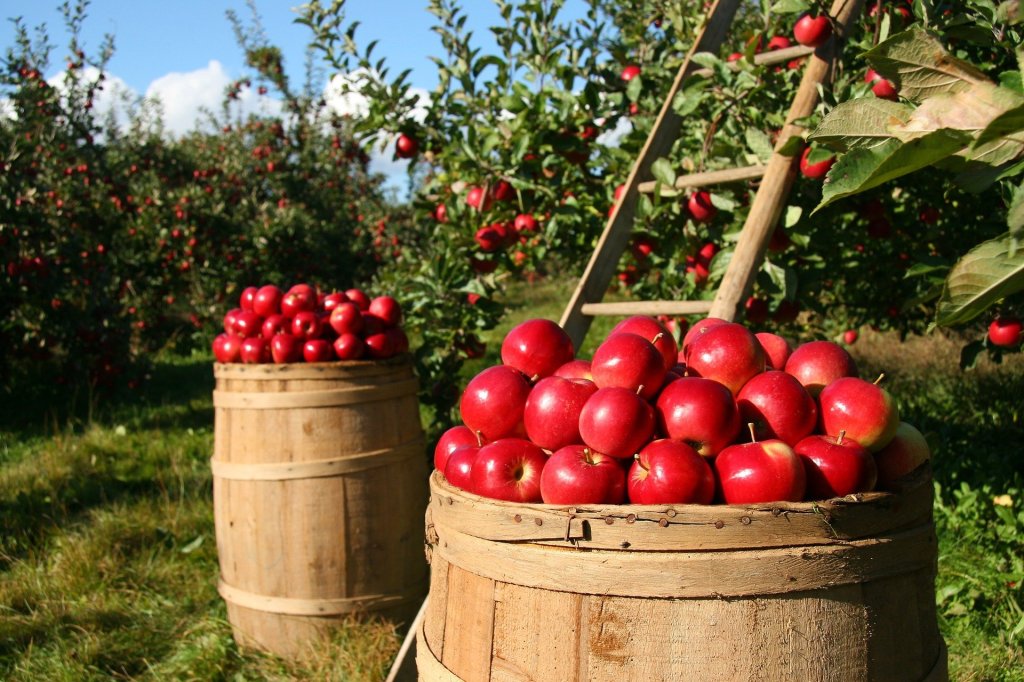
The Dutch love their tomatoes: it’s the most popular vegetable, making up of 10% of vegetables bought. The Dutch are eating a little more fruit and veg this year, compared to last year. The most popular fruit was the banana. Probably because fewer apples were harvested.
Credit: Lumix2004 via Pixabay
The poem Satsumas was published in my debut collection Another life, by Oversteps Books in 2016. I wrote it on a workshop where the tutor suggested that ‘half a sestina might be called a satsuma’. I’m always grateful for prompts!
Satsumas
The mandarin is also a clementine, or a seedless tangerine. They must not be confused with the satsuma, first exported from the province Satsuma in Japan.
The men and women of the Fruit-and-Veg Marketing Board are introducing their successes: the Orkney, a type of button mushroom, but a clear ice-white and stoic. There is the Argyle, an improved form of celery with lower water content, therefore less stringy and greener. The Devon is already being exported to Japan: a small, tasty apple, dark red, square and stackable.
No-one mentions the Wicklow with a taste like ratatouille after a fortnight in the fridge, or the Sark, a long, sour, brown hairy thing lying at the back in wooden crates.
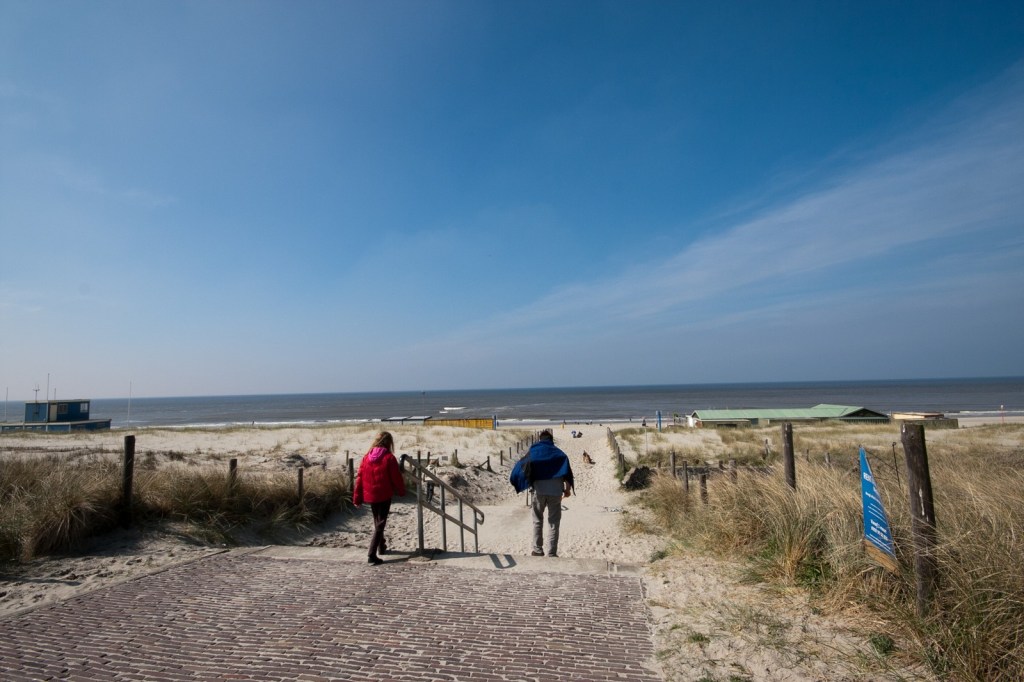
Here in Scheveningen, the seaside district of The Hague, it’s a wet Sunday. Tomorrow it’ll be World Animal Day. Here is a short poem with wet animals, inspired by seeing the peregrine falcons at Norwich Cathedral. It’s from my pamphlet A Stolen Hour, published by Grey Hen Press.
Prompt: What animal(s) did inspire you? Where did you first see it? What day was it?
Stonemason
I am the last stonemason. Green water spouts from the gargoyle to my left. I am hidden up here with the two peregrines, sodden on their cathedral nest.
My apprentice didn’t come today. Black sky, lightning and the distant rumbling of armies advancing, retreating. I count hours on my arthritic fingers.
As you can see from the picture, I’m back in the Netherlands. The camp site closes 12 noon this Thursday, so I’m making the most of the good weather to work in the garden and plant bulbs.
On the last Sunday in September I’m posting this poem which is included in my second collection Nothing serious, nothing dangerous (with Indigo Dreams Publishing, 2019).
Uniforms
I saw the van turn and park by the old oak tree at the heart of our cul-de-sac.
It was early September and sunny. It must have been afternoon, because I worked part-time.
Our white cat was asleep upstairs.
Two men carried it, though it wasn’t heavy. A metal trunk, shiny in the sun.
The ship safely back in Southampton.
That sheen on the dark brown coffin as it was helped from the limousine. We had buried you in May, a cemetery next to the Ford factory.
White and black uniforms. Shirts, trousers, shorts. Black shoes, white shoes,
cracked by too much cleaning, and yellowing socks in different stages of decay.