Tag Archives: Japan

as if thrown by a boy

Here is the second selection of poems by Judy Kendall, our June guest poet. She lived and worked in Japan for almost seven years. Cinnamon Press published four collections of her haiku and ‘mainstream’ poems. You can find her biography below her writing.

Poems:


The First Fountain Ever Placed In A Japanese Garden

for my mother

more than half
is the sound of it
as it splashes on the stone rim

this is the part
the thousands of photographs
will never reach

their takers stop
to make a frieze
and then move on

no chance of hearing
the other half
clapping its moving shadow in the trees

the shudder
when the leaves
follow the foam

which drops, unmoved
as if thrown by a boy
to fall through air

diluting
dissolving
into parts


Note:
The first fountain in a Japanese garden was built in Kenroku en, Kanazawa, in 1861


Driving To Noto

Men are better says Toshi I know
no they are not says I (I also know)
and so we argue to the tip of Noto

To Suzu where the wood huts slump in shock
plopped suddenly in frocks of snow
and the sea is whipped to icicles of frenzy

Over a nabe pot of fish and cabbage
(Toshi warns me not to call it cabbage
for it is the vastly superior hakusai)
our host asks me my age

Taken aback
(I`m older than he thought
more single), he inquires
don’t you like men?

So I assure him
only frequent country-moving
has prevented me from choosing
one of them

The returning road is white, wide as a field
the ditches spread themselves with frosting
and the windscreen blanks out like a blizzard

Toshi scrapes at the iced-up wipers singing
to himself, waving me in

Midwinter hangs in the boughs

The pine trees are bent nearly in two
laden with second helpings

(earlier version published in Ambit)

Short poem, haiku and tanka from The Drier The Brighter (Cinnamon Press, 2007):

Poem:

5 am

these cold skies
cheating the dawn,

these bits of tree,
blocks of houses too close to houses,
shrouded people, shrinking in the weather.

Haiku:

too much autumn
the reds are almost scorching now
a mouth brimming with leaves

tanka:

leaving.

not one stick of furniture
in the room.
in the heart,

no tears.

(previously published in Presence)

Biography:

Judy Kendall worked as an English lecturer at Kanazawa University in Japan for nearly seven years. When she first went to Japan she was a practicing playwright but she soon began to focus on poetry and haiku, kickstarted by an invitation to to participate in a collaborative translation of Miyaiki Eiko’s haiku. This became the bilingual publication Suiko /The Water Jar. Since then she has been writing haiku and haibun along with other poetic and prose forms. The haiku mode has informed her four Cinnamon Press poetry collections, particularly Joy Change – composed while she was in Japan. She has won several poetry awards, recently receiving a 2019 Genjuan International Haibun An Cottage prize, and is the essays and bilingual translations editor for Presence haiku journal. She has also run the Yorkshire/Lancashire haiku group.

She is Reader in English and Creative Writing at Salford University, and aside from haiku and haibun, works as a poet, poetry translator and visual text exponent. She has published several articles and books on the translation and creative process, including ‘Jo Ha Kyu and Fu Bi Xing; Reading|Viewing Haiku’ in Juxtapositions, 1 (2). She is currently putting the finishing touches to a monograph for Edinburgh University Press on Where Language Thickens (focusing on the threshold between articulation and inarticulation in language – a threshold in which haiku itself is surely situated).

a horizon of lilies

It’s a great pleasure to introduce this month’s guest poet Judy Kendall. We met many years ago through our membership of the Yorkshire/Lancashire Haiku group. Judy lived and worked in Japan for nearly seven years. Cinnamon Press published four collections – containing haiku and ‘mainstream’ poems. You can read Judy’s full biography further down. I’ll post a second selection of Judy’s writing next month.

Haiku published in Presence

shades of blue distance in the fells

afternoon off 
red grouse in flight 
almost grazing the heather

moorland air
just after a curlew’s call
liquid fresh—

travelling light
I will my neighbor
to turn the page

(published in Presence and selected for Red Moon Best English Language anthology)

Short poems or ‘vegetable’ haiku published in insatiable carrot (Cinnamon Press, 2015)

[Many of these have featured on Incredible Edible Todmorden’s Edible Poetry site and on or around the town]

tall green mild and meek
not quite the full onion
the gentle leek

hairy bitter cress
going wild
among
the cabbages

snug by the wall
the one the pennine wind forgot
Todmorden’s first apricot

taken apart, the cabbage
becomes all heart
and leaves

chunky, nobbly-eyed
the potato says ‘hi,
will you be my friend?’

Haiku and poems from Joy Change (Cinnamon Press, 2010)
Haiku:

wooden geta
the water quivers with carp
a horizon of lilies

sickle moon, yellow
and black, on my way
back to the heart

(still international haiku competition)

watching the breath come
and go, who am I but
a broken bit of star?

(still international haiku competition)

drifting
mountains shoulder the sky
blotches of pine

(Asahi Shimbun)

Biography

Judy Kendall worked as an English lecturer at Kanazawa University in Japan for nearly seven years. When she first went to Japan she was a practicing playwright but she soon began to focus on poetry and haiku, kickstarted by an invitation to to participate in a collaborative translation of Miyaiki Eiko’s haiku. This became the bilingual publication Suiko /The Water Jar. Since then she has been writing haiku and haibun along with other poetic and prose forms. The haiku mode has informed her four Cinnamon Press poetry collections, particularly Joy Change – composed while she was in Japan. She has won several poetry awards, recently receiving a 2019 Genjuan International Haibun An Cottage prize, and is the essays and bilingual translations editor for Presence haiku journal.

She is Reader in English and Creative Writing at Salford University, and aside from haiku and haibun, works as a poet, poetry translator and visual text exponent. She has published several articles and books on the translation and creative process, including ‘Jo Ha Kyu? and Fu Bi Xing; Reading|Viewing Haiku’ in Juxtapositions, 1 (2). She is currently putting the finishing touches to a monograph for Edinburgh University Press on Where Language Thickens (focusing on the threshold between articulation and inarticulation in language – a threshold in which haiku itself is surely situated).
The small Japanese corner


Scan0023


How strange to see the notification of someone’s birthday on Facebook
when they are no longer there to receive your greeting … Sumiko Morimoto
and I met in 2014.


The small Japanese corner

Howell was all packed, to return to live in Japan,
and as keen as always to win the karaoke contest.
He’d been brushing up, but Sumiko too knew
how to soft sing sakura, sakura

Now and then I see her mother’s old blue fan
on the shelf in my Japanese corner, beside the blue
mug Howell gave me, with the names of fishes,
Sumiko’s delicate New Year card with pigs and piglets.

She’d been well looked after at Rydal Hall, when she
went up to the Lakes, wanting at last to see the small
cottage of Wordsworth, her hero, whom she’d studied.
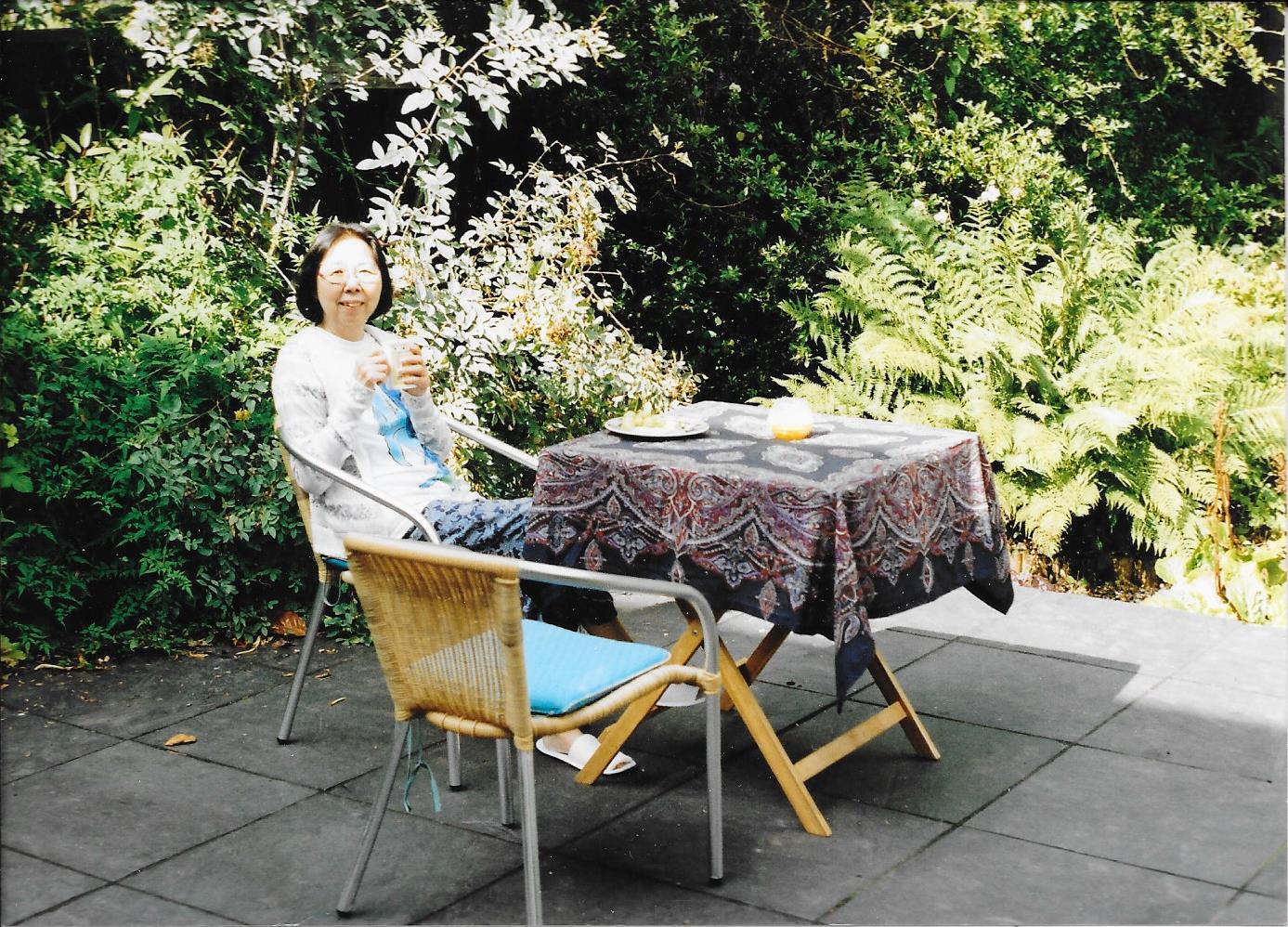
Here is the photo of her smiling over breakfast in my garden.

Worried about Sumiko, Howell’s email two months ago,
the illness she is fighting. Here’s another email …
If I finally decide to fly to Osaka, it’ll just be Howell
and me, eating his favourite okonomiyaki pancake.

Snow still in sight


Scan0012

 
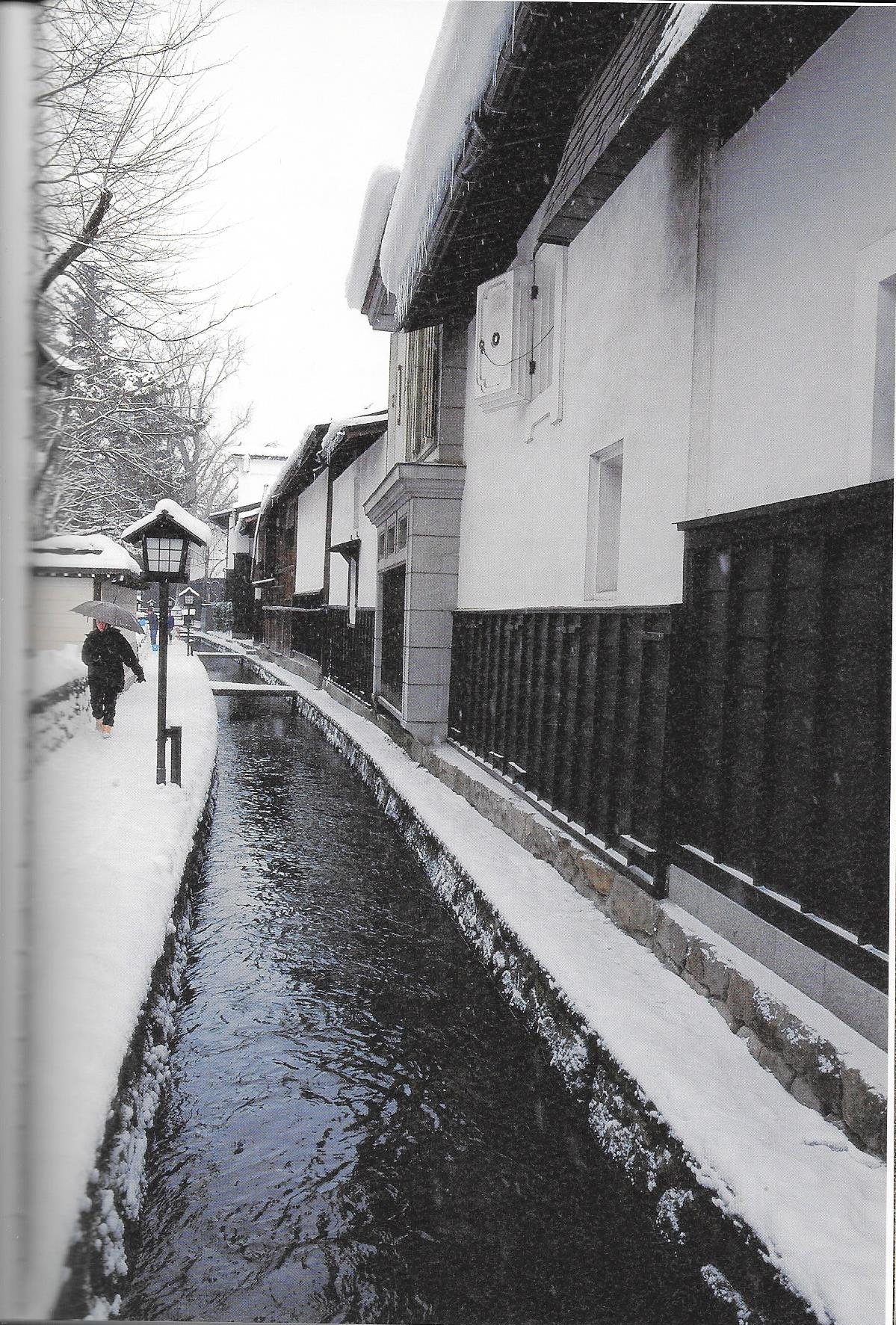
snow still in sight
the water becomes less cold
in this castle town

yuki nokori tsutsu mizu nurumu jokamachi

(haiku by Kiyo)

This castle town may be located somewhere deep in the mountains in the northern part of Japan. Snow still remains on the surrounding steep mountains, but the snowmelt water flows peacefully in the river running through the town. We can imagine the lives of the lord who owned this castle and its dwellers, which may not have been so peaceful all the time.

One of my bookshelves is filled with books and magazines on haiku, tanka, renga and renku. One of them is very special to me: Haiku. The poetic key to Japan by Mutsuo Takahashi, Hakudo Inoue and Kazuya Takaoka, published in 2003. It suddenly arrived several months after a Japanese postgraduate student who had shared my house had returned home.

Each haiku is accompanied by a wonderful colour picture, a brief explanation, the original Japanese text and the version in Romaji. Is late January too early for a spring haiku? I hope not!

Haiku calendars

haiku-calendar-2020.jpg


I bought extra copies of the 2020 Haiku Calendar to give as presents. This small desk calendar shows one haiku each month, with three or four more on the back.

Twelfth Night –
lobster pots
shouldered with snow
(Sheila K. Barksdale – England)

The haiku presented in the calendar are the winners and runners-up of the annual competition. The competition for the 2021 calendar is open until the 31st of January. Guidelines are on http://www.snapshotpress.co.uk

Twelfth Night was last Sunday when I was taking down Christmas decorations and carefully removing Christmas cards from the display on the kitchen door. And I was also thinking about the other haiku calendar – a present from a friend who lives in Japan. One of these calendars I’m going to take with me to my caravan in the Netherlands. No need to decide yet: my first trip there is early April!

snow scene


The images in the large calendar are all from the Art Gallery of Greater Victoria. Miyajima in the Snow is by Tsuchiya Koitsu (1937), wood cut on paper.

oyuki ya
yuki o mi ni yuku
tokoro nashi

 
So much snow – but
a place for snow viewing?
There is nowhere to go!

(Anonymous, 18th century)

A glint of wolf

DSC00273

I am very pleased to introduce our September poet: Stuart Quine. We met almost 30 years ago. I hope you love his haiku as much as I do.

In 1998, after a few years of writing haiku in a three-line form, Stuart Quine started to feel that his haiku were becoming a little formulaic and so began to explore the opportunities of a one-line format without breaks or punctuation.. In addition to their aesthetic appeal, one-line haiku echo Japanese haiku which usually, of course, are written in a single, albeit vertical, line. While many one-line haiku contain an implicit caesura given by their syntax, at their best they can be broken in a number of places thereby enabling a multitude of readings. Haiku is a collaborative poetry with writers and readers working together to bring it to completion. Therefore the success of a haiku is not a matter of how well it conveys the writer’s intention to the reader but rather whether readers can enter and occupy it on their own terms.

Many of Stuart’s haiku have been included in anthologies and journals and he is a former associated editor of the journal Presence. He has also had two collections of haiku published by Alba Publishing (available from albapublishing.com ). Sour Pickle (2018) contains 100 one-line haiku and Wild Rhubarb (2019) contains another 80.

A practitioner of Soto Zen Buddhism for over thirty years he regards his haiku writing as a dao and is a member of the Red Thread Haiku Sangha..


hidden and unseen the burgeoning life in buds and bellies

through driving rain the ambulances’ dopplering sirens

round midnight moonlight playing on the piano hammers

a short night shrunk to a dog bark and the clanking of the trams

through the haze the headlights of a hearse

lassitude and languor these days without rain

snagged in machair a gull feather unzipped by the wind

distant thunder the old mouser raises an ear

-not yet, not yet” says the tumbling beck

pagan moon in the shadow of her cleavage a tiny silver cross

winter solstice darkness gathers in the unrung bells

birthcry deep in the night a freight train’s lonesome whistle

like the honed edge of a blade keen is the cold

winter moon a glint of wolf in the mongrel’s eyes

under mistletoe on her lips a tang of tamarind

new year’s day only the rain comes to my gate