Tag Archives: history

Veteran trees

Poplar tree, 110-year-old.

Today I am voting twice: first for a political party, then for a tree.

In a busy city, there is little room for trees to become old. On average, a city tree lives for 50 years.

The Hague doesn’t have many old trees: during WWII a lot were cut down, their wood used for cooking and heating. Of the 120,000 city trees, only around 1300 have the ‘monumental’ tree status.

Such trees are over 50 years old and meet at least one of these criteria: it is irreplaceable, of rare type, shape, or size. It may have historical value, or provide a home for rare plants or animals.
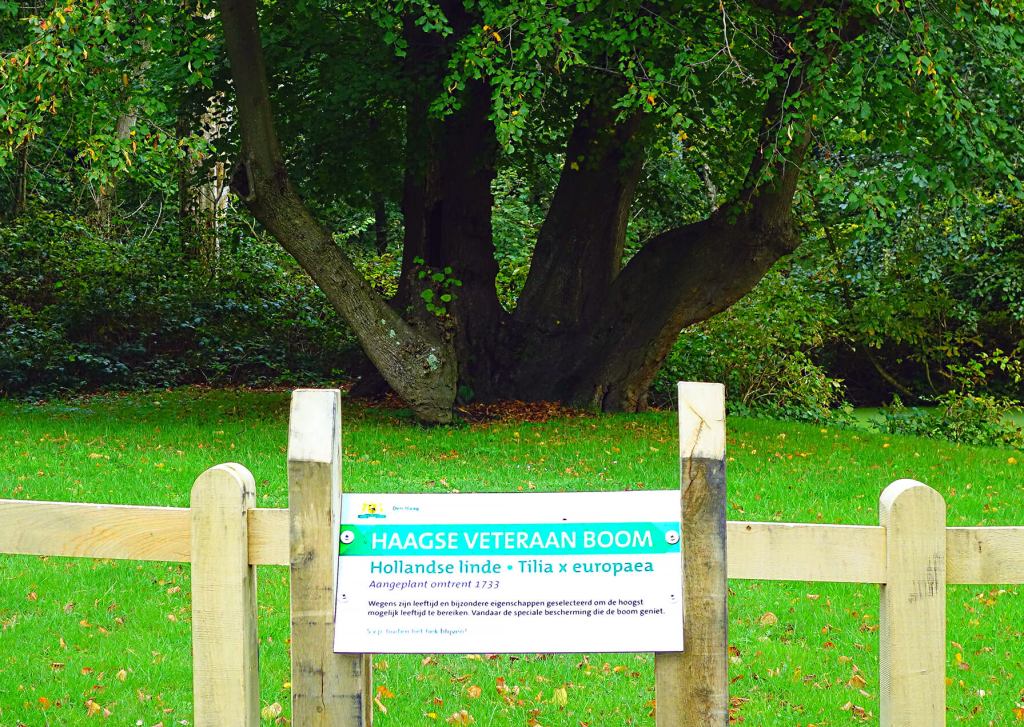
Photo credit: Joost Gieskes

The veteran tree initiative comes from the UK. The first official veteran tree of The Hague – even of The Netherlands – is a lime or linden tree (Tilia x europea) on the Clingendael Estate. This was planted around 1733.

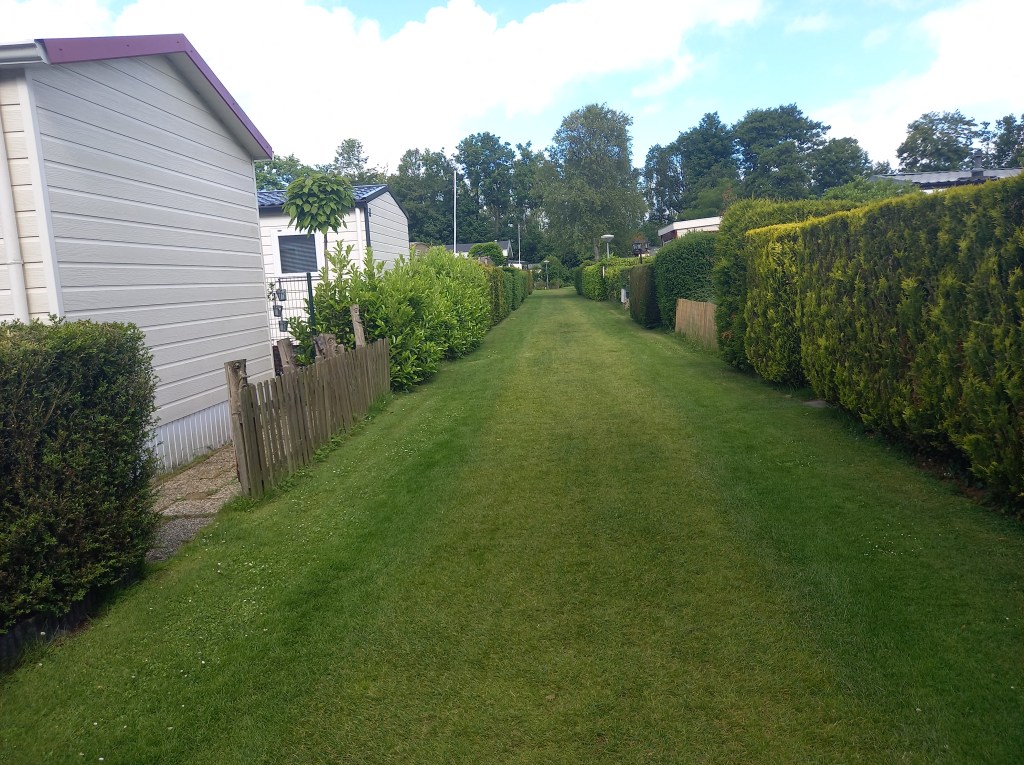
I came across it on my walks during the first 2020 lockdown: Clingendael is close to the camping where I had my caravan. I was intrigued to find a tree in a corner of a field with a fence round it.

A veteran tree is protected and allowed to remain in place forever. A ‘monumental’ tree may be cut down when it becomes dangerous or diseased.
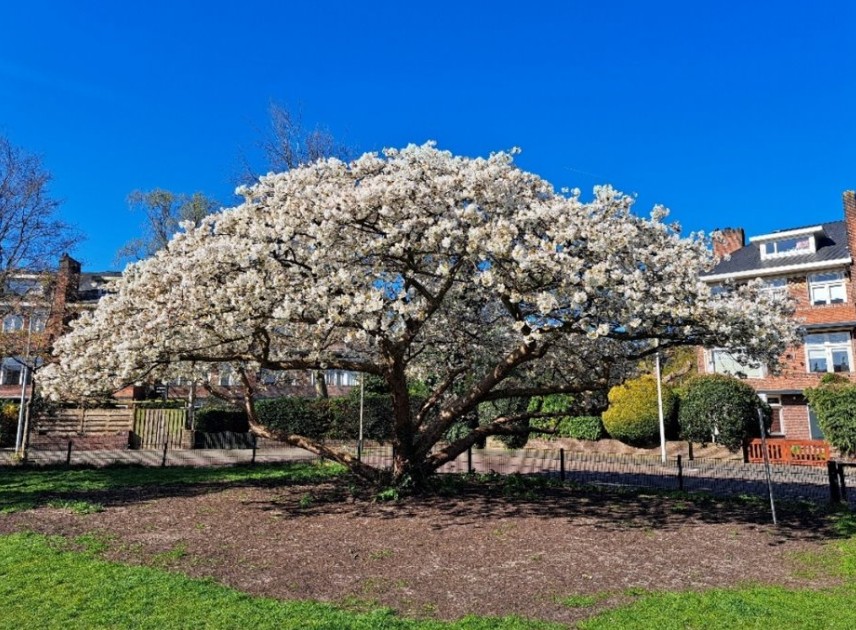
Japanese flowering cherry, tree. 92, 13 m wide.

The Hague local authority has nominated 10 trees and invites people to vote for five of these to become a veteran tree. The five trees that don’t get veteran status will become monumental trees. All the nominated trees are between 70 and 220 years old.

This is much harder than choosing a political party!

Will I choose that Japanese cherry, or the ’12 Broers’, tree no. 73, a 220-year-old oak that had a tough life (cut down often) and now has 12 trunks (the brothers), or choose the 145-year-old Mourning beech that houses falcons. I will let you know.

Saved by bankruptcy

Photo credit: Pieter van Marion, NL

I had booked return flights Manchester – Exeter to visit my poet friend Kathleen. My trip was going to be in the third week of March 2020. On the 5th of March Flybe filed for administration and ceased all operations immediately. I lost £65, but I was very relieved: If I had flown to Exeter, I might well have been stuck in Devon as that first lockdown started…


On Sunday 15 March I learned the British government was considering a compulsory quarantine. The next day I emailed the owner of the campsite asking if I could arrive early. He replied immediately. I booked a flight, transferred money, packed, agonised over which poetry books to take to my ‘desert island’ near The Hague. I flew to Schiphol on the Wednesday. The local buses already had the area near the driver closed off with white-red plastic.


Here are two poems about that first lockdown:

The departure

Half a century condensed into Brexit, pandemic.
At the threat of a four-month’ compulsory
quarantine I fled to my bolthole in Holland.

Six months of safety in a static caravan,
waking to birdsong each morning,
shielded from the sun by the golden elm.
I walked my daily rounds on the grass lanes.

Forsythia, tulips, narcissi, rhododendron,
pyracantha, salvia, rock rose, asters:
the seasons’ steady markers. From a distance
I waved to neighbours finally arriving.

In the cupboard of the spare room
lay the letter confirming my ‘settled status’
on the other side of the North Sea.

The undertakers

A double spread in the paper
features a large photo.

This man, in his thirties, a narrow
horizontal moustache, soft smile.

He sits in a wooden boat, his right hand
resting on a plain white coffin.

People are asked to email text and selfies.
Made into cards, these are placed on the coffin.

He is based in Amsterdam, will transport
you safely through the canals.

That undertaker has just opened a crematorium.
He also owns a chain of hotels.

The pandemic has cut the numbers allowed
to be in the room. There is livestreaming.

People, he says, are glad of it.
The intimacy makes it easier to speak.

At the end of September 2020, the campsite closed. I got a Covid test somewhere in the centre of The Hague and flew back to Manchester.

Late lockdown poem

I wake up and know, of course,
that I am not a morning person.
The sound of rain, of course,
and fewer sirens as people
are supposed to be at home.
My lifelines are the same, of course:
motto, comfort break, medication.
Of course, I think about exercise,
settle for Composer of the Week,
dead, of course.

Marie-Louise Park, Didsbury, Manchester, UK

A postage stamp, Joshua calls it

He’s right and there’s traffic noise
from the main road and people
with dogs on long leads,
but not all the benches
are dedicated to the dead,
Marie-Louise is a pretty name
for a park and the 43 Airport bus
is a hybrid and no-one much
was going to the airport
that autumn: I often had the bus
to myself, both ways.

Whistling for Stalin – poem

This w/end my poet friend Kathleen Kummer will be celebrating her 94th birthday. We first met 20 years ago on a writing week held near Cambridge. Kathleen lived and worked in The Netherlands after marrying a Dutchman.

To mark her special day, I’m posting a poem from her debut collection Living below sea level, published by Oversteps Books. The poem first appeared in the original 14 magazine, edited by Mike Loveday.

Whistling for Stalin

Circus performer summoned to the dacha,
you arrived empty-handed, no sign of the treasure
at the tip of your tongue. The signal was given,
you pursed your lips, made them a channel,
floated a tune on a cushion of air,
like a bird in a cage, lusciously trilling.
They sat around in their white, belted tunics,
he and his henchmen, legs stretched out rigid,
but ready to jack-knife to a Georgian folk song.

Did your whistling enliven the poker-face,
make it genial? When he clicked his fingers,
your tune slid back into its voice-box.
How much did you know about Uncle Joe?
When you whistle, you’re bound to sound carefree.

Trying – writing prompt

Madingley Hall, near Cambridge

Yesterday I talked with friends about Cambridge. That brought back memories of a one-week workshop at Madingley Hall with the poet Lawrence Sail. Madingley Hall is a 16th Century building just a few miles from Cambridge. It is set in seven acres of splendid gardens and grounds, designed by the famous Capability Brown in the 18th Century.The weather was good the week I was there and we would all find a quiet corner outside and get writing.

Credit: Pasja1000 via Pixabay

Writing prompt

One of the exercises was about personification. We mentally went through the alphabet and stopped at a letter that resonated with us. What kind of life does that letter have? What do they want and what is difficult for them?

The poem Trying was published in my debut Another life (Oversteps Books Ltd, 2016).

Trying

Trying not to be like
one who has gone before.
Allocated a slot
at the back of the queue:
a circle dancer with a club foot.

Striving to become
the symbol of perfection.
Dragging a tail,
leaving tiny furrows
on the rough terrain.

Trying then to hide
in foreign places.
Archaic words spoken with a twang:
Qua, quorum, quota, quasi.

A cold place they tell me.
Quebec.

Joan

To honour International Women’s Day I’m posting this poem about a woman.  It was first published in The Best of Manchester Poets, vol. 2, published by Puppywolf (2011).  I aimed to give the reader enough clues (the Gauloises cigarettes, the stubborn streak) for them to be able to guess the identity of this woman before they read the final lines.

It’s a good prompt: with which historical figure (famous or infamous) could you have gone to school, college, university with?  Did you even sit next to them in the classroom?  What were they like then?

Joan

One of the girls I went to college with

was Joan who’d left home early.

She smoked Gauloises, had a stubborn

streak, wanted to study philosophy.

We thought she was depressed; she cut

herself and once put out a cigarette on her arm.

I wish I’d asked her why.  I can see her now

with that hair cropped short, staring straight ahead.

People shouting, the smoke, the crackling fire.

Too hot, I need to step back.