I enjoy most of the archive poems from the Paris Review which arrive in the inbox. I save many of them in my folder ‘Inspiration’.
The poem Imaginary Paintings, by Lisel Mueller (Fall 1992, # 124) is in seven numbered sections. Seven is always a good number. The length of sections varies, from one line (Love) to 10 (Big Lie).
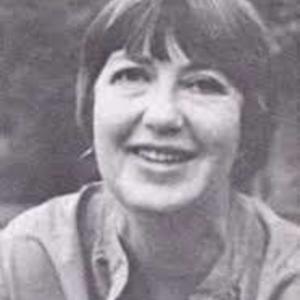
Lisel Mueller, 1924 – 2020
1 How I would Paint the Future
A strip of horizon and figure, seen from the back, forever approaching.
2 How I would Paint Happiness 3 How I would Paint Death 4 How I would Paint Love 5 How I would Paint the Leap of Faith 6 How I would Paint the Big Lie 7 How I would Paint Nostalgia
I liked the start of the Big Lie painting:
Smooth, and deceptively small so that it can be swallowed like something we take for a cold.
Here is my attempt at How I would Paint Patience:
A small mat, wool, handwoven. Mostly pale grey, with the odd black nubbly bits at the corners.
Credit: Prawny via Pixabay
Writing prompt: If you’re looking for a subject for your imaginary paintings, you could always take one of the seven cardinal sins (pride, greed, lust, envy, gluttony, wrath, sloth) or one of the capital virtues that overcome them (humility, generosity, chastity, brotherly love, temperance, meekness, diligence). There is also prudence, fortitude, justice. Or take anything abstract, such as stubbornness, peace.
It’s four years this month since the poet Tony Hoagland died. Turn Up the Ocean was published posthumously this year.
The blurb on the back says ‘Over the course of his celebrated career, Tony Hoagland ventured fearlessly into the unlit alleys of emotion and experience. The poems [ … ] examine with mordant wit the reality of living and dying in a time and culture that conspire to erase our inner lives.’
The mordant wit can be found in some of the titles:
Four Beginnings for an Apocalyptic Novel of Manners
Why I Like the Hospital
On Why I Must Decline To Receive The Prayers You Say You Are Constantly Sending
The last few lines of this poem are:
And could you stop burning so many candles, please?
My god, think how many hours and hours and hours – think of how hard those bees worked to make all that wax!
Hoagland’s poems often go just over the page and here are the last few lines of Gorgon:
Your job is to stay calm. Your job is to watch and take notes, to go on looking.
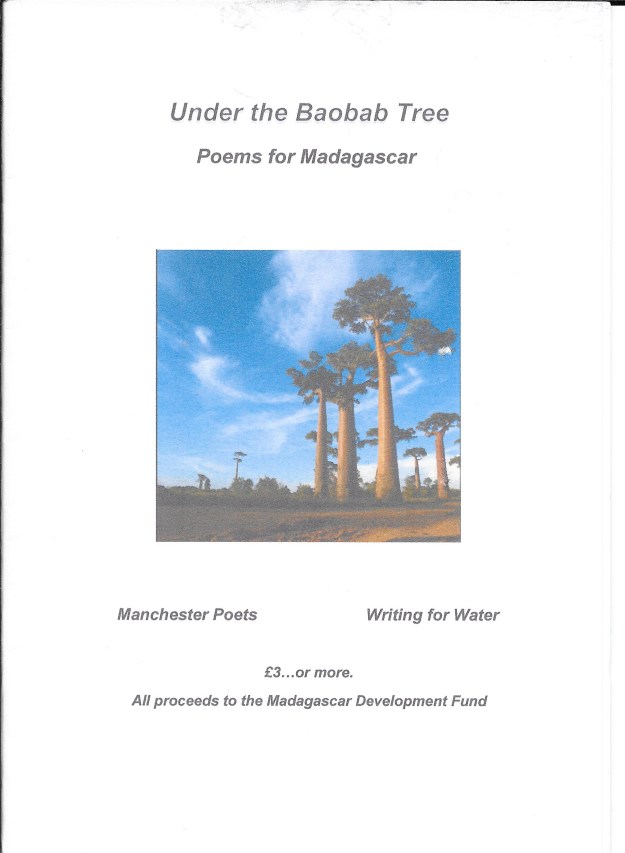
Sorting out boxes with books that moved with me from the UK, I found this small pamphlet. Manchester poets Steve Waling and Francesca Pridham edited poems by members of Manchester Poets. Copies were sold at the Didsbury Festival to raise funds.
Here Fran tells us about her connection with the Madagascar Development Funds and shares some wonderful proverbs – writing prompts for your poems, flash fiction, short stories.
Madagascar
“My first contact with Madagascar came in 2013, when my husband, interested primarily in the country’s unique wildlife, persuaded me to take part in a trekking holiday there. The scenery is awe inspiring. A melting pot situated between Asia, Africa and Australia, Madagascar is the mysterious land of the ancient baobab tree, a land where pachypodiums thrive, the cat-like fossa hunts and lemurs swing from tree to tree. The most revered lemur, the Indri’s strange call wails through the rainforests, echoing the ancient isolation of the island.
The people
Despite this beauty, what however most caught my heart were the people. There is little infrastructure in the country and most villages consist of a small collection of adobe houses made from the spectacular red mud that Madagascar is famous for. The people have nothing, just the land they live on and any livestock, such as chickens or the zebu cattle that represent their wealth. Their generosity and welcome though is infectious. I gave a biscuit to a small child, four others appeared instantly, and the biscuit was shared immediately.
Credit: Puabar via Pixabay
Water
Their water supplies are often limited to streams that trickle into small muddy ponds, polluted sometimes by cattle who too have to use the water. Standing by the side of a small dirt track nearing the end of my trekking holiday I drank thirstily from a litre bottle of water I’d brought with me. Staggering down the track was an old man with his grandson, pulling and pushing at a makeshift trolley, carrying four battered plastic water containers. They had walked five miles to the nearest water supplies and were coming back to the village.
Credit: via Pixabay
The Madagascar Development Fund
When I returned to England, I started raising money to develop water supplies and build wells in Madagascar. We are lucky enough to work with The Madagascar Development Fund, a small charity run by the ex British Ambassador to Madagascar and have provided enough money now for four wells. The charity specialises in small projects which because of the charity’s experience are achievable and can bypass the complicated political situation in the country.
We have been lucky enough to attend the opening of one of the wells where we were welcomed into the village by singing, dancing, and drumming. We were given a welcome feast and a poem, written specially for the event was read by a young man, resplendent in what looked like a doctor’s white coat!
Malagasy Proverbs
The Madagascan culture is infectious! Their proverbs or ohabolana capture the learning and wisdom of centuries, inspiring both thought and writing! Enjoy the poems they produce!”
Truth is like sugar cane: even if you chew it for a long time it is still sweet. Words are like eggs; when they are hatched they have wings. Like the chameleon keep one eye on the future and one eye on the past. Let your love be like the misty rains coming softly but flooding the river. Those who know how to swim are the ones who sink. Don’t be like a shadow: a constant companion, but not a comrade. An egg does not fight a rock. Only thin dogs become wild. A canoe does not know who is king: when it turns over everybody gets wet.
We’re staying with the Writing Poetry paperback that Matthew Sweeney and John Hartley Williams wrote together for the Teach Yourself series.
In Chapter 12 they’re looking at first lines of contemporary poems, and the need to hook the reader:
Someday I will go to Aarhus Hitler entered Paris the way The strangest thing I ever stole? A snowman. Brethren, I know that many of you have come here today We gotta make a film of this, Jack. After she left he bought another cactus.
All these lines are intriguing, but they work in different ways. The first is a vow, then we have the first half of a comparison that the reader needs to complete. The third is a question with its own answer, followed by a resolve in dialogue. Number 6 is a story that begins in the middle.
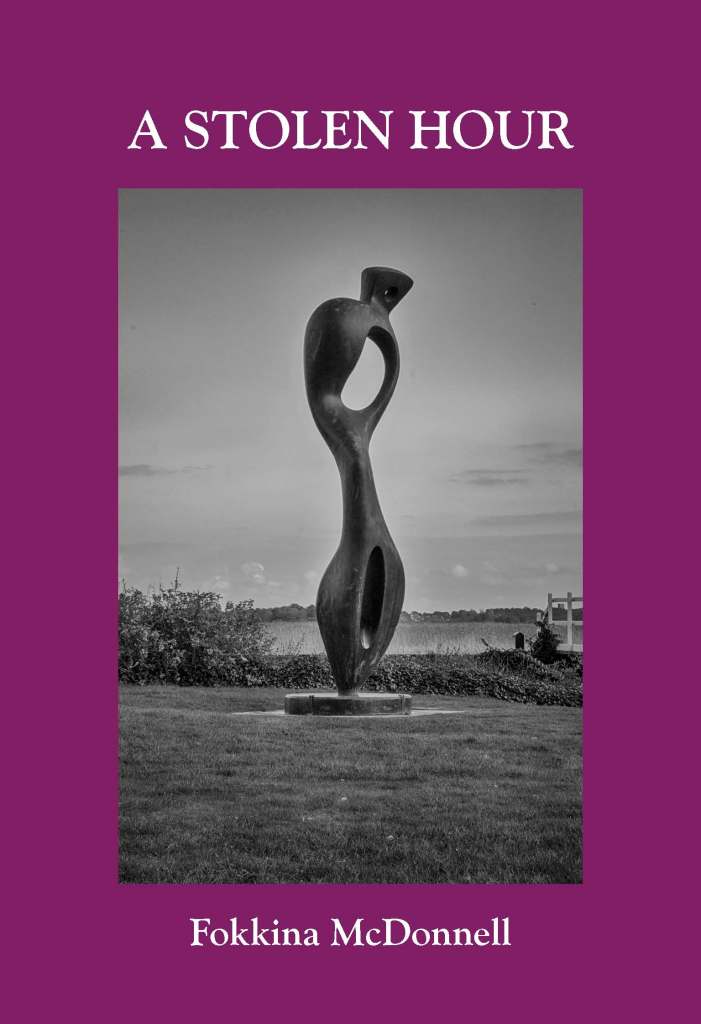
Here are first lines from some of the poems in my pamphlet A Stolen Hour (Grey Hen Press, 2020):
For just one minute of the day If we were strangers, His binoculars rest on the windowsill. The week before I’d given my pleated dress away. Bedrooms are for hiding white. One hour was stolen from the time I am the last stonemason. Date of refusal decision: 13 September 2017
What do you think? Which is the one that intrigues you most and why? Feel free to use them for your freewrite, your ink waster. If you get a poem or flash fiction from a line, I’d be pleased to know!
One of the poems in this week’s inbox came courtesy of The Paris Review: Identity Check by Hans Magnus Enzensberger. The title is intriguing enough, the first line is a bold claim and a denial:
This is not Dante
This immediately sets up tension and hooks the reader’s curiosity. If not Dante, who is it? We get an answer we know can’t be true: This is a photograph of Dante. Then: This is a film showing an actor who pretends to be Dante.
The poem continues like this. It reminded me of a poem of mine published in orbis magazine which uses similar techniques. If I feel really ‘stale’, then using two prompts of a different kind is guaranteed to work.
In 2017 I went to Tate Modern for the exhibition of Robert Rauschenberg – very stimulating. It included his telegram This is a painting of Iris Clert if I say so. A visit with a poet friend to Manchester Art Gallery then started the poem. The painting described is Portrait of Lucian Freud by Francis Bacon. Here is the link.
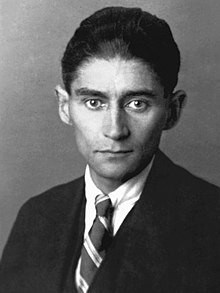
Franz Kafka
This is a portrait if I say so
A portrait of Kafka, in a long coat; dark grey, almost black. No, it’s not. It’s just paint on canvas. This is a portrait of the man who was a friend of the man who put the paint on the canvas. Paint is history. Painting is looking for something, then losing it again. This is a portrait of a man, based on a photo of Kafka. My friend Kathleen asked Was Kafka’s face that long? The man in the long coat in the portrait is striding out. No, he’s not. The note to the right of the portrait says the man who is not Kafka is leaning against the pillar, but the pillar isn’t straight. This is a portrait of a man who isn’t famous, based on a photo of Kafka, and Kafka became famous, and the man who put the paint on the canvas became famous. Kafka is dead. The painter is dead, but this portrait is living, dead paint is living. This is the living portrait of a man who had friends. The man in a coat the colour of death. All colours become history. A coat; a face; a pillar. A portrait is, he says so.
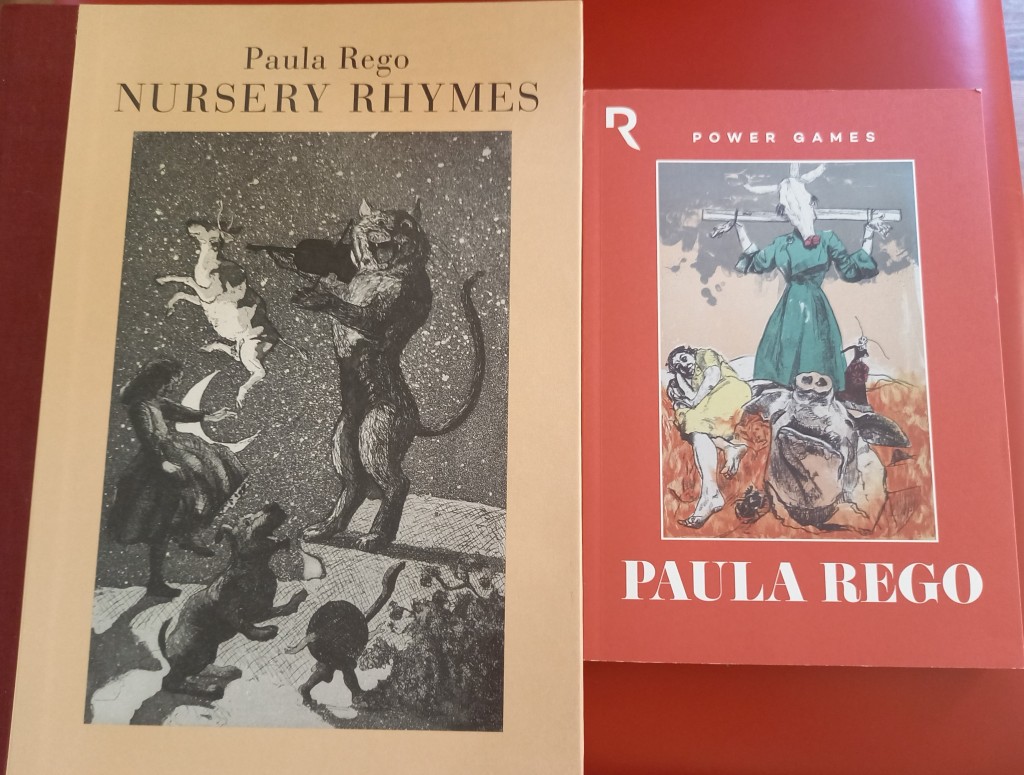
I was sad to learn of the recent death of the artist Paula Rego. Last century I saw her work at the Whitworth Museum in Manchester, UK. That’s when I bought Nursery Rhymes. In March this year I went to the first major retrospective exhibition of her work in The Netherlands – at the Kunstmuseum here in The Hague. The museum shop had copies of Power Games.
I admire her as a person and an artist. As she told it ‘art was a way to work through fear and trauma, to soothe and comfort, as well as to erase, attack, scratch out and destroy.’
Whitworth Museum, extension
After a major refurbishment the Whitworth reopened in 2015. I would have liked very much to meet Paula Rego and talk with her about life and art. This imaginary meeting is set in the new café. The poem was published in my pamphlet A Stolen Hour (Grey Hen Press, 2020).
Meeting Paula Rego at the Whitworth, Manchester
Shading her eyes with a small black fan she looks distressed and even out of place. Ash trees cast a greenish shadow on her face. To me she seems older now, frailer than in the short winter days of that other year when the quiet ghost of a drowned baby played with black hen, spiders, women who prayed for open roads, escape, a private den.
There was a boating lake once in the park. We wait for panini, service is slow. Café in the trees, I say, canopy. Her earrings sparkle, her eyes are still dark. It’s from the Greek; “konops” means mosquito. Paula’s face lights up; her imagination set free.
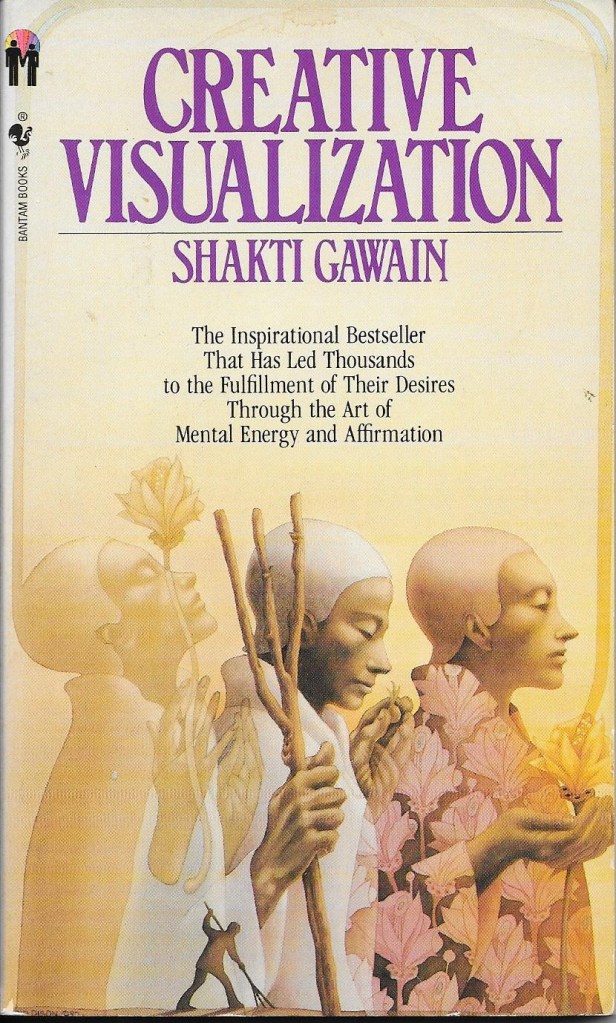
Twice a year, early July, on or close to my birthday, and on New Year’s Eve, I sit down and write a gratitude list. Being alive and kicking: always the first item. It’s a practice I got from the classic Creative Visualization by Shakti Gawain. I have the 1982 Bantam edition, with that special yellowing-pages smell.
The Dutch couple below made the paper. Most days they put a gratitude note in a glass jar. On NYE with a glass of wine and music in the background, they take items out and read them to each other. Of course, it’s often the small things: the colleague who did your work when you were ill, a kind note from someone when you needed it, a hug, waking up with a body that’s just doing its job, a walk in the forest. Ah yes, that was a special moment they say to each other.
Two more things I am grateful for are the acceptance by Broken Sleep Books of the manuscript Remembering / Disease. Here are the names of other poets and writers with a book out with BSB this year.
Matthew Stewart publishes an annual list of Best UK Poetry Blogs on his site Rogue Strands. I was chuffed that this blog is one of five ‘top notch newcomers’. You can read the full list here. Matthew lives between Extremadura, Spain and West Sussex. His collection, The Knives of Villalejo, is published with Eyewear and a recent Poetry News Book of the Year selection.
Here are two short prompts. In the current issue (27) of the online poetry magazine Allegro, editor Sally Long, the opening stanza of the poem by John Grey caught my eye. For Gratitude I’ve chosen the opening stanza of Joy Harjo’s poem Perhaps the World Ends Here.
Forgiveness
The woman with the forgiveness is out there in the world somewhere.
Gratitude
The world begins at a kitchen table. No matter what, we must eat to live.
This week I saw a feature on tv about various adoption schemes here in The Netherlands. One of those, Adopteer een Kerstboom, now has 3,000 people who have adopted a Christmas tree. There is a waiting list: it takes five years for a tree to be tall and big enough for adoption. Each tree carries a metal tag with a number, so that the adopters know it’s their tree. Many people have given their tree a name. They pay a small deposit on collection in November from one of 13 locations, and trees are returned in January when they are planted back in their slot. The fee goes up a little each year the taller the trees get.
I think it’s a great scheme! Season’s Greetings to you all. Thank you for following my blog and for your comments. A short seasonal poem:
I’ve never been to that desert island though the removal firm sends me a bill each month for the books I left there. I’ve never been to Iceland for that green light, nor Lapland for those dogs and sledges, but I have kissed Father Christmas.
Writing Prompt1: a six-line poem that includes, in different lines, an animal, a country, a place in nature, a concrete object (like my book).
Writing Prompt 2: What name would you give your adopted Christmas tree? Write a short ode to Julian or Emily, or ….
This week my friend Valerie celebrated her birthday. We met 30 years ago on a residential week in Spain. To celebrate our friendship, here is a short poem in which we’re together. Bowler’s is a very large indoor and outdoor carboot sale location in Manchester.
That Generation Game is a tv game show in which teams of two family members, but from a different generation compete. The winners see a conveyor belt with goodies wobble past. No worries: if they can’t remember them all, the studio audience will shout to help …
Table 64
We carried the plastic crates and cardboard boxes into Bowlers at bloody six o’clock. The locusts, proper traders, picked items from the piles we carried, threw us pound coins and a few fivers.
The early flurry was good and then it was like the Generation Game in reverse: suitcases went, a pile of books, glasses, a wok, costume jewellery, some cuddly toys. We sat back in our folding chairs like regulars, holding off sleep.
Writing Prompt: Did you do a car boot sale with a friend? Were you a market trader (for real or in your dreams)? Did you go to an auction of lost property? What is the object that you lost or found?
Too many gardening programmes can seriously damage your health! They said if you plant out your marigolds you will get a splendid display, but Nigella hasn’t had a single flower. Monty Donkey. What does he know?
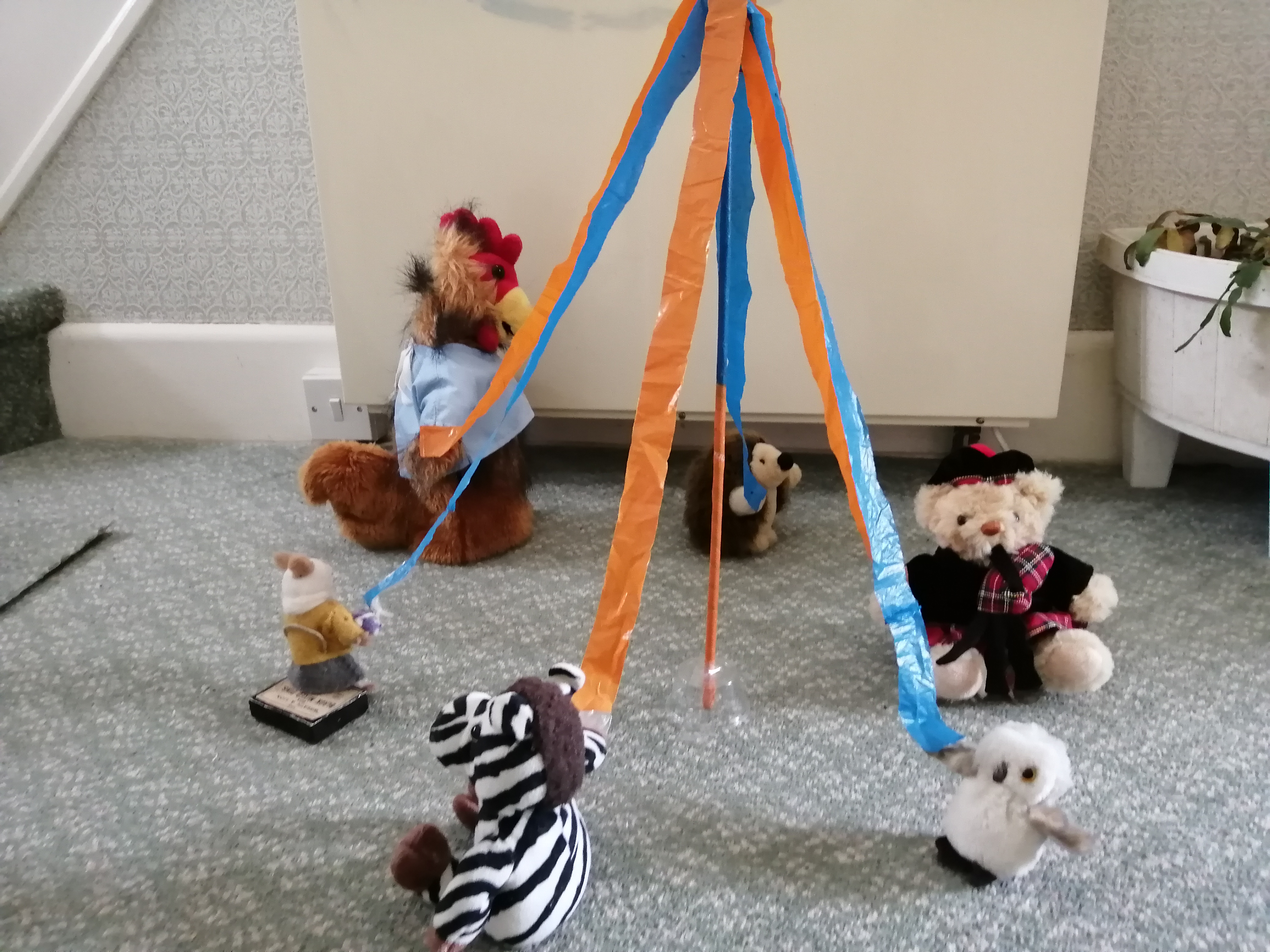
During lockdown, the first thing I did after breakfast was to go to Facebook to see what my poet friend Helen Kay had come up with that day. As Helen explains:
“In 2016 I wrote some poems about chickens. I hit the road and read my poems to local groups, but something, or someone, was missing to bring a spark into my performance – and that was how a hen glove puppet came into my life – you could call it puppet love. I had no idea that my lively alter ego would become more popular than me, delighting all ages with her lively mix of bright-eyed innocence and femme fatale. She even has her own little book of poems called the Nigella Monologues- it’s all about me.
In 2020 lockdown came and Nigella and I left our home to live with my 99-year-old Aunty Phyllis. It was all very sudden; our packing was mostly food parcels, a laptop and a couple of books. Hidden away, we wanted to help others. Facebook seemed awash with anger and sadness, so Nigella and I decided to do a funny daily photo on the theme of keeping Sane & Safe. People liked it, so we ended up doing 103 posts. We made scenery using toilet rolls and old paint in the garage. Aunty Phyllis home schooled Nigella about the war and dug out bits of fabric. People added their own puns and quips and chatted to each other. The last week Nigella had her own art exhibition, then left us for the stars in her A Pollo 103 Spaceship. Out of the dark a star was born. Who knows what next?”
Home School and the pecking order. Today maths: some things are more equal than others.
The posts brought me joy and gave me a cheerful start to the day. Some posts included references to very British phenomena: those Marigold gloves, Monty Don, a well-known TV gardener, Orwell’s Animal Farm. The wit was a bonus. The posts showed me how curiosity and creativity are a fundamental part of our survival kit. Let’s finish with a celebration!
Celebrate May Day with a social distancing activity. Don’t get yourself in a tangle.













 Acacia Publications