Tag Archives: childhood

A Coalition of Cheetahs

It’s a great pleasure to introduce our April guest poet Doreen Gurrey. We met on a writing workshop some years ago and belong to a group that meets regularly online. You can find Doreen’s biography at the end of the post. I have chosen three poems from her new pamphlet A Coalition of Cheetahs, just out with smith/doorstop. It was a winner of the 2023 Poetry Business International Book & Pamphlet Prize.

Zoo

From the lit hall, I slide back the hardboard panel
to find you under the stairs, crouched like an Indian street seller
in front of the toy animals you’ve fumbled into a ring.

Hands and knees on chipped linoleum, I crawl in,
smell the turps and boot polish, the must of apples
separated until next year.

You’re listening to the slow clicks of the electric meter,
your heart monitor, sharing the sound with the broom
which shoulders the corner like your guardian angel.

I haul you out, pick up the polar bear, giraffe,
the big elephant and the little elephant, then soothe
the smouldering print, reddening on your thigh.

Yarn

I was learning to knit when you left me,
decoding the language; stocking stitch, moss,
knit2tog., twist; the wool a filigree

snaking through my fingers across
the floor. The note was cold: In Italy
don’t write or ring. Needles knit up my loss,

a pink anaconda down to my knees.
I learned to pick up stitches I’d dropped,
then all my friends said pink suited me,

asked would I carry on or had I stopped?
I said I’d started another in green,
that casting off was easier than casting on.

Guest

You came with all you needed,
your car a metal suitcase,

the boot full of booze
the back seat housing a portable grill.

Temporary you said, but I forgot
how little you need to live.

You kept mostly to the garage,
the beer stacked next to the tool box,

the radio tuned in to the French news;
you smoked your roll ups and grilled

your côtes de porc.
My washing took on a Gallic smell.

Now you’re gone, I’ve got the garage back,
but sometimes mistake

the growl of the tumble drier
for your phlegmy cough,

the washing machine’s whine
for your whistling.

Biography

Doreen Gurrey trained as an English and drama teacher and for several years ran her own Youth Theatre Company. She went on to become an Adult Literacy Tutor writing and delivering Family Learning courses for the local council. Latterly she has worked as a Creative Writing tutor at York University. Her work has appeared in Poetry Salzburg Review, The North and The Yorkshire Anthology. She has won prizes in The McClellan, Bridport and Troubadour poetry competitions. Doreen lives in York and has five grown up children.

Forgetting My Father

Photo credit: Naomi Woddis

It’s a great pleasure to introduce our December guest poet Jill Abram. Jill and I met several years ago on a writing workshop. I have chosen four poems of Jill’s pamphlet Forgetting My Father. The beautiful cover was designed by Aaron Kent and was inspired by rhododendrons in the last of the poems. You’ll find Jill’s biography and links after her poems.

This is the last post of 2023: Season’s Greetings to you; thank you for your support.

How To Belong

At Jewish youth club we all wore
Rock Against Racism badges
and danced to Glad To Be Gay
girls in one ring, boys in another.

They ate ham sandwiches when
their parents weren’t looking yet
scorned me for Smokey Bacon crisps
and going to school on Yom Kippur.

The Evangelicals lured us into their
church hall with ping pong then tried
to keep us with singing and prayers
and Jesus. They wanted all of us.

Words Are Not All We Have

Words are all we have. – Samuel Beckett

Don’t get into debt with anyone but me!
Dad’s sole instruction when he left me
at university. When we did the reckoning
he took the hit on my car’s depreciation.
And because I’d sold it, he drove 300 miles
in his to bring me and all I owned home.

We argued over SI units once. I fetched all
my A-level text books, showed him proof
after proof. He wasn’t having it. He’d grown up
with imperial; I knew metric, and that I was right.
Next day he brought a page he’d found at work,
looked at the floor as he handed it to me: I withdraw.

Now he can’t say anything because of the tube
in his throat and maybe – we’ll know when they
remove it – that blood clot. When I try to leave
his bedside, he grips my finger and won’t let go.

My Sister Is


a gold coin:
She is precious.
Her style is simple and elegant.
I’d like to exchange her
for something of equal value.

an alarm clock:
Controlled by radio from Rugby,
accurate to a fraction of a second.
If she were by my bed, she’d go wrong
and wake me at 5am.

a mid-morning beverage:
Green tea fits her philosophy,
black coffee her personality.

a steamroller:
She’d say that was more appropriate
for me, being heavier than her.
I’d say she has a greater power to crush.

a bear:
Will she be a ferocious, mama grizzly
or cuddly teddy? We never know
until she gets here.

a window:
Round, square or arched?
Hmm, certainly arch

a hand thrown pot:
Finest china drawn out thin, glazed
in lustrous copper and cobalt. In the kiln,
a bubble formed on her rim.

a coffin:
Made to measure, lined with silk,
a velvet cushion, and no shortage
of people to carry it.

Slow Orphaning

Images slide across my lock screen at random:
hot pink rhododendrons at Kew last May,
glasses of rum and ginger on a hotel balcony.
Here’s Mum, pensive and beautiful as she
gazes at the skyline from a Thames boat
when she came to see me. The last time
I tried to visit her, she said she was busy.

Dad teeing up on the ninth at Dunham
in an orange cagoule. Rain never held him back.
A heart attack slowed him. A bypass stopped him
at a stroke. His body survived fifteen years
while his mind died and I grieved for
so long. So long I was surprised
there were still tears for his funeral.

Biography
Poet, producer and presenter, Jill Abram is autistic, has Jewish heritage and lives with fibromyalgia. She grew up in Manchester, travelled the world and now lives in Brixton. She has performed her poems, which have been widely published, across London and beyond, including Ledbury Poetry Festival, StAnza, Paris, USA and online. She was Director of the influential collective Malika’s Poetry Kitchen for twelve years. Jill’s debut pamphlet, Forgetting My Father, was published by Broken Sleep Books in May 2023. Jill has a newsletter. You can sign up via her website or directly via this link and here is the link to Broken Sleep Books, if you want to buy a copy of the pamphlet.

Journey – a poem

It’s a great pleasure introducing this month’s poet Pat Edwards. We met on Facebook and then discovered we both have a book with Indigo Dreams Publishing.

Pat is a writer, reviewer and workshop leader from mid Wales. She also offers a poetry feedback service on her site Gold Dust. Her work has appeared in Magma, Prole, Atrium, IS&T and many others. Pat hosts Verbatim open mic nights during more ‘normal’ times and curates Welshpool Poetry Festival. She has two pamphlets: Only Blood (Yaffle, 2019); Kissing in the Dark (Indigo Dreams Publishing, 2020).

Today is Mother’s Day in many countries. Pat’s dedication for Only Blood reads ‘For Mum and Dad if only we could all try again.’ Here are three poems from Only Blood, followed by Journey, from Kissing in the Dark, in Pat’s honest and compassionate voice.

The year Mum died

She is cutting tiny pieces of foam rubber
to comfort-cushion her feet in pinch-painful shoes.

There’s that look in her eyes, the one I don’t yet understand,
that gives away the cell-division in her breast.

She has a box of keepsakes I’m allowed to sift through:
the silver clasp for keeping sixpences together;
the golden compact that clicks open to reveal a mirror;
the trace of bronze powder that smells like ladies.

Here in 1963 amongst the fullness of her skirt,
I am barely five and only know I love her.

Gems

I want to find my mother’s jewellery,
to lift the lid on a tin box
of paste and pearls;

to find drop earrings that glint,
necklaces that lie on collar bones,
a charm or two for luck.

I want her wedding band,
brooches that once fastened scarves,
all the souvenirs and sentiment.

But I bet the first went to pay the gas,
the second to buy the weekly shop,
the third towards a gambling debt.

Gee-gees

Teenage me always knew when he’d put on a bet.
The channel would get changed,
there would be an urgent tension,
tight as a fist.

We’d sit saying not a word,
for fear speaking would fracture us.
Then, in the closing furlongs,
I’d know for sure.

Dad would bounce on the edge of his seat,
building from a hushed Come on my beauty!
to blatant demand of it.

We would both urge the horse
across the finishing line,
jockey standing in his stirrups,
cracking the whip.

Then the relief.
Let’s get your hair done.
I can buy you a new coat.
As if I was my mother.

Journey

I draw a blue-black line under my eyes,
trace it across the tattoo on my left arm.
I watch it slide down the veins of my leg,
to settle in a grey graffiti pool by my feet.
That’s quite some journey I say out loud,
so the man on the train looks up from
his screen and glares at me like a priest.
My thin mouth flashes a penance smile
back at him and he absolves me I think.
That’s quite some journey I say silently
so the man in my dream looks up from
his book and smiles at me like a friend.
My full mouth offers him a lover’s kiss
which surely changes something I think.
I draw a blue-black line under everything.

Piecework – war poem

Credit: Andrew Martin on Pixabay

Today’s poem is another childhood memory, related by a fellow teacher to my friend, poet Kathleen Kummer. I find much to admire and like here: the first line which places it so precisely, the questions in the first stanza, that use of the word ‘goosestep’ in the second stanza, the sensory details – sounds, images, smells. The end rhyme is often subtle, and I particularly like the ending. How our view of a person can suddenly shift through something we learn about them.

Piecework

At the age of two or three in wartime London,
under the table she played alone to the hum
of the sewing machine. Did she ignore the coil,
pastel-coloured, which lengthened with the shadows to fall
over the edge, soon reaching the floor? Or was it
her job to alert her mother when the pink or blue fabric
touched down and risked getting dirty? That this was a lifeline,
she understood: with carrier bags, they arrived
and departed, the strangers who counted out with care
the sixpences, pennies, halfpennies, so much a pair.
Until the table was needed, she built, then demolished,
towers of silver and nasty-smelling copper.

Her mother worked late. She would hear from her bed
the goosestep of scissors through felt or satin, the thread
as it snapped at the end of the long line of shoes, soft shoes
for babies, for feet in mint condition, unused.
Had it seemed like magic the first time the puckered cord
which dangled over the table’s edge was transformed
and became tiny shoes, some with pearl buttons, some
with rosebuds, perfectly paired? That the strangers would come
and take them away, was what she remembered, and her mother
dividing the money, putting some of it in tins for another
rainier day – which is more or less what she told me,
the colleague I hadn’t warmed to previously.

Saturday mornings – poem

Maison de Bonneterie, Amsterdam

On Friday I had my second vaccination (Pfizer). I have felt ok, a bit tired and feverish. By way of a treat, a good childhood memory.

The “selling fur coats” took place in Amsterdam, in Maison de Bonneterie: a small chain of high-end fashion stores. The building in Amsterdam was designed by a well-known Dutch architect with an interior in the style of Louis XVI (the Sun King of France), an imposing staircase and a glass roof.

It closed in 2014, after 125 years of uninterrupted service to the elegant public. The Amsterdam store is a national listed building and now used as a location for events.

Saturday mornings


We’ve been waiting in silence.
It’s just the three of us.
Mother’s away in a city, selling fur coats.
The radio crackles, but here comes father
with blue beakers, hot chocolate,
curled cream on top, and the bread
he has baked on his day off.

Tomorrow he’ll be on the balcony
playing the organ; we’ll be below.
Today he is the son of a master baker.
We’ll have the bread with butter
and jam, red strawberries,
shiny against the golden crust.

Neighbours Day – poem

Photo Credit: andrewlloydgordon via Pixabay

Yesterday was Neighbours Day here in the Netherlands. The Neighbours Day initiative was started in 2005 by Douwe Egberts, one of the traditional Dutch coffee makers: social contact starts with a cup of coffee. A few years later they were joined by a charity called Oranjefonds. Each year they provide funds, support and advice for a large range of social and community activities, such as Dutch language support for refugees, mentoring, club houses for the old and young.

During the lockdown earlier this year, many new initiatives were started by people volunteering in their own street or local area. A good fit with this annual initiative. My neighbours here on the camping have cut their hedges and have gone home. My day always starts with a good cup of coffee made in a cafetiere. It happens to be D.E. – a firm started in 1753 in a small shop in Friesland, a northern province.

Earlier this year I talked with my brother about events in our childhood. This memory came up.

Getting to know the neighbours

We’re snoozing after lunch
in a Sunday afternoon garden.
One of our family, still awake,
sees silent orange flames rising
that side of the opaque glass.

It’ll be a small insurance claim.
As evening turns pink, the old
Belgian couple walk their Borzoi.

Photo credit: akunnen via PIaxabay

Southwold, Suffolk

Image (2)

Beach huts in Southwold, Suffolk

Later today, I’m on a ‘virtual’ writing weekend. Part of the preparatory work was to write a 16-word poem about a place on the coast, but not about Whitby – which is where we will be based ‘virtually’. That brought back memories of my many visits to Southwold in Suffolk. The expensive beach huts there are legendary. The smell of beer brewing at the local Adnams Brewery is an acquired taste!

Several times we rented Shrimp Cottage, at the front. Whoever stayed in the main bedroom on the first floor, had a view of the sea from their bed. We were the women I met on holiday in China, as one of our regular reunions. I’ve also stayed there with friends from Manchester and, twice, my brother and his family in the Netherlands got the ferry to Harwich and made the short drive up the coast.

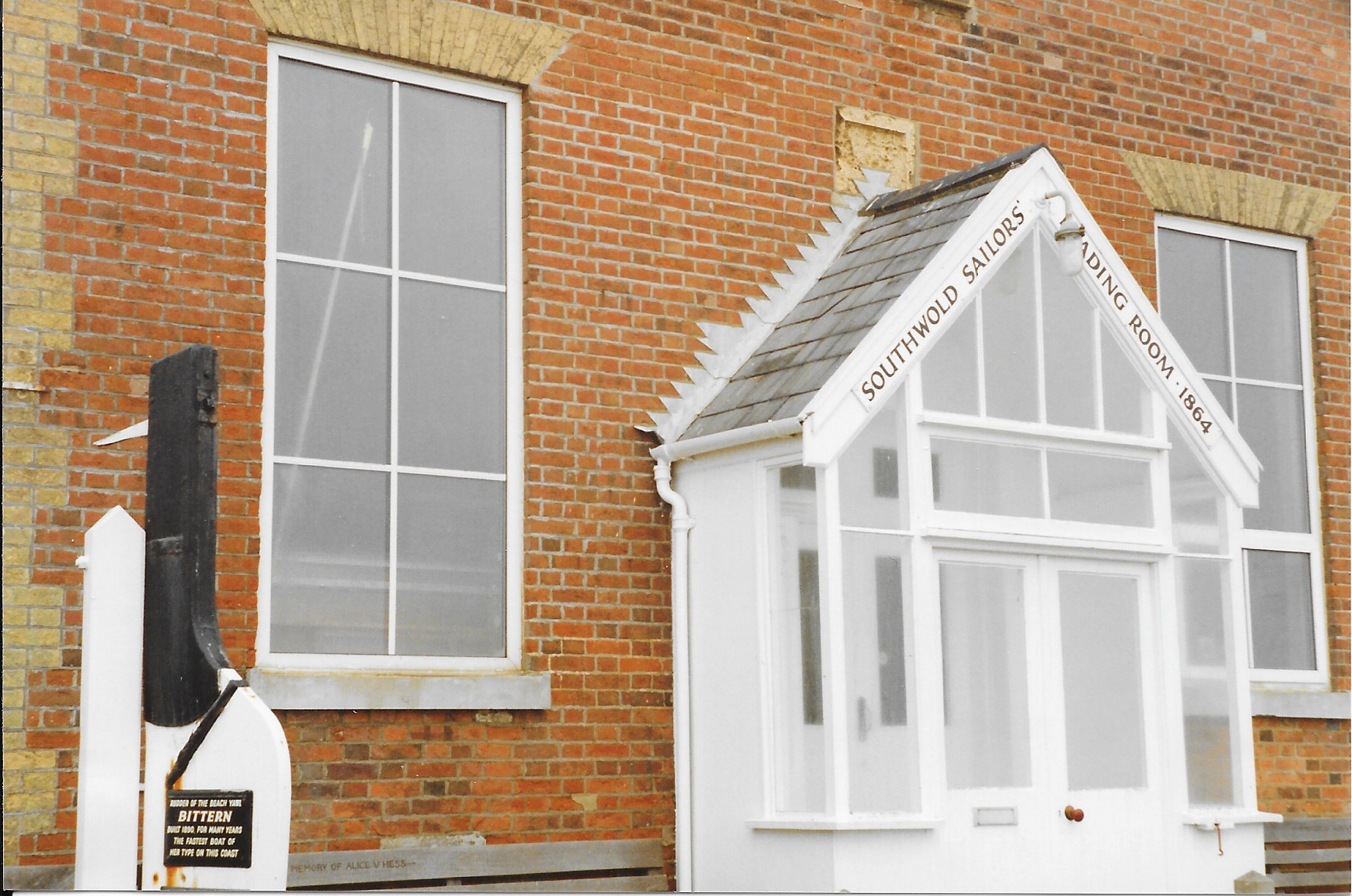
Southwold Sailors Reading Room


I visited Southwold in all seasons. There was just one house between Shrimp Cottage and the Sailors’ Reading Room – a Grade II listed building from 1864 and still a refuge for sailors and fishermen. Another forty footsteps took us to the Lord Nelson pub. The poem is included in my second collection Nothing serious, nothing dangerous, published by Indigo Dreams Publishing Ltd  in November 2019.


Southwold posts


Nautical miles
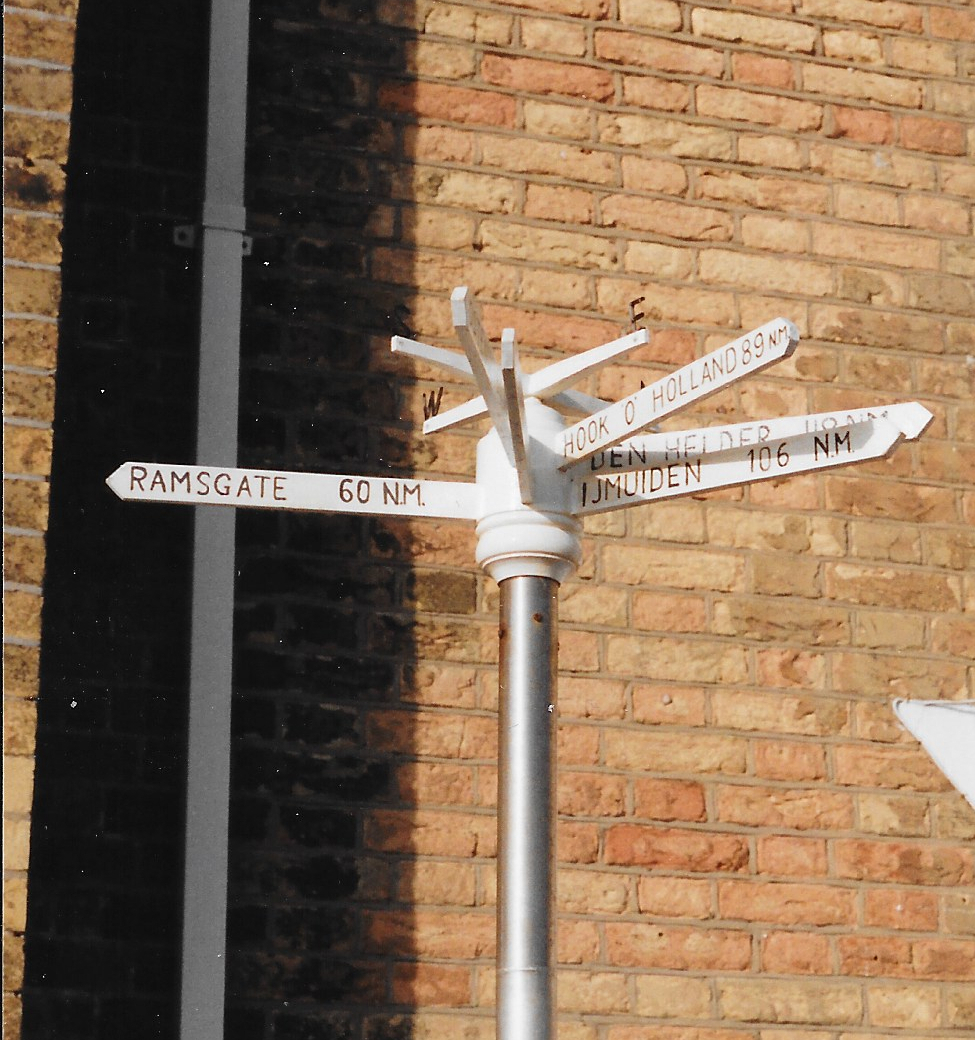
The sign outside the Sailors’ Reading Room is

a series of thin wooden planks, painted white:
Den Helder, IJmuiden, Hoek van Holland.

Across the horizon, they are less than a hundred
nautical miles from Southwold in Suffolk

where the narrow beach of pebbles –
grey, brown, black mostly –

is held together
by couplets of groynes, slimy green.

Both our languages have the word strand.


Father’s Day


40th Wedding Anniversary
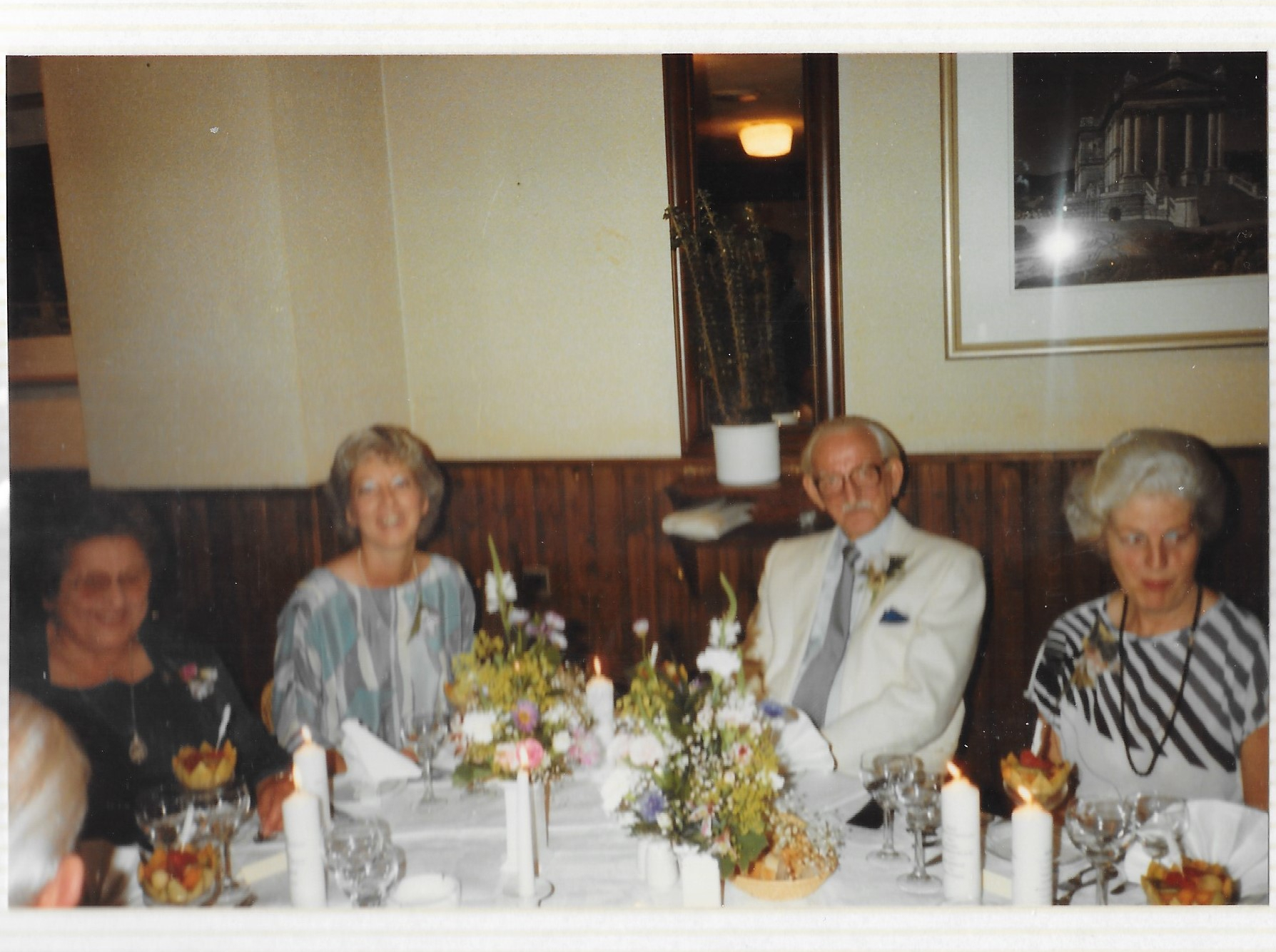
The picture shows me and my parents at a dinner to celebrate their 40th wedding anniversary in 1984. At Christmas 1988 I became the scapegoat for the difficult circumstances around my sister leaving her husband. My father, my brother and that husband were all called Theo. My sister was living with someone else by then.

So, one Theo told me off for keeping in touch with that Theo and the third Theo collected me from my parents’ flat and took me to the airport. My father and I became estranged. Late September 1990 my father was taken to hospital after a suspected heart attack. He was doing okay, my brother told me, no need to rush and book a flight. Two days later my father died in hospital, instantly, after a large heart attack.


Almuerzo con mi padre

My father’s eyes behind the spectacles sparkle.
There’s wisdom in his moustache,
and dreams of fino sherry, chilled in a thin glass.

There would be time to wait and wander,
criss-cross a square, look at people,
the statue of a famous general on his horse.

The dead will be around us on the hills that hold the city.
My father claps his hands, decides where we will eat.

He’s learned his Spanish from reel-to-reel Linguaphone.
I’m online with Duolingo: Vino tinto, pan, conejo.

My father would have found it hard to choose
between the crema catalana and helada.
His moustache would have selected ice cream.