Last year I wrote about the ‘Ongelezen Boeken Club’ (Unread Books Club), a new venture where libraries promoted books on the ‘null list’ – books that have never been taken out.
This year, the ‘Nationale Ongelezen Boekendag’ (National Day of Unread Books) coincides with another new initiative: De Week van het Verboden Boek(The Week of Forbidden Books). Bookshops and libraries throughout the country are showcasing books that have been or are still censored.
On Wikipedia, you can find an article on book censorship, a list of banned books and the main list of books banned by governments. This starts with the Bible and Albania and ends with Yugoslavia.
If I counted correctly: 66 countries. ‘Almost every country places some restrictions on what may be published, although the emphasis and the degree of control differ from country to country and at different periods.’
Wikipedia lists 66 books that have been or are currently banned in India. A small number, relatively speaking. The earliest is a Gujarati translation of Mahatma Gandhi’s book Hind Swaraj. This was banned by the British Authorities in 1909. In August 2025, the Indian Home Department banned 25 books for ‘propagating false narrative and secessionism in Jammu and Kashmir.’
Here in The Netherlands, there is only one book officially banned: Adolf Hitler’s Mein Kampf (1924). In 2014, a bookshop owner in Amsterdam was found to stock and sell the book. There was no prosecution.
However, training for new staff in bookshops routinely includes how to deal with aggressive customers. Library staff find returned books with pages torn out. A Dutch survey last year found that (1 in 7) authors had to deal with aggression, threats, intimidation – much of it online.
Here is the cover of Lale Gul’s debut published in 2021, when she was 23. It’s an autobiographical account of growing up in a strict Islamic family. It became a bestseller and was translated, but Lale has since been in hiding.
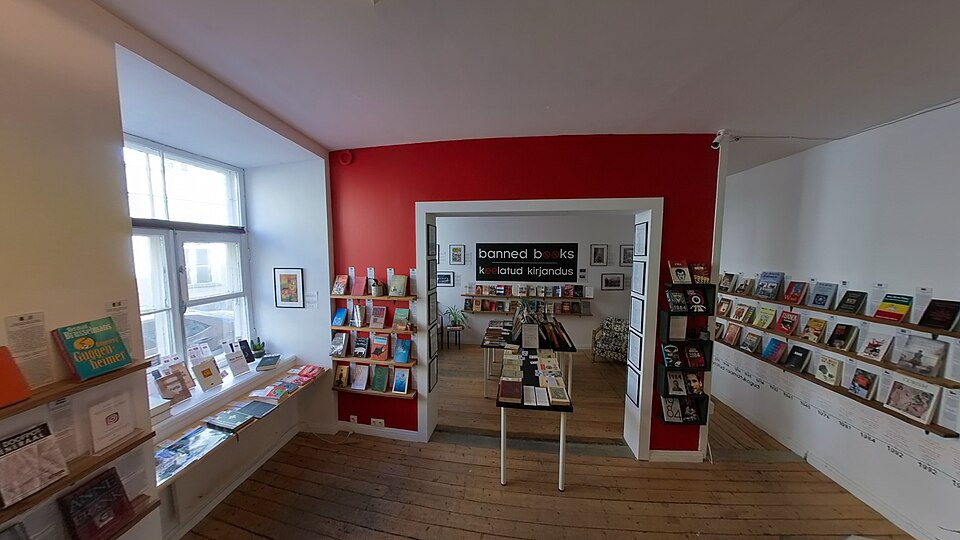
If Tallinn is on your bucket list, you can visit the Banned Books Museum while you’re there!
I’m delighted to share poems by Matthew Paul from his new collection with Crooked Spire Press. The poems demonstrate Matthew’s ‘unflinching clarity’, and his ‘fierce attention to detail’. His biography follows the poems and there you can also find a link to his own website.
Spent Matches
Mum lets only Granddad light up in our house. The second Thursday of every other month, she fetches Grandma and him over from Sutton. The chalkhill-blue elegance of the Wedgwood ashtray rhymes with unfiltered smoke rings pixilating like Ceefax in the living-room air.
Teatime doesn’t wait for Dad: Hovis, Primula, Shippam’s fish paste, allotment tomatoes, cress; mini rolls, Penguins, cremated fruitcake; pots of Brooke Bond PG Tips; Beryl Ware replaced by Royal Worcester, on Hay Wain place mats. Chit-chat wilts like Dad’s California poppies.
Mum fills space with monologues. My brothers’ progress; mine. WRVS activities. Her botched hysterectomy. We watch Grandma’s must-see, Crossroads, then ours: ‘Top of the Flops, I call it,’ says Granddad. The outfits, songs, presenters and Legs & Co. baffle him into silence; except
when Julio Iglesias butchers ‘Begin the Beguine’. ‘Artie Shaw!’ he cries; and his and Grandma’s memories spool back to bulletins on the wireless, to Chamberlain’s jubilant declaration of peace. Barely through the door, Dad re-buttons his coat to take them home. Granddad beams, ‘Abyssinia!’
Photo credit: Liam Wilkinson
A Common Hand
I don’t have to prove whether I did it or not; if they can’t see it, what kind of damned experts are they? [. . .] I’m not a crook; I’m just doing what people have always done in the history of the world: ever since art was invented, people have made imitations of it. Eric Hebborn, ‘Portrait of a Master Forger’, Omnibus, BBC TV, 1991
Eric pestles oak gall, gum Arabic, pinches of iron Sulphate and rain into ink with ‘a gorgeous patina’, To pen his line on slyly foxed paper, in the styles Of Pisanello, Poussin and sundry other old masters, Reshaping preparatory sketches to make pentimenti, Faking collectors’ monograms as cherries on top.
At junior school, Eric, aged eight, discovered that Burnt Swan and Vesta matchsticks’ charcoal tips Burnished imagination’s marks, incurring, firstly, Welts from a leathering for possessing matches, Then a three-year stretch in an Essex reformatory For wilfully setting cloakrooms on fire. A flair for Painting sees him into art schools, lastly the RA, Where, though he wins every prize, contemporaries Remember Eric only as ‘a silent creature’; ‘a joke’.
They would say that, since he’s brought their craft Into disrepute. ‘Dealers are not interested in art, but Money,’ he says. ‘The real criminal, if there is one, Is he who makes the false description; guiltier by far Than had he manipulated the nib himself. Ignore The fusspots. Enjoy art, without worrying whether Attributions are correct.’ Museums have everything To lose from uncovering Eric’s handiwork; queasily, They check their acquisitions back to the Sixties And issue, de haut en bas, highly selective denials.
‘No one is studying art with honesty,’ claims Eric, Upon the publication of The Art Forger’s Handbook In Italian. Out in Trastevere three icy nights later, He stumbles, soaked in Chianti Classico Riserva, Down a cobbled passage, to his blunt force demise.
In Which I Spend a Fortnight of my West Berlin Summer in 1987 Doing a Few Hours’ Cleaning Per Day in Some Multinational’s HQ
My Iraqi supervisor Zaynab and I enjoy, for our lingua franca, helpless amusement. Every day, precisely at knocking-off time, we point at the clock, chorus ‘Sechs!’, then cackle like siblings.
Dieter, fellow cleaner, never gets our jokes. Just like me, he’s twenty and nearing the end of a gap year; mandatory, before enrolment at Humboldt. Mine’s elective, for my mental health. He and I view the city’s halves from the roof: the Wall zigzags like the Western Front.
Afterwards, we take the U-Bahn —he buys a ticket; I don’t— to the agency’s office, at Nollendorfplatz. He translates the clerk: I won’t get paid until next week. ‘Scheisse,’ I say. Dieter deadpans: ‘She said, “Ah, so the English boy can speak German after all”’
Biography
Matthew Paul hails from South London and lives in South Yorkshire. His second collection, The Last Corinthians, was published by Crooked Spire Press in June 2025. He is also the author of two haiku collections – The Regulars (2006) and The Lammas Lands (2015) – and co-writer/editor (with John Barlow) of Wing Beats: British Birds in Haiku (2008), all published by Snapshot Press. His reviews regularly appear in The Friday Poem and elsewhere. He blogs here.
It’s a great pleasure to introduce this month’s guest poet Matthew Stewart, with three poems from his collection Whatever you do, justdon’t. It was published by HappenStance Press to their usual high standards in 2023. The background of the jacket is an old map of Extremadura, Spain. The poem Gostrey Meadow was published in Stand. See below the poems for Matthew’s biography. I admire the attention to detail, precision, and economy of his poems: so much between the lines…
Banana
Come to think of it, she didn’t tell us who’d got hold of the banana, or how, and we forgot to ask, stunned by the news that at ten years old she’d never seen one.
She was still proud her class had raffled it for the war effort, still slightly mournful at it turning black on her teacher’s desk long before they drew the winning ticket.
She wouldn’t talk about gas masks, the Blitz, the doodlebugs (how they changed to V2s) — but she always recalled her fury at the waste of bloody good food.
Wendsday
Halfway through the word and the week, my pen used to pause and stumble, tripped up by my eight-year-old tongue
and even now I still delight in having learned at last to swap the n and d and add the e.
I stumbled, too, after coming to Spain. Shook off routines and rules. Let a new language soak through me.
Two more hassle-packed, tensed-up days till vino tinto y queso instead of cod and chips.
Gostrey Meadow
Showing my son round, I notice a father taking a picture of his wife and son who’s melted half an ice cream on his fingers and the other half on his face.
It’s a copy of a photo in our album. Same river. Same heat-laden sky. Same roles. Same spot on the bank. Same pose. Our trees were ten feet shorter.
Biography
Matthew Stewart lives between Extremadura in Spain and West Sussex in the South of England. He works in the Spanish wine trade as a blender and exporter. His blog site ‘Rogue Strands’ is a respected source for poetry lovers, and he reviews widely for a range of publications. His first full collection was The Knives of Villalejo (Eyewear, 2017). Before that, there were two pamphlets from HappenStance: Tasting Notes (2012) and Inventing Truth (2011).
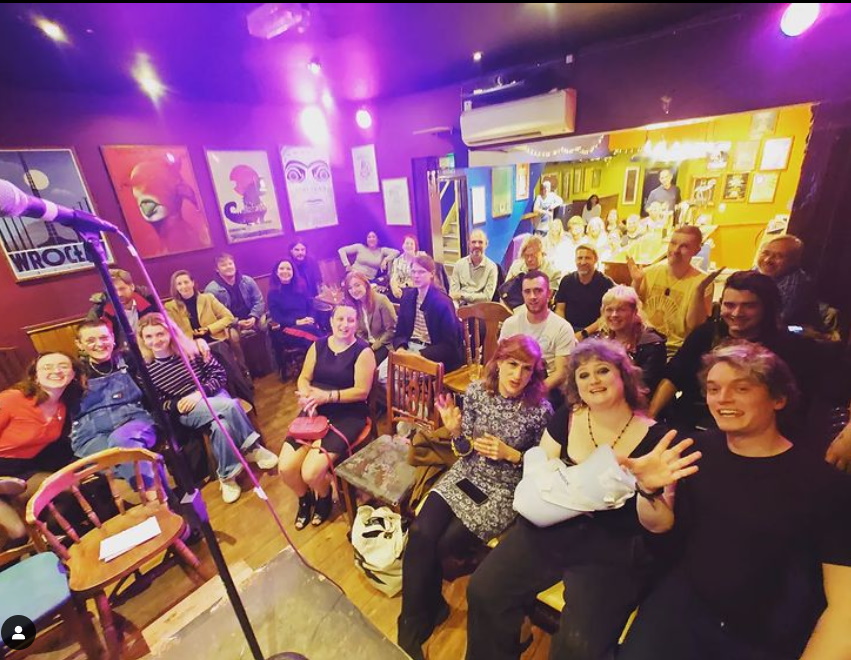
Speak Easy was formed at Stretford’s Sip Club by Dave Hartley in August 2015 as a spoken word open mic before the team of Andy N, Amanda Nicholson and Steve Smythe joined forces to take it over at the end of 2017. The night moved to Chorlton Cum Hardy’s Dulcimer Bar in August 2020 and has carried on being a welcoming, supportive, friendly and encouraging night since welcome to both experienced and newcomers with all acts given equal opportunity to perform with everybody who reads being headliners.
(See the end of the post for details and links to social media for Speak Easy, Andy N, Amanda Nicholson.)
Andy N
Andy N is the author of 8 full length poetry collections including ‘Return to Kemptown’ and ‘The End of Summer’ and co-runs Chorlton Cum Hardy’s always welcoming Spoken Word Open mic night ‘Speak Easy’. He runs / co-runs Podcasts such as Spoken Label, Cloaked in the Shadows and Storytime with Andy & Amanda and does ambient music under the name of Ocean in a Bottle.
Three x Winter Haiku
Walking in darkness your front door briefly lights up in the heavy rain. * Ripping out the trees lighting hit the forest hard flooding the river * Sleeping in winter the trees hibernate alone awaiting for Spring.
*
Amanda Nicholson
Amanda Nicholson is an author, poet, podcast co-host and copywriter. She has written several books as Amanda Steel, including Ghost of Me. Amanda’s poetry has been broadcast on BBC Radio Manchester. She Has a Creative Writing MA, and has had articles published by Jericho Writers, Reader’s Digest UK, Ask.com, and Authors Publish.
Do All These Labels Make Me Look Fat?
Like blank sticky labels pressed to my skin I write on some myself While people scribble their own words Over time, the ink fades on some and others fall off The one labelled daughter is half peeled off now Older labels remain stuck fast But buried by new labels So people rarely see Unless they get close enough And there is always room for more Some are like tattoos Only more painful And others wash away easily
It’s a pleasure to introduce Stephen Smythe. He has been involved with Speak Easy since it started (at the SIP Club in Stretford) and that’s where we met. The SIP Club closed during the lockdown and Speak Easy then moved online. I was able to take part from my caravan in The Netherlands, along with poets and writers from London and the US and elsewhere.
Stephen Smythe is a Manchester writer who achieved an MA in Creative Writing from Salford University, in 2018. He was shortlisted in the Bridport Prize, Flash Fiction category, in 2017, and was also longlisted for the Bath Flash Fiction Award, in 2018. He won The Bangor Literary Journal FORTY WORDS Competition, in 2022, and was placed third in the Strands International Flash Fiction Competition, in 2021, for his 1000-word story.
His book of forty x forty word stories published by Red Ceilings Press is due out later this year.
Here are two prize winners to give you a taste…
KLEPTO
Bridget took stuff from her work colleagues after they’d gone home. Pens, post-it pads, sweets, even family photos. People suspected her, but couldn’t prove anything. When the company introduced hot desking, Bridget became confused and sometimes stole from herself.
(Winner of the Bangor Literary Journal FORTY WORDS Competition, 2022)
COLD CALL
‘Wait!’ Dad yelled down the phone. He put his specs on. ‘That’s better, I can hear you now.’ He listened intently, frowned deeply, then hung up. ‘A conservatory?’ He snorted. ‘Your mother would kill me– if she were alive.’
(Second place in the Bangor Literary Journal FORTY WORDS Competition, 2019)
The Other has been running in Manchester since January 2016. Michael Conley and Eli Regan organise the event where writers are put in pairs to read and perform each other’s work, with plenty of time beforehand to prepare. It is a fascinating idea.
During the pandemic The Other moved online and I took part in a memorable Zoom session where I was paired up with Adam Farrer. The Other is now ‘live’ again. Dates are on Facebook and Twitter. Sessions also raise funds for Manchester Central Foodbank.
It’s a pleasure introducing Michael and a sample of his writing.
Michael Conley is a poet and prose writer from Manchester. His first prose collection, “Flare and Falter” was published by Splice and longlisted for the 2019 Edge Hill Short Story Prize. His latest work is a poetry pamphlet published by Nine Pens, called “These Are Not My Dreams…”
At The Park, A Grown Man Has Got His Head Caught In The Railings
Possibly somebody loves, or at some point has loved, this man. But it’s hard to imagine right now. It’s hard to imagine that for most of his life he hasn’t been stuck at this ninety-degree angle, fists flailing, jeans sagging at the waist. He’s so angry with the railings, with the soft mud under his boots and especially with the teenagers who are laughing at him from the picnic benches.
You could empty a whole tub of vegetable oil onto his neck and tug him out by his belt loops but he wouldn’t thank you for it. And of course you can’t ask him what he was trying to do in the first place. He doesn’t know what his pain looks like from the outside.
On Monday, my journey to the other side of the North Sea involved five different modes of transport: taxi from Aldeburgh to Ipswich, National Express coach to Standsted Airport, Easyjet flight to Schiphol, Intercity to Den Haag Centraal, tram to the flat. All clockwork, no delays. It was dark when I got back home.
Taking part in the ‘live’ Poetry in Aldeburgh Festival has been a joyous experience. The highlight was the reading Our Whole Selves with poet friends. Poet Kathy Pimlott and I wrote several blog pieces about the readings, workshops, performances, open mic. These will soon be on the official website. A big thank you to the small organising team which managed to arrange a wonderful programme.
The poems I read were from my new collection Remembering / Disease, published by Broken Sleep Books last month. I opened my set with Nautical Miles (from my collection Nothing serious, nothing dangerous). When I looked at an old photo, I saw that only Hoek van Holland is ‘less than a hundred’ nautical miles. Good reminder that poetic truth matters more than the accurate facts…
Nautical miles
Outside the Sailors’ Reading Room, the sign:
thin wooden planks, painted white: Den Helder, IJmuiden, Hoek van Holland.
Across the horizon, they are less than a hundred nautical miles from Southwold in Suffolk
where the narrow beach of pebbles – grey, brown, black mostly –
is held together by couplets of groynes, slimy green.
Both our languages have the word strand.
Note: The Sailors’ Reading Room, Southwold is a Grade II listed building from 1864 and still a refuge for sailors and fishermen.
Yesterday’s journey: comfortable Eurostar from Rotterdam Centraal, a sit-down at Soho & Co, Liverpool Street Station for food. The unexpected ‘red signal’ at Colchester turned out to be ‘waiting for British Transport Police’. They escorted a couple off the train. Missed connection at Ipswich gives an unexpected hour to mull and ponder. The friendly taxi driver from A2B and warm welcome at The White Lion where the bar is still open.
Today is the publication day of my third collection. This evening, starting at 19:30 UK time, there will be a Zoom launch, organised by the publisher, Broken Sleep Books. There is a link on their website to Eventbrite.
Four other poets will also be reading, to launch their pamphlet or collection: Caleb Parkin, Chrissy Williams, Taylor Strickland, and Chris Laoutaris.
The manuscript was awarded a Northern Writers’ Award from New Writing North in June 2020. That raised my spirits during the lockdown. It was a unanimous decision by the Board of Broken Sleep Books to accept the collection for publication. The delicate cover design by Aaron Kent is a great match for the minimalist content.
My poems and I have found at Broken Sleep Books, and I am looking forward very much to the reading this evening.
It’s a great pleasure to introduce this month’s guest poet Mary Chuck. Mary and I first met on a poetry workshop in Manchester and we have met on such workshops many times since, including a splendid one at the Almassera Vella, Spain.
Mary Chuck started writing poetry when she retired after 30 years working in Secondary Schools, starting by teaching chemistry. While she was working her need to escape and let some-one else do the organising took her on many walking holidays in different parts of the world. She is still an active governor at a local primary school and has just completed twelve years as a Trustee of the Wordsworth Trust. She has been writing poetry with several groups, attending workshops and going on residentials with a variety of poets, but most often with Peter and Ann Sansom at the Poetry Business.
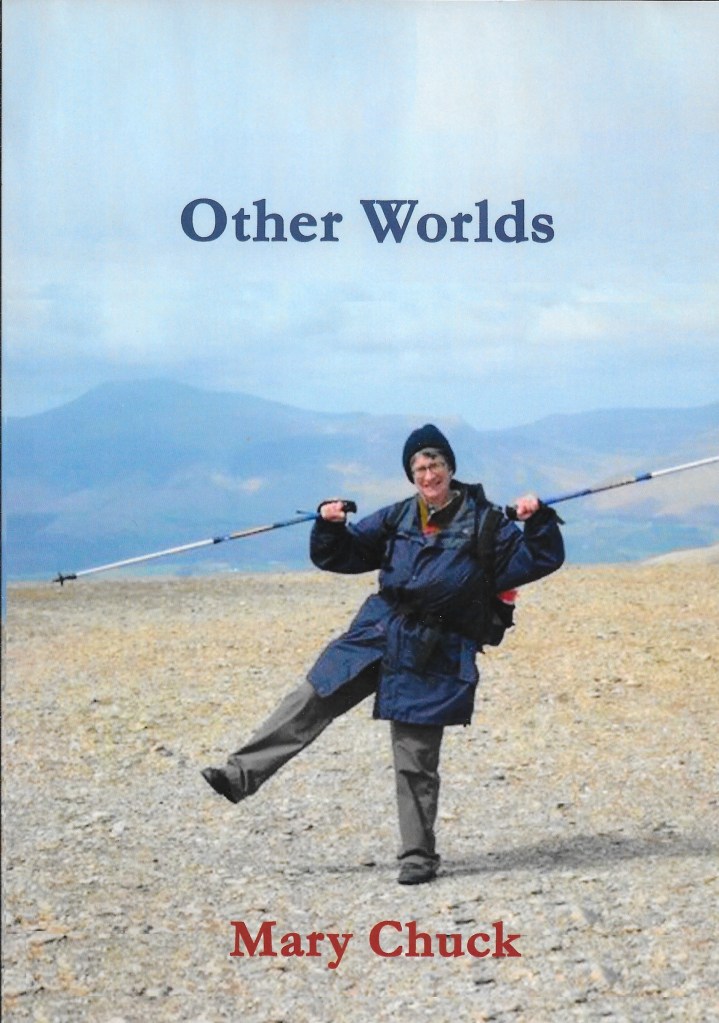
I’ve chosen four poems from Mary’s debut collection Other Worlds (Dempsey & Windle, 2021). Mary will have a belated Zoom launch with two poet friends on Tuesday 23 August. Contact Dempsey & Windle for a link.
Migration
His people came from Russia and Lithuania, their passports always changing, not because they moved but because their countries became other countries.
His people were Jews, Ashkenazy Jews. They came from the East, driven south and west over centuries until finally they fled from the Pale.
Long after my grandfather settled in England, and long before he was naturalised, he was able, once again, to be Lithuanian. His mother’s people were White Russians or maybe they had ten white horses?
My father married out. Her people were not Jews.
They came from Shropshire, farmers, and one was a stationmaster. They were not the chosen people. Her people were not so interesting.
Jammu-Kashmir
He tells me that his father was Kashmiri but now he can’t go back and I describe to him what Srinagar was like before unrest made it unsafe to go;
I tell him how we only went because the flight to Leh was cancelled due to clouds, and how luxurious it was, staying on house boats on Dal Lake;
how we were shown around the lake and lay with curtains to protect us from the sun, on cushions on a wooden boat, a shikara, and saw the floating gardens there;
tell him how pink the lotus flowers were and how the Mughal gardens, full of scents I didn’t recognise, were different from the spice stalls in the street;
how the couple in one garden, keen to speak in English, asked me about my life, how they were sad my family had not arranged a marriage – then I stopped.
I knew I’d gone on far too long. His eyes glazed over as he looked beyond me, said I never knew my dad I never really wanted to.
Travels with my Daughter
I’m not really sure when the balance altered, when I knew for certain our relationship had changed.
Perhaps somewhere north of Peshawar after we drove up the Khyber Pass with an escort carrying a Kalashnikov, arrogant, in the front seat of the car
and after we bought an alcohol licence in the hotel, and she flirted in the swimming pool, with a young man who claimed he was the brother of Imran Khan
but maybe before the landslide which closed the road, when she carried a tiny baby across the rubble, impossible for its mother wearing a burkha.
We crossed a bridge over a ravine at night, before the house of the drunken engineer. She had been talking easily in Urdu to the driver; we turned and reversed, then advanced
more slowly, about nothing she said as we jolted across – then on the other side – He had heard that the bridge was rotten, but I told him it would be fine.
A well-worn track on Kerridge Ridge
Another glorious Saturday morning needing to be out, needing to be walking to be moving rhythmically across the hillside up to White Nancy, through the kissing gate, ignoring the brambles, skirting the quarry, following the well-worn track on the back of Kerridge Ridge head down muttering to myself long before anyone might have thought I was phoning going over and over conversations I have had or might have had over and over thinking if only…
until, hearing the hint of a cough I feel warm breath on my face and lift my head to find myself looking at a moist, brown, eye above a large, brass, ring in the nose of an enormous bull.
I breathe, slowly. I look around. It is a glorious Saturday morning.










 Acacia Publications