A spot of sunshine – guest poet and haiku


john-barlow (002)


It is an enormous pleasure to introduce the talented John Barlow: poet, editor, publisher and designer. I can’t remember exactly when and where we first met. It may well have been at one of the annual conferences organised by the British Haiku Society.

John Barlow is the editor of The Haiku Calendar, which has appeared annually since the 2000 edition, and co-editor (with Martin Lucas) of The New Haiku (2002). His other books include Waiting for the Seventh Wave and Wing Beats: British Birds in Haiku (with Matthew Paul).

John grew up surrounded by fields and woodlands. A keen amateur naturalist, his haiku appear in Where the River Goes: The Nature Tradition in English-Language Haiku, and he has given talks and workshops on haiku for organisations such as New Networks for Nature, Haiku North America, and the RSPB.

where_the_river_goes_large

His haiku and tanka have received more than 150 awards, including the Modern Haiku Award, The Heron’s Nest Award, the Haiku Presence Award (in 2007, 2010, and 2011), and British Haiku Society Awards (in 2015, 2016, and 2018), while works he has edited have been honoured by the Haiku Society of America and the Poetry Society of America.

In 1997 he founded Snapshot Press, described in Haiku in English: The First Hundred Years as “the most important English-language haiku publishing house outside the United States.” From his published work John has made this selection.  Starting with the inventive vertical haiku, it forms a seasonal progression.


down
the
leafless
beech
the
voice
of
a
nuthatch


under leaden skies the low-slung belly of a river


through her skin
the baby’s heartbeat
fieldfares in alders


each one on sunlight the yellowhammer’s phrases


summer morning
the riverbed stones warm
beneath my feet


sparroweight the groundsel bends to ground


a nestful of feathers
and tiny skulls . . .
clouds without rain


leaf-cast shade
a hoverfly moves around
a spot of sunshine


crab buckets along the quay the gait of trawlermen


train delays
for the fifth day now
the dead fieldmouse


our shadows holding hands the width of the stubble field


inside the clown’s smile the clown’s smile


calls of marsh tits
in the autumn woods
leaves release their rain


wind-rippled tarn
a raven’s croak
echoes through stone


for all the wind-borne spores lungfuls of the wood


a stoat arcs into undergrowth thin winter moon


the faint pulse
of out-of-tune strings—
winter light


The light streams in – poem


Keukenhof 18

Yesterday afternoon I watched a TV programme about the Keukenhof, a major Dutch tourist attraction. Annually visitors come from over 100 different countries. A team of 40 gardeners has worked for three months last autumn planting around seven million bulbs – tulips, hyacinths, narcissi. Easter w/end is usually one of the busiest times; this year the Keukenhof will not open to visitors.

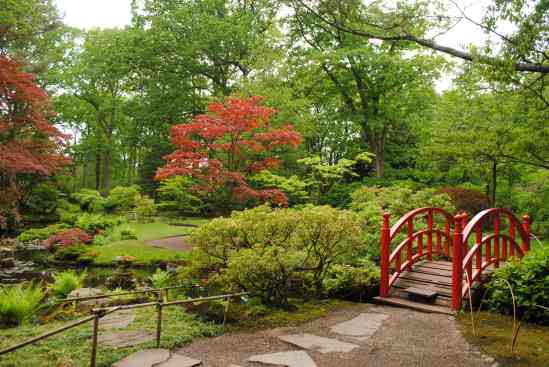
The photos are from 2018 when I went with my sister and brother-in-law. Now you cannot visit the Keukenhof, the Keukenhof will come to you. On the website they will be posting more videos. Go to de Keukenhof


purle tu;los


The poem is by Thomas Tranströmer, from his collection The Sad Gondola, 1996. May you and those dear to you be safe and sound this Easter.

 
The Light Streams In

Outside the window, the long beast of spring
the transparent dragon of sunlight
rushes past like an endless
suburban train – we never got a glimpse of its head.

The shoreline villas shuffle sideways
they are proud as crabs.
The sun makes the statues blink.

The raging sea of fire out in space
is transformed to a caress.
The countdown has begun.

Vanished – poem


broom-2884860_1280

Photo credit Milliways42 on Pixabay

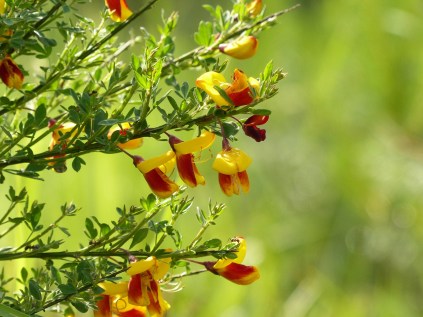
The storm last weekend changed my To Do list: on Sunday morning I opened the door to see the terracotta-coloured broom had been cut down – two parts lay entangled on the lawn.

 
I had planted that broom with its coconut scent, the yellow forsythia and white spiraea as a new hedge in spring 2012 after the new caravan was towed into place November 2011. Nico, the trusted on-site DIY man had removed the gate, shrubs and old hedge, and had taken apart the old wooden caravan my friend Marianne had left me a few years earlier. When she bought that old caravan her partner, a sculptor, had trimmed the tall conifers and shaped them into four guards. I had wanted to keep these, so Nico dug them up and they’ve been attached to the new fence. You can see they’re beginning to look grey and grumpy…

the for men
Good things happened this week too – an extended Skype lunch with a good friend in Manchester. The onsite shop and snack bar has opened, so I can treat myself to the occasional saté and French fries.

I hope that you and those dear to you are keeping well and safe.

The poem is from my second collection Nothing serious, nothing dangerous, with Indigo Dreams Publishing, 2019.

 
Vanished

Vanished the coconut scent of the bronze gorse,
forsythia, the thin red stalks of fuchsia.

Lavenders are dotted around the borders,
a white one with the old red rose that Marianne planted.

The shadows must rest in the memories of grass blades.
Does grass carry its memory from year to year?

Early evening already, the new conifer hedge catches
the sun. The single siren of an ambulance going to Bronovo.

A blackbird hides among the orange berries,
sky is greying. Vanished into the earth
my friends, enemies. Finches swing on the fat ball.

After midnight – haiku

DSC00273


A few days ago I learned that Stuart Quine died in hospital of Covid-19.  His haiku were featured on my blog in September last year, under the heading A glint of wolf. You can read them here

Stuart himself provided the biographical notes and he made the selection of one-line haiku.

Here in the caravan in the Netherlands I found a copy of Presence from July 2019 with the one-line haiku below.  I am grateful to have known him.

after midnight firelight playing the accordion keys

Here I am walking – poem

trotting-3598639_1280

Photo credit: Digwen on Pixabay


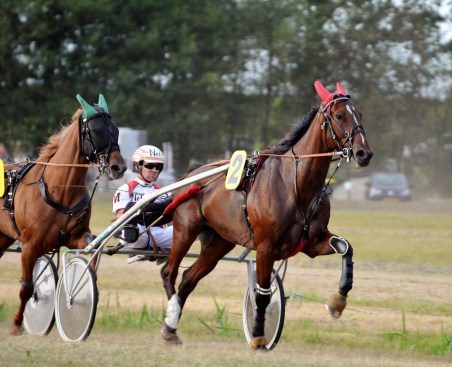
These are my neighbours. Yes, camping Duinhorst backs onto a racecourse. Duindigt opened in 1906. Most of the races held are trotting races, with the jockeys sitting on a sulky as in the picture. Some days I can hear the faint sounds of commentary, or a national anthem at the end of a race. And, very often when I’m out and about I come across horses being exercised. That is where the writing started.  It is the second poem in my second collection Nothing serious, nothing dangerous.

I was going to fly to Holland on 5 April, but things are serious and dangerous. I managed to get a flight out on Wednesday 18 March from Manchester to Schiphol in the Netherlands, and went straight to my caravan. You know from following my blog that I am a Dutch national, long-term resident in the UK. Faced with “social distancing” and a possible four-month’ quarantine, I felt it would be easier in the caravan. It has a small garden and I can go for a bike ride, or a short walk in the nearby dunes – as long as I keep my distance.


Here I am walking …

 
Here I am walking with a small horse.
I found it on the path to the supermarket
where it stood, eyes closed, by yellow gorse.

All this happened a long time ago,
before I was born, before the war,
and the rope in my hand smells of horse.

We can turn to the right, walk over
the dual carriageway, head for the dunes,
four bronze crosses to remember

the war dead and we’ll arrive,
place our feet on the beach
where it’ll soon be night.

Chaos – poem

airport-4922358_1280

Photo credit: oho725 on Pixabay

Poetry readings and workshops have been cancelled. People are panic-buying pasta and toilet paper. A few friends have cancelled lunch dates: I have an empty diary.  So, I have started packing boxes for my move later this year, while listening to the radio. My flight is booked on 5th of April and I hope that the borders are still open by then. I can blog over in the Netherlands just as I can here: I have Wifi inside the caravan. If I become ill, it’s easier to self-isolate over there.

Meanwhile, here is a short poem about chaos. It first appeared in The North magazine and was later published in my debut collection Another life. Look after yourself, keep safe and look out for those around you.

 
On the town

In the time it took to buy a birthday card, a special
80th birthday card, they had arrived in a long, black limousine,
jumped out, set fire to the hotel and released wicker
baskets. The flying baskets with wicker wings chopped
tops of trees, trees falling on traffic lights – chaos everywhere
and in the middle of it the small bronze statue.
A smiling woman holding doves covered in bird shit.
The wind howling, sirens crying like the end of the world had come.
And me and that card that had cost me £2.99 and nowhere
to buy stamps, no letter box to post it.

Ferry crossing – poem

Fokkina_McDonnell_Poetry_Launch_3March2020_with_GKB_Painting (002)

The Departure, book and me (Photo: copyright Sophie J Brown)

 
Here I am with my second collection Nothing serious, nothing dangerous at the launch, held at the International Anthony Burgess Foundation, Manchester on the 3rd of March. It was a wonderful occasion, made very special by Graham Kingsley Brown’s painting The Departure being there too.

His daughter Sophie Brown (herself a talented artist) designed this website. Visit www.grahamkingsleybrown.com and click on the Curator’s Diary for her account of the launch and to read what the meaning of the painting may be (entry 28 November 2019).

Below is the first poem of the book. This may well be the ferry from Harwich, UK to Hook of Holland, the Netherlands. A ferry crossing is a departure of a kind …


Ferry crossing

Two people sit at a table by an oblong picture window.
Sun lights up their hands which are curled round coffee cups.

The window is made of safety glass. There have been announcements:
location of lifebelts, life rafts, long and short blast of a horn.

While words are hidden at the obscure side of imagination,
other people are queuing for lunch or buying alcohol in the shop.

The folded hands are the back of playing cards, The Queen of Spades,                                    operas, novellas, the shortest of short stories.

It is not strange to see these cards turn into sea gulls.
A white ferry is a city where nothing is permanent.

A man with a frown – poem and writing prompt

rain-3518956_640

Photo credit: Pixabay

It is March, so here is an example of personification. It comes from a workshop: we were asked to choose a month and write about it, as though it was a person.  Do you see March as a man too? Does his emotional state reflect typical March weather?


March

He is a man with a frown,
walking in a military
manner. He is the eldest
son of a Rossendale baker, who
married young and placed his hopes
on other people’s shoulders.

He studied accountancy at a redbrick
in the Midlands, ironed shirts himself,
lost his accent, met a nurse
in town one night, got drunk,
a lower second degree, a baby,
a small semi in the suburbs.

Last year he didn’t get a rise,
didn’t get promotion either.
He thinks about renewing insurance,
calculates the cost of divorce,
puts his hands in his pockets and
strides over the zebra crossing.

He often feels like going crazy, going
off with a woman half his age, living
in the south of France, but he walks
back to the empty house, hiding
under a large black umbrella,
cursing under his breath.

The small Japanese corner


Scan0023


How strange to see the notification of someone’s birthday on Facebook
when they are no longer there to receive your greeting … Sumiko Morimoto
and I met in 2014.


The small Japanese corner

Howell was all packed, to return to live in Japan,
and as keen as always to win the karaoke contest.
He’d been brushing up, but Sumiko too knew
how to soft sing sakura, sakura

Now and then I see her mother’s old blue fan
on the shelf in my Japanese corner, beside the blue
mug Howell gave me, with the names of fishes,
Sumiko’s delicate New Year card with pigs and piglets.

She’d been well looked after at Rydal Hall, when she
went up to the Lakes, wanting at last to see the small
cottage of Wordsworth, her hero, whom she’d studied.
Here is the photo of her smiling over breakfast in my garden.

Worried about Sumiko, Howell’s email two months ago,
the illness she is fighting. Here’s another email …
If I finally decide to fly to Osaka, it’ll just be Howell
and me, eating his favourite okonomiyaki pancake.