Tag Archives: Travel

Boxes – writing prompt

It’s good to get an acceptance and even better when it’s prompt! Thanks to Paul Brookes for accepting this poem and two others for his online poetry journal The Starbeck Orion. You’ll find it here: the 880.substack.com. Issue 4 is themed. Current contributions are open themed.


You will be asked what your favourite constellation is. I bought the domain name acaciapublications in the early 90s, so you won’t be surprised that Camelopardalis is mine. It is a large but faint constellation of the northern sky representing a giraffe.


The poem was written from a prompt on the Boxes workshop with Graham Mort. WordPress wanted to make it a list, which messed up the numbers the lines had. We like a non-sequitur…

Boxes

I declined it. The man in black nodded, walked back to the horse.

Boy, am I glad I can feel my legs.

There must always be doors for the pleasure of opening them. Cats know this.

Boardroom brown, expensive pens, hand-rolled cigars, promises on parchment.

On display in the glass case: the motorbike, black-and-white photos, three bullets.

Groundswell – so little land, so much water.

Was I not meant to see the deep scarlet lining?

Writing prompt

Which kind of box could you write about – jewellery, the one your cat prefers? A musical one with a ballerina? Pandora’s box?

A tribute

This post is a tribute to my brother Theo who died early on Tuesday morning in hospital. On the evening of Friday 28 June, he went out with his wife Ancilla to celebrate their 52nd wedding anniversary. After a lovely meal he had a fall in which he sustained serious brain damage. I spent time with him on the Saturday. Ancilla and my nephew were with him when he died.


It was only last autumn, when a MRI scan was taken for other purposes, that my brother learned that he had the rare condition of multiple cavernomas. This explains the paralysis and subsequent sudden hearing loss. The poem 1962 was published in my debut collection Another life.


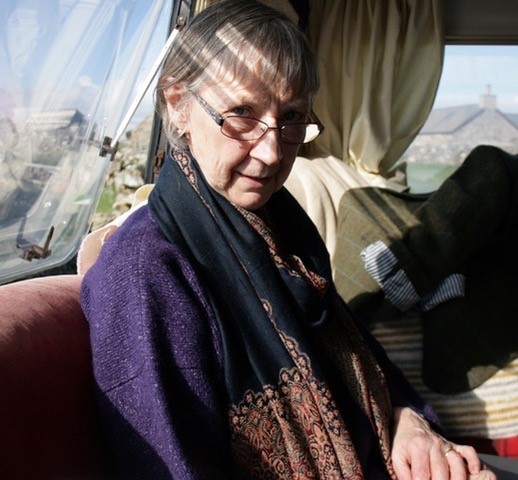
My brother had a rich and full life. The photo was taken in 2019 when he and Ancilla both received honours (Member of the Order of Oranje-Nassau) in recognition of decades of charity and community service.

1962

Alexander Eduard (coppersmith
in the bible and van Beinum,
the famous conductor).
Our Irish setter had been given
the names of an unborn child.

A ward of six, our parent’s daily
drive, almost an hour each way.
Neurologist, paralysis,
lumbar puncture, nausea
.

Grandfather owned an electrical shop
(double-fronted on the main street),
gave my brother a beige-brown radio.

The specialist allowed our red
Irish setter to visit my brother,
celebrating his fourteenth birthday
in the academic hospital in Leiden.

Three months later he arrived home,
just in time for Sint Nikolaas.
My brother still limped and his crown
was marked by two scars at right angles,
the space between dipped and dented.
A few days later grandfather came
to take his radio back.

Cromer, June

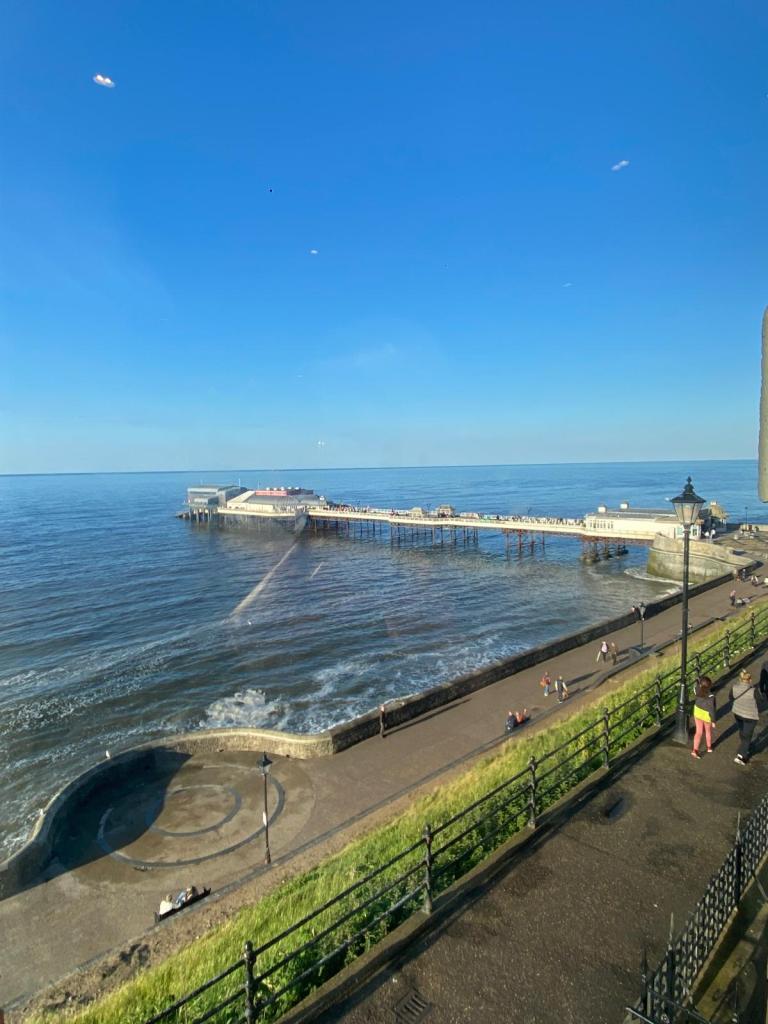
Cromer Pier and Esplanade

As the church bells began ringing, we were off – like thoroughbreds out of the starting boxes. We’d arrived on Saturday, inspected the spacious and comfortable rental property. Then enjoyed a delicious fish dinner at No. 1 Cromer Upstairs.

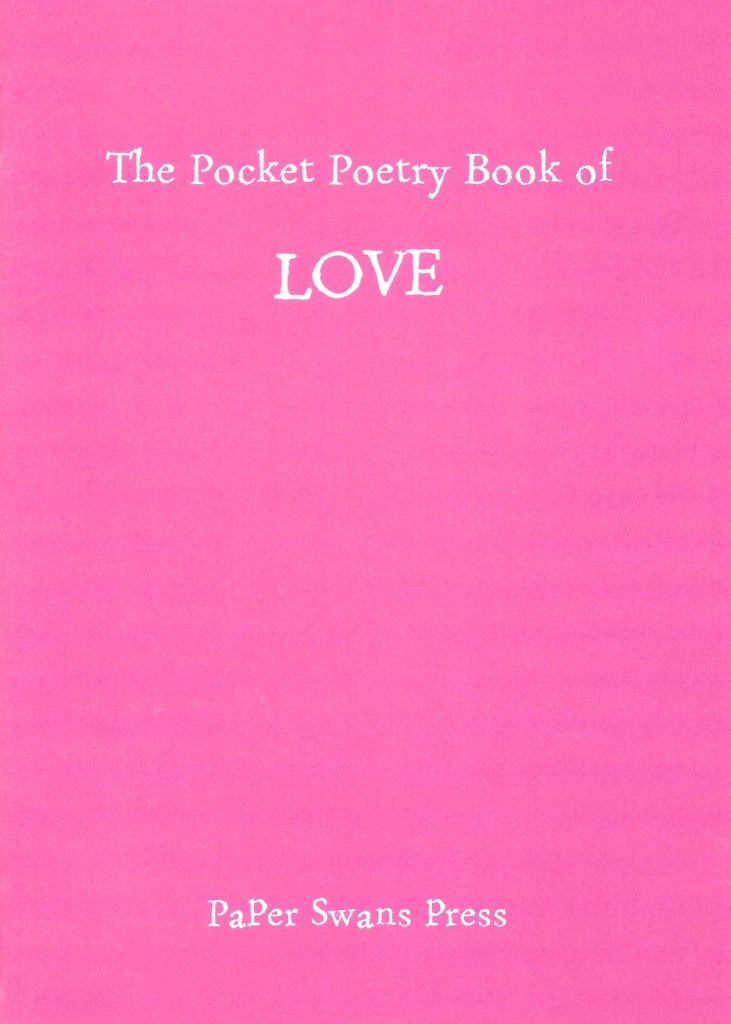
My morning flight from Schiphol landed at Norwich. The views of the coast and the Broads reminded me of other times. The poem was first published in The Pocket Poetry Book of LOVE (Paper Swans Press, 2018).

With love to my five talented poet friends…

Cromer, August

Curved around Cromer Pier a twitching mass of legs,
sturdy calves, socks, sandals. Fathers scoop up bait,
wind black thread onto pink plastic spools.
An old couple, in matching anoraks,
watch a thin man, wheelchair-bound.
He shakily lifts his thermos flask.

I thought of you then and the creaking stair lift,
the plastic roll-up seat, raising her in and out of the bath.
The small wooden cart you made
so she can travel through the orchard
inspecting the new fruit with her crooked hands.

Wendsday – guest poet

It’s a great pleasure to introduce this month’s guest poet Matthew Stewart, with three poems from his collection Whatever you do, just don’t. It was published by HappenStance Press to their usual high standards in 2023. The background of the jacket is an old map of Extremadura, Spain. The poem Gostrey Meadow was published in Stand. See below the poems for Matthew’s biography. I admire the attention to detail, precision, and economy of his poems: so much between the lines…

Banana

Come to think of it, she didn’t tell us
who’d got hold of the banana, or how,
and we forgot to ask, stunned by the news
that at ten years old she’d never seen one.

She was still proud her class had raffled it
for the war effort, still slightly mournful
at it turning black on her teacher’s desk
long before they drew the winning ticket.

She wouldn’t talk about gas masks, the Blitz,
the doodlebugs (how they changed to V2s) —
but she always recalled her fury
at the waste of bloody good food.

Wendsday

Halfway through the word and the week,
my pen used to pause and stumble,
tripped up by my eight-year-old tongue

and even now I still delight
in having learned at last to swap
the n and d and add the e.

I stumbled, too, after coming
to Spain. Shook off routines and rules.
Let a new language soak through me.

Two more hassle-packed, tensed-up days
till vino tinto y queso
instead of cod and chips.

Gostrey Meadow

Showing my son round, I notice
a father taking a picture
of his wife and son who’s melted
half an ice cream on his fingers
and the other half on his face.

It’s a copy of a photo
in our album. Same river.
Same heat-laden sky. Same roles.
Same spot on the bank. Same pose.
Our trees were ten feet shorter.

Biography

Matthew Stewart lives between Extremadura in Spain and West Sussex in the South of England. He works in the Spanish wine trade as a blender and exporter. His blog site ‘Rogue Strands’ is a respected source for poetry lovers, and he reviews widely for a range of publications. His first full collection was The Knives of Villalejo (Eyewear, 2017). Before that, there were two pamphlets from HappenStance:
Tasting Notes (2012) and Inventing Truth (2011).

My family and other birds – guest poet

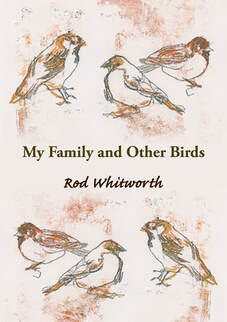
It’s a great pleasure introducing this month’s guest poet: Rod Whitworth. We first met, probably, a good decade or so ago. His poems have been widely published and successful in competitions. One of these, the poignant Demobbed was featured here on 30 May, 2021. Rod recently launched his first full collection My family and other birds. I’ve chosen a selection of poems on the themes of family and birds and, of course, jazz.

Tandem in Holland

On that day, your smile
hung like a sunrise
over the polders.

And on that day, your voice
greeted me like blackbirds
singing to claim and to yield.

And on that day, your touch
thrilled like a breeze
from the pine trees.

And that day brought the knowledge
of itself and knew
that it was this day.

Portrait of my grandfather, accompanied

The daft smile, wide as a spiv, tells us
Sunday afternoon, after a slow left-arm morning
and Chester’s Best in the Cotton Tree.
You’re sitting in the sun on the donkey-stoned
front step of Number 51
in undone waistcoat, collarless shirt, felt slippers,
a Capstan Full Strength drooped from a trailing hand.
This is happiness: transported
from your brother Llewelyn who never left the Somme,
from crying all the way home after delivering jam and marmalade
to shops in Coventry the day after it was blitzed.

On your right knee: me, plump
as a queen’s cushion, wide-eyed,
in Auntie-Louie-knitted rompers,
not knowing any of this.

Names you know, names

It was Rod, the other one,
the one who listened to American radio
on his Communist dad’s short wave,
who, one bright April morning
between the 53 bus stop and school, said
You’ve got to listen to this bloke,
a pianist, Thelonious Monk.
He’s something else. Another world.
I told him no-one could be called
Thelonious Monk. It took me
two years to find out he was right,
on both counts. What he didn’t know though
was that Monk’s middle name was Sphere.
By the time I knew that,
the car Rod was travelling in
had crashed into the lamp post.

One for…

He was walking away
when I noticed the wings.

Furled they were, but still
visible against the dark blue

hoodie. I don’t believe in angels
but it does make you think.

I called him back, asked him to intercede.
You’re asking a lot from a magpie

he croaked, then flew off.
Made me feel sorrowful.

I wished he’d had a friend.

Biography

Rod Whitworth was born in Ashton-under-Lyne in 1943, and has done a number of jobs, including teaching maths (for 33 years) and working in traffic censuses (the job that kept him on the streets). He currently works as a medical rôle-player. Rod has been writing poetry for a few years and has had work published in a number of journals and anthologies. His first collection, My family and other birds, was published by Vole Books in 2024. He now lives in Oldham and is still tyrannised by commas.

To Live Here – haiku

This month’s guest slot is for poems from To Live Here, an anthology of haiku published by The Wee Sparrow Press. The Press was founded by Claire Thom. 100% of the proceeds of their anthologies are given to charity.

The anthology is edited by Giorgia Di Pancrazio & Katherine E Winnick. The lovely cover and illustrations are by Scottish artist Colin Thom.

To Live Here is “A collection of haiku on the theme of home, which explores the many facets of human experience, from the mundane to the sublime. Featuring the work of talented poets from around the world, this anthology invites readers to reflect on the beauty and complexity of the world we inhabit.”

Salford Loaves and Fishes, a charity supporting the homeless, has already received over £600. The anthology is available through Amazon – ISBN 9788409528165. I’m grateful to Francis Attard and Julie Mellor for permission to share their haiku.

sandy beach
turtles lay clutches of eggs
off-shore breeze

Francis Attard, Malta

three cornered field
the generations
who farmed here

Julie Mellor

on the verge a stork stepping out

Fokkina McDonnell

Carnation Lily Lily Rose – guest poet

It’s a great pleasure to feature four poems from our guest poet Jane McKie. Her collection Carnation Lily Lily Rose was published by Blue Diode earlier this year. The title and title poem are after John Singer Sargent’s painting of the same name. Each word is also the heading of the four sections of the book.

The collection includes a range of poetic forms and shapes: prose poems, a concrete poem, long and thin poems. We meet couplets and triplets, striking titles: Cairn to a Dead Biker, X-Ray of a Deer’s Skull. The poems crackle with energy and vitality. The book is ‘a hymn to all the different kinds of connective tissue that lightly, but firmly, weave us into the fabric of our own and others’ lives’. (David Kinloch).

Lord, Make Me an Instrument

Here the clouds outrun land: greyer, fleeter,
casting their shadows on the estuary and making
mud move at their speed, blown rather than
fixed, flexing with light / dark / light / dark,
sea-blite at the edges to catch the odd discarded
fag butt. Sea pea, clover, yellow vetch.

Further out, the flattened eelgrass – a trammelled
thatch without the tide; with it, upstanding,
like proud speech. Into this landscape creeps
a man following redshank, black-tailed godwits;
watch him huddle – glimmer of a struck match.
Winged souls call to the crackle of his breath.

Sand

Tonight, I’m in an arbour designed
by an artist who moonlights as a gardener.

Our host’s aesthetic sixth sense is spot on:
look how the roses jostle the frame,
how the lattice pins them like pretty moths.
A drink in one’s hand is compulsory.

And we guests are laughing, playing up
a hunger that may be on the wane,
but holds us, tonight, as snug as palms
around glasses. It is brilliant, this garden,
and familiar, as if it is not a garden at all
but a gateway, and we are not guests
at a middle-aged party but school-leavers
on a promised, delicious brink.

Tonight, if you sliced me open,
you would find a swirl of glitter:
all the shades of the sand
at Alum bay squeezed
into one miniature glass lighthouse.

Antigravity

They hover along pavements, barelegged,
on Mini Micro scooters, a flock of them –

the best of us. Hovering in shirtsleeves, hearts
and mouths open before guile sets in.

Don’t they feel the cold? Hovering to class
like motes in light.

On this unbearable, ordinary day, we mothers
can’t stop them lifting off the ground,

their small hands to their mouths
as they giggle, spitting out milk teeth,

growing too quickly. Catch onto
their waistbands and don’t let go.

Harness

I think of the invisible harness that hitches us, one to the other,
how it signifies both baggage and provision;

how, in the past, I have slipped the harness
and tested freedom, finding it overrated;

how mood is a harness, like gravity, pitching our orbits
a little off-kilter;

how sometimes the harness pinches and we are inclined
to worry it, fidgeting, even to tear at it;

how we trust the harness to repair itself like skin.

Biography

Jane McKie works as a Senior Lecturer in Creative Writing at the University of Edinburgh. Her first collection, Morocco Rococo (Cinnamon Press) was awarded the 2008 Sundial/Scottish Arts Council prize for best first book of 2007. Recent collections include Quiet Woman Stay (Cinnamon Press, 2020) and Jawbreaker (2021) which won the Wigtown Poetry Festival’s Alastair Reid’s Pamphlet Prize 2021.

Jane, as a member of the Edinburgh-based Shore Poets, facilitates poetry readings and music. She is interested in collaboration across forms, writes with 12, a collective of women writers, and with Edinburgh’s genre spoken word group Writers’ Bloc.

Fieldfare, blown off course, early spring – guest poet

A lively and intriguing title for a poem sequence by our guest poet Lydia Harris. Her work has featured here before (March 2019). This sequence is from her new collection Objects for Private Devotion, beautifully produced by Pindrop Press, published last year. Lydia lives in the Orkney island of Westray. Many of the poem sequences in her new book focus on local culture, people, nature, objects – such as the prayer nut which provides the cover image.

The sequence about the fieldfare is inspired by the great Serbian poet Vasco Popa. The Blackbird’s Field is also a sequence, from Popa’s Collected Poems, close on 400 pages – drawing on folk tale, surrealist fable, personal anecdote, and tribal myth.

Fieldfare, blown off course, early spring

After Vasco Popa 

My Fieldfare

He’s made of bone pins.
He’s a book inside a box
with a beak-shaped lid.
A snapped-shut lock.

He Makes Landfall

at Hagock where the Scollays
ploughed in patches,
wore tracks with their boots,
gulped spring water,
built their house.

Body

His muscles hurtle
from rump to neb.

First Song

The sky is my eye,
earth my egg.
From Noup to the Ness
in the turn of my head.

How I know him

His underwing flashes,
he wheels before settling
on plough or pasture.

His Manners

When the tide is asleep
he swallows it.
His wings are granite
with a hundred eyes.

Second Song

Bone grinds skin,
stone splits grain.

His Passion

Flames again.
He thinks he is clay.
The sea wrought him
like a mace head,
speckled, banded,
half-way done.
Bird before he was bird.

Third Song

Snapped flint,
water-worn
sea pebble.

His Dress Code

He squints through an eye mask,
lifts his mottled back through west winds,
across north winds.

A Flagstone in the Wall Speaks to Him

Grapple with my grain.
My night surfaces.
Tap the lichen from my face.
Draw silver from my base.

Lament

I’ve lost my folk,
my night ships,
my dear blood,
thick then thin,
night bird, stray bird.

Tongue

A whip of liver-coloured flesh
sheathed in the coffin of his beak.

His Heart

Its flicker forms ice,
his own padlocked air.
His map of the wind
stiff with frost
in the skirts of an old storm.

He Takes His Leave

Fooled by the moon.
He’s lost his bearings,
like the night boat.
We need to talk
on the edge of sight.

Biography: Lydia Harris lives in the Orkney island of Westray. Her first pamphlet Glad not to be the corpse was published by Smiths Knoll in 2012. In 2017 she held a Scottish Book Trust New Writers’ Award. Her pamphlet A Small Space was placed first in the Paper Swans competition 2020.

The special table cloth

Credit: Bismillah via Pixabay

The day before my birthday storm Poly (Beaufort 11) raged at speeds of 140 kms an hour: overhead lines and trees came down. The day after my birthday the Dutch government fell.

On my birthday I treated family to lunch. It was a joyous occasion. My uncle (born 17 years after my mother) turned 85 in June. He has only recently given up playing volleyball: too much for his shoulders. He’s taken up Jeu de Boules instead.

Here are two verses from an extended sequence titled Briefly a small brown eye.

Primary school demolished,
protestant church a community centre.
Our old house extended.
Forty years on no reason to visit
this town other than the old uncle.

Lunchtime, my aunt brings out
the special table cloth.
She has embroidered signatures,
some in Arabic, some in Cyrillic.
I’m looking for mine.

St. Agatha’s – writing prompt

The day after my birthday I travelled back home and saw St. Agatha’s church from the train. That brought back memories of the poem – a competition winner some years ago.

This too is art

Mondays, washing days.
Heaving sheets from one tub
through the mangle into
another tub on a wooden stand.
Hands placing them, spacing
them on a plastic line.
This is street art
where the westerly wind
coming in from the beach
takes the plumes from the iron
works’ chimneys,
lets them pass through
this small town – a station,
hospital, three churches.
Tiny spots mounted on white sheets,
black dots like bugs, the yellow
eggs of unknown insects.
This is smoke art, chimney stack art
landing on roofs, window sills
and the steps of St Agatha.

Writing prompt

What are your memories of Mondays? As a child, were you expected to help on washing day? What church or other special building is linked to the place you were born, lived as a child, moved to as an adult?