Tag Archives: sculpture

Filling the well…

A war memorial

Health issues have kept me housebound, but I was determined to go and see this artwork at Museum Beelden aan Zee, Scheveningen before it goes back to Marseille. A sunny, breezy autumn day, a salty tang, quiet beach.

Khaled Dawwa (Maysaf, 1985) worked on it during 2018 – 2022. He was invited to show it at Beelden aan Zee in 2025 – when here in The Netherlands we celebrate 80 years of freedom.

Voici mon coeur!

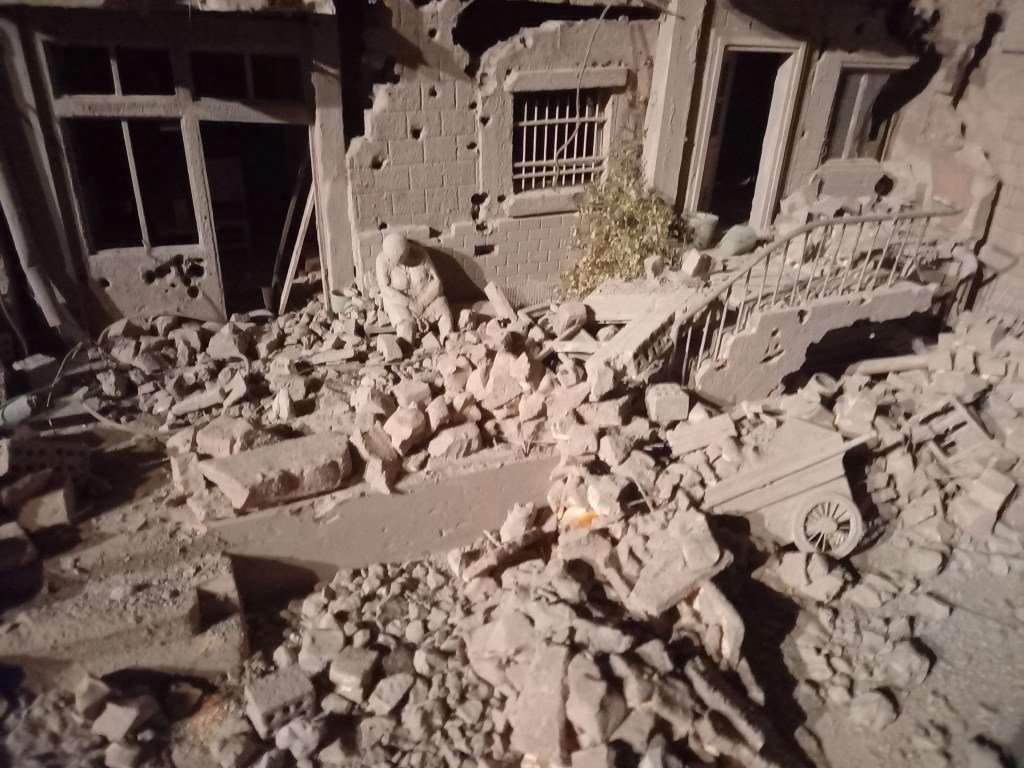
The work (tr. Here is my heart!) is a 6 m long model. It’s made of vulnerable, unbaked clay. It represents a fictional street in Damascus. Outside, there are the remains of a car, benches, a swing seat. We see material damage. The setting is nighttime.

It was a disorienting experience walking into the small side gallery as it was almost dark. A volunteer gives visitors a small torch, so we can walk around and shine into the rooms: beds, tables, chairs, a poster on the wall, a book left on the table.

Dawwa and his family fled Syria shortly after the start of the civil war. After a year in Lebanon, they travelled to France where they now live in exile. Khaled now works in a studio just outside Paris.

Before leaving he took photos of the works he had made, then destroyed them – for security reasons, or because they were too large to travel.

Voici mon coeur!, a contemporary war memorial, is a personal and emotional representation, in contrast with the collective memory expressed by traditional war memorials. A powerful and timely reminder. I found it deeply moving.
Links: https://www.beeldenaanzee.nl/tentoonstellingen/khaled-dawwa

https://www.facebook.com/share/15fJ6dg7Eq/ On this page you can find details of other works by Khaled Dawwa.
Filling the well, stocking the pond…

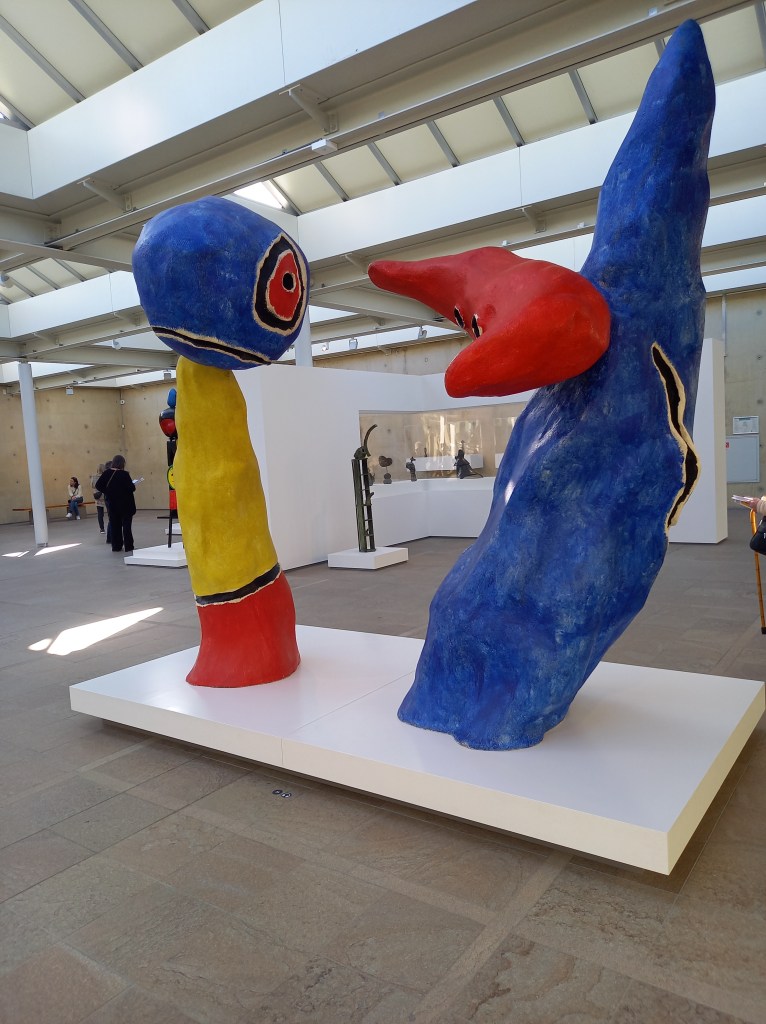
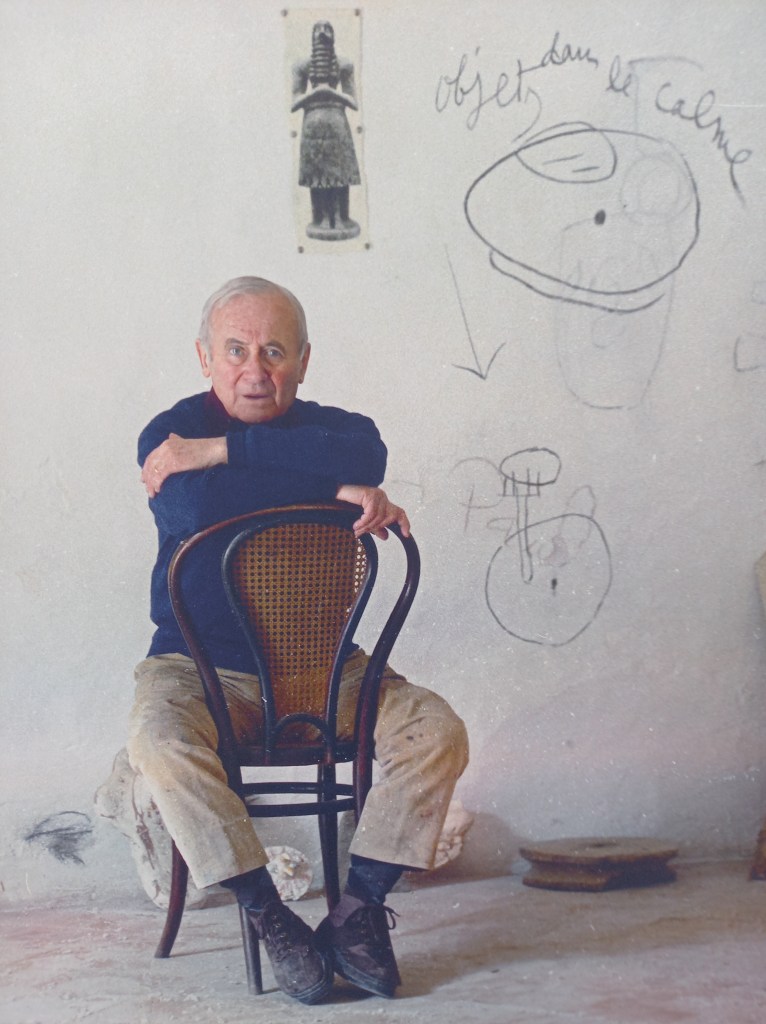
It’s been a long time since I’ve been out to fill that well. I’ve had health issues and sat at home with the black dog. The exhibition of Joan Miró’s sculptures at Beelden aan Zee is almost closing. On a cold and sunny Tuesday, I got two trams to Scheveningen.

Pair of lovers playing with almond blossom

Beelden aan Zee is the only Dutch museum specialising in sculpture and it’s in a great setting. The authorities in The Hague insisted that the building should not be visible, so it’s hidden inside a dune, and it is mostly underground. From the terrace you can only see the sea, not the busy boulevard. All the materials have a sandy colour. Through plenty of glass in the roof there is a lot of light.

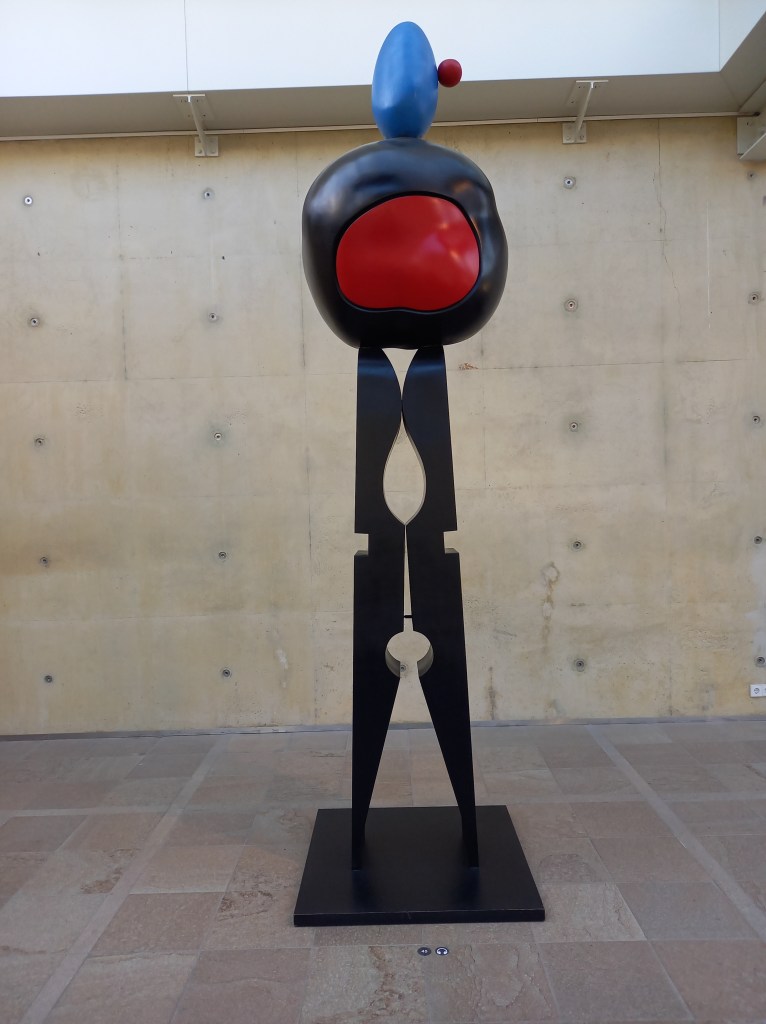
In his studios by the sea in Mont-roig del Camp and on Mallorca, Miró’s love for sculpture was given a huge boost. The (natural) objects he found on his walks were incorporated into sculptures and assemblages, along with everyday objects. The giant clothes peg (painted synthetic resin) was a design for a prestigious project in Central Park, New York. It would have been at least 14 metres high, though it was never realised.

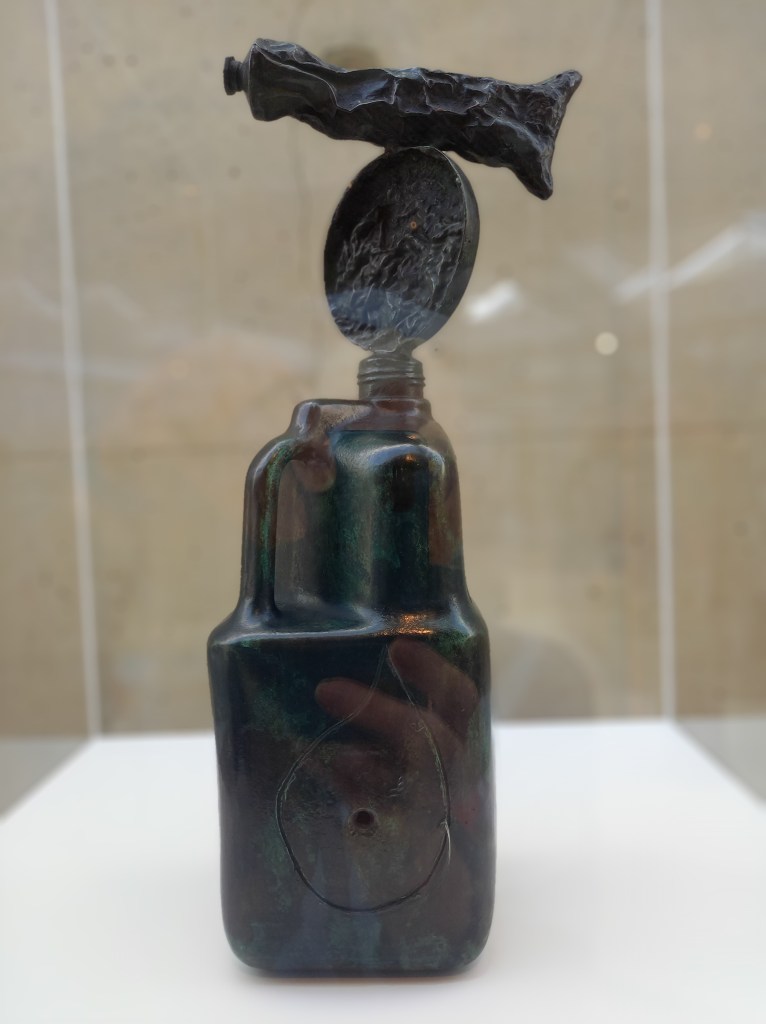
You can see the objects in this bronze sculpture: a paint tube, plastic bottle, spoon. Miró’s bronze sculptures were created using plastic models that he continued to shape until he found them good enough to cast.

The sculpture Monsieur et madame (Sir and Madam) is made of painted bronze. Two different objects form a couple. A square, red-painted stool stands for the man. On top of it is a rectangular white box with a face on it. The round, black stool represents the woman. It has a yellow egg on it. A playful, archetypical representation of masculinity and femininity.

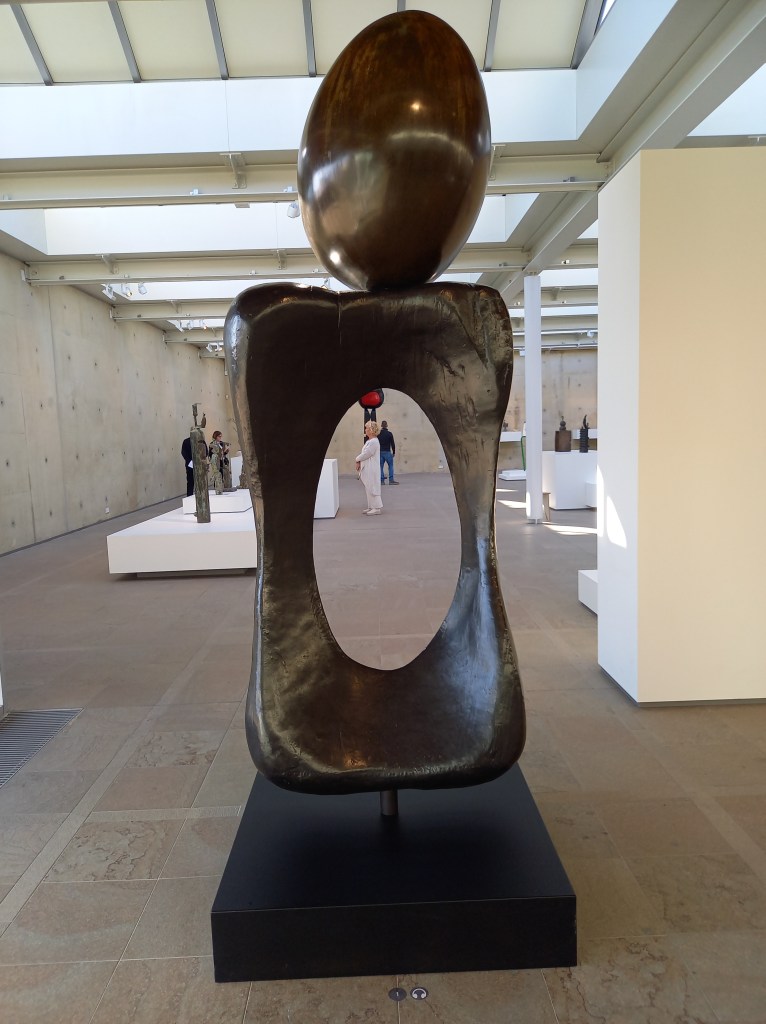
The Monument is the first sculpture as you enter the main hall. You can see some of the light coming through the roof.

It was hugely inspiring to see how Miró continued to innovate and be curious well into his 70s and 80s.

The Herring Eater


Herring Eater

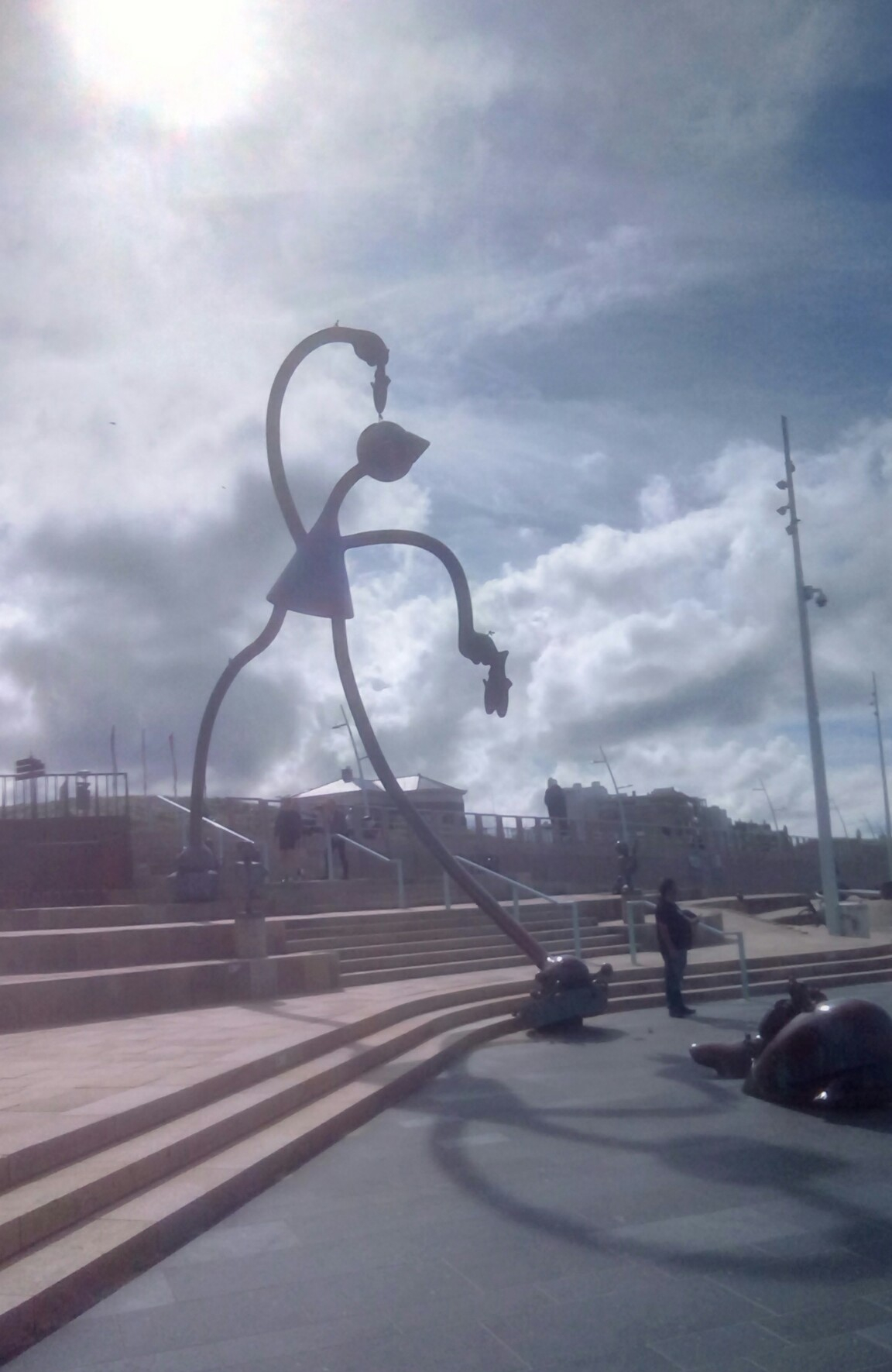
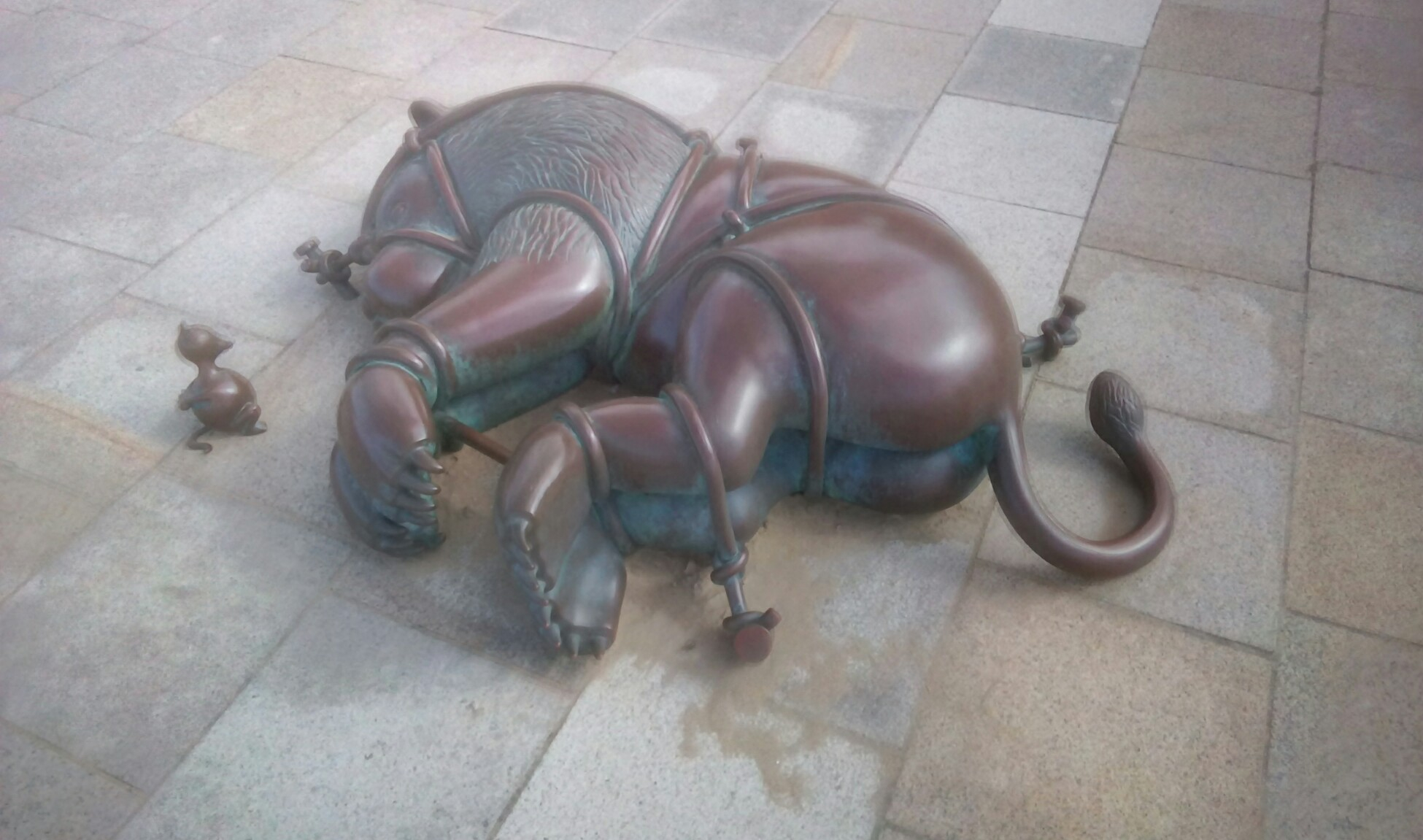
The Herring Eater is the centrepiece of a series of 23 inter-related sculptures by the American sculptor Tom Otterness. The tubes and round shapes are typical of his work: cartoon-like and humorous. However, these sculptures called Fairytales by the Sea are not from the children’s playground, but they remind us how these stories have a serious, even bleak, message. Here are Gulliver and creatures held down, tied down, or captive in cages. There is the hangman’s noose.


Fairy tale


Scheveningen was one of the major ports for the Dutch herring fleet. To this day, most Dutch people love their raw herring with chopped onion served in a white bread roll. There is always a queue at the stall next door to my local supermarket. I am about to close the caravan for the winter. The poem was written earlier in the season.

 
When in Holland

When in Holland do as the Dutch do:
eat raw herring in a white roll with
optional small bits of onion.
Or, like the giant bronze statue
The Herring Eater, already weathered
out on the promenade, head backwards,
holding the fatty fish by its tail.

Next you need to hunt out smoked eel
in the supermarkets. They’re delicious
with a sauce of crème fraiche and jenever.
Flight KL1079 to Manchester arrived on time
and I let the fish go.

Is it a competition?


11

Virtues of Unity, by Halima Cassell

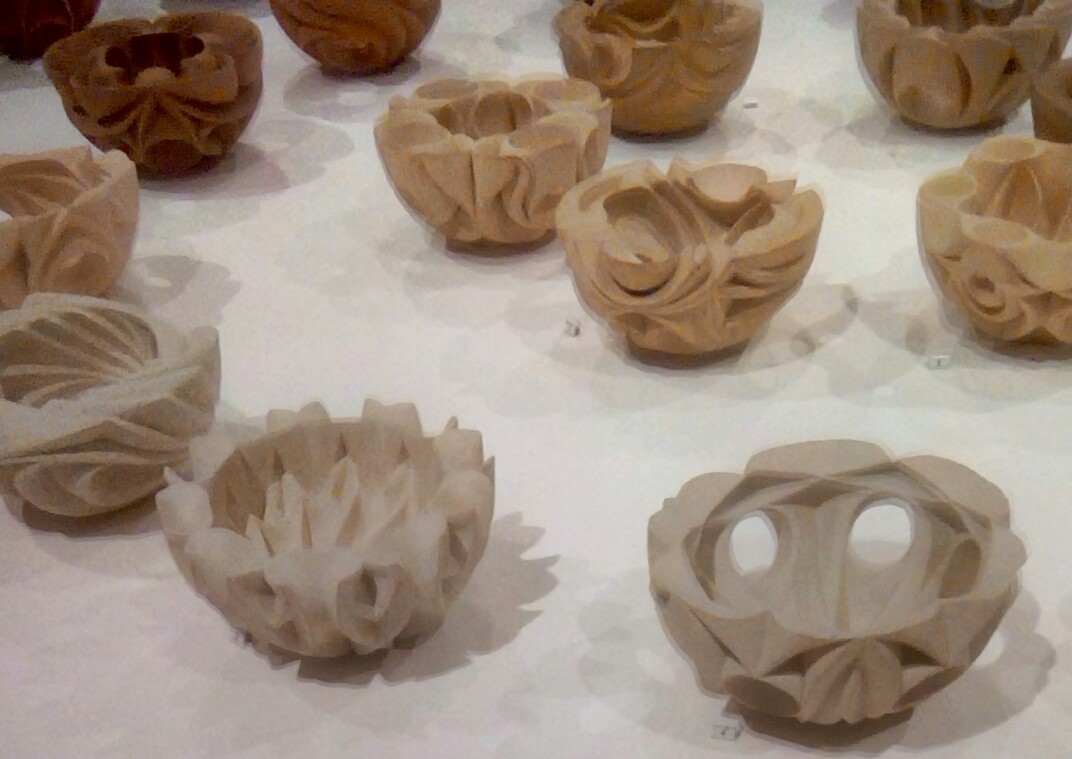
Is it a competition? the woman with dark hair and glasses asked. I stood writing in a small notebook.  On the contrary, I said. I told her this installation is a major and ongoing project. The artist Halima Cassell was born in Kashmir, then raised in the UK. In England she is called a “foreigner” or “second generation migrant”, so she has always been aware of issues of identity. However, when she visited Pakistan as an adult in 2009, she was called “British Asian” or more frequently “a foreigner from England”.

This sense of double dislocation was the trigger for Virtues of Unity. Different countries produce different colours and textures of clay. Each sculpture has its own design. Superficially, we seem dissimilar, but we share DNA. We all come from the clay of the earth and will return to that same elemental clay. The shape of the sculpture resembles the earth, the holes remind us of the womb and the birth canal. Halima was pregnant with her first child when she conceived the project.

So far, Halima has made 39 vessels. Her aim is to make 195, one for each of the countries in the world today. It will be a life-long journey. Each of the sculptures has been made from the clay of that country. The designs of each vessel and the titles represents a positive quality of that country, eg the Netherlands is called Harmony.

I was on a writing workshop at Manchester Art Gallery and we were to imagine a public superhero with a piece of art in the Gallery. I have been pleased to read that the under 35’s are streaming the composer J S Bach. He has been one of my superheroes for many years.

2 (2)


Virtues of Unity

He seemed invisible to visitors,
though he was dressed in a costume
of the period, and his wig resembled
curved waves of a waterfall.

In truth, I thought he was part
of the installation: thirty-nine spheres,
each one representing a country and
made from the clay of this country.

He moved slowly anticlockwise,
stopped at the small ceramic vessel,
a creamy white called Faith.
The positive quality of Germany.

A slow smile grew on his face
when he saw there were no openings,
that the vessel seemed restful,
flowering into a solid cathedral.

Russet, tan, black, brown, beige, taupe,
grey, creamy-white, white. Eyes fixed
on his native country, he started humming
Jesu, joy of man’s desiring, and I was glad.


Refusal of a visit visa (2)

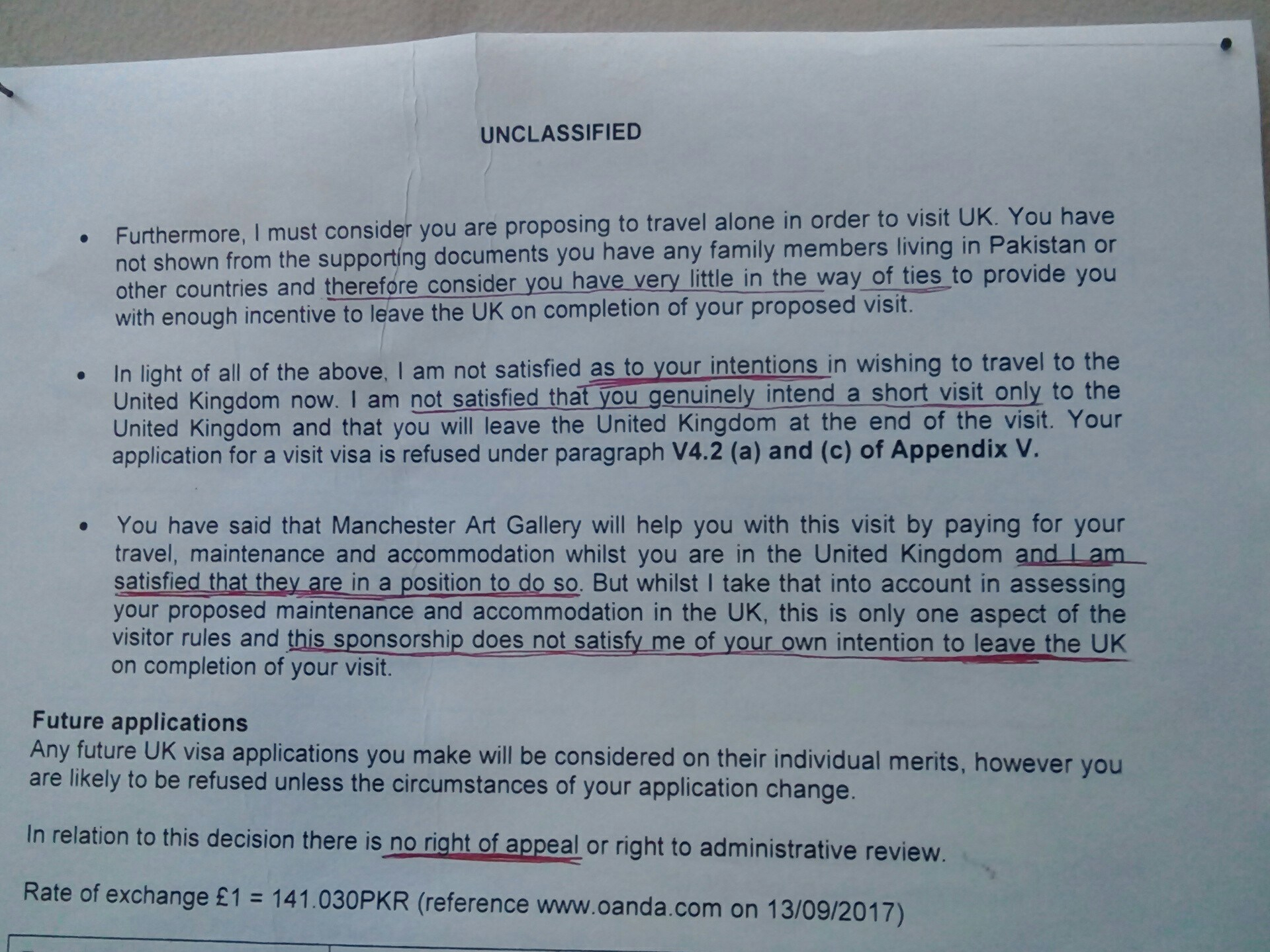
Recent Poetry School workshops have been held in the Manchester Art Gallery. So, we have been inspired by sample poems as well as the works on display. On the second floor there have been several interesting exhibitions of modern art. Dashing back downstairs I missed the display on the foyer wall – an enlarged copy of Home Office form OV51 Visit (NRA). On the first page the staff have given another reason for the refusal. They doubt that the artist has control over her bank account (the application was accompanied by bank statements, as required).

visa 2

Some personal details have been blacked out prior to posting, but the applicant is born in Pakistan and the work in the gallery is by Adeela Suleman, a sculptor and artist and Associate Professor and Head of the Fine Art Department of the Indus Valley School of Art and Architecture in Karachi.

My short “found” poem:

Refusal of a visit visa

Date of refusal decision: 13 September 2017

Furthermore, you have stated that you are single
with no dependents.

I am not satisfied that you have demonstrated ties
to Pakistan that would give you reason to return
there.

a simple pattern that silently repeats itself
               silence haunts you
                                       silence is disturbing


Text in italics by Adeela Suleman.