Tag Archives: Poetry

Clogs – a poem

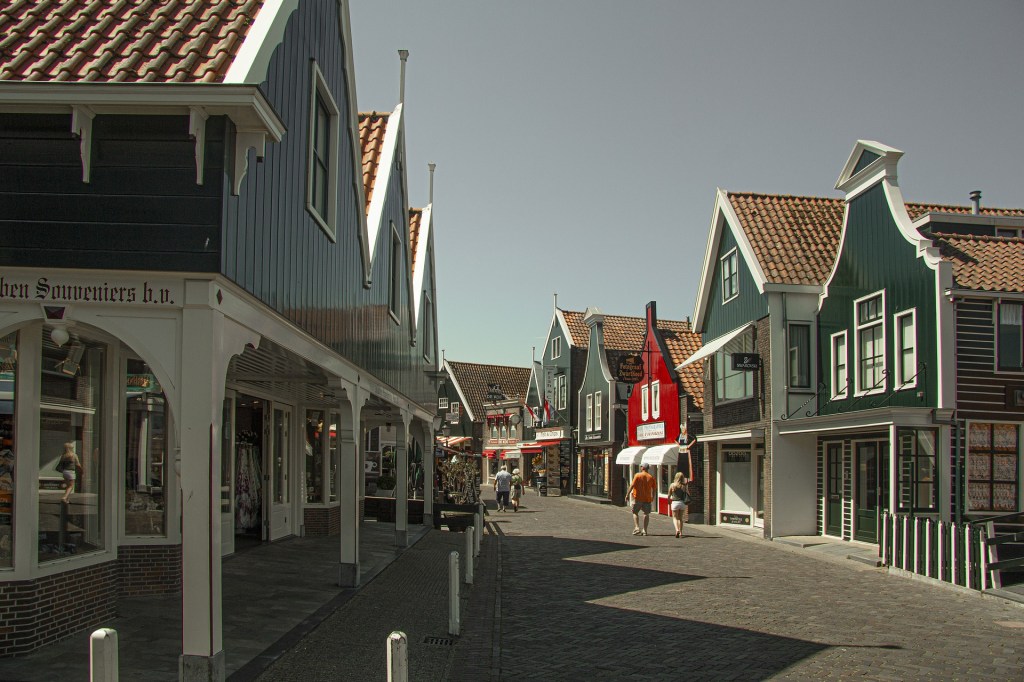
Volendam, the Netherlands. Credit: Mel_88 via Pixabay

I’ve been typing up notes from a Zoom writing workshop with Liz Berry. The focus was on short poems – some of them only two or three lines long. One was a two-line poem about a chess game and a raised hand by Charles Simic, the Serbian American poet.

In the early days of the spring lockdown, Dutch TV showed famous places somewhere in the Netherlands which are usually thronging with tourists: Volendam, Giethoorn, Kinderdijk, Zaanse Schans. One night the Red Light district in Amsterdam, empty and quiet.

Here is my short poem about clogs, a cliché along with the tulips, bicycles and cheese. I hope you remembered to put your clocks back!

Clogs, Volendam

Poem of the Clog

The clog was crying.
It wasn’t lonely: there were
thousands of shiny clogs.
I am addicted, it howled,
there are no tourists

Kilmartin

Loch Awe, Argyll and Bute, Scotland

A fellow psychologist I worked with for many years lived near Loch Awe, Argyll and Bute, Scotland. He’d often told me about the splendid views they had from their small house. Loch Awe is the third largest as well as the longest (41 km) freshwater loch in Scotland. If you’re into that kind of thing, it’s famed for trout fishing. The ruins of Kilchurn Castle must be one of the most photographed castles in Scotland!

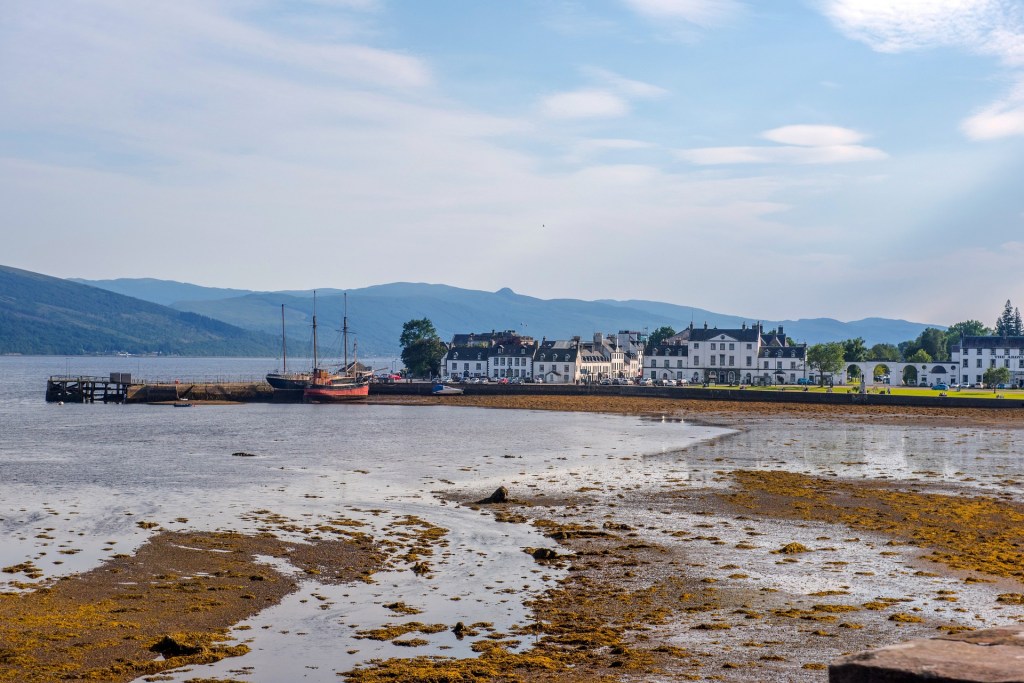
Before visiting my colleague, I stopped for a coffee and something to eat in Inveraray, with its splendid Georgian architecture. There were coach loads of tourists at the Castle, but I went for some retail therapy: bough a comfortable, warm jacket that I keep in the caravan for those below zero April days.

Inveraray, photo credit Sophia Shilmar on Pixabay

My next stop was Kilmartin Museum in Lochgilphead. The area round Kilmartin with Kilmartin Glen is rich in historic monuments, 150 of them prehistoric: standing stones, stone circles, cairns, rock carvings – often with the familiar cup and ring mark.

Kilmartin Museum with shop and cafe

I was almost the only visitor at Kilmartin Museum which, surely, added to my experience …

Kilmartin Museum

slowly rotting the shell of a coracle

standing stones rock carvings cairns are projected on the walls of a dark room

the floor throbs with pre-historic sounds

i am pulled into this distant past of hunters warriors and i am crying

Cup and ring mark, Achnabreck – speckled in Gaelic

World Animal Day

Photo credit: Artcats via Pixabay


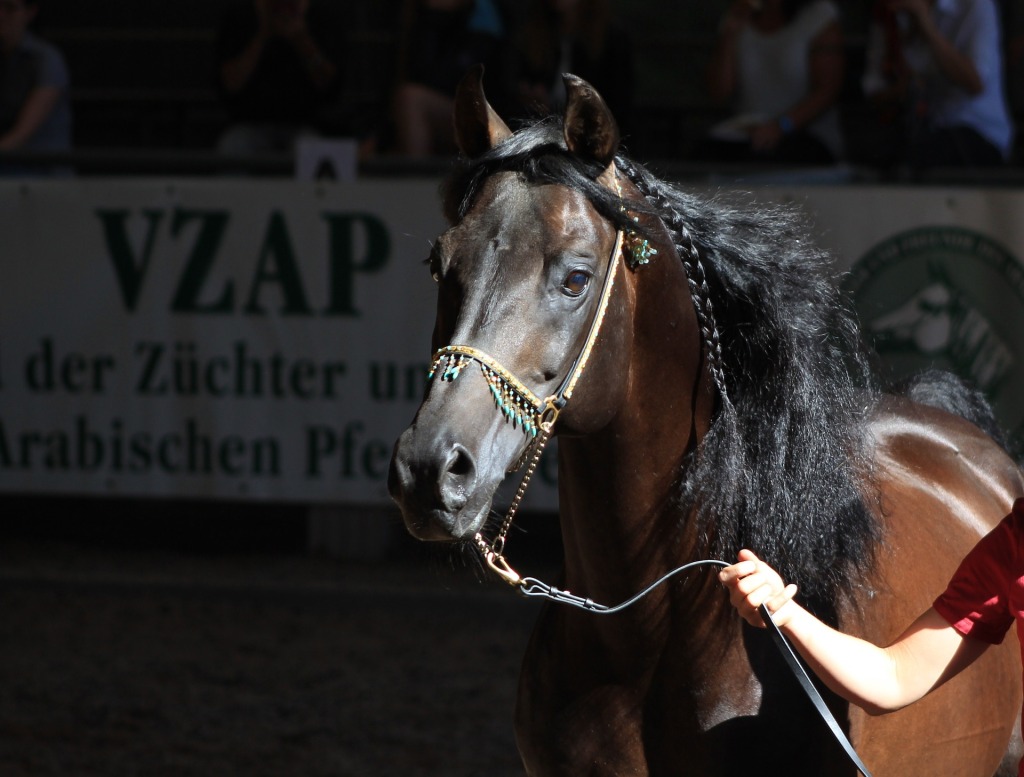
World Animal Day was started in 1925. I was looking for an animal poem in my file. Looking back on this experience, we might question the animal welfare aspect. The horse seemed happy enough at the time.

Circus

The Arabian thoroughbred
and his blue-blood spinster
lodged with a middle-aged couple
living in the Dutch bible belt.

My parents despatched
my younger brother and me
that summer to acquire
circus skills in two weeks.

Each morning a child took
turns standing on the horse
as it walked round the ring
inside the stuffy canvas tent.

In the afternoons we swam
in the local pool, tried to get
the couple’s fat ponies to obey.
There were prayers, a lot of eggs.

By the end of the holiday we
balanced, arms outstretched,
on the trotting horse. We swung
off and on as it cantered.

Neighbours Day – poem

Photo Credit: andrewlloydgordon via Pixabay

Yesterday was Neighbours Day here in the Netherlands. The Neighbours Day initiative was started in 2005 by Douwe Egberts, one of the traditional Dutch coffee makers: social contact starts with a cup of coffee. A few years later they were joined by a charity called Oranjefonds. Each year they provide funds, support and advice for a large range of social and community activities, such as Dutch language support for refugees, mentoring, club houses for the old and young.

During the lockdown earlier this year, many new initiatives were started by people volunteering in their own street or local area. A good fit with this annual initiative. My neighbours here on the camping have cut their hedges and have gone home. My day always starts with a good cup of coffee made in a cafetiere. It happens to be D.E. – a firm started in 1753 in a small shop in Friesland, a northern province.

Earlier this year I talked with my brother about events in our childhood. This memory came up.

Getting to know the neighbours

We’re snoozing after lunch
in a Sunday afternoon garden.
One of our family, still awake,
sees silent orange flames rising
that side of the opaque glass.

It’ll be a small insurance claim.
As evening turns pink, the old
Belgian couple walk their Borzoi.

Photo credit: akunnen via PIaxabay

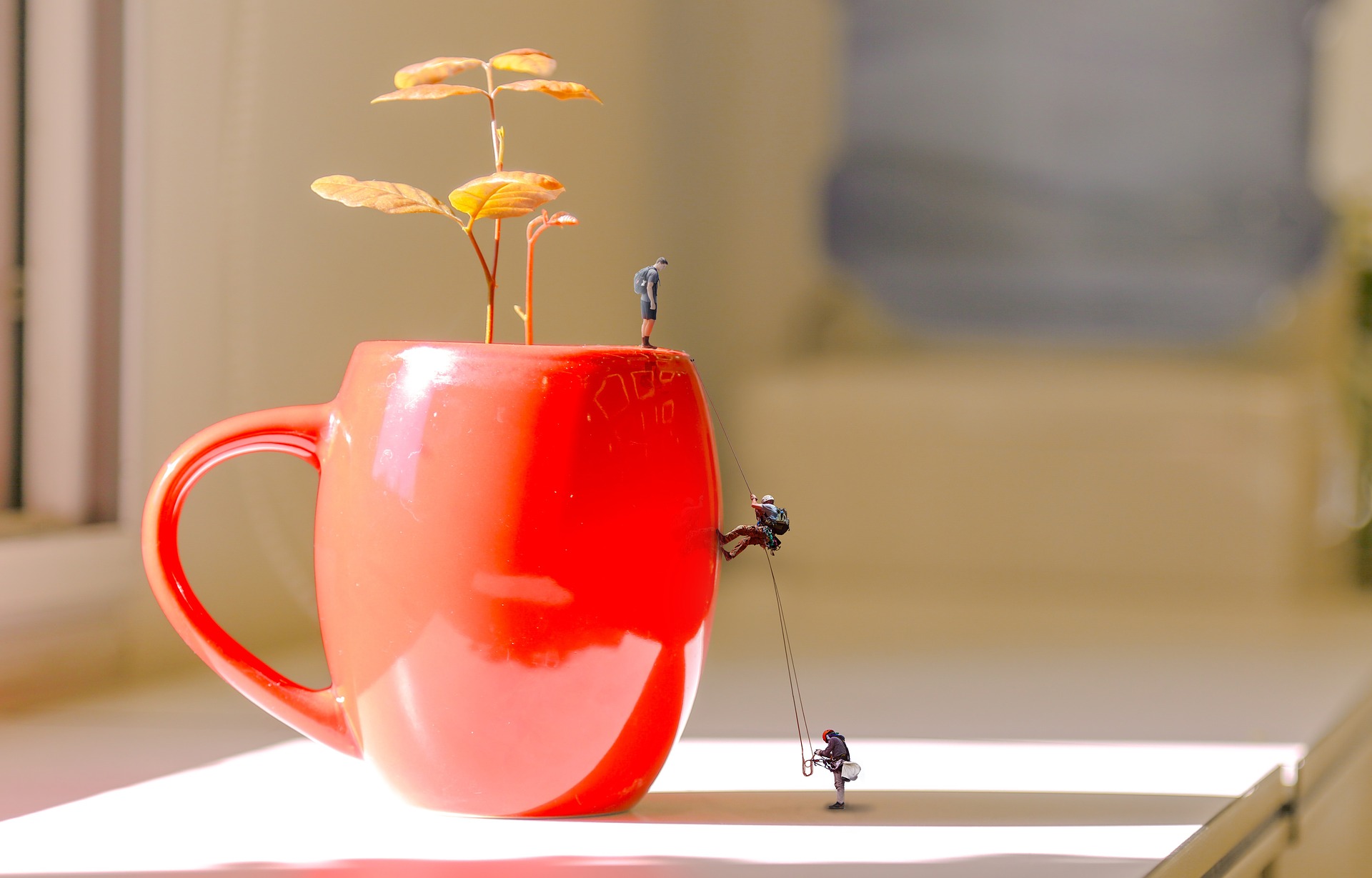
Abseiling – a poem


flowerpot-climb-1873479_1920

Photo credit: Elias Sch via Pixabay


This coming week would have been the birthday of Bill Huddleston. My second collection Nothing serious, nothing dangerous (Indigo Dreams) is dedicated to him. In one of the poems I wrote:

Bill’s last words were always Have fun, so I will.
He was a very good father, Bill, though he wasn’t my father.

Bill and I first met in 1986 when we worked on an Outplacement project in Scotland. In his 60s Bill retrained as a hypnotherapist, and for many years he and I had a peer-supervision agreement – meeting monthly to discuss our clients.

From a poetry workshop on Working the Body I had the marvellous poem Climbing my Grandfather. It’s a first-hand story by a child, starting at the brogues (shoes) and ending on top of the head, the summit, with the slow pulse of (the grandfather’s) good heart. Here you can read the original poem by Andrew Waterhouse, a poet and musician, who was passionate about the environment. He suffered from depression and, aged 42, died by suicide in 2001.

 
Abseiling Bill

 
The grey hairs combed back are too few to attach the equipment,
so I slide down slowly to his glasses, see close-up the grey hairs
sprouting from his ear. I think of rabbit holes, hear scuttling
sounds as his amazing brain is shifting, growing, learning.
I move carefully down his cheek where I can hear humming
from his sinus. Suddenly I’m dangling as he turns his head
to hear the other person better. His chin is smooth and
soon I reach the safety of his dark green cardigan,
all bobbly terrain and the round boulders
of its leather buttons. I can slide across his chest
where his large warm heart is housed, my feet
feel the rise of his breath lower down as he is
slowing to pace the other person.
It’s an easy journey now onto his chinos.
I walk across his upper leg, sun lights
my path. I rest in the folds of his knees.
From here I can see his steady feet
in the solid grey trainers and I land
without a hitch, safely.

Knitting – poem and writing prompt


bike-247394_1920 (1)

Photo credit: cocoparisienne via Pixabay

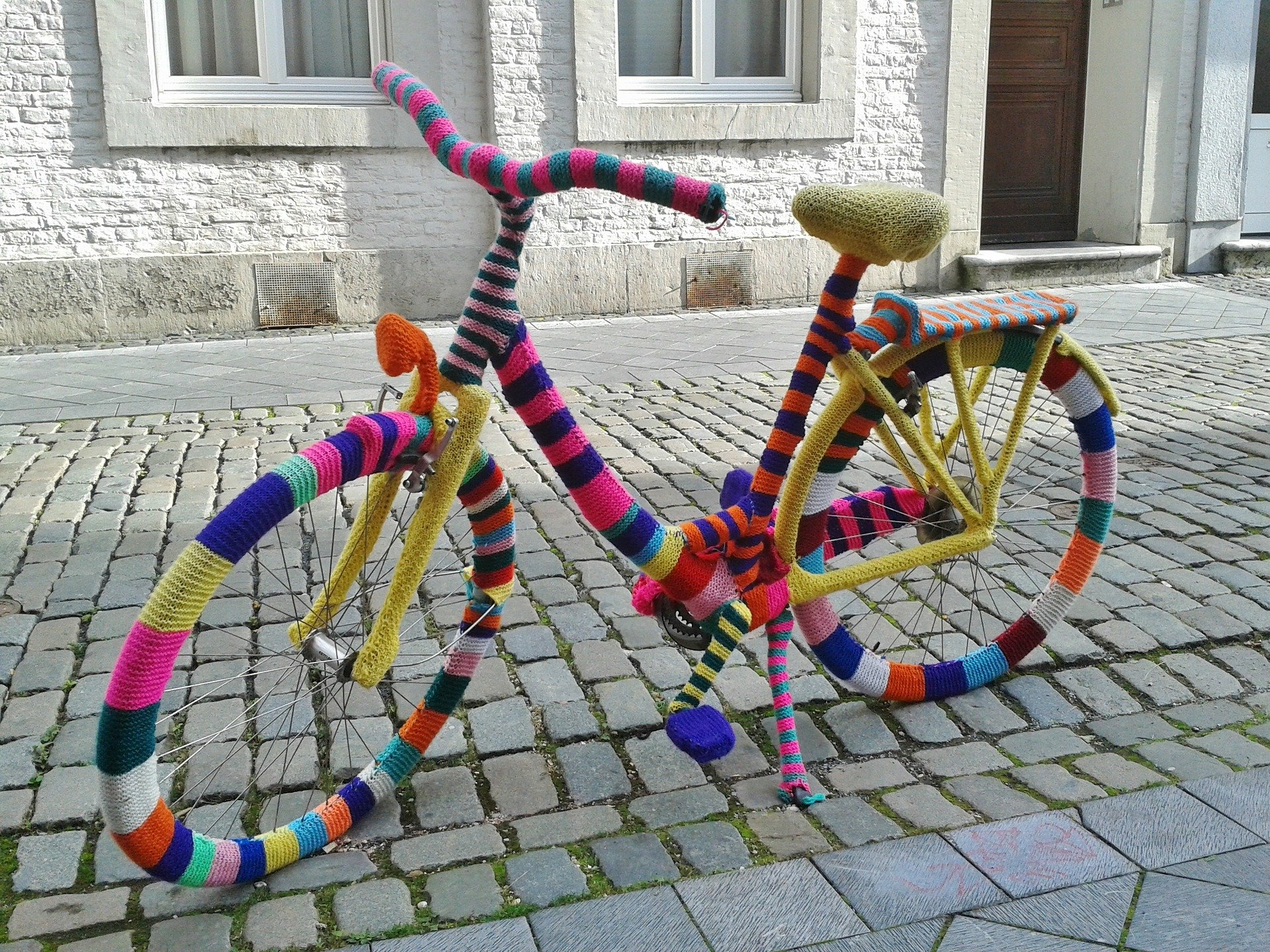
In this region, schools will start tomorrow. Everywhere, there are large white banners up reminding drivers that children are about, on foot or on their bike. For various reasons, I don’t have good memories of my time at primary school. When I think about knitting, or see someone knitting, my stomach contracts. But, don’t you love the bike?


knit-869221_1920

Photo credit: Foundry Co via Pixabay

Did you knit this yourself?

It would have been a morning.
Glasses, graying hair in a bun,
typical spinster teacher.

Why ask a question to which you
already know the answer?

Because you had never been able
or willing to show me left-handed knitting.

The few centimetres my mother
had added during the week stood out:

too smooth and regular, too clean,
easily done in her click-clack rhythm.

I watched you unpick it, leaving
me sitting with a pile of curly wool.

Prompt: Was there a subject that you disliked or even hated at school? Was it because of the person who taught you the subject? You may well have written a poem or short story about this already. Is there another poem waiting underneath?

Hacker – guest poet

Keith Lander


It’s a great pleasure to introduce this month’s poet Keith Lander. We first met early autumn 2004 in the Village Hall, Manchester where the poet Linda Chase was running a weekly poetry course, on behalf of the Poetry School. The Poetry School is the UK’s largest provider of poetry education, offering a wide range of courses at all levels.

Keith Lander was born and grew up in Manchester. At school he studied sciences and went on to gain a B.Sc. in mathematics from the University of Wales, Bangor. This led him into the IT industry where he worked as a software engineer and for several years was a consultant for Siemens in Munich.

He has had poems published in a number of anthologies and magazines including The North, Envoi and Obsessed with Pipework and has been long listed three times for the National Poetry Competition. He has an M.A. in Creative Writing from Manchester Metropolitan University.

The three poems feature the mysterious “Milo” character. You can find all three in the pamphlet Pandemonium, published by Yaffle Press in 2019. For more information about Keith Lander go to his writing website.


Hacker

This morning Wu Mian of Guangzhou province,
Zen hacker extraordinaire, Milo’s big buddy,
will smash through Mr C’s firewall
using a password provided by Milo.

He’ll be sitting alone in his garden
surrounded by clematis and acacia blossom
listening to the music of the fountain
while reading Lu Chi’s Wen Fu.

A trojan horse will appear out of cyberspace
and release its hidden hoard of phisher men
who’ll slide into the fountain,
hack their way into his heart
and steal his deepest secrets.


In theatre: Milo’s view

Milo tells me I won’t feel a thing.
He on the other hand will be awake
monitoring the situation.
He’s seen the videos on YouTube,
how they stop the heart, cool the body, pump
the blood through a machine. No way is he

going to get trapped in that infernal thing.
So he stays out of the arteries, surfs
from lymph node to lymph node, watches the surgeon
remove the right saphenous vein through a hole in my groin,
peeps gobsmacked as they graft it in place.
And how he cheers when they remove the valve,

the choked old squeaker. How sweet the bovine
replacement smells—green grass, fresh pastures.
He has to cling to a rib while they staple
the sternum back together, but then passes out
when they shock me back to this world.
Milo was right: I didn’t feel a thing.


Pandemonium-cover (002)
Retirement

After a shit life horse-trading with wankers
down back streets of shady deals
he sought nirvana
in a kingdom of ticky-tack and sushi
finding it here, in this place,
with its parity of peace.
The psychedelic visions of his gullible youth
have paled into shades of white.
At last he’s immune to most earthly hazards,
but at night, in his boxroom,
he’s started to have visions
of a black shadow—
Milo in his cave lurking just out of sight.

Birds on Paper (2)


sparrow-4334964_1920 (2)

Photo credit: Susanne Jutzeler, Suju Foto on Pixabay

More birds: here is the second half of the sequence Almost complete poems: encounters with twelve birds. The inspiration for these short poems came from different sources:

* The title comes from the Wallace Stevens poem Thirteen Ways of Looking at a Blackbird. I decided I needed at least one blackbird poem, but there are two.
* i – Almost complete poems is the title of a poetry collection by Stanley Moss. It is published by Carcanet who (used to) send postcards with pictures of their books with your order. The cover image of the book is Still Life of Grapes with a Grey Shrike, Antonio da Cavalcore. I keep dozens of art postcards in a box, in case there is no inspiration.
* ii – Painting The Sea-Birds’ Domain by Peter Graham in Manchester Art Gallery. The reproduction doesn’t show it clearly, but my dialogue is with the bird on the rock that is nearest to the viewer.


Graham, Peter, 1836-1921; The Seabirds' Domain

Graham, Peter; The Seabirds’ Domain; Manchester Art Gallery; http://www.artuk.org/artworks/the-seabirds-domain-205095

* v – inspired by reading Jaan Kaplinski, Estonian poet.
* vi – observation from my attic window.
* viii, x and xii – a short writing exercise from workshops with Ann Sansom, the Poetry Business. She often does these just before a break. Mostly six or seven lines with restrictions, for example line 1 must have a day of the week, line 2 a building, line 3 no rules. Written against the clock, some small jewels may appear.
* ix – observation from sun lounge window.
* xi – inspired by that phone call. The tanka was published in Blithe Spirit, the magazine of the British Haiku Society, some years ago.


peregrine-falcon-371610_1920

Peregrine falcon, Photo credit: Ray Miller on Pixabay

vii
Pocked and pitted stone
visible only to the peregrines
that nest on this cathedral –
a grimace carved by the stonemason
who used to beat his apprentice.

viii
Sundays summer and winter
we went to church at least once –
If I was that tiny sparrow
I would slip out, circle the white
spray, marram grass, the endless shore.

ix
Blackbirds nest in the ivy hedge,
as one comes in with food
the other exits at the side –
I remember those empty rituals
well-meaning suitors spurned

x
All around fields are planted with dill,
among the fronds an anklebone.
Just one pale bone.
Scrawny canaries fly across
the aria Verdi never composed.

xi
My friend calls:
an orphan
at sixty, suddenly
I hear blackbirds sing
thin, feathery clouds.
xii
A lost parakeet, friendly face
against turquoise wings
paper notice on the mat –
small birds are a comfort stone
to be carried around in a sombrero.

Birds on Paper


sunset-610097_1920

Photo credit: Foto Rabe on Pixabay


The last few months the poet John McCullough has posted many colourful images of amazing birds on Facebook. Other days he shared helpful advice about writing poems. It is fitting that his third poetry collection Reckless Paper Birds was recently awarded the Hawthornden Prize – the oldest of the major British literary awards (established 1919).

Reckless Paper Birds has been described as “dazzling” and a “celebration of abundance”. It was published by Penned in the Margins last year.


silver-gulls-4335397_1920

Photo credit: Manfred Richter on Pixabay

When I was putting the manuscript together for my second collection Nothing serious, nothing dangerous, I came across several short poems about different birds. So, these became a sequence: Almost complete poems: encounters with twelve birds. Here is the first half of the set.

Almost complete poems: encounters with twelve birds

i
If they’re honest
most poems are almost:
the nearly-there bird,
bowl of glowing grapes,
sun, this still life, silence.

ii
You don’t belong here
she seems to say.
Two small black eyes peer
straight at me.
There is a shadow over
the bowl of her belly,
a pale-blue shawl for wings,
feet firmly planted
on an outcrop of black rock.

Gannet, you are wrong, I say,
like you I’m mostly in the air,
white spray, white clouds,
lifting and landing.
The in-between domain
often cold and steep.

iii
In her dreams that night angry birds
came and pecked at the cherries,
small red stains on the grass –
it was a summer slowly
shrinking at the corners.

iv
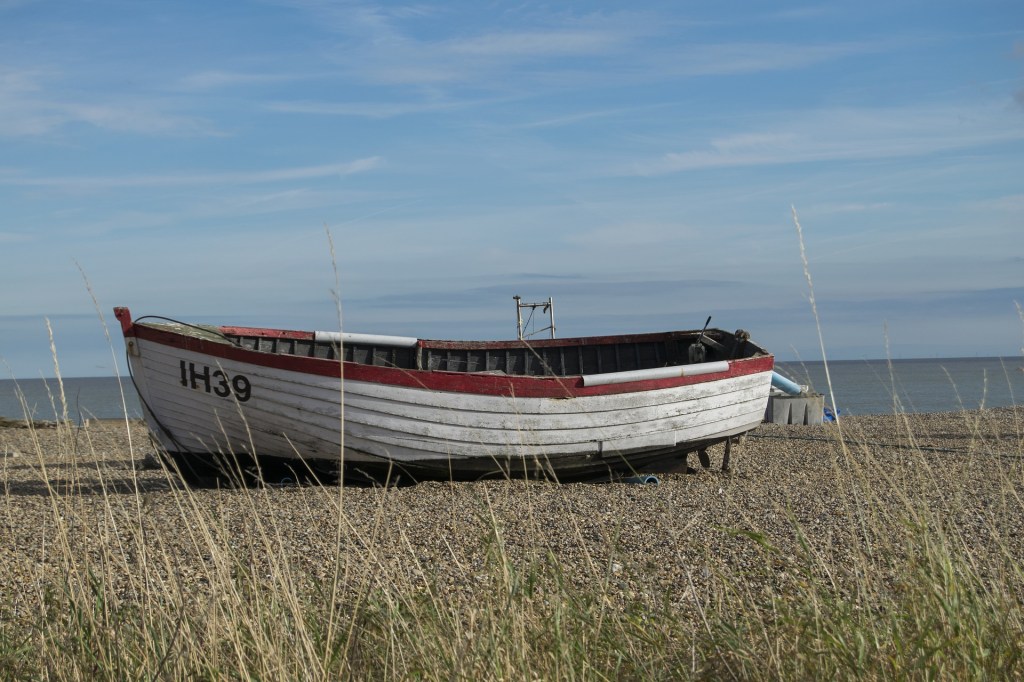
On the shingle barnacled white
fishing boats lie on their side.
Standing above its reflection,
a gull stares straight ahead.
The gulls are tucked into their own lives.

v
The honking of homeward geese,
hush of flags half-mast on a building,
the crunch of fresh snow underfoot.
In Estonia planets were venerated,
I am Stella Maris, the planet’s interpreter.

vi
Squawking draws me from my emails.
I see two magpies closing in
turn on a young blackbird
peck      peck      peck
This bird gave its name to an opera.

Southwold, Suffolk

Image (2)

Beach huts in Southwold, Suffolk

Later today, I’m on a ‘virtual’ writing weekend. Part of the preparatory work was to write a 16-word poem about a place on the coast, but not about Whitby – which is where we will be based ‘virtually’. That brought back memories of my many visits to Southwold in Suffolk. The expensive beach huts there are legendary. The smell of beer brewing at the local Adnams Brewery is an acquired taste!

Several times we rented Shrimp Cottage, at the front. Whoever stayed in the main bedroom on the first floor, had a view of the sea from their bed. We were the women I met on holiday in China, as one of our regular reunions. I’ve also stayed there with friends from Manchester and, twice, my brother and his family in the Netherlands got the ferry to Harwich and made the short drive up the coast.

Southwold Sailors Reading Room


I visited Southwold in all seasons. There was just one house between Shrimp Cottage and the Sailors’ Reading Room – a Grade II listed building from 1864 and still a refuge for sailors and fishermen. Another forty footsteps took us to the Lord Nelson pub. The poem is included in my second collection Nothing serious, nothing dangerous, published by Indigo Dreams Publishing Ltd  in November 2019.


Southwold posts


Nautical miles
The sign outside the Sailors’ Reading Room is

a series of thin wooden planks, painted white:
Den Helder, IJmuiden, Hoek van Holland.

Across the horizon, they are less than a hundred
nautical miles from Southwold in Suffolk

where the narrow beach of pebbles –
grey, brown, black mostly –

is held together
by couplets of groynes, slimy green.

Both our languages have the word strand.