Tag Archives: poem

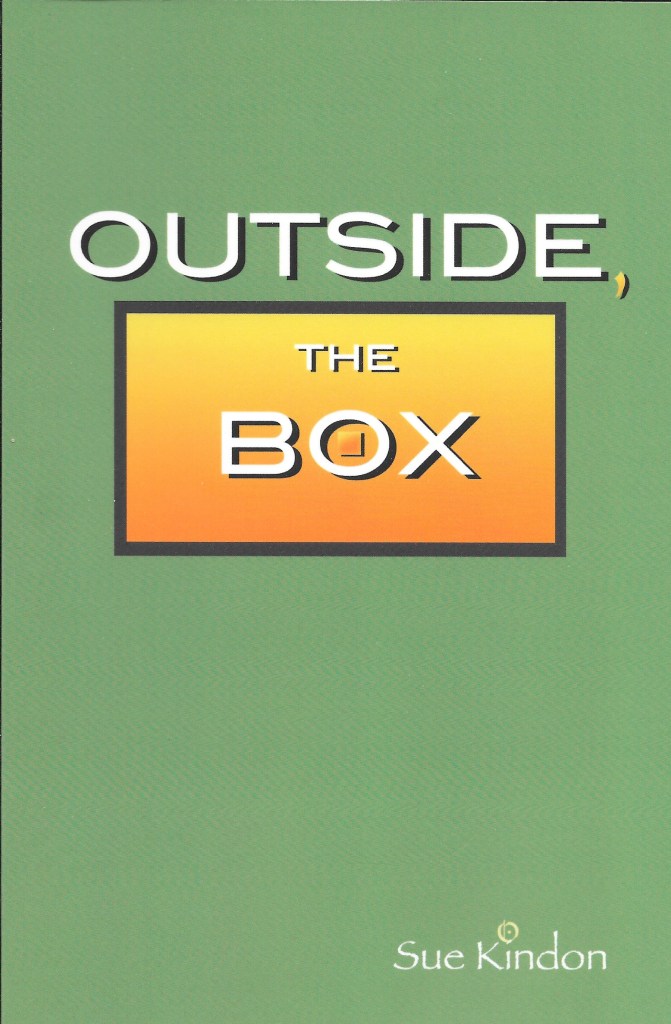
Outside, the Box – poems

I am delighted to introduce this month’s guest poet Sue Kindon. We met on Zoom during lockdown 1, through a mutual poet friend.


Sue Kindon lives and writes in the French Pyrenees. An enthusiastic member of the local slam team, her greatest achievement to date is an award for a poem in French. 


Kindon was Runner Up in the 2021 Ginkgo Prize (for Eco-poetry); and has two pamphlets to her name – She who pays the piper (Three Drops Press, 2017) and Outside, the Box (4Word Press, 2019). The poems in the latter were sparked by the box moth plague that devastated the landscape a few years ago.


I’ve selected five poems from Outside, the Box, to give you a taste of the range and humanity of Sue’s poems.

Box Moth (Cydalima perspectalis)

white moths haunt each hedge
all summer their larvae gorge
on our ancient ways

The House of Running Water

We’re so far off the mains, I cross myself,
or is it my reflection? Our drinking water
isn’t purified, sobbing in glugs
from a faery underworld
just beyond the spring line.
Boils, frogs, plagues of grass snakes
are there none. The kitchen tap
dispenses an incessant stream
in spite of some newly-converted saint
bottled up in supermarket plastic.
Every day an elven-prince
strikes rock with his divining rod
and sets loose unchlorinated magic:
we drink deep, until our inner walls
cascade with the stuff.

I could never return, now my mind
is clean as the washing on the line.
Townsfolk have forgotten
how the old world flows.
It must be something in the water.

Bernadette

I thought of you as a sister
from the start.
You were the one who insisted
I worked in the shade, you saw
that my fair skin reddened
in the southern sun trap
of the presbytery walls.
Your straight larkspur back
bent for hours as you laboured
to remove chiendent and petty spurge.

You would go missing
for a quick smoke
outside the tall grey gates
of our temporary eden, and I felt
the loss, sure as the last petals
falling from the climbing rose.
Then you’d be back,
tending the last geranium
and offering a kind word
I might not understand.

So much more I wanted to say:
and now I’m gaining confidence
with the language, it’s already
winter, and the gates are shut.

On Safari

Death came to me as a zebra
crossing my path. I’m not ready yet,
I said, and he stepped aside.

As I passed by, I admired
the pull of perfect stripes,
the kiss of dark mane

and I was nearly fooled
by his op-art trompe-l’oeil invitation
to step into his black-and-white-wash skin

and set down my bright sorrow.
I was dazzled by the glow
of skeletal zebra ribs

until I saw the shadow
of famished lion at the tunnel mouth
and smelt the jitter of my blood on parted lips.

Jardin de Curé – Damage Limitation

Our prayers have kept the moth at bay –
and careful spraying – chemicals
have underplayed their part.

The volunteers have withered up
or died. A few stalwarts
welcome late summer visitors
but when it comes to weeding,
they pull the flax
and leave the nipplewort.

Nettles flourish by the chapel wall.
Self-seeded marjoram
annexes the cabbage plot.

At least the box hedge is intact.
Our prayers have kept the moth at bay.

Two cats on a Valentine’s card – poem

Credit: mihailfeciorunature on Piaxabay

A big ‘thank you’ to Ramona Herdman for today’s poem. It’s from her wonderful pamphlet A Warm and Snouting Thing published in 2019 by Emma Press. Ramona will be guest poet later this year, after her collection with Nine Arches Press has appeared in print.

Two cats on a Valentine’s card

For one bribed instant, they sat
in a heart shape: double-tail-curled
rumps the heart’s bumps,
heads close enough to bite.
You can see they don’t fool
each other an inch, don’t try.

This is one split-second’s flicker
in a ticker tape of sniff,
cuff, hiss, hysterical arching,
pantomime affront, huff off,
real pinching hate,
play-fight, indignant alliance.

Everyone in on this –
the animal-handler,
photographer, graphic artist,
printer, shop assistant –
knows it as cheap con, nothing
like the on and on of coupledom.

If you buy it, fool, do it
knowingly. Write I am the cat
who walks by himself. Some nights
I choose to curl close. That’s it. You want
my heart? OK. My heart’s
like that.

Blossoming and Abundance – poetry, writing prompt

Credit: Watercolour by Prawny on PIxabay

The 10th edition of Poëzieweek (Poetry Week) has just ended. Over 120 activities happened in The Netherlands and Vlaanderen (the Northern, Dutch-speaking part of Belgium). Some of these will continue during the year.


The theme this time was Nature. During any year there are a several ‘book’ weeks in The Netherlands and readers can claim a free book when they purchase up to a given amount. As poetry books are expensive here, the sum of Euro 12,50 was easily reached!

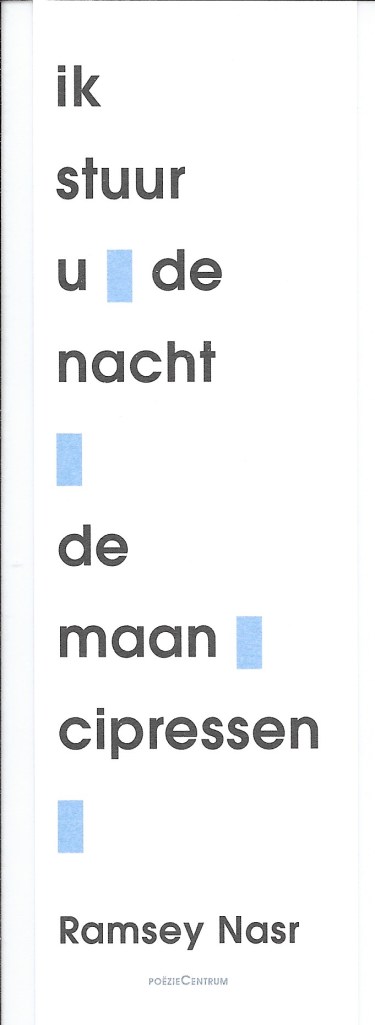
The Dutch-Palestinian author and actor Ramsey Nasr was commissioned to write the poetry gift this year. He is well-known, as he was the Dichter des Vaderlands (the unofficial title for poet laureate) during 2009 – 2012.


The pamphlet with 10 poems is well produced on quality paper. It’s based on the hundreds of letters Van Gogh wrote from his youth until his death in 1890. Under the motto Blossoming and Abundance, the poet has selected and re-arranged Van Gogh’s words. The two blue horizontal lines on the cover indicate caesuras. These return in the text as thin blue vertical lines, showing where Nasr has deleted a word or several phrases from the original text.


I love how Ramsey Nasr has distilled the essence of Van Gogh. It is a very interesting way of using found material. Here are my translations of a few parts of some of his poems.


(3)
let us | find a task
that forces us to quietly | sit
busy with work that is simpler
than | tasks that | are useful

(4)

i am no better than another |
am not like a street pump | from stone | or iron |

(6)

i send you | the night |
the moon | cypresses |

(5)

it cannot | remain like it is now |
burn rather than choke |
a door must be open or closed
something in-between i do not understand

(10)

the mediterranean has a colour like | mackerel |
you don’t know | if it is green or purple
you don’t know | if it is blue for a second later
the constantly changing reflection has
taken on a pink or grey tinge |

De Kop van de Haven – poem

Credit: R van Lonkhuizen

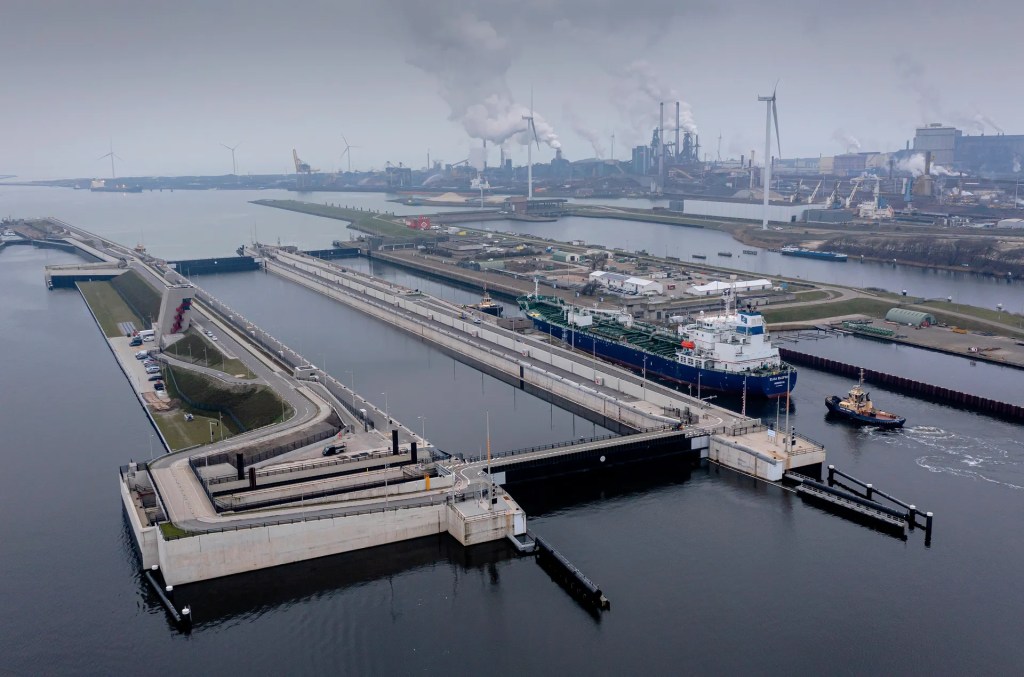
On Wednesday this week King Willem-Alexander opened the Zeesluis Ijmuiden. These new sea locks, built alongside the existing locks, are the largest in the world: 500 metres long, 70 metres wide and 18 metres deep. The existing locks were nearing the end of their life and becoming too small for the huge vessels heading for Amsterdam.


A major design fault was discovered. This resulted in excess cost of almost three million Euro and the grand opening almost three years overdue. Now ships can pass independently from the tides. But, with the cruise ships entering the locks, so does a lot more salt water… and are those towering liners still wanted?


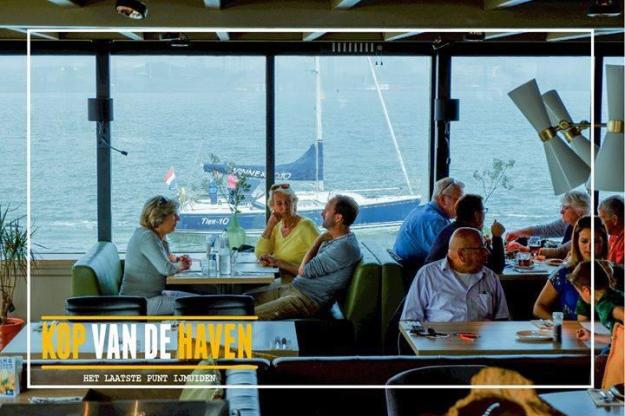
A splendid view of it all can be had a little further out. The last time I had lunch there was, probably, in 2011 – that Icelandic volcano had closed air space. I managed to get a shared cabin on the ferry to Newcastle and treated my friend to lunch as a thank-you.

De Kop van de Haven, Ijmuiden
for Trieneke


It’s not a pub, it’s not in the UK.
It’s right by the tall chimneys
of the steel works, once Royal
Dutch, now Tata. The canal
to Amsterdam was dug by
unemployed men and now
there’s a gleaming ferry terminal:
Christmas shopping in Newcastle.

Fish is fish is fresh is fresh with
a view of water and waves and
smoke and boats and barges
and ships and liners and the wind.
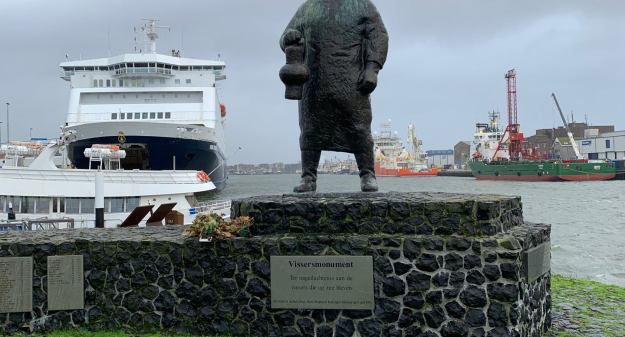
Outside on the head of the harbour
the bronze fisherman holding
a storm lantern in his right hand.

Lockdown Latitudes – poems

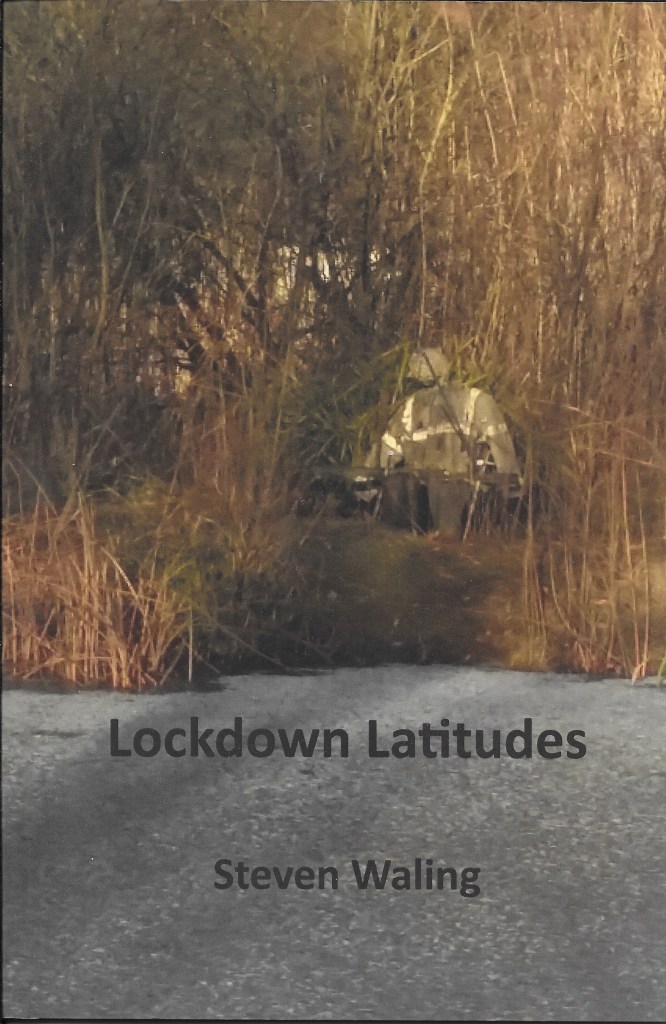
I am delighted to introduce this month’s guest poet Steven Waling. I first met Steven over 30 years ago after I’d moved to Manchester and joined the local poet’s group. Manchester Poets is the successor to South Manchester Poetry Group, started in 1978 by Dave Tarrant and still going strong!


His brief biography says ‘Steven Waling lives in Manchester and is apparently a stalwart of the Manchester poetry scene. His latest books are Disparate Measures 1: Spuds in History, and Lockdown Latitudes.’


From his most recent book Lockdown Latitudes I have chosen three different poems. Steven ‘writes overlooked life into vibrant presence’ says Scott Thurston. It is this quality I particularly admire and love in Steven’s writing.

Photo Credit: Steven Waling


Jesus Strolls Down Market Street

All he wants is new underwear and a coffee in Starbucks, time to himself to phone his dad and see he’s looking after himself during the lockdown. He sees they’re back again on the corner of Piccadilly Gardens and Market Street, shouting his name like a weapon at random strangers. He sneaks past, hand in front of his face. He’d like to shout in their faces, ask them what the hell they thought they were doing. Not that they’d recognise who he was, and anyway, these days he just gets embarrassed, avoiding the hassle of conflict that won’t get anywhere. Everyone ignores these men in old-fashioned suits sweating in the heat, lifting holy books like clubs to beat the sinful air away. So he goes to buy his pants, dashes into Primark before they clock him. People don’t, he thinks, realise how shy he is. He’d much prefer they found him by accident, when they needed him. Like later in the coffee shop: some old lady confused because they don’t take cash for drinks any more. Someone pays with his own card and when she looks up, they’re gone

Back to his bench to sleep with the pigeons

Snow Moon

Night stands at the tram stop
over head the moon a

soluble aspirin slowly dissolves
into the big black night goes

nowhere the spider in my right
eye is flashing again I walk

past the street they’re planting
non-aggressive trees spindly roots

spring flowers berries in autumn
that won’t disrupt the neighbourhood

kids kick the moon down the road i
wait for light rapid transit late

due to police incident keep my
distance from the moon its snow

face bending over the quick brown
cat crossing the tracks quick quick

Links to Steven’s books below:

Some Roast Poet – Manchester Poetry Magazine and Pamphlets (wordpress.com)

Steven Waling – Lockdown Latitudes (leafepresspoetry.com)

Tulips from Amsterdam

Credit: Kang-min Liu,  Creative Commons Attribution 2.0 Generic license


Today is dovetailed between yesterday’s National Tulip Day and Blue Monday. Nationale Tulpen Dag is an initiative started by Dutch tulip growers 10 years ago. On the third Saturday of January, about 200, 000 tulips are placed on the Dam Square in Amsterdam. These free flowers start the tulip season. This year people will be handed two bunches and are asked to give one to someone else – share the happiness.

Credit: WCoda on Pixabay


Research seems to have pinpointed the third Monday in January as the worst day of the year. There was some easing of the lockdown here in The Netherlands. However, the hospitality and cultural sector are still closed. I’m leaning more towards being blue …
Here is my poem about tulips.

Extraordinary Popular Delusions and the Madness of Crowds

They’ve not yet reached one of the tulips,
the central one of this display.
You can imagine a window, if you like.
Five parrot tulips lean towards the light.
Degrees of purpling. The ants appear
half-way up the bulb-shaped vase.
I’ve left the thin pencil lines
indicating a flat surface.
Look closely and you’ll see this vase
should tumble, fall or slip.
Three fingers’ width, water level
in the glass. Greying water extracted.
The tulips were a present.
You can count the ants, if you like.

Note: This is the title of a watercolour painting, donated by the (anonymous) artist to Manchester Art Gallery. The poem was published in my second collection Nothing serious, nothing dangerous (Indigo Dreams Publishing, 2019).

Miniature French Suite – writing prompt

Credit: fsHH on Pixabay

It’s a rainy weekend here in Holland. So, I’m writing the blog piece for this month’s guest poet: Steve Waling. That reminds me of this poem which I wrote on a short workshop with Steve. And it was in January 2011 that I heard the countertenor Andreas Scholl sing in the Bridgewater Hall in Manchester, UK. It’s such an experience seeing and hearing your heroes live!

Writing prompt: Combining a place and the music you (might) have heard there. Or, you could use write a miniature suite, like I did. Or, the end of the poem could come back full-circle to the beginning.

Miniature French Suite

Allemande

Do you mind if I borrow your man?
The old one with the beard that has
sparrows nesting in it. It’s only
for the Open Gardens weekend.
He needs to wear something
beige-brown, corduroy and I’ll
provide food. Tell him to wear
a cap or a southwester – something
to keep the fledglings dry.
He can hum to them. It might rain,
it could snow, warm boots.
Rameau or Telemann, I don’t mind.

Sarabande

Rameau or Telemann, I don’t mind.
A countertenor can’t be that choosy.
A voice like that is a rare find
but keeping it alive and strong taxes
me and my agent, bless her.
She tells me to let go of worries
and fears. It’s her domain to get
me engagements, book flights,
the new portrait and such.
She says a voice like mine is a horse,
that needs to be whispered to,
not broken in.

ErikTanghe on Pixabay

Gigue

I’m warming up in an empty church,
on a grey Sunday afternoon.
It’s winter, the radiators gurgle,
the conductor is late.
I let my eyes wander in order
to keep my thoughts at rest
but now they take flight,
filling the gallery, the arches
and the painting of the old one
with the beard that has
sparrows nesting in it.

(published in Another life, Oversteps Books, 2016)

Gratitude and Forgiveness … writing prompt

Happy New Year to you all.

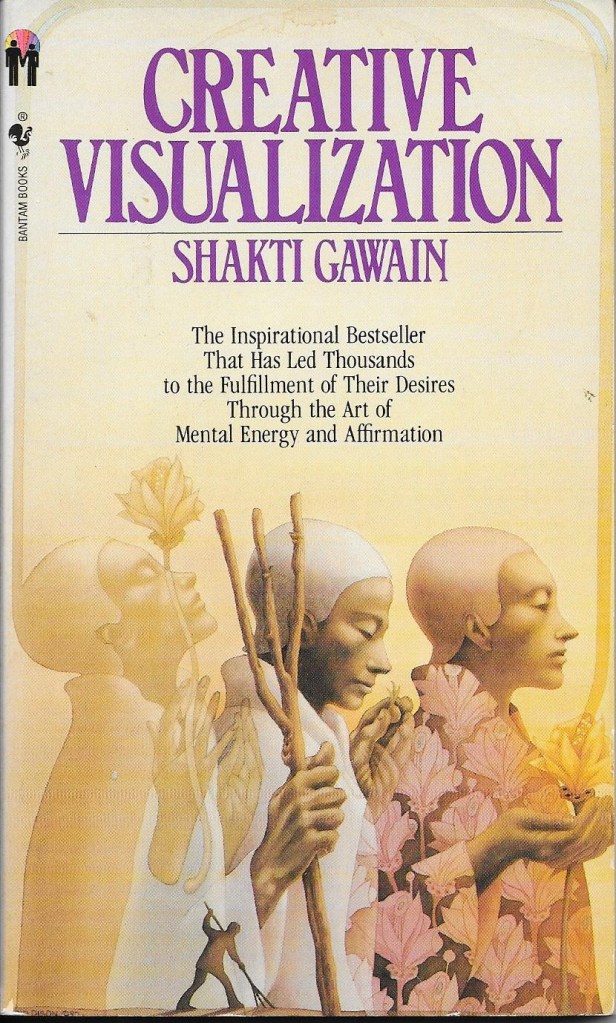
Twice a year, early July, on or close to my birthday, and on New Year’s Eve, I sit down and write a gratitude list. Being alive and kicking: always the first item. It’s a practice I got from the classic Creative Visualization by Shakti Gawain. I have the 1982 Bantam edition, with that special yellowing-pages smell.

The Dutch couple below made the paper. Most days they put a gratitude note in a glass jar. On NYE with a glass of wine and music in the background, they take items out and read them to each other. Of course, it’s often the small things: the colleague who did your work when you were ill, a kind note from someone when you needed it, a hug, waking up with a body that’s just doing its job, a walk in the forest. Ah yes, that was a special moment they say to each other.

Two more things I am grateful for are the acceptance by Broken Sleep Books of the manuscript Remembering / Disease. Here are the names of other poets and writers with a book out with BSB this year.

Matthew Stewart publishes an annual list of Best UK Poetry Blogs on his site Rogue Strands. I was chuffed that this blog is one of five ‘top notch newcomers’. You can read the full list here. Matthew lives between Extremadura, Spain and West Sussex. His collection, The Knives of Villalejo, is published with Eyewear and a recent Poetry News Book of the Year selection.

Here are two short prompts. In the current issue (27) of the online poetry magazine Allegro, editor Sally Long, the opening stanza of the poem by John Grey caught my eye. For Gratitude I’ve chosen the opening stanza of Joy Harjo’s poem Perhaps the World Ends Here.

Forgiveness

The woman with the forgiveness
is out there in the world somewhere.

Gratitude

The world begins at a kitchen table. No matter what, we must eat to live.

Adopt a Christmas tree – writing prompt

Adopteer een Kerstboom


This week I saw a feature on tv about various adoption schemes here in The Netherlands. One of those, Adopteer een Kerstboom, now has 3,000 people who have adopted a Christmas tree. There is a waiting list: it takes five years for a tree to be tall and big enough for adoption. Each tree carries a metal tag with a number, so that the adopters know it’s their tree. Many people have given their tree a name. They pay a small deposit on collection in November from one of 13 locations, and trees are returned in January when they are planted back in their slot. The fee goes up a little each year the taller the trees get.


I think it’s a great scheme! Season’s Greetings to you all. Thank you for following my blog and for your comments. A short seasonal poem:

I’ve never been to that desert island
though the removal firm sends me
a bill each month for the books I left there.
I’ve never been to Iceland for that green light,
nor Lapland for those dogs and sledges,
but I have kissed Father Christmas.

Writing Prompt 1: a six-line poem that includes, in different lines, an animal, a country, a place in nature, a concrete object (like my book).

Writing Prompt 2: What name would you give your adopted Christmas tree? Write a short ode to Julian or Emily, or ….

W G Sebald -writing prompt

This week it is 20 years since the writer W G (Max) Sebald died, aged 57.
Propolis, the publishing arm of Norwich-based The Book Hive, published Ariadne’s Thread: In Memory of W G Sebald (2014). This memoir was written by Philippa Comber. She met Sebald in 1981 in Norwich where they both lived. They hit it off and became friends.


Philippa and I met in Manchester late 2004 at a series of poetry workshops and we hit it off too: both practising psychotherapists with several shared interests. I remember Philippa telling me she was planning a visit to the German museum dedicated to Sebald to read the letters that she had sent him over the years.


Sebald died in a road-traffic accident near Norwich. According to the coroner’s report, he had died of a heart attack before colliding with a lorry. Memory, loss of memory, decay, exile are the main themes of his books with their unique blend of fact, recollection, and fiction.

Writing Prompt: My poem is in 14 lines. Yours can be shorter. Do include ‘I do know’ and ‘I don’t know’ at least twice in each stanza.

Knowing and not knowing

I know I mustn’t eat grapefruit as it interferes
with the effect of the medication. I don’t need to know
the Table of Chemical Elements, though I do know
that a few elements have recently been added and
Rutherfordium is one of them.

I know and remember the view of the Wash and the silver
ribbon of the Broads as the plane turns. I don’t know
the names of narrowboats and yachts, but I do know
that the beach huts in Wells-next-the-Sea are on stilts.

I know someone who was a good friend of W G Sebald
and that her letters to Max are archived in a museum
near Stuttgart. I know where I was when I heard on
the radio that Sebald had died: the A17 heading for Norwich,
just before a round-about.