A poem that has two fathers in it, with a photo of the actual building.
When Sunday is not a day of rest
Two narrow wooden benches form the arena. Both gladiators enter through the main left door. The one with the brown perm has an entourage: three boys (one with red hair), a girl with braces, and the eldest son with glasses, the creepy smile inherited from his father, a businessman with butter in his mouth who happens to be our uncle. As church elder, he’ll collect in the interval, holds out a long wooden pole with black velvet bag. Both gladiators buy at Stoutebeek, the town’s upmarket department store.
Our gladiator has better legs, better posture, a striking hat, which makes up for just three of us. She is a semi-professional singer. Our gladiator chose to marry the controller of church proceedings – the organist. Outside, afterwards, the light ammunition of smiles, air kisses and compliments.
Writing prompt
‘Sundays could feel very threadbare’ (Claire Keegan, Small things like these).
What is Sunday for you? A day you look forward to; a day you wish would pass quickly?
Is there another day that has special meaning to you – positive or negative?
It’s a great pleasure introducing this month’s poet Pat Edwards. We met on Facebook and then discovered we both have a book with Indigo Dreams Publishing.
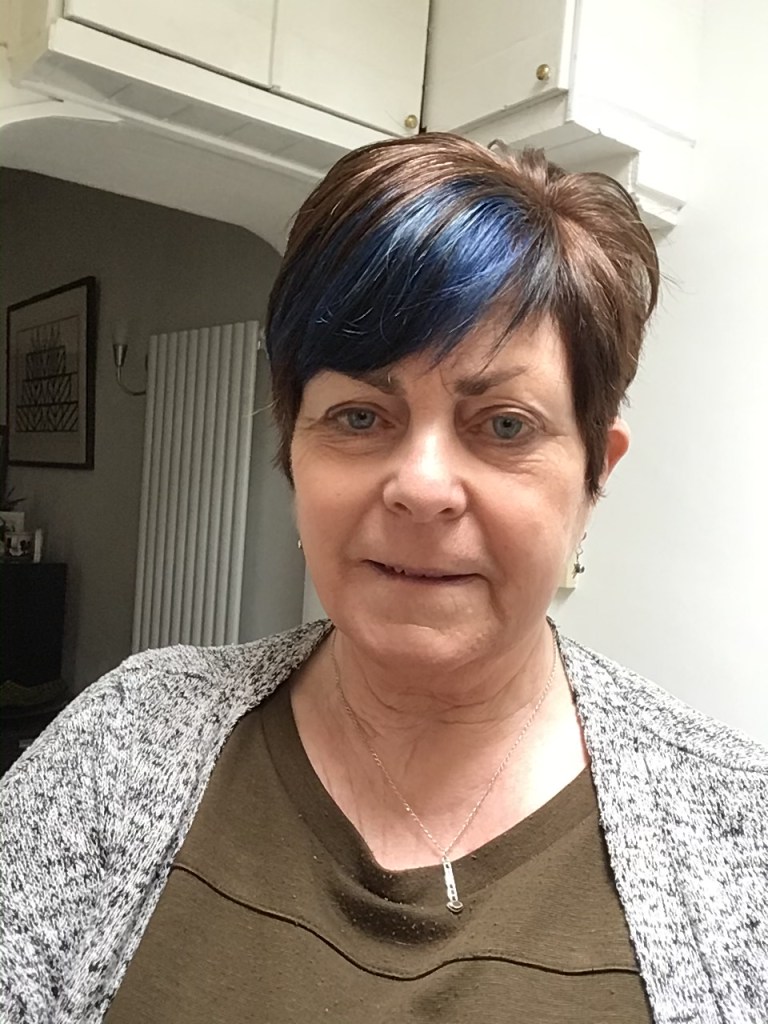
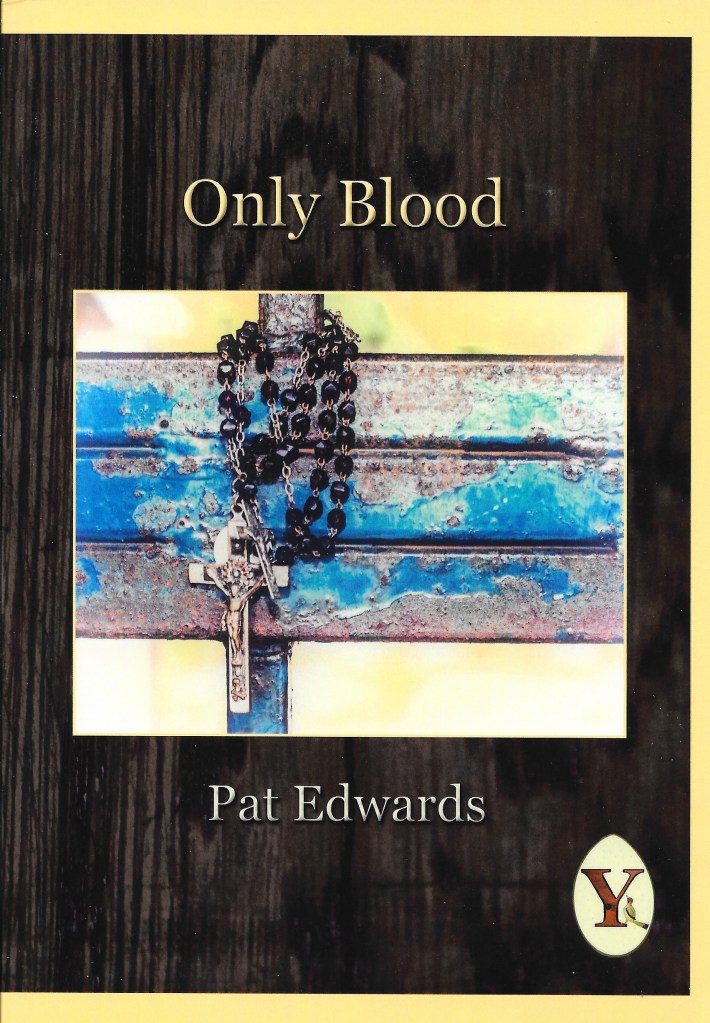
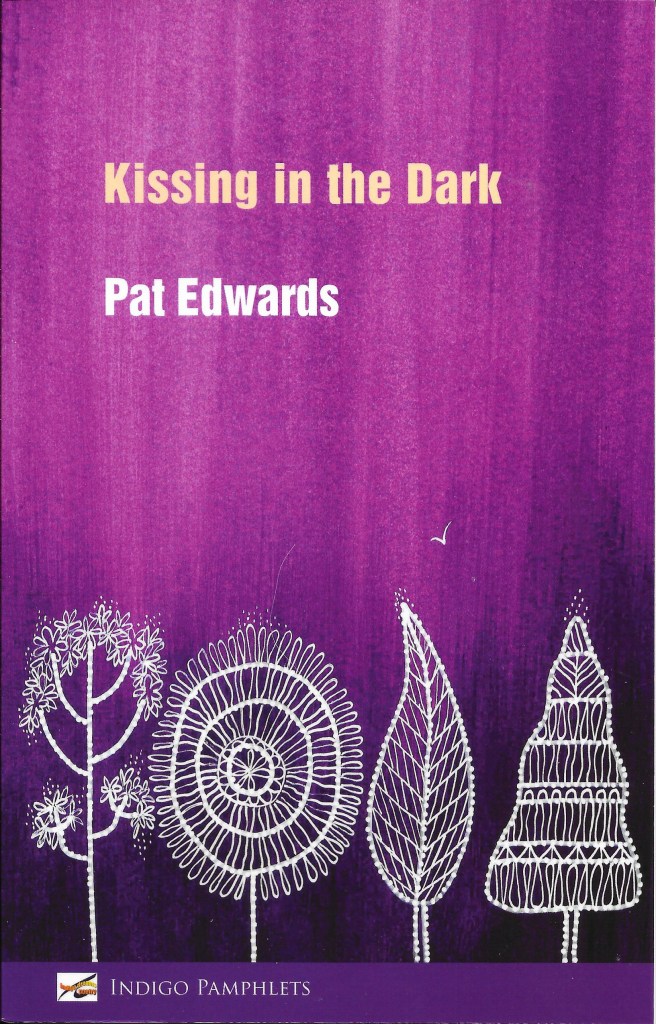
Pat is a writer, reviewer and workshop leader from mid Wales. She also offers a poetry feedback service on her site Gold Dust. Her work has appeared in Magma, Prole, Atrium,IS&T and many others. Pat hosts Verbatim open mic nights during more ‘normal’ times and curates Welshpool Poetry Festival. She has two pamphlets: Only Blood (Yaffle, 2019); Kissing in the Dark (Indigo Dreams Publishing, 2020).
Today is Mother’s Day in many countries. Pat’s dedication for Only Blood reads ‘For Mum and Dad if only we could all try again.’ Here are three poems from Only Blood, followed by Journey, from Kissing in the Dark, in Pat’s honest and compassionate voice.
The year Mum died
She is cutting tiny pieces of foam rubber to comfort-cushion her feet in pinch-painful shoes.
There’s that look in her eyes, the one I don’t yet understand, that gives away the cell-division in her breast.
She has a box of keepsakes I’m allowed to sift through: the silver clasp for keeping sixpences together; the golden compact that clicks open to reveal a mirror; the trace of bronze powder that smells like ladies.
Here in 1963 amongst the fullness of her skirt, I am barely five and only know I love her.
Gems
I want to find my mother’s jewellery, to lift the lid on a tin box of paste and pearls;
to find drop earrings that glint, necklaces that lie on collar bones, a charm or two for luck.
I want her wedding band, brooches that once fastened scarves, all the souvenirs and sentiment.
But I bet the first went to pay the gas, the second to buy the weekly shop, the third towards a gambling debt.
Gee-gees
Teenage me always knew when he’d put on a bet. The channel would get changed, there would be an urgent tension, tight as a fist.
We’d sit saying not a word, for fear speaking would fracture us. Then, in the closing furlongs, I’d know for sure.
Dad would bounce on the edge of his seat, building from a hushed Come on my beauty! to blatant demand of it.
We would both urge the horse across the finishing line, jockey standing in his stirrups, cracking the whip.
Then the relief. Let’s get your hair done. I can buy you a new coat. As if I was my mother.
Journey
I draw a blue-black line under my eyes, trace it across the tattoo on my left arm. I watch it slide down the veins of my leg, to settle in a grey graffiti pool by my feet. That’s quite some journey I say out loud, so the man on the train looks up from his screen and glares at me like a priest. My thin mouth flashes a penance smile back at him and he absolves me I think. That’s quite some journey I say silently so the man in my dream looks up from his book and smiles at me like a friend. My full mouth offers him a lover’s kiss which surely changes something I think. I draw a blue-black line under everything.
This month I am featuring poems by Martin Zarrop. We met some years ago through the Poetry School workshops and are also members of one of the Poetry Society’s Stanzas. I start by congratulating Martin: the 2021 Cinnamon Press Pamphlet competition got 450 submissions. The results came out a few days ago – Martin’s manuscript was in the top five!
Martin is a retired mathematician who wanted certainty but found life more interesting and fulfilling by not getting it. He started writing poetry in 2006 and has been published in various magazines and anthologies. He completed a MA in Creative Writing at Manchester University in 2011.
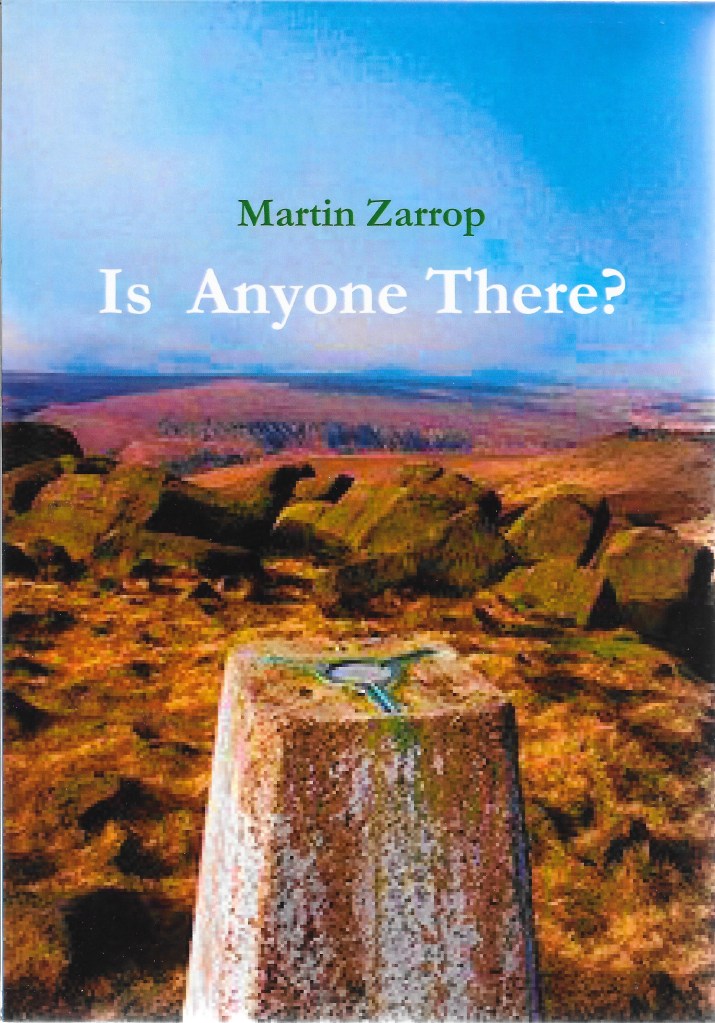
His pamphlet No Theory of Everything (2015) was one of the winners of the 2014 Cinnamon Press pamphlet competition and his first full collection Moving Pictures was published by Cinnamon in 2016. His pamphlet Making Waves on the life and science of Albert Einstein was published by V. Press in 2019. His second collection Is AnyoneThere? was published by High Window Press in March 2020.
The five poems are all from Is Anyone there? Where Martin’s poems refer to science, they do so in an accessible way, often poignant, often with humour. Like Martin, I first came to Manchester in the early 1980s – a place where now around 200 world languages are spoken. I hope you enjoy this selection.
Sci Fi
The aliens are coming. I can see them flicker in the flames as I stare into the coal fire and my mother asks me if I’m happy. Has she been taken over by Martians? I must take care not to fall asleep.
And here I am covered in mud. The invisible predator can’t see me as I try to leave the exam room. Failure isn’t an option but the exit signs are hidden under ectoplasmic goo. The ice cream man ignores my screams.
It is bursting out of my chest cavity, this other me I don’t want to know. Why is my name missing from the credits? Perhaps I didn’t wait long enough for the Z’s. Out in the foyer, zombies are waiting for the next show.
First Impressions Manchester 1980
People talk to you here but not in English and the rain is cold on the grim streets that run for their lives past empty Victoriana, lost empires.
At night, the city strips to its bones, lies unwashed in the glow of fag ends, crushed and dying among claggy debris, northern mouths.
published by The High Window
Missing
She must be in here somewhere. He turns another page and stares at shapes, the outline of a face and almost smiles. The hair’s not right, he says.
Under his thumb, images move, some not even close to human. This one looks like a centaur, this a lion. He knows how much he wants her but he struggles to join the dots.
Across the table, the astronomer, sympathetic despite the late hour, is accustomed to darker matters. Try this one, he grunts, and opens another star catalogue.
Hands
UK’s first double hand transplant awoke from a 12-hour operation with two new sets of fingers (Guardian 23.07.16)
It’s not like wearing leather gloves. This is for real, the weld of tissue, bone to severed stumps; white flesh imbibes the ruddiness of life, then shudders at an alien command –
a finger twitches. It displays no loyalty to donor meat, no tear or thought, no dumb relief not to be ash, no memory of goodbye waves, past loves held close.
The patient chews his nails, flexes each knuckle as if born to it, admires blotches, childhood scars from scraps he never fought, holds out his hands.
To My Nineties
You’d better get your skates on or at least your boots and get out there, old dribbler, before it’s too late.
I may not meet you in the hills struggling through Kinder peat. Thirteen miles, fifteen? No problem!
Or so I thought as hair thinned and Christmas followed Easter as if in a time machine that ate old friends for breakfast.
You stand patient near the finish line as I pull myself up for the final sprint. Nothing lasts forever, not hips, not brain cells. I need a project.
On Friday I had my second vaccination (Pfizer). I have felt ok, a bit tired and feverish. By way of a treat, a good childhood memory.
The “selling fur coats” took place in Amsterdam, in Maison de Bonneterie: a small chain of high-end fashion stores. The building in Amsterdam was designed by a well-known Dutch architect with an interior in the style of Louis XVI (the Sun King of France), an imposing staircase and a glass roof.
It closed in 2014, after 125 years of uninterrupted service to the elegant public. The Amsterdam store is a national listed building and now used as a location for events.
Saturday mornings
We’ve been waiting in silence. It’s just the three of us. Mother’s away in a city, selling fur coats. The radio crackles, but here comes father with blue beakers, hot chocolate, curled cream on top, and the bread he has baked on his day off.
Tomorrow he’ll be on the balcony playing the organ; we’ll be below. Today he is the son of a master baker. We’ll have the bread with butter and jam, red strawberries, shiny against the golden crust.
Later today, I’m on a ‘virtual’ writing weekend. Part of the preparatory work was to write a 16-word poem about a place on the coast, but not about Whitby – which is where we will be based ‘virtually’. That brought back memories of my many visits to Southwold in Suffolk. The expensive beach huts there are legendary. The smell of beer brewing at the local Adnams Brewery is an acquired taste!
Several times we rented Shrimp Cottage, at the front. Whoever stayed in the main bedroom on the first floor, had a view of the sea from their bed. We were the women I met on holiday in China, as one of our regular reunions. I’ve also stayed there with friends from Manchester and, twice, my brother and his family in the Netherlands got the ferry to Harwich and made the short drive up the coast.
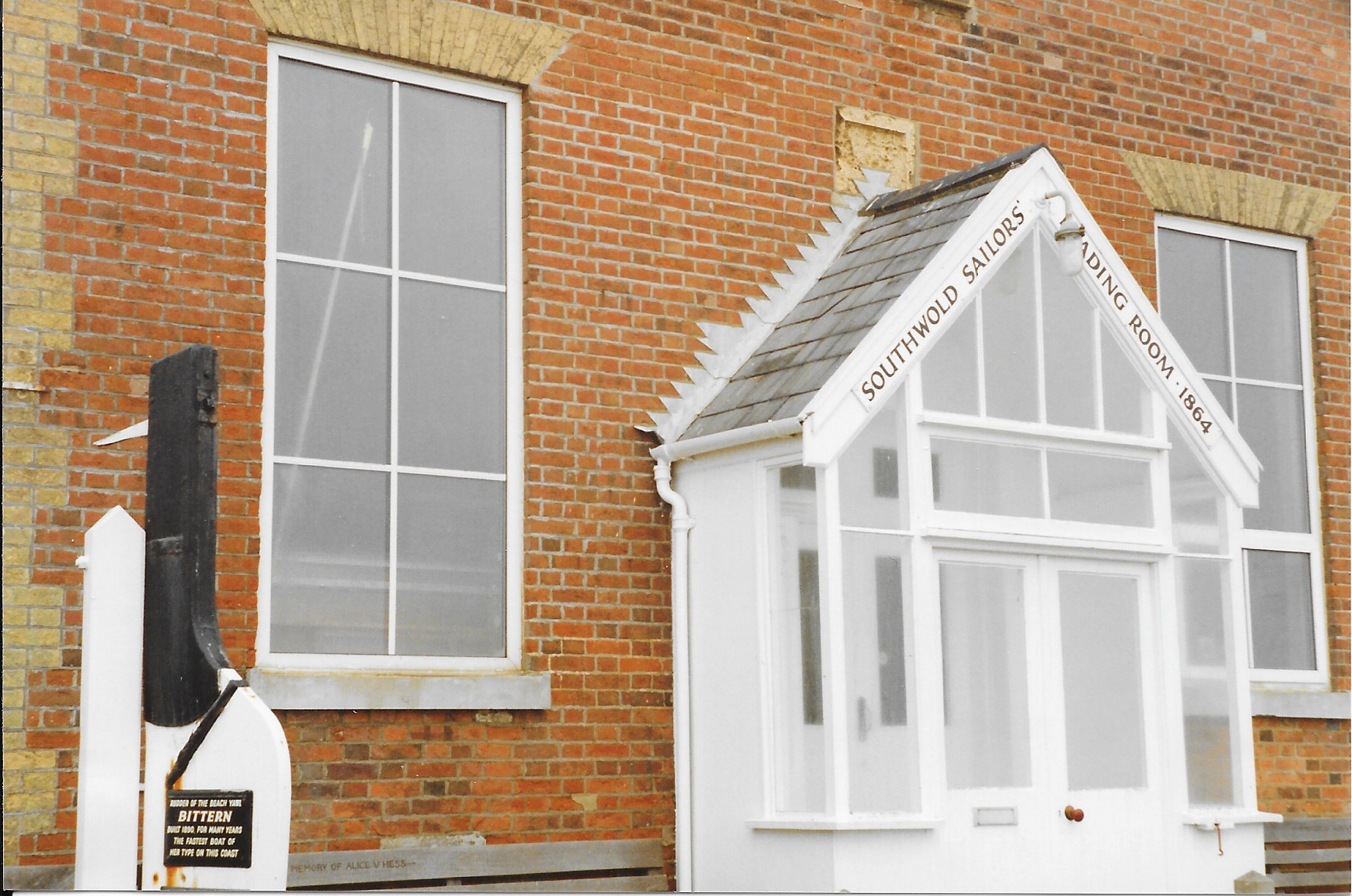
I visited Southwold in all seasons. There was just one house between Shrimp Cottage and the Sailors’ Reading Room – a Grade II listed building from 1864 and still a refuge for sailors and fishermen. Another forty footsteps took us to the Lord Nelson pub. The poem is included in my second collection Nothing serious, nothing dangerous, published by Indigo Dreams Publishing Ltd in November 2019.
Nautical miles
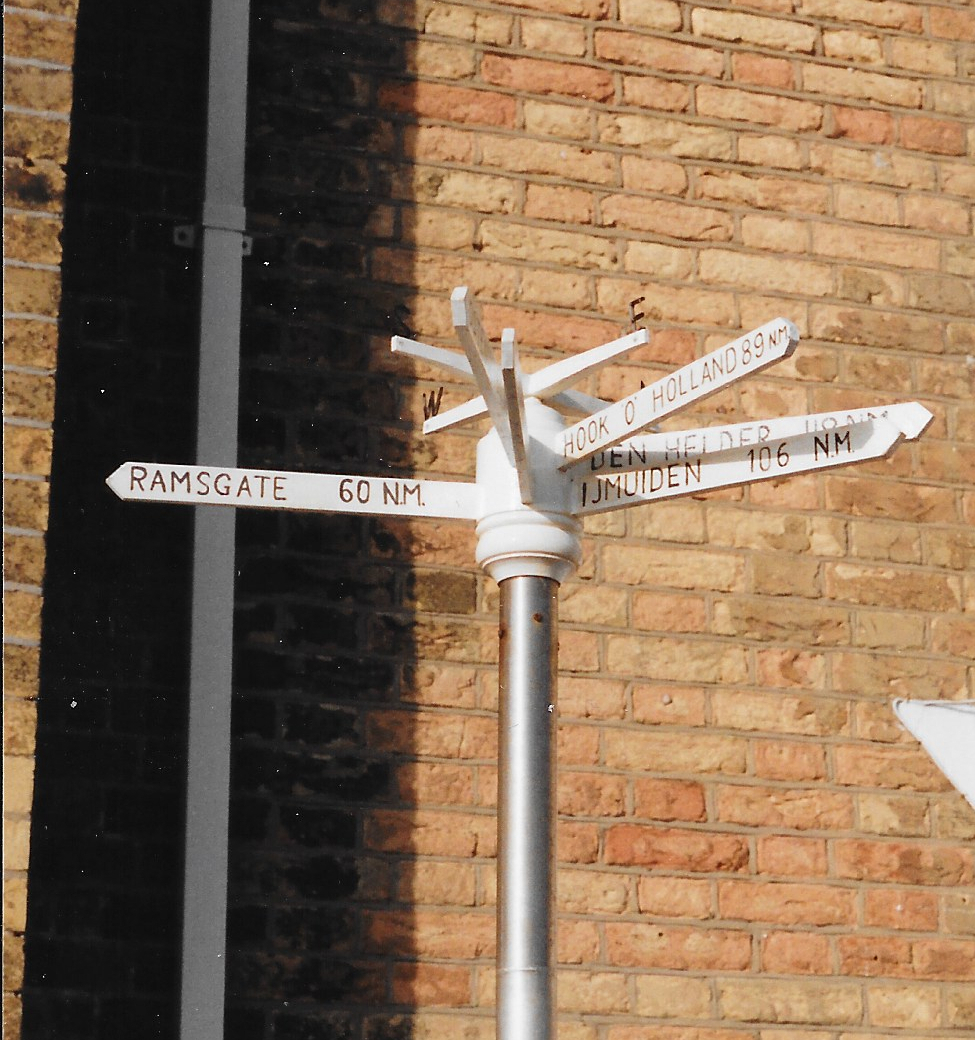
The sign outside the Sailors’ Reading Room is
a series of thin wooden planks, painted white: Den Helder, IJmuiden, Hoek van Holland.
Across the horizon, they are less than a hundred
nautical miles from Southwold in Suffolk
where the narrow beach of pebbles –
grey, brown, black mostly –
is held together
by couplets of groynes, slimy green.
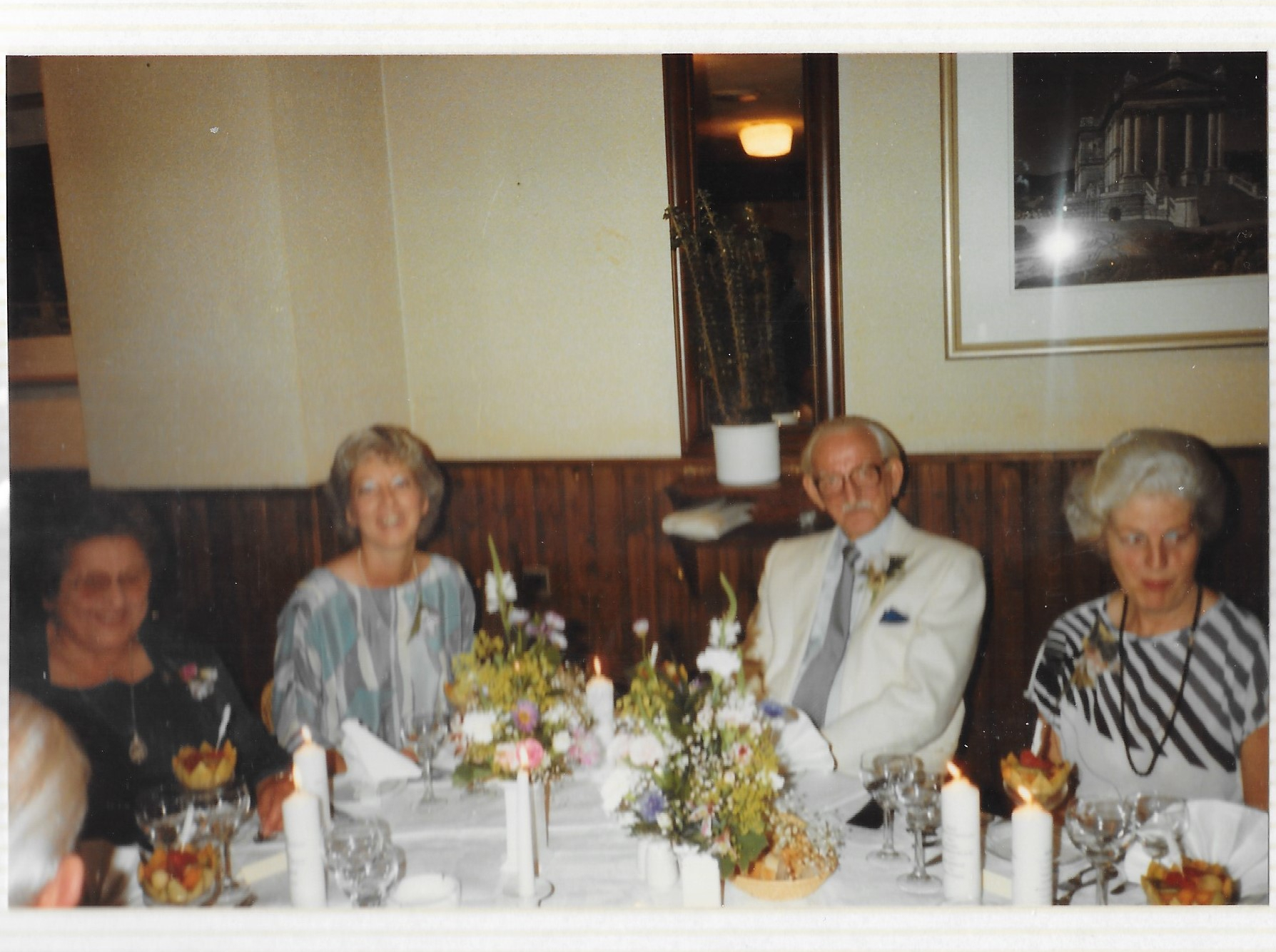
The picture shows me and my parents at a dinner to celebrate their 40th wedding anniversary in 1984. At Christmas 1988 I became the scapegoat for the difficult circumstances around my sister leaving her husband. My father, my brother and that husband were all called Theo. My sister was living with someone else by then.
So, one Theo told me off for keeping in touch with that Theo and the third Theo collected me from my parents’ flat and took me to the airport. My father and I became estranged. Late September 1990 my father was taken to hospital after a suspected heart attack. He was doing okay, my brother told me, no need to rush and book a flight. Two days later my father died in hospital, instantly, after a large heart attack.
Almuerzo con mi padre
My father’s eyes behind the spectacles sparkle.
There’s wisdom in his moustache,
and dreams of fino sherry, chilled in a thin glass.
There would be time to wait and wander,
criss-cross a square, look at people,
the statue of a famous general on his horse.
The dead will be around us on the hills that hold the city.
My father claps his hands, decides where we will eat.
He’s learned his Spanish from reel-to-reel Linguaphone.
I’m online with Duolingo: Vino tinto, pan, conejo.
My father would have found it hard to choose
between the crema catalana and helada.
His moustache would have selected ice cream.





 Acacia Publications