Tag Archives: Manchester

Forgetting My Father

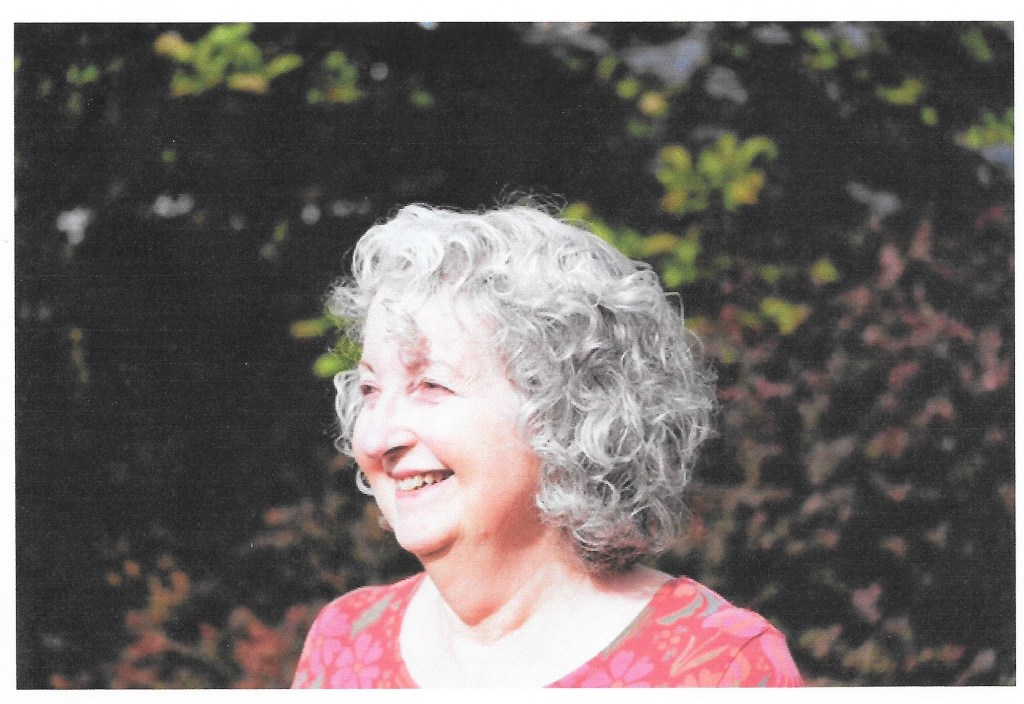
Photo credit: Naomi Woddis

It’s a great pleasure to introduce our December guest poet Jill Abram. Jill and I met several years ago on a writing workshop. I have chosen four poems of Jill’s pamphlet Forgetting My Father. The beautiful cover was designed by Aaron Kent and was inspired by rhododendrons in the last of the poems. You’ll find Jill’s biography and links after her poems.

This is the last post of 2023: Season’s Greetings to you; thank you for your support.

How To Belong

At Jewish youth club we all wore
Rock Against Racism badges
and danced to Glad To Be Gay
girls in one ring, boys in another.

They ate ham sandwiches when
their parents weren’t looking yet
scorned me for Smokey Bacon crisps
and going to school on Yom Kippur.

The Evangelicals lured us into their
church hall with ping pong then tried
to keep us with singing and prayers
and Jesus. They wanted all of us.

Words Are Not All We Have

Words are all we have. – Samuel Beckett

Don’t get into debt with anyone but me!
Dad’s sole instruction when he left me
at university. When we did the reckoning
he took the hit on my car’s depreciation.
And because I’d sold it, he drove 300 miles
in his to bring me and all I owned home.

We argued over SI units once. I fetched all
my A-level text books, showed him proof
after proof. He wasn’t having it. He’d grown up
with imperial; I knew metric, and that I was right.
Next day he brought a page he’d found at work,
looked at the floor as he handed it to me: I withdraw.

Now he can’t say anything because of the tube
in his throat and maybe – we’ll know when they
remove it – that blood clot. When I try to leave
his bedside, he grips my finger and won’t let go.

My Sister Is


a gold coin:
She is precious.
Her style is simple and elegant.
I’d like to exchange her
for something of equal value.

an alarm clock:
Controlled by radio from Rugby,
accurate to a fraction of a second.
If she were by my bed, she’d go wrong
and wake me at 5am.

a mid-morning beverage:
Green tea fits her philosophy,
black coffee her personality.

a steamroller:
She’d say that was more appropriate
for me, being heavier than her.
I’d say she has a greater power to crush.

a bear:
Will she be a ferocious, mama grizzly
or cuddly teddy? We never know
until she gets here.

a window:
Round, square or arched?
Hmm, certainly arch

a hand thrown pot:
Finest china drawn out thin, glazed
in lustrous copper and cobalt. In the kiln,
a bubble formed on her rim.

a coffin:
Made to measure, lined with silk,
a velvet cushion, and no shortage
of people to carry it.

Slow Orphaning

Images slide across my lock screen at random:
hot pink rhododendrons at Kew last May,
glasses of rum and ginger on a hotel balcony.
Here’s Mum, pensive and beautiful as she
gazes at the skyline from a Thames boat
when she came to see me. The last time
I tried to visit her, she said she was busy.

Dad teeing up on the ninth at Dunham
in an orange cagoule. Rain never held him back.
A heart attack slowed him. A bypass stopped him
at a stroke. His body survived fifteen years
while his mind died and I grieved for
so long. So long I was surprised
there were still tears for his funeral.

Biography
Poet, producer and presenter, Jill Abram is autistic, has Jewish heritage and lives with fibromyalgia. She grew up in Manchester, travelled the world and now lives in Brixton. She has performed her poems, which have been widely published, across London and beyond, including Ledbury Poetry Festival, StAnza, Paris, USA and online. She was Director of the influential collective Malika’s Poetry Kitchen for twelve years. Jill’s debut pamphlet, Forgetting My Father, was published by Broken Sleep Books in May 2023. Jill has a newsletter. You can sign up via her website or directly via this link and here is the link to Broken Sleep Books, if you want to buy a copy of the pamphlet.

Speak Easy (Stephen Smythe)

It’s a pleasure to introduce Stephen Smythe. He has been involved with Speak Easy since it started (at the SIP Club in Stretford) and that’s where we met. The SIP Club closed during the lockdown and Speak Easy then moved online. I was able to take part from my caravan in The Netherlands, along with poets and writers from London and the US and elsewhere.


Stephen Smythe is a Manchester writer who achieved an MA in Creative Writing from Salford University, in 2018. He was shortlisted in the Bridport Prize, Flash Fiction category, in 2017, and was also longlisted for the Bath Flash Fiction Award, in 2018. He won The Bangor Literary Journal FORTY WORDS Competition, in 2022, and was placed third in the Strands International Flash Fiction Competition, in 2021, for his 1000-word story.


His book of forty x forty word stories published by Red Ceilings Press is due out later this year.


Here are two prize winners to give you a taste…

KLEPTO


Bridget took stuff from her work colleagues after they’d gone home. Pens, post-it pads, sweets, even family photos. People suspected her, but couldn’t prove anything. When the company introduced hot desking, Bridget became confused and sometimes stole from herself.

(Winner of the Bangor Literary Journal FORTY WORDS Competition, 2022)

COLD CALL


‘Wait!’ Dad yelled down the phone.
He put his specs on. ‘That’s better, I can hear you now.’
He listened intently, frowned deeply, then hung up.
‘A conservatory?’ He snorted. ‘Your mother would kill me– if she were alive.’

(Second place in the Bangor Literary Journal FORTY WORDS Competition, 2019)

Links to 1000-word stories


Love Your Neighbour


The Fourth P (weebly.com)


Al Pacino of the Welsh Valleys (weebly.com)

Granny (weebly.com)

Poetry
Sommelier 2020 – Janus Literary

The Other (Michael Conley)

The Other has been running in Manchester since January 2016. Michael Conley and Eli Regan organise the event where writers are put in pairs to read and perform each other’s work, with plenty of time beforehand to prepare. It is a fascinating idea.

During the pandemic The Other moved online and I took part in a memorable Zoom session where I was paired up with Adam Farrer. The Other is now ‘live’ again. Dates are on Facebook and Twitter. Sessions also raise funds for Manchester Central Foodbank.

It’s a pleasure introducing Michael and a sample of his writing.

Michael Conley is a poet and prose writer from Manchester. His first prose collection, “Flare and Falter” was published by Splice and longlisted for the 2019 Edge Hill Short Story Prize.  His latest work is a poetry pamphlet published by Nine Pens, called “These Are Not My Dreams…”

At The Park, A Grown Man Has Got His Head Caught In The Railings
 
Possibly somebody loves,
or at some point has loved,
this man. But it’s hard to imagine
right now. It’s hard to imagine
that for most of his life
he hasn’t been stuck 
at this ninety-degree angle,
fists flailing, jeans sagging
at the waist. He’s so angry
with the railings, 
with the soft mud under his boots
and especially with the teenagers
who are laughing at him
from the picnic benches.
 
You could empty a whole tub
of vegetable oil onto his neck
and tug him out by his belt loops
but he wouldn’t thank you for it.
And of course you can’t ask him
what he was trying to do
in the first place.
He doesn’t know 
what his pain looks like
from the outside.   

Website: https://ninepens.co.uk/2022-poets/michael-conley

Meeting Paula Rego – writing prompt

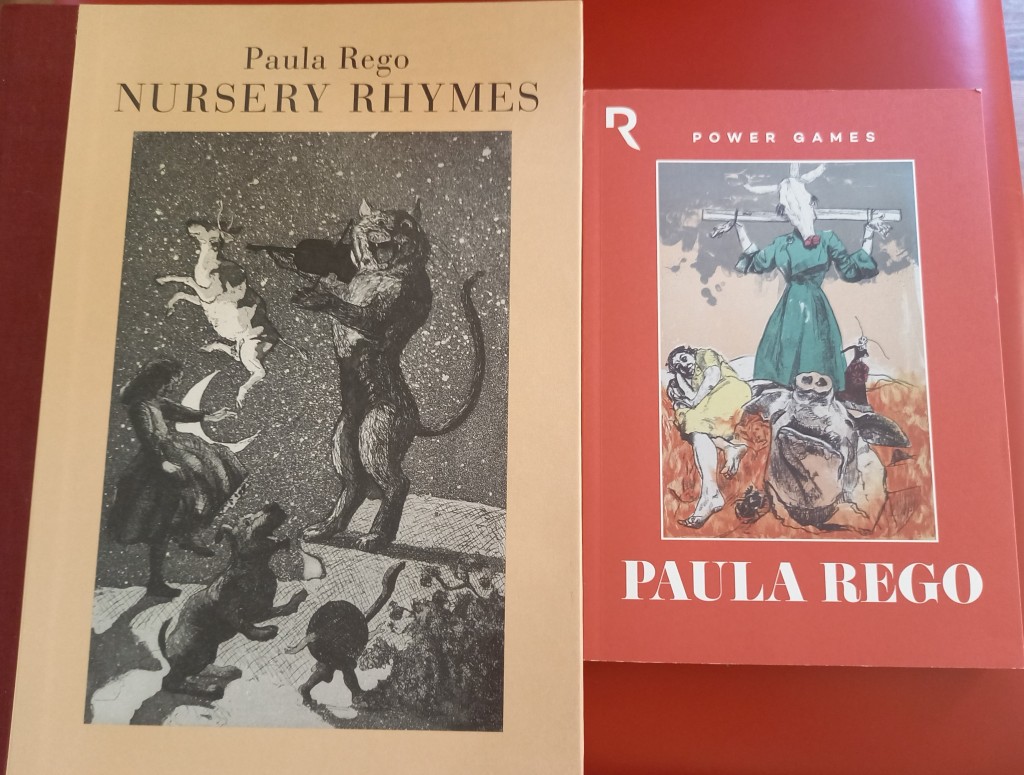
I was sad to learn of the recent death of the artist Paula Rego. Last century I saw her work at the Whitworth Museum in Manchester, UK. That’s when I bought Nursery Rhymes. In March this year I went to the first major retrospective exhibition of her work in The Netherlands – at the Kunstmuseum here in The Hague. The museum shop had copies of Power Games.


I admire her as a person and an artist. As she told it ‘art was a way to work through fear and trauma, to soothe and comfort, as well as to erase, attack, scratch out and destroy.’

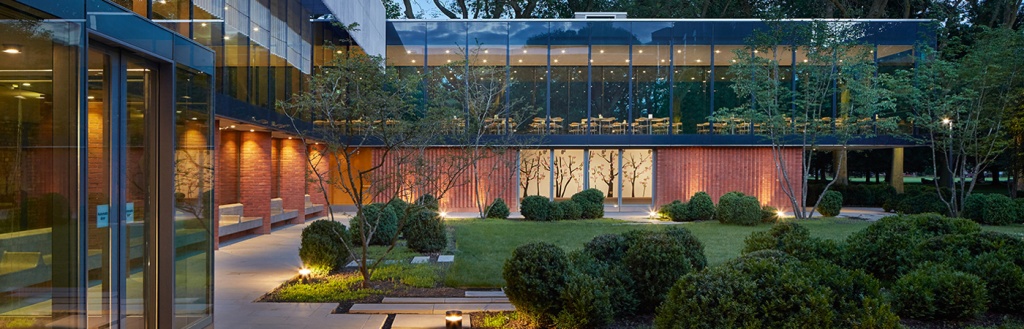
Whitworth Museum, extension


After a major refurbishment the Whitworth reopened in 2015. I would have liked very much to meet Paula Rego and talk with her about life and art. This imaginary meeting is set in the new café. The poem was published in my pamphlet A Stolen Hour (Grey Hen Press, 2020).

Meeting Paula Rego at the Whitworth, Manchester

Shading her eyes with a small black fan
she looks distressed and even out of place.
Ash trees cast a greenish shadow on her face.
To me she seems older now, frailer than
in the short winter days of that other year when
the quiet ghost of a drowned baby played
with black hen, spiders, women who prayed
for open roads, escape, a private den.

There was a boating lake once in the park.
We wait for panini, service is slow.
Café in the trees, I say, canopy.
Her earrings sparkle, her eyes are still dark.
It’s from the Greek; “konops” means mosquito.
Paula’s face lights up; her imagination set free.

Tree frog – haiku

Credit: David Dixon

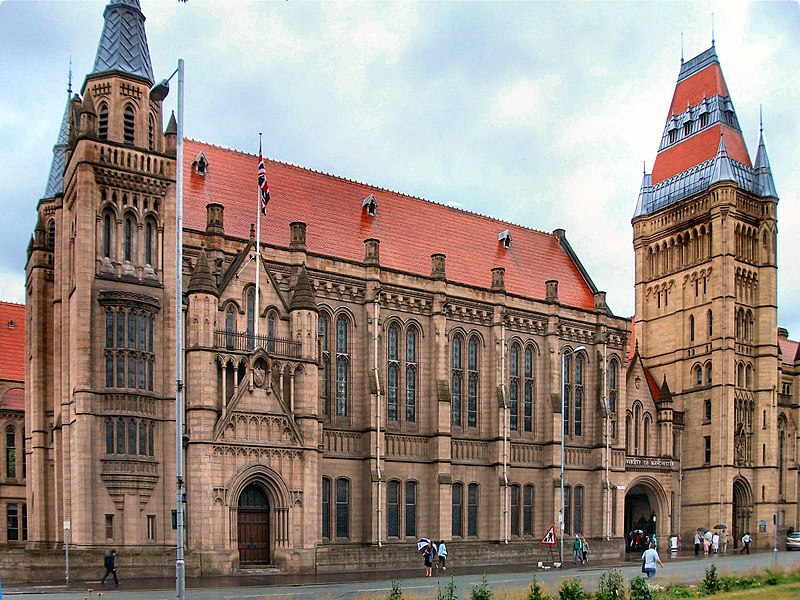
Manchester Museum, part of the Victoria University of Manchester is closed for a 15 million redevelopment. It will open February 2023. Part of the Museum is the Vivarium, home to some of the most critically endangered neotropical species. Some years ago, a good friend became a sponsor and, by way of thank-you, she was invited to bring someone along for a ‘behind the scenes’ visit to the Vivarium.

Credit: Katja via Pixabay


The Department is a key player in the education about, and conservation of such beautiful creatures as the Lemur Leaf Frog, Yellow-eyed Leaf Frog, and the Splendid Leaf Frog. It was thrilling to have the small creature sit quietly in the palm of my hand.

Tree frog

Here is the coolness of its orange feet
splayed onto my hand. The slow bulge
of its breathing throat. Two unblinking eyes
the colour of black Morello cherries.

Laughter – poem

Credit: Mike Goad via Pixabay


On Tuesday evening my local Stanza poetry group held it first ‘live’ meeting since the start of the pandemic. It was a hybrid session which worked very well: some poets in the station bar of Stalybridge station, some of us at home in the UK and abroad. I was pleased that I could take part. I have also joined the Groningen Stanza here in The Netherlands which alternates live and Zoom meetings.

I saw fresh rhubarb at the supermarket yesterday which reminded me of another group I used to belong to in Manchester. My third poetry book is dedicated to Elaine, Hannah and Jackie; here is a poem written in a back garden in Chorlton-cum-Hardy, Manchester.

Laughter


The laughter swaying across the lettuce,
strong knotted rope in the old Bramley tree.
A grandmother sits quietly in a wooden chair;
she counts knitting patterns in her head.

The dappled shade is a cool alleyway
between her life and her daughter’s world.
Laughter slides away from them, low
down across the grass; it hides
between the rhubarb and redcurrant bushes,
waiting until night time for the moles
to come up and breathe into it.
Yesterday’s laughter a small pile of earth.

(published in Another life, Oversteps Books, 2016).

Revelation – poem


It is an enormous pleasure to introduce this month’s guest poet Hilary Robinson. We met many years ago on writing workshops in Manchester.

Hilary Robinson


Hilary Robinson has lived in Saddleworth for over 40 years. Publications include The Interpreter’s House, Obsessed with Pipework, Strix, The Morning Star, Riggwelter, Atrium and Poetry Birmingham and several anthologies including Please Hear What I’m Not Saying (Fly on the Wall Poetry 2018), A New Manchester Alphabet (Manchester Writing School 2015), Noble Dissent (Beautiful Dragons Press 2017), Bloody Amazing! (Yaffle/Beautiful Dragons Press 2020) and The Cotton Grass Appreciation Society. In 2018 twelve of her poems were published in the first joint DragonSpawn book, Some Mothers Do . . . alongside Dr Rachel Davies and the late Tonia Bevins. Her poem, ‘Second Childhood’ was shortlisted in the 2016 Yorkmix Poetry Competition.


Hilary has collaborated with composition students from the Royal Northern College of Music as part of the Rosamond Prize and was involved in the 2016 Leeds Lieder Festival. She is currently collaborating with composer, Joseph Shaw, on an opera to be performed at the Royal Northern College of Music.

In June 2021, Hilary’s debut pamphlet, Revelation, was published by 4Word Press. Hilary has an MA in Creative Writing from Manchester Metropolitan University. The central section of Revelation is a series of poems which explore the aftermath of betrayal in a marriage. From this section I have selected four poems. Nikolai Duffy says that these poems ‘sing with a lyrical precision that is as authentic as it is unflinching.’

Revelation

And I beheld the last seven years open up before me
and they gave up their secrets.

And I beheld my beloved’s face concealed by a fine beard
and his feet that were turned to sand.

And I beheld seven office chairs, unoccupied except
for two, on which sat my beloved and his shame.

And surrounding my beloved and his shame were all the places
they had been while I had slept on in our bed.

And all the places they had been were also all the places
he had taken me. And I wept that this was true.

And I beheld his eyes turn to streams as his remorse descended
from him. And lo — his arms reached out for mine.

And I tightened my golden belt around my waist, knelt down
by his side and said that I forgave him.

That September

Every time he went to the window
he saw them. Gangs hired to find us,
gangs armed with torches burning
even though it was early September
and still light. Gangs getting closer.

He’d let everyone down, his partners,
clients, staff, his family. Most of all
he’d let me down in ways I’d never imagined.
Now they were at the end of our drive. Now
he’d found a way to stop the fire he’d caused.

It took four of us to prize his fingers
from the Swiss Army Knife’s twin
blades. I never knew what happened
to that knife. I wiped blood from his hand,
found the doctor’s home number.

The rest is a history of ashes, scorched
earth of a marriage that somehow
bore new life after hospital, after
ECT, after many hours of therapy.
This house still stands.

Brittle

In the kingdom of glass everything is transparent, and there is no place to hide a dark heart.
Vera Nazarian, The Perpetual Calendar of Inspiration

To become glass, learn to make yourself
fluid as egg-timer sand.

Hone yourself to brittleness with just a little
give to accommodate rough winds.

Research your ancestry — try to enter
the mindset of silica.

Practise the occasional sharp look,
the cutting remark — hide in the shadows.

To become glass, give in — become transparent;
melt into the view from this bedroom.

Trying to Take my Husband to the Antica Carbonera

There is no chance I’ll find the Calle Bembo
with its kinks, its turns, its lamps
hanging above shops of antique Murano beads,
its shiny cobbles and those buskers
trotting out Vivaldi through the season.
No chance I’ll find what translates

where Cath and I ate wild mushrooms
cooked four ways and spent so much
they brought us Limoncello on the house.

Yet here we are. This is the first Venetian street
our feet touch on the way to the Al Codega.
The food is perfectly seasoned. Tonight
we’re on the roof. I have another angle on this street.

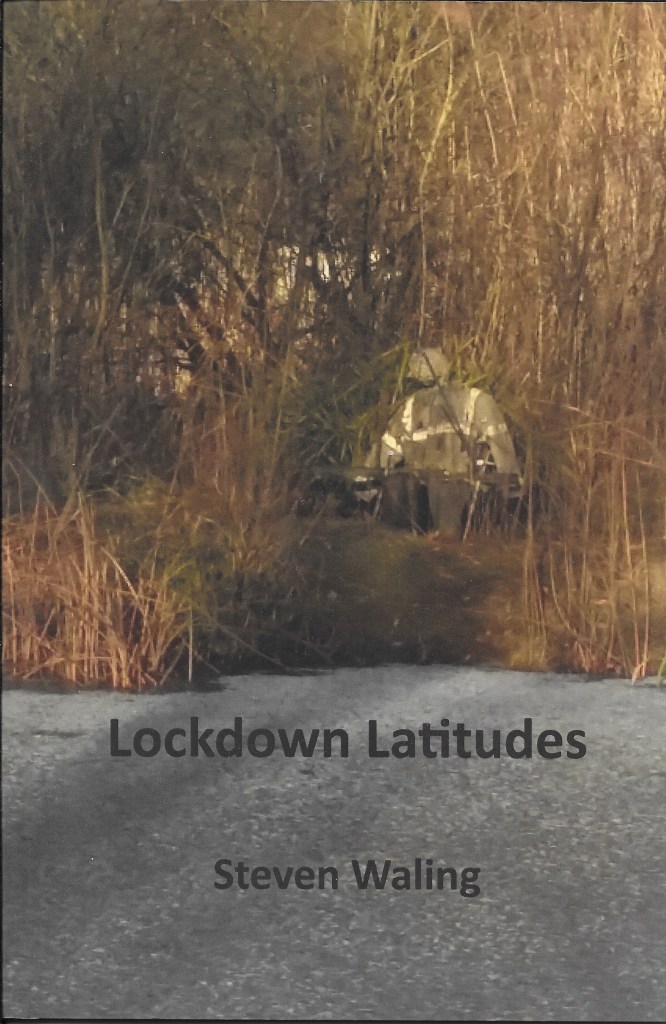
Lockdown Latitudes – poems

I am delighted to introduce this month’s guest poet Steven Waling. I first met Steven over 30 years ago after I’d moved to Manchester and joined the local poet’s group. Manchester Poets is the successor to South Manchester Poetry Group, started in 1978 by Dave Tarrant and still going strong!


His brief biography says ‘Steven Waling lives in Manchester and is apparently a stalwart of the Manchester poetry scene. His latest books are Disparate Measures 1: Spuds in History, and Lockdown Latitudes.’


From his most recent book Lockdown Latitudes I have chosen three different poems. Steven ‘writes overlooked life into vibrant presence’ says Scott Thurston. It is this quality I particularly admire and love in Steven’s writing.

Photo Credit: Steven Waling


Jesus Strolls Down Market Street

All he wants is new underwear and a coffee in Starbucks, time to himself to phone his dad and see he’s looking after himself during the lockdown. He sees they’re back again on the corner of Piccadilly Gardens and Market Street, shouting his name like a weapon at random strangers. He sneaks past, hand in front of his face. He’d like to shout in their faces, ask them what the hell they thought they were doing. Not that they’d recognise who he was, and anyway, these days he just gets embarrassed, avoiding the hassle of conflict that won’t get anywhere. Everyone ignores these men in old-fashioned suits sweating in the heat, lifting holy books like clubs to beat the sinful air away. So he goes to buy his pants, dashes into Primark before they clock him. People don’t, he thinks, realise how shy he is. He’d much prefer they found him by accident, when they needed him. Like later in the coffee shop: some old lady confused because they don’t take cash for drinks any more. Someone pays with his own card and when she looks up, they’re gone

Back to his bench to sleep with the pigeons

Snow Moon

Night stands at the tram stop
over head the moon a

soluble aspirin slowly dissolves
into the big black night goes

nowhere the spider in my right
eye is flashing again I walk

past the street they’re planting
non-aggressive trees spindly roots

spring flowers berries in autumn
that won’t disrupt the neighbourhood

kids kick the moon down the road i
wait for light rapid transit late

due to police incident keep my
distance from the moon its snow

face bending over the quick brown
cat crossing the tracks quick quick

Links to Steven’s books below:

Some Roast Poet – Manchester Poetry Magazine and Pamphlets (wordpress.com)

Steven Waling – Lockdown Latitudes (leafepresspoetry.com)

Table 64 – writing prompt

Credit: Pexels on Pixabay

This week my friend Valerie celebrated her birthday. We met 30 years ago on a residential week in Spain. To celebrate our friendship, here is a short poem in which we’re together. Bowler’s is a very large indoor and outdoor carboot sale location in Manchester.


That Generation Game is a tv game show in which teams of two family members, but from a different generation compete. The winners see a conveyor belt with goodies wobble past. No worries: if they can’t remember them all, the studio audience will shout to help …

Table 64

We carried the plastic crates and cardboard
boxes into Bowlers at bloody six o’clock.
The locusts, proper traders, picked items
from the piles we carried, threw us
pound coins and a few fivers.

The early flurry was good and then it was
like the Generation Game in reverse:
suitcases went, a pile of books, glasses,
a wok, costume jewellery, some cuddly toys.
We sat back in our folding chairs like regulars,
holding off sleep.

Writing Prompt: Did you do a car boot sale with a friend? Were you a market trader (for real or in your dreams)? Did you go to an auction of lost property? What is the object that you lost or found?

Sci Fi – guest poet

This month I am featuring poems by Martin Zarrop. We met some years ago through the Poetry School workshops and are also members of one of the Poetry Society’s Stanzas. I start by congratulating Martin: the 2021 Cinnamon Press Pamphlet competition got 450 submissions. The results came out a few days ago – Martin’s manuscript was in the top five!

Martin is a retired mathematician who wanted certainty but found life more interesting and fulfilling by not getting it. He started writing poetry in 2006 and has been published in various magazines and anthologies. He completed a MA in Creative Writing at Manchester University in 2011.

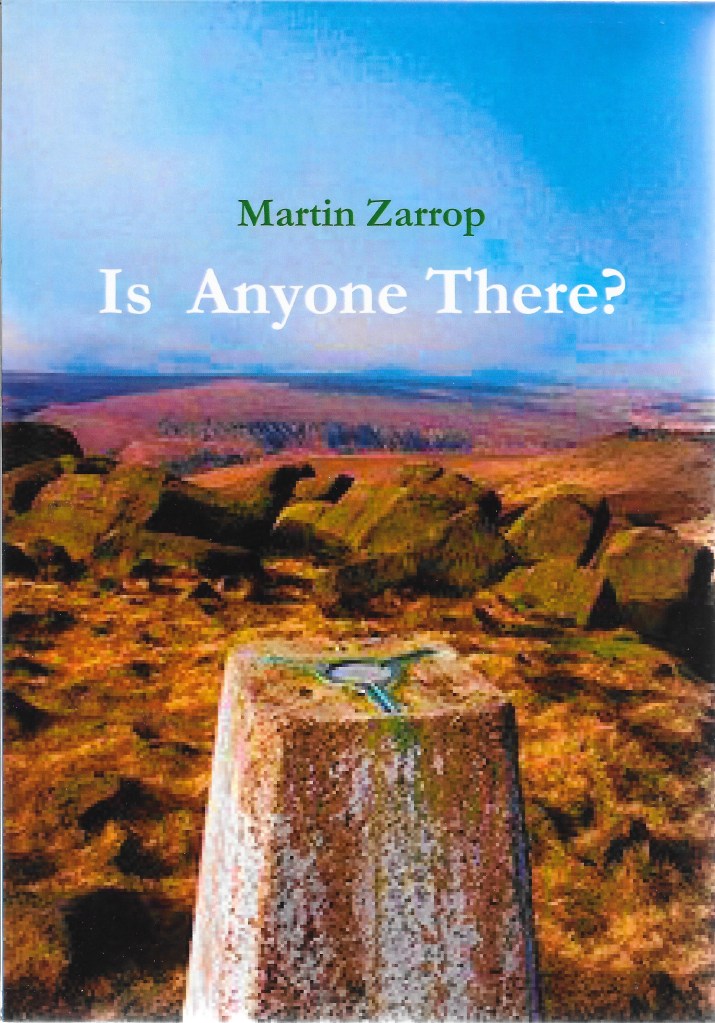
His pamphlet No Theory of Everything (2015) was one of the winners of the 2014 Cinnamon Press pamphlet competition and his first full collection Moving Pictures was published by Cinnamon in 2016. His pamphlet Making Waves on the life and science of Albert Einstein was published by V. Press in 2019. His second collection Is Anyone There? was published by High Window Press in March 2020.

The five poems are all from Is Anyone there? Where Martin’s poems refer to science, they do so in an accessible way, often poignant, often with humour. Like Martin, I first came to Manchester in the early 1980s – a place where now around 200 world languages are spoken. I hope you enjoy this selection.

Sci Fi

The aliens are coming.
I can see them flicker in the flames
as I stare into the coal fire
and my mother asks me if I’m happy.
Has she been taken over by Martians?
I must take care not to fall asleep.

And here I am covered in mud.
The invisible predator can’t see me
as I try to leave the exam room.
Failure isn’t an option but the exit signs
are hidden under ectoplasmic goo.
The ice cream man ignores my screams.

It is bursting out of my chest cavity,
this other me I don’t want to know.
Why is my name missing from the credits?
Perhaps I didn’t wait long enough for the Z’s.
Out in the foyer, zombies are waiting
for the next show.

First Impressions
Manchester 1980

People talk to you here
but not in English
and the rain is cold
on the grim streets
that run for their lives
past empty Victoriana,
lost empires.

At night, the city
strips to its bones, lies
unwashed in the glow
of fag ends, crushed
and dying among
claggy debris,
northern mouths.

published by The High Window

Missing

She must be in here somewhere.
He turns another page and stares
at shapes, the outline of a face
and almost smiles.
The hair’s not right, he says.

Under his thumb, images move,
some not even close to human.
This one looks like a centaur, this a lion.
He knows how much he wants her
but he struggles to join the dots.

Across the table, the astronomer,
sympathetic despite the late hour,
is accustomed to darker matters.
Try this one, he grunts, and opens
another star catalogue.

Hands

UK’s first double hand transplant awoke from
a 12-hour operation with two new sets of fingers

(Guardian 23.07.16)

It’s not like wearing leather gloves.
This is for real, the weld of tissue,
bone to severed stumps; white flesh
imbibes the ruddiness of life, then
shudders at an alien command –

a finger twitches. It displays no loyalty
to donor meat, no tear or thought,
no dumb relief not to be ash,
no memory of goodbye waves,
past loves held close.

The patient chews his nails,
flexes each knuckle as if born to it,
admires blotches, childhood scars
from scraps he never fought,
holds out his hands.

To My Nineties

You’d better get your skates on
or at least your boots
and get out there, old dribbler,
before it’s too late.

I may not meet you in the hills
struggling through Kinder peat.
Thirteen miles, fifteen?
No problem!

Or so I thought as hair thinned
and Christmas followed Easter
as if in a time machine
that ate old friends for breakfast.

You stand patient near the finish line
as I pull myself up for the final sprint.
Nothing lasts forever, not hips,
not brain cells. I need a project.

I’ll make you my project.
Wait for me.