Category Archives: Travel

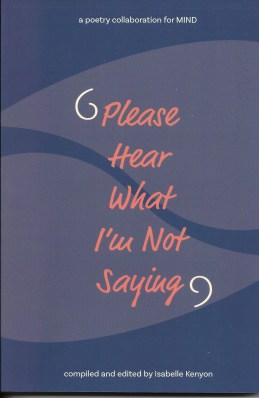
Please Hear What I’m Not Saying

cover MIND


With 200 poems, this is a substantial anthology of mental health issues. It was compiled and edited by Isabelle Kenyon of Fly on the Wall Press. Profits from the publication go to MIND, the UK mental health charity and a small charity based in Scotland. So far almost £600 has been raised.

Isabelle organised a micro-competition to celebrate the first anniversary of the anthology’s publication. I just received my copy of the anthology, as she declared Voice the winner.

 
Voice

I’m scared of the voice that tells me to let go of the wheel.
It’s an old man’s, harsh, gritty, cold, pushing me.
That time: Monday, sunny, A487, heading for Portmadog …

throat, sweaty fingers, heat


Black figures carry bags home. Whatever home might mean.
Silence, only sirens calling. The dog-end of the year.


Falling is kind of doing something.
You can fall sideways, head first, backwards.
I have worked all these years to stay upright.
Running like a rabbit on a metal track.

American Dream – guest poet

Jim Caruth
This month’s poet is James (Jim)  Caruth. We met in 2012 on the Poetry Business Writing School. He has had several pamphlets and a collection published: A Stone’s Throw (Staple Press, 2007), Marking the Lambs (Smith/Doorstop, 2012), The Death of Narrative (Smith/Doorstop, 2014) and Narrow Water (Poetry Salzburg, 2017).

Jim says: I was born in Belfast, have lived in South Africa and, for the last thirty years, in South Yorkshire. Like all itinerants, that has left me with a need to question what I mean by home.

Many of James’ poems are a search for a definition, a means to find some way to articulate the past (whether real or imagined) and put names and faces to the ghosts.

I admire his ability to say so much in few words with accurate and delicate detail. I’m delighted to share Jim’s work here.

 
American Dream

Each time I tell it differently.
It was Autumn, a skirr of leaves
in Washington Square, old men playing chess,
two women on a bench drinking Zinfandel
from crystal flutes while the Cuban boys danced salsa.

Summer maybe, a man stretched on his bed,
the wail of sirens from the streets
as cockroaches scratch in the walls
and the woman in the next apartment
makes love in Spanish.

And on a sidewalk in the East Village,
a man with a sign – Gulf War Vet,
one trouser-leg flapping from the knee,
till a fat cop in his stayprest blues kicks
the one good leg, fingers his polished holster
and raises a night-stick to point the way home.

Or was it late Spring when we saw them
on Charles Street, heard the young one yell –
keep your freekin hands off me
as the other raised two pale palms
and turned away as her face fell apart.

No, it was Winter, a trace of snow
on the streets when I took a photograph of you
by an office window – Divorce$300,
as you lifted your hand to your heart
and sang – God Bless America.


Traces

He preferred horses to people.
Recognised that look of madness
in their eyes. Loved to run
a calloused hand along their sheen,
feel the taut length of a sinew
with knowing fingers.

Two months before he died,
we found ourselves stranded
across a table in a pub,
empty conversation rattling
the space between us
like a spoon in a pot.

As he looked at the walls
decorated with the past,
a bridle, collar and traces,
his eyes washed clear of me.
But I swear I heard him say,
Walk on. Walk on boy.


41+David+Goad

By David Goad

A First Glimpse of Snow

Strikes and demonstrations,
burning necklaces in the townships,
the rhetoric of bull-whips in Adderley Street.
It must have been winter, eighty-five,
when the Cape had a first fall of snow
and I drove you and Alice to Franschoek.
Up through vineyards, past dams of green water,
till we reached that point where the dirt road
was washed away and we got out to watch
a flock of guinea fowl root amongst the rooikrans.
We stood, sipping the clear air in slow breaths
as she laughed at their kek-kek, kek-kek
and you lifted her in your arms, so a child
might have a first glimpse of snow.

 
What’s the Point?

My father would say
he could never see the point
in climbing a hill
though they rose like a wall
at the top of each street.

Never looked down
on the city at night,
jewels on black velvet,
never once felt peace
rise up like a breath.

He never stood on Cave Hill
to watch the ferries
slip down the Lough,
never thought that grey stretch
as a road to anywhere.

He never climbed the slopes
of Divis on a spring afternoon,
never lay amongst the heather
to watch a kestrel hover
as if it was pinned to the sky.

I am taking my father’s ashes
up Carnmoney Hill.
In the hearse’s slow climb
I hear a voice in my head:
What’s the point in this?

John and Mary meet …


2 romance

A romantic display at the 2018 Keukenhof, the Netherlands

A poem for Valentine’s Day:


John and Mary meet

John and Mary meet.
John and Mary greet.

The Film and Reels.
The Cog and Wheels.

John falls first.
Therefore, he kneels.

Mary thinks she knows
what John feels.

So, Mary falls as well,
as far as John can tell.

The sorcerer, a spell.
The Bell and Peals.

John and Mary greet.
John and Mary eat,

more sour than sweet.
Their eyes no longer meet.

Year of the Golden Pig

4

Shop Window in Siena, Italy

Wishing you a happy, healthy and prosperous Year of the Golden Pig, with a haiku sequence.

I wrote this after a visit to Little Gidding in August 2001, while on a writing week with the poet Lawrence Sail. Little Gidding is, of course, well-known as the fourth and final of T S Eliot’s Four Quartets. He wrote it after his own visit to Little Gidding.

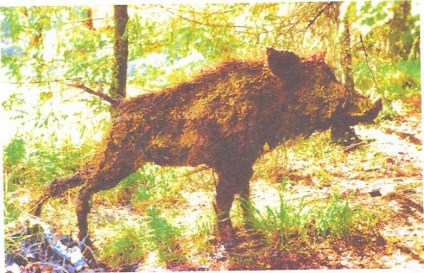
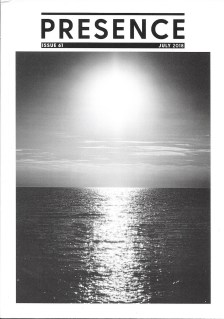
My haiku sequence was published in Presence #18, in September 2002. The illustration below of the wild boar is by Ian Turner. It’s a photograph of Wild Boar Clearing Sculpture by Sally Matthews, 1987. It was made of mud, cement and brash and situated in Grizedale Forest, Cumbria, UK. Grise dal is Norwegian for Valley of the boars.


Little Gidding

following her
across the field
a white butterfly

almost hidden by grass
three wooden crosses

the church bell
covered
in pigeon droppings

pink geranium petals
a droning plane

on the terrace
calling us old, advanced –
the toothless guide

finding the pigsties –
number one boarded up

as we leave
sunlight
on the font


Golden Boar

A Golden Shovel poem about Brexit…

40.jpg

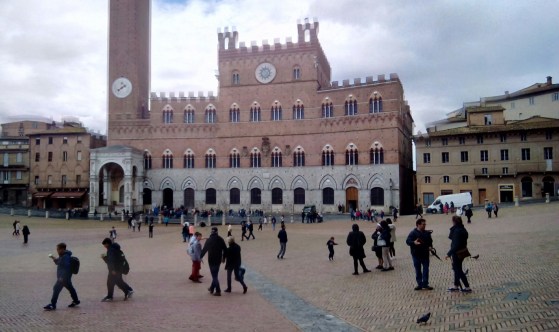
The Campo, Siena, Italy.

The Golden Shovel form was invented by Terrance Hayes. His poem Golden Shovel is a tribute to the poem We Real Cool by another US poet Gwendolyn Brooks. It is a poem about a group of young black men playing pool in the Golden Shovel. Terrance Hayes’ poem stays close to the subject of the original poem. You can find it on the Poetry Foundation site.

A Golden Shovel poem takes a line from another poem and places the words at the end of the lines of the new poem. So, Terrance Hayes’ poem starts:

When I am so small Da’s sock covers my arm, we
cruise at twilight until we find the place the real

men lean, bloodshot and translucent with cool.
The UK is inching closer and closer to the 29 March deadline for leaving Europe. I’ve had chronic “Brexit Anxiety Disorder” for over two years now, so was glad to escape for three weeks to Lanzarote – warmth, sun, walks by the sea, good books, company of family and friends.

Here is my first attempt at a Golden Shovel poem. It is inspired by a line from Nine Allegories of Power, by John Siddique: The accumulation of seconds in which empires are born, gather their height and become broken statues and friezes in museums far away.

In Blighty

So much here in Blighty has been lost, replaced or deleted: in the
grey city centre European Christmas markets confront an accumulation
of dirty duvets in doorways of offices and hotels. I hear the faint ticking of
clocks, hold memories of closed libraries, swimming pools. No seconds
are offered in foodbanks. Minutes after my friend put tinned rice in
a cardboard box in Sainsbury’s, she tripped on the cracked pavement which
has an outline in white paint. The people, many of them, dream of empires
returning. The past was always another country and pipe dreams are
made of clay. One man’s dream is another woman’s nightmare. I was born
in a land below the sea, the North Sea, a country where politicians gather
around tables, walk the corridors in The Hague to arrive, eventually, at their
destination: consensus, compromise, through polderen. I cry at the height
of hypocrisy when Britannia rules the waves, Jerusalem, and
other iconic symbols are stolen by those moneyed men who have now become
European citizens simply through buying in. The UK, my home for 45 years, is broken
but the chimneys of empty factories will outlive the stately statues
of proud admirals on horseback. They are already covered in pigeon shit and
some wear a fluorescent yellow jacket. High up in the Gallery are Victorian friezes
and dusty glass cases display the relics of civilisation, while upstairs in
the Elgin Room a silent queue shuffles, some people are crying. These museums,
(yes, every town or city has its Museum of Lost Marbles), have at the far
end the emergency exit, a green man running, running, running away.

Exploring the Orinoco – guest poet

It’s a pleasure and a privilege to introduce Alan Payne, the poet featured this month. We met during the 2012-13 Poetry Business Writing School.
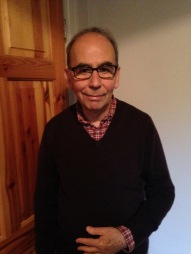
Alan Payne

Alan was born in Trinidad and lives in Sheffield. His pamphlet Exploring the Orinoco was a winner in the 2009 – 10 Poetry Business competition. He has had poems published in Smiths Knoll, the North and Scintilla, and in various anthologies including The Sheffield Anthology: Poems from the City Imagined, and Cast: The Poetry Business Book of New Contemporary Poets. He worked for many years as a teacher of young children.

His poems visit themes of loss, grief and migration. Alan writes with great economy, sometimes even sparseness. Poignancy is created by his selection of accurate and telling details. Alan always writes with empathy for the people in his poems. His poems taught me that it is fine to revisit the themes that continue to haunt us.

The poems Colombie and Exploring the Orinoco are from the 2009 pamphlet. Menu and Silence are published in The North, issue 60, August 2018.

Colombie

Sudden stars pulled us through
the Dragon’s Mouth.
Port of Spain extinguished.
Home and homeliness
already a legend.

Next day, briefly ashore
in Guadeloupe –
the patois a distorted version
of a beloved tongue,
its lilt curled in my ear.

Crossing the Atlantic –
a band’s orchestrated goodbyes
lost in the wind,
the thundery embrace
of the Northern Range
an echo in the swell,
my stuffed alligator
a talisman.

Fabled Plymouth.
And the journey north, by train,
to Apperley Bridge.
There, in that no-man’s-land,
I tasted pickled onions.
Assumed a stranger’s skin.
A worsted suit.

 
Exploring the Orinoco

With the Thames in their hearts,
and childhood fevers in common,
my father and his dead brother
explored the Orinoco.

The boat of my father’s faith
carried them upstream
to the port of Encaramada,
past the granite domes
of Punta Curiquima.

There, on a deserted island,
they camped for the night,
sitting on the scattered husks
of turtle shells,
reading in the moonlight,
and dining. A faint stink
of rotting crocodiles
corroded the air

During the night, a jaguar
added discord to the howling
of their dogs,
and cataracts answered
the rumbles overhead.

Once, a small black monkey,
like a widow in mourning,
returned the sweet, sceptical smile
of my father’s brother
as he glanced up
from his beloved Darwin.
With a pencil, he underlined
a few words; then disappeared
into the forest
of my father’s mind,
where their mother’s grief
(one boy saved, one boy lost)
left him bereft.

 
Menu

Stereotypical, I know, this woman
carrying an urn on her head, smiling,
as if it’s nothing to have walked
to the market in Tunapuna,
and this man who, good-naturedly,
holds out his cup, and this donkey,
waiting patiently by the man’s side,
still, with well-behaved ears.

My father framed it, hung it on the wall,
a reminder of S.S. Colombie,
au revoir, the French waiter
with one blue eye, one green eye,
Trinidad, Martinique, Guadeloupe,
and then the chilly Atlantic.


Silence

There was always silence in our house,
the silence before grace,
the silence following the Lord’s Prayer,
the silence of my father’s work
that seeped out from behind
his polished study door,
the silence of my mother’s brother
who, we were told, died in the war,
but as I later discovered
blew his brains out
in a car-park in Hammersmith
on receiving his call-up papers.

Discarding clothes

discarding clothes

It’s now just over a year since I closed my psychotherapy and supervision practice. I’ve gone through some wobbly spells. But, I feel more settled in this new way of being, especially after five glorious weeks in my caravan in Holland.

In my psychotherapy work, sitting closely with traumatised clients, I used to dress in sober colours: plain tops and trousers in grey, dark blue, black, dark green. No long, shiny ear rings, or clanging bangles… I wrote the poem Discarding clothes on a workshop last year, after a poem by Robert Vas Diaz.

Discarding clothes

Cheerio, black briefcase,
hand stitched in France,
with the deep smell of leather.

So long, three-piece suit,
pleated skirt, thin stripes;
a trio of ceremonial blue.

Farewell, flat shoes
you sensible goodie-goodies.
There’s pale skin underneath my watch.

I’m flip-flopping into retirement
with dangling silver ear rings,
Capri trousers, a selection of sleeveless tops.

I’ll need to fly back to Hawaii and Fiji.
Aloha! Colourful kaftans,
strapless pink and a cocktail or two.


The photo is of exhibits in the current exhibition Stage of Being at Voorlinden Museum, Wassenaar, the Netherlands: Please (neon) by Jeppe Hein from Denmark, with Dawn (polyester, hair, glass, oil) by John DeAndrea, USA.

Decluttering


Blue Horn 1

There will be many varied events across the country today on National Poetry Day.
Twenty poets have donated poems to York Explore Libraries.  These will be on display in the libraries in and around York and given out to visitors. Below is the poem I gave away.

Decluttering

I rarely used the cups and saucers:
good enough for the Red Cross.
Dark forest-green rim and each of the five

remaining dinner plates (Poole Pottery, Dorset)
chipped, thin brown cracks running
across the plain centre like a fault line.

You have turkey and trimmings in front of you.
You were wearing that 70s polo-neck jumper,
corduroy trousers, the lopsided smile.

Stacked securely in a cupboard,
suddenly taken away,
placed in a black plastic bag.


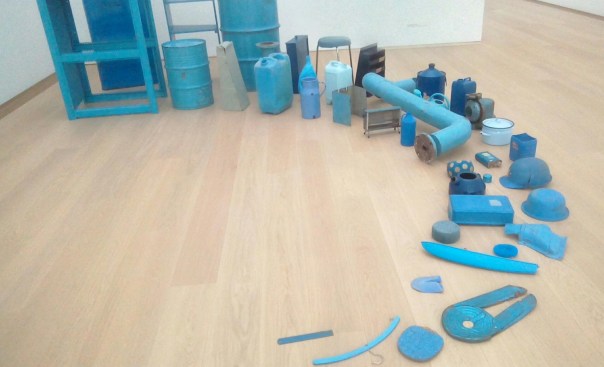
The accompanying picture is of Blue Horn by Tony Cragg. He collected 40 used objects in different shades of blue and then ordered them by size in the shape of a scythe, a reference to one of the oldest things used by men to work the land. The artist looks for ways to connect art with daily life.

I took the photo during a recent visit to Voorlinden, a new private museum in Wassenaar, the Netherlands.

More an ache than sorrow – guest poet

Ian Storr

This month I’m featuring one of my fellow haiku poets: Ian Storr.  He is a history graduate and trained social worker whose last job before he retired was with Voice for the Child in Care, managing their advocacy service in the north of England. Ian  has been writing haiku and tanka since the mid-1970s and he has had over 200 published in British and oversees journals.

His poems have won prizes in Britain, Canada and Ireland and they have been included in British and international anthologies. Ian is the production and poetry editor of Presence magazine, described by the Founder and Chairperson of The Haiku Foundation as “the most important haiku journal in English outside the United States.”

I first met Ian more than 25 years ago and I’m delighted to share a selection of his writing with you.  His tanka, in particular,  I find deeply moving and masterful examples.


Haiku

Brightening
the house in winter
orange roses from the wreath

Cleft of the brook
wood sorrel bright
on a fallen birch

wind strengthening a skylark holds his place of song

The rhythm of
this baby’s sleep upon me
. . . days of rain

Valley head
white with cotton grass
the silence before the raven

Sweeping rain
deer on the ridge
climb into cloud

Gusts from the street
the store greeter’s
unreturned hellos

Darkening marsh
the swirl of golden plovers
settles again


Tanka

Night mist . . .
back where I was born
I walk this lane again
down to the flooded pit shaft
where tinkers used to camp

 
Snow falls tonight
as I drive slowly home
against the windscreen
a drift of stars
melting into water

 
Our son of seven weeks
struggles from sleep in my arms
tight in his hand
from the night’s feed
a long strand of your hair

 
Our balcony
over the settled sea . . .
you bring on two white plates
grapes the green of jade
the seeds within like shadows

 
More an ache than sorrow
this second anniversary . . .
falling on shrouded hills
and reservoir
the wet november snow

 
I put on my father’s boots
for a path I’ve never walked . . .
through reeds and cotton grass
comes the autumn wind
sounding like the sea


Year ending
frost covers the boards
of the empty pier
above a beach
strewn with razor shells


A stretcher-bearer
wounded twice and twice
returned to the front
Grandpa back on duckboards
over the sucking mud


Cover Presence

Comares, Spain

Comares Spain. Window & Steps

Comares Spain. Window & Steps, David Goad

While tidying and sorting folders on the laptop I came across this image. It was a reminder of the enjoyable project that the late Linda Chase organised jointly with Hot Bed Press in Salford. The photographers and print makers based there put work on a website and we, poets, chose something that inspired us. There were two exhibitions with readings of the poems, both very enjoyable events. One was at Hot Bed Press, the other at the Village Hall, Manchester.

I met the artist David Goad at the Lowry just before he moved to France and bought a copy of the work – a linocut/drypoint with hand colour dating from 2006. David was quite amazed that I’d got Triptych from his art.  Posting this is a reminder for me to make more time to go to art galleries and museums – that’s where I find inspiration when I feel stale…

Triptych

His song, like a veil,
laid out on the dry, cracked earth.
A farmer, soldier or goatherd
under the halo of this midday sun.

A future anchored in the past.
A past mirrored in the future.
And what are these offerings?

A man, his wife.
His life, her life.
The smallest token.
Words left unspoken.
Their family name.
The curved greyness of shame.

Only when shaken
or beaten with a stick
does the olive tree yield
its small, black fruit.

Against distant thunder
the cling-clang of their bells:
the counterpoint of loneliness.