Category Archives: Travel

And roared for hours at the moon …

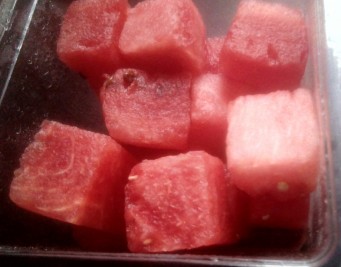
water melon


As you know, when I’m struggling to get new poems out and there are no workshops booked, I return to the books with their exercises. Exercise 7 in the book Writing Poetry by Matthew Sweeney and John Hartley Williams is called Backwards. Here are the examples from that exercise:

* ‘Eating red carnations by the dozen’
* ‘Singing, she pedalled over the moonlit bridge’
* ‘Back to his underwater home’
* ‘And roared for hours at the moon’
* ‘To stand, staring at the water’
* ‘Then parachuted, roaring, into a bonfire’

The late Matthew Sweeney contributed this exercise: “I woke up one morning with a poem fully formed in my head, but was too lazy to get out of bed and write it down. Then the poem started to evaporate, line by line, but I jumped out of bed and caught it by the toe – I had the last line, The smell and colour of petroleum, and spent the rest of the week working backwards to recover the poem, although it was undoubtedly inferior to the one I had had in my head.”

Well, I always have a notebook on my bedside table, but I rarely wake up with a poem fully formed!

I picked one of the lines and wrote a poem. It ended up being a comment about tourism, which I wasn’t expecting, and it certainly worked as a “warm up” exercise.


Wednesday

The old man shuffles up and down the beach
holding up the quartered fruit with one hand,
imploring in guttural sounds Water melon, melon,
a large plastic bag in his other hand.
He turns where the beach meets the shack
renting out parasols. Small white waves
tickle his feet, but he doesn’t smile.

Today the small strip of pebbly brown sand
is almost empty. The tourists have been placed
in shiny white coaches with air-co in the toilet.
This week’s excursion to the castle on the other
side of the bay: gardens, statues, fountains, lakes.
Shuffling through long corridors and state rooms,
the visitors huddle round their guide, see tired faces
staring back at them in monumental mirrors.

The tourists are back in their air-conditioned hotel,
five floors, five stars. There will be entertainment.
The old man has gone away. I’m told he made
a large mountain, a green mountain with red pulp.
I’m told he sat on that mountain all night
and roared for hours at the pale and distant moon.

Never Totally Lucid – guest poet

Hilary


This is my 100th blog piece, and I am delighted I can celebrate this century by introducing you to the work of Hiliary Elfick. We first met many years ago at the wonderful Almassera Vella in Relleu, Spain and have exchanged poems there several times since.

Hilary is an experienced broadcaster and the author of a novel and over a dozen poetry collections and pamphlets. She has performed her work in cathedrals, theatres, bookshops, libraries, schools and literary festivals in many countries, including Africa. Two of her poetry books have been translated into Romanian.

Hilary lives in East Anglia and also in New Zealand (where she is a bush bird guide), and is a frequent visitor to Australia where she recently launched two poetry sequences in collaboration with an international prize-winning Australian photographer, with a third appearing in early 2020. She has a lifelong love of being out in boats on the water.

Three poems are from Hilary’s THIS IS WHAT HAPPENS, published by Grey Hen Press (2019), while The Wedding Ring is from her earlier book THE OUTSHIFT PLACES, also with Grey Hen Press.


The Wedding Ring

But the morning before the wedding his father died. Two events
he’d long anticipated and with equal fervour. He would have
ignored the former, but Gilly persuaded him that even a minor
gesture to the event at their own reception might be at least seemly
and, more, something that much later he might be glad that he had
done. ‘I won’t pretend’ he said. ‘I won’t do platitudes.’

His mother came as planned. Under her wide hat her face
impossible to read, as it had been for many years. His sister
hugged him, saying nothing. Only when Gilly’s ring slid on his
finger did something jolt inside him. A ring finger. A ring. His
father ‘d always worn his. Even after everything.


Scan0020


When you know exactly where you were at the time
i.m. Professor Donald Nicholl

Six foot six he was but never towered.

Your first week. A small lecture theatre,
a wisp of Sobranie from the row in front.

He comes in, begins to speak

then nothing but his voice
and what he says and how he says it.
Sixty years ago. You’re at his feet:

whatever subject this man teaches
whatever he’ll demand
you’ll do it. You’ll be there.

Your first tutorial he asks how Christ came into Britain.
Someone tells him what happened, names, dates, places.
He turns to you and waits. You wait too. Then you tell him:

One man told another.
They put down their nets and followed.

Days later his wife has their fifth, last baby;
he names her after you.

Forty years on when he’s dying you remind him
Socrates said there’s no greater love
than between a teacher and his natural pupil.

Wonderful he whispers.

 
Four Quarters
A Grandmaster sees four moves ahead.

As child, I anticipate the trigger
for a new rage in my mother.

As mother I wake startled
by a cry or too-deep silence,
deep water, roaring roads.

As wife I place your glasses, shoes,
just where your eye might fall,
forgiving the questions I answered
today, yesterday,

tomorrow.

 
Never Totally Lucid

‘The reality of nature …obeys laws…never totally lucid to
our understanding.’ Anni Albers

When is he coming?
Five o’clock.
Is that what you wanted?
No. You gave me that yesterday.
I can’t have.
You did. Look. Here in my bag.

Did he come yesterday?
No. He’s coming today.
I’m not ready.
You have till five. You have time.
Why is he coming? Is it cold in here?
Your skin smells different.

I can’t find it.
You put it in your pocket
I only have this in my pocket.
That’s the one we’re talking about.
Who wrote this?
I did. You asked me to.
Why do I need it now?
You don’t. It’s for tomorrow.
Did I agree to this?
You did.

You make me so angry, you don’t listen to me, you just go ahead.

It was your idea.

What was my idea? When was it my idea?
Yesterday. That’s why he’s coming today.
Who?
James.
I don’t know a James.
Look. Here’s his name. Your handwriting.
Did he come?
No. He’s coming today at five.

The Vienna of Sigmund Freud


image_gallery


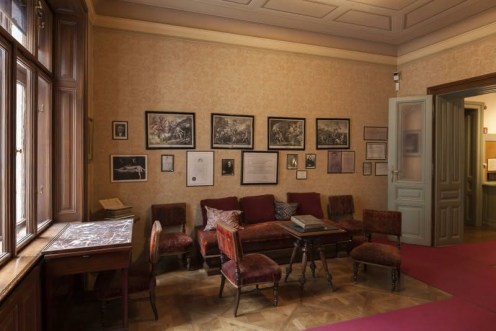
In November 1994 my friend Wendy and I flew to Vienna, with Niki Lauder’s airline. She had asked me to come for moral support, as she wanted to look at the houses where her parents had been born and lived. They were Jewish and had both left Vienna before the war, meeting in Manchester where they married and changed their name from Grünewald to Greenwood.

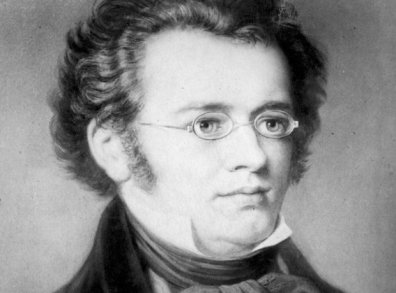
Wendy and I visited the Freud Museum together. My poem The Vienna of Sigmund Freud was awarded the second prize in the 2012 Marple International Poetry Competition. On the Saturday morning my friend went back to one of the houses and I went to the birthplace of the composer Franz Schubert. I expected crowds, but I was alone with a protective attendant.

Scan0018

Wendy being awarded first prize in the 2000 Sale Photographic Society


During his short career, less than 20 years, Schubert composed a vast amount of music: over 600 vocal works, seven symphonies, piano and chamber music. He died in 1828, aged 31. My friend Wendy died in April 2000, aged 52. Litany for All Soul’s Day is one of Schubert’s best-known songs: Alle Seelen Ruhn in Frieden! All souls rest in peace!


franz-schubert-1372938064-view-1


The Vienna of Sigmund Freud
(after Miroslav Holub)
This is where they rein in Lippizaner horses
and Schnitzler and Klimt shocked
and Hitler studied art.

And here an emporium reflects the cathedral.
Here they debate the merits of Sachertorte
and mature women wear hats with feathers.

This is where Freud analysed the disturbed
and the distressed sat in his red waiting room,
this museum with a clean flag and frosted glass.

And here the U-Bahn stations are without graffiti.
Here the shoppers whisper silently
and pain starts when sounds die.


Nussdorferstrasse 54

Red geraniums in window boxes
brighten the wooden balcony.
Scattered leaves around the statue
of a shy, naked girl, perched on the edge.

I’d planned a rain-soaked pilgrimage:
wind howling in the chimney. Imagined
creaking stairs, the shadows of birds,
old beggars in swirling fog.

On polished floorboards I glide past
a clear and orderly arrangement of
manuscripts, paintings and prints.
The shiny keyboard waits.

Now the sun lights up his portrait.
Elbow resting on books, he holds a quill.
Franz Schubert smiles past me
at this trim, suburban scene.

Cheerio and Goodbye: going bananas

1024px-Wijk_aan_zee_044

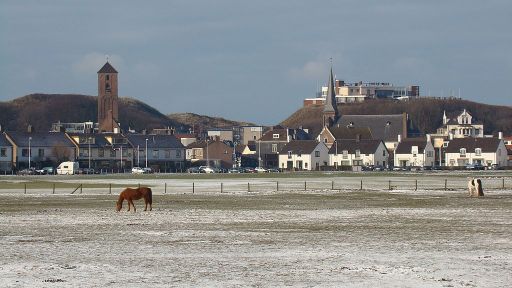
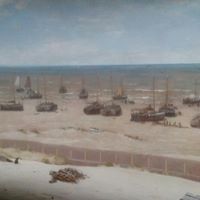
To date, over 13,000 people have booked to attend a party on the beach at Wijk aan Zee in the Netherlands on the 31st of October. It all started as a joke on Facebook in August but quickly grew. People paid Euro 19.73 (the year the UK joined the EU) and they were going to wave goodbye to us here in the UK, listening to live music and being served Belgian beer, French wine and Dutch chips and cheese.

I know Wijk an Zee very well: it’s just two miles from the small town where I was born. I spent a lot of time there as a child and adolescent. From the beach you can see the chimneys of the steelworks by the port of Ijmuiden.

Brexit has been delayed and so has the party! The organiser, Ron Toekook, admits that it has not been possible to get the finance sorted for a party this size in such a short time. Money will be refunded, and they will try again early next year.

According to a recent survey, one third of the UK population reports mental health issues as a result of Brexit.  That’s close to 22 million people and I am only one of them.

This seems a good time to share with you my Brexit poem Going bananas. One of the lies told by politicians here in the UK was that the EU wouldn’t allow bananas to be bent! The poem is in the form of an abecedarian. This is an ancient form with each line starting with a letter of the alphabet. Apparently, the first examples were in Semitic and religious Hebrew poems.

Going bananas

Aliens’ Office: the first destination on my 1969 arrival, a somewhat
bewildering encounter with Blighty’s bureaucracy in London.
Colombey-les-Deux-Églises it ain’t and I’m in Manchester now, five
decades down the time-line, feeling like a sick parrot, a dead one
even. I was an economic migrant, attracted by English eccentricity.
Four candles? Fork handles? Wit and humour have been turned into the
Groundhog Day of Brexit negotiations. Jack took a fortnight’s leave –
halcyon days in September – and through marriage I acquired an
Irish surname while my husband held two passports, even then.
Je ne regrette rien screech those who voted non in the referendum.
Kafka would have been enchanted by a hard border in the Irish sea.
Languages were my passport, small flags sewn on the uniforms;
my Seaman’s Record Book rests in a box file with birthday cards.
NHS nurses and pediatricians are returning to Europe, even poets I know.
Oui, some of the three million are voting with their feet.
P&O gave the world the word posh: port out, starboard home. The
question of lorries queuing on the M20 still has no answer, as do the
refugee tales of children held in indefinite detention or stuck in Calais.
Schadenfreude is not what they feel in Europe, they’re just bewildered.
Tourist shoppers avail themselves of the sinking pound sterling and the
ugly UKIP man with Union Jack footwear, beery bonhomie, claimed
victory then scarpered sharply right. What kind of victory is it
when I now no longer want to become a British citizen? My neighbours are
xenophobes who, Macron says, will soon need visit visa to enter France.
Yes, the yahoos are among us yanking us closer and closer to the edge,
zealots who prefer the zilch-no-deal, while I cry and pluck my zither.

White-faced capuchin – guest poet

Penny

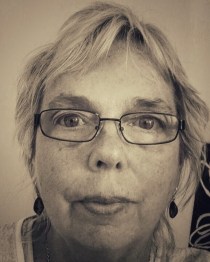
It is a pleasure to introduce this month’s poet Penny Sharman. We met many years ago on writing workshops organised and run by the late Linda Chase.

Penny is a Poet, Photographer , Artist and Therapist. She is inspired by wild open spaces and coastal paths. Penny uses metaphor to create deep emotional landscapes for personal and universal themes. She has an MA in Creative Writing from Edge Hill University and has been published in many magazines and anthologies such as The Interpreters House, Strix, Finished Creatures and Obsessed with Pipework. Penny’s pamphlet Fair Ground was published by Yaffle Press in 2019 and her first collection Swim With Me In Deep Water was published by Cerasus in 2019. Both books are available from her website: pennysharman.co.uk

I have chosen three poems from Fair Ground to show the range and the deep humanity of Penny’s poems.


White-faced capuchin

In my dream state I keep my monkey in a violin case.
Every daybreak I unclip the clasp and let the inquisitor out.
She greets me with a pale face, jumps onto my hand
with a chitter-chatter and pisses over my skin.

I feed one morsel at a time into her small mouth: fruits, nuts,
ants, tree-rat tails, squirrel tongues, or any titbit from a bird.
She stares into my eyes in a trance, hand-sniffs and licks
my fingers for comfort.

I ask her about dreams and fears, about past arboreal fields,
how she learnt to use sticks to beat away tree boas. How she
rubbed plants and ants into her fur as a medicine, how she played
with her tribe and trembled when jaguars stalked her path.

I calm her when she sobs with thoughts of humans hunting
her for food. In another life she is an automaton holding out
her hand with a beggar’s cup for the organ grinder when
vagabonds cranked away from dawn to dusk.

She tells me how her face resembles a Capuchin friar’s cowl,
how it resembles a cappuccino in the hands of barista boy.
In my dream state I keep my monkey safe in a violin case.
Every daybreak I unclip the clasp and let the inquisitor out.

Fair ground
Bella

All night incoming waves roll pebbles on the storm beach
as the girl struggles with her fear, sweat, lack of breath,
the drums in her heart and screaming mind.

All night the incoming waves pummel the oyster shells
on Llandona sands where emptiness echoes in the girl’s ears,
not one giving an answer to her plea for peace.

All night she searches for just one pearl to hold in her hand,
to calm her in the driving seat, to be the passenger,
to leave control under a gravestone at St. Dona’s Church.

All night the witches rumble spells through the glazed glass
And washed floor boards inside Gorphwysfa, a place of rest
where each window sees Red Wharf Bay.

All night she walks down the hill in dreams: it’s easy to paddle
in the shallow ocean, it’s easy to place worries in a paper boat,
to sail them to somewhere out of her white room.

 
Cutting rice

Let me hold your hand, heal the howl of blue-eyes.
Look at you, down on your knees, how you cut
the smallest white grain, your hunger in the meadows.

Let me stroke your hair, calm your thin-moon of stone,
your rock strangers that run through a corridor of minds.
Here’s a lemon balm to smooth out your wrinkles.

Let me hear your earthquakes, leopard-spotted appetites
for belonging. Bury them in my palm. Let me bring blossoms,
the white-white of petals in your earthly hours.

Leaving Czechoslovakia, 1964

Image


I was invited to read at a European Language Day, held at the Instituto Cervantes here in Manchester. I selected poems that all had a European connection, including the poem below.  It was a joy to take part in the evening event. And I very much enjoyed watching and listening to Hungarian dancers in traditional costume, and a young woman singing melancholy songs from the Balkans and Romany songs.

The next morning I did a bit of clearing through photo albums and found a black-and white photo of that red Trabant! The young woman leaning on the driver’s door had only just passed her driving test and advertised for someone to go with her.  In the event her father drove us to Munich from Amsterdam, and after that we were on our own.  Her mother was Czech, so we met a lot of family out there.  The poem was included in Songs for the Unsung anthology, published by Grey Hen. It will be included in my second collection Nothing serious, nothing dangerous which will be published shortly by Indigo Dreams Publishing.


Leaving Czechoslovakia, 1964

When we reached the border
in her small red Trabant
our cases were lighter: the pleated dresses,
jeans we’d given to aunts and nieces;
our footsteps behind us on the mountain
where we walked with her family
up towards the border with Poland,
our plimsolls wet, our hair lank from drizzle;
sweet and savoury Knedlicky we’d eaten;
songs we’d sung, drunk on vodka,
already flown, small skittering birds;
the yellow Objizdka sign in Prague diverting us
into the path of a funeral, black plumed horses.
The border guards with their guns gather
around us as we try again to open the boot,
our stiff smiles telling us not to think
of the airmail letters for America
hidden under the back seat.

The Herring Eater


Herring Eater

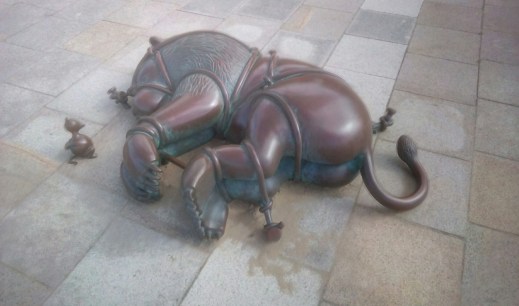
The Herring Eater is the centrepiece of a series of 23 inter-related sculptures by the American sculptor Tom Otterness. The tubes and round shapes are typical of his work: cartoon-like and humorous. However, these sculptures called Fairytales by the Sea are not from the children’s playground, but they remind us how these stories have a serious, even bleak, message. Here are Gulliver and creatures held down, tied down, or captive in cages. There is the hangman’s noose.


Fairy tale


Scheveningen was one of the major ports for the Dutch herring fleet. To this day, most Dutch people love their raw herring with chopped onion served in a white bread roll. There is always a queue at the stall next door to my local supermarket. I am about to close the caravan for the winter. The poem was written earlier in the season.

 
When in Holland

When in Holland do as the Dutch do:
eat raw herring in a white roll with
optional small bits of onion.
Or, like the giant bronze statue
The Herring Eater, already weathered
out on the promenade, head backwards,
holding the fatty fish by its tail.

Next you need to hunt out smoked eel
in the supermarkets. They’re delicious
with a sauce of crème fraiche and jenever.
Flight KL1079 to Manchester arrived on time
and I let the fish go.

A cylinder full of the rushing sea …


Mesdag 4

Panorama Mesdag is a cylindrical painting, more than 14 metres high and 120 metres in circumference. It’s a view of the sea, the dunes and Scheveningen village as it was in 1881. It’s the oldest 19th century panorama in the world in its original site.

Ever since getting my caravan in Holland, I’ve been visiting several times a year. When I am standing on the circular viewing platform in the centre, I know I’m just 14 metres away from the canvas. I know it’s all an illusion, but I can hear sea gulls, I get the salty tang, I see clouds pass by and the sun break through.

Mesdag 3

Painting the enormous canvas was a team effort: Hendrik Willem Mesdag with his wife Sientje and various able painters from the Hague. Other panoramas portray violent scenes (the battle at Waterloo, the Crucifixion of Christ). Here it’s visible silence, still as the hourglass (Dante Gabriel Rossetti), the tranquility of everyday life. A few fishermen are messing about with their nets, the boats are beached, the cavalry are walking their horses on the sand, women are chatting in a doorway, a dog lies down quietly.

Before the camping closes and I lock up my caravan, I will go and stand on that viewing platform again and say my goodbyes to Panorama Mesdag. The poem is by my friend Keith Lander.


Mesdag trieneke

The Mesdag Panorama
after a panoramic painting by Mesdag in The Hague

I’m on a school trip to The Hague
transfixed by the Mesdag Panorama,
especially the seascape stretching away
from the viewpoint on the man-made sandhill,
with fishing boats moored on the vast beach,
a troop of cavalry men in training,
and, joy of joys, a donkey ride.

When no one is looking I climb
over the railings onto the sandhill
and, without looking back, skip away
laughing and tumbling down the slope
towards the beach, the north sea breeze
in my hair, to run behind the military
and have endless rides on the donkeys.

Forty years later, a bored business man
with time to spare before an appointment,
I visit the Panorama and remember
I’ve been there before as a schoolboy.
As I stare at the seascape again I see
the boats on the beach, the military men
and a lost boy waving from the donkey ride.

A glint of wolf – guest poet

DSC00273

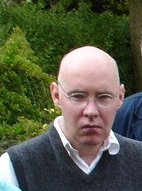
I am very pleased to introduce our September poet: Stuart Quine. We met almost 30 years ago. I hope you love his haiku as much as I do.

In 1998, after a few years of writing haiku in a three-line form, Stuart Quine started to feel that his haiku were becoming a little formulaic and so began to explore the opportunities of a one-line format without breaks or punctuation.. In addition to their aesthetic appeal, one-line haiku echo Japanese haiku which usually, of course, are written in a single, albeit vertical, line. While many one-line haiku contain an implicit caesura given by their syntax, at their best they can be broken in a number of places thereby enabling a multitude of readings. Haiku is a collaborative poetry with writers and readers working together to bring it to completion. Therefore the success of a haiku is not a matter of how well it conveys the writer’s intention to the reader but rather whether readers can enter and occupy it on their own terms.

Many of Stuart’s haiku have been included in anthologies and journals and he is a former associated editor of the journal Presence. He has also had two collections of haiku published by Alba Publishing (available from albapublishing.com ). Sour Pickle (2018) contains 100 one-line haiku and Wild Rhubarb (2019) contains another 80.

A practitioner of Soto Zen Buddhism for over thirty years he regards his haiku writing as a dao and is a member of the Red Thread Haiku Sangha..


hidden and unseen the burgeoning life in buds and bellies

through driving rain the ambulances’ dopplering sirens

round midnight moonlight playing on the piano hammers

a short night shrunk to a dog bark and the clanking of the trams

through the haze the headlights of a hearse

lassitude and languor these days without rain

snagged in machair a gull feather unzipped by the wind

distant thunder the old mouser raises an ear

-not yet, not yet” says the tumbling beck

pagan moon in the shadow of her cleavage a tiny silver cross

winter solstice darkness gathers in the unrung bells

birthcry deep in the night a freight train’s lonesome whistle

like the honed edge of a blade keen is the cold

winter moon a glint of wolf in the mongrel’s eyes

under mistletoe on her lips a tang of tamarind

new year’s day only the rain comes to my gate


Rembrandt van Rijn

Johnnes W

Rembrandt is always big business in the Netherlands, and especially this year: it is the 350th anniversary of his death. Everywhere there are items of merchandise for sale with Rembrandt’s paintings and etchings. I treated myself to a folder and bought birthday presents for friends. One of those was a birthday calendar. The Dutch have a tradition of hanging these inside the toilet, on the door!

I was raised a Protestant and for much of my childhood we lived down the road from the church where my father was the organist. Rembrandt was beginning to make a name for himself as a portrait painter when he did the portrait of Johannes Wtenbogaert. He was the founder and leader of the Remonstrant Brotherhood and preached religious tolerance. The poem was published in my debut collection Another life.

 
Portrait of Johannes Wtenbogaert, Remonstrant Preacher, aged 76

He stands there and we wonder what he thinks.
His head, resting like a deserted swan
in a nest of fine lace pleats. Did he shrink
even once from God’s black skull cap plan?

In a corner, placed to catch the light,
the book we expect is his bible. No,
those pages curling away from top right
are not yet half full, and only we know

this preacher would live till nearly ninety.
Too tired to protest, he faces Rembrandt
who paints a life-like sketch where we can see
the frayed edge of the limp cloth in his hand.