I am grateful to Josephine Corcoran for posting this poem on her And Other Poems site today. You can read the full poem and many other wonderful poems here Josephine had a brief submission window from which she selected those poems that would connect with many people, poems that would lift our spirit in these difficult times.
Blackbird
There’s a blackbird on the wooden fence. It looks left, then right, stretches up and its yellow beak plucks an orange berry from the pyracantha.
It is almost Solstice, the day in December that means the most to me: the shortest day, the gradual turn towards the light.
I will celebrate with a short meditation, then some music and mulled wine. I send you warm wishes for Solstice, Christmas and for the New Year. Thank you all for your support and your comments. On Sunday 3 January I will post again.
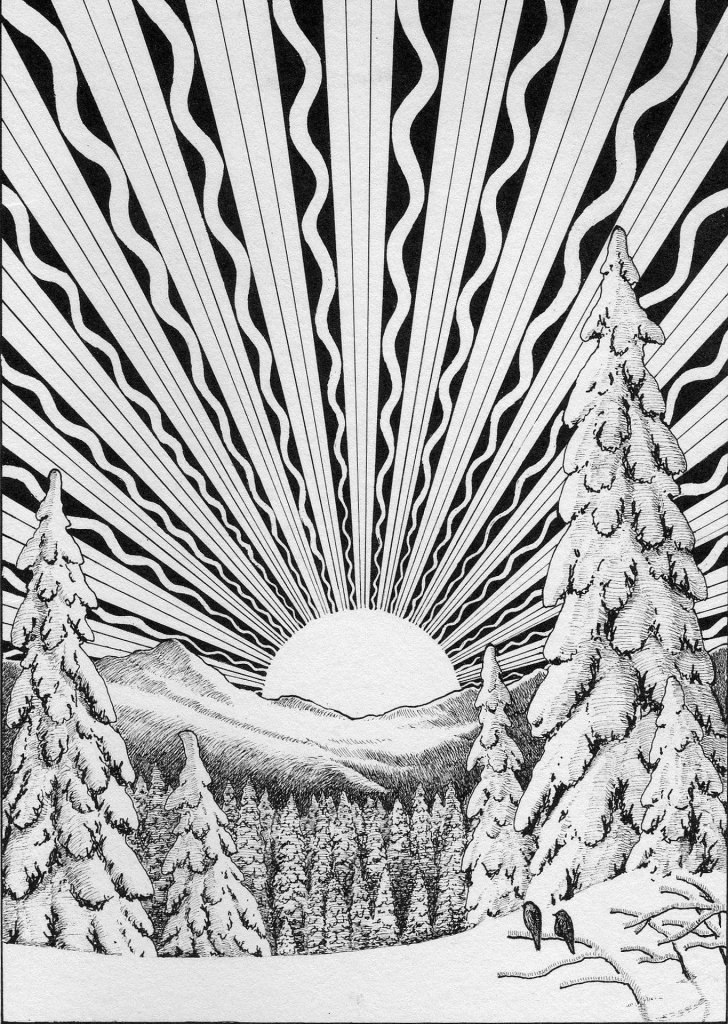
The marvellous illustration is by gdizerega on Pixabay, and the winter solstice haiku by Matthew Paul. It was first published in The Haiku Calendar 2014.
winter solstice the street-cleaner picks up a glass half full
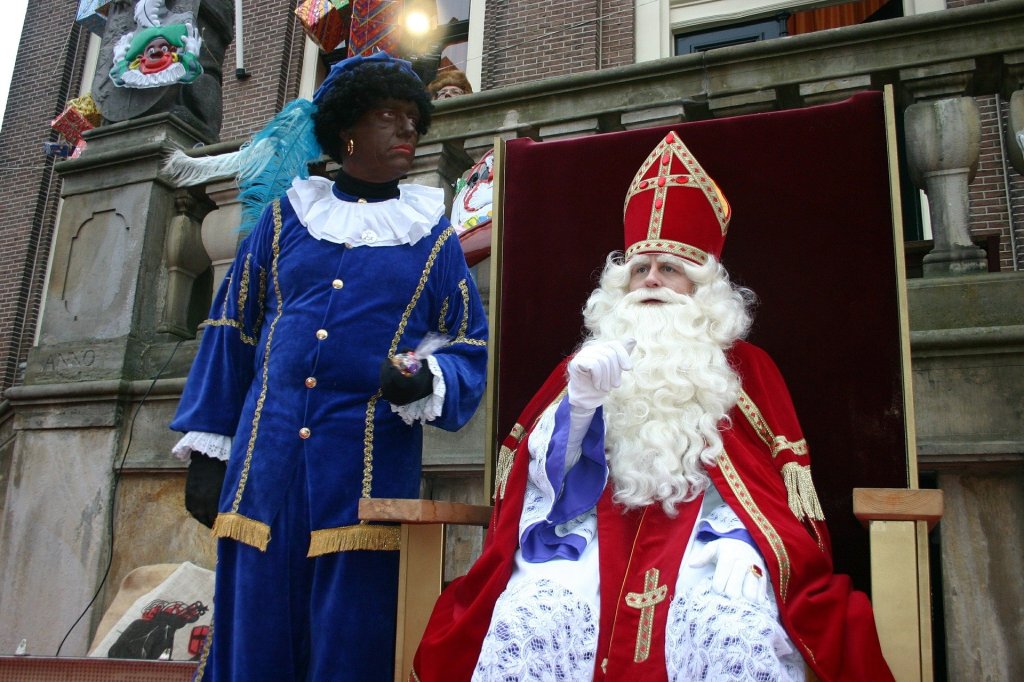
St Nicholaas arrives in the Netherlands by boat, each year at a different port. He then rides through the town on his white horse. It’s on the mid-November Saturday. In the three weeks’ run-up to St Nicholaas Eve (5 December) he will appear in other towns, always with at least one Zwarte Piet who carries a large bag with goodies and, traditionally, a birch bundle to clean a chimney. But, as children we were told that, if you were naughty, you’d get spanked – even worse, you might be put inside that bag and taken away to Spain …
Since 2010, there has been growing concern about Zwarte Piet and racism. There have been demonstrations for and against the tradition. Motorways have been blocked. Arrests made.
St Nicholaas and Zwarte Piet, olliebrands0 via Pixabay
The arrival of St Nicholaas attracts large crowds: not good in a pandemic. This year the Dutch, pragmatic as ever, have killed two birds with one stone. The holy man arrived in a non-existent village, called Zwalk. The verb Zwalken means to drift, wander about. His arrival was shown live on Dutch television on 14 November. There were no crowds, no protesters.
Here is the white horse, a display in the famous Bijenkorf store in Amsterdam.
The traditional sweets connected with St Nicholaas were already in the shops late September when I was due to travel back to Manchester. Alphabet letters, capitals in dark or milk chocolate, along with marzipan figures, gingerbread cookies (pepernoten), speculaas filled with almond paste…
St Nicholaas sweets and cookies, nietjuh via Pixabay
Once children know the truth about St Nicholaas – that he is based on a Greek bishop who lived 270 – 343 in Myra, in what is now Turkey – and they have pocket money, they can buy presents for other members of their family. Traditionally, these are hidden in a surprise – a humourous, unusual or personalised packaging, made of papier maché and painted. These may come with a “poem” that is supposed to come from the good old man himself. Poor St Nicholaas can only compose doggerel!
St Nicolaas writes to my dear brother. He wants to know: Why is it so much bother
for you to take a turn at doing the dishes? The knives and forks are not dangerous fishes!
Coffee cups, soup bowls, the dirty plate: Why do you always leave it so late?
The plastic bowl with soapy water isn’t deep. Honestly, you won’t drown, you could do it in your sleep!
Promise St Nicholaas that you’ll improve and he’ll send you some presents and his love.
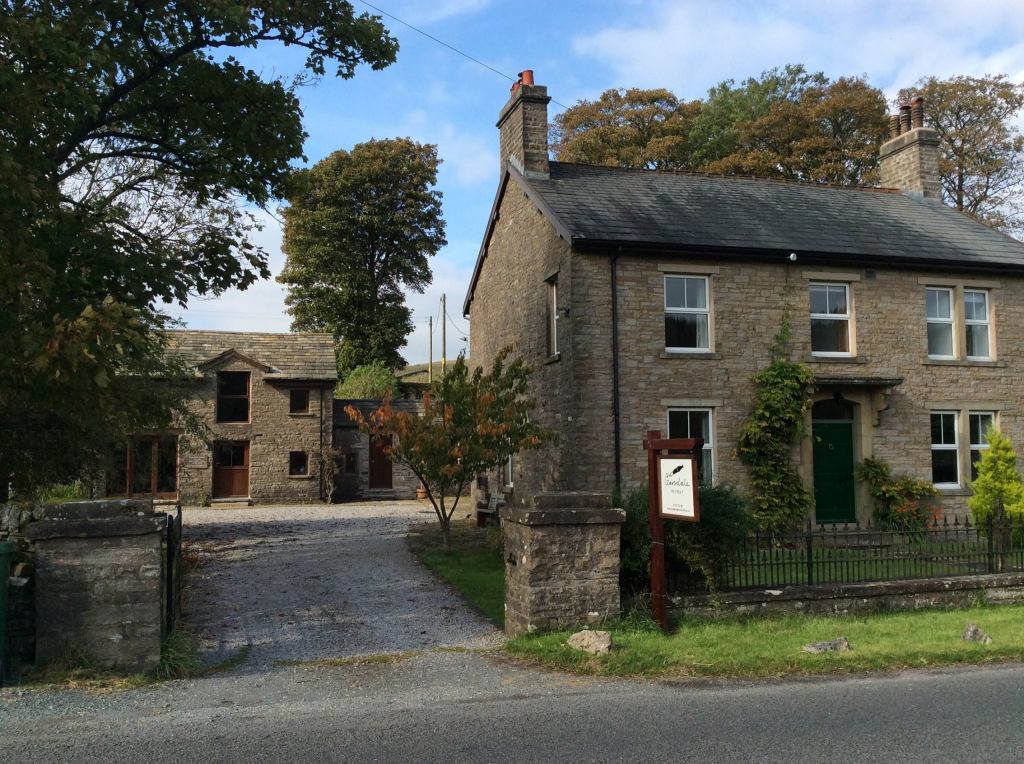
This week I’ve been on a writing course at the Garsdale Retreat: Memoir/Life Writing. It was an intense four days with tutor Cathy Rentzenbrink. She wrote a successful memoir The Last Act of Love and has published two books since. Of course, we were meeting via Zoom. Rebecca emailed us recipes to make up for the fact we would not be eating her delicious, home cooking. There was an afternoon chatroom option, but it could never replace Rebecca’s home-made cake!
One way to elicit memories for a memoir is to think of objects. I’ve read exercises about shoes, seen a tutor on another workshop bring in her first shoes. I have no memories of the shoes I wore as a child, but I have fond memories of the green shoes with three tiers – glamorous and comfortable – I wore that year when I was doing my MA at Sheffield University.
I do recall the astonishing poem My Shoes by Charles Simic. It starts:
Shoes, secret face of my inner life: Two gaping toothless mouths, Two partly decomposed animal skins Smelling of mice-nests.
There are four more stanzas, with a surprise in the second stanza – two dead siblings.
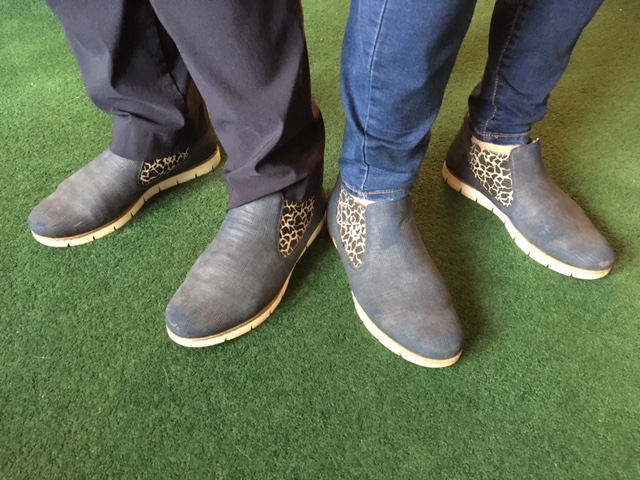
Last year at Garsdale, I was delighted to find that another woman on the course was wearing identical boots! Briefly, I felt like I had a twin sister …
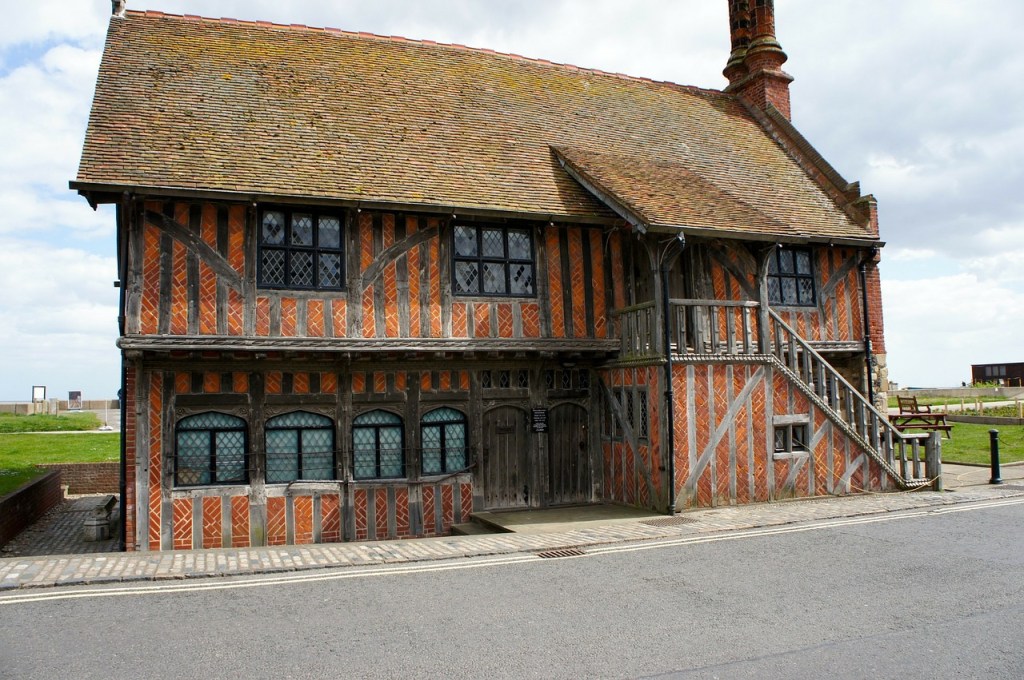
Moot Hall, Aldeburgh, Suffolk. Photo in public domain
I’m delighted to be reading at Poetry in Aldeburgh. The reading, called Between Places: Britain and Europe, will take place on Saturday 14 November, 12:00 – 13:00 London time. Also reading will be poets Sharon Black (France), Alex Josephy (Italy) and Christopher North (Spain).
The readings are free to attend. You just need to register at the Poetry in Aldeburgh website, to get a link to the Zoom event. The Festival runs from Friday to Sunday.
I will be reading new work, written in my caravan in the Netherlands during the last six months. When I selected the poems, I came across one which reminded me of “Poetry in the Plague Year”. Jim Bennett of the Poetry Kit set up this project. It’s an international project with contributions from many countries: https://www.poetrykit.org/plague.htm
My short poem, written on 29 March, is below.
Credit: marcart via Pixabay
Poem
CORE i3, a blue laptop, my lifeline to the world. How to fill the time until sunset?
If he was here…no, he is someone’s husband now. The only snow, spiraea in the hedge.
All that’s well will end. My friend Helen emailed There’ll be a cremation, no ceremony
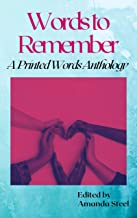
I am pleased to be one of the 43 writers who have contributed to this anthology by Printed Words. It includes fiction, creative non-fiction and poems. They cover writing about cancer and loss, but there are also pieces of writing that provide some lighter relief. The profits of the book are going to several cancer charities. Words to Remember is edited by Amanda Steel (@Amanda_S_Writer) and is available on Amazon as a paperback and Kindle Edition.
One of my two poems is Bitterne Park, Southampton. A friend who also used to work for P&O bought the house that I shared for just a few years with my late husband. I can still visit…
Bitterne Park, Southampton
The blackout curtains don’t let the sun through. I wake to the small sounds that come with morning: squirrels jump around the oak tree at the heart of our cul-de-sac. A bus strains up the hill.
At the Triangle, the bank opens and the smiley greengrocer limps his vegetable crates outside. On the river Itchen John strokes his beard, thinks about brewing tea.
It is meant to be an ordinary day. But this month is a long-distance runner, this month is a marathon.
On the other side of the narrow bridge, a woman is taking two large black bags into a charity shop. Suits and shirts, all washed, dry-cleaned, ironed. She had forgotten the silk ties. Now they’re rolled up, placed in a see-through Biza bag that once held duty-free cologne.
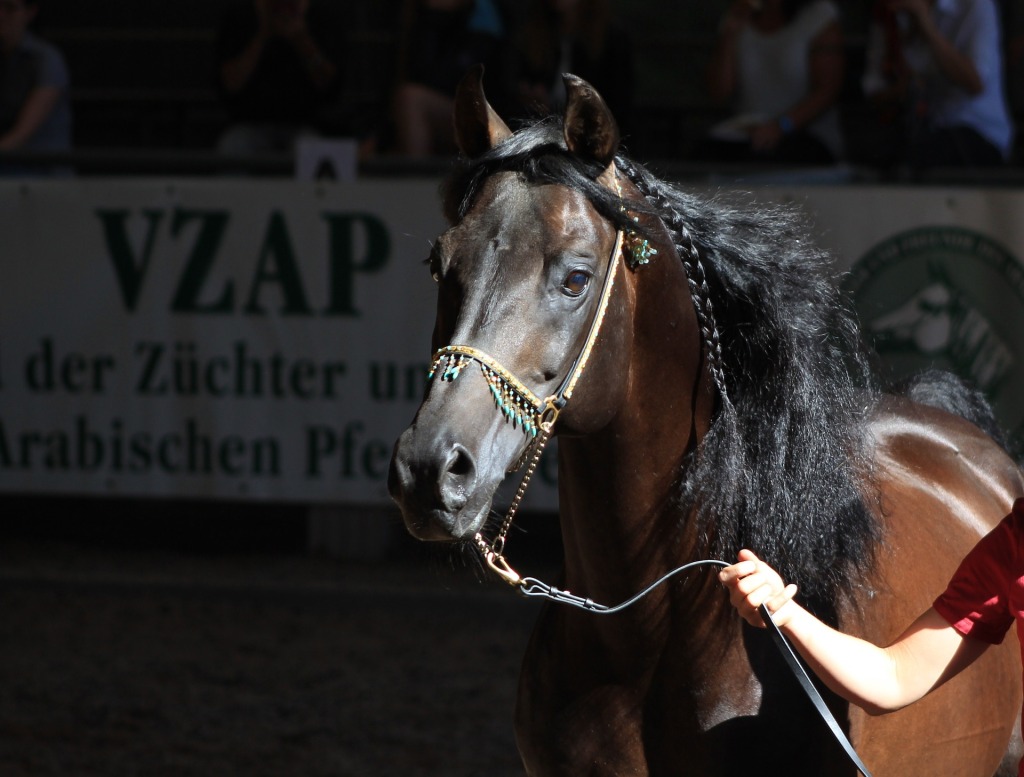
World Animal Day was started in 1925. I was looking for an animal poem in my file. Looking back on this experience, we might question the animal welfare aspect. The horse seemed happy enough at the time.
Circus
The Arabian thoroughbred and his blue-blood spinster lodged with a middle-aged couple living in the Dutch bible belt.
My parents despatched my younger brother and me that summer to acquire circus skills in two weeks.
Each morning a child took turns standing on the horse as it walked round the ring inside the stuffy canvas tent.
In the afternoons we swam in the local pool, tried to get the couple’s fat ponies to obey. There were prayers, a lot of eggs.
By the end of the holiday we balanced, arms outstretched, on the trotting horse. We swung off and on as it cantered.
Yesterday was Neighbours Day here in the Netherlands. The Neighbours Day initiative was started in 2005 by Douwe Egberts, one of the traditional Dutch coffee makers: social contact starts with a cup of coffee. A few years later they were joined by a charity called Oranjefonds. Each year they provide funds, support and advice for a large range of social and community activities, such as Dutch language support for refugees, mentoring, club houses for the old and young.
During the lockdown earlier this year, many new initiatives were started by people volunteering in their own street or local area. A good fit with this annual initiative. My neighbours here on the camping have cut their hedges and have gone home. My day always starts with a good cup of coffee made in a cafetiere. It happens to be D.E. – a firm started in 1753 in a small shop in Friesland, a northern province.
Earlier this year I talked with my brother about events in our childhood. This memory came up.
Getting to know the neighbours
We’re snoozing after lunch in a Sunday afternoon garden. One of our family, still awake, sees silent orange flames rising that side of the opaque glass.
It’ll be a small insurance claim. As evening turns pink, the old Belgian couple walk their Borzoi.
This coming week would have been the birthday of Bill Huddleston. My second collection Nothing serious, nothing dangerous (Indigo Dreams) is dedicated to him. In one of the poems I wrote:
Bill’s last words were always Have fun, so I will.
He was a very good father, Bill, though he wasn’t my father.
Bill and I first met in 1986 when we worked on an Outplacement project in Scotland. In his 60s Bill retrained as a hypnotherapist, and for many years he and I had a peer-supervision agreement – meeting monthly to discuss our clients.
From a poetry workshop on Working the Body I had the marvellous poem Climbing myGrandfather. It’s a first-hand story by a child, starting at the brogues (shoes) and ending on top of the head, the summit, with the slow pulse of (the grandfather’s) good heart.Here you can read the original poem by Andrew Waterhouse, a poet and musician, who was passionate about the environment. He suffered from depression and, aged 42, died by suicide in 2001.
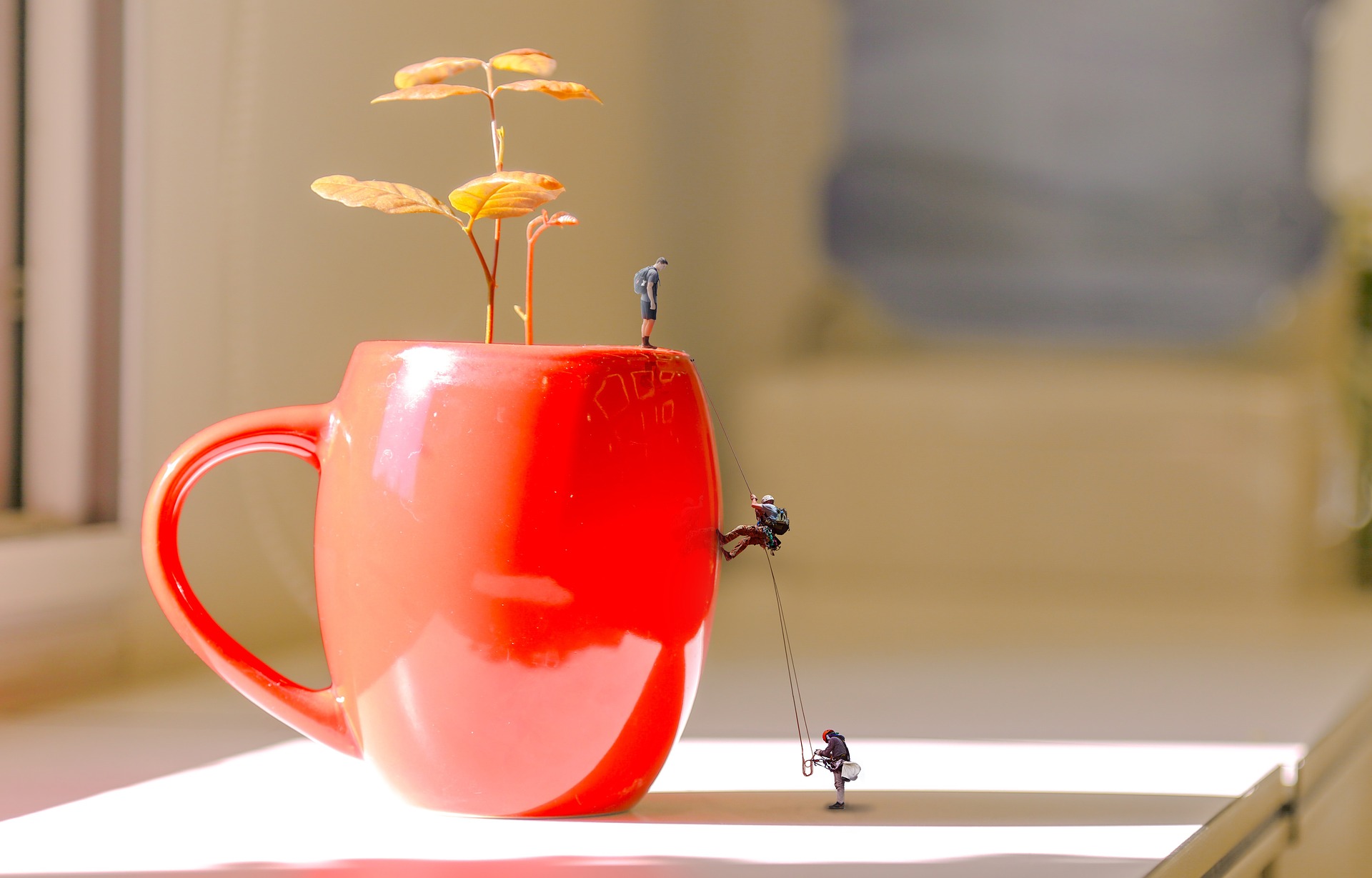
Abseiling Bill
The grey hairs combed back are too few to attach the equipment,
so I slide down slowly to his glasses, see close-up the grey hairs
sprouting from his ear. I think of rabbit holes, hear scuttling
sounds as his amazing brain is shifting, growing, learning.
I move carefully down his cheek where I can hear humming
from his sinus. Suddenly I’m dangling as he turns his head
to hear the other person better. His chin is smooth and
soon I reach the safety of his dark green cardigan,
all bobbly terrain and the round boulders
of its leather buttons. I can slide across his chest
where his large warm heart is housed, my feet
feel the rise of his breath lower down as he is
slowing to pace the other person.
It’s an easy journey now onto his chinos.
I walk across his upper leg, sun lights
my path. I rest in the folds of his knees.
From here I can see his steady feet
in the solid grey trainers and I land
without a hitch, safely.
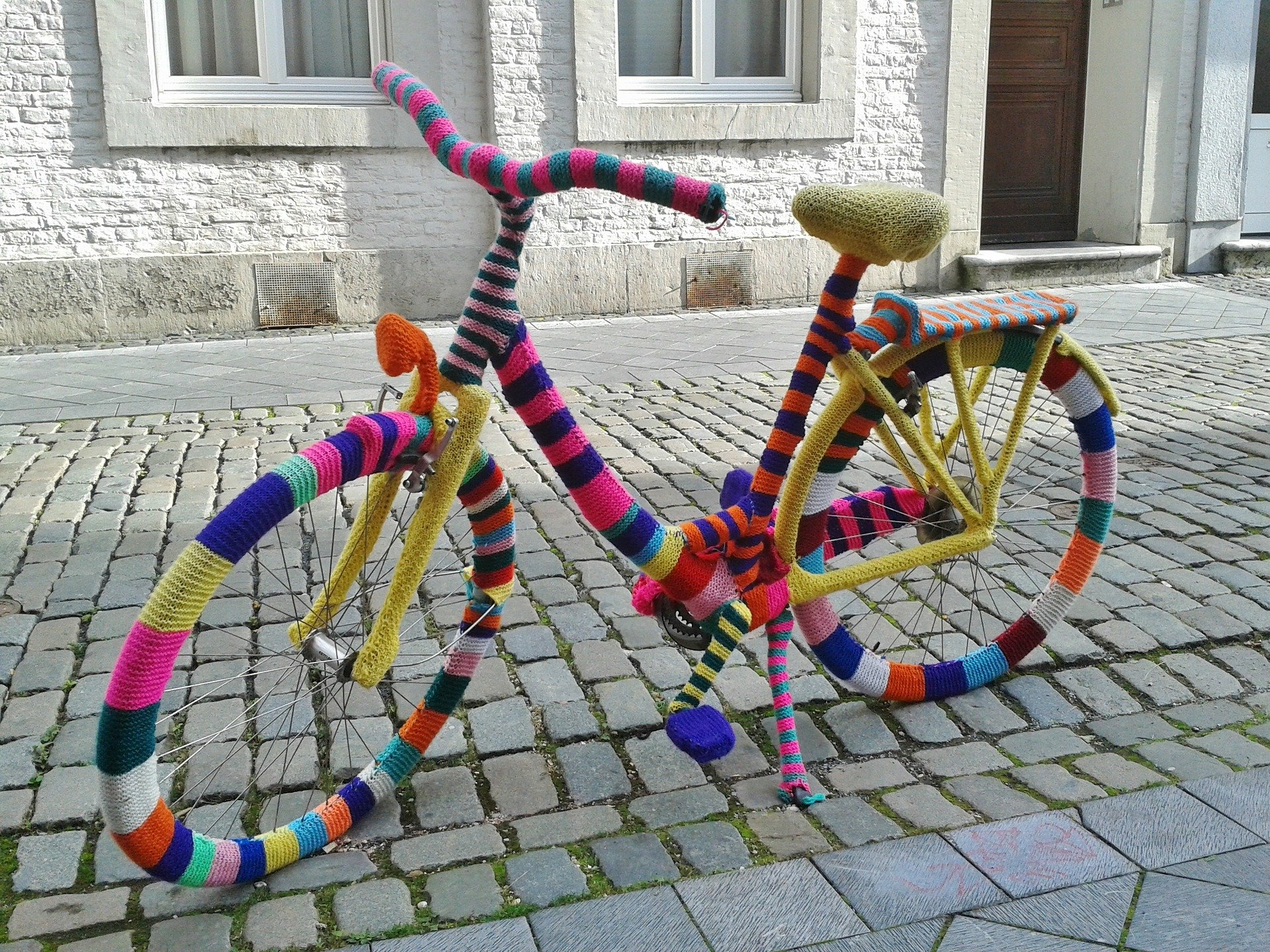
In this region, schools will start tomorrow. Everywhere, there are large white banners up reminding drivers that children are about, on foot or on their bike. For various reasons, I don’t have good memories of my time at primary school. When I think about knitting, or see someone knitting, my stomach contracts. But, don’t you love the bike?
Photo credit: Foundry Co via Pixabay
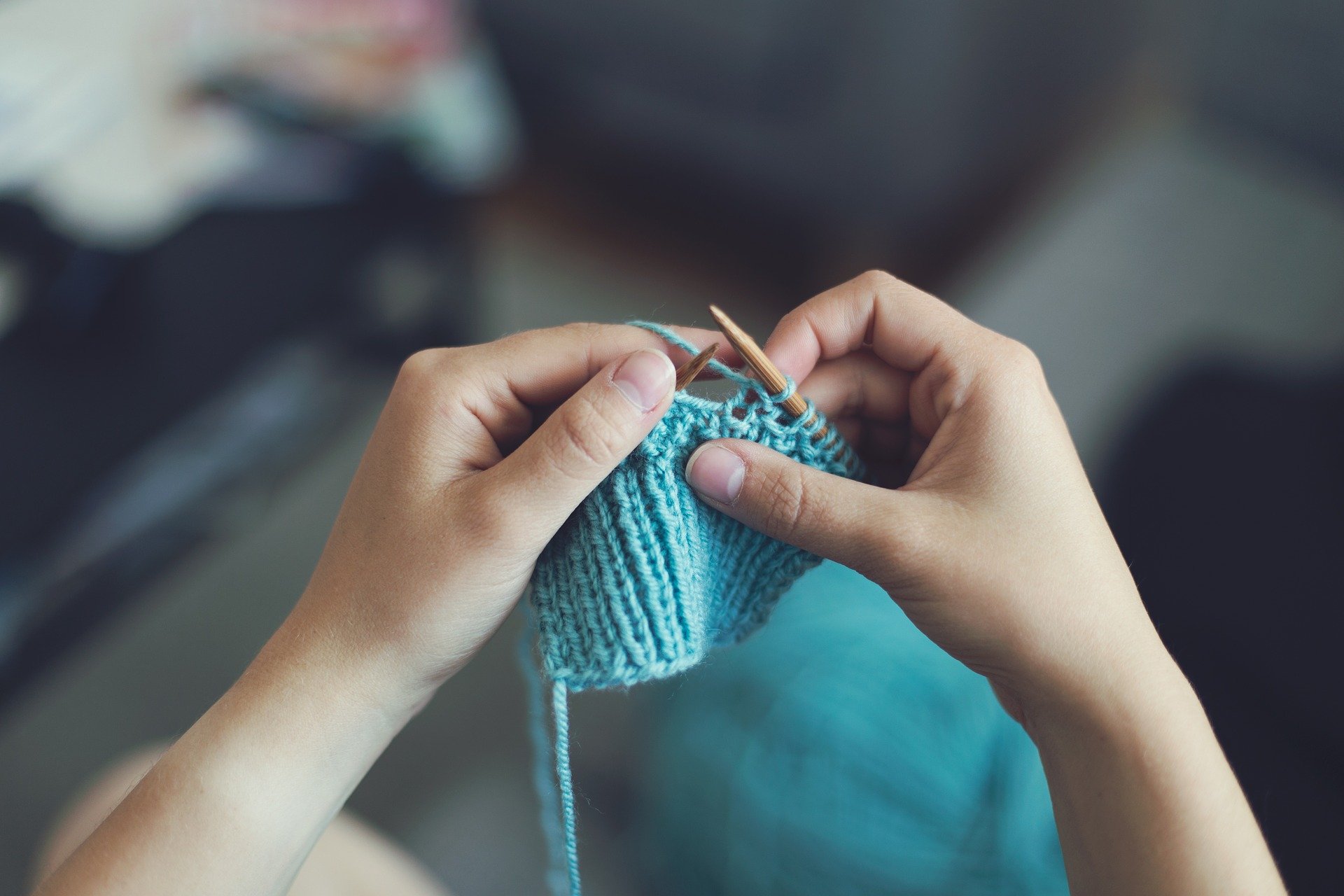
Did you knit this yourself?
It would have been a morning. Glasses, graying hair in a bun, typical spinster teacher.
Why ask a question to which you already know the answer?
Because you had never been able or willing to show me left-handed knitting.
The few centimetres my mother had added during the week stood out:
too smooth and regular, too clean, easily done in her click-clack rhythm.
I watched you unpick it, leaving me sitting with a pile of curly wool.
Prompt: Was there a subject that you disliked or even hated at school? Was it because of the person who taught you the subject? You may well have written a poem or short story about this already. Is there another poem waiting underneath?






 Acacia Publications