This coming week it’s my birthday. I’m taking family out to lunch near where I was born: a lovely bistro near the water. Here is a poem that I wrote on an excellent workshop with the poet Kei Miller.
My name
Even in the Netherlands my name is rare. It comes from the Northern provinces, a bleak windy place near the sea, near Germany.
People of the North grow tall to stand up to gales that whistle, across bare fields, into your face. A name so rare it’s not in the book of names.
I inherited this name from a grandmother who was often ill to spite her husband. I heard him shout behind the shop in a town
named after the beaver. Beavers on the façade of the vegetable canning factory, the foundry roof. My name means strong like the teeth of a beaver.
No, it doesn’t. I wish it did. Most children born just after the war had bad teeth because of the hunger winter: eating tulip bulbs to survive.
I wish I was named after the beaver, or the giraffe, an animal strong enough to shatter a lion’s skull with a single blow of its hooves.
In Dutch my name means people, folk or even battle folk. My grandmother died at 55. I’m beyond that age. I am an animal after all.
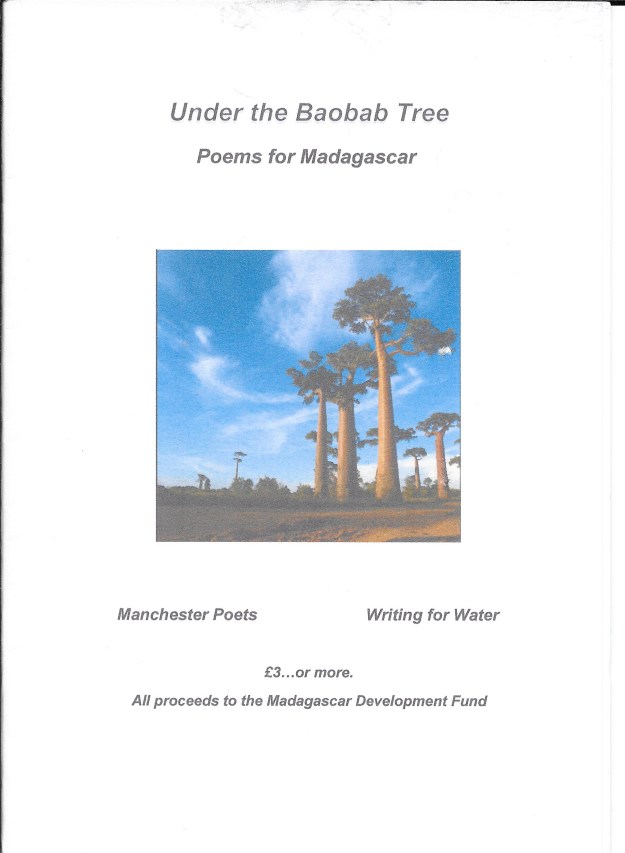
Sorting out boxes with books that moved with me from the UK, I found this small pamphlet. Manchester poets Steve Waling and Francesca Pridham edited poems by members of Manchester Poets. Copies were sold at the Didsbury Festival to raise funds.
Here Fran tells us about her connection with the Madagascar Development Funds and shares some wonderful proverbs – writing prompts for your poems, flash fiction, short stories.
Madagascar
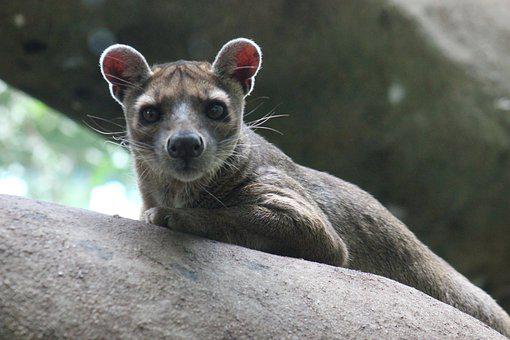
“My first contact with Madagascar came in 2013, when my husband, interested primarily in the country’s unique wildlife, persuaded me to take part in a trekking holiday there. The scenery is awe inspiring. A melting pot situated between Asia, Africa and Australia, Madagascar is the mysterious land of the ancient baobab tree, a land where pachypodiums thrive, the cat-like fossa hunts and lemurs swing from tree to tree. The most revered lemur, the Indri’s strange call wails through the rainforests, echoing the ancient isolation of the island.
The people
Despite this beauty, what however most caught my heart were the people. There is little infrastructure in the country and most villages consist of a small collection of adobe houses made from the spectacular red mud that Madagascar is famous for. The people have nothing, just the land they live on and any livestock, such as chickens or the zebu cattle that represent their wealth. Their generosity and welcome though is infectious. I gave a biscuit to a small child, four others appeared instantly, and the biscuit was shared immediately.
Credit: Puabar via Pixabay
Water
Their water supplies are often limited to streams that trickle into small muddy ponds, polluted sometimes by cattle who too have to use the water. Standing by the side of a small dirt track nearing the end of my trekking holiday I drank thirstily from a litre bottle of water I’d brought with me. Staggering down the track was an old man with his grandson, pulling and pushing at a makeshift trolley, carrying four battered plastic water containers. They had walked five miles to the nearest water supplies and were coming back to the village.
Credit: via Pixabay
The Madagascar Development Fund
When I returned to England, I started raising money to develop water supplies and build wells in Madagascar. We are lucky enough to work with The Madagascar Development Fund, a small charity run by the ex British Ambassador to Madagascar and have provided enough money now for four wells. The charity specialises in small projects which because of the charity’s experience are achievable and can bypass the complicated political situation in the country.
We have been lucky enough to attend the opening of one of the wells where we were welcomed into the village by singing, dancing, and drumming. We were given a welcome feast and a poem, written specially for the event was read by a young man, resplendent in what looked like a doctor’s white coat!
Malagasy Proverbs
The Madagascan culture is infectious! Their proverbs or ohabolana capture the learning and wisdom of centuries, inspiring both thought and writing! Enjoy the poems they produce!”
Truth is like sugar cane: even if you chew it for a long time it is still sweet. Words are like eggs; when they are hatched they have wings. Like the chameleon keep one eye on the future and one eye on the past. Let your love be like the misty rains coming softly but flooding the river. Those who know how to swim are the ones who sink. Don’t be like a shadow: a constant companion, but not a comrade. An egg does not fight a rock. Only thin dogs become wild. A canoe does not know who is king: when it turns over everybody gets wet.
It’s only days since I returned to Manchester and I’m slowly getting back into the English language. It has been a great pleasure to feature poems here this year by my friend Kathleen Kummer. I hope you enjoy this one.
A walk in summer in Holland
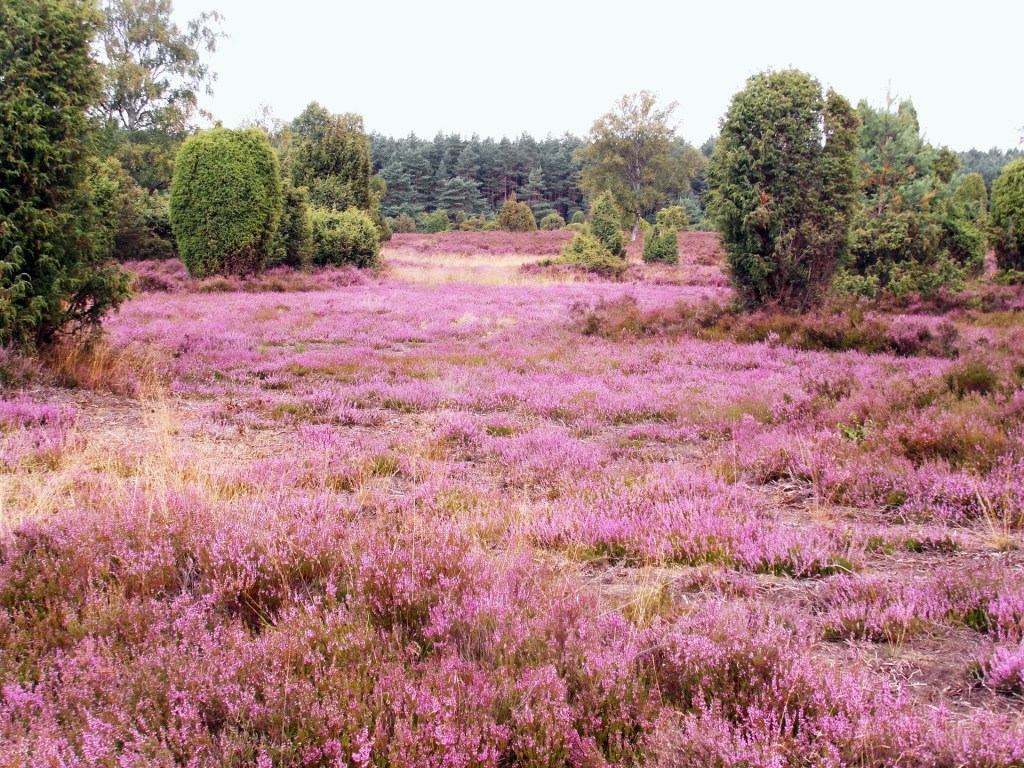
No ditch, no canal, no river here, no heron to remind me, as always, of Gandhi, hunched up, as it studies the text of the water. This landscape, the heat at Blaricum, its sandy paths moist from yesterday’s rain, never seem to be still. It moves with a gentle, rocking rhythm. The mass of heather, shrubs and trees, the tipsy ladders of vapour the jets leave behind like litter, the cirrus snagged on the sky, the flock of sheep, horned flecked with brown, expertly nibbling between each dainty, filigree sprig – all of these frolic round us: moving pictures on a frieze like those in a child’s bedroom.
An illusion? Call van Gogh as a witness. His olive groves writhe, his crops are waves, cypresses rock on an ocean of fields or boil with the stars in a fiery furnace. But here, there is no such fever. Under the huge Dutch sky, we are cradled, rocked on a warm bed of purple heather.




 Acacia Publications