Tag Archives: Spain

Wendsday

It’s a great pleasure to introduce this month’s guest poet Matthew Stewart, with three poems from his collection Whatever you do, just don’t. It was published by HappenStance Press to their usual high standards in 2023. The background of the jacket is an old map of Extremadura, Spain. The poem Gostrey Meadow was published in Stand. See below the poems for Matthew’s biography. I admire the attention to detail, precision, and economy of his poems: so much between the lines…

Banana

Come to think of it, she didn’t tell us
who’d got hold of the banana, or how,
and we forgot to ask, stunned by the news
that at ten years old she’d never seen one.

She was still proud her class had raffled it
for the war effort, still slightly mournful
at it turning black on her teacher’s desk
long before they drew the winning ticket.

She wouldn’t talk about gas masks, the Blitz,
the doodlebugs (how they changed to V2s) —
but she always recalled her fury
at the waste of bloody good food.

Wendsday

Halfway through the word and the week,
my pen used to pause and stumble,
tripped up by my eight-year-old tongue

and even now I still delight
in having learned at last to swap
the n and d and add the e.

I stumbled, too, after coming
to Spain. Shook off routines and rules.
Let a new language soak through me.

Two more hassle-packed, tensed-up days
till vino tinto y queso
instead of cod and chips.

Gostrey Meadow

Showing my son round, I notice
a father taking a picture
of his wife and son who’s melted
half an ice cream on his fingers
and the other half on his face.

It’s a copy of a photo
in our album. Same river.
Same heat-laden sky. Same roles.
Same spot on the bank. Same pose.
Our trees were ten feet shorter.

Biography

Matthew Stewart lives between Extremadura in Spain and West Sussex in the South of England. He works in the Spanish wine trade as a blender and exporter. His blog site ‘Rogue Strands’ is a respected source for poetry lovers, and he reviews widely for a range of publications. His first full collection was The Knives of Villalejo (Eyewear, 2017). Before that, there were two pamphlets from HappenStance:
Tasting Notes (2012) and Inventing Truth (2011).
Enxaneta

Credit: Makamuki0 via Pixabay

My thanks to poet Annie Muir for this seasonal poem from her pamphlet New Year’s Eve. Best wishes for your own New Year’s Eve – wherever you are. See you in 2023.

Enxaneta

In Barcelona it is 38 degrees
and a little girl screams with mimicked joy –

she is all eyelashes, all eyes,
all teeth and gums and tongue.

I hate her through the eyes of her big sister:
half a plastic broken heart tied around my neck,

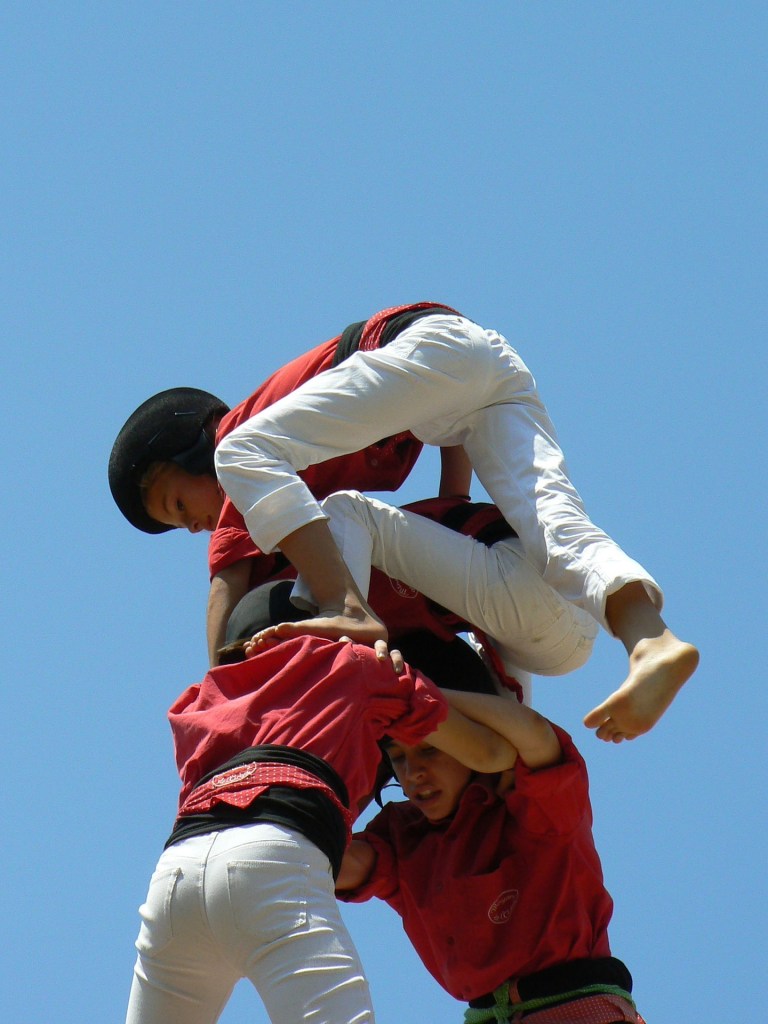
I climb a fence to watch the castellers.
They huddle, arms up as if reaching for a throat,

others climb them like stairs, feet clinging to backs
like tadpoles on their first legs,

it doesn’t stop, more like ants than people
but with muscle and bone and white trousers,

two little girls heading for top,
one takes her place below, the other

is no longer a child but the star
at the top of a Christmas tree,

her arm pointing up is the man on the moon,
a clock striking midnight on New Year’s Eve.

She slides down the legs of her supporters,
relieving the mountains of tension from their shoulders.

Biography

Annie Muir lives in Glasgow. Her debut pamphlet New Year’s Eve was published by Broken Sleep Books. Pre-pandemic she handed out poems on the street outside local libraries, and has a podcast – Time for one Poem – aimed at complete beginners to poetry.
@time41poem

Food Match

Credit: Life-Of-Pix, Pixabay

A Christmas Day poem with my best wishes for the day and with my thanks to Matthew Stewart. In his pamphlet Tasting Notes (Happenstance Press) he pairs poems with notes about the Zaleo wines from Extremadura, a region with several UNESCO heritage sites.

Food Match

It glistens on the wooden stand,
a black trotter pointed upwards
as if offering a hoofprint.
Now cut a slice so thin that steel
is visible below the meat.

Place it across your tongue and wait
for the marbled fat to melt. Sip
un vino tinto. The tannin
grips, hugging the ham — both of them
start, suddenly, to magnify.

Credit: GerardBarcelona, on Pixabay

Biography:

Matthew Stewart works in the Spanish wine trade and lives between Extremadura and West Sussex. His second full collection is due from HappenStance Press in November 2023.

There are a few copies left of Tasting Notes. Contact Matthew direct via social media.

The shoplifter and the hermit – writing prompt

It is three years since the poet Matthew Sweeney died. I was fortunate of having a whole week with him at the wonderful Almassera Vella, Spain in 2006. I learned a great deal. The photo was taken in the garden by the infinity pool.


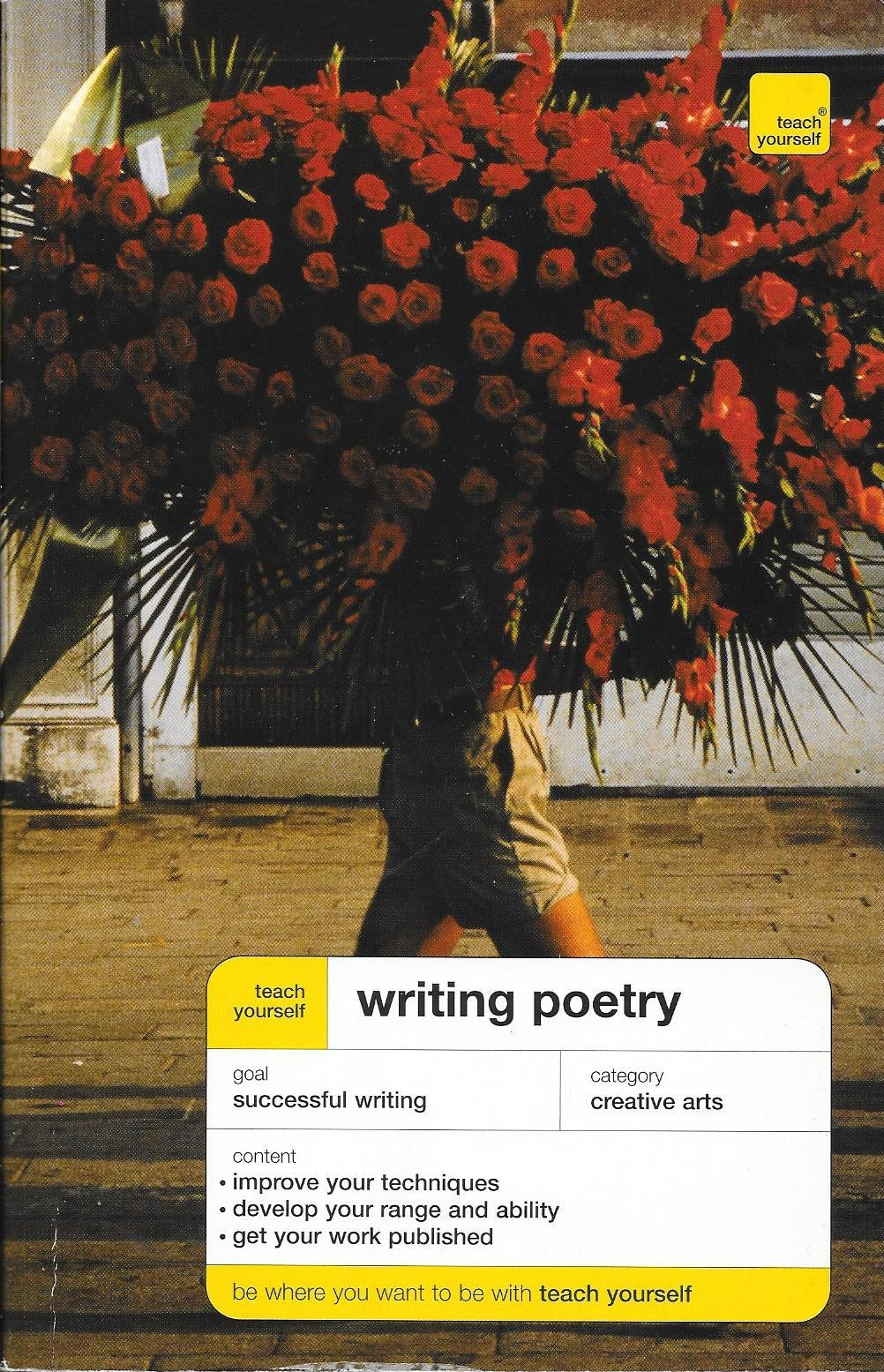
One of my favourite books about writing is Teach Yourself Writing Poetry. It was written by Matthew and his friend and poet John Hartley Williams. It is packed with exercises, and I love the book because in between the exercises there is dialogue, chat, discussion. I can hear their voices as they talk (I’m sure over a glass of wine). Wit and poignancy.

Prompt:

The Hermit was written on a workshop. We were given Sweeney’s poem The Shoplifter and asked to think about someone with an unusual occupation and what life would be like for them when they retired. Both the shoplifter and hermit now live by the sea. Sweeney’s shoplifter has ‘fronds of marijuana’ outside, has ‘learned the use of coins’ and has a use for all those books:


His books come in useful now
as each time he has shinned

with an aerial up the chimney
Viking wind has ripped it down.

The Hermit


The hermit had to be retired
for health and safety reasons.

He was flown out of the desert,
given a dictionary and glasses.

He is renting an old longhouse,
leaves doors and windows open

so he can smell the cool air,
but still he cannot sleep.

The postman was his first visitor.
Mail lies piled up by the gate.

The grains of sand on the beach
make him feel homesick even now.

By the light of a candle he may
be able to look in the mirror, but not yet.

(first published in Another life, Oversteps Books, 2016)

The Old Olive Press


rear view

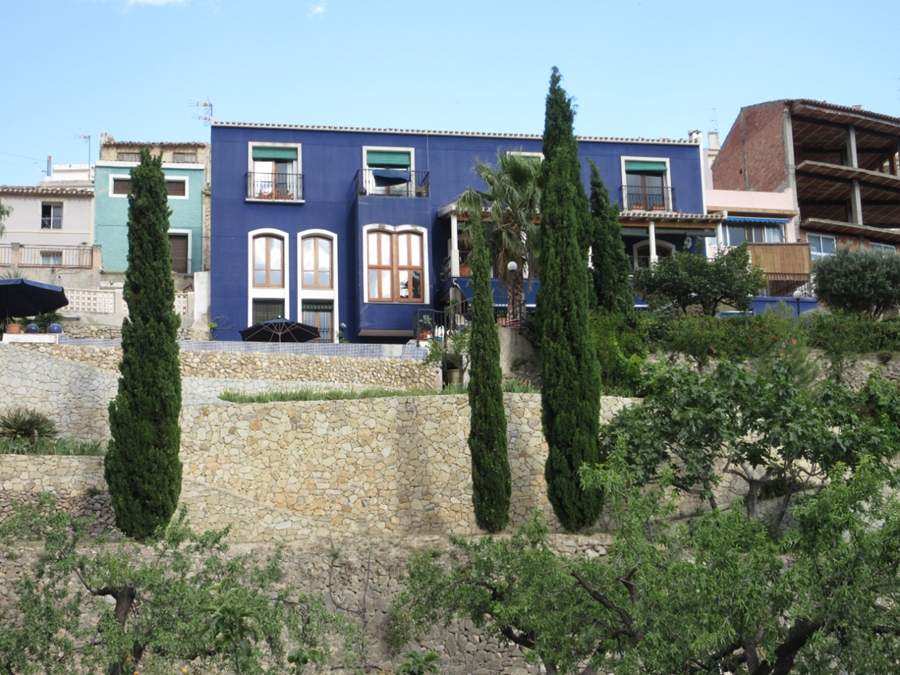
The Old Olive Press, view from the terraces at the rear

June was when I would visit the wonderful Almassera Vella (Old Olive Press) in Relleu, Spain. I have been on several one-week workshops with the incomparable Ann Sansom of the Poetry Business. Other poets from whom I learned a great deal were Mimi Khalvati and the late Matthew Sweeney.

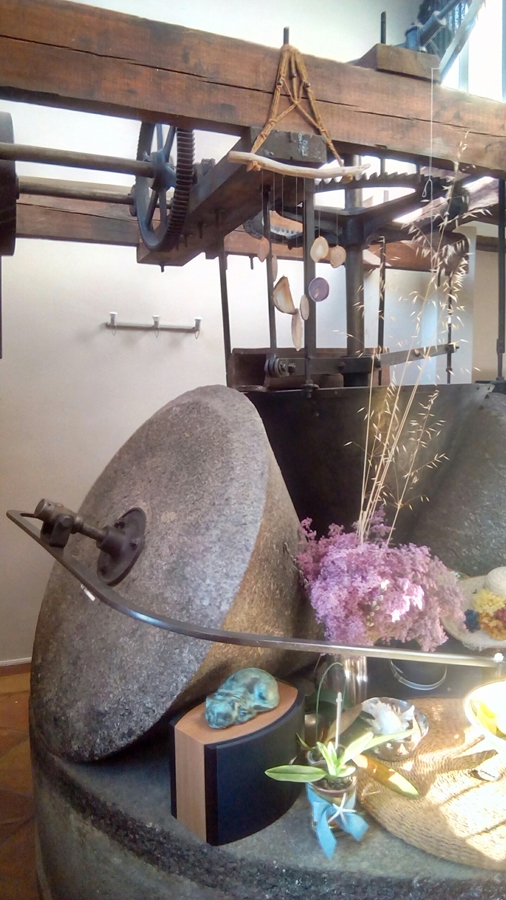
Christopher North, himself a published poet, and his wife Marisa took two years to convert the old olive press into a stunning home. As you can see, they kept the actual press. Relleu is a one-hour drive from Alicante airport and about half an hour from Villajoyosa on the coast.


olive press 2

The olive press


Nowadays, Christopher and Marisa organise cookery workshops. You can also book B&B accommodation and the flat over the road is still available as retreat accommodation for writers.

The poem June rain is from my first collection Another life  published by Oversteps Books Ltd (2016).
June rain
for Cristopher and Marisa

It’s June and the rain is falling.
It is cooler and darker now.
It’s the rain we prayed for last night,
though we’d not meant to do such a thing.

The old women, eight or nine, spread
across benches outside the church.
Us along the tables, a line of snails,
sloping down towards the blue house.

It was speaking of Sundays now filled
with shopping and the silence
that binds Quakers together.

And it’s in silence we, snails,
all of us with our whorled shells
of stories, sit at the breakfast table.

The cheep-cheep-cheep of birds
after the rain is flowing into the room
and a fresh breeze that tells of new stories.

Never Totally Lucid

Hilary


This is my 100th blog piece, and I am delighted I can celebrate this century by introducing you to the work of Hiliary Elfick. We first met many years ago at the wonderful Almassera Vella in Relleu, Spain and have exchanged poems there several times since.

Hilary is an experienced broadcaster and the author of a novel and over a dozen poetry collections and pamphlets. She has performed her work in cathedrals, theatres, bookshops, libraries, schools and literary festivals in many countries, including Africa. Two of her poetry books have been translated into Romanian.

Hilary lives in East Anglia and also in New Zealand (where she is a bush bird guide), and is a frequent visitor to Australia where she recently launched two poetry sequences in collaboration with an international prize-winning Australian photographer, with a third appearing in early 2020. She has a lifelong love of being out in boats on the water.

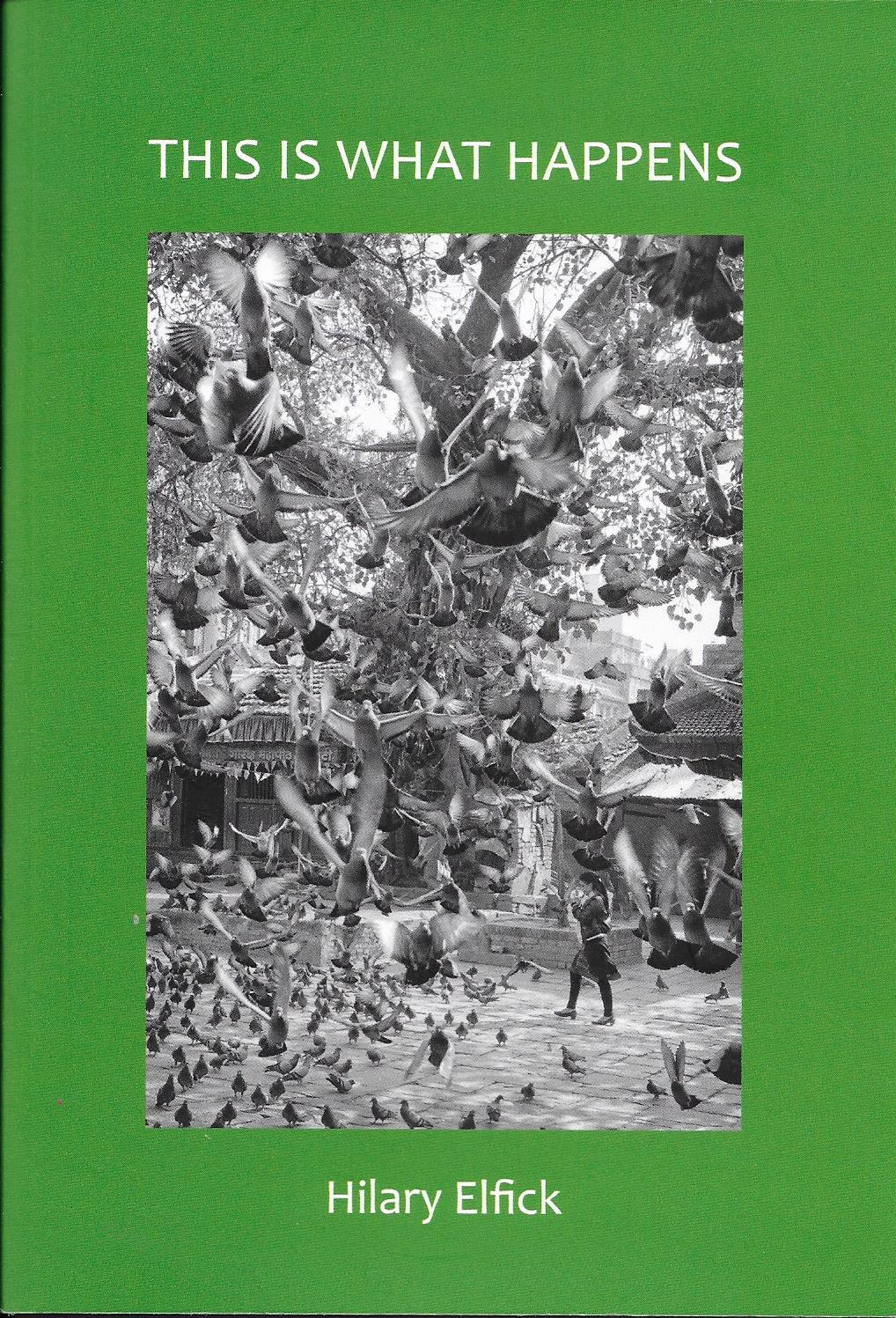
Three poems are from Hilary’s THIS IS WHAT HAPPENS, published by Grey Hen Press (2019), while The Wedding Ring is from her earlier book THE OUTSHIFT PLACES, also with Grey Hen Press.


The Wedding Ring

But the morning before the wedding his father died. Two events
he’d long anticipated and with equal fervour. He would have
ignored the former, but Gilly persuaded him that even a minor
gesture to the event at their own reception might be at least seemly
and, more, something that much later he might be glad that he had
done. ‘I won’t pretend’ he said. ‘I won’t do platitudes.’

His mother came as planned. Under her wide hat her face
impossible to read, as it had been for many years. His sister
hugged him, saying nothing. Only when Gilly’s ring slid on his
finger did something jolt inside him. A ring finger. A ring. His
father ‘d always worn his. Even after everything.


Scan0020


When you know exactly where you were at the time
i.m. Professor Donald Nicholl

Six foot six he was but never towered.

Your first week. A small lecture theatre,
a wisp of Sobranie from the row in front.

He comes in, begins to speak

then nothing but his voice
and what he says and how he says it.
Sixty years ago. You’re at his feet:

whatever subject this man teaches
whatever he’ll demand
you’ll do it. You’ll be there.

Your first tutorial he asks how Christ came into Britain.
Someone tells him what happened, names, dates, places.
He turns to you and waits. You wait too. Then you tell him:

One man told another.
They put down their nets and followed.

Days later his wife has their fifth, last baby;
he names her after you.

Forty years on when he’s dying you remind him
Socrates said there’s no greater love
than between a teacher and his natural pupil.

Wonderful he whispers.

 
Four Quarters
A Grandmaster sees four moves ahead.

As child, I anticipate the trigger
for a new rage in my mother.

As mother I wake startled
by a cry or too-deep silence,
deep water, roaring roads.

As wife I place your glasses, shoes,
just where your eye might fall,
forgiving the questions I answered
today, yesterday,

tomorrow.

 
Never Totally Lucid

‘The reality of nature …obeys laws…never totally lucid to
our understanding.’ Anni Albers

When is he coming?
Five o’clock.
Is that what you wanted?
No. You gave me that yesterday.
I can’t have.
You did. Look. Here in my bag.

Did he come yesterday?
No. He’s coming today.
I’m not ready.
You have till five. You have time.
Why is he coming? Is it cold in here?
Your skin smells different.

I can’t find it.
You put it in your pocket
I only have this in my pocket.
That’s the one we’re talking about.
Who wrote this?
I did. You asked me to.
Why do I need it now?
You don’t. It’s for tomorrow.
Did I agree to this?
You did.

You make me so angry, you don’t listen to me, you just go ahead.

It was your idea.

What was my idea? When was it my idea?
Yesterday. That’s why he’s coming today.
Who?
James.
I don’t know a James.
Look. Here’s his name. Your handwriting.
Did he come?
No. He’s coming today at five.

Fishbones Dreaming

IMG_0679
Tomorrow it’s a year since the Irish poet Matthew Sweeney died. He was just 65 and died of motor neurone disease.

I took the photo in 2006 when I attended a week-long course with Matthew at the wonderful Almassera Vella in Spain. He was like a dog with a bone about adjectives, but otherwise warm and funny. I learned a great deal that week.

The poem Fishbones Dreaming features in Writing Poetry, a publication in the Teach Yourself series. It’s packed with ideas and good exercises. Matthew wrote it with the poet John Hartley Williams. They both lived in Berlin for a period and were friends. The friendship clearly shows in the bits of dialogue where they introduce the exercises.

Scan0014

Fishbones Dreaming starts: Fishbones lay in the smelly bin. / He was a head, a backbone and a tail. / Soon the cats would be in for him.

The refrain is: He didn’t like to be this way. / He shuts his eyes and dreamed back.

The poem uses a gradual flashback technique, with the refrain dividing the stanzas: a stanza about being on plate, next to the green beans, a stanza about being in the freezer with lamb cutlets, about squirming in a net, and so on. Till he is darting through the sea, past crabs and jellyfish.

My poem below was written in response. It was published in my debut collection Another life.


Friday evening

He leaves work early,
walks past the pub,
unchaining habits,
dropping an old raincoat
into the Ribble.
Preston is still Preston,
magnificent failure.

If he can walk backwards
to the railway station,
he will catch himself
in the windows.
There is his 40th birthday,
never celebrated.
Here are the empty Sundays.
Swans, a football, his parents, baby sister.